This site is supported by our readers. We may earn a commission, at no cost to you, if you purchase through links.

A tangled pile of thread spools is one of those small chaos agents that somehow derails an entire project. You reach for navy blue, and out tumbles everything else—cotton mixing with polyester, bobbins rolling under the machine, and suddenly you’re spending twenty minutes searching instead of sewing.
Thread storage and organization isn’t about being tidy for tidiness’s sake; it’s about protecting your time, materials, and sanity. The right system means every color lives where you expect it, damage from light and humidity stays off your radar, and your workspace actually works for you.
Table Of Contents
Key Takeaways
- The right storage product — whether a rotating wooden rack, a wall-mounted system, or a simple drawer organizer — isn’t just about looks; it’s about cutting the time you waste hunting for the right color.
- Sorting thread by color family and type isn’t perfectionism — it’s how you stop tension problems and mid-project frustration before they start.
- Sunlight, humidity, and loose thread ends quietly destroy your collection over time, so sealed containers, UV protection, and spool huggers aren’t optional extras — they’re basic maintenance.
- Thread has a real shelf life (polyester lasts up to 20 years, cotton just 2–5), so storing it right isn’t just about today’s project — it’s about protecting the money you’ve already spent.
Top 5 Thread Storage Products
The right storage product can make or break your whole thread system. There are a few standout options that sewists keep coming back to — each one solves a real problem, whether that’s space, visibility, or portability.
If you’re still building out your collection, browsing sewing thread sets designed for craft room organization can help you find options that pair well with the storage systems sewists swear by.
Here are five worth a serious look.
1. Sulky Thread Storage Box Organizer
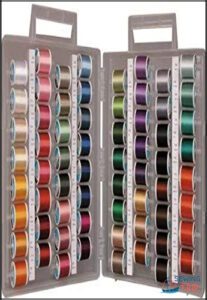
The Sulky Thread Storage Box is one of those finds that makes you wonder how you managed without it.
It holds up to 104 small snap-end spools, and the transparent lid means you can spot your color at a glance — no digging required.
Individual lifting tabs keep each spool isolated, so nothing tangles or spills when you grab one.
It stands on its own, mounts on a wall, and closes securely for travel.
Tidy, practical, and genuinely clever.
| Best For | Home sewers, professional tailors, and anyone with a growing thread collection who wants quick, organized access to every color they own. |
|---|---|
| Material | Clear molded plastic |
| Color | Clear/transparent |
| Weight | ~6 lb loaded |
| Storage Capacity | 64 spools |
| Mobility | Carry handle |
| Assembly Required | Minimal |
| Additional Features |
|
- Holds up to 64 spools in one compact unit — stands on a desk, hangs on a wall, or closes up for travel
- Clear plastic lets you spot the color you need instantly, no rummaging required
- Lift-tab rods keep spools locked in place so nothing falls out or tangles
- Plastic spindle rods can be brittle and may break over time, especially with heavier spools
- Only fits spools up to about 2 inches long — oversized spools won’t work here
- Some units arrive with cracks or damaged parts, so give it a close look right out of the box
2. Rotating Wooden Thread Rack Organizer
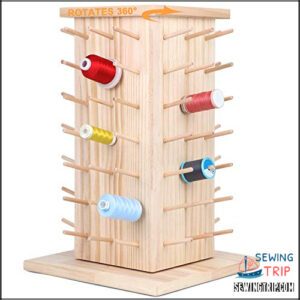
If wall space isn’t your thing, this one’s a lifesaver. The Rotating Wooden Thread Rack holds up to 129 spools — 93 on the outer ring, plus 36 tucked inside two interior compartments.
Made from solid beech wood, it spins a full 360° on a stable base, ensuring every color stays within easy reach.
The unfinished wood invites customization—paint it, stain it, or make it yours.
Note: Sized for mini and mini-king spools only.
| Best For | Sewers, embroiderers, and quilters who want their thread collection organized, visible, and easy to grab without digging through a drawer. |
|---|---|
| Material | Solid beech wood |
| Color | Natural unfinished wood |
| Weight | ~6 lb (2.7 kg) |
| Storage Capacity | 129 spindle positions |
| Mobility | Rotating 360° |
| Assembly Required | Yes, peg insertion |
| Additional Features |
|
- Holds up to 129 spools in one compact spot, so your whole collection is right there when you need it.
- Spins smoothly on a stable base — no tipping, no chasing runaway spools across the table.
- Unfinished beech wood means you can paint or stain it to match your space exactly how you want.
- Only works with mini and mini-king spools — if you use larger bulk thread, it won’t fit.
- Putting it together takes a hammer, and the one included might not quite cut it for stubborn pegs.
- The interior compartments are a bit awkward to use — getting spools in and out can take some fiddling.
3. Winsome White Wooden Storage Cabinet
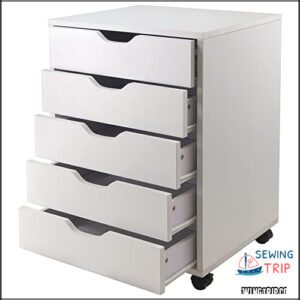
Maybe you want something a little more furniture-forward. The Winsome White Wooden Storage Cabinet fits right into a craft room without looking like a storage afterthought.
It pairs beautifully with smart fabric and material storage ideas for sewing rooms that keep everything organized without sacrificing style.
It’s built from engineered wood with a clean white finish — tidy, minimal, and actually nice to look at. Adjustable interior shelves mean you can customize the height to fit thread cones, bins, or baskets.
The cabinet pairs well with organizer bins, keeping everything behind closed doors, away from light and dust.
| Best For | Anyone who wants storage that actually looks good in a craft room, home office, or mudroom — not just functional, but easy on the eyes. |
|---|---|
| Material | Engineered composite wood |
| Color | White |
| Weight | 40.3 lb |
| Storage Capacity | 5 drawers |
| Mobility | 4 swivel casters |
| Assembly Required | Yes, screwdriver needed |
| Additional Features |
|
- Rolls where you need it, locks where you want it — the swivel casters with lockable wheels make it genuinely flexible.
- Five drawers keep supplies sorted without dumping everything into one big pile.
- Two units can pair up under a worktop, so it grows with your space.
- Assembly runs 2–4 hours with picture-only instructions and unlabeled parts — budget the time.
- Drawers only pull out about three-quarters of the way and are pretty shallow, so bulkier items won’t fit well.
- A few buyers have run into missing screws or slightly off pre-drilled holes, which means the build doesn’t always go smoothly.
4. Ikea Helmer White Metal Drawer Unit
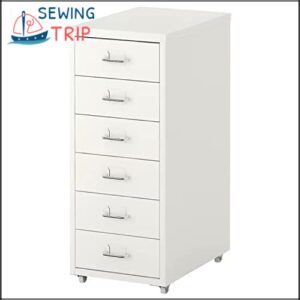
The IKEA Helmer offers a unique organizational approach with every drawer right out in the open, providing immediate access to contents. Its design prioritizes visibility and convenience, featuring six drawers with label slots to ensure items are easily identifiable.
This slim white metal unit measures just 11 inches wide, allowing it to fit neatly under desks or beside machinery. Its compact footprint maximizes space efficiency without compromising storage capacity.
Mobility is enhanced by casters, enabling effortless movement to any desired location. Additionally, drawer stops prevent accidental spills, ensuring stability during use.
| Best For | Anyone who needs lightweight, organized storage for office supplies or hobby items and wants something compact enough to slide under a desk. |
|---|---|
| Material | Steel with aluminum panels |
| Color | White |
| Weight | Not specified |
| Storage Capacity | 6 drawers |
| Mobility | 4 caster wheels |
| Assembly Required | Yes, tab-and-snap |
| Additional Features |
|
- Six drawers with built-in label slots make it easy to stay organized at a glance.
- Slim 11-inch width fits neatly in tight spaces like home offices or craft rooms.
- Casters let you roll it wherever you need it without any heavy lifting.
- Assembly can be tricky — the picture-only instructions send a lot of people straight to YouTube.
- Thin metal construction means it’s not built for anything heavy; it can feel a bit wobbly over time.
- Small wheels struggle on carpet and can make the unit feel unstable when moving it.
5. iDesign Clear Plastic Jewelry Organizer
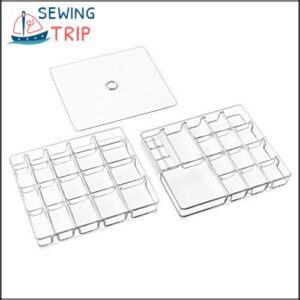
Don’t overlook the iDesign Clear Plastic Jewelry Organizer — it’s a quiet overachiever for small-spool storage.
The set includes three stackable BPA-free trays, offering 40 compartments total to sort threads by color or type at a glance. Each tray measures just under 9 inches wide, sliding easily into a dresser or vanity drawer.
The lid keeps dust out between projects, while the design remains budget-friendly, lightweight, and surprisingly practical for space-constrained crafters.
| Best For | Crafters and jewelry lovers who want a simple, no-fuss way to keep small items sorted and visible in a drawer. |
|---|---|
| Material | BPA-free rigid plastic |
| Color | Clear/transparent |
| Weight | ~1.5 lb (0.7 kg) |
| Storage Capacity | 40 compartments |
| Mobility | Portable stackable trays |
| Assembly Required | None |
| Additional Features |
|
- 40 compartments across three trays make it easy to sort by color, type, or size at a glance
- Stackable and drawer-friendly — fits neatly into tight spaces without taking over your counter
- Lightweight and travel-ready, with a lid to keep things from shifting around
- Compartments are pretty shallow, so chunky bracelets or larger pieces won’t fit well
- The lid doesn’t clip shut, which can make stacking feel a little wobbly
- Clear plastic looks functional rather than fancy — don’t expect the premium feel of metal or fabric organizers
Organize Thread by Color and Type

A chaotic thread drawer is basically a time tax — every project starts with a hunt.
The good news is that a simple system can change all of that.
Here’s how to bring real order to your collection: starting with color and type.
Sort by Color Family
Color is your filing system — treat it like one. Group threads by hue family first: warms (reds, oranges, pinks), cools (blues, greens, purples), then neutrals. This makes colorful thread arrangement feel almost automatic.
- Use hue gradient mapping — light to dark within each family
- Add family swatch tags to drawer fronts for instant ID
- Follow shade intensity ordering: pale blush before deep crimson
- Build a neutral subcategory layout for whites, ivories, and grays
Separate Thread Types
Not all spools of thread belong together — and mixing them up costs you time. Separate them by purpose classification first: embroidery, quilting, serger, and hand-sewing each deserve their own zone on your thread rack or thread holder. Then factor in fiber material, thread gauge, thread coating, and spool diameter.
Effective thread color coordination relies on keeping like types together, shielded from dust and humidity to avoid protection failures.
Understanding the right thread mapping can boost efficiency.
Group Everyday Sewing Threads
Your everyday threads deserve their own dedicated home. All-purpose polyester blends, cotton-wrapped cores, and monofilament nylon each have different Weight Matching needs and Fiber Compatibility quirks — mixing them creates tension headaches mid-project. Group them thoughtfully using your thread holder by function:
- Build Project Kits around Seasonal Palettes for faster grab-and-go access
- Pair spools of thread with color-matched bobbins for smooth thread color coordination
- Use a clear organizer for spools to support dust prevention for thread and Thread Longevity
Label Drawers and Containers
A good label turns a chaotic drawer into a system you can trust. Use removable labels so reorganizing doesn’t leave sticky residue behind — polyester or vinyl label materials hold up beautifully over time. Add color-coded borders to match thread families at a glance. Eye-level placement on your designated drawer front saves real time. For larger collections, QR coding links spools to a digital inventory instantly.
Keep Bobbins With Matching Spools
Treat every bobbin like it has a soulmate — because it does. Store each bobbin directly beside its matching spool using Dedicated Pair Bins or clear cases with Brand‑Specific Slots.
Color‑Coded Pair Tags confirm a perfect match instantly, while Weight‑Matched Pairing prevents tension headaches mid-project.
Silicone Bobbin Rings 4-pack stops slippage, and Bobbin Thread Buddies Set 142pcs keeps travel pairs tidy.
Run Scheduled Match Audits every six months — it’s worth it.
Choose Space-Saving Storage Systems
The right storage system can make your sewing space feel twice as big. Whether you’ve got a dedicated craft room or just a corner of the kitchen table, there’s a setup that fits your life.
Here are five space-saving options worth considering.
Wall-mounted Thread Racks
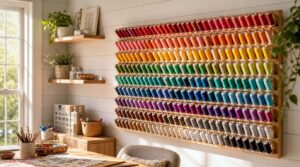
A wall-mounted organizer is one of the smartest moves you can make for your craft room. Installation guidelines are straightforward—just a stud finder, level, and screws.
Here’s why a thread rack wins:
- Material durability in hardwood or powder-coated steel supports heavy-weight capacity easily
- Adjustable spacing fits bulky embroidery spools
- Aesthetic finishes complement any decor
- Wall hanging keeps colors visible at a glance
Pegboard Spool Storage
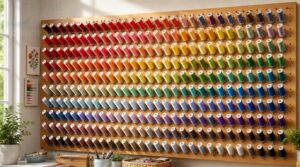
Pegboard thread storage transforms wall space into a full thread spool display. With a pegboard hanging system, hook angle optimization is critical—angled hooks prevent spools from rolling off.
Material choices matter: powder-coated steel hooks adhere to load rating guidelines (approximately 1.5 pounds per hook). Additionally, anti-corrosion hooks safeguard against humidity, ensuring longevity.
The system’s modular panel expansion allows seamless growth as your collection expands.
| Feature | Benefit |
|---|---|
| Angled thread holder hooks | Prevents spools from slipping |
| Modular panel system | Expands as your collection grows |
Drawer Dividers and Trays
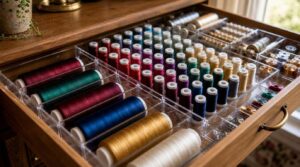
Adjustable inserts let you reshape compartments as your collection grows — no guesswork needed. Large rectangular drawer organizers fit bulkier spools beautifully, while medium-length drawer organizers handle everyday thread neatly.
Transparent compartments mean no digging around. Adding label integration and a DIY drawer thread organizer setup ensures your pull-out tray thread storage practically runs itself.
Rotating Tabletop Organizers
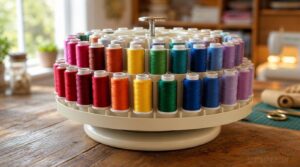
Drawers keep things tidy — but sometimes you want everything within arm’s reach without shuffling a single spool. That’s where rotating tabletop thread storage shines. A quality rotating tabletop thread rack spins a full 360°, using smooth ball bearings to glide effortlessly under load.
- Holds up to 84 spools in a compact footprint
- Ball-bearing bases guarantee smooth, seamless spinning
- Durable ABS plastic or wood builds handle daily use
- Holds 6–15 pounds — plenty for a generous collection
- Easy to wipe clean and reposition anywhere
Portable Retreat Storage Boxes
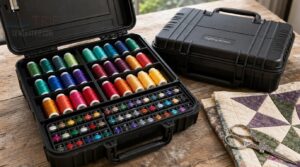
Pack your whole thread collection and go. The best portable retreat storage boxes use lightweight polymer material with weatherproof construction — so humidity and dust never crash your quilting getaway.
Modular interior trays hold spools and bobbins separately, while a stackable lid system saves luggage space. Integrated handle design makes hauling your travel sewing kit smooth.
Your portable quilting supplies arrive organized and ready.
Protect Thread From Damage

Good storage isn’t just about staying organized — it’s about keeping your threads alive longer. Sunlight, dust, humidity, and tangles are the quiet culprits that slowly ruin even the best quality thread.
Good storage isn’t just about organization — it’s about protecting your threads from the silent damage of sunlight, dust, and humidity
Here’s what you can do to protect every spool you own.
Block Sunlight and UV Exposure
Sunlight is sneaky — it fades your thread colors before you even notice. Install UV-blocking window film on nearby windows, or tuck spools into opaque storage cabinets and tinted glass enclosures. These steps provide foundational protection against harmful rays.
For added defense, UV-absorbing liners and sunshade fabric covers create an extra barrier, shielding fabric from direct sunlight exposure. This layered approach enhances preservation efforts.
When safeguarding valuable threads long-term, acid-free storage bags seal out light completely, offering the most rigorous solution for serious preservation needs.
Control Dust and Pet Hair
Dust and pet hair are silent thread-wreckers. To combat airborne particles, use sealed, airtight drawer liners and positive pressure shelving to block contaminants. A HEPA air purifier placed nearby captures 99.97% of dander, further safeguarding fabrics.
Maintain vigilance through regular pet grooming and weekly shelf cleaning with microfiber dust cloths. These steps ensure your threads remain protected and pristine.
Avoid Humidity and Heat
Heat and humidity are your threads’ worst enemies — and they work fast. Keep your storage area between 60–70°F with steady Temperature Regulation year-round.
For Humidity Monitoring, aim for 30–50% and check a hygrometer daily in summer. Tuck desiccant packs into your storage spots for easy Desiccant Usage.
Rely on smart Ventilation Strategies — like vented cabinet doors — to keep air moving without letting moisture sneak in.
Use Sealed Storage Containers
Sealed containers are your thread’s last line of defense. The airtight seal benefits are real — they block dust, light, and humidity before damage starts.
Look for stackable airtight units with transparent lid inspection to find colors fast. Tuck in desiccant packets for extra moisture control, ensuring optimal preservation.
The PROP-IT Acid-Free Storage Box and clear acrylic storage drawers are solid go-to picks for reliable protection.
Prevent Tangles With Spool Huggers
Loose thread ends are sneaky troublemakers — one unraveling spool can tangle an entire drawer overnight. That’s where spool huggers earn their keep.
Their silicone material’s advantages shine here: elastic grip longevity means they stretch, hold firm, and bounce back without damaging fibers.
Color-coded identification makes sorting easy. For installation, slip them on before storing.
Budget multi-pack options simplify stocking up.
Frequently Asked Questions (FAQs)
How often should I replace old thread?
Replace thread every five years — sooner if you notice fraying, fading, or weak tensile strength. Old cotton and rayon wear out first. When in doubt, perform a quick pull test before loading your machine.
Can thread expire or lose its strength?
Yes, thread absolutely can lose its strength. Fiber degradation is real — UV impact, humidity effects, and simple aging all break down fibers over time.
This shortens material lifespan substantially faster than most sewists realize.
Whats the best way to travel with thread?
Pack smart: use lightweight thread pouches or a travelfriendly thread box with foam-filled spool compartments. Toss in silica gel, spool huggers, and a quick-access color tag system. Done.
How do I store specialty metallic threads?
Metallic threads are divas — beautiful but demanding.
Use Foil‑Safe Containers with Acid-Free Inserts, toss in Silica Gel Packets, and choose Temperature‑Stable Cabinets with Static‑Free Storage to keep specialty threads in excellent condition.
Should different thread weights be stored separately?
Absolutely — keeping different weights apart is smart. Weight-based categorization prevents fiber compression, reduces abrasion, and limits dye bleed.
It’s one of those simple thread management habits that genuinely extends your thread’s life.
How long does thread typically last before degrading?
Think of thread like a fine wine — it ages well only under the right conditions. Polyester lasts 5–20 years; cotton, 2– Humidity impact, UV degradation, and temperature effects cut those numbers fast.
Can old thread be restored or refreshed safely?
Wipe spools with a dry lint-free cloth and rehydrate brittle cotton using breathable bags with silica gel refresh packets.
Test a scrap seam trial and check for mildew before sewing anything important.
What thread brands offer the best colorfastness?
Madeira durability and Isacord performance are hard to beat — both hold color beautifully after 50-plus washes.
Gutermann’s resistance and Mettler’s retention are equally solid, ensuring reliable results over time.
Sulky’s longevity shines due to its quality dyes, maintaining vibrancy through repeated use.
How do I store thread while actively working on projects?
Keep your active project threads on a desk spool holder or rotating thread rack. This ensures organized storage and easy access during stitching.
Thread tension clips and hands-free dispensers prevent tangling mid-stitch, allowing you to maintain focus and workflow without interruptions from runaway spools.
Should specialty threads like metallics be stored differently?
Yes — and ironically, the most glamorous threads are also the most fragile.
Store metallics flat in rigid trays, sealed from humidity, and away from UV light to protect their delicate foil coating.
Conclusion
Funny how the moment your thread storage and organization clicks into place, your whole sewing rhythm shifts. Projects that once started with a frustrating search now start with a clean reach and a confident pull.
That’s not a coincidence—it’s cause and effect. When your space works for you, your creativity does too.
So give every spool a home, protect what you’ve collected, and watch how much smoother everything else becomes.
- https://www.maggieframes.com/blogs/embroidery-blogs/thread-storage-containers-the-ultimate-organization-guide-for-sewing-embroidery
- https://www.aquiltinglife.com/sewing-room-organization-7-practical-thread-storage-ideas/
- https://www.nationalquilterscircle.com/post/organizing-your-sewing-room-part-1-thread-and-bobbins
- https://createwhimsy.com/projects/10-best-fabric-storage-ideas/
- https://allstitch.com/collections/thread-storage-containers?srsltid=AfmBOoq5xzdq9QRLRr7BOgGZI0ldwtAz1uDq1fK3AuUj0wZNAIUSS1TP