This site is supported by our readers. We may earn a commission, at no cost to you, if you purchase through links.
Knitters who stumble onto brioche knitting often describe the same moment: they pull the finished fabric apart between their hands, feel that impossible bounce and depth, and immediately wonder why nobody told them about this sooner.
The stitch dates back to 1840s England, but it still stops people mid-scroll today. That’s a long run for a technique built on something deceptively simple—a slipped stitch paired with a yarn over, repeated until something almost pillow-like emerges from your needles.
The result is thicker, warmer, and stretchier than standard ribbing, with both sides looking identical. Whether you’re picking up knitting needles for the first time or looking to finally crack brioche knitting, this guide walks you through everything.
Table Of Contents
- Key Takeaways
- What is Brioche Knitting?
- Essential Tools and Materials for Brioche
- Brioche Stitch Basics for Beginners
- Step-by-Step Brioche Knitting Tutorial
- Popular Brioche Stitch Variations
- Troubleshooting and Finishing Brioche Projects
- Inspiring Brioche Knitting Project Ideas
- Frequently Asked Questions (FAQs)
- Conclusion
Key Takeaways
- Brioche knitting creates a thick, reversible, ultra-stretchy fabric by pairing a slipped stitch with a yarn over — two simple moves that produce something far squishier than regular ribbing.
- The right setup matters: go one to two needle sizes smaller than your yarn label suggests, choose merino or wool-nylon blends, and always start with a stretchy cast-on like the Italian or German Twist.
- Mastering just four terms — BRK, BRP, SL1YO, and stitch unit — gives you everything you need to follow any brioche pattern with confidence.
- Brioche is beginner-friendly once you accept the learning curve: swatch first, count visible knit columns (not individual loops), and use a crochet hook to rescue dropped stitches before they become a real problem.
What is Brioche Knitting?
Brioche knitting has a rich history, a surprisingly simple structure, and a distinct personality that sets it apart from other ribbing techniques.
Before you cast on your first stitch, it helps to understand what makes brioche so special. Here’s what you need to know.
Brioche’s layered texture actually shares DNA with classic fabric work, so brushing up on foundational stitching techniques for quilting can sharpen your eye for how structure and tension work together.
History and Origins of Brioche Stitch
Brioche knitting has a surprisingly rich backstory. The name traces back to 1840s England, where a plump, cushion called the “Moorish Brioche” was named after the fluffy French pastry it resembled.
Victorian Era knitters loved it for parlor décor first — garments came later. Some historians also point to Middle Eastern Roots in the stitch’s deep-loop structure, making this a true global Knitting Heritage.
Modern knitters are exploring creative uses for the reversible stitch technique in their own projects.
Key Characteristics and Structure
So what makes this stitch so special? The secret is in the stitch anatomy itself. Each brioche knit pairs a slipped stitch with a yarn over, creating thick, lofty ribs.
Here’s what defines the stitch structure:
- Fabric density that traps air for extra warmth
- Built-in reversibility — both sides look identical
- Outstanding stretch from yarn over-heavy construction
That texture analysis alone explains why brioche knitting feels unlike any other knitting technique. You can explore more about the unique brioche fabric properties that contribute to its stretch and softness.
Differences From Other Ribbing Techniques
Now, how does brioche stitch actually stack up against other ribbing techniques? The ribbing comparison is pretty eye-opening.
Standard 1×1 rib is simpler in stitch complexity, but brioche delivers exceptional fabric density and elasticity factors — it stretches further and bounces back better. The trade-off? Higher yarn consumption. But that extra yarn is exactly what gives this textural knitting its signature squishy warmth.
Brioche demands more yarn than basic rib, but rewards every extra strand with unmatched stretch and squishy warmth
Essential Tools and Materials for Brioche
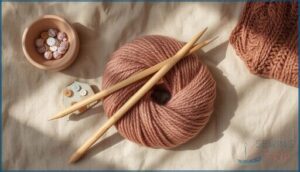
Before you cast on a single stitch, it helps to know what you’re working with. Brioche is forgiving, but the right tools make it so much easier to learn.
Here’s what you’ll want to have on hand before getting started.
Recommended Needle Types and Sizes
The right tools make brioche so much easier — and needle choice matters more than you’d think. For knitting techniques like brioche, go one to two sizes smaller than your yarn label suggests. Gauge swatching first saves you headaches later.
Here’s what works best:
- Circular needles hold that squishy, deep fabric comfortably
- Sharp tips let you glide under slipped stitches cleanly
- Metal over wood for smooth stitch movement
- Needle sizes around US 6 for worsted weight yarn
Choosing The Best Yarn for Brioche
Yarn selection can make or break your brioche knitting project. For the best elasticity factors, reach for merino wool — it springs back beautifully and keeps those ribs crisp.
If you’re pairing merino with textured stitches, this brioche and fabric weight stitch guide helps you match the right technique to your yarn’s natural stretch.
Yarn fiber options like wool-nylon blends add durability, while texture choices matter too: smooth, high-twist yarns show off brioche’s structure clearly. For color contrast in two-color brioche, pair light and dark values so both sides pop.
Selecting Stretchy Cast-on Methods
Starting with the right cast on sets the tone for everything that follows. For a polished, elastic foundation, the Italian Cast on is a favorite — it blends invisibly into brioche rib for stretchy edges that look intentional.
Prefer something simpler? German Twist gives you nearly the same elasticity with less setup. Both are beginner friendly brioche project staples worth adding to your knitting tutorials for beginners toolkit.
Brioche Stitch Basics for Beginners
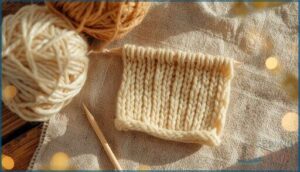
Before you cast on a single stitch, it helps to get familiar with how brioche actually works. The good news is that once you understand a few key terms and moves, everything else clicks into place pretty fast.
Here’s what you need to know to get started.
Understanding Brioche Terminology
Learning a new knitting language feels intimidating at first — but brioche knitting has its own small vocabulary that makes everything click fast. These four core terms are your foundation:
- BRK (Brioche Knit): Knit your slip stitch and its yarn over together as one stitch unit.
- BRP (Brioche Purl): Purl that same paired stitch unit together.
- SL1YO (Slip Stitch + Yarn Over): Slip one stitch while wrapping the yarn over it — this sets up your brioche decrease and row structure.
- Stitch Unit: The slipped stitch and yarn over always count as one in brioche knitting techniques.
The understanding of these terms is crucial for mastering brioche knitting, as they form the basis of the technique.
Single-Color Brioche Stitch Tutorial
Single-color brioche knitting is honestly the best place to start — it’s just one yarn, one rhythm, and a whole lot of satisfying squish. Cast on an even number of stitches, work your setup row, then repeat your BRK and SL1YO pattern every row. That’s it.
| Step | What You Do |
|---|---|
| Setup Row | Alternate SL1YO and knit across |
| Odd Rows | BRK, SL1YO repeat |
| Even Rows | Mirror the same sequence back |
Two-Color Brioche Stitch Tutorial
Two-color brioche knitting is where things get genuinely exciting. Each side of your fabric shows a different color as dominant — that’s color dominance at work, giving you a fully reversible fabric without any extra effort.
The key is managing both yarns through each Sl1Yo and yarn over without twisting them. Nail that stitch alignment, and your brioche texture will look clean, bold, and totally intentional.
How to Knit Brioche Flat and in The Round
Whether you knit flat or in the round changes everything about your brioche fabric. Here’s how each method works:
- Flat Stitch alternates right-side and wrong-side rows — you turn the work each time.
- Round Knitting keeps the right side facing you, using both BRK and BRP rounds.
- Circular Techniques often need a needle size down to keep tension consistent.
Both brioche knitting approaches create beautiful brioche patterns — pick what your project needs.
Step-by-Step Brioche Knitting Tutorial
Now that you know the basics, it’s time to put them into practice. This section walks you through the actual process, one clear step at a time.
Here’s exactly what you’ll work through.
Casting on for Brioche Projects
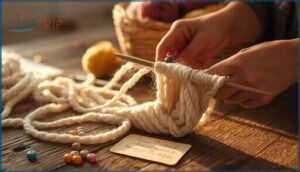
Your cast on sets the tone for the whole project — get it wrong and your brioche edges will pull or pucker no matter how perfect the rest looks.
For beginner-friendly results, try a long tail tubular cast on or Italian cast on. Both deliver stretchy edges that match brioche’s natural bounce. Always work a brioche setup row right after to lock everything in cleanly.
Working Knit and Purl Brioche Stitches (BRK & BRP)
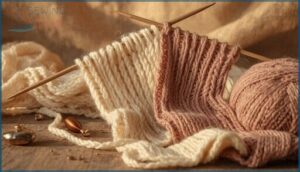
Now that your cast on is done, it’s time to meet your two new best friends: BRK (brioche knit) and BRP (brioche purl).
BRK works the double stitch — the sl1yo pair — as one tall knit column. BRP sinks that same double stitch into a purl valley. Yarn back for BRK, yarn front for BRP. Keep that pattern rhythm steady and your brioche rib will practically knit itself.
Managing Yarn Overs and Slipped Stitches
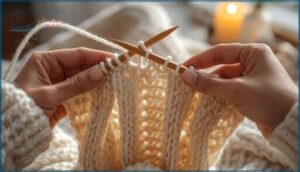
Here’s where brioche stitch either clicks or frustrates — it all comes down to yarn over placement. Every sl1yo move follows the same path: yarn to the front, slip the stitch, let the yarn travel over the needle to the back. That’s your yfsl1yo.
Skip that path, and you’ll get a flat, sad column instead of a lofty brioche rib. Yarn over management makes all the difference.
Maintaining Stitch Count and Tension
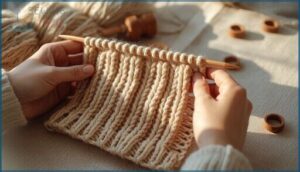
Stitch counting in brioche knitting feels different from regular knitting — you’re really counting visible knit columns, not individual loops. Check each repeat as you go.
For tension control, try going down a needle size or two and swatch first. Grippy wool helps with yarn management. Spreading your fabric flat every few rows catches loose or tight spots before they become a real headache.
Popular Brioche Stitch Variations
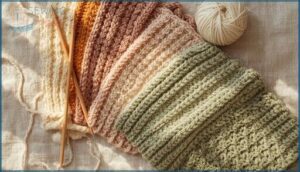
Once you’ve got the basics down, brioche opens up into a whole world of fun variations — each one with its own look and feel.
Some are subtle twists on the classic stitch, while others create something totally different. Here are a few popular ones worth knowing about.
Half Brioche and Double Brioche Techniques
Not all brioche knitting looks the same — and that’s part of the fun.
Half brioche alternates regular rows with brioche stitch techniques, giving you a flatter fabric depth with one textured side.
Double stitch brioche goes deeper, building thick, almost quilted brioche texture with strong vertical columns.
Your yarn choices matter here — soft wool works beautifully with double brioche knit, while reversible patterns shine in half brioche.
Syncopated Brioche and Waffle Brioche
Two brioche variations worth knowing are syncopated brioche and waffle brioche — and they’re genuinely exciting.
Here’s what makes each one special:
- Syncopated patterns flip color dominance mid-fabric, making colors visually “step” sideways
- Waffle texture creates deep, cushioned cells using a four-row repeat
- Both produce reversible fabrics with full brioche squish
- Syncopated brioche knitting techniques suit shawls and modern accessories beautifully
- Waffle brioche stitch works best in bulky yarn for cozy throws
Fisherman’s Rib Vs. Brioche Stitch
Here’s a fun knitting fact: Fisherman’s Rib and Brioche look almost identical on the needles, but they’re worked differently.
Fisherman’s Rib pulls loops from the row below, while true Brioche relies on yarn overs paired with slipped stitches — a real stitch complexity difference.
Brioche fabric comparison shows it’s airier and stretchier, making it ideal for texture differences in shawls and color-forward projects.
Troubleshooting and Finishing Brioche Projects
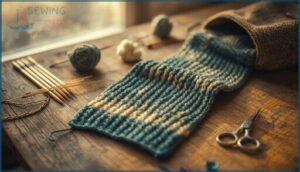
You’ve made it through the fun part — now comes the stuff that turns a good project into a great one.
Every brioche knitter hits a snag or two along the way, and knowing how to handle them makes all the difference. Here’s what you need to know to finish your brioche projects with confidence.
Fixing Common Brioche Mistakes
Even seasoned knitters drop a stitch sometimes — don’t panic. For dropped stitch repair, pin it immediately with a safety pin, then use a crochet hook to ladder it back up through the yarn overs two strands at a time.
Missing yarn over fixes are easier if you tink back a few stitches. For tension adjustment, try needles a half-size smaller.
In two-color work, color correction means re-latching the correct column with a hook.
Binding Off and Edge Techniques
Binding off brioche is trickier than standard knitting — that beautiful stretch can vanish with the wrong cast off. For elastic edges, Jeny’s Surprisingly Stretchy Bind Off is your best friend; it adds a yarn over before each stitch, preserving that natural give.
Need a polished finish? The Italian bind off creates nearly invisible, stretchy edge finishing. Always bind off loosely to keep those elastic edges intact.
Blocking and Caring for Brioche Knits
Your finished brioche knitting deserves proper care — skip this step and all that effort unravels fast. Wet blocking is simple: soak in cool water for 15–20 minutes, roll in a towel to remove moisture, then lay flat to dry.
- Avoid wringing — it warps the ribs permanently
- Pin gently for brioche shaping without killing the squish
- Use cool water for fiber care with non-superwash wool
- Fold for long term storage, never hang
- Dodge common blocking mistakes like hot water or over-stretching
Inspiring Brioche Knitting Project Ideas
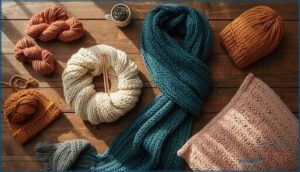
Now that you’ve got the basics down, it’s time for the fun part — actually making something.
Brioche works beautifully across a wide range of projects, from quick weekend knits to bigger, more ambitious pieces.
Here are some ideas to get your needles moving.
Scarves, Cowls, and Hats
Scarves, cowls, and hats are the sweet spot for brioche accessories — beginner-friendly yet impressively cozy. A simple brioche scarf is one of the best knitting tutorials for beginners because you just repeat the same rows until it’s long enough.
Cowl patterns worked in the round create a no-wrong-side fabric, perfect for winter knits. Brioche hat designs use stretchy ribs that fit nearly any head size.
Sweaters and Larger Garments
Ready to level up? Brioche sweaters are a natural next step — and more doable than you’d think. Here’s what to keep in mind for garment construction and sizing:
- Choose elastic wool yarns for yarn selection — they help brioche fabric bounce back.
- Knit looser than usual; brioche stitch patterns stretch horizontally with wear.
- Use blocked gauge for accurate garment sizing.
- Learn directional increases for clean sweater shaping.
- Lay flat when blocking techniques are applied — never hang a wet brioche knit.
Tips for Designing Your Own Brioche Patterns
Once you’ve tackled sweaters, designing your own brioche stitch patterns feels like the natural next adventure. Start small — plan your brioche motifs on graph paper, keeping stitch repeats in multiples of two. Use color theory intentionally: high contrast shines, soft tones blend.
Pattern charting keeps fabric density consistent. Here’s a quick stitch guides reference to ground your pattern making:
| Design Element | Beginner Tip |
|---|---|
| Stitch Variation Techniques | Start with vertical ribs or chevrons |
| Brioche Knitting Tutorial | Swatch at least 10–15 cm wide |
Frequently Asked Questions (FAQs)
What is the difference between fisherman’s rib and brioche knitting?
They look nearly identical — but here’s the real difference: brioche knitting uses a yarn over with Sl1yo, while fisherman’s rib knits into the stitch below, giving each a distinct stitch formation and texture.
Is brioche stitch difficult?
Brioche stitch has a learning curve, but it’s not as scary as it looks. Once you get the rhythm, stitch complexity fades and it feels almost meditative.
What is the purpose of brioche knitting?
What’s the real purpose behind all those yarn overs and slipped stitches? Simply put, brioche stitch gives you fabric that’s warm, stretchy, and gorgeous on both sides — a true win in yarn crafting.
Is brioche knitting difficult?
It’s got a learning curve, sure — but don’t let that scare you off.
Most knitters find brioche knitting clicks after a few restarts, making it approachable with the right beginner friendly brioche projects.
What is the difference between ribbing and brioche stitch?
The main difference comes down to stitch mechanics. Ribbing alternates knit and purl stitches row by row.
Brioche knitting adds yarn over effects, creating a thicker, squishier fabric with reversibility benefits regular ribbed knit can’t match.
What is the difference between brioche knitting and regular knitting?
Unlike regular knitting, brioche stitch doubles every column through slipped stitches paired with yarn overs, creating a richer fabric structure, looser gauge, extra yarn usage, and a fully reversible texture that standard knit and purl stitches simply can’t match.
What materials are best for brioche knitting?
Wool is your best friend here. Its natural bounce keeps those deep ribs springy, and merino blends give you crisp stitch definition without sacrificing softness.
Worsted weight is perfect for beginner-friendly brioche projects.
What are the advantages of brioche knitting over regular knitting?
Honestly, some fabrics just refuse to be boring — and brioche is one of them. You get warmth benefits, elastic properties, reversible fabric, and stunning textured appearance all at once.
Is brioche knitting suitable for beginners?
Yes — brioche knitting is beginner-friendly once you’re comfortable with basic knit stitches and yarn overs. Start with a simple one-color cowl, and the rhythm clicks faster than you’d expect.
What tips can I use to make brioche knitting easier?
Start with the basics: swatch first, count double stitches (not strands), and keep yarn overs snug.
A crochet hook saves dropped stitches fast.
Small habits like these make brioche knitting surprisingly manageable.
Conclusion
Brioche knitting is less a technique and more a conversation between your hands and the yarn—one that gets easier the longer you listen. What felt like confusing terminology and tricky yarn overs will soon become second nature.
Your first swatch won’t be perfect, and that’s exactly how it should be. Every row teaches you something the last one couldn’t.
Start small, stay curious, and trust the process. The fabric will reward your patience every single time.
- https://loopymango.com/a/blog/how-to-knit-brioche-a-beginner-friendly-guide
- https://nimble-needles.com/stitches/how-to-knit-the-brioche-stitch/
- https://www.knittingcraftideas.com/exploring-brioche-stitch-in-knitting
- https://www.whimsynorth.com/increasing-and-decreasing-brioche-knitting/
- https://www.purlsoho.com/create/brioche-stitch-2-color-brioche/