This site is supported by our readers. We may earn a commission, at no cost to you, if you purchase through links.
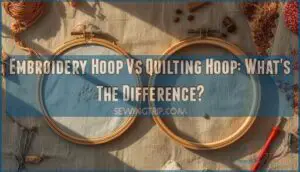
Grab two hoops from a craft store shelf and they might look nearly identical—same circular shape, same screw at the top. But use the wrong one for your project, and you’ll spend the afternoon wrestling with puckered fabric or a quilt sandwich that keeps slipping out of place.
The difference between an embroidery hoop and a quilting hoop goes deeper than size, touching on depth, tension, and how each tool manipulates layers. Knowing which one belongs in your hands before you make the first stitch saves time, frustration, and fabric.
Table Of Contents
Key Takeaways
- Quilting hoops are nearly twice as deep as embroidery hoops, and that extra depth is what keeps a full quilt sandwich — top, batting, and backing — from slipping while you stitch.
- Embroidery hoops shine on single-layer fabric with firm tension for detail work, while quilting hoops handle thick, layered projects where stability matters more than grip strength.
- You can swap one hoop for the other in a pinch, but small adjustments like careful basting or wrapping the inner ring with cotton tape are what make it actually work.
- Matching your hoop to your project isn’t just a best practice — it’s the thing that keeps your tension even, your stitches clean, and your afternoon frustration-free.
What is an Embroidery Hoop?
An embroidery hoop is one of those tools that looks simple but does a really important job — keeping your fabric taut so your stitches stay even and clean.
Once your fabric is secure, you can dive into simple hand embroidery stitches that look impressive but are surprisingly easy to learn.
Before you pick one up at the craft store, it helps to know a little about what you’re actually working with. Here’s what you should understand about embroidery hoops.
Common Shapes and Materials
Embroidery hoops come in a few reliable frame shapes — round being the most common, but oval, square, and even heart-shaped flexi options exist for specific designs.
As for hoop materials, most wooden hoops are bamboo or beechwood, while plastic versions offer easy cleaning. Each material grips fabric a little differently, so matching your embroidery tools to your project makes a real difference.
For an overview of the different embroidery hoop types and materials, you can refer to this detailed guide.
Typical Sizes and Uses
Size matters more than you’d think in embroidery projects. A 3–5 inch hoop gives you stitch control for tiny monograms or single florals, while a 6–8 inch hoop accommodates everyday wall art and tote bag designs comfortably.
Need a full jacket back or long quote? Your hoop size guide jumps to 8–12 inches, letting you work bigger without constant rehooping.
To learn how hoop size affects stitch quality and fabric tension, see this helpful embroidery hoop size chart guide.
How Embroidery Hoops Hold Fabric
Once you’ve chosen the right size, understanding how the hoop actually grips your fabric makes all the difference. The mechanics are simple: an inner ring sits beneath your fabric, then the outer ring presses down, creating ring compression that locks everything in place.
- Fabric tension keeps the surface drum-tight for clean needlework
- Hoop mechanics rely on screw tension to grip evenly
- Embroidery grip improves with binding or textured rings
- Stitch stability depends on maintaining consistent fabric tension throughout
What is a Quilting Hoop?
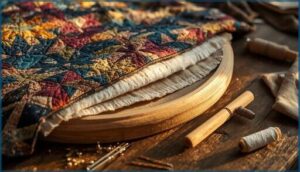
A quilting hoop looks similar to an embroidery hoop at first glance, but it’s built differently for a very different job.
It’s a lot like how sewing and embroidery machines differ under the hood—same basic look, totally different purpose.
It’s designed to hold multiple layers of fabric together — the quilt top, batting, and backing — without distorting them. Here’s what you should know about how quilting hoops are made and how they work.
Standard Shapes and Construction
Quilting hoops come in a wider variety of hoop frame types than you might expect. Beyond the standard round shape, you’ll find quilting oval shapes and square frames built to match patchwork block layouts.
These wooden hoops are noticeably deeper than typical embroidery hoops, with sturdier hoop material selection and heavier hardware for reliable fabric tension control across thick, layered quilt sandwiches.
Size Range for Quilting Hoops
In terms of hoop diameter, quilting hoops run noticeably larger than their embroidery counterparts. Most handheld hoops fall between 10 and 20 inches, so your quilt size guides your pick.
Here’s a quick breakdown:
- Lap quilting — 12 to 18-inch hoops work best
- Large frame styles — expand to 45 by 66 inches
- Embroidery hoop comparison — usually tops out near 12 inches
How Quilting Hoops Support Quilting
A good quilting hoop does more than hold fabric — it brings real quilt stability to every stitch you make. It keeps layer alignment intact across the top, batting, and backing so nothing shifts as you work.
The fabric tension stays even, which means better stitch control and fewer puckers. Add ergonomic support from a hoop stand, and your quilting techniques actually improve session by session.
Key Differences Between Embroidery and Quilting Hoops
Once you put the two side by side, the key differences become pretty obvious. Each hoop is built with a specific job in mind, and using the wrong one can make your project a lot harder than it needs to be.
Here are the key differences worth knowing before you pick one up.
Size and Shape Comparisons
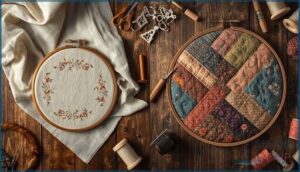
Size really does matter here. Embroidery hoop sizes usually run from 3 to 14 inches in hoop diameter, and most embroidery hoops are round hoops, though oval and square frame shapes exist too.
Your size guidelines should always match the scale of your project. Quilting hoops stretch that range further, often reaching 18 to 20 inches, giving you broader stitching areas for layered quilts.
Frame Depth and Tension
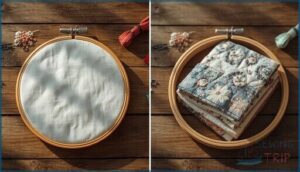
Frame depth is where these two tools really part ways. A standard embroidery hoop sits about 1 centimeter deep — just right for fabric grip on a single layer.
A quilting hoop or quilting frame runs nearly twice that depth, giving you even tension across a full quilt sandwich. Better frame depth means better hoop tension, and that directly shapes your stitch quality and controlled stitches throughout.
Fabric Types and Crafting Needs
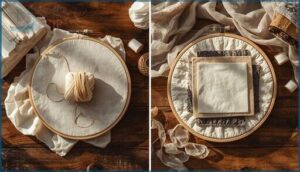
Your fabric selection shapes everything. Plain quilting cotton between 140 and 180 gsm sits comfortably in an embroidery hoop, keeping stitch density even and your thread choices clean.
Quilting hoops, though, handle multi-layer textile art — batting, backing, and all. Stretchy knits and delicate sheers need extra care, so matching your crafting techniques and needlework goals to the right hoop makes all the difference.
Choosing The Right Hoop for Your Project
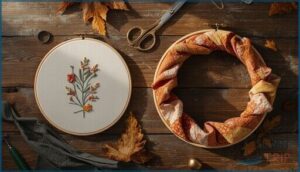
Picking the right hoop comes down to a few things that are easy to overlook until something goes wrong mid-project. Your project type, fabric thickness, and stitching style all play a role in which hoop will actually work for you.
Here’s what to think about before you make your choice.
Project Type Considerations
The type of project you’re working on is really the first thing that should guide your hoop choice. Small hand embroidery pieces — monograms, ornaments, single motifs — fit naturally inside an embroidery hoop.
But once you move into quilting, especially block-based quilting techniques, you need a quilting hoop that holds the whole block comfortably. Match the hoop to the work, not the other way around.
Quilting demands a quilting hoop — match the hoop to the work, not the other way around
Fabric Thickness and Layering
Matching your hoop to your layers makes a real difference. Quilt batting adds loft that a shallow embroidery hoop simply can’t grip — thickness control matters here.
A quilting hoop manages the full quilt sandwich and maintains fabric tension without slipping. For single-layer embroidery, a standard embroidery hoop is plenty. Layer management isn’t complicated once you understand what each hoop was actually built for.
Stitching Techniques and Precision
Your stitch type shapes everything. Embroidery techniques like French knots and satin stitch demand firm tension management — the fabric can’t shift even slightly. That’s where embroidery hoop uses really shine.
Quilting accuracy, especially free motion quilting, needs gentler fabric stability so your needle precision stays consistent while rocking through layers. Matching stitch control and precision to the right hoop keeps your stitch patterns clean every time.
Can You Substitute One Hoop for Another?
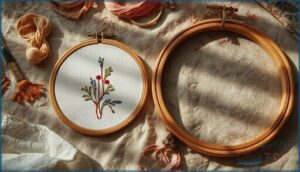
Sometimes you don’t have the right hoop on hand, and you just want to get started anyway. The good news is that swapping one for the other can work — but it depends on what you’re making and how much you’re willing to adjust.
Here’s what you need to know before you make the switch.
Embroidery Hoops for Quilting Projects
Yes, an embroidery hoop can step in for hand quilting — but knowing its limits makes all the difference. Hoop size limitations and frame depth mean it works best when your project is small and your batting is thin.
For quilting tips that actually hold up, keep these in mind:
- Choose a 10–12 inch embroidery hoop to enlarge your quilting area
- Baste layers carefully to maintain fabric tension while rehooping
- Wrap the inner ring with cotton tape for a firmer grip on thick layers
Quilting Hoops for Embroidery Work
Flip the script, and quilting hoops actually shine for embroidery work — especially on big, layered projects. Their deeper embroidery frame depth grips thick fabric stacks securely, giving you better fabric tension control than a standard embroidery hoop can manage.
Hoop size selection matters here: larger quilting hoops boost stitching comfort levels on sprawling quilting embellishments, keeping more of your design visible so repositioning stays minimal.
Pros, Cons, and Expert Recommendations
Both tools have real strengths, and swapping them occasionally works — but each has trade-offs. Embroidery hoops win on comfort and portability for small projects, while quilting hoops deliver the stability and reduced repositioning that big layered work demands.
Expert advice consistently points to owning one of each, so your workflow stays smooth whether you’re comparing quilting and embroidery needs or juggling different crafting supplies mid-project.
Frequently Asked Questions (FAQs)
What is the difference between a quilting hoop and an embroidery hoop?
The main gap comes down to size and depth.
Embroidery hoops grip a single fabric layer, while quilting hoops are built deeper to hold an entire quilt sandwich of top, batting, and backing together.
Can I use an embroidery hoop for quilting?
Think of it like using a butter knife to spread cement — it works in a pinch. For small quilts with thin batting, an embroidery hoop accommodates hand quilting just fine.
What is the difference between embroidery and quilting?
Embroidery decorates fabric surfaces with detailed needlework, while quilting joins three layers for warmth and structure.
Both crafts differ in thread types, stitch complexity, project scaling, and the crafting tools you’ll reach for.
How does a quilting hoop work?
A quilting hoop grips all three quilt layers — top, batting, and backing — keeping them stable while you stitch.
Tighten the screw, smooth the fabric taut, and you’ve got reliable stitch control.
How do I clean and store my hoops?
A quick wipe with warm, soapy water keeps your hoop clean, while thorough drying prevents fabric stains.
Store hoops flat or upright, away from dust and moisture, to protect your crafting supplies and tools long-term.
Are wooden or plastic hoops better overall?
Neither wins outright — it depends on your priorities.
Wooden hoops offer Tension Control, Hoop Durability, and warmth, while Plastic Hoops resist moisture and grip thin fabrics well.
Match the material to your project and comfort.
Can beginners use either hoop type easily?
Yes, beginners can handle both hoops with ease. Simple Hoop Handling Tips, like tightening fabric for solid Fabric Tension Control, make either option approachable for anyone exploring Hand Embroidery, Quilting, or basic Sewing right away.
Do hoop brands affect stitching quality significantly?
Absolutely — brand matters more than most stitchers expect. Better hoop material means steadier fabric grip and more consistent stitch tension, so your details stay crisp without constant readjusting.
How often should embroidery hoops be replaced?
Hoop durability depends on how often you stitch. A wooden embroidery hoop used casually can last years, while daily machine use may require replacement every one to two years.
Conclusion
Yes, you can swap hoops in a pinch—but understanding the real difference between an embroidery hoop and a quilting hoop means you’ll rarely want to.
Each tool was built around a specific job, and using the right one keeps your fabric stable, your tension even, and your stitches clean. Think of it less like a rule and more like a shortcut: the correct hoop simply gets you where you’re going faster, with fewer headaches along the way.