This site is supported by our readers. We may earn a commission, at no cost to you, if you purchase through links.
You grab what looks like a perfectly good pair of fabric scissors from your desk drawer, make one cut through silk charmeuse, and watch in dismay as the fabric edge frays into a mess of loose threads. The difference between fabric scissors and regular scissors isn’t just marketing hype—it’s engineered precision that determines whether your cuts seal cleanly or unravel before you even reach the sewing machine.
Regular scissors feature blade angles around 45 degrees and general-purpose edges that crush delicate fibers instead of slicing through them, while fabric scissors employ 60-75 degree angles with micro-beveled edges specifically designed to prevent fraying. Understanding these distinctions will save you countless hours of frustration and wasted material.
Table Of Contents
- Key Takeaways
- Key Differences Between Fabric and Regular Scissors
- How Fabric Scissors Enhance Sewing Precision
- Limitations of Regular Scissors for Fabric
- Types of Fabric Scissors and Their Uses
- Proper Care and Maintenance for Fabric Scissors
- Can You Substitute Scissors in Sewing?
- Frequently Asked Questions (FAQs)
- Conclusion
Key Takeaways
- Fabric scissors feature 60-75 degree blade angles with micro-beveled edges that slice cleanly through textile fibers, while regular scissors use 45-degree angles that crush and fray delicate materials instead of cutting them precisely.
- The specialized construction of fabric scissors, including high-carbon or titanium-coated blades, ergonomic handles, and reinforced pivot joints, delivers superior edge retention and cutting control that regular stainless steel scissors can’t match across thousands of cuts.
- Using fabric scissors exclusively for textiles is critical because cutting paper accelerates blade wear through fiber grit and creates micro-chips that compromise the razor sharpness needed for clean fabric edges.
- Different fabric scissor types serve distinct purposes—dressmaker shears handle long cuts and multiple layers, pinking shears prevent fraying with zigzag edges, embroidery scissors manage detailed thread work, and rotary cutters excel at speed and precision across layered materials.
Key Differences Between Fabric and Regular Scissors
When you pick up fabric scissors and regular scissors side by side, the differences become immediately apparent—and those differences matter more than you might think.
If you’re serious about sewing, investing in quality fabric scissors will make every cut cleaner and protect your materials from damage.
Understanding what sets these tools apart will help you make smarter choices for your sewing projects and prevent costly mistakes. Let’s break down the three main distinctions that separate fabric scissors from their everyday counterparts.
Blade Design and Sharpness
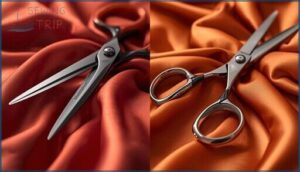
The edge geometry sets fabric scissors apart—you’ll find blade angles between 60 and 75 degrees engineered for cutting efficiency through textile fibers.
Steel composition in these tools, often high-carbon or titanium-coated blades, delivers exceptional sharpness retention compared to stainless steel alternatives. This blade design requires specific sharpening techniques and regular scissor maintenance to preserve the micro-beveled edge that prevents fraying during each cutting technique you employ.
For those interested in optimizing cutting tools, understanding how blade geometry impacts efficiency is essential when choosing or maintaining precision scissors.
Handle Shape and Comfort
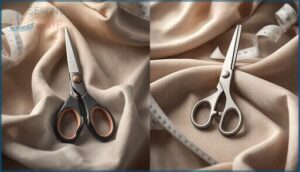
Handle design in fabric scissors promotes extended cutting sessions without hand fatigue—you’ll notice contoured grips with soft materials like rubber or silicone that cushion pressure points.
Ergonomic grip features include:
- Palm swell distributing pressure across your hand rather than concentrating on the thumb
- Finger rest grooves guiding proper grip for control
- Asymmetric finger holes preventing misalignment during cuts
Dressmaker shears usually feature bent handle scissors design for custom fit, while straight handle scissors suit quick trimming tasks.
Material and Construction
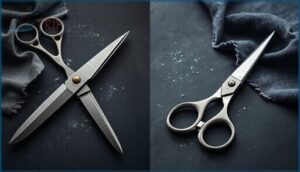
While comfort matters, the materials that form your fabric shears determine how well they’ll perform over years of use.
Carbon steel blades—forged through hot drop processes—hold edges longer than the stainless steel found in regular scissors, though they require more careful maintenance to prevent rust.
The pivot durability in quality fabric shears comes from reinforced joints and brass or stainless steel rivets that maintain blade alignment through thousands of cuts.
How Fabric Scissors Enhance Sewing Precision
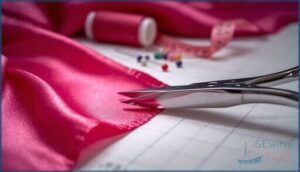
When you’re working with fabric, precision isn’t just about skill—it’s about having the right tool in your hand.
Fabric precision comes not from skill alone, but from having the right tool in hand
Fabric scissors are engineered specifically to give you that edge, literally and figuratively, ensuring every cut enhances the quality of your finished project.
If you’re seeing uneven cuts or fraying despite using the right scissors, check your common stitch problems and solutions to rule out machine issues first.
Here’s how they make a measurable difference in your sewing work.
Clean Cuts and Reduced Fraying
When you invest in quality fabric scissors, you’ll notice the precision immediately—your fabric edge stays clean and uniform rather than fuzzy and distorted.
Proper cutting techniques combined with sharp blades reduce fray prevention concerns by sealing fiber ends instead of tearing them. Regular scissor maintenance and blade sharpening keep your cutting fabric performance consistent, whether you’re using pinking shears or standard dressmaker blades for various fabric cutting techniques.
Suitability for Various Fabric Types
Your fabric scissors excel when you match blade design to fabric density, thread count, and weave patterns. Dressmaker shears handle woven textiles like cotton without fraying, while tapered blades preserve stretch on knits.
Lightweight chiffon demands fine-pointed tips to avoid snags, and pinking shears prevent unraveling along woven edges. Understanding fiber types and material compatibility lets you apply proper fabric cutting techniques that maintain textile integrity across every project.
Specialized Fabric Scissor Types
Your fabric cutting demands specialized sewing tools—dressmakers scissors deliver 8-to-12-inch blades for extended yardage, while pinking shears create zigzag edges that resist unraveling.
Embroidery scissors feature fine tips for thread trimming near applique techniques, and tailor scissors manage thick layers with offset grips.
Regular scissor sharpening maintains precision blades across rotary cutters, duckbill models, and fine-pointed variants designed for specific textile applications. For an in-depth overview of the different types of fabric scissors, consult dedicated sewing resources.
Limitations of Regular Scissors for Fabric
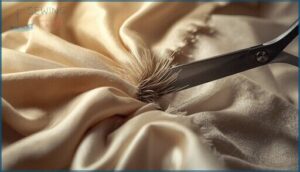
Regular scissors might seem like a quick fix when you’re reaching for fabric, but they’ll work against you more often than you’d expect. The blunter blades and stainless steel construction create problems that compound with every cut—frayed edges, uneven lines, and compromised fabric integrity.
Here’s what happens when you use the wrong tool for textile work.
Dullness and Frayed Edges
Regular scissors dull quickly when cutting fabric—requiring 15 to 40 percent more force and causing hand fatigue. Dull blades create uneven edges with visible jagging, compromising fray prevention entirely. Your blade sharpness directly impacts edge retention, and when compromised:
- Nicked blades create micro-tears that spread fraying on delicate materials
- Rolled edges reduce cutting precision by up to 25 percent
- Misaligned blade gaps snag fibers during cutting
- Dulled stainless steel struggles with proper cutting techniques on woven fabrics
Proper scissor maintenance and regular blade sharpening restore performance.
Impact on Fabric Quality
When you cut with the wrong tool, you’re not just slowing down—you’re compromising the material itself. Regular scissors damage edge integrity through blade wobble, creating off-grain cuts that distort patterns and prevent accurate seam allowances.
Fiber snagging from blunt blade design reduces cut uniformity, stretching delicate weaves and introducing material distortion that affects drape, fit, and garment construction quality throughout your entire project.
Versatility Vs. Specialization
While regular scissors handle everyday tasks—paper, cardboard, plastic—their blade design and material compatibility fail when precision matters most. You gain broad functionality but sacrifice cutting precision and sewing efficiency on fabric variety.
The following points highlight the importance of specialized scissors:
- Fabric scissors deliver clean edges on knits, wovens, and delicate materials through specialized tools and blade design
- Regular scissors dull quickly on denim or layered fabric, compromising scissor adaptability
- Pinking and embroidery scissors offer features absent in general-purpose tools
- Proper scissor selection and maintenance preserves edge quality for your specific cutting needs
Types of Fabric Scissors and Their Uses
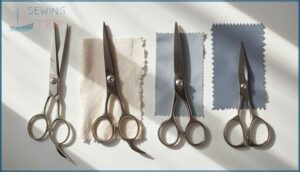
Not all fabric scissors are created equal—each type is engineered to handle specific cutting tasks with precision and control.
From long, sweeping cuts to intricate detail work, the right tool makes all the difference in your finished project. Let’s examine the four essential types you’ll encounter in professional sewing work.
Dressmaker Shears
Dressmaker shears—the workhorse of fabric cutting—feature a bent handle that keeps your material flat on the cutting surface, preventing distortion and maintaining sewing precision along long seams.
You’ll find long, beveled blades made from forged carbon steel that slice through multiple layers cleanly, while the ergonomic upper loop accommodates several fingers for control. This design distinguishes them from basic sewing scissors, making scissor selection and maintenance critical for professional results.
Pinking Shears
Pinking shears deliver serrated blades with a distinctive zigzag cutting pattern—usually 3/8 to 1/2 inch wide—that interrupts fabric weave at regular intervals, slowing fray on cotton, linen, and similar textiles. You’ll use these edge finishing specialists on seam allowances and raw edges where binding isn’t practical.
- Fray prevention through zigzag edge design
- High carbon steel serrated blades for durability
- 8 to 9 inch blade length for controlled fabric handling
- Specialized maintenance requiring professional sharpening equipment
Embroidery Scissors
You’ll reach for embroidery scissors when thread management and stitch precision matter most—these 3 to 4 inch specialists feature narrow, pointed blades that navigate tight spaces in weaving without damaging surrounding stitches.
Their blade geometry, sharpened to fine points with micro bevels, delivers clean cuts on delicate threads while scissor ergonomics guarantee controlled fabric handling during intricate embroidery and detailed trimming work.
Rotary Cutters
When precision cutting demands speed across multiple layers, rotary cutters—cylindrical blade tools mounted on ergonomic grips—outperform traditional fabric scissors through their rolling action and replaceable cutting edges ranging from 28 to 60 millimeters.
Rotary maintenance and safety features you need:
- Retractable blade guards prevent accidental contact during fabric preparation
- Self-healing cutting mats preserve blade sharpness between blade replacement cycles
- Ambidextrous trigger mechanisms accommodate various cutting techniques
- Locking housings secure the rotary cutter when textile cutting projects pause
Proper Care and Maintenance for Fabric Scissors
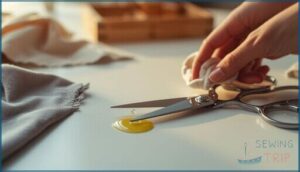
Your fabric scissors are only as good as the care you give them—neglect them, and you’ll be fighting dull blades and poor cuts before long.
Proper maintenance isn’t complicated, but it does require consistency and attention to a few key practices. Here’s what you need to know to keep your scissors performing at their best for years.
Cleaning and Oil Application
Your fabric scissors need regular sewing tool maintenance to perform at their best—after each project, wipe the blades with a lint-free cloth to remove residue, then apply light mineral oil to the pivot area for rust prevention and smooth blade lubrication.
Proper oil selection matters; avoid thick oils that gum up joints, and always wipe excess off to prevent staining your fabric.
Sharpening Techniques and Frequency
You’ll need to sharpen your fabric scissors every 60 to 100 hours of cutting—light use means every 2 to 3 weeks, while heavy fabrics like denim demand edge maintenance after just 20 to 40 hours.
Use a 1000 to 3000 grit whetstone for scissor honing, holding a micro-bevel of 0.5 to 1.0 degrees per side to preserve blade angles without overheating the carbon steel.
Storage and Exclusive Use Tips
To prevent rust, you should commit to dry handling and store your fabric scissors in a dedicated drawer with dividers—blade protection matters.
Keep them in a protective sheath away from heat sources, maintaining exclusive use for fabric only.
Proper scissor storage on stable shelves prevents tip bending, while separating these sewing tools and accessories from other sewing notions ensures your maintenance tips preserve cutting precision indefinitely.
Can You Substitute Scissors in Sewing?
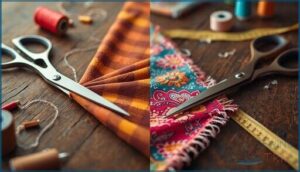
You might wonder if you can swap one type of scissors for another when you’re in the middle of a project—and the short answer is that it depends on what you’re cutting. Using the wrong scissors won’t just make your work harder, it can actually damage both your materials and your tools.
Let’s break down what happens when you use fabric scissors on paper, regular scissors on fabric, and how to choose the right tool for each task.
Using Fabric Scissors for Paper
Can you safely reach for your fabric scissors when cutting paper? While they’ll deliver clean paper edge quality due to their razor-sharp blades, paper cutting tips caution against this practice.
The fiber grit embedded in paper accelerates blade dulling much faster than fabric cutting tools experience with textiles. Over time, this scissor conversion creates micro burrs and fabric residue transfer that compromise future fabric cutting performance—forcing you to sharpen your sewing scissors more frequently and risking the precision you’ve worked hard to maintain.
Risks of Using Regular Scissors on Fabric
You risk more than just cutting inaccuracy when grabbing regular scissors for sewing projects—fabric damage starts immediately as dull blades tug fibers instead of slicing cleanly.
Scissor deterioration accelerates through fabric cutting since textile fibers bind between the blades, while you’ll battle hand strain from forcing each pass.
Blade corrosion follows when fabric finishes react with stainless steel, ultimately compromising your entire project’s structural integrity.
Best Practices for Scissor Selection
Your fabric scissors investment demands consideration of multiple technical specifications—blade design, edge retention, and material compatibility determine cutting performance across different textile weights. Match scissor material to your primary fabrics: carbon steel excels with natural fibers, while specialized coatings suit synthetics.
- Evaluate blade angle against your typical cutting technique requirements
- Assess handle ergonomics through extended-use trials before purchase
- Compare edge retention ratings between different scissor models
- Verify material compatibility with your fabric inventory range
Frequently Asked Questions (FAQs)
Can you use normal scissors on fabric?
Yes, but household scissors crush delicate fibers, snag silk, and create frayed edges—compromising your sewing projects.
Normal scissors lack the razor sharpness and blade alignment that protect fabric integrity and guarantee cutting safety.
Are fabric scissors better?
Absolutely—fabric scissors deliver exceptional blade sharpness and cutting efficiency customized for sewing accuracy.
Their optimized edge angle ensures fabric precision, while regular scissors lack the durability and specialized design that prevent fraying during detailed cutting fabric tasks.
What not to cut with fabric scissors?
Avoid heavy denim and leather cutting, which dull blades rapidly.
Plastic damage occurs from thick materials like Mylar, which can cause chips and warping to result. Foil hazards and abrasive materials compromise sharpness, interfering with precision sewing techniques.
What happens if you use fabric scissors on paper?
While it won’t destroy your shears overnight, cutting paper accelerates blade wear and dulling—the harder fibers create micro-chips along the edge, compromising cutting quality and reducing edge durability for future fabric work.
How much do quality fabric scissors cost?
Quality fabric scissors usually range from $20 to $80, with cost factors including blade material, brand influence, and handle design—entry-level options start around $25, while professional-grade dressmaker shears exceed $
What causes fabric scissors to lose sharpness?
Edge wear and micro chipping from repeated fabric cuts gradually round the cutting edge—fiber abrasion accelerates this process, while blade misalignment and contaminant buildup between the blades further compromise sharpness over time.
Are electric fabric cutters better than scissors?
Electric fabric cutters excel at speed efficiency and layer cutting through multiple fabrics simultaneously, while manual fabric scissors offer exceptional control for intricate work—your choice depends on project complexity and cutting performance needs.
How do you test fabric scissor sharpness?
A sharp blade glides like a whisper through fabric—to verify yours, perform sharpness testing by slicing silk or cotton without snagging.
Inspect the edge for blade alignment, then check cutting force required and overall cutting performance for precision cutting.
Conclusion
The humblest tool in your sewing kit wields disproportionate power over your finished work—fabric scissors don’t just cut material, they determine whether seams hold or unravel under stress.
Now that you understand the difference between fabric scissors and regular scissors, you can approach every project with the precision these specialized tools were engineered to deliver. Reserve your fabric shears exclusively for textiles, maintain their micro-beveled edges through proper care, and watch formerly frustrating cuts transform into clean, professional results.