This site is supported by our readers. We may earn a commission, at no cost to you, if you purchase through links.
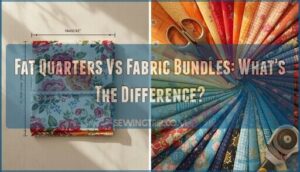
You stand in the fabric store, staring at two shelves labeled “fat quarters” and “fabric bundles,” wondering which one your pattern actually needs. The names sound quirky, the packages look similar, and the price tags don’t make the choice any clearer.
Here’s what makes them different: a fat quarter gives you one 18 by 22 inch piece of fabric, while bundles package multiple coordinating fabrics together in various precut sizes. The difference between fat quarters and fabric bundles affects everything from how many blocks you can cut to whether you’ll have enough variety for your quilt top. Once you understand what each option offers, you’ll grab the right package every time.
Table Of Contents
Key Takeaways
- A fat quarter measures 18 by 22 inches and gives you a near-square piece of fabric, while fabric bundles package multiple coordinating fabrics together in various precut sizes like jelly rolls, layer cakes, or charm packs.
- Fat quarters work best for small to medium projects needing variety—like table runners, mini quilts, and scrappy patchwork—because you can mix prints yourself without buying full yards.
- Fabric bundles deliver better value for larger quilts or projects requiring speed since they include 6 to 42 coordinated pieces that eliminate time spent on color selection and fabric matching.
- Your choice depends on project size and goals: fat quarters offer mixing flexibility for varied blocks, while bundles provide curated collections that save time and reduce waste for bigger designs.
What Are Fat Quarters in Sewing?
Fat quarters are a quilting staple, but the name doesn’t always make sense at first. They’re cut differently than regular yardage, which gives you more usable fabric for small projects.
If you’re planning a larger project, check out the best fabric for making quilted blankets to find options that work well with both cuts.
Here’s what makes fat quarters unique and why quilters reach for them so often.
Standard Fat Quarter Dimensions and Cuts
A fat quarter measures 18 inches by 22 inches—created when you cut half a yard of fabric and halve it widthwise. This precut fabric gives you a near-square piece instead of a long, narrow strip.
The fabric cutting process utilizes the bolt’s 42 to 44 inch width, delivering quilting measurements that support efficient crafting techniques and sewing efficiency in your projects. For more details about the standard fat quarter dimensions, you can explore detailed guides online.
How Fat Quarters Differ From Regular Quarter Yards
While both give you the same square inches, the shape makes all the difference.
A regular quarter yard is 9 by 44 inches—a long strip perfect for borders and binding.
Fat quarters provide 18 by 22 inches, offering greater cutting efficiency for quilting patterns that need squares or blocks. This fabric shape advantage means you’ll spend less time rotating your precut fabric and more time sewing.
Quilters frequently use these precut fabric pieces for patchwork, applique, and a variety of crafting projects.
Common Uses for Fat Quarters in Quilting
You’ll find fat quarters shine in projects that need variety without waste. They’re perfect for patchwork cushion covers measuring 16 by 16 inches, baby quilts around 36 by 40 inches, and wall hangings showcasing balanced color palette planning.
Traditional quilt block patterns like Ohio Star benefit from their adaptable dimensions, while fabric scrap management becomes easier when you’re piecing placemats or small totes. These quilting fabric cuts support creative sewing project ideas across quilting techniques.
What Are Fabric Bundles in Quilting?
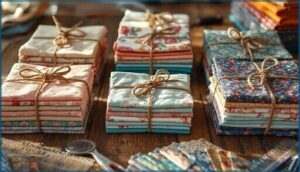
Fabric bundles are curated sets of coordinating fabrics sold together as a package. These collections give you multiple fabrics that work well together, saving you time picking out colors and prints.
Let’s look at the types of bundles available, how they’re put together, and what sizes you’ll find at most quilt shops.
Types of Pre-Cut Fabric Bundles Available
You’ll find several precut fabric options that simplify your quilting projects.
For beginners, a comprehensive guide to quilting fabrics can help you choose the right precut bundles and understand how fat quarters work best for your first projects.
Fat quarter bundles include 18 by 22 inch cuts perfect for blocks.
Jelly rolls contain 2.5 inch strips running 44 inches long.
Layer cakes offer 10 inch squares, while charm packs provide 5 inch squares.
Fat eighth bundles give you 9 by 21 inch pieces for enhanced fabric selection and sewing efficiency.
How Fabric Bundles Are Curated and Packaged
Designers select fabrics that balance color families and print scales for cohesive projects. Each bundle undergoes quality control checks to verify color coordination and print accuracy before packaging.
Fabric selection follows curated collections like fat quarter bundles or layer cake sets from companies including Moda. Precut fabric pieces are wrapped in protective materials, sealed with tamper-evident tags, and labeled with bundle details for traceability.
Popular Bundle Sizes and Quantities
You’ll find fabric bundles in a wide range of sizes to match your project needs. Bundle options vary by precut type, with fabric quantities designed for everything from small blocks to full quilts.
Popular quilt bundles include:
- Fat quarter bundles with 8 to 20 coordinated fabrics
- Layer cakes offering 10 to 40 pre-cut 10 inch squares
- Charm packs containing 5 inch squares for sewing kits
- Jelly rolls with 40 to 60 fabric strips
- Themed collections featuring 6 to 16 curated pieces
Key Differences Between Fat Quarters and Bundles
Fat quarters and fabric bundles might seem interchangeable at first glance, but they serve different purposes in your sewing room. Understanding these key distinctions helps you make smarter purchasing decisions and prevents buyer’s remorse.
Let’s break down the three main differences you need to know.
Size and Dimensions Comparison
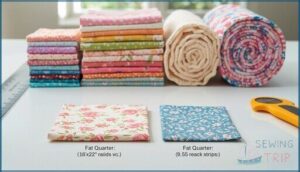
Understanding fabric measurements makes choosing quilting supplies and materials easier. A single fat quarter measures roughly 18 by 22 inches, giving you a squarish piece perfect for block work. Regular quarter yards measure 9 by 45 inches—narrow and long.
Fat quarter bundles maintain these dimensions across multiple pieces, while other fabric bundles like layer cakes offer 10-inch squares or jelly rolls provide 2.5-inch strips, each designed for specific cutting techniques and sewing efficiency.
| Bundle Type | Individual Piece Size | Best Quilting Dimensions For |
|---|---|---|
| Fat Quarter Bundle | 18″ × 22″ | Small blocks, appliqué, varied piecing |
| Layer Cake | 10″ × 10″ | Quick squares, simple patchwork |
| Jelly Roll | 2.5″ × 36″ | Strip piecing, borders, binding |
Quantity and Variety in Each Option
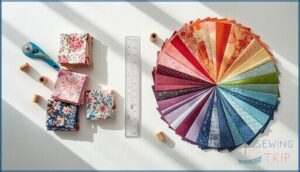
Bundle sizes shape your fabric options and color palettes more than you might expect.
Fat quarter bundles usually include 6 to 20 pieces of patchwork fabric, while layer cakes or jelly rolls often contain 40 to 42 coordinating cuts.
This difference in quilting quantities affects your cutting varieties directly—bundles with more pieces give you broader color choices for complex designs without buying full yards of quilting supplies and materials.
Price and Value Considerations

Your wallet notices the price gap between fat quarter bundles and other fabric bundles right away. Here’s how fabric costs break down for smart quilting supplies shopping:
- Fat quarter bundles average $3 to $5 per piece, making price comparison essential for your budget.
- Larger fabric collections like layer cakes offer better cost savings per square inch than individual quilting fat quarters.
- Bundle deals reduce waste while giving you coordinated fabric bundles at lower per-yard rates.
- Value analysis shows bulk purchases beat singles every time.
Your budget will benefit from understanding these differences and making informed decisions about fabric bundles and quilting supplies.
Best Projects for Fat Quarters Vs Bundles
Your choice between fat quarters and other pre-cut bundles depends on what you’re making. Each option shines in different projects based on the size and number of pieces you need.
Let’s look at when to reach for fat quarters, when other bundles work better, and how to mix them for maximum flexibility.
When to Choose Fat Quarter Bundles
You’ll get the most value from fat quarter bundles when your quilting projects call for variety without eating up your weekend on fabric selection. Small to medium quilts, table runners, and scrappy patchwork patterns shine with these bundles because you’re working with 8 to 20 coordinated fabrics right out of the package.
| Project Type | Why Fat Quarters Work | Typical Bundle Size |
|---|---|---|
| Table Toppers | Coordinated prints create cohesive designs | 8-12 fabrics |
| Mini Quilts | Perfect size for blocks without waste | 10-15 fabrics |
| Tote Bags | Variety adds visual interest to small projects | 5-10 fabrics |
| Scrappy Patchwork | Multiple prints support color planning and stash building | 15-20 fabrics |
Fat quarter bundles boost your sewing efficiency for quilting fat quarters projects while keeping color stories balanced.
When Other Fabric Bundles Work Better
While fat quarter bundles excel at small projects, you’ll reach for other fabric bundles when your quilt demands bigger blocks or faster assembly.
Jelly Rolls and Layer Cakes deliver consistent color stories with 6 to 24 fabrics, making cohesive quilts faster than assembling from scraps.
| Bundle Type | Best For | Why It Works Better |
|---|---|---|
| Jelly Rolls | Strip piecing, borders | Pre-cut strips eliminate measuring |
| Layer Cakes | Large blocks, backing | 10″ squares reduce cutting time |
| Mixed Bundles | Color harmony exploration | Multiple designers increase fabric mixing variety |
| Yardage Bundles | Charity quilts, backings | Larger pieces suit quilt planning without waste |
These precuts boost sewing efficiency when you need speed and bundle variety beyond standard fat quarter dimensions.
Mixing Fat Quarters With Other Pre-Cuts
You can blend fat quarters with charm packs, jelly rolls, and layer cakes to expand your design cohesion without sacrificing scale harmony.
Cutting precision matters when matching precut dimensions to fat quarter blocks—align seam allowances and plan layout strategies first.
This combination builds fabric bundles that balance bold prints with small motifs, giving you creative control over color and texture in every quilt top.
How to Choose Between Fat Quarters and Bundles

Your choice between fat quarters and fabric bundles comes down to three main factors.
You need to match the fabric type to your specific project needs, think about how you want to grow your stash, and consider what gives you the best value for your money.
Let’s break down each of these decisions so you can shop with confidence.
Assessing Your Project Requirements
Before you commit to any purchase, think through your quilt patterns and sewing goals. Count how many different fabrics your project needs—some require just six coordinated prints, while complex designs demand twenty or more.
For small blocks needing variety, fat quarter bundles work best. When your fabric needs include strips or squares, consider jelly rolls or layer cakes instead.
Building Your Fabric Stash Strategically
Start a stash inventory to track what you own, grouping fabrics by theme or color family. Organize by theme to pair fat quarter bundles with coordinating precuts for future quilt making and patterns.
- Label bins by season, color, or print type for quick retrieval
- Reserve adaptable solids and small prints for fabric crafting and projects
- Track purchase dates to rotate older fabrics first
- Store bundles flat to prevent creasing
- Plan projects around your current stash before buying more
Cost-Effectiveness for Different Sewing Goals
Ultimately, your sewing budget and material efficiency goals determine the best choice.
Fat quarter bundles deliver quilting value for sampling multiple designers and refining sewing techniques and tips on a modest budget.
Larger bundles boost fabric savings when you need coordinated quilting supplies for big projects.
Match your purchase to your sewing patterns and designs, fabric cutting and measurement needs, and long-term cost optimization strategy for maximum return.
Frequently Asked Questions (FAQs)
Is a fabric quarter the same as a fat quarter?
No—a fabric quarter and a fat quarter aren’t the same.
Picture two different shapes: a long, narrow strip versus a generous square.
A quarter yard measures 9 by 44 inches, while fat quarters are 18 by
What is a fat quarter fabric bundle?
A fat quarter bundle is a curated collection of multiple fat quarters—usually 8 to 42 pieces—packaged together with coordinating prints, colors, and patterns from a single fabric line or designer collection.
How many fat quarters are in a bundle?
Most bundles contain 12 to 42 fat quarters depending on the collection. Common precut fabrics include 18, 30, or 40 pieces for quilting quantities that balance variety with value in fabric crafting projects.
Does 4 fat quarters equal a yard of fabric?
Yes, four fat quarters equal one yard in total fabric amount. Each measures roughly 18 by 22 inches, and together they match the area of a full yard cut from standard width fabric.
Can you wash fat quarters before sewing?
You can absolutely wash fat quarters before sewing. Prewash tips include using color catchers to prevent color bleeding and expect minor fabric shrinkage.
This fabric preparation step helps guarantee quilting safety and better results.
How do you store fabric bundles long-term?
A stitch in time saves nine—proper fabric storage protects your investment.
Store bundles in acid-free boxes with humidity control between 40-50%. Use cedar blocks for pest prevention and baking soda for odor management in your sewing room organization.
Are pre-cuts always 100% cotton fabric?
Not all pre-cuts are 100% cotton.
Cotton content varies by brand, with many offering Cotton Content blends like cotton-polyester.
Always check Fiber Analysis and Textile Composition details on packaging before purchasing for quilting and sewing projects.
Do fabric bundles come with pattern instructions?
Most Fabric Bundles ship without sewing patterns, though specialty quilt kits often include coordinating designs.
Always check Bundle Details for Pattern Inclusion—some retailers offer Sewing Guides as separate downloads or printed inserts.
Where can you buy discounted fabric bundles?
You’ll find the best online deals at Missouri Star, Fabric Depot, and Pound Fabrics UK.
Discount stores like Broadway Fabrics and Fabric Mart offer bundle discounts on quilting supplies and notions, with some wholesale markets reaching 70% off.
Conclusion
Like choosing between a single paintbrush and a complete artist’s set, understanding the difference between fat quarters and fabric bundles gives you control over your creative toolkit.
Fat quarters offer flexibility for mixing prints yourself, while bundles deliver coordinated variety in one package.
Your project dictates the choice: small patchwork favors fat quarters, larger quilts benefit from fabric bundles.
Match the format to your pattern’s needs, and you’ll cut with confidence every time.
- https://www.museumofthealbemarle.com/collections/how-care-your-textiles
- https://mypacklove.com/blogs/heat-transfer-labels/long-term-clothes-storage-garment-preservation-guide
- https://info.gaylord.com/resources/acid-free-vs-archival
- https://history.nebraska.gov/light-damage
- https://www.nedcc.org/free-resources/preservation-leaflets/2.-the-environment/2.4-protection-from-light-damage