This site is supported by our readers. We may earn a commission, at no cost to you, if you purchase through links.

I once yanked my favorite linen dress from the dryer and held up what looked like a toddler-sized version of the original—a costly lesson in fabric physics. Yes, linen absolutely shrinks when you wash it, generally losing 2 to 8 percent of its size after the first wash, with hot water and high heat acting like kryptonite to those beautiful natural fibers.
The culprit? Linen’s cellulose structure relaxes and contracts when exposed to moisture and heat, causing those fibers to curl up tighter than your budget after a shopping spree.
But here’s the good news: you don’t have to sacrifice your gorgeous linen pieces to the shrinkage gods. Understanding what triggers that fabric contraction—and more importantly, how to outsmart it—means you can keep your linens looking perfectly sized wash after wash.
Table Of Contents
- Key Takeaways
- Does Linen Shrink When You Wash It
- Why Linen Shrinks in The Wash
- How Much Can Linen Shrink
- Does Linen Shrink in Hot or Cold Water
- Does Linen Shrink in The Dryer
- How to Prevent Linen Shrinkage
- Does Linen Shrink Every Time You Wash It
- Do Linen Blends Shrink When Washed
- What to Do if Linen Shrinks
- Top Products for Caring for Linen
- Frequently Asked Questions (FAQs)
- Conclusion
Key Takeaways
- Linen shrinks 2-8% after the first wash (mostly 3-5%), with hot water and high dryer heat causing the most damage, while subsequent washes only add 1-2% shrinkage if you’re careful.
- You can prevent most shrinkage by washing in cold water on a gentle cycle and air drying instead of using the dryer, which cuts your shrinkage risk by up to 5%.
- If your linen does shrink, you can reverse it by soaking the garment in warm water (105-120°F) with mild detergent, then gently stretching it back to shape while damp and air drying it flat.
- Pre-washed or pre-shrunk linen only shrinks 0-3% in future washes, making it a smarter buy than untreated fabric that’ll lose more size over time.
Does Linen Shrink When You Wash It
Yes, linen does shrink when you wash it—but not every time, and not always by the same amount. The good news? You can predict when it’ll happen and how much damage you’re looking at. Let’s break down the numbers and timing so you know exactly what to expect.
The first wash typically causes the most noticeable shrinkage, which is why proper pressing techniques matter so much when you’re working with pre-washed linen fabric.
Typical Shrinkage Percentages
You’re looking at 2 to 8 percent fabric shrinkage after that first wash—that’s the reality of linen’s natural fiber contraction. Relaxation shrinkage happens when moisture effects kick in, causing the weave to tighten.
Prewashed linen behaves better, showing just 0 to 3 percent on subsequent washes. Heavyweight fabrics tend to shrink slightly more due to their dense fiber structure and reduced textile stability.
When Shrinkage is Most Likely to Occur
Your linen shrinks most when hot water meets high heat in the tumble dryer—that combo triggers maximum fiber relaxation and tightens fabric tension fast. The first wash cycle causes the biggest dimensional change, especially if you’re dealing with unwashed pieces.
Moisture levels above 140°F accelerate shrinkage patterns through heat sensitivity, and aggressive laundry cycles with fast spin speeds create extra stress on those cellulose fibers, amplifying moisture effects greatly.
Why Linen Shrinks in The Wash
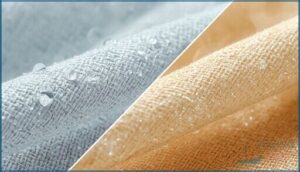
Linen shrinkage isn’t random—it happens for specific scientific reasons. Understanding what’s going on at the fiber level helps you protect your favorite linen pieces from turning into doll clothes.
Let’s break down the two main culprits behind linen shrinkage.
Fiber Structure and Manufacturing
Here’s the thing about flax fibers—they’re pulled and stretched during retting and scutching, then twisted tight during yarn formation. This tension stays locked in until your first wash triggers fiber relaxation.
The natural fabric basically “remembers” its original state, so when moisture hits those cellulose-packed fibers, the weave contracts. That’s textile properties at work, not a defect.
Linen fibers remember their original shape and contract when wet—that’s natural textile behavior, not a flaw
Role of Heat and Moisture
Once those fibers relax, heat and moisture team up to make linen shrink even more. Here’s how thermal effects and moisture levels drive shrinkage:
- Heat above 140°F accelerates fiber relaxation and tightening
- Water causes swelling, then contraction during drying
- Heat transfer speeds moisture movement through fabric
- Steam intensifies dimensional changes over repeated cycles
- Temperature swings create uneven shrinkage control challenges
Managing both factors prevents most issues.
How Much Can Linen Shrink
Here’s the thing about linen shrinkage—it’s not a one-size-fits-all situation. The amount your favorite linen shirt or sheets will shrink depends on several factors, from fabric quality to how you’re treating it.
Let’s break down what you can realistically expect and what pushes linen past the point of no return.
Average Shrinkage Rates
You’ll see about 1 to 3 percent fabric shrinkage after your first wash—most linen shrink happens right then. That’s fiber relaxation in action, pure textile science.
Pre-washing your fabric and mastering techniques for clean, professional seams will help you account for that initial shrinkage before you cut.
Prewashed pieces? Expect closer to 0 to 1 percent in later washes. Heavier linen resists shrinkage patterns better than lightweight versions, and fabric density matters, because tighter weaves handle moisture effects with less drama.
Factors That Increase Shrinkage
Temperature extremes kick shrinkage into high gear—hot water and tumble dryer heat trigger relaxation shrinkage fast. Tight weaves and repeated high temperatures make each cycle worse than the last.
Agitator stress from top-loaders, prolonged moisture exposure, and yarn thickness all compound the problem.
Finishing agents on unwashed linen dissolve during the first wash, letting fibers contract freely.
Does Linen Shrink in Hot or Cold Water
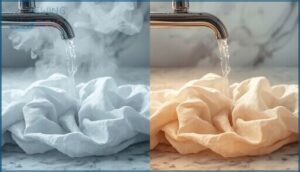
Water temperature plays a bigger role in linen shrinkage than most people realize. Both hot and cold water can cause your linen to shrink, but they work in different ways.
Here’s what you need to know about each temperature and how it affects your linen items.
Effects of Hot Water
Hot water acts like a catalyst for linen shrink—it triggers fiber relaxation and fabric contraction in ways you need to understand. When you wash linen in hot water above 140°F, those flax fibers swell, soften, and tighten up, potentially causing 4-10% shrinkage.
Heat exposure also removes surface oils, which brightens your linen but accelerates that frustrating size change you’re trying to avoid.
Effects of Cold Water
Cool water is your ally in shrinkage prevention—it keeps linen fibers calm and relaxed instead of stressed. When you wash at lower temps, you’re protecting weave retention and fiber integrity, which means your fabric stays closer to its original size.
Bonus: texture preservation happens naturally, plus you get energy savings. Just pair it with Detergent E formulated for delicate weaving, and you’re golden.
Does Linen Shrink in The Dryer

The dryer is basically linen’s worst enemy. If you thought hot water was risky, tossing your linen into a tumble dryer cranks the shrinkage potential up to 15%.
Let’s break down how different drying methods affect your linen so you can make the right call every time.
High Heat Vs. Low Heat Drying
Here’s the thing: high heat is linen’s worst enemy. When you dry linen fabric on high heat settings, it can shrink up to 15%—that’s serious fabric relaxation gone wrong.
Low heat drying cycles offer better shrinkage control, keeping your linen closer to its original size. Plus, low heat improves energy efficiency.
So if you want to protect your linen, always choose gentler heat settings over aggressive ones.
Air Drying Linen
Want to dodge shrinkage entirely? Air dry your linen fabric instead. This natural drying method eliminates heat-related fiber stress, so your linen won’t shrink or fade.
Here’s how to nail the air drying process:
- Hang items on a drying rack with plenty of space between pieces
- Keep linen away from direct sunlight to prevent yellowing
- Lay flat for delicate items to maintain their shape
- Promote good air flow around each garment
- Smooth wrinkles gently while damp for easier ironing later
How to Prevent Linen Shrinkage
Good news: you don’t have to let your favorite linen pieces turn into doll clothes. A few simple adjustments to how you wash, dry, and care for linen will keep it looking and fitting the way it should.
Here’s what actually works to stop shrinkage before it starts.
Washing Techniques
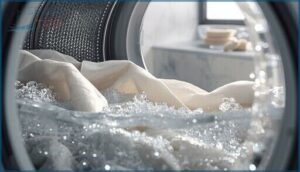
You can dodge most linen shrink disasters by switching to cold water for every machine wash—warm water speeds up fiber relaxation by 1 to 3 percent. Always select the gentle cycle to cut down on agitation, and skip fabric softening products that mess with absorbency.
A brief prewash soak in cool water lifts dirt without the drama.
Drying Recommendations
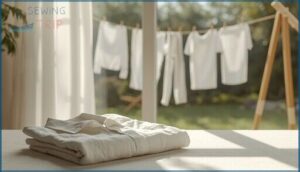
After you wash, air drying is your safest bet—hang linen outside or indoors to skip heat exposure entirely.
If you’re tumble drying, use low heat and pull pieces out while slightly damp, cutting shrinkage risk by up to 5 percent. Shake them gently while warm to smooth wrinkles, then let them finish drying flat on a rack.
Proper Ironing and Storage
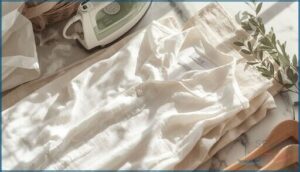
Once your linen is dry, ironing while slightly damp helps relax fibers without scorching—set your steam iron to the linen position, around 230°C. Iron on the reverse side for delicate pieces, moving smoothly to avoid shine.
For storage, hang garments on padded hangers or fold with tissue at creases, keeping everything in a cool, dry spot away from sunlight.
Does Linen Shrink Every Time You Wash It
Good news: linen doesn’t keep shrinking forever like some kind of fabric nightmare. The first wash is when you’ll see the most dramatic change, but what happens after that depends on whether your linen was pre-treated.
Let’s break down what to expect from that initial wash versus all the ones that follow.
First Wash Vs. Subsequent Washes
Here’s the truth: your linen’s biggest shrinkage drama happens right out of the gate. The first wash can zap 3 to 5 percent off the size—yep, that’s when fiber behavior goes wild with heat and moisture.
After that initial shock, shrinkage patterns calm way down. Subsequent washes? Maybe 1 to 2 percent total, thanks to fabric relaxation stabilizing over time.
Pre-Washed and Pre-Shrunk Linen
Good news for control freaks: prewash or preshrunk labels mean manufacturers handled the heavy lifting before you bought it. These linen fabric pieces already survived that wild first-wash drama—shrinkage usually drops to just 1 to 3 percent afterward.
You’ll notice better fabric softness, tighter shrinkage control, and fewer surprises. The prewashing benefits include stable dimensions and easier care instructions moving forward.
Do Linen Blends Shrink When Washed
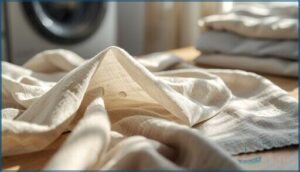
Linen blends throw a curveball into the shrinkage game because you’re dealing with two different fibers, each with its own personality. The blend ratio matters—a lot—and so does what you’re pairing with that linen.
Let’s break down the most common linen blends and what you can expect when you toss them in the wash.
Linen-Cotton Blend
Your linen cotton blend won’t shrink as drastically as pure linen—you’re looking at about 5 percent max in the first wash, thanks to that cotton cushioning the blow. The blend ratio matters here; higher cotton content means better fabric durability and less shrinkage overall.
Always prewash before sewing, use cold water, and skip high dryer heat to keep your linen blend fabric behavior predictable.
Linen-Viscose and Linen-Polyester Blends
Blended fabrics bring you the best of both worlds—linen viscose blends shrink less because viscose stabilizes fabric during washing, while linen polyester blends resist wrinkling thanks to synthetic fibers.
Here’s how each fiber mix impacts your laundry:
- Viscose adds softness and drape while limiting fabric shrinkage
- Polyester provides dimensional stability that prevents full-width shrinkage
- Cold water washing minimizes shrinkage in both blend types
The textile durability improves, and you’ll enjoy easier care.
What to Do if Linen Shrinks
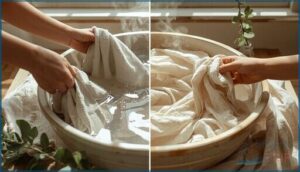
So your favorite linen shirt came out of the wash looking like it’s ready for a toddler—don’t panic just yet. You can actually reverse some of that shrinkage with a few simple techniques that work with the fabric’s natural fibers.
Here’s exactly how to unshrink your linen and get it back to a wearable size.
Steps to Unshrink Linen
You can reverse shrinkage through fabric relaxation and linen restoration.
Soak your item in warm water (105-120°F) with mild detergent for 30 minutes to encourage fiber revival. Gently stretch the damp fabric outward in all directions, working from the center.
Lay flat on a towel, pin edges to desired dimensions, and air dry completely. This textile reconditioning process helps prevent future linen shrink incidents.
Stretching and Reshaping Tips
You’ll need patience and the right reshaping methods to reverse linen shrink. Start with wet blocking—soak your piece, then pin it flat at target dimensions until dry. Manual stretching works while damp: pull gently from all sides.
For stubborn fabric relaxation, iron linen using steam on medium heat, stretching as you press. Unshrinking takes time, but these ironing techniques deliver real results without damaging fibers.
Top Products for Caring for Linen
You’ve learned how to wash, dry, and rescue shrunken linen—but having the right products makes everything easier.
The good news? You don’t need a cabinet full of specialty items to keep your linen looking great.
Here are three products that’ll help you care for linen like a pro without breaking the bank.
1. Rowenta Steam Force Pro Iron
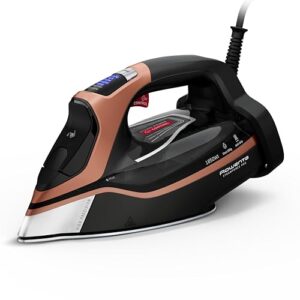
When you’re serious about keeping your linen crisp without the shrink risk, the Rowenta Steam Force Pro Iron is your power move.
This 1850-watt beast delivers 50 g/min continuous steam and a whopping 250 g/min boost—enough muscle to smooth out stubborn wrinkles without cranking up the heat.
The 400 microsteam holes spread moisture evenly across that stainless steel soleplate, so you’re not scorching delicate flax fibers.
Just iron while your linen’s still slightly damp, and you’ll avoid both wrinkles and shrinkage in one pass.
| Best For | Anyone who irons large batches of clothes regularly or works with delicate fabrics like linen that need powerful steam without high heat. |
|---|---|
| Brand | Rowenta |
| Item Form | Solid |
| Primary Use | Ironing fabrics |
| Target Fabrics | Various fabrics |
| Safety Features | Auto-off function |
| Weight/Size | 4.19 pounds |
| Additional Features |
|
- 1850 watts with 400 microsteam holes delivers serious wrinkle-busting power across all fabric types
- Steam boost of 250 g/min tackles stubborn creases without cranking up the temperature
- Auto-off safety feature and electronic steam control make it foolproof for everyday use
- At 4.19 pounds, it’s heavy enough to tire out your arm during long ironing sessions
- Leaks can happen if you don’t maintain it properly or store it correctly
- Customer service and repair process can be a headache if something goes wrong
2. OxiClean Odor Remover Powder

OxiClean Odor Remover Powder is ideal for cleaning linen without harsh chemicals. This oxygen-based booster works with your regular detergent to lift sweat and musty odors from sheets and towels. It contains no chlorine, making it color-safe on natural fibers.
Just toss a scoop into lukewarm water before washing. The sodium percarbonate releases hydrogen peroxide, which neutralizes smells without causing the heat damage that shrinks linen.
At 80 ounces, one container manages dozens of loads, keeping your fabrics fresh and full-sized.
| Best For | Anyone dealing with stubborn odors in laundry—especially if you wash a lot of towels, workout clothes, or bedding that needs serious freshening without bleach. |
|---|---|
| Brand | OxiClean |
| Item Form | Powder |
| Primary Use | Stain removal |
| Target Fabrics | Machine-washable fabrics |
| Safety Features | Chlorine-free formula |
| Weight/Size | 5 lb (80 oz) |
| Additional Features |
|
- Tackles tough smells like sweat and mustiness that regular detergent misses
- Safe for colors and works on all kinds of machine-washable fabrics
- One 80-ounce container lasts through tons of loads, so it’s pretty economical
- The scent can be overpowering if you’re sensitive to fragrances
- Powder sometimes clumps if you don’t keep the lid sealed tight
- Needs a good rinse or it might leave a slight film on clothes
3. Le Blanc Linen Wash Original Scent
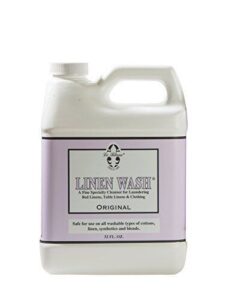
Le Blanc Linen Wash Original Scent is a cold-water luxury cleanser that protects your linen from heat-related shrinkage. With notes of kiwi, apples, and citrus, this 32-ounce formula fights stains without bleach, enzymes, or phosphates—harsh ingredients that can weaken natural fibers over time.
It’s perfect for hand washing or machine use on fine linens, vintage textiles, and everyday bedding. The gentle formula preserves fabric strength through repeated washes, keeping your linen soft and full-sized while leaving a fresh, subtle scent.
| Best For | Anyone who wants to protect their fine linens, vintage textiles, or high-quality bedding from shrinkage and damage while getting a gentle, effective clean in cold water. |
|---|---|
| Brand | LE BLANC |
| Item Form | Liquid |
| Primary Use | Fine linen care |
| Target Fabrics | Fine linens & textiles |
| Safety Features | Enzyme-free formula |
| Weight/Size | 32 fl oz |
| Additional Features |
|
- Cold-water formula prevents heat shrinkage and keeps fabrics looking new longer
- Free from harsh chemicals like bleach, enzymes, and phosphates that can weaken natural fibers
- Works on everything from delicate vintage linens to everyday cotton bedding
- Higher price point compared to standard detergents
- 32 oz bottle may run out quickly if you’re doing frequent or large loads
- Scent is subtle and fades fairly quickly, which might disappoint those who prefer a stronger fragrance
Frequently Asked Questions (FAQs)
How to wash 100% linen without shrinking?
Wash your linen in cool or lukewarm water using a gentle cycle with mild detergent. Skip the dryer—air dry flat or on a line, then iron while damp to keep its original size.
Should you size down in linen?
Imagine slipping into a perfectly fitted linen shirt that drapes just right.
Don’t size down—linen naturally relaxes and softens with wear, so buying your true size ensures comfort without that painted-on feeling after laundering.
What is the downside of linen?
Linen wrinkles like crazy and shrinks up to 10% without proper care. It also costs more than cotton.
It requires gentle washing and can’t handle high heat. Additionally, it may feel stiff after the first wash.
Does linen shrink when washing?
Yes, linen does shrink when washed—usually around 3 to 5 percent in the first wash. Hot water and high heat drying accelerate shrinkage, while cold water and air drying minimize it.
What should I do if my Linen shrinks?
Shrinkage feels permanent, but linen’s actually reversible. Soak your garment in lukewarm water with gentle fabric conditioner, then stretch it back to shape while damp. Roll in a towel, lay flat to dry.
Does dry-cleaned linen shrink?
Good news: dry cleaning usually causes less than 2% shrinkage in linen. However, if your cleaner uses high heat during pressing or finishing, you might notice some tightening in your garment’s fit.
Why do linen fabrics shrink?
Here’s the enemy: flax fibers stretch during manufacturing, then snap back like rubber bands when you wash them. Heat and moisture trigger this relaxation shrinkage, contracting the entire weave.
Do linen sheets shrink?
Linen sheets absolutely shrink, usually dropping 3 to 5 percent after that first wash. King-sized sheets can lose up to 2 inches in length, so you’ll want to factor that in before buying.
How much does linen shrink in the wash?
Here’s the bottom line: you can expect about 1 to 3 percent shrinkage during your first wash. Prewashed linen shrinks less—around 5 to 2 percent—while raw untreated fabric often hits 2 to 3 percent.
Should you size up in linen?
Yes, you should size up by one size when buying linen garments. They usually shrink 3 to 8 percent after the first wash, especially in length, even with proper care.
Conclusion
Your favorite linen pieces don’t have to become casualties of laundry day. Armed with cold water, gentle cycles, and air drying techniques, you’ve now got the blueprint to keep every garment exactly the size you bought it.
Whether you’re rescuing a shrunken linen shirt or preventing future disasters, the answer to “does linen shrink when you wash it” is yes—but only if you let it. Take control, follow the rules, and your linens will thank you.