This site is supported by our readers. We may earn a commission, at no cost to you, if you purchase through links.
Every tailor knows the frustration of a jagged edge ruining a perfect fabric cut. One slip, and your project can unravel—literally. That’s where the right fabric scissors for dressmaking step in, transforming your workflow with blades that glide through silk, denim, and organza like a hot knife through butter.
Precision, comfort, and durability aren’t just nice-to-haves; they’re the backbone of every successful garment. Whether you’re hunting for shears that handle heavy canvas or snips that tame loose threads, understanding the features and types available will help you cut with confidence and control, unlocking your full creative potential.
Table Of Contents
- Key Takeaways
- Best Fabric Scissors for Dressmaking
- 1. Guggenhein Professional Tailor Shears
- 2. Karen Kay Buckley Perfect Scissors
- 3. Snip Eze Embroidery Scissors
- 4. Tula Pink Curved Snips
- 5. Fiskars Easy Action Rag Quilt Snips
- 6. Kai Pinking Shears Scissors
- 7. Gingher Embroidery Scissors
- 8. Gingher Stainless Steel Fabric Scissors
- 9. Kai Sewing Scissors with Pink Handle
- Essential Features of Dressmaking Scissors
- Types of Scissors Used in Dressmaking
- How to Choose Scissors for Dressmaking
- Care and Maintenance Tips for Fabric Scissors
- Frequently Asked Questions (FAQs)
- Conclusion
Key Takeaways
- Quality fabric scissors require sharp stainless steel blades, ergonomic handles, and proper blade length (6-8 inches for most tasks) to deliver clean cuts without fraying or hand fatigue during extended sewing sessions.
- Different scissor types serve specific purposes—dressmaker shears handle long fabric cuts, pinking shears prevent fraying, embroidery scissors manage detailed threadwork, and thread snips excel at precision trimming in tight spaces.
- Matching your scissors to fabric weight matters: lightweight cottons need precise blades to prevent fraying while heavy materials like denim demand sturdier construction, and reserving scissors exclusively for fabric extends their lifespan significantly.
- Proper maintenance through immediate cleaning after use, professional sharpening every 6-12 months, and dry storage in protective cases preserves cutting precision and prevents blade rust or damage.
Best Fabric Scissors for Dressmaking
Your scissors can make or break your dressmaking projects, so choosing the right pair isn’t something you want to get wrong. The best fabric scissors combine sharp blades, comfortable grips, and the right design for your specific cutting needs.
Here are nine top-rated options that professional tailors and home sewers rely on for clean, precise cuts every time. Whether you’re upgrading your workspace or shopping for your first quality machine, this guide to the best sewing machines breaks down what actually matters for long-term performance.
1. Guggenhein Professional Tailor Shears
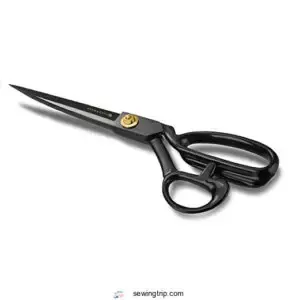
When you need professional-grade dressmaker shears that won’t quit halfway through heavy wool or denim, Guggenhein’s 9-inch tailor shears deliver the precision and endurance serious sewists demand. These fabric shears feature thick forged steel blades with corrosion-resistant coatings, ensuring clean cuts through multiple fabric layers without staining.
Ergonomic grips reduce fatigue during extended cutting sessions, while the adjustable tension screw lets you fine-tune your cutting action. Available in left- and right-handed configurations, they’re backed by manufacturer warranties—though you’ll want to master basic tailor scissor maintenance to keep that edge sharp for years of professional cutting.
| Best For | Professional tailors, dressmakers, and serious quilters who cut thick or heavy fabrics regularly and need precision shears that hold up through long workdays. |
|---|---|
| Material | Alloy Steel |
| Weight | 8.5 ounces |
| Color | Black |
| Primary Use | Fabric cutting |
| Brand | Guggenhein |
| Handle Design | Ergonomic comfort grip |
| Additional Features |
|
- Forged steel blades with corrosion-resistant coating stay sharp through multiple fabric types including wool and denim
- Ergonomic handles and adjustable tension screw reduce hand fatigue during extended cutting sessions
- Available in left- and right-handed versions with manufacturer warranty support
- Some users report the tension nut can loosen over time, affecting cutting performance
- International customers have limited warranty support since replacements only ship within the USA
- Quality control issues occasionally result in defective products reaching customers
2. Karen Kay Buckley Perfect Scissors
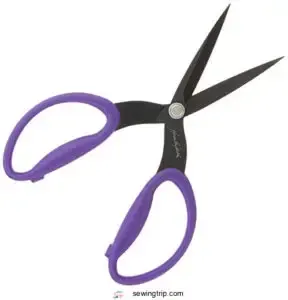
For intricate appliqué and small-piece cutting, Karen Kay Buckley Perfect Scissors bring micro-serrated blades that grip fabric without slippage. The serrated edge prevents fraying on delicate materials, and at under four ounces, you’ll maintain precise cutting techniques through detailed projects. Their design also supports couture sewing construction methods where precision cutting directly impacts seam quality and garment longevity.
These 4.4-inch sewing scissors feature Japanese stainless steel construction for lasting blade sharpness, while cushioned grips support extended work sessions. Though careful handling protects these dressmaking shears from damage, their performance across multiple fabric layers makes them worth the investment.
Regular scissor maintenance preserves their edge, ensuring consistent cutting precision for your most demanding fabric scissors applications.
| Best For | Quilters, sewists, and crafters who need precision cutting for appliqué work, small fabric pieces, and intricate details where control and accuracy matter most. |
|---|---|
| Material | Plastic |
| Weight | 3.84 ounces |
| Color | Purple |
| Primary Use | Sewing and appliqué |
| Brand | Karen Kay Buckley |
| Handle Design | Cushioned handle |
| Additional Features |
|
- Micro-serrated blade grips fabric to prevent slipping and keeps edges from fraying during cuts
- Sharp to the very tip with Japanese stainless steel construction that stays sharp through heavy use
- Lightweight at under 4 ounces with cushioned handles that reduce hand fatigue on long projects
- Delicate construction means they can be damaged if dropped or handled roughly
- Higher price point compared to standard fabric scissors
- Require careful maintenance and occasional professional sharpening to keep performing at their best
3. Snip Eze Embroidery Scissors
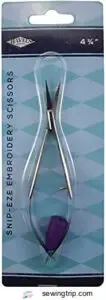
When your embroidery scissors feel too bulky for detailed threadwork, Snip Eze Embroidery Scissors deliver stitch precision through compact design. These sewing scissors feature ultra-fine tips that slip under presser feet and trim threads flush to fabric without snagging, making them essential for hand ergonomics during long sessions. Their lightweight build reduces hand fatigue during garment construction, and pairing them with essential sewing project tips for making clothes helps beginners master clean finishes on stretch fabrics and knitwear hems.
The high carbon stainless steel blades maintain sharpness across various fabric types, though regular blade sharpening preserves their edge. At 0.64 ounces and 2.9 inches, they suit multiple sewing techniques from appliqué to beadwork, proving that proper scissor materials matter as much as embroidery tips. Their compact design also makes them ideal for precision quilting work, where clean cuts around seams and tight curves are essential.
| Best For | Embroiderers and quilters who need precise thread snipping close to fabric, especially those with arthritis or hand fatigue who want a lightweight, easy-squeeze alternative to traditional scissors. |
|---|---|
| Material | Plastic |
| Weight | 0.64 ounces |
| Color | Silver |
| Primary Use | Thread snipping |
| Brand | Havel’s |
| Handle Design | Easy squeeze action |
| Additional Features |
|
- Ultra-fine curved tips slip under presser feet and trim threads flush without snagging fabric
- Lightweight design (0.64 oz) with easy squeeze action reduces hand strain during long embroidery sessions
- Sharp stainless steel blades handle detailed work across multiple techniques like appliqué and beadwork
- Durability reports are mixed—some users find them sturdy while others report breakage
- Blades may dull over time with regular use, requiring maintenance or replacement
- Sharp exposed blades need careful storage with safety cap to prevent accidents
4. Tula Pink Curved Snips
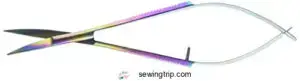
When precision trimming demands tighter control, Tula Pink curved snips shift the game with titanium-coated blades and micro-serrated edges that grip fabric without slip. These sewing scissors feature spring-action grips that reduce hand fatigue during repetitive cuts, while their curved blade design follows seam contours you can’t reach with standard embroidery scissors or fabric shears. Their ergonomic spring mechanism makes them ideal for beginners learning proper cutting techniques, especially when trimming curved seams or appliqué edges.
At just 1.06 ounces, they excel with lightweight to medium-weight fabric compatibility from quilting cotton to linen. The thin profile slips under presser feet for thread snipping, though regular scissor maintenance keeps those edges sharp for appliqué and beadwork precision.
| Best For | Quilters, sewists, and embroidery enthusiasts who need lightweight, precise snips for trimming threads at the machine, cutting curved seams, and handling delicate detail work without hand fatigue. |
|---|---|
| Material | Stainless, Titanium, Steel |
| Weight | 1.06 ounces |
| Color | Pink |
| Primary Use | Quilting and sewing |
| Brand | Tula Pink |
| Handle Design | Curved spring action |
| Additional Features |
|
- Titanium-coated, micro-serrated blades grip fabric securely for clean cuts on lightweight to medium-weight materials
- Spring-action curved design reduces hand strain and fits easily under presser feet for thread snipping
- Ultra-lightweight at 1.06 ounces with thin profile ideal for appliqué, beading, and needle felting precision
- Blade tips may arrive with a slight burr that requires light filing before first use
- Opalescent finish adds bulk compared to streamlined competitors like Fiskars
- Not built for heavy-duty garment construction or thick layered fabrics
5. Fiskars Easy Action Rag Quilt Snips
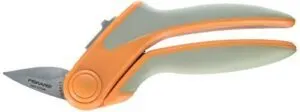
When rag quilting demands rapid, controlled snips through layered fabrics, Fiskars Easy Action Rag Quilt Snips deliver spring-loaded comfort that reduces hand strain during marathon sessions. These sewing scissors feature 8-inch stainless steel blades that cut cleanly through denim, silk, and multiple cotton layers without lifting your work off the table.
The contoured Softgrip grips suit right-handed users tackling small squares for quilts, while the flat-cutting design keeps fabric aligned for accurate tabletop weaving cuts.
Regular snip maintenance and blade cleaning extend performance across your quilting tools arsenal and dressmaking projects.
| Best For | Quilters and sewers who make rag quilts or work with multiple fabric layers and want to reduce hand fatigue during extended cutting sessions. |
|---|---|
| Material | Stainless Steel |
| Weight | Not specified |
| Color | Gray Orange |
| Primary Use | Tabletop cutting |
| Brand | Fiskars |
| Handle Design | Contoured Softgrip |
| Additional Features |
|
- Spring-action mechanism reduces hand strain and cramping during repetitive cuts
- Premium stainless steel blades stay sharp and cut cleanly through multiple fabric layers including denim and silk
- Unique flat-cutting design lets you keep fabric on the table for more accurate cuts without constantly lifting material
- Spring mechanism has a longer travel distance that can slow down your cutting pace
- Not ideal for very thick or hard materials beyond standard quilting fabrics
- Blades will eventually need sharpening or maintenance to maintain peak performance
6. Kai Pinking Shears Scissors
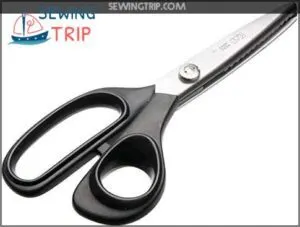
When zigzag edges become your signature finish, Kai pinking shears deliver Japanese precision-ground blades that slice clean saw-tooth patterns through silk, cotton, and wool without fraying.
These fabric shears feature stainless steel construction and ergonomic grips that reduce hand fatigue during dressmaking marathons. You’ll find the offset design improves control for pinking shear tips while cutting multiple layers.
Regular scissor blade care and proper fabric cutting techniques maintain sharpness across your sewing scissors collection, though some users note the weight requires strong hand ergonomics for extended projects.
| Best For | Sewers, quilters, and crafters who need precision zigzag cuts to prevent fabric fraying on seams and decorative edges. |
|---|---|
| Material | Rubber and Stainless Steel |
| Weight | 3.2 ounces |
| Color | Stainless Steel |
| Primary Use | Quilting and crafting |
| Brand | Kai Scissors |
| Handle Design | Ergonomic comfort handle |
| Additional Features |
|
- Japanese precision-ground stainless steel blades create clean saw-tooth patterns that minimize fraying on various fabrics
- Ergonomic offset handle design reduces hand strain during extended cutting sessions
- Durable construction cuts through multiple fabric layers while maintaining sharpness
- Heavier weight (3.2 oz) may cause fatigue for users with smaller hands or grip strength limitations
- Some users report the scissors feel too tight or cumbersome for comfortable handling
- Quality concerns raised about manufacturing origin not matching expected “Made in Japan” labeling
7. Gingher Embroidery Scissors
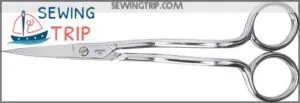
When delicate work demands finesse, you’ll reach for Gingher embroidery scissors that transform thread management into an art form. These 4.5-inch precision tools feature hand-finished stainless steel blades with micro-serrated edges that grip threads during embroidery techniques without slipping.
The chrome-finished scissor materials resist corrosion better than basic sewing equipment, while ergonomic finger loops reduce fatigue during fabric preparation sessions. Though they lack the blade length of full fabric shears, regular scissor sharpening maintains their reputation as essential sewing scissors for intricate appliqué and close trimming work.
| Best For | Embroiderers and crafters who need ultra-precise cuts on delicate threads and fabrics without fraying or slipping. |
|---|---|
| Material | Carbon Steel |
| Weight | Not specified |
| Color | Original Version |
| Primary Use | Embroidery work |
| Brand | Fiskars |
| Handle Design | Double-loop handle |
| Additional Features |
|
- Hand-finished stainless steel blades with micro-serrated edges grip threads cleanly during cutting
- Chrome finish resists corrosion and maintains sharpness longer than basic scissors
- Ergonomic finger loops reduce hand strain during detailed embroidery sessions
- 4.5-inch size limits use for cutting larger fabric pieces or heavy materials
- Requires regular sharpening to maintain peak performance over time
- Higher price point compared to standard craft scissors
8. Gingher Stainless Steel Fabric Scissors
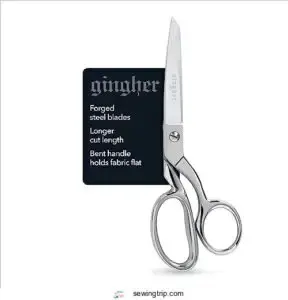
When you’re slicing through yards of silk or layering cotton for a fitted bodice, Gingher stainless steel blades deliver the fabric precision that separates professional results from amateur work. These 8-inch dressmaking shears feature knife-edge geometry and a bent-handle design that lets you cut long, smooth lines without lifting material off your table.
The forged construction maintains blade sharpness through countless projects, while scissor ergonomics reduce hand strain during marathon cutting sessions. Gingher quality means you’re investing in fabric shears that’ll outlast cheaper sewing scissors by years.
| Best For | Sewers, quilters, and tailors who need professional-grade fabric scissors that stay sharp through heavy use and cut multiple layers cleanly without fraying edges. |
|---|---|
| Material | Stainless Steel |
| Weight | 7.2 ounces |
| Color | Silver |
| Primary Use | Dressmaking |
| Brand | Gingher |
| Handle Design | Bent handle design |
| Additional Features |
|
- Forged stainless steel blades hold a sharp edge longer than cheaper alternatives and resist corrosion from fabric dyes
- Bent-handle design keeps fabric flat on your table while cutting, making it easier to follow patterns accurately
- Comfortable grip reduces hand fatigue during long cutting sessions, whether you’re trimming seams or cutting through multiple fabric layers
- Finger holes can feel slippery if your hands are very dry, making precision cuts harder to control
- At 7.2 ounces, they’re heavier than some users prefer for extended use
- Handle size may be too small for people with larger hands, limiting comfort during use
9. Kai Sewing Scissors with Pink Handle
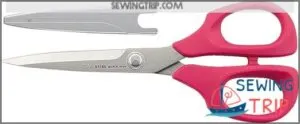
If you’re chasing blade sharpness without the weight penalty of professional shears, Kai sewing scissors with pink grip design offer lightweight fabric cutting that won’t fatigue your hand. These Japanese-made sewing shears feature 16.5 cm stainless steel blades that slice cleanly through multiple fabric layers, backed by Kai’s reputation for edge retention.
The ergonomic grips provide sewing comfort during extended sessions, while the compact size gives you control for detail work. According to multiple Kai scissor review sources, hand grip ergonomics and rustproof construction make these reliable for quilting and general dressmaking tasks.
| Best For | Home sewers and crafters who want sharp, lightweight scissors for cutting fabric layers without hand fatigue during quilting, dressmaking, and detail work. |
|---|---|
| Material | Dimethylacrylate ester |
| Weight | Not specified |
| Color | Not specified |
| Primary Use | Fastener locking |
| Brand | Not specified |
| Handle Design | Not applicable |
| Additional Features |
|
- Sharp Japanese steel blades (16.5 cm) cut cleanly through multiple fabric layers with excellent edge retention
- Lightweight design (0.08 kg) and ergonomic pink grip reduce hand strain during extended sewing sessions
- Rustproof stainless steel construction with included blade covers for long-lasting durability
- Compact size may feel too small for sewers who prefer full-size professional shears
- Lightweight build might not provide enough cutting force for very thick or dense materials
- Mid-range price point may be higher than basic craft scissors for casual hobbyists
Essential Features of Dressmaking Scissors
The right scissors can make or break your dressmaking projects, and knowing what to look for separates a frustrating experience from a smooth one.
Quality dressmaking scissors share specific features that directly impact your cutting accuracy, comfort, and overall results.
Here are the essential characteristics you should prioritize when selecting scissors for your work.
Sharp Stainless Steel Blades
Sharp blades are the foundation of precise cuts—you can’t master dressmaking with dull tools. Blade material matters: stainless steel fabric shears resist corrosion and maintain edge retention through heat-hardened construction, usually reaching mid-50s HRC steel hardness. Quality sewing scissors deliver consistent blade sharpness for clean fabric cuts.
When making your scissor selection, prioritize:
- Hardened stainless steel for lasting performance
- Corrosion resistance to prevent rust
- Smooth, non-serrated blades for most applications
- Edge retention that withstands regular use.
Ensuring the accuracy of your tools is essential, much like addressing methodological flaws in scientific research.
Ergonomic and Comfortable Handles
Ergonomic grips keep your hand relaxed during long cutting sessions. Contoured finger loops and soft-grip materials reduce fatigue—biomechanical studies show ergonomic scissors lower hand strain by measurable margins. Look for grip materials with textured surfaces that prevent slipping, especially rubberized or elastomer coatings.
Whether you need lefthanded sewing scissors or standard grip geometry, comfort designs matter. Ergonomically soft grips distribute pressure evenly, letting you focus on precision instead of discomfort.
Blade Length and Cutting Precision
Comfortable grips set the stage, but blade geometry transforms how you master textile cutting. The right blade length unlocks precision control you didn’t know you needed.
Scissor sharpness plus proper blade geometry equals sewing scissors that won’t let you down.
- 6–8 inch blades handle most fabric shears tasks with cutting accuracy
- Longer blades (7–8 inches) deliver smoother straight cuts on woven materials
- Shorter blades (6 inches or less) excel at tight curves and intricate notches
- Edge alignment prevents fabric snag, keeping your cutting tools performing flawlessly
Weight Balance and Control
Blade length sets you up, but weight distribution decides whether you’ll finish that hem or quit halfway through. Balanced blades paired with ergonomic grips turn marathon cutting sessions into smooth sailing—your wrist won’t scream at you after an hour.
Here’s how weight balance changes your game with fabric shears:
| Balance Feature | Impact on Cutting | Long-Session Benefit |
|---|---|---|
| Even weight heel-to-tip | Consistent pressure across blade edge | Less grip adjustment needed |
| Lower total weight | Better maneuverability on curves | Reduced forearm strain |
| Uniform distribution | Smoother tracking along guides | Longer stitching without fatigue |
| Ergonomic scissors design | Steadier blade response | Higher comfort satisfaction scores |
That heel-to-tip ratio isn’t marketing fluff—it’s the difference between sewing scissors that fight you and ergonomic design that disappears in your hand. You’ll feel the difference when precision cutting doesn’t cost you control.
Right-Handed Vs. Left-Handed Design
Weight balance gets you started, but hand orientation closes the deal. Right-handed fabric shears position blades so your thumb pushes the top edge away, giving you clear blade visibility and cutting accuracy. Left-handed fabric scissors flip that geometry—without them, you’re fighting scissor mechanics that obscure your cut line and tank precision.
Here’s what proper hand orientation delivers with ergonomic scissors:
- Blade visibility: Edges align with your sight line, so you track seams without guessing.
- Reduced wrist strain: Ergonomic grips match your natural grip angle, cutting fatigue during long projects.
- Improved leverage: Finger holes sized for your dominant hand boost control on thick fabrics.
- Accurate cuts: Proper sewing scissors mechanics mean cleaner lines and less fabric waste across all scissor types.
Mismatched orientation isn’t just uncomfortable—it’s costing you accuracy every time you open those shears.
Using scissors designed for the wrong hand doesn’t just feel awkward—it actively undermines your cutting precision with every snip
Types of Scissors Used in Dressmaking
Dressmaking requires different scissors for different tasks, and knowing which type to reach for can make your work faster and more precise. Each style is designed with a specific purpose in mind, from cutting long fabric yardage to trimming delicate threads.
Here are the five main types of scissors you’ll use in dressmaking.
Dressmaker Shears
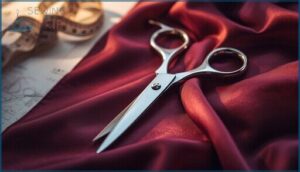
You’ll rely on dressmaking shears for cutting long fabric swaths with control and accuracy. These sewing scissors feature eight to nine inch blades forged from high-carbon stainless steel, maintaining sharpness through multiple projects.
The offset handle designs reduce fatigue during extended sessions, while proper shear maintenance—including regular cleaning and professional sharpening—keeps your tailoring supplies performing at their best for years.
Pinking Shears
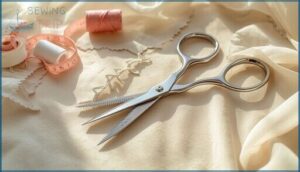
You’ll turn to pinking shears when fraying prevention matters most. These fabric shears feature zigzag serrated blades—usually high-carbon stainless steel—that create a sawtooth edge to delay unraveling on lightweight wovens like cotton voile.
Pinking techniques work best on seam allowances, though the ergonomics and blade materials vary across tailoring supplies.
While cutting precision drops compared to straight sewing scissors, their decorative finish adds practical value to your sewing accessories.
Embroidery Scissors
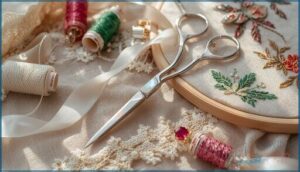
When thread trimming demands pinpoint control, embroidery scissors deliver. These compact fabric cutting tools generally feature 3- to 4-inch blades in high-carbon stainless steel, keeping blade sharpening intervals manageable while you tackle delicate sewing and embroidery work.
- Pointed tips navigate tight corners without snagging motifs
- Ergonomic grips reduce fatigue during repetitive snipping
- Stainless compositions resist corrosion, extending scissor maintenance cycles
Brands like Gingher and Kai offer models that balance precision with durability across embroidery supplies and scissor types.
Electric Fabric Scissors
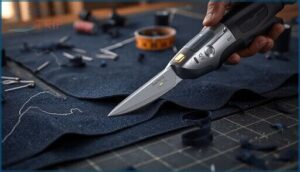
Ever tried slicing through thick layers of denim with manual shears? Electric fabric scissors make short work of challenging materials, thanks to motor safety features and precise blade calibration.
These cutting tools boost cutting efficiency in demanding sewing projects, handling woven fabrics with ease. For best results, match your electric maintenance routine to the tool’s fabric compatibility, ensuring reliable performance across your sewing equipment.
Thread Snips
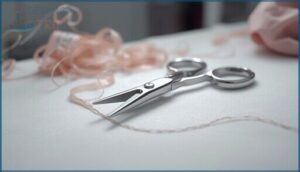
When you’re trimming threads mid-stitch or clipping loose ends, thread snips become your go-to sewing tool. These compact fabric cutting accessories feature precision tips and hardened blades for clean cuts without fraying.
- Short blade length delivers outstanding control for detailed work
- Sharp edge design ensures precise thread care in tight spaces
- Durable snip materials like stainless steel resist corrosion
- Ergonomic handle design reduces hand fatigue during extended use
- Consistent blade durability maintains cutting performance over time
How to Choose Scissors for Dressmaking
Choosing the right scissors for dressmaking depends on the fabrics you work with, the techniques you use, and your personal comfort during long cutting sessions. You’ll need to balance factors like blade size, weight, and special features against your budget and skill level.
The following considerations will help you select scissors that match your specific dressmaking needs and improve your cutting accuracy.
Matching Scissors to Fabric Types
You’ll need to match your scissors to what you’re cutting, since fabric density directly affects blade durability and cut quality. Lightweight cottons demand sharp, precise fabric shears to prevent fraying, while denim requires sturdier blades for clean edge finishing.
For textile arts and tailoring equipment, specialty fabrics with stretch need corrosion-resistant blades and fine points. This pairing transforms your sewing projects through better fray prevention and fabric cutting control.
Size and Weight Considerations
When you’re sizing up fabric shears, blade length matters—7 to 9 inches gives you control without sacrificing reach for sewing projects. Heavier tailoring equipment (12–16 ounces) cuts with momentum but can wear you down, so weight distribution becomes your ally.
Ergonomic grips with offset grasps and quality grip material reduce wrist strain during marathon cutting sessions, turning your sewing tools into extensions of your hand rather than burdens.
Specialty Scissors for Advanced Techniques
Beyond standard tailoring equipment, sophisticated techniques demand specialized sewing accessories. Serrated edges minimize fraying on slippery fabrics, while micro tips trim intricate seam allowances with surgical accuracy. Consider these game-changers for your crafting tools arsenal:
- Curved blade pinking shears navigate applique curves effortlessly
- Offset grips reduce finger fatigue during extended embroidery sessions
- Titanium coating resists corrosion, maintaining sharpness longer
- Micro-tip embroidery scissors deliver precision on delicate work
- Serrated edges grip challenging materials securely
Budget Vs. Premium Options
Your investment shapes your cutting experience. Budget-friendly scissors with stainless steel blades and molded grips work well for light sewing projects, while premium materials like high-carbon steel deliver enhanced edge retention.
This cost comparison reveals a clear value analysis across price points:
| Feature | Budget Options | Premium Options |
|---|---|---|
| Blade Material | Stainless steel, light duty | High-carbon stainless steel |
| Handle Design | Molded plastic | Ergonomic, contoured |
| Blade Length | 8 inches | 8.5-9.5 inches |
| Rust Resistance | Lower | Professional-grade |
| Warranty | Basic coverage | Professional guarantees |
Budget-friendly sewing tools serve beginners well, but serious fabric cutting demands premium sewing accessories that won’t quit mid-project.
Care and Maintenance Tips for Fabric Scissors
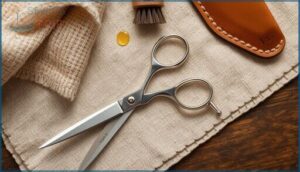
Your fabric scissors are an investment in your craft, and proper care keeps them performing like new for years. Without regular maintenance, even premium shears lose their edge and precision, forcing you to work harder for clean cuts.
Follow these essential practices to protect your tools and maintain the smooth, seamless cutting action you need for professional results.
Proper Cleaning and Drying
Think of your blades as precision instruments—they’ll stay sharp longer with proper care. After each sewing project, wipe down the metal surfaces with a dry microfiber cloth to prevent blade rust prevention and maintain corrosion control. These metal care tips matter in the sewing profession and textile industry:
- Remove fabric oils and dust immediately after cutting
- Never immerse sewing scissors in water—moisture destroys sewing tools
- Dry blades thoroughly if using cleaning solution for scissor sanitizing
- Store closed in dry conditions to protect scissor sharpness
Regular Sharpening Techniques
Keep your scissor sharpness at peak performance with the right sharpening tools. You’ll maintain blade honing through ceramic hone bars or dedicated scissor maintenance systems—pulling each blade through at a consistent angle removes burrs and refines the edge.
For sewing scissors used in the textile tools trade, professional sharpening every six to twelve months preserves precision. Edge refining with Arkansas stones works between sessions, and simple sharpness testing on fabric scraps tells you when your sewing supplies need attention.
Safe Storage Practices
Protect your blades with storage cases designed to shield sharp edges from damage and corrosion. You’ll need dedicated scissor sheaths and dry storage methods—humidity control preserves metal and prevents rust on your sewing equipment and tools.
- Store scissors in low-humidity environments away from moisture sources
- Use protective cases or sheaths to prevent blade contact and dulling
- Keep blades closed and aligned in crafting supplies drawers
- Separate sewing accessories and tools from harsh solvents or chemicals
- Place scissors beyond children’s reach for safety in your sewing and crafting space
Extending Lifespan by Exclusive Fabric Use
Reserve your fabric shears exclusively for textiles—cutting paper or cardboard accelerates blade wear and compromises edge maintenance.
High-grade cotton causes 12% less snagging than polyester blends, while tightly woven materials extend sharpening intervals by 9%.
This dedicated approach to material selection protects your sewing supplies investment, preserving scissor longevity and cutting precision for all your sewing and crafting projects.
Frequently Asked Questions (FAQs)
Can fabric scissors be sharpened at home?
About 65% of sewers attempt DIY sharpening, but you’ll get mixed results—manual tools like whetstones work for basic fabric scissors, though high-end brands like Kai often need professional blade maintenance to preserve cutting precision.
What causes fabric scissors to become dull?
Your scissors lose their edge from cutting through heavy fabrics, adhesive buildup, and blade misalignment. Poor edge geometry, dropped blades, and skipping scissor maintenance also accelerate material fatigue, making clean fabric cutting tips essential for sewing techniques.
Are titanium blades better than stainless steel?
Neither blade material dominates outright. Titanium offers enhanced corrosion resistance and lighter weight, while stainless steel provides better edge retention and easier sharpening.
Your choice depends on cutting frequency, fabric types, and maintenance preferences.
Do professional tailors prefer specific scissor brands?
Regarding the tools of the trade, professional tailors don’t put all their eggs in one basket—but Kai and Gingher consistently earn brand loyalty for blade sharpness, ergonomically soft grips, and meeting professional standards in tailoring and dressmaking.
Should you oil fabric scissors regularly?
Most high-quality fabric scissors from brands like Kai don’t need routine scissor lubrication.
Apply light oil application only when blades feel stiff, prioritizing blade maintenance through cleaning over frequent oiling for maximum cutting efficiency.
Conclusion
The right tool makes all the difference—and that holds true for every snip you make. Investing in quality fabric scissors for dressmaking elevates your precision, protects your materials, and streamlines your workflow from pattern to finished seam.
Match blade type to fabric weight, maintain sharp edges through proper care, and reserve your shears exclusively for textiles. With the right pair in hand, you’ll cut cleaner, work faster, and bring every vision to life with confidence.
- https://sewcanshe-sewingbee.mn.co/
- https://www.sewcanshe.com/blog/unboxing-tula-pink-bernina-770qe?rq=Bernina
- https://x.com/godofprompt/status/1990526288063324577
- https://academichelpexpress.blog/2024/08/please-use-the-bulleted-points-and-the-rubric-below-to-guide-your-work-your-pa/
- https://www.sciencedirect.com/science/article/pii/S0749208123000268