This site is supported by our readers. We may earn a commission, at no cost to you, if you purchase through links.
After twenty years running a sewing studio, I’ve watched countless sewers hunch over dining tables, kitchen counters, and makeshift work surfaces that leave them with aching backs and crooked seams. The wrong cutting height can turn a simple quilt project into an orthopedic nightmare, while a wobbly surface guarantees uneven cuts no matter how carefully you measure.
A good fabric cutting table changes everything—it gives you the stable, spacious workspace you need at a height that keeps your spine happy through hours of cutting. Whether you’re piecing together intricate quilts or churning through custom orders, the right table becomes the foundation of your entire workflow, affecting everything from cutting accuracy to how quickly you can move between projects.
Table Of Contents
Key Takeaways
- The right fabric cutting table needs to match your height (typically 36-39 inches for standing work), provide a stable surface of at least 48×24 inches, and include features like adjustable height, built-in measuring grids, and durable steel frames to prevent back pain and cutting errors during long sessions.
- Mid-range cutting tables ($150-$400) offer the best value by balancing durability with features like foldable designs, rolling casters, and built-in storage, while budget options under $100 typically sacrifice longevity and stability that affect cutting accuracy.
- Tables with steel frames, powder-coated finishes, and reinforced construction handle 100-150 pounds without wobbling, and pairing them with self-healing cutting mats protects both your blade and work surface while maintaining precision through thousands of cuts.
- Regular maintenance—wiping down surfaces after each use, deep cleaning monthly, and using proper storage for tools—extends your table’s life by over a decade and keeps your workspace efficient for precise fabric cutting.
Key Features of a Good Fabric Cutting Table
The right fabric cutting table transforms your workspace from a place of constant back pain and cramped quarters into a studio where you can work for hours without strain.
The right fabric cutting table transforms constant back pain and cramped quarters into a studio where you can work for hours without strain
After years of running my sewing studio, I’ve learned that certain features separate tables that truly support your craft from ones that just take up floor space.
Here are the five key features you should look for when choosing a fabric cutting table.
Table Size and Work Surface Dimensions
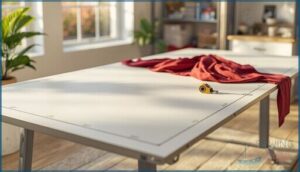
When you’re shopping for fabric cutting tables, table length matters more than you might think. Most crafting tables run 48 to 60 inches long to handle standard fabric widths without cramping your style. You’ll want a work surface that’s 24 to 36 inches wide, giving you plenty of room for cutting depth and fabric layout without feeling squeezed or wrestling with overhang.
Effective writing guides, such as those found in clear science resources, can help you organize your thoughts and make informed purchasing decisions.
Adjustable Height and Ergonomic Comfort
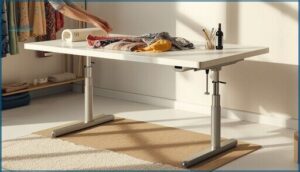
Once you’ve found the right surface area, height adjustments become your best friend for avoiding back pain and shoulder fatigue. Tables with ergonomic design let you work between 28 and 36 inches high, matching your natural stance whether you’re standing or perched on a stool. Models like the MELLCOM Height Adjustable Craft Table and Sullivans 38431 offer comfort features and posture support that keep you cutting accurately for hours without that nagging ache.
Effective auditing processes, such as those using scientific study methods, can also improve overall workflow efficiency.
Build Material and Durability
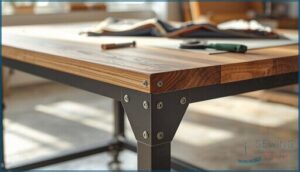
A comfortable height means nothing if your table wobbles or warps after a few months. Look for high-density steel frames with powder-coated finishes that resist corrosion, paired with engineered wood or solid hardwood tops that handle cutting pressure without flex.
Models like the Sew Ready Foldable Hobby and Cutting Grid Table use bolt-fastened joints and reinforced braces, ensuring your cutting table stays flat and sturdy through years of fabric projects.
Portability and Storage Options
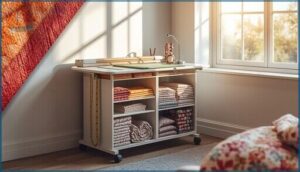
Beyond a sturdy build, your table needs to adapt to your space. Portable tables with wheels let you roll your workspace to ideal lighting or tuck it away after a session—models like the Sew Ready Mobile Fabric Cutting Table and Sullivans 38431 Adjustable Height Foldable Table fold flat in under two minutes.
Look for these space savers:
- Foldable designs that weigh under 40 pounds
- Storage bins or shelf systems for fabric cutting and organization
- Built-in table wheels that glide over carpet and tile
The MELLCOM Height Adjustable Craft Table proves you don’t sacrifice function for flexibility.
Measurement Guides and Cutting Grids
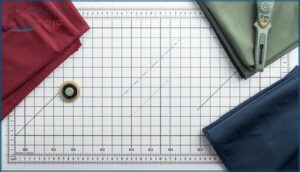
Accurate cutting starts with your grid. Most tables, like the Sew Ready Foldable Hobby and Cutting Grid Table, feature 1-inch or half-inch grids for fabric alignment. Look for high-contrast markings that won’t fade, plus metric and imperial scales.
A quality cutting mat protects both your fabric cutting surface and blade. Grid maintenance means wiping away lint that obscures measurement tools after every project.
Top 5 Fabric Cutting Tables
After years of working with different cutting tables in my studio, I’ve narrowed down the top performers that actually hold up to daily use.
These five tables offer the best combination of workspace, durability, and value across different price points and needs.
Whether you’re working in a small apartment or a dedicated sewing room, one of these options should fit your setup perfectly.
1. Hobby Cutting Table With Storage
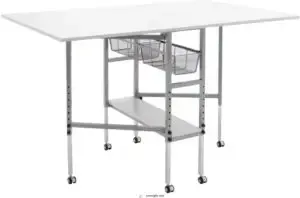
You’ll love the Sew Ready Foldable Hobby and Cutting Grid Table if workspace optimization is your priority. This fabric cutting station spans 58.75 inches wide and adjusts from 29.75 to 38.75 inches high, so you can stand or sit without straining your back.
Two slide-out metal mesh drawers and a lower shelf offer excellent storage solutions for rotary cutters, rulers, and fabric scraps, keeping your table organization tight. The powder-coated frame manages regular crafting tables and storage needs, while six casters let you roll it aside when you’re done.
| Best For | Sewers, quilters, and crafters who need an adjustable-height work surface with built-in storage but have limited space and want something they can fold up and roll away. |
|---|---|
| Work Surface Size | 58.75″ x 36.5″ |
| Height Adjustable | Yes (29.75″-38.75″) |
| Storage Features | 2 drawers + shelf |
| Material | Metal & wire mesh |
| Mobility | 6 casters (4 locking) |
| Weight | 58 lbs |
| Additional Features |
|
- Adjustable height from 29.75 to 38.75 inches lets you work comfortably whether sitting or standing, which helps reduce back strain during long projects.
- Two metal mesh drawers plus a lower shelf give you plenty of spots to stash fabric, cutting mats, rulers, and other supplies right where you need them.
- Six rolling casters make it easy to move around your space, and the four locks keep it steady once you’re ready to work.
- The casters can be flimsy and may break with regular use, which is frustrating if you move the table often.
- Assembly can be tricky since the predrilled holes don’t always line up perfectly, so you might need extra time and patience to put it together.
- The particle board surface and lower shelf aren’t super durable for heavy-duty projects, so this table works better for fabric cutting than woodworking or other rough tasks.
2. South Shore Craft Table With Storage
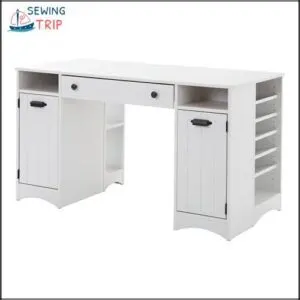
The South Shore Craft Table With Storage brings cottage charm to your sewing and crafting workspace with its 53 x 24 inch surface and interchangeable storage cabinets. You’ll appreciate the rustic black-finish pulls and grooved wainscoting that make this cutting table feel less like equipment and more like furniture.
Table assembly takes around two to four hours, so set aside an afternoon. The laminated particle board surface handles daily cutting tasks well, while multiple shelves and drawers keep your craft organization on point for everything from sewing table projects to gift-wrapping sessions.
| Best For | Crafters and sewers who want a spacious work surface with built-in storage and don’t mind spending a few hours on assembly. |
|---|---|
| Work Surface Size | 53.25″ x 23.75″ |
| Height Adjustable | No (30″ fixed) |
| Storage Features | Shelves, cabinets, drawers |
| Material | Metal & particle board |
| Mobility | None |
| Weight | 75 lbs |
| Additional Features |
|
- Large 53 x 24 inch surface gives you plenty of room to spread out fabric, patterns, and supplies
- Multiple storage options (shelves, cabinets, drawers) keep everything organized and within reach
- Attractive cottage-style design with wainscoting details looks good in any room
- Assembly takes 2-4 hours and some people have reported missing or damaged parts
- Weighs 75 pounds, so you’ll probably need help moving it around
- Some users have had issues with doors and drawers not lining up properly after assembly
3. Arrow Folding Craft Table
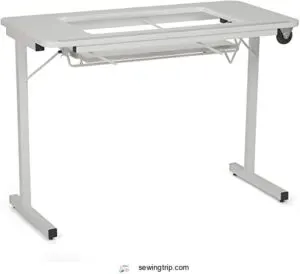
When your studio needs serious table stability without sacrificing floor space, the Arrow Folding Craft Table delivers a 19-inch wide surface that locks into place for reliable fabric cutting and sewing tasks.
This portable design folds flat for storage between projects, and the built-in measuring decal keeps your cuts accurate without extra tools.
The steel frame manages machines up to 45 pounds, while two wheels make repositioning seamless. At 32 pounds, you’ll get professional sewing ergonomics that actually fits through doorways.
| Best For | Sewers and quilters who need a sturdy, full-featured sewing table that can fold away when not in use—perfect for small apartments, RVs, or taking to classes. |
|---|---|
| Work Surface Size | 19″ W (compact) |
| Height Adjustable | No (fixed) |
| Storage Features | None |
| Material | Alloy steel |
| Mobility | 2 wheels |
| Weight | 32 lbs |
| Additional Features |
|
- Folds completely flat for storage and fits through doorways at 32 pounds, making it genuinely portable for workshops or moving between rooms
- Two-position manual lift lets you switch between free arm and flat bed sewing without buying multiple tables
- Steel frame with locking legs keeps machines up to 45 pounds stable and minimizes vibration during high-speed sewing
- Adjusting the drop height is difficult and can be frustrating to get right for your specific machine
- Fixed table height means it won’t match up perfectly if you’re trying to expand your workspace with other tables
- Requires a separate custom acrylic insert (not included) to get the best drop-in sewing experience
4. Foldable Hobby Cutting Table
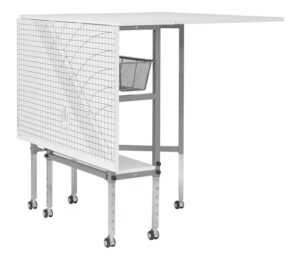
If you’re chasing cutting accuracy without claiming half your workspace, the Sew Ready Foldable Hobby and Cutting Grid Table gives you a 58.75-inch fabric cutting surface that adjusts from 29.75 to 38.75 inches for ergonomic comfort. The grid top with radial lines and angle measurements keeps your rotary cuts precise, while foldable designs collapse the side panels when you need floor space back.
Two mesh drawers and a lower shelf provide storage solutions for your rulers and thread, and six casters deliver table portability between projects without straining your back.
| Best For | Sewers, quilters, and crafters who need a height-adjustable cutting surface with built-in measurements and want the flexibility to fold it away when not in use. |
|---|---|
| Work Surface Size | 58.75″ x 36.5″ |
| Height Adjustable | Yes (29.75″-38.75″) |
| Storage Features | 2 drawers + shelf |
| Material | Engineered wood & metal |
| Mobility | 6 casters (4 locking) |
| Weight | Not specified |
| Additional Features |
|
- Adjustable height from 29.75 to 38.75 inches lets you work standing or sitting, reducing back strain during long projects.
- Grid surface with angle lines and measurements in both inches and centimeters helps you make precise cuts without extra tools.
- Folds up to save space and rolls on six casters, making it easy to move or store in smaller rooms.
- Assembly can be time-consuming and may require a second person to help put it together.
- Weight limits are fairly restrictive—especially the 25-pound limit on side panels—so it’s not built for heavy sewing machines or bulky materials.
- Some users report the grid lines don’t always align perfectly, which can be frustrating if you rely on them for precision work.
5. Arrow Sewing Cabinet Table
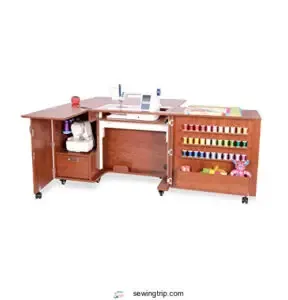
When your sewing machine needs a permanent home with serious storage chops, the Arrow K8405 Wallaby Kangaroo Sewing cabinet design delivers a 3-position hydraulic lift that shifts between free arm, flat bed, and storage modes.
This cutting table accommodates machines up to 55 pounds with a 43-inch work surface that expands via a rear quilt leaf for larger projects.
The soft-closing drawer and flush sewing surface beat standard foldable options, though table assembly requires patience since instructions can frustrate even experienced sewers.
| Best For | Serious quilters and sewers who need a stable, spacious workspace with hydraulic lift functionality and substantial storage for their sewing machine and supplies. |
|---|---|
| Work Surface Size | 43″ x 30″ |
| Height Adjustable | No (fixed) |
| Storage Features | 1 drawer |
| Material | Wood |
| Mobility | None |
| Weight | 31 lbs |
| Additional Features |
|
- 3-position hydraulic lift smoothly transitions between free arm, flat bed, and storage modes for versatile sewing setups
- Large 43-inch work surface expands with rear quilt leaf to handle big quilting projects
- Soft-closing drawer and flush sewing surface create a professional workspace that beats basic folding tables
- Assembly instructions are confusing and make setup frustratingly difficult
- Some components use cheaper materials like plastic parts that don’t match the cabinet’s price point
- Shipping damage and missing parts crop up often enough to be a real concern
How to Choose The Right Fabric Cutting Table
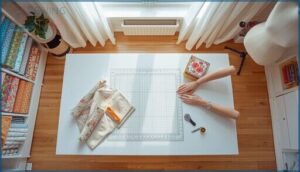
Finding the right fabric cutting table isn’t just about picking the first one you see—it’s about matching the table to your space, your projects, and how you actually work. You’ll want to think through a few key factors before you commit to a purchase, from the physical dimensions of your sewing room to the features that’ll make your cutting sessions smoother and more efficient.
Let’s break down what you need to keep in mind so you can choose a table that works with you, not against you.
Space Requirements and Table Dimensions
Before you commit to any cutting table, measure your workspace layout carefully—you’ll need at least 60 by 30 inches of table size, plus 6 inches of clearance on all sides.
Tight on room? Foldable designs like the Sew Ready Foldable Hobby and Cutting Grid Table or Sullivans 38431 Adjustable Height Foldable Table let you reclaim floor space without sacrificing those essential measurement guides.
Weight Capacity and Construction Quality
Once you’ve settled on dimensions, turn your attention to structural integrity and load testing results. Your cutting table should handle at least 100–150 pounds without wobbling—steel-frame durability with powder-coated finish beats bare metal every time.
Models like the Sew Ready Mobile Fabric Cutting Table use reinforced crossbars for stability features that prevent sag during long fabric cutting sessions, while non-slip feet keep your crafting station anchored.
Budget Considerations and Value
After evaluating construction quality, smart budget planning means comparing cost analysis across price tiers.
Mid-range models like the Sew Ready Mobile Fabric Cutting Table run $150–$400, offering solid value assessment through durable frames and functional sewing table and storage.
Price comparison shows budget tables under $100 sacrifice longevity, while premium options deliver financial savings over time through replaceable surfaces and extended warranties in this buying guide for fabric cutting stations.
Essential Features and Accessories
Once you’ve set your budget, the right extras transform a good table into your command center. Look for a durable steel or laminate top paired with replaceable cutting mat materials that protect against blade marks. Built-in measuring guide accuracy eliminates guesswork, while storage compartment design keeps rotary cutters and rulers within arm’s reach—turning your crafting station and tools into a well-organized fabric organization hub.
- Table surface durability – Steel or high-density laminate resists warping and withstands daily fabric cutting without sagging.
- Integrated measuring grids – Rulers printed directly on the surface improve alignment and speed up layout work.
- Smart fabric organization – Drawers, shelves, or side bins on models like the Sew Ready Mobile Fabric Cutting Table keep your sewing table and storage clutter-free.
Warranty and Customer Support
Peace of mind starts with strong warranty claims coverage—most hobby sewing cutting tables offer one to two years, while return policies give you 30 to 90 days to test your crafting station and tools.
Check sewing table reviews for customer service responsiveness, support channels like phone or chat, and repair options for your sewing workspace. Quick replacement parts keep your sewing room organization running smoothly.
Maintaining Your Fabric Cutting Table
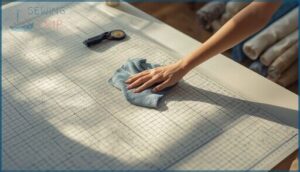
Taking care of your cutting table isn’t complicated, but it makes a real difference in how long it lasts and how well it performs. I’ve seen tables in my studio hold up for over a decade with the right attention, while neglected ones start showing wear within a couple years.
Here’s what you need to know to keep your table in solid working condition.
Regular Cleaning and Surface Care
A clean cutting table keeps your workspace efficient and your fabric free from snags or stains. Regular surface cleaning with the right approach extends your table’s life and maintains precision cutting conditions.
- Wipe down your work surface after each session with a microfiber cloth to remove lint and dust that interfere with accurate cuts.
- Clean weekly with mild detergent on laminate or melamine tops to prevent oils and residues from dulling the finish.
- Deep clean every one to three months depending on how heavily you use your sewing table to maintain ideal surface condition.
- Remove thread, fabric scraps, and pins regularly from your crafting station to avoid scratches and tool damage.
- Use non-scratching sponges and soft brushes for stain removal on coated surfaces, avoiding steel wool or abrasive powders that cause permanent scratching.
For stubborn spots on your cutting tables, warm dried adhesive with a hair dryer before wiping, and tackle water-based marker stains promptly with gentle household cleaners. Proper table maintenance protects your investment and ensures your sewing workspace stays ready for fabric protection and precise work.
Protecting The Table With Cutting Mats
A good rotary cutting mat acts as armor between your blade and table surface, preventing permanent grooves that compromise cutting accuracy. Self-healing mats like the Arrow rotary cutting mat protect table surfaces while maintaining your fabric cutting precision through thousands of cuts.
Choose mat material sized to your workspace, clean regularly with mild soap, and rotate periodically to extend both mat life and surface durability.
Storage and Organization Best Practices
Your workspace efficiency depends on keeping tools within arm’s reach but off the cutting surface. Use dedicated storage like drawer organization for rotary blades and clips, shelf optimization for fabric rolls, and tool arrangement on pegboards or under-table carts.
Smart supply management transforms your crafting space from cluttered to calm, letting you focus on precision instead of hunting for scissors in the craft room organization chaos.
Safety Precautions During Use
A sharp blade doesn’t care if you’re distracted. Always wear safety glasses during fabric cutting and keep fingers clear of the blade edge, using push sticks when needed.
Secure your cutting table and mat to prevent slipping, maintain proper lighting to see cut lines clearly, and store tools with blade guards in place.
Accident prevention starts with these simple habits in your sewing room and space.
Frequently Asked Questions (FAQs)
What is a cutting table?
A cutting table is a flat work surface designed for measuring and cutting fabric accurately.
It generally features a large, stable top with built-in rulers or grids to help sewists and quilters improve alignment.
What is a good height for a fabric cutting table?
Most people think elbow height is ideal, but standing work actually demands 36 to 39 inches for cutting posture and user comfort. Adjustable cutting tables like Sullivans 38431 or MELLCOM Height Adjustable Craft Table accommodate different ergonomic height needs.
How hard is it to assemble a fabric cutting table?
Most cutting tables take 30 to 90 minutes for assembly time with basic tool requirements like screwdrivers. Foldable workstations simplify setup.
Common challenges include leg alignment, but final verification ensures your crafting equipment functions smoothly.
What is the best surface for a cutting table?
A smooth hand planes twice, as they say. The best surface materials for cutting tables balance durability with blade protection.
Laminated surfaces resist stains, while self-healing cutting mats extend longevity and prevent fabric snagging during rotary cutting.
What is the size of cutting table for fabric?
Most cutting tables range from 36 to 60 inches in table length, with cutting width between 18 and 30 inches.
Your workspace area should accommodate standard fabric size while allowing comfortable reach across the surface.
What kind of table do you need for sewing?
You need a sewing table with at least 48 by 24 inches of stable workspace, adjustable height for ergonomics, and built-in storage—these features enhance fabric handling and cutting accuracy during projects.
What height should a sewing machine table be?
Your sewing machine table should sit between 28 and 32 inches tall, with 29 to 30 inches ideal for most sewers to maintain ergonomic height and comfort levels during extended sessions.
How much space does it need?
Your crafting room needs at least 60 inches of clearance around the table footprint for comfortable movement.
Room measurement matters—workspace optimization depends on storage capacity, plus you’ll want space planning for accessing sewing tables and crafting supplies during quilting projects.
What materials are best?
A carbon steel or powder-coated steel frame with a solid wood or plywood top gives you the durability you need.
High-density foam or vinyl covering protects cutting surfaces, while stainless steel edge protectors prevent fabric snagging.
Is assembly difficult?
Assembly isn’t rocket science—most fabric cutting tables and craft cutting tables feature straightforward instructions with clear difficulty levels. You’ll usually need basic tools, spend 30 to 60 minutes, and follow simple assembly tips for success.
Conclusion
Your back will thank you a thousand times over when you finally ditch that cramped countertop for a good fabric cutting table that fits your space and budget. The right table transforms cutting from a chore into something you can actually sustain for hours without paying for it later.
Take your measurements, consider your workflow, and invest in the workspace your projects deserve—it’s the difference between struggling and thriving.
- https://pdfflipbook.com/v/meissner-sewing-holiday-gift-guide/?auto_viewer=true
- https://www.youtube.com/watch?v=NR8HAfVxnDM
- https://www.instagram.com/meissnersewingandvacuum/
- http://www.homedecorators.com/P/Martha_Stewart_Living_Craft_Space_Collapsible_Craft_Table/400/
- https://dictionary.cambridge.org/dictionary/english/subtopic