This site is supported by our readers. We may earn a commission, at no cost to you, if you purchase through links.
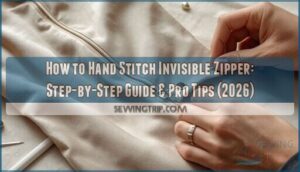
Nothing ruins a beautiful dress faster than a bulky zipper line running straight up the back.
You press the seams, smooth the fabric, zip it up… and that ridge still shows.
Learning hand stitching invisible zipper closures fixes that problem and gives you the kind of finish you’d expect from high‑end couture.
With a needle, some patience, and a few smart tricks, you can make the zipper vanish into the seam so the fabric hangs clean and uninterrupted.
Once you understand where to stabilize, how to place the teeth, and which stitches to use, your garments start looking truly custom.
Table Of Contents
- Key Takeaways
- What is an Invisible Zipper?
- Choosing The Right Invisible Zipper
- Best Fabrics and Preparation Tips
- Essential Tools and Materials for Hand Stitching
- Step-by-Step Guide to Hand Stitching Invisible Zippers
- Troubleshooting and Professional Finishing Tips
- Top 3 Products for Hand Stitching Invisible Zippers
- Frequently Asked Questions (FAQs)
- Conclusion
Key Takeaways
- Hand-stitched invisible zippers let you hide the closure inside the seam so the dress hangs smoothly and cleanly, unlike regular zippers that show their teeth and add bulk.
- Getting a pro result starts with choosing the right zipper (length, color, and material), pairing it with smooth woven fabrics, and carefully prewashing, pressing, marking, and stabilizing the zipper area.
- Clean, invisible results come from using proper tools (sharp hand-sewing needles, matching thread, good pins, pressing tools, and fusible interfacing) and following a clear sequence: press and interface the seam, mark and pin, baste, then work tiny, even stitches along the tape and secure the ends.
- To keep the finish flawless, manage tension and pressing to avoid puckers and misalignment, handle curves and waistbands with extra stabilization and careful easing, and care for finished garments gently with delicate washing, air drying, and low-heat pressing over a cloth barrier.
What is an Invisible Zipper?
Invisible zippers are a breakthrough for anyone who wants a clean, professional finish in their sewing projects.
Mastering this technique is easier than you’d think, especially with a solid foundation in basic sewing skills training to guide you through each step.
You’ll find they work a bit differently from regular zippers and offer some unique advantages.
Let’s look at how they compare, where they’re used, and why they’re so popular in garment sewing.
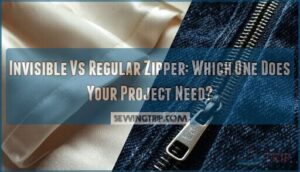
Invisible Zipper Vs. Regular Zipper
While regular zippers show their teeth and often become a design feature, invisible zippers melt right into the seam—perfect for clean garment construction. Let’s break down the essentials:
- Aesthetic Impact: Invisible zippers vanish; regular zippers stand out.
- Durability Comparison: Regular zippers handle heavy fabrics better.
- Cost Differences: Invisible zippers can cost more.
- Installation Complexity: Invisible zippers require precise sewing techniques.
- Fabric Compatibility: Invisible zippers suit woven fabrics; regular zippers are more adaptable.
Where Invisible Zippers Are Used
So, where do invisible zippers shine?
Think evening gowns, bridal wear, and even home textiles—they’re the secret behind smooth lines in a couture jacket or the smooth finish on a bridal gown. You’ll spot them in lingerie closures, specialty fabrics, and anywhere fashion design and construction demand subtlety. Here’s a quick look at common uses:
| Garment Type | Example Use |
|---|---|
| Evening Gowns | Center back seam |
| Bridal Wear | Seam under overlays |
| Home Textiles | Cushion covers |
| Lingerie Closures | Bodysuit back |
| Couture Jackets | Smooth pocket |
Benefits of Invisible Zippers in Garment Sewing
Now, let’s talk perks. Sewing invisible zippers gives your garments a smooth aesthetic—no bulky lines or hardware peeking out. You get comfortable movement, since the closure lies flat and flexes with the fabric.
There’s a durability boost too, as hidden teeth resist wear. Plus, you’ll enjoy fabric versatility and weight reduction, perfect for modern garment sewing techniques and fashion design.
Choosing The Right Invisible Zipper
Picking the right invisible zipper can make all the difference in your finished project.
There are a few key things you’ll want to think about before you start sewing.
Let’s walk through what matters most when choosing your zipper.
Sizing and Length Considerations
Ever notice how a zipper’s length can make or break your project?
For Zipper Length Selection, measure your Garment Opening precisely, allowing for Seam Allowance Width.
If you’re tackling a Curved Opening Adjustment or Partial Zipper Replacement, opt for a slightly longer Invisible Zipper, then trim after basting.
Fabric Preparation ensures your Zipper Installation sits flush—one of my favorite Sewing Tips!
For a step-by-step breakdown of this edge reinforcement, see this detailed invisible zipper edge reinforcement tutorial with photos and troubleshooting tips.
Matching Zipper Color to Fabric
Across the sewing table, Shade Value Alignment is your secret weapon for Invisible Zipper success.
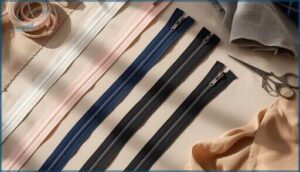
Match the zipper’s color to your fabric tone—think black for dark, ivory for light, taupe for mid‑tones.
Thread Color Coordination matters too; choose a thread that blends.
Lighting Influence affects perception, so check your Zipper Finish Selection in daylight for perfect invisibility.
That’s real Fabric Tone Matching.
Selecting Zipper Material for Your Project
Material choice is your power move: think Polyester vs Nylon first.
Polyester manages washing well, while Nylon wins on Coil Flexibility and durability for stretch knits.
Watch Metal Slider Impact on delicate fabric; plastic runs softer.
Match Tape Width Choice to weight of fabric, and choose Zipper Tape for smooth hand sewing and sewing tips and techniques with Invisible Zipper.
Best Fabrics and Preparation Tips
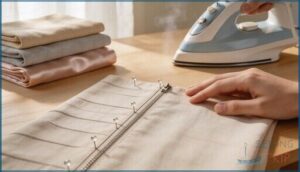
Choosing the right fabric and getting it ready before you sew can make or break an invisible zipper.
A few simple steps—like pre-washing, pressing, and stabilizing the seam—will keep the zipper smooth, flat, and truly hidden. Here’s what you should focus on before you ever pick up your needle and start stitching.
Ideal Fabrics for Invisible Zippers
Think of ideal zipper fabrics as calm, well‑behaved teammates in your Textile Crafts.
Smooth woven Fabric like cotton poplin or Silk hides coils beautifully, thanks to strong Weave Compatibility and Fabric Weight Limits.
Avoid stretchy jerseys and heavy Velvet or Guipure Lace unless you add Stabilization Techniques, smart Color Matching Strategies, and careful Seam Finish Options, weaving function with aesthetics.
Pre-washing and Pressing Fabric
Skipping this step is like building on sand — everything shifts later. Good fabric preparation tips start with shrink wash timing: wash at the same temperature you’ll use for laundering, so shrinkage control happens before your seams are sewn.
Skipping prewashing is like building on sand; wash fabric at laundering temperature to prevent post-seam shrinkage
Then press with grain alignment in mind.
- Test colorfastness on a small corner first
- Press along the grain for accurate zipper placement
- Allow fabric to cool completely before cutting
Marking and Stabilizing The Zipper Area
Once your fabric is pressed, the real precision work begins. Getting your marking and stabilizing right here saves you from headaches later in the zipper installation methods process.
| Fabric Marking Methods | Purpose |
|---|---|
| Water-soluble pen | Guides seam allowance prep lines |
| Tailor’s chalk | Marks interfacing placement on thicker cloth |
Use sewing pins with pinning techniques along the seamline, then fuse lightweight interfacing to stabilize the zipper area before stitching.
Essential Tools and Materials for Hand Stitching

Before you start stitching, the tools and materials you choose will decide how easy the process feels and how clean your zipper looks. You don’t need anything fancy, but you do need a few reliable basics that work well together.
In the next section, you’ll see exactly which needles, threads, and helpers I recommend having ready.
Hand Sewing Needles and Thread Selection
Your needle and thread choices make or break invisible zippers, treat this as your needle size guide.
For Hand Sewing, pick sharps size 7–9 for light fabrics, 14 for medium weights, and consider a Microtex needle choice for silks.
Prioritize Thread weight matching, Silk thread benefits, Tension adjustment tips, Sewing Tools, Needlework, precise Hand Stitches, and Sewing Tips and Tricks.
Using Pins and Fabric Marking Tools
Once your needle and thread are sorted, pins and marking tools become your best allies.
A solid Pin Placement Strategy means spacing dressmaker Sewing Pins perpendicular every 1–2 centimeters, especially along Curved Seam Pinning areas. For Marking Pen Selection, water-soluble pens work beautifully on most fabrics.
Use Interfacing for Stability under slippery materials before marking — your Sewing Invisible Zippers results will look genuinely professional.
Pressing Tools and Interfacing Options
After marking, your next power move is heat: smart Fabric Preparation and Handling before stitching.
Use a Pressing Cloth and Tailor Ham for shaped areas, plus a Seam Roll for straight seams during Ironing, Seam Finishing, and Pressing. Add Fusible Interfacing behind the zipper area, and protect synthetics with a Teflon Sheet; these are real Sewing Machine Tips today.
Step-by-Step Guide to Hand Stitching Invisible Zippers
Hand stitching an invisible zipper is really just a matter of following the right steps in the right order.
Once you’ve tools ready, the process moves along more smoothly than you’d expect.
Here’s exactly what to do, from prepping your seam all the way to finishing the ends.
Preparing The Seam and Zipper Placement
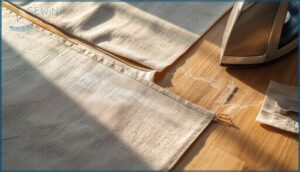
Getting your seam ready is honestly where the magic starts. Press the seam open completely — a flat, crisp seam allowance is your foundation. Apply interfacing to the seam allowance to prevent stretching, then mark the inset line with chalk for accurate zipper tape alignment. Test the zipper fit before committing to a single stitch.
- Press seam open with a hot iron for a flat base
- Apply fusible interfacing to stabilize the seam allowance
- Mark the inset line parallel to the fabric edge
- Align the zipper tape centered on the seamline
- Test zipper fit on scrap fabric first
Pinning and Basting The Zipper
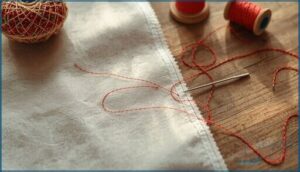
With seam pressed flat and interfacing in place, it’s time to hold everything steady.
Pin spacing precision matters here — place sharp pins every 2 to 3 centimeters, perpendicular to the zipper edge.
Then baste with long 3 to 4 millimeter stitches using a size 9 needle and contrasting thread. Alignment checks catch any drift before you commit to permanent stitching.
Hand Stitching Techniques for Invisibility

Balancing precision and calm, you focus on Stitch Alignment, working tiny 1–2 millimeter stitches right at the seam allowance edge. Ease Thread Tension so the tape lies flat and smooth during Zipper Insertion.
Avoid backstitches; steady Zipper Techniques and good Fabric Coordination do the work, elevating Sewing Invisible Zippers, Edge Finishing, Tailoring, Sewing Tools and Equipment, and Garment Construction Techniques.
Securing and Finishing The Zipper Ends

Securing the ends cleanly protects your whole invisible Zipper Installation and keeps the Zipper Tape stable.
Combine End stabilizers, an Interfaced seam lock, Seam Finishing, and simple Sewing Tools and Equipment for strength without bulk.
- Use Concealed stops and a Blind stitch finish to anchor Seam Allowance ends.
- Heat seal edge on synthetic tape stops fraying.
- Test zipper movement gently.
Troubleshooting and Professional Finishing Tips
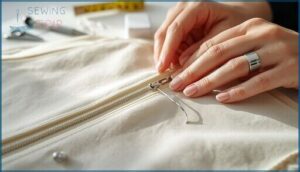
Now that you know how to sew your invisible zipper by hand, let’s talk about what to do when things don’t look quite right. This section focuses on simple ways to fix common issues and add those small refinements that make your work look truly professional.
Use the tips below as a quick checklist to smooth out problems and enhance your finish.
Preventing Puckering and Misalignment
Nothing ruins an Invisible Zipper faster than ripples and crooked teeth, so prevention starts before a single stitch.
Prioritize smart Fabric Selection and Interfacing Placement along the zipper line, then use Seam Gauge Usage and a consistent Pinning Technique to lock edges.
During Zipper Installation, focus on Stitch Tension Control, Pressing Sequence Optimization, accurate Seam Allowance, and tidy Seam Finishing.
Blending The Seam for a Flawless Look
Ever notice how the best garments look like the closure vanishes? That effect comes from smart Fabric Selection, thoughtful Interfacing Placement, and precise Seam Edge Pressing so the Seam and Invisible Zipper read as one line.
Add Thread Color Matching, careful Stitch Density Control, subtle Fabric Tape Concealment, plus tidy Seam Finishing and Pressing to merge all Stitching into invisibility.
Pressing Techniques for a Seamless Finish
The iron is your secret weapon for a truly smooth finish. Master your Pressing Rhythm and watch the difference:
- Use a Tailor’s Ham to support curved seams during Ironing.
- Apply a Steam Pulse in short bursts — never drag.
- Place a Cloth Barrier over the Invisible Zipper to protect delicate fabric.
- Adjust Heat Settings low, pressing the Seam Allowance from the wrong side for clean Seam Finishing.
Top 3 Products for Hand Stitching Invisible Zippers
The right supplies can make or break your invisible zipper project.
After years of teaching, these three products keep showing up in my students’ kits for good reason. Here’s what I’d recommend picking up before you start.
1. Coats Clark Invisible Navy Zipper

Think of your zipper as the stagehand of your garment—if it’s visible, it’s stealing the show.
The Coats & Clark Invisible Navy Zipper is a 14‑inch, closed‑end polyester coil zipper made in the USA, designed to disappear into a seam with only the pull tab showing. The navy colorfast tape blends beautifully with dark or mid‑tone fabrics, ideal for dresses and skirts.
Polyester construction means it’s durable, machine washable, and flexible enough for everyday wear without adding bulk or shine.
| Best For | Home sewists and dressmakers who need a reliable, invisible navy zipper in a specific 14-inch length for dresses, skirts, or tailored projects. |
|---|---|
| Brand | Coats & Clark |
| Origin | USA |
| Material | Polyester |
| Primary Use | Garment sewing |
| Project Type | Sewing projects |
| Color | Navy |
| Additional Features |
|
- Made in the USA with durable polyester that’s flexible, low-bulk, and machine washable.
- Invisible zipper design keeps the focus on the garment, not the closure.
- Easy to order online in the exact navy color and length you need, even if local stores don’t stock it.
- Price may be higher than similar zippers bought in local sewing or craft stores.
- Limited to navy color and a specific length range, so it won’t suit every project.
- Not the most budget-friendly option for people with easy access to well-stocked sewing shops.
2. Singer Ball Head Straight Pins
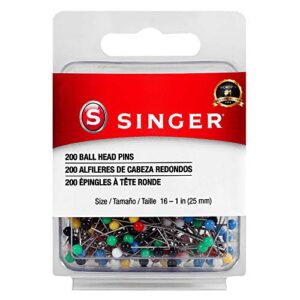
Once invisible zipper is picked out, you need pins that actually keep your seam under control.
Singer Ball Head Straight Pins (model 07040) are tempered, nickel‑plated steel, size 16, with bright round heads that are easy to grab and see on patterned fabric.
The 200‑pin pack works well for long seams and layout.
Just know they’re on the shorter side, and in some boxes a few pins arrive bent, dull, or with loose ball heads, so sort those out.
| Best For | Home sewists, quilters, and crafters who want bright, easy-to-see pins for holding fabric in place on garments, hijabs, or detailed projects like miniatures and felted animals. |
|---|---|
| Brand | SINGER |
| Origin | Not specified |
| Material | Alloy Steel |
| Primary Use | Fabric pinning |
| Project Type | Sewing & quilting |
| Color | Assorted |
| Additional Features |
|
- Bright ball heads are easy to see and grab, even on busy or patterned fabric.
- 200-pin pack gives you plenty for long seams, layouts, and bigger projects.
- Nickel-plated steel pins glide through most fabrics and resist rust with normal use.
- Pins are on the shorter side, so they may not be ideal for very thick layers or bulky projects.
- Some boxes arrive with a few bent or dull pins that need to be sorted out.
- Occasional quality control issues like loose or detached ball heads have been reported.
3. Pellon Shape Flex Iron On Cotton Interfacing
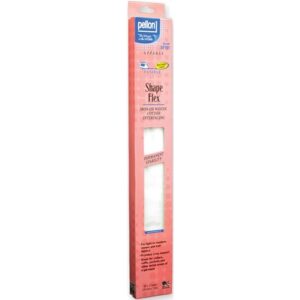
Pins hold the zipper in place, but interfacing holds everything together underneath.
Pellon Shape Flex is a 100% cotton, iron-on woven interfacing that gives your seam allowance the stability it needs before a single stitch goes in. It works beautifully on light to medium fabrics like silk, linen, and cotton sateen — exactly what invisible zippers love.
Cut it to fit, press it smooth-side down with a cloth, and you’ll notice the difference immediately: no puckering, no shifting, just clean edges.
| Best For | Sewers and crafters working with light to medium-weight fabrics who want clean, stable results on collars, cuffs, and detail areas without a lot of fuss. |
|---|---|
| Brand | Pellon |
| Origin | United States |
| Material | 100% Cotton |
| Primary Use | Garment stabilizing |
| Project Type | Sewing & crafting |
| Color | White |
| Additional Features |
|
- 100% cotton that plays nicely with natural fabrics like linen, silk, and cotton sateen — no stiffness, just support
- Iron-on application is quick and easy, and steam activation gives you a long-lasting bond
- Stable in both grain directions, so your edges stay put and your seams don’t shift
- The 15" width doesn’t go far on bigger projects, and some users felt they ran out fast for the price
- Not the right pick for heavier fabrics — it’s built for light to medium weights only
- Requires an iron to apply, which can be tricky on heat-sensitive materials
Frequently Asked Questions (FAQs)
Can I hand sew instead of a machine?
Like threading a needle by candlelight, it’s slower — but absolutely doable.
Yes, you can hand sew an invisible zipper using backstitch or slip stitch, and the results can look just as clean and professional.
How do I hand stitch an invisible zipper with lining?
Sandwich the zipper tape between your main fabric and lining, then slip stitch the folded lining edge directly to the zipper tape from inside — keeping stitches tiny and thread perfectly color‑matched.
Heat seal the zipper ends before stitching to prevent fraying.
Can I replace a broken invisible zipper by hand?
Ever tried giving garment new life by swapping its zipper yourself?
You can replace a broken invisible zipper by hand, but it’s slower, needing matching length and color, careful basting, and tiny, controlled backstitches.
How do I sew an invisible zipper into a curved seam?
Treat the curve like a road: stabilize with light interfacing, press over a tailor’s ham, then clip seam allowances.
Baste the zipper along your marked line, ease in excess, stitch slowly, and zip-test, pressing afterward.
What adjustments are needed for waistbands with invisible zippers?
Waistbands need a little extra love. Trim seam allowances, fuse interfacing behind the zipper area, and start the zipper 1–2 cm from the edge. This keeps everything flat, stable, and gap-free.
How do I care for garments with hand-stitched invisible zippers?
Hand-wash or use a delicate cycle, turning the garment inside out.
Air dry flat to protect the stitching.
If ironing, use a pressing cloth on low heat — never directly on the zipper.
Conclusion
Think of your zipper like a quiet doorway, only noticeable when it slams instead of gently closing. Each small promise is a small promise that your fabric will glide, not fight, when you move.
Now that you understand hand stitching invisible zipper techniques, you can decide how visible your craftsmanship should be. Practice on scraps, test your tension, study the seam in light, and let every finished garment whisper, not shout, that you’re in control.
- https://www.facebook.com/sharer.php?u=https%3A%2F%2Fwww.threadsmagazine.com%2F2020%2F07%2F14%2Fsew-an-invisible-zipper-by-hand
- https://twitter.com/intent/tweet?url=https%3A%2F%2Fwww.threadsmagazine.com%2F2020%2F07%2F14%2Fsew-an-invisible-zipper-by-hand&text=Sew%20an%20Invisible%20Zipper%20by%20Hand%20-%20Threads&via=threadsmagazine
- mailto:?subject=Sew%20an%20Invisible%20Zipper%20by%20Hand%20-%20Threads&body=https%3A%2F%2Fwww.threadsmagazine.com%2F2020%2F07%2F14%2Fsew-an-invisible-zipper-by-hand
- https://itch-to-stitch.com/invisible-zipper-lining-installation-part-1/
- https://candiceayala.com/tutorial-how-to-install-an-invisible-zipper-into-a-lined-garment/