This site is supported by our readers. We may earn a commission, at no cost to you, if you purchase through links.
Pick up two bolts of fabric at your local store—one airy cotton voile, one sturdy canvas—and you’ll feel the difference immediately in your hands. That weight you’re holding isn’t just thickness; it’s the deciding factor between a breezy summer dress and a durable slipcover that can handle years of daily use.
Fabric weight, measured in GSM (grams per square meter) or OZ (ounces per square yard), determines everything from drape and breathability to durability and seasonal appropriateness. Understanding the practical differences between heavyweight vs lightweight fabric will save you from buying material that’s too flimsy for upholstery projects or too heavy for flowing garments.
The right weight transforms your sewing from frustrating guesswork into confident, professional results.
Table Of Contents
- Key Takeaways
- Fabric Weight: Key Definitions and Units
- Characteristics of Lightweight Fabrics
- Characteristics of Heavyweight Fabrics
- Comparing Drape and Structure
- Breathability, Comfort, and Seasonality
- Durability and Longevity Differences
- Sewing Considerations by Fabric Weight
- Fabric Weight Selection for Projects
- Care and Maintenance by Fabric Weight
- Sustainable Choices: Lightweight Vs. Heavyweight
- Frequently Asked Questions (FAQs)
- Conclusion
Key Takeaways
- Fabric weight (measured in GSM or OZ) directly determines drape and breathability, durability, and seasonal appropriateness—lightweight fabrics (30-150 GSM) flow freely and cool you down, while heavyweight options (350+ GSM) provide structure and insulation, and resistance to wear.
- You’ll need to adjust your entire sewing setup based on weight: lightweight materials demand fine 60/8 to 70/10 needles with stabilizers to prevent puckering, whereas heavyweight fabrics require sturdy 90/14 to 100/16 needles, industrial-strength machines, and walking feet to handle multiple dense layers.
- Heavier fabrics aren’t automatically more sustainable—they use more water and energy upfront but last longer and tolerate repairs better, while lightweight options require fewer resources per meter yet need replacing more frequently, making longevity the real sustainability factor.
- Match fabric weight to your project’s functional requirements rather than preference alone: apparel under 180 GSM prioritizes movement and breathability, 180-260 GSM balances drape with stability for versatile garments, and 300+ GSM delivers the abrasion resistance essential for upholstery and structured outerwear.
Fabric Weight: Key Definitions and Units
You can’t choose the right fabric without understanding how weight measurement gets measured. The two main units—GSM and OZ—tell you everything about a fabric’s thickness, structure, and suitability for your project.
Both systems help you interpret what fabric weight actually means for drape, durability, and end use.
Let’s break down what these measurements mean, how you measure them yourself, and how to convert between the two systems.
What is GSM and OZ?
GSM (grams per square meter) and OZ (ounces per square yard) are the two dominant weight units you’ll encounter when evaluating fabric density. GSM measures how many grams a square meter of material weighs, while OZ measures ounces per square yard.
These measurement tools help you classify lightweight fabric (usually 30–150 GSM) versus heavyweight fabric (over 350 GSM), guiding your project selection with precision. For a detailed explanation of the conversion formulas and techniques that make switching between GSM and OZ simple, consult expert resources.
How to Measure Fabric Weight
You can measure fabric weight accurately by following these steps:
- Cut a precise 50 cm × 50 cm sample (0.25 m²) from your material
- Weigh the sample on a digital scale in grams
- Divide the weight by 0.25 to calculate GSM
- Multiply GSM by 0.0295 for weight conversion to OZ
This calculation method reveals fabric density, distinguishing lightweight fabric from heavyweight fabric instantly.
Understanding the differences in fabric weight measurement methods is essential for selecting the right material for your project.
Converting GSM to OZ and Vice Versa
Converting between units requires simple formulas you can memorize. Multiply GSM by 0.033906 to get ounces per square yard, or multiply OZ by 33.906 to reverse the conversion.
These weight calculations provide measurement accuracy for fabric density comparisons, helping you evaluate lightweight fabric options across different labeling systems. Round your results to one decimal place for practical unit conversions that match standard fabric weight charts and selection guides.
Characteristics of Lightweight Fabrics
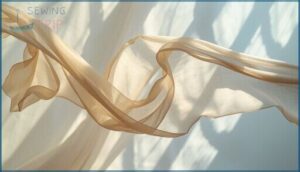
Lightweight fabrics give you freedom of movement and breathability, making them the go-to choice for warm-weather clothing, delicate garments, and flowing designs.
These materials usually weigh between 30-150 GSM, though the specific range varies depending on fiber type and weave construction. Understanding what makes a fabric lightweight—and where it works best—helps you select the right material for your project.
Common Lightweight Fabrics and Uses
You’ll find lightweight fabrics in everything from breezy summer apparel to delicate home textiles.
Common options include:
- Cotton and linen blends – breathable textiles perfect for warm-weather shirts and dresses, often using a 60-40 ratio for improved drape
- Silk alternatives like Tencel lyocell and bamboo viscose – mimic silk’s softness with better moisture management
- Microfiber weaves – tightly woven for smooth linings and activewear
- Lightweight upholstery fabrics – deliver comfort without bulk in curtains and cushions
Typical GSM Range for Lightweight Materials
When selecting lightweight fabrics for breathability factors and seasonal choices, you’ll usually work with materials ranging from 50 to 150 GSM. Most apparel-focused lightweight fabric density sits between 60 and 120 GSM, balancing drape with durability.
Ultra-light options below 70 GSM suit sheer layering pieces, while 80 to 120 GSM fabrics deliver the structure you need for everyday tees, blouses, and summer garments—making material selection straightforward for warm-weather projects.
Pros and Cons of Lightweight Fabrics
Breathability factors make lightweight fabrics your go-to choice for warm-weather comfort, but you’ll need to weigh trade-offs before committing to projects under 150 GSM.
- Exceptional air flow and moisture wicking keep you cool during summer heat, though repeated washing may cause thinning over time
- Quick-drying properties speed up laundry cycles, reducing care considerations and energy costs
- Lower fabric weight per yard cuts material expenses, though sustainability impact varies widely across fiber types
Characteristics of Heavyweight Fabrics
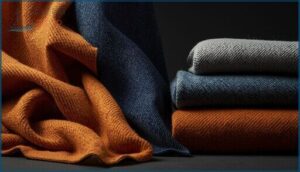
Heavyweight fabrics bring strength and substance to your projects, weighing over 350 GSM and offering the kind of durability you need for outerwear, upholstery, and garments that face real wear and tear.
Working with these heavier materials means improving your stitch quality becomes essential to handle the thickness without puckering or skipped stitches.
These materials hold their shape, provide insulation, and create structure that lighter fabrics simply can’t match. Let’s look at the specific fabrics that fall into this category, their weight ranges, and what makes them worth choosing—or avoiding—for your next project.
Common Heavyweight Fabrics and Uses
Heavyweight materials like canvas, denim, and wool blends dominate workwear, upholstery, and outerwear because they deliver outstanding fabric density and durability. You’ll find canvas uses in bags and outdoor gear, heavyweight denim varieties in 12 to 20-ounce jeans, and heavyweight linen or wool coatings in structured winter garments.
These heavyweight fabrics offer high-quality fabric weight performance where abrasion resistance and longevity matter most.
Typical GSM Range for Heavyweight Materials
Most heavyweight fabric starts around 200 GSM and extends well beyond 400 GSM for industrial upholstery, giving you a clear point of reference for fabric weight and selection.
Canvas and denim usually range from 300 to 420 GSM, while heavyweight linen sits near 250 to 350 GSM. These fabric density values translate directly into material thickness, durability, and heavyweight uses—so you’ll know exactly what GSM conversion figures mean when choosing your next project.
Pros and Cons of Heavyweight Fabrics
Fabric durability stands out as the clear winner with heavyweight materials—you get outstanding resistance to abrasion, tears, and wrinkling that lighter options simply can’t match. This weight comparison reveals critical trade-offs:
- Unparalleled longevity in high-stress areas like seams and hems
- Higher insulation but reduced breathability in warm conditions
- Sewing challenges including longer dry times and specialized needle requirements
Dense weave structures above 200 GSM deliver heavyweight uses from upholstery to winter outerwear, though you’ll sacrifice mobility and comfort in hot climates for that premium durability and structure.
Comparing Drape and Structure
Fabric weight doesn’t just determine how heavy your material feels—it fundamentally changes how the fabric moves and holds its shape.
Lightweight fabrics flow and drape softly around the body, while heavyweight materials stand firm and create defined silhouettes. Understanding these differences helps you choose fabrics that achieve the exact look and function you need for your project.
How Fabric Weight Affects Drape
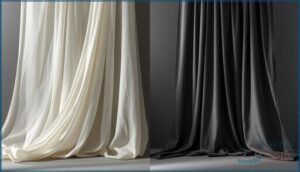
As GSM increases, you’ll notice drape dynamics shift dramatically—lightweight fabric flows freely with gravity, creating soft garment silhouette lines, while heavyweight fabric falls straighter with minimal cling.
This weight impact on fabric movement stems from mass per area: higher drapability occurs when fibers flex easily despite GSM, so viscose blends can flow even at midweights, whereas dense weaves stiffen fabric flow regardless of their lightness.
Structural Qualities of Heavy Vs. Light Fabrics
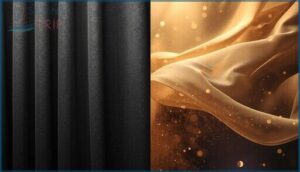
Beyond movement, structural integrity changes fundamentally with GSM. Heavyweight fabric resists bending—its weight distribution creates sharp folds and upright panels, ideal when you need textile rigidity for custom coats or upholstery. Lightweight fabric bends effortlessly, lacking the fabric stiffness required for crisp edges.
Drape analysis reveals key differences:
- Heavy fabrics maintain creases and structured shapes
- Light materials bend over curves with minimal resistance
- Durability correlates with higher density and mass
Breathability, Comfort, and Seasonality

Fabric weight doesn’t just affect how a garment looks—it directly impacts how it feels on your skin and whether you’ll actually want to wear it. The right weight can keep you cool in summer heat or warm during winter months, while the wrong choice leaves you uncomfortable no matter the season.
Understanding how weight influences breathability, temperature regulation, and overall comfort helps you match fabrics to both your climate and your body’s needs.
Impact of Weight on Breathability
Air permeability drops sharply as fabric density increases, which means heavyweight fabrics restrict airflow more than lightweight fabric. You’ll notice moisture wicking slows when fibers pack tightly in higher GSM materials, delaying evaporation.
Thermal insulation rises with weight because thicker layers trap air, limiting heat transfer. Breathable membranes and open weaves can offset some weight-related breathability limits in garments.
Best Fabric Weights for Hot and Cold Weather
You’ll want lightweight fabric for hot weather—cotton voile, linen blends, and modal drapes cool you through maximum airflow and moisture evaporation.
Cold conditions demand heavyweight fabric above 250 GSM: wool flannel, heavy fleece, or canvas at 260–420 GSM delivers thermal insulation and weather resistance.
Seasonal fabric selection between 120–240 GSM suits transitional months, and fabric layering multiplies climate control without bulk.
Comfort Factors for Clothing
Clothing comfort hinges on more than seasonal fabric weight—you need garment fit that allows movement, fabric softness against skin, and breathability tests that confirm airflow under real wear conditions. Your comfort depends on these factors:
- Proper drape and stretch prevent binding and restriction during activity
- Moisture-wicking capability keeps you dry when sweating or in humidity
- Soft hand feel reduces irritation and chafing over extended wear
- Strategic seasonal layers balance warmth with mobility and breathability
Consider GSM alongside fiber type and weave for true clothing comfort.
Durability and Longevity Differences
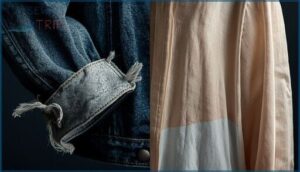
You won’t find a one-size-fits-all answer in the area of fabric durability—weight plays a vital role, but it’s not the whole story.
Heavier fabrics generally withstand more wear and tear, yet lighter materials can surprise you with their longevity when constructed properly. Let’s break down how fabric weight actually affects how long your garments and home textiles will last.
Heavier fabrics resist wear better, but well-constructed lightweight materials can last just as long
How Fabric Weight Influences Durability
Fabric weight directly influences durability, but it’s not the whole story. Heavier fabrics—usually above 300 GSM—pack more fibers per square meter, boosting material resilience and seam resistance against abrasion.
Lightweight fabric under 150 GSM wears faster unless you choose tight weaves or protective finishes. Don’t ignore fiber longevity and weave integrity; they’re just as critical as raw weight for lasting fabric strength and overall fabric properties.
Longevity in Garments and Home Textiles
Expect different longevity between garments and home textiles based on Fabric Weight, GSM, and fiber type. Cotton garments lose up to 20 percent tensile strength after 50 washes, while polyester retains 90 percent of original strength after five years.
Proper Garment Maintenance—washing at recommended temperatures and air drying—extends Textile Longevity by 30 percent, reducing Fabric Degradation and improving Material Sustainability through careful Fabric Selection and handling practices.
Sewing Considerations by Fabric Weight
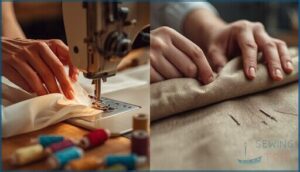
Working with different fabric weights isn’t just about choosing the right material—you’ll need to adjust your entire sewing setup to match. Your needle size, thread type, and machine settings all shift depending on whether you’re handling delicate chiffon or thick upholstery canvas.
Let’s break down the key adjustments you’ll make for lightweight versus heavyweight fabrics.
Needle and Thread Selection
You’ll find that matching needle sizes and thread tension to fabric weight determines whether your stitches flow or frustrate.
Lightweight fabrics under 150 GSM demand fine 60/8 to 70/10 needles and thin thread, while heavyweight materials over 350 GSM require sturdy 90/14 to 100/16 needles with heavier thread.
This fabric interaction affects sewing techniques—get it right, and your seams hold strong.
Machine Capabilities for Heavy Fabrics
Your sewing machine needs serious muscle to punch through heavyweight fabrics without breaking down. Industrial motor power and high sewing machine torque keep stitches consistent when you’re working with materials over 350 GSM, while standard home machines struggle with fabric thickness handling beyond medium weights.
Here’s what you need for heavy fabric feed:
- Servo or industrial motors delivering high torque at low RPM for reliable stitch formation through multiple layers
- Reinforced needle durability systems with larger hook timings and rigid frames that minimize vibration during high-speed operation
- Walking presser feet or dual feed mechanisms that grip dense textiles without slipping, essential for fabric technology in upholstery and outerwear projects
Handling and Stabilizing Lightweight Materials
You’ll prevent puckering and shifting when you anchor lightweight fabrics under 150 GSM with the right fabric stabilizers. Apply lightweight interfacing only at seams and hems to preserve drapability, then test your sewing techniques on scraps to dial in tension and stitch length.
Fine needles paired with spray stabilizers give you clean edges without residue, essential for proper fabric handling and material selection in delicate work.
Fabric Weight Selection for Projects
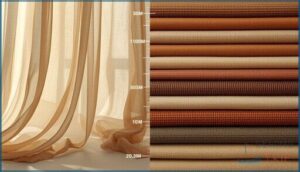
Selecting the right fabric weight determines whether your project succeeds or falls flat. You need to match GSM to your specific application, considering factors like garment structure, upholstery demands, and seasonal wear.
Here’s how to choose fabric weight for different project types.
Choosing for Apparel Vs. Upholstery
Apparel needs and upholstery requirements demand different fabric selection strategies based on how you’ll use the material. When choosing between these applications, consider these critical factors:
- Abrasion resistance: Upholstery fabrics need tighter weaves and higher thread counts (usually 350+ GSM) to withstand daily seating friction, while apparel prioritizes comfort and movement with lighter constructions.
- Cleanability standards: Upholstery demands stain-resistant finishes compatible with extraction cleaners, whereas apparel emphasizes washability and rapid drying.
- Structural stability: Backed fabrics or interliners in upholstery prevent seam sag over time, while apparel uses lighter weaves for flexibility across joints.
- Surface durability: Heavy textured fabrics like chenilles excel in furniture applications, while smooth twills reduce friction against skin for clothing.
Your fabric weight comparison must account for material durability expectations—upholstery withstands years of static stress, apparel manages repeated flexing and laundering cycles.
Matching Weight to Project Type
Weight matching drives project success, so you must align fabric GSM with end use from the start. Lightweight fabrics under 180 GSM work for T-shirts and active wear requiring breathability.
Medium-weight wovens between 180-260 GSM balance drape and stability for adaptable garments and home textiles. Heavyweight options over 300 GSM suit structured outerwear and upholstery demanding durability.
Seasonal and Functional Requirements
Seasonal fabrics respond directly to climate demands—you’ll need under 150 GSM for summer breathability and over 350 GSM for winter insulation.
Functional needs determine weight variations too, since active wear requires flexibility while structured coats demand stability. Garment purposes shift across seasons, so your fabric choices must balance GSM with practical wear cycles, matching clothing for different seasons to specific performance requirements for comfort and durability.
Care and Maintenance by Fabric Weight
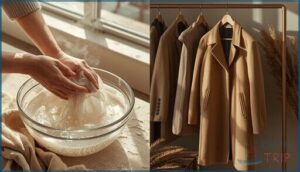
Taking care of your fabric the right way keeps it looking good and lasting longer, but the approach changes depending on whether you’re working with lightweight or heavyweight materials.
What works for a delicate chiffon blouse won’t cut it for a heavy wool coat, and vice versa.
Here’s how to wash, dry, and store fabrics based on their weight so you can protect your investment and avoid costly mistakes.
Washing and Drying Guidelines
You’ll dial in the right wash cycles by checking your fabric weight—lightweight materials under 150 GSM thrive in cold water at 80°F or less, while heavyweight fabrics above 350 GSM handle warm washes around 104°F for effective stain removal.
Drying times vary dramatically: thin garments finish in 20 to 30 minutes, but thick textiles need 60 to 90 minutes to avoid damp spots and fabric shrinkage.
Preventing Shrinkage and Damage
Beyond choosing the right wash cycles, you need proactive shrinkage control to keep your projects intact. Prewash fabrics before cutting—this removes starches and triggers initial fiber relaxation before construction.
Weigh your material to establish a baseline, then compare post-wash dimensions to catch unexpected changes early. For fabric stability, use gradual temperature changes during laundry and add heat-setting steps on synthetic blends to lock dimensions permanently.
Storage Tips for Different Weights
In any storage solutions setup, organize by fabric weight and GSM to protect your investment. Store lightweight materials in clear plastic bins with fabric folding techniques that prevent creasing, while heavyweight pieces tolerate stacked box organization with proper weight distribution on lower shelves.
Climate control prevents moisture damage across all weights—essential fabric care and maintenance between laundry cycles.
Sustainable Choices: Lightweight Vs. Heavyweight

Sustainability isn’t just about choosing natural fibers—fabric weight plays a bigger role in environmental impact than most people realize.
Lighter fabrics require less material and energy to produce, but heavier fabrics often last longer, reducing replacement frequency and waste. Consider these three key factors when making eco-conscious fabric choices for your projects.
Eco-Friendly Fabric Options
You’ll find sustainable textiles across both fabric weights when you prioritize certified options. Organic cotton, recycled fibers, and plant-based alternatives like TENCEL offer eco-friendly materials for lightweight garments, while recycled polyester and hemp deliver green fashion choices in heavier weights.
Look for GOTS or OEKO-TEX certifications to confirm your fabric selection for comfort and durability meets sustainable fashion and manufacturing standards.
| Lightweight Eco Options | Heavyweight Eco Options |
|---|---|
| Organic cotton lawn | Recycled wool coating |
| TENCEL lyocell | Hemp canvas |
| Recycled polyester voile | ECONYL nylon outerwear |
| Bamboo jersey | Upcycled denim |
Environmental Impact of Different Weights
Production impact differs sharply between heavy and lightweight textiles when you examine energy consumption, water pollution, and carbon footprint. Heavier fabrics demand more water and chemicals during dyeing, increasing wastewater loads and fabric waste at end-of-life disposal, while lightweight materials use fewer resources per meter but may require more frequent production cycles—complicating recycling challenges and sustainable fashion goals despite eco-friendly materials and lower GSM ratings.
| Environmental Factor | Lightweight Fabrics | Heavyweight Fabrics |
|---|---|---|
| Energy Consumption | Lower per unit area | Higher finishing energy |
| Water Pollution | Reduced wastewater volume | Greater chemical loading |
| Carbon Footprint | Lower upfront emissions | Higher embodied carbon |
| Fabric Waste | Easier downcycling | Greater landfill bulk |
| Recycling Challenges | Simpler fiber separation | Harder blend processing |
Longevity and Waste Reduction Considerations
You’ll cut textile waste dramatically when you choose heavier, more durable fabrics that tolerate repairs and last years longer in high-wear applications. Heavyweight materials resist fading, support visible mending, and enter recycling streams more readily than fragile lightweight textiles—though proper maintenance, rotation, and timely repairs remain essential for extending fabric life and minimizing environmental impact regardless of GSM.
| Waste Factor | Lightweight Fabrics | Heavyweight Fabrics |
|---|---|---|
| Replacement Frequency | Higher turnover rates | Lower disposal cycles |
| Repair Potential | Limited patch durability | Stronger mending holds |
| Recycling Feasibility | Simpler fiber separation | Requires preconditioning |
| End-of-Life Options | Easier downcycling | Higher remanufacture value |
| Maintenance Needs | Gentler handling required | Tolerates tougher care |
Frequently Asked Questions (FAQs)
What is the difference between light and heavy fabric?
Heavier fabrics trap more air between fibers, creating insulation and structure—think denim holding its shape.
Lighter fabrics let air flow freely, draping softly like silk scarves that move with every breeze.
What’s the difference between heavyweight and lightweight?
Heavyweight fabrics exceed 350 GSM and provide structure and durability, while lightweight fabrics range from 30 to 150 GSM, offering breathability and fluid drape—weight comparison determines your material selection for ideal fabric performance.
Does a shirt weigh 1 g or 100 g?
A typical shirt weighs far more than 1 gram—you’ll find most everyday tees clock in between 150 and 250 grams, depending on fabric density, garment weight, and material selection influencing final shirt thickness.
Can fabric weight affect skin sensitivity or allergies?
Yes, fabric weight affects skin sensitivity through friction irritation, heat trapping, and chemical residues.
Heavier GSM fabrics increase contact pressure and reduce breathability, worsening discomfort, while lightweight materials improve comfort for sensitive skin.
Do heavyweight fabrics pill less than lightweight ones?
While no fabric is immune to pilling, denser constructions—think tight Weave Patterns and greater Yarn Thickness—usually show better Pilling Resistance.
Fabric Density, GSM, and Surface Finishes influence Durability more than weight alone.
Which fabric weight is better for travel clothing?
For travel fabric needs, lightweight fabrics between 60 and 150 GSM win for packing strategies and quick drying, while fabric blend options around 150 to 190 GSM balance garment layering, traveler comfort, and wrinkle resistance across climates.
How does fabric weight impact garment tailoring costs?
Heavier materials increase Tailoring Fees by 12 to 25 percent due to slower cutting and bulkier handling, while Fabric Costs rise 5 to 15 percent from specialized needles, threads, and equipment settings.
Are blended fabrics heavier than single-fiber fabrics?
Not necessarily—blend weight depends on fiber mixing ratios and material density.
A cotton-polyester blend can achieve lightweight fabrics at 100 GSM or heavyweight fabrics exceeding 300 GSM, determined by weave construction and blend ratios.
Conclusion
Think of fabric weight as your project’s foundation—choosing between heavyweight vs lightweight fabric isn’t about preference, it’s about matching material properties to functional requirements. You’ve learned the GSM ranges, performance characteristics, and sewing considerations that determine success.
Now measure your needs against those specifications: drape requirements, durability standards, seasonal conditions, and care limitations. Select deliberately, sew confidently, and your finished work will perform exactly as intended—whether that’s a flowing silk blouse or a canvas tote built for decades.