This site is supported by our readers. We may earn a commission, at no cost to you, if you purchase through links.
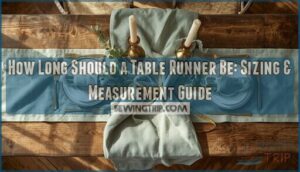
You’ve probably noticed how a table runner can either pull a room together or look completely off—and the difference often comes down to just a few inches. Too short, and it appears like an afterthought floating awkwardly in the middle of your table. Too long, and it drapes onto chairs, collects spills, or creates a tripping hazard for guests reaching across the table.
Getting the length right isn’t about following rigid rules, but understanding a simple formula: your table’s length plus 12 to 24 inches for balanced overhang on each end. The ideal proportions depend on your table shape, the formality of your setting, and how you actually use the space—whether it’s daily family dinners or special occasions.
Table Of Contents
- Key Takeaways
- How Long Should a Table Runner Be?
- Measuring Your Table for a Runner
- Table Runner Sizes for Different Tables
- Should a Table Runner Hang Off The Table?
- Choosing The Right Table Runner Width
- Material and Design Considerations
- Customizing Table Runner Size and Style
- Frequently Asked Questions (FAQs)
- Conclusion
Key Takeaways
- Your table runner should extend 6 to 12 inches beyond each end of the table, with 6 inches for casual settings and 10 to 12 inches for formal occasions, but never exceed 12 inches to avoid interfering with seating.
- Calculate your ideal runner length by measuring your table’s length and adding 12 to 24 inches total (split evenly between both ends), ensuring the width stays between one-third to one-half of your table’s width for balanced proportions.
- Rectangle tables need longer runners than round or square tables, with standard store-bought options ranging from 72 to 108 inches to accommodate most dining tables without custom alterations.
- The right runner creates visual balance while protecting your table’s edges from wear and scuffs, with material choices like cotton for easy washing, polyester for durability, and vinyl for waterproof outdoor use.
How Long Should a Table Runner Be?
Getting the right table runner length isn’t just about aesthetics—it’s about creating balance and proportion on your table. The ideal length depends on your table’s dimensions and how much overhang you prefer at each end.
Let’s break down the standard measurements, recommended overhang guidelines, and how to adjust for different table shapes.
Standard Table Runner Lengths
Most table runners you’ll find in stores come in standard lengths between 72 and 108 inches, with popular options at 72, 84, 90, 96, and 108 inches. These dimensions cover most dining and console tables comfortably.
For smaller tables or accent pieces, you’ll see shorter runner sizes starting around 36 inches, while banquet-style setups might need 120-inch options for proper table runner dimensions.
When choosing a table runner, consider the table runner sizes to guarantee a proper fit for your table.
Recommended Overhang for Runners
Your runner should hang 6 to 12 inches over each end of the table for a balanced table runner drop and edge decoration. For casual dining, stick with 6 inches of overhang per side. Formal settings look better with 10 to 12 inches for a more elegant dining ambiance. Whatever runner length you choose, don’t let the fabric hang past 12 inches—that’s when overhang starts interfering with seating.
Table runners should hang 6 to 12 inches over each end—6 inches for casual dining, 10 to 12 inches for formal elegance, but never past 12 inches to avoid interfering with seating
To achieve a refined look, consider the importance of proper table settings in your dining arrangements.
Adjusting Length for Table Shape
Rectangle tables call for longer runner lengths than round or square ones. Your rectangle table needs 6 to 12 inches of edge overhang on each end, while a round table requires a shorter overall runner length to keep proportional margins around the circumference.
Pairing the right runner length with a standard table runner width ensures your table setting looks balanced and intentional, no matter the shape.
Square tables work best when the runner aligns with each side, creating symmetry balance without corner folds or excessive table runner drop.
Measuring Your Table for a Runner
Getting the right table runner starts with accurate measurements of your table. You’ll need to grab a measuring tape and take a few simple measurements based on your table’s shape.
Let’s walk through exactly how to measure rectangular, round, and square tables so you can find the perfect fit.
Measuring Rectangular Tables

Getting your measurements right is the foundation of a perfectly sized runner. Grab a tape measure and record your rectangle table’s length from edge to edge, then measure the width across the shorter side. For custom sizing, note dimensions to the nearest half-inch.
Add 6–12 inches of edge overhang per side to your table’s length—that’s your ideal table runner length and the key to balanced runner proportions.
Measuring Round and Square Tables

How do you size a runner for round and square tables? For round tables, measure the diameter straight across the center to define your base table runner size. Square tables require measuring one side length since all sides match.
If you’re just starting out, try some beginner-friendly sewing machine projects to build your skills before tackling more complex runner designs.
Both table geometries demand symmetry rules—your edge overhang should extend evenly on all sides, usually 6–12 inches, ensuring balanced round measurements and square dimensions when measuring a table for a table runner length.
Calculating Desired Overhang

How do you determine the perfect drop for your table runner dimensions? Start by choosing your overhang calculation based on the occasion—formal decor typically needs 8–10 inches per side for elegant draping, while casual settings work well with a modest 6-inch edge protection.
- Measure your table width, then add twice your desired overhang for total table runner length
- Formal dining benefits from generous 8–10 inch drops that elevate refined presentation
- Casual gatherings suit shorter 6-inch overhangs, keeping your table runner size neat and practical
Table Runner Sizes for Different Tables
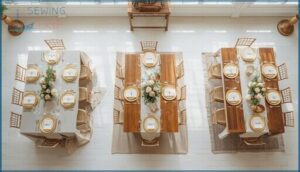
Now that you’ve measured your table, it’s time to match those numbers to the right runner size. Each table shape has its own set of guidelines to guarantee your runner looks balanced and proportional.
Let’s break down the ideal sizing for rectangular, round, and square tables so you can find the perfect fit.
Ideal Runner Length for Rectangular Tables
For a rectangular table, your runner length should extend 6 to 12 inches beyond each end—that’s the sweet spot for balanced dining decor and table protection.
Most designers stick to a 12 to 24-inch total overhang, split evenly on both sides. This table runner size keeps your table settings functional while adding polish, and it won’t interfere with seating or crowd your table runner dimensions.
Runner Size for Round Tables
Round tables need a different approach to table runner sizing. Your circular runner sizes should account for the table’s diameter plus your desired overhang on all sides—usually 6 to 12 inches.
Here’s what works for common round table measurements:
- 60-inch diameter: 84 to 96-inch runner for balanced drape
- 72-inch diameter: 108 to 120-inch runner length
- Add 12 to 24 inches total to your table’s diameter
- Prioritize uniform overhang proportions around the entire perimeter
This diameter calculation ensures your runner drapes evenly.
Sizing for Square Tables
When you’re working with a square table, your runner placement follows the same 6 to 12-inch overhang rule.
| Square Table Size | Recommended Runner Length |
|---|---|
| 30″ x 30″ | 48-54 inches |
| 36″ x 36″ | 54-60 inches |
| 42″ x 42″ | 60-66 inches |
| 48″ x 48″ | 66-72 inches |
| 54″ x 54″ | 72-78 inches |
Your table runner width should stay between 12 to 18 inches for balanced proportions.
Should a Table Runner Hang Off The Table?

Yes, your table runner should hang off the table—but the right amount of overhang matters more than you might think. The length you let drape over the edges affects both the look and function of your runner.
Let’s break down why overhang works and how much you actually need for a polished, practical result.
Benefits of Overhang
A table runner overhang of 6 to 12 inches on each end creates visual balance that makes your dining table runner feel complete, not abrupt. This soft drape enhances aesthetic appeal by framing your centerpieces and drawing the eye toward your tabletop while adding vertical lines that soften hard edges.
Beyond decorative effects, overhang offers functional benefits—it shields your table’s vulnerable end edges from wear, scuffs, and repeated contact.
The right table runner size with proper overhang also signals formality, with longer drops suggesting special occasions and shorter ones keeping things casual and relaxed.
Minimum and Maximum Overhang Guidelines
While a proper overhang adds visual impact, you’ll want to keep it within safe boundaries. Aim for a minimum of 6 inches on each end—anything shorter looks unfinished and won’t protect your table edges effectively. On the upper end, limit your drop to 12 inches maximum for safety reasons, as longer fabric increases snagging risk when guests stand or pull out chairs.
Follow these drop guidelines based on your setup:
- Formal dining tables: Choose 10 to 12 inches for an elegant, deliberate look
- Everyday settings: Stick with 6 to 8 inches for balanced proportions
- Low or small tables: Keep overhangs around 4 to 6 inches to prevent catching
- High-traffic areas: Opt for shorter drops to avoid tripping hazards
Choosing The Right Table Runner Width
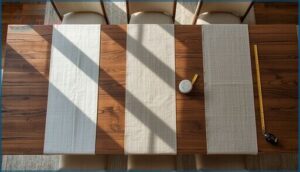
Width matters just as much as length when you’re picking out a table runner. The right width creates balance on your table and keeps your runner from looking lost or cramped.
Let’s look at the standard measurements and how to match your runner’s width to your table’s proportions.
Standard Table Runner Widths
Most table runners fall into a consistent width range that works for typical dining setups. Standard widths between 12 and 18 inches are commonly available at retailers, with 16 inches being the ideal choice for everyday tables. Narrow runners, measuring around 10 inches or less, offer a subtle decorative touch suitable for compact spaces, while wider runners exceeding 18 inches make a bold statement on larger surfaces. The material and fabric of the runner also influence its visual appearance.
Here’s a quick reference for standard table runner sizes:
| Width Category | Typical Measurement |
|---|---|
| Narrow | 10 inches or less |
| Standard | 12–18 inches |
| Most Common | 16 inches |
| Wide | Over 18 inches |
Proportioning Width to Table Size
When selecting runner sizing, aim for a width that’s about one-third to one-half of your table’s width. This ratio creates visual balance without overwhelming the surface. For a standard 36-inch-wide table, a 12 to 16-inch runner hits that sweet spot. Wider tables, say 48 inches across, can handle runners up to 20 inches comfortably.
The key is maintaining edge clearance—you’ll want several inches of bare table showing on each side so your runner doesn’t crowd the space. These width guidelines work across most table runner sizes, giving you flexibility while keeping proportions harmonious and practical for everyday use.
Material and Design Considerations

Once you’ve nailed down the right size, the material and design of your table runner become just as important. The fabric you choose affects how long your runner will last and how easy it is to keep clean.
Your color and pattern choices should match the occasion and tie your whole look together.
Fabric Types and Durability
Your fabric choice influences how long your table runner will actually last. Cotton offers breathability and easy machine washing—even with bleach when needed—making it ideal for everyday dining. Polyester stands up to repeated use without fading or wrinkling, plus it resists stains better than natural fibers. For outdoor settings, vinyl delivers waterproof protection you can simply wipe clean.
Consider these durability factors:
- Fiber strength – Polyester maintains color and shape longer than cotton
- Weave patterns – Tighter weaves in cotton improve structural integrity
- Textile care – Linen requires careful maintenance but rewards you with years of elegant service
Material durability directly affects your replacement frequency and long-term value.
Color, Pattern, and Occasion
Your dining table tells a story before anyone sits down, and the runner you choose sets the tone for the entire meal. Match formal events with elegant fabrics in subdued colors—think champagne, navy, or ivory. Casual decor calls for vibrant patterns and relaxed textures that invite conversation. Seasonal themes keep your table setting fresh throughout the year.
| Occasion | Color Schemes | Pattern Mixing |
|---|---|---|
| Formal Events | Neutral, metallic | Minimal or none |
| Casual Gatherings | Bright, varied | Stripes, florals |
| Holiday Dinners | Seasonal tones | Themed designs |
| Everyday Dining | Adaptable shades | Subtle textures |
Your table decoration should reflect both the moment and your personal style.
Customizing Table Runner Size and Style

Sometimes you can’t find a table runner that fits your table perfectly or matches your vision. Making your own runner gives you complete control over size, fabric, and design details.
Here’s how to customize a table runner that’s exactly right for your space.
Making a DIY Table Runner
Creating your own table runner gives you complete control over fabric selection, dimensions, and custom designs. Start by measuring your table runner size—most DIY patterns call for lengths between 60 and 120 inches with widths from 12 to 20 inches. Choose fabrics like cotton, linen, or burlap for easy cutting and sewing.
When crafting your runner, consider these essentials:
- Sewing techniques like topstitching or French seams for clean, durable edges
- Runner embellishments such as decorative trim or custom monograms
- Hemming allowance of ½ to 1 inch on all sides for a polished finish
This table runner sizing guide ensures your handmade piece fits perfectly.
Personalizing Runners for Your Decor
Transforming a simple table runner into a signature piece that speaks to your unique style happens when you align every design choice with your home’s existing palette and personality. Match color schemes to your room styles—soft neutrals for minimalist spaces, bold patterns for eclectic areas.
Your fabric choices should complement existing table settings, whether you’re drawn to linen for casual charm or silk for formal elegance. Consider decor themes when choosing the right table runner size and style. Customizing a table runner means thinking beyond measurements to how it fits your lifestyle.
Current table runner styles and trends favor mix-and-match textures that layer beautifully.
Frequently Asked Questions (FAQs)
Can I use a table runner and a tablecloth together?
Yes, you can pair them beautifully. Layer a runner over your tablecloth to add depth with coordinating colors and contrasting fabric choices—this creates rich dining decor that elevates any table setting without overwhelming the space.
What are the benefits of using a table runner?
A table runner shields your table from heat and spills while adding a decorative accent and aesthetic appeal to any setting.
It defines place settings beautifully, makes cleaning easier, and reduces wear on your table’s finish.
Can you layer multiple table runners together?
Absolutely—stacking runners creates visual depth through texture mixing and color contrast. Try a wide base layer with a narrower patterned piece on top, adjusting overhang to maintain balance and showcase your tablescaping ideas beautifully.
How do you prevent runners from sliding?
You can use non-slip pads or table grippers underneath, apply fabric weights at the ends, or add anti-slip coatings to the runner’s underside to keep it anchored securely during your table setting.
Do seasonal themes affect runner length choices?
Seasonal decor does influence runner lengths for themed events. Winter holiday settings often feature longer drapes for formal table aesthetics, while summer gatherings favor minimal overhang, keeping measuring table runner size practical and safe.
Whats the difference between runners and placemats?
Runners run the length of your dining table as a centerpiece accent, while placemats mark individual eating spaces.
One creates a focal line for decorative elements; the other protects surfaces under each plate with functional purposes.
How often should you replace table runners?
Replace your table runner when frayed edges or permanent stains appear, usually every 1–3 years with regular use.
Polyester blends with stain resistance last longer than cotton, reducing maintenance costs and replacement frequency.
Conclusion
Picture a 72-inch dining table with a perfectly proportioned 96-inch runner—each 12-inch drop frames the ends with just enough visual weight to anchor your centerpiece without interfering with place settings. That’s the practical beauty of understanding how long a table runner should be.
Measure your table, add your preferred overhang (usually 12 to 24 inches total), and you’ll create a balanced look that works for both everyday meals and special gatherings. The formula is simple, the impact immediate.
- https://www.cuemath.com/geometry/diameter/
- https://en.wikipedia.org/wiki/Tableware
- https://www.allcottonandlinen.com/blogs/tablecloths/how-to-measure-a-table-runner
- https://www.birchlane.com/sca/the-home-guide/guides/how-to-find-the-right-table-runner-sizes-styles-T9895
- https://www.cvlinens.com/blogs/styling-tips/how-long-should-table-runner-be