This site is supported by our readers. We may earn a commission, at no cost to you, if you purchase through links.
Your favorite windbreaker just came back from a camping trip covered in mud and campfire smoke. You toss it in the wash like cotton, crank up the heat, and pull out a shrunken, pilled disaster.
Nylon doesn’t follow the same rules as natural fibers—it needs cooler water, gentler handling, and a completely different approach to stain removal. Get it wrong and you’ll watch expensive gear lose its shape, color, and performance features.
The good news is that once you understand nylon’s quirks, keeping it clean becomes straightforward. From choosing the right detergent to protecting water-repellent coatings, a few simple adjustments will keep your athletic wear, backpacks, and outdoor gear performing like new for years.
Table Of Contents
Key Takeaways
- Nylon requires cold to warm water (105-140°F) and mild detergent on delicate cycles because hot water causes shrinking, melting, and permanent fiber damage that ruins your gear.
- You must blot fresh stains immediately and pre-treat with enzyme cleaners for protein-based marks or dish soap for oils before washing to prevent permanent setting into the synthetic fibers.
- Air drying flat or on wide-shouldered hangers protects nylon’s shape and elasticity better than machine drying, which risks heat damage, wrinkles, and loss of water-repellent coatings.
- Store your nylon completely dry in cool, ventilated spaces away from sunlight and chemicals to prevent mildew growth, odor buildup, color fading, and fiber breakdown over time.
What is Nylon and Why Clean It?
Nylon shows up in everything from your gym bag to your favorite windbreaker, and it’s built to handle a beating. Even tough synthetic fabrics need the right care to stay looking sharp and performing well.
If you’re sewing with nylon for outdoor projects, check out this guide on choosing the best materials for outdoor flags to see how it stacks up against other weather-resistant fabrics.
Let’s break down what makes nylon special, why regular cleaning matters, and what challenges you’ll face when tackling dirt and stains.
Common Uses of Nylon
Nylon textiles show up in more places than you might think. This synthetic fabric plays a starring role in everyday life because of its outstanding strength and versatility.
Its technical specs make it a top pick for gear and activewear, and you’ll find it alongside other fabric types for sewing projects that prioritize durability.
You’ll find nylon in:
- Athletic gear, fishing lines, and toothbrush bristles thanks to its resilience
- Automotive components and industrial applications where toughness matters
- Medical devices and surgical sutures requiring sterility
Understanding where nylon appears helps you clean it correctly.
Benefits of Regular Cleaning
Keeping your nylon clean isn’t just about appearances—it protects your investment. Regular laundering prevents body oils and salts from dulling fabric color and brightness, while stopping odors before they settle in.
Regular laundering protects your nylon investment by preventing body oils from dulling colors and stopping odors before they settle in
You’ll also dodge fiber abrasion caused by dirt buildup, extending your gear’s lifespan.
Plus, frequent cleaning removes stains while they’re fresh, preserving that like-new look you love.
Following a fabric care instructions guide helps you choose the right cleaning methods for each material, so colors stay vibrant and fibers stay strong.
Nylon’s Cleaning Challenges
Despite nylon’s impressive durability and stain resistance, this synthetic fabric comes with its own set of cleaning hurdles. Understanding these challenges helps you protect your investment.
For more on how natural vs synthetic fabric properties compare across different materials, it’s worth exploring their unique care requirements.
- Oils and soils cling stubbornly to nylon fibers, demanding targeted pre-treatment.
- Fabric blending with spandex or coatings reacts unpredictably to detergents.
- Heat sensitivity limits safe drying temperatures—high heat causes shrinking or melting.
- Static buildup creates wrinkles after storage.
- Abrasion from rough washing causes pilling and weakens fibers over time.
Preparing Nylon for Cleaning

Before you start cleaning, take a few minutes to prep your nylon items the right way. This step helps prevent color bleeding and fabric damage, and sets you up for better stain removal.
Here’s what you need to do first.
Sorting Nylon by Color and Type
Before you toss everything in together, separate your nylon by color—darks with darks, whites with whites—to stop dye transfer in its tracks.
Next, split items by type: pure nylon goes in one pile, blends in another. This simple color coding and fabric sorting prevents mechanical stress and keeps delicate pieces like lace away from sturdier gear, giving you total control over your laundry results.
Pre-Treating Stains
Quick action is your best ally when spills strike. Blot fresh stains gently with a clean cloth—don’t rub—to lift excess liquid before it sets into the fibers.
Once the area is dry, you can explore creative options like applying glitter with fabric-safe adhesive to refresh or embellish the cleaned spot.
- Apply enzyme cleaners to protein-based stains like sweat or milk using cold water
- Dab dish soap directly on oil stains and grease spots for effective pre-treatment
- Test your stain remover on a hidden area first to prevent discoloration
- Let the cleaning solution sit for 5-10 minutes before washing
- Rinse thoroughly after stain treatment to remove all soap residue
How to Hand Wash Nylon Safely
Hand washing nylon gives you complete control over the cleaning process and protects delicate items from the rough-and-tumble of machine cycles.
You’ll get the best results when you use the right products, stick to safe water temperatures, and follow a proven technique.
Here’s what you need to know to hand wash nylon without causing damage.
Choosing The Right Detergent

Your detergent selection makes all the difference regarding fabric safety. Choose mild detergent or liquid formulas designed for delicate fabrics—they provide gentle cleaning without harsh enzymes that damage nylon fibers.
Look for color-safe laundry detergent that skips optical brighteners and maintains lower pH levels for better color preservation. Hypoallergenic soap options reduce irritation while keeping your signature detergent routine effective and safe.
Proper Water Temperature

Water temperature controls everything when washing nylon—get it wrong, and you’ll face shrinkage or fading. Use lukewarm water between 105 to 140 degrees Fahrenheit for fabric care that balances effective stain removal with color safety.
- White nylon tolerates warmer water for better cleaning power
- Colored items need cold water closer to 105°F to prevent dye bleeding
- Check care labels before washing nylon to avoid permanent damage
This simple laundry detergent temperature match protects your investment.
Step-by-Step Hand Washing Process
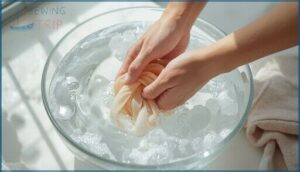
Hand wash nylon fabric care begins with proper preparation. Fill a basin with cold water between 105–140°F, then add mild detergent designed for synthetics. Submerge your nylon completely and use gentle agitation—swirl the fabric for 1–3 minutes without wringing.
Rinse techniques matter: flush with clean water until soap vanishes. These drying methods and soap selection protect against stain removal challenges while preserving your material’s integrity.
How to Machine Wash Nylon Items
Machine washing nylon doesn’t have to be complicated if you follow a few key guidelines. Your washing machine can handle nylon just fine when you use the right settings and take simple precautions.
Here’s what you need to know to protect your nylon items while getting them thoroughly clean.
Delicate Cycle Settings
Set your machine to the delicate cycle for gentle washing that protects nylon from fiber stress and pilling. Choose a spin speed between 400 and 600 RPM—cycle speed control matters here. Keep the water temperature at cold or warm (30–40°C) for fabric protection.
These delicate modes with reduced agitation preserve your nylon’s integrity while still delivering effective laundry care.
Using Mesh Bags for Protection
Think of a mesh bag as your nylon’s shield in the washing machine. Place your delicate nylon items inside a 12–20 inch mesh bag before starting the delicate cycle—this simple step delivers powerful fabric protection.
- Reduces friction and prevents snags from zippers or drum surfaces
- Maintains garment shape by limiting excessive agitation during wash cycles
- Preserves colors by separating light nylon from darker laundry items
- Allows water and detergent to circulate while protecting delicate fibers
Avoiding Fabric Damage
Your nylon’s Abrasion Resistance can’t protect it from everything. Skip hot water—it accelerates Fiber Degradation and breaks down material strength. Always use Mild Detergent and Lukewarm Water on a Delicate Cycle with Low Heat drying settings. Check Care Instructions before every wash.
Wrong detergents containing harsh solvents trigger Color Fading and weaken fibers fast. These simple precautions deliver unbeatable Textile Protection against Fabric Wear that shortens your gear’s lifespan.
Effective Stain Removal From Nylon

Stains happen fast, but catching them early makes all the difference. Nylon’s non-absorbent surface actually works in your favor—most spills sit on top rather than soaking in deep.
You’ll need different approaches depending on what you’re dealing with, so let’s break down the most effective methods.
Blotting and Treating Fresh Stains
Speed matters when spills happen. Grab a clean white cloth or paper towel and blot the excess liquid immediately—don’t rub, or you’ll push the stain deeper into the fibers. Apply gentle pressure to lift moisture without spreading it.
Keep blotting with fresh fabric care materials until nothing transfers. This quick spot cleaning prevents permanent damage and makes stain removal easier later.
Safe Home Remedies (Vinegar, Club Soda)
Once you’ve blotted the stain, two pantry staples can come to the rescue. Mix equal parts white vinegar and water, apply to the spot, and let it sit for up to five minutes before rinsing with cold water—vinegar benefits include neutralizing odors and lifting light residues.
For fresh stains, pour club soda directly onto the area; its carbonation loosens particles without harsh scrubbing.
Handling Tough or Oily Stains
When grease or oil hits your nylon, water-based cleaners won’t cut it. Apply a liquid enzyme-based stain remover directly to the spot and let it work for 10 to 15 minutes—enzymatic action breaks down oily residues that synthetic fabric care demands.
- Use cool water; hot water sets oil permanently
- Pre-treat with a dab of liquid detergent for degreasing methods
- Launder with heavy-duty detergent after enzyme treatment
- Air-dry completely to check if the stain is gone before heat-drying
Best Practices for Drying Nylon

Drying nylon the right way keeps your items looking great and lasting longer. You’ve got two main options—air drying or using a machine—and each comes with its own set of smart moves.
Here’s what you need to know about protecting your nylon from heat damage, wrinkles, and losing its shape.
Air Drying Vs. Machine Drying
Which drying method should you choose after washing? Air drying minimizes heat damage and preserves nylon’s elasticity better than high-heat cycles. Machine drying on low heat works, but it risks fabric shrinkage and fiber damage.
Air drying extends drying times yet offers enhanced energy efficiency and fiber preservation. Hang your items or lay them flat to protect their shape and avoid mechanical wear from tumbling.
Preventing Wrinkles and Static
Timing matters for wrinkle prevention and static reduction. Remove your nylon items promptly after washing to prevent deep creases from setting in.
Dry them on low heat or hang them slightly damp to relax wrinkles naturally. Light steaming afterward helps with fabric relaxation without damaging synthetic fibers.
These anti-cling methods and drying techniques keep your nylon looking fresh and smooth.
Protecting Nylon’s Shape
Support matters during fabric handling to protect your nylon’s shape. Never hang nylon garments while they’re wet—this causes shoulder sag and stretching. Instead, lay items flat or fold them carefully for proper shape retention. If you must use hangers, choose wide-shouldered ones that distribute weight evenly.
When storing nylon, avoid piling heavy objects on top, which creates pressure-induced wrinkles and deformation.
Long-Term Nylon Care and Maintenance

Keeping your nylon items clean is just the beginning. To get the most life out of your gear, you need to think beyond the wash cycle.
Here’s how to store, protect, and maintain your nylon so it stays in great shape for years.
Storing Nylon Properly
Proper storage keeps your nylon gear looking new and performing well. Store nylon items in a cool, dry place away from direct sunlight to prevent fading and fiber breakdown. Fold garments neatly or hang them on padded hangers to maintain their shape.
Use breathable containers for fabric protection—they block dust while allowing air circulation. Keep nylon away from harsh chemicals and high humidity environments to guarantee long-lasting textile maintenance and fabric preservation.
Preventing Mildew and Odors
Moisture is mildew’s best friend, so always verify your nylon is bone-dry before putting it away.
Store items in well-ventilated spaces using breathable cloth bags instead of sealed plastic—this simple storage tip prevents moisture management issues and odor control problems. For laundry rooms or closets prone to dampness, place moisture absorbers nearby.
If you catch a musty smell early, vinegar works wonders for nylon cleaning and mildew prevention.
Repairing Small Damages
A small tear won’t end your nylon item’s life if you act fast. Trim loose threads, then apply fabric adhesives or a nylon patching kit to seal holes from the inside. Use a tight zigzag stitch for seam reinforcement and tear repair.
For fray prevention along edges, add a thin line of clear sealer. These clothing maintenance and repair steps preserve synthetic fiber maintenance quality while extending your nylon’s lifespan.
Frequently Asked Questions (FAQs)
What is the best way to store nylon fabrics?
Think of storage as nylon’s sanctuary—cool, dry spaces shield fabric from sunlight’s harsh rays.
Use breathable containers or cotton bags, keeping pieces flat or hung to prevent creases while maintaining their original shape.
Does nylon shrink when it is washed?
Pure nylon won’t shrink in cool or warm water, but hot wash temperatures above 80°C can cause fiber contraction. Nylon blends with cotton or rayon shrink more easily than 100% nylon fabrics.
To maintain the quality of nylon fabrics, it’s necessary to follow proper nylon care tips for washing and drying.
How often should nylon fabrics be washed?
Ironically, the “wash after every wear” rule doesn’t apply here. Wash nylon when visibly soiled or after 1-3 uses for athletic wear.
Outer shells need laundering every 1-4 weeks, depending on exposure and fabric hygiene needs.
Can I use bleach on nylon fabrics?
No, you shouldn’t use bleach on nylon. Chlorine bleach degrades fibers, causes color fading, and weakens fabric strength.
For safe stain removal techniques on synthetic materials, stick to enzyme-based cleaners and gentle laundry care tips instead.
Is there any special care needed for nylon swimwear?
Yes. Rinse nylon swimwear immediately after swimming to remove chlorine, salt, and sunscreen residues. Hand wash with mild detergent in cool water. Air dry away from direct sunlight to preserve elasticity and color fastness.
Can nylon be ironed without causing damage?
Nylon fabric can be ironed on low heat settings with a pressing cloth. Steam usage should remain minimal.
Always test an inconspicuous area first, as high temperatures melt nylon, causing permanent damage and distortion.
How often should nylon items be cleaned?
Clean nylon clothing after 1–2 wears under normal conditions.
Wash active gear after each use when soiled or odorous.
Bedding and upholstery need cleaning every 1–3 months, depending on visible dirt and usage intensity.
Does nylon fade after repeated washing cycles?
Will your favorite nylon jacket lose its vibrant hue over time? High-quality nylon exhibits excellent color fastness and dye stability.
When washing nylon properly with mild detergent and cool water, you’ll prevent fading and maintain fabric durability across repeated wash cycles.
Can nylon be dry cleaned professionally instead?
You can take nylon to a professional dry cleaner, though it’s not always necessary. Check your garment’s care label first—some nylon items benefit from specialty solvents that protect delicate finishes.
What removes yellowing from old nylon fabric?
Over time, your favorite gear can take on a dingy, yellowed look that seems impossible to reverse.
Hydrogen peroxide (3%), oxygen bleach, or a vinegar soak can brighten old nylon fabric safely and effectively.
Conclusion
Protecting performance fabrics becomes practically painless once you master the basics. Learning how to clean nylon correctly saves your gear from heat damage, pilling, and lost water resistance.
Check every care label before washing. Use cool water and mild detergent consistently. Skip the dryer whenever possible.
These simple habits keep athletic wear, backpacks, and outdoor equipment functioning at peak performance for years. Your nylon items will outlast expectations when you treat them with the right technique from day one.