
This site is supported by our readers. We may earn a commission, at no cost to you, if you purchase through links.
You know that sinking feeling when a spill lands right on your favorite nylon jacket? Whether it’s a splash of coffee, a streak of mud, or the greasy aftermath of street food, nylon doesn’t forgive easily—and the wrong cleaning move can ruin its shine or wreck the fabric. Nylon jackets are tough, but their care isn’t as simple as tossing them in the wash and hoping for the best.
How to clean nylon jacket comes down to knowing the tricks that keep it looking sharp without damaging the fibers or finish. With the right steps, you can tackle stains, protect delicate stitching, and keep your jacket feeling fresh—no drama, no guesswork.
Table Of Contents
Key Takeaways
- Always check your nylon jacket’s care label and prepare it by emptying pockets, inspecting seams, closing zippers, and turning it inside out before washing.
- Treat stains before washing by blotting gently and using mild, bleach-free detergents or enzyme cleaners, testing any treatment on a hidden area first.
- Wash your jacket in cold water using a mesh laundry bag and gentle detergent, then rinse thoroughly to avoid residue and air dry away from heat.
- Avoid fabric softeners and high heat, and use a low-heat garment steamer or pressing cloth for wrinkle removal to protect the nylon’s finish and water-repellent coating.
What You’ll Need
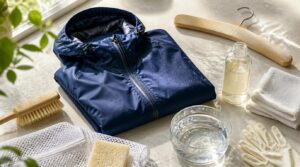
Before you start cleaning your nylon jacket, it’s important to have the right tools on hand. Each item will help protect the fabric and make your job easier. Here’s what you’ll need to get started.
Mild Bleach-free Detergent
Reach for a mild bleach-free detergent to protect your nylon jacket. These detergents use nonionic or anionic surfactants to lift dirt without damaging fibers. Most stay at a neutral pH (7–9), so colors don’t fade and the fabric remains elastic.
For more tips on keeping your nylon gear in top shape, check out this comprehensive guide to caring for nylon fabrics and accessories.
Some include enzymes for extra stain removal, and eco-friendly formulas help avoid skin irritation and environmental harm. Using plant-based ingredients can further reduce the risk of fiber damage.
Mesh Laundry Bag
A mesh laundry bag protects your nylon jacket from snags and friction in the machine. Choose a bag with hole sizes around 1–2.5 mm for delicate garment protection. Large bags fit bulkier jackets.
Secure closures like hidden zippers keep contents safe, while airflow prevents moisture buildup. Always inspect seams and closures monthly to extend bag longevity and safeguard your washing routine.
Soft Microfiber Cloth
A soft microfiber cleaning cloth is your secret weapon for quick touch-ups on a nylon jacket. Its ultra-fine fibers—about 80% polyester, 20% polyamide—grab dust and oils with electrostatic attraction. The dense weave prevents scratches and lint.
After stain removal or washing, use the cloth damp or dry for streak-free wiping. Wash it in cold water; skip fabric softener.
Clean Towels
You’ll want clean, absorbent towels nearby for drying your nylon jacket after washing. Cotton towels work best—they soak up moisture quickly and don’t leave lint behind.
Test absorbency by pouring water: if it disappears fast, your towel’s ready. Replace towels if they feel stiff or have persistent odors. Dry jackets on towels, never directly on heated surfaces.
Low-heat Garment Steamer
Fire up your low-heat garment steamer to tackle wrinkles without risking shine or damage. Low heat means safer steaming—keep the temp below 180°F for delicate nylon. Choose distilled water to prevent mineral buildup and extend steamer life. Compact, handheld models are perfect for travel or quick fixes. Here’s why you’ll love it:
- Safe wrinkle removal
- Easy fabric care
- Travel-friendly design
Prepare Your Nylon Jacket
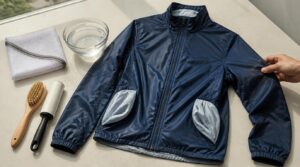
Getting your nylon jacket ready before washing is the first step to keeping it in top shape. Small actions can make a big difference in protecting the fabric and details. Here’s what you should do before you begin cleaning.
Check The Care Label
Before you dive into cleaning, read the care label—it’s your blueprint for safe washing. Look for washing instructions, fabric types, and temperature limits. Decoding symbols helps you spot if machine wash, cold water, or dry-cleaning is required.
For tips on handling synthetics, check out expert advice on common washing mistakes and fabric care essentials to keep your clothes looking their best.
Always check your jacket’s care label first—it’s your guide to safe washing, fabric type, and temperature limits
If your jacket’s nylon mix lists “no bleach,” pick a compatible detergent. Don’t skip this step—following the tag prevents mistakes and preserves fabric care.
Empty All Pockets
Reach into every pocket before washing nylon jackets — coins cause rust stains, and a forgotten lip balm can ruin an entire load with dye transfer.
- Check for hidden compartments along seams
- Remove keys, coins, and receipts
- Place items in a small tray nearby
Even tissues leave residue. Quick pocket checks make laundry tips actually work.
Inspect Rips and Seams
A small tear today becomes a ruined jacket tomorrow. Lay the jacket flat and run a finger along each seam line to catch gaps or separation.
Pay extra attention to high-stress points — armholes, shoulder areas, and pocket corners — where cracked or broken stitches appear first. Spot any frayed edges or skipped stitches before washing makes them worse.
Close Zippers and Snaps
Fasten every zipper before the jacket hits the water. Open zippers snag neighboring fabric during agitation, and that friction can pull threads or warp the slider out of alignment.
Check your snaps too — press each one firmly until you hear that clean click. A half-engaged snap can catch fabric mid-cycle and stress the socket.
Turn Jacket Inside Out
Flip your jacket inside out before it goes anywhere near water. This simple move shields the outer shell and DWR coating from agitation friction while giving you a clear view of the lining. Check for internal stains, loose seams, and pocket debris you’d otherwise miss.
On synthetic fabrics like nylon, that reversed position during washing makes a real difference.
Remove Stains Before Washing
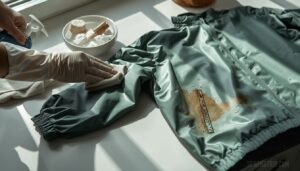
Stains are best tackled before the jacket ever touches water — once they set in the wash, they’re much harder to budge. Different stains need different approaches, so knowing what you’re dealing with makes all the difference. Here’s how to handle the most common ones you’re likely to run into.
Food Stain Treatment
Food stains are sneaky — proteins, oils, and pigments each behave differently on nylon. Start by blotting the excess with a clean cloth, never rubbing. Then apply mild detergent solution and let it sit for 15 minutes.
- Use cold water rinsing to stop proteins from setting
- Apply enzyme pretreatment to break down starches and residue
- Blot pigment stains promptly before color binds deeper
Grease and Oil Stains
Grease stains fight back harder than food residue because oil actively repels water. Start by sprinkling baking soda or cornstarch directly on the spot — these desiccants pull surface oil out before it sinks deeper. Wait five minutes, then brush away.
Next, apply a small amount of liquid dish soap or enzymatic detergent, blotting gently. Never rub; rubbing spreads the stain.
Gum or Wax Removal
Sticky situations like gum or wax call for cold, not scrubbing. Press an ice pack wrapped in cloth against the spot for 5–10 minutes until it hardens. Then use a plastic scraper or old credit card to lift it off in shallow strokes.
Any leftover residue? Dab with rubbing alcohol or white vinegar on a cloth — never directly on the nylon. Always test solvents on a hidden seam first.
Organic Stain Cleanup
Blood, urine, or vomit on nylon needs a targeted approach. These are protein-based stains — enzymes break them down far better than scrubbing ever will.
Try these treatments:
- Apply 3% hydrogen peroxide directly with a cloth
- Use an enzymatic cleaner and let it sit 5–10 minutes
- Dab diluted white vinegar to lift stubborn residue
- Rinse with cool water to prevent setting
Test Hidden Fabric First
Before applying any stain treatment to visible areas, test it on a hidden spot first — an inside seam or hem works perfectly. This small step catches dye bleeding and fiber reaction early, protecting your jacket’s appearance before anything goes wrong. Think of it as a preview: your fabric care instructions and detergent compatibility get confirmed quietly, away from the spotlight.
| What to Test | Why It Matters |
|---|---|
| Colorfastness | Prevents dye bleeding onto other fabric |
| Fiber reaction | Detects unexpected texture or stiffness changes |
| Detergent compatibility | Avoids residue, rings, or color shifting |
| Dye stability | Confirms pigments hold under moisture and friction |
| Hidden spot evaluation | Protects visible areas from irreversible damage |
Wash and Dry Nylon Safely
With stains out of the way, it’s time to give your jacket a proper wash without risking damage to the fabric. Nylon can be surprisingly easy to clean once you know the right approach for each step. Here’s how to wash and dry it safely.
Hand Washing Steps

Fill a basin with lukewarm water and a few drops of mild bleach-free laundry detergent. Submerge your jacket and let it soak for about 10 minutes.
Gently work the soapy water through the fabric using slow circular motions — no harsh scrubbing. Rinse thoroughly until the water runs completely clear, removing every trace of detergent residue to keep the nylon soft.
Machine Washing Steps
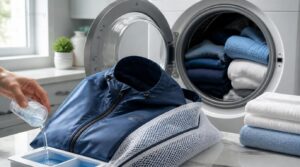
Count on these four steps for a safe machine wash:
- Place your jacket in a mesh laundry bag for extra protection.
- Load your washer evenly—don’t crowd the drum or overload.
- Add mild bleach-free detergent using the recommended dose.
- Select the gentle cycle and a low temperature setting to avoid fiber damage.
Remove promptly to minimize wrinkles.
Use Cold Water
Washing nylon jackets with cold water is your best defense against shrinking, color bleeding, and fiber damage. Cool cycles protect delicate synthetic fabric and keep colors sharp wash after wash.
Plus, you’ll save energy—no need to heat water. Enzyme detergents designed for cold work wonders, breaking down stains without high temps. Stick to low temperature settings and gentle cycles every time.
Rinse Detergent Fully
If you want your nylon jacket to feel clean, rinse detergent fully—don’t leave any soap behind. Residue dulls fabric, causes itchiness, and traps odors. Keep rinsing until water runs clear. For heavy soils, run an extra rinse.
Soft water boosts rinse efficiency, so jackets dry brighter and softer. Always use a mild bleach-free laundry detergent to avoid buildup.
Air Dry Away From Heat
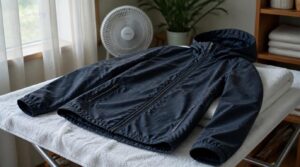
Think your dryer’s the answer? Nylon fibers hate heat. Air dry your jacket in a cool, shaded spot—never near radiators or sunlight.
For best airflow, lay it flat on a towel, prop it up with a second towel, and use a low-power fan. Keep humidity low and room temperature steady, ideally 60–75°F. Rotate often to prevent warping and damp pockets.
Top 3 Nylon Jacket Cleaning Items
Having the right tools makes cleaning your nylon jacket much easier and safer. You’ll want to pick items that protect the fabric and simplify each step. Here are three essentials to keep on hand for every wash.
1. Laundress Delicate Wash Liquid Detergent
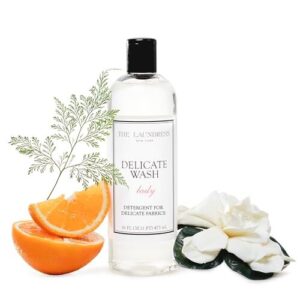
One top pick for washing nylon jackets is Laundress Delicate Wash Liquid Detergent. This double-concentrated formula lasts through 31 loads in a 16 fl oz bottle, saving space and money.
Because it’s enzyme-free, you won’t risk damaging sensitive nylon fibers or water-resistant coatings. The detergent is perfect for hand or machine washing, especially in cold water. Its subtle Lady fragrance brings citrus-floral notes, keeping your jacket fresh without overpowering. Always test for colorfastness before use and rinse thoroughly.
| Best For | People looking for gentle, professional-quality cleaning of delicate fabrics like silk, linen, satin, or nylon garments. |
|---|---|
| Fabric Care | Gentle washing |
| Weight | 1.17 pounds |
| Portability | Compact bottle |
| Usage | Hand/machine washing |
| Limitations | No tumble drying |
| Suitable For | Delicate fabrics |
| Additional Features |
|
- Enzyme-free formula protects sensitive fibers and water-resistant coatings
- Double-concentrated liquid saves money and storage space, lasting up to 31 loads
- Pleasant citrus-floral fragrance adds a fresh scent without being overpowering
- Requires cold water washing for optimal results
- Not suitable for use in tumble dryers; garments must be air dried
- Users need to test color fastness before washing to prevent potential fading
2. Dovety Handheld 2 In 1 Steamer
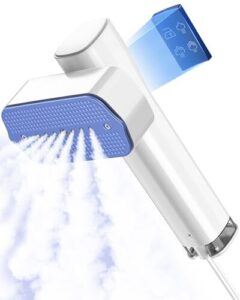
If you’re chasing wrinkle-free results after washing, reach for the Dovety Handheld 2 In 1 Steamer. Its 90-degree rotating steam head lets you tackle jackets vertically or flat, so you don’t need a bulky ironing board. The fast 25-second heat-up means you can refresh your nylon jacket in a pinch.
Three steam settings suit everything from delicate nylon to sturdy denim. With a leak-proof design and easy-to-follow LED prompts, you get safe, smooth operation—perfect for both home and travel.
| Best For | Travelers, busy professionals, and anyone looking for a quick, portable solution to remove wrinkles from a variety of fabrics. |
|---|---|
| Fabric Care | Wrinkle removal |
| Weight | 0.8kg |
| Portability | Travel-friendly |
| Usage | Steaming/ironing |
| Limitations | Burn risk |
| Suitable For | Various textiles |
| Additional Features |
|
- Versatile design allows both vertical steaming and horizontal ironing without an ironing board
- Fast 25-second heat-up and lightweight build make it ideal for travel and quick touch-ups
- Leak-proof technology and LED display ensure safe, easy operation
- Only works in regions with 110V–130V electrical outlets
- Small water tank (100mL) requires frequent refills for extended use
- High surface temperatures mean users must be careful to avoid burns
3. Large Mesh Delicates Laundry Bags
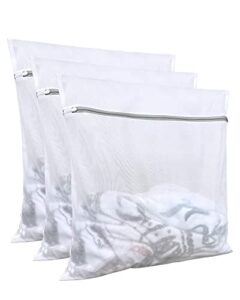
If you’re after maximum garment protection, large mesh delicates laundry bags are your safety net. The 24 x 24-inch polyester mesh shields nylon jackets from friction, snags, and stretching in both washers and dryers. Secure zippers and reinforced stitching keep your jacket’s shape intact, while the breathable weave helps rinse away detergent.
Slip your jacket inside, tuck the zipper under its cover, and keep the bag no more than two-thirds full for best results—think of it as armor for your delicates.
| Best For | People who want to protect delicate or easily tangled clothing—like lingerie, bras, or jackets—during machine washing and drying. |
|---|---|
| Fabric Care | Protects delicates |
| Weight | 150 Grams |
| Portability | Lightweight bags |
| Usage | Laundry/organizing |
| Limitations | No dry cleaning |
| Suitable For | Lingerie/baby clothes |
| Additional Features |
|
- Durable polyester mesh material resists tearing and allows for thorough cleaning.
- Secure zipper with elastic cover prevents snagging or opening during cycles.
- Versatile for both laundry use and organizing other small items.
- Must not be filled more than two-thirds full for effective cleaning.
- Not suitable for dry cleaning, bleaching, or ironing.
- Zipper requires proper tucking under the elastic cover to avoid snagging.
Frequently Asked Questions (FAQs)
Can a nylon jacket be washed?
Washing a nylon jacket is like caring for a raincoat—cold water and a gentle cycle are your best friends. Avoid high heat or harsh chemicals, and always check the care label for special instructions.
How do you get stains out of nylon jackets?
To get stains out of nylon jackets, treat spots with a mild detergent solution or use enzyme-based cleaners for organic stains. Always blot, never scrub. Test treatments on a hidden area first to avoid color loss or fabric damage.
What cleans nylon the best?
Mild, bleach-free detergent and cold water clean nylon best, preserving the fibers and finish. For stains, a soft microfiber cloth gently lifts debris. Avoid harsh chemicals, fabric softeners, or hot water—those can damage or dull nylon.
How to remove black grease from a nylon jacket?
Blot up surface grease using a clean cloth, then sprinkle baking soda to absorb oil. Apply grease-cutting dish soap and gently brush. Rinse with cold water from the fabric’s back, then launder as directed on the care label.
How often should I clean my nylon jacket?
Wash your nylon jacket when you notice visible dirt or odor—usually after 5–10 wears for casual use. If you sweat a lot or get stains, clean it sooner. Regular airing helps extend wash intervals.
What type of detergent should I use for my nylon jacket?
Worried about harsh chemicals? Stick with a mild liquid detergent that’s bleach-free and made for delicates or sportswear. Fragrance-free options help avoid residue. Avoid fabric softeners—these break down water-repellent coatings and weaken nylon fibers.
How do I remove stubborn stains from my nylon jacket?
To tackle stubborn stains, apply a bleach-free detergent or dish soap directly to the spot, let it sit for ten minutes, then gently rub with a soft cloth and rinse with cool water. Repeat if needed.
Is it safe to use fabric softener on nylon jackets?
Fabric softener isn’t safe for most nylon jackets. It can leave a residue that weakens water-repellent finishes, reduces breathability, and attracts dirt. Always check the care label—when in doubt, skip softener and use mild detergent.
Can nylon jackets be ironed without damage?
You can iron nylon jackets safely if you use the lowest temperature setting for synthetics and always place a pressing cloth between the iron and fabric. Avoid direct heat—too much will cause melting, glossiness, or permanent damage.
How often should nylon jackets be cleaned?
If you think nylon jackets are immortal and never dirty, think again—clean every 4 to 8 wears for mild use. After muddy hikes or sweaty activity, wash after 2 to 3 wears to keep fabric fresh and safe.
Conclusion
Think of your nylon jacket as armor—it needs the right care to keep shining. Every step, from stain removal to gentle drying, protects its strength and finish.
The key to how to clean nylon jacket is following a method that respects its delicate weave. Don’t rush; patience pays off. With these tools and tips, your jacket stays fresh, ready for whatever comes next. A little attention makes all the difference, turning spills into stories—not disasters.
- https://www.dripnationil.com/blogs/blogs/how-to-wash-nylon-jacket
- https://www.wikihow.com/Clean-a-Nylon-Jacket
- https://www.laundryheap.com/blog/how-to-care-for-nylon
- https://www.fieldmag.com/articles/how-to-wash-down-jacket-expert-advice
- https://tavatino.com/blogs/journal/ultimate-outdoor-gear-washing-care-guide