This site is supported by our readers. We may earn a commission, at no cost to you, if you purchase through links.
That first wonky cut with a rotary cutter? It’s a rite of passage—but it doesn’t have to become a habit. One crooked strip can throw off an entire quilt block, and suddenly your perfect pattern looks more like abstract art (the unintentional kind).
The good news is that cutting laser-straight lines isn’t about having steady hands or years of experience. It’s about setting yourself up for success with the right tools and a few key techniques that make precision feel seamless. Once you know how to cut straight lines with a rotary cutter properly, you’ll breeze through fabric prep and spend more time on the fun stuff—like choosing your next gorgeous pattern!
Table Of Contents
- Key Takeaways
- Essential Tools for Cutting Straight Lines
- Preparing Fabric for Straight Cutting
- Setting Up a Safe Cutting Workspace
- Step-by-Step Guide to Cutting Straight Lines
- Techniques for Perfectly Straight Cuts
- Troubleshooting Common Cutting Problems
- Maintaining and Storing Rotary Cutters
- Top 9 Tools for Straight Line Cutting
- Frequently Asked Questions (FAQs)
- Conclusion
Key Takeaways
- Success with a rotary cutter depends on three essentials: a sharp blade matched to your fabric thickness (28mm for curves, 45mm for most projects, 60mm for thick stacks), a self-healing mat with clear grid lines, and a clear acrylic ruler with non-slip backing for precise blade guidance.
- Fabric prep is half the battle—always prewash to prevent shrinkage, iron along the grainline to remove wrinkles, and align the selvage edge parallel to your ruler before cutting to ensure your fabric’s natural structure stays true and prevents warping.
- The cutting technique matters more than steady hands: hold your rotary cutter at a 30-45 degree angle, apply firm but relaxed pressure, glide in one smooth motion without lifting, and keep your non-cutting hand flat on the ruler with fingers away from the blade path.
- Maintenance extends your tools’ life and your safety—clean fabric residue after each project, replace dull blades every 6-8 uses, store your cutter with the blade locked, and keep your mat flat away from heat to prevent warping and ensure years of accurate cuts.
Essential Tools for Cutting Straight Lines
Getting straight cuts with a rotary cutter starts with having the right tools in your workspace. You don’t need a ton of fancy gadgets, but a few key pieces will make all the difference in your accuracy and confidence.
A sharp blade, a self-healing mat, and a clear ruler are the foundation of improving accuracy in pattern cutting and making clean, consistent cuts every time.
Let’s look at the essentials you’ll want to gather before making that first cut.
Choosing The Right Rotary Cutter Size
Your rotary cutter size matters more than you think! A 28mm blade nails tight curves and small-scale work, while the popular 45mm tackles most quilting and dressmaking like a champ.
Need speed on thick fabric stacks? Grab a 60mm for efficiency. Match your blade size to your fabric thickness and project type—it’s the secret to cutting precision, rotary cutter safety, and less hand fatigue! For more details, read about the differences in rotary cutter blade sizes.
Selecting The Best Cutting Mat
Once you’ve got your rotary cutter, pair it with a self-healing mat to protect your blade and table. Look for these five must-haves:
- Mat materials like self-healing PVC that reseal after every cut
- Grid quality with clear inch and centimeter lines for easy alignment
- Surface longevity through thick, durable construction
- Non-slip backing to prevent sliding during fabric cutting
- Cutting mat sizes from 12×18″ to 24×36″ for your workspace
For more information on essential features, check out these best cutting mat guidelines.
Your cutting techniques improve instantly with the right foundation!
Using Acrylic Rulers for Precision
Your mat’s ready—now grab a clear acrylic ruler for blade guidance that’ll make you feel like a cutting pro!
The ruler material (thick, transparent acrylic) gives you edge visibility so you can see every line while guiding your rotary cutter.
Position it firmly for fabric alignment, then let the straight edge control your precision cutting—no more wonky fabric cutting adventures on your cutting mat!
Additional Accessories for Accurate Cuts
Beyond your acrylic ruler and cutting mat, a few smart extras make straight cuts foolproof. Try a nonslip ruler with a rubberized back, or add peel-off grip sheets for slick fabrics.
Edge alignment tools like straight-line guides lock in repeatable cuts, while fabric stabilizers keep layers from shifting. Don’t forget rotary blade guards and cutting mat materials like self-healing surfaces—they’re game-changers for quilters!
Preparing Fabric for Straight Cutting
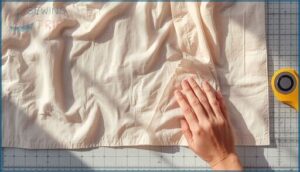
Before you even pick up your rotary cutter, you’ve got to prep your fabric—it’s honestly half the battle in achieving clean cuts! Think of it like setting the stage for success; wrinkled or bunched fabric is your enemy here.
Let’s walk through the key steps to get your fabric ready so those lines come out crisp every single time.
Washing and Ironing The Fabric
Think of fabric prep like prepping your canvas—skip it, and your cuts won’t shine! Washing prevents fabric shrinkage and removes finishes that can dull your blade.
Ironing tips include using steam for wrinkle removal and checking the fabric’s grainline and selvage edge. Here’s your fabric preparation checklist:
- Prewash with cold water to avoid color fading
- Skip fabric softening—it makes cutting harder
- Use steaming methods for stubborn wrinkles
- Iron along the grainline for best results
- Let fabric cool completely before cutting
Laying Fabric Flat and Smooth
You’ve pressed your fabric—now let’s get it battle-ready on the cutting mat!
Fabric tension is your secret weapon: smooth from the center outward without stretching beyond five percent.
Edge stabilizing with pattern weights every 6 to 12 inches keeps everything locked down.
Crease prevention means no folds lurking under your ruler alignment.
A flat surface = straight cuts every time!
Aligning Fabric Grain for Accuracy
Grain direction is your north star for cutting accuracy! 吝 That selvage edge shows the fabric grainline—your roadmap to perfectly stable cuts.
Grain direction is your north star—the selvage edge shows the fabric grainline, your roadmap to perfectly stable cuts
- Align your ruler parallel to the selvage edge for true straight cuts
- Match pattern grainlines to the fabric grain to prevent twisted seams
- Check that lengthwise grain runs parallel to the selvage for maximum stability
- Verify all layers show consistent selvage alignment before cutting
- Gently realign edges if selvages appear uneven to maintain grain integrity
Proper grain alignment on your cutting mat means your rotary cutter glides along the textile’s natural structure—no warping, no drama!
Setting Up a Safe Cutting Workspace

A well-organized workspace is the secret to straight cuts and safe hands. Before you roll that blade across your fabric, you need to set up your cutting area the right way.
Let’s walk through the essentials that’ll keep you cutting confidently without any ouch moments.
Organizing Your Cutting Area
Set up your cutting station like a command center—everything within arm’s reach. Keep your rotary cutter with its ergonomic handle front and center, ruler flat to avoid warping, and self-healing mat on a stable table.
Store extra blades in a labeled container, and tuck fabric scraps in clear bins sorted by color. A clutter-free workspace layout equals safer, straighter cuts every time!
Ensuring Proper Lighting and Stability
Good lighting quality and workspace stability turn wobbly cuts into laser-straight lines! Position two bright LED lights (5000–6500 Kelvin) at angles that minimize shadows cast by your rotary cutter and hands.
Use a level and sturdy cutting mat on a solid table—no wobbles allowed. High-contrast ruler visibility reduces glare, and diffused lighting keeps your eyes comfortable during long fabric cutting sessions.
Keeping Fingers Safe During Cutting
Your fingers are precious—let’s keep all ten! Sharp rotary blades demand respect and smart hand positioning every single cut.
- Lock the blade guard immediately after each pass to prevent accidental contact.
- Position your non-cutting hand firmly on the ruler, fingers flat and away from the blade path.
- Wear cut-resistant gloves on your ruler hand for an extra safety layer.
- Cut away from your body with slow, controlled motion.
- Use finger shields or plastic guards mounted along ruler edges for added injury prevention.
Practice these cutting safety rules until they become second nature!
Step-by-Step Guide to Cutting Straight Lines
Alright, you’ve got your tools ready and your workspace set up—now it’s time for the fun part. Cutting straight lines with a rotary cutter isn’t hard once you know the right moves.
Let’s walk through each step so you can nail those perfectly straight cuts every single time.
Positioning The Fabric and Ruler

Before your rotary cutter even touches fabric, position everything like a pro. Lay your fabric smooth and flat on the cutting mat, then place your quilters ruler firmly along the desired cutting line.
Make sure the ruler edge sits flush with no gaps—that’s your blade guidance system! Use edge notching or ruler markings for perfect fabric alignment, and keep your fingers safely away from the cutting path.
Holding The Rotary Cutter Correctly
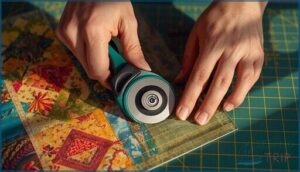
Your grip makes all the difference in rotary cutter usage. Rest the handle in your palm with your index finger guiding the blade along the top edge—this hand placement keeps your wrist alignment straight and reduces drift.
Here’s what to nail:
- Hold the blade at a 30 to 45 degree angle against your ruler for clean fabric cutting techniques
- Keep your wrist straight; let your shoulder do the work on your cutting mat
- Angle the blade slightly away from your body for cutter safety
- Lock the blade after every pass to protect your fingers
Applying Steady Pressure and Motion
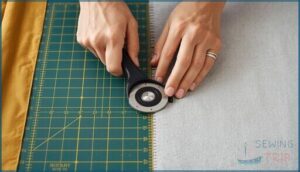
Now that you’re holding the cutter right, it’s time to move with steady grip. Apply a steady grip that maintains constant blade control without forcing through—think firm but relaxed.
Glide the rotary cutter in one smooth motion from start to finish, keeping fabric tension even across your cutting mat. This cutting technique prevents jagged edges and keeps your textile cutting perfectly straight every time.
Techniques for Perfectly Straight Cuts

You’ve got your workspace set up and you’re ready to roll—now let’s make those cuts razor-sharp! Mastering a few simple techniques will take your straight lines from “pretty good” to “absolutely perfect.”
Here’s what you need to know to keep your cuts clean, straight, and frustration-free every single time.
Using The Ruler Edge as a Guide
Think of your ruler edge as the guardrail that keeps your blade on track. Start with edge alignment—position the ruler along your desired cut line and press firmly so it won’t budge.
A shallow first pass anchors everything before you apply full blade control. Keep that cutting motion smooth and continuous along the ruler, guiding fabric straight from start to finish without lifting.
Managing Multiple Layers of Fabric
Layer stacking lets you power through multiple fabric plies at once—just keep it to 2-3 layers when you’re starting out.
Align the fabric grain on all pieces to prevent shifting, then use spray baste or pins for slippage control. Your rotary cutter will glide smoothly through matched layers, making cutting fabric straight a breeze while prepping seams for edge finishing and quilting success.
Avoiding Slips and Uneven Edges
To keep your Rotary Cutter from nibbling the Selvage Edge, lock down that ruler with steady hand pressure and position the blade perpendicular for Edge Control.
A sharp blade (hello, Blade Sharpening!) prevents jagged cuts, while ironing fabric reduces tension and keeps the Grainline true.
Stand square to your cutting fabric straight path, maintain even Fabric Tension, invest in Mat Maintenance, and watch those Cutting Angles—flawlessness follows!
Troubleshooting Common Cutting Problems
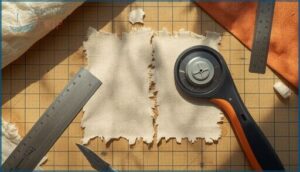
Even with the best setup, sometimes cuts just don’t go as planned—and that’s totally normal. You might notice jagged edges, fabric that won’t stay put, or lines that look more like waves than straight shots.
Let’s tackle the most common hiccups and get you back on track with smooth, clean cuts every time.
Dealing With Jagged or Skipped Cuts
A dull blade is your enemy when jagged edge fixes are needed—swap it out every 6-8 uses for skipped cut prevention. Keep blade sharpness tips in mind: use long, steady strokes instead of choppy motions for cutting motion control.
If fabric tension management feels off, try lighter pressure and let your rotary cutter glide. Regular rotary cutter maintenance and blade replacement = smoother cuts every time!
Preventing Fabric Shifting
Fabric grip is everything when you’re cutting fabric straight! Pin every 2-3 inches along the edge alignment, or try fabric clips to lock those layers down.
A grippy cutting mat helps too—add a non-slip liner underneath if it’s sliding around. Press the selvage edge firmly with your non-cutting hand, keeping the grainline true.
Layer control = no surprises. Your rotary cutter (and blade sharpness) will thank you!
Fixing Crooked or Wavy Lines
Crooked cuts happen, but you can totally fix them! The real culprits? Blade alignment, fabric tension, and cutting techniques that need tweaking.
Here’s your edge correction game plan:
- Check blade sharpness—dull blades = wavy lines every time
- Hold your rotary cutter at 45 degrees for smooth, controlled cuts
- Press your ruler down firmly so it doesn’t shift mid-cut
- Align with the grainline and selvage edge before you start
- Use steady pressure in one smooth motion—no jerking!
Master these straightening methods and cutting fabric straight becomes second nature.
Maintaining and Storing Rotary Cutters

Taking care of your rotary cutter isn’t just about keeping it sharp—it’s about keeping you safe and your cuts accurate.
A little maintenance goes a long way in extending the life of your blade and making every project easier.
Let’s walk through the three essential practices that’ll keep your cutter in top shape for years to come.
Cleaning The Rotary Cutter Blade
A clean blade is a happy blade! Regular rotary cutter maintenance keeps your cuts crisp and prevents fabric residue from dulling the edge. After each project, wipe the blade with a lint-free cloth to remove fibers. Use a small brush for the housing, and apply a drop of oil to the pivot area.
Here’s your quick cleaning guide:
| Cleaning Step | Tool Needed | Frequency |
|---|---|---|
| Wipe blade edge | Lint-free cloth | After each use |
| Remove housing lint | Small brush | Weekly |
| Oil pivot area | Sewing machine oil | Monthly |
| Inspect for damage | Visual check | Before storage |
| Deep clean blade seat | Dry cloth + solvent | As needed |
Store your cutter with the safety latch engaged to protect both the blade and your fingers—cutter safety starts with smart blade storage habits!
Safely Replacing Dull Blades
When it’s time for a blade swap, safety comes first! Always lock your rotary cutter and wear cut-resistant gloves during blade removal steps—proper hand protection prevents nasty nicks.
Choose replacement blades that match your cutter model (Excel Blades work great!). Hand-tighten the blade nut snugly without overdoing it. Dispose of old blades in a sharps container for smart sewing safety and crafting tool maintenance!
Proper Storage Practices
Once you’ve swapped that dull blade, smart storage keeps your rotary cutter sharp and safe! Lock the blade after every use—no exceptions.
Here’s your storage game plan:
- Blade Storage: Keep extras flat in a labeled case away from moisture to prevent rust and edge dulling
- Mat Care: Store your cutting mat flat or upright, away from sunlight to avoid warping
- Tool Organization: Use a holster for your rotary cutter and keep sewing tools in labeled trays within arm’s reach
Maintain a cool, dry workspace (under 60% humidity!) for proper environmental control and crafting tool maintenance. Your quilting gear will thank you!
Top 9 Tools for Straight Line Cutting
You’ve got the basic technique down, but having the right tools in your hands makes all the difference when you’re chasing those crisp cuts.
The good news? You don’t need a gazillion fancy gadgets—just a solid lineup of nine reliable essentials. Let’s walk through the tools that’ll take your straight-line cutting from “pretty good” to “wow, did I really make that?
1. Creative Grids Quilting Ruler
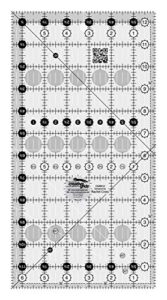
This Creative Grids 6-1/2in x 12-1/2in ruler is a breakthrough for straight cuts. Made in the USA with durable acrylic, it features an exclusive non-slip grip on the underside—no more slipping mid-cut.
You’ll love the easy-to-read black and white markings with 1in grids and 1/8in increments. Plus, those 1/4in dashed lines make trimming seam allowances a breeze. The 45-degree angles help you nail half-square triangle blocks every time.
It’s sturdy, precise, and works beautifully on both light and dark fabrics.
| Best For | Quilters and sewers who want precise cuts without the ruler sliding around, especially when working with strips, seam allowances, and half-square triangles. |
|---|---|
| Brand | Creative Grids |
| Material | Plastic |
| Weight | 5.6 ounces |
| Primary Use | Quilting ruler |
| Dimensions | 13 x 7.5 x 0.5 in |
| Key Feature | Non-slip grip |
| Additional Features |
|
- Non-slip grip keeps the ruler firmly in place while you cut, which means fewer mistakes and less frustration
- Clear markings work on both light and dark fabrics, so you’re not squinting or guessing at measurements
- Multiple angle lines (45-degree and 30/60-degree) give you flexibility for different block styles and quilting patterns
- Higher price point compared to basic acrylic rulers without the non-slip feature
- The 6-1/2in x 12-1/2in size won’t cover larger cuts, so you might need additional rulers for bigger projects
- The non-slip coating can wear down over time if you’re not careful about how you store and handle it
2. Singer Sewing Machine Oil

Once you’ve got your ruler sorted, you’ll need to keep that rotary cutter running smoothly. Singer Sewing Machine Oil is your new best friend here! This 3.38-ounce bottle of mineral-based lubricant prevents friction on moving parts and keeps your cutter gliding like butter.
Just apply a few drops to pivot points every 6–12 months, wipe off the excess, and you’re golden. It’s also handy for other gear like bicycles and hinges. Keep it away from flames and store it somewhere safe!
| Best For | Quilters and sewers who want to keep their rotary cutters, sewing machines, and other household tools running smoothly without spending a fortune. |
|---|---|
| Brand | SINGER |
| Material | Metal |
| Weight | 3.38 ounces |
| Primary Use | Machine lubrication |
| Dimensions | 4.72 x 2.36 x 0.5 in |
| Key Feature | All-purpose oil |
| Additional Features |
|
- Works on more than just sewing machines—great for bikes, locks, hinges, and other household items
- A little goes a long way, so one bottle lasts for years of regular use
- Compatible with all sewing machine brands, not just Singer
- The oil has a 5-year shelf life, which might be an issue if you don’t use it often
- Bottle doesn’t have a screw-on cap, making it less convenient to store
- The 3.38-ounce size might be overkill for casual users who only need a few drops at a time
3. Olfa Ergonomic Rotary Fabric Cutter
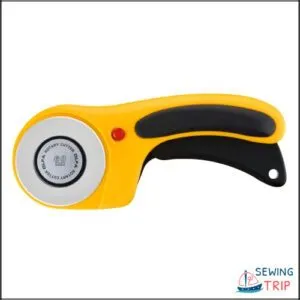
Your rotary cutter deserves an upgrade, and the Olfa Ergonomic model delivers big time! That contoured handle fits naturally in your hand, so you can cut for hours without the dreaded wrist ache.
The squeeze trigger keeps your blade engaged exactly when you need it, and the dual-action safety lock means no accidental cuts. With a 60mm steel blade, you’ll slice through 12 layers of cotton like they’re nothing.
Whether you’re right or left-handed, this cutter’s got your back!
| Best For | Quilters, sewers, and crafters who need to cut multiple fabric layers frequently and want a comfortable tool that reduces hand fatigue during long projects. |
|---|---|
| Brand | OLFA |
| Material | Steel |
| Weight | 5.44 ounces |
| Primary Use | Rotary cutting |
| Dimensions | 60mm blade |
| Key Feature | Dual-action safety lock |
| Additional Features |
|
- Ergonomic squeeze trigger and contoured handle minimize hand and wrist strain during extended use
- Powerful 60mm steel blade cuts through up to 12 layers of cotton fabric in one pass
- Dual-action safety lock and easy blade replacement system make it safe and convenient to use
- Contains chemicals (DEHP) known to California to cause cancer or reproductive harm
- Higher price point compared to basic rotary cutters on the market
- Requires genuine OLFA replacement blades for best performance, which adds to ongoing costs
4. Fiskars Classic Rotary Cutter Tool
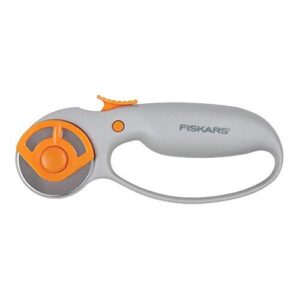
The Fiskars Classic is your reliable buddy with that comfy loop handle and a 45mm premium steel blade that stays sharp. The steel and orange design feels sturdy in your hand, and at just 2.56 ounces, it won’t tire you out during marathon cutting sessions.
Slide the button to extend the blade, roll through multiple fabric layers, then tuck it back for safe storage. You’ll love how it works for both righties and lefties without any fuss!
| Best For | Quilters, sewers, and craft enthusiasts who cut fabric regularly and want a comfortable, ambidextrous tool that handles multiple layers with ease. |
|---|---|
| Brand | Fiskars |
| Material | Metal |
| Weight | 2.56 ounces |
| Primary Use | Rotary cutting |
| Dimensions | 45mm blade |
| Key Feature | Loop handle design |
| Additional Features |
|
- Premium 45mm steel blade cuts through multiple layers of fabric, felt, and vinyl smoothly
- Ergonomic loop handle fits comfortably in either hand and reduces fatigue during long projects
- Self-storing blade with sliding button makes it safe and convenient to use
- Needs a hard surface or cutting mat underneath to work properly (mat sold separately)
- Left-handed users might find the blade retractor button placement a bit awkward
- Blade isn’t covered by the lifetime warranty, so replacements are an extra cost
5. Olfa Rotary Fabric Cutter
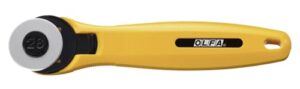
This little yellow wonder from OLFA packs a 28mm tungsten steel blade that’s perfect for tight corners and detailed work. At just 0.8 ounces, it’s feather-light and works like a charm for both right and left-handed stitchers.
The quick-change blade system makes swaps super easy, and those finger grooves keep your grip steady while you’re slicing through fabric strips for mini quilts or precise appliqué shapes. Plus, the built-in blade cover means you won’t accidentally nick yourself between cuts!
| Best For | Quilters, sewists, and crafters who need precision cutting for small projects, intricate shapes, and tight corners. |
|---|---|
| Brand | OLFA |
| Material | Cotton |
| Weight | 0.8 ounces |
| Primary Use | Precision cutting |
| Dimensions | 28mm blade |
| Key Feature | Built-in blade cover |
| Additional Features |
|
- Lightweight at 0.8 ounces with comfortable finger grooves that reduce hand fatigue during detailed work
- Quick-change blade system makes replacing the 28mm tungsten steel blade safe and hassle-free
- Ambidextrous design with built-in blade cover works great for both right and left-handed users
- The 28mm blade size limits it to lighter materials and smaller-scale projects
- Requires specific OLFA RB28-2 replacement blades, which adds to ongoing costs
- Not ideal for cutting through multiple fabric layers or heavy-duty materials
6. Riley Blake Cutting Mat
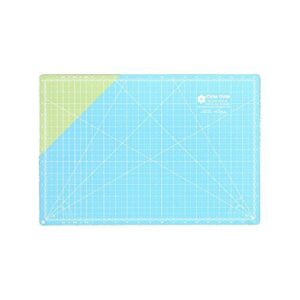
Think of this 18×24 inch Riley Blake mat as your fabric’s comfy landing pad. The grid lines and ruler guides keep everything squared up perfectly, while the self-healing surface bounces back after each slice.
You’ll love how the fade-resistant ink stays crisp even after tons of cuts, and those diagonal markers? Total game-changers for trimming triangles. Just remember to store it flat and skip the direct heat—your mat will thank you with years of smooth, wobble-free cutting sessions.
| Best For | Quilters and crafters who need a reliable, dual-sided mat for precision cutting with rotary blades, especially when working on smaller projects like masks or curved fabric pieces. |
|---|---|
| Brand | Bee Creative |
| Material | Steel |
| Weight | 8 ounces |
| Primary Use | Cutting mat |
| Dimensions | 12 x 18 inches |
| Key Feature | Self-healing surface |
| Additional Features |
|
- Self-healing surface with triple-layer construction bounces back from cuts and handles rotary cutters like a champ
- Reversible design with grids on both sides gives you double the workspace and keeps measurements visible from any angle
- Compact 12×18 inch size is perfect for smaller projects and fits easily on most work surfaces
- Only marked in inches, so if you work with metric measurements you’ll need a separate ruler
- Some users report the self-healing feature doesn’t hold up long-term, with deep ridges forming over time
- Actual color may not match what’s advertised, which could affect visibility depending on your fabric choices
7. Fiskars Rotary Cutter Set
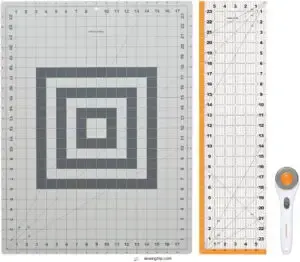
When you’re starting out, grabbing the whole package saves so much time. This Fiskars set bundles a 45mm stick rotary cutter, an 18×24 inch self-healing mat, and a clear acrylic ruler with seam allowance markers—everything you need in one go.
The ambidextrous design works great whether you’re a righty or lefty, and that sliding blade guard? Total lifesaver for safe storage. The premium steel blade stays sharp through tons of cuts, plus replacements are super easy to swap in when needed.
| Best For | Quilters and sewers who want a complete cutting solution without having to buy pieces separately—especially beginners who need everything to start right away. |
|---|---|
| Brand | Fiskars |
| Material | Acrylic |
| Weight | 3.38 pounds |
| Primary Use | Cutting kit |
| Dimensions | 0.63 x 19.63 x 26.5 in |
| Key Feature | Complete cutting set |
| Additional Features |
|
- Complete starter kit includes rotary cutter, self-healing mat, and clear ruler with seam allowances marked
- Ambidextrous design with sliding blade guard makes it safe and easy to use for both righties and lefties
- Sharp 45mm blade cuts cleanly through multiple fabric layers, paper, felt, and vinyl with minimal fraying
- Requires some pressure when cutting thicker materials like multiple vinyl layers
- Mat may be thinner than premium brands and shows shallow slice marks over time
- Ruler only has inch measurements, no millimeters for metric users
8. Lori Holt Aqua Cutting Mat
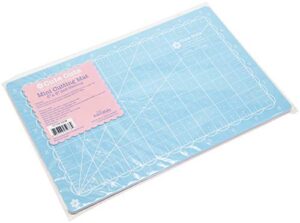
That bright aqua surface with crisp white grid lines makes tracking your cuts a breeze, especially when you’re working with darker fabrics.
This 18×24-inch self-healing mat features triple-layer construction and durable inch markings in both directions, plus handy angle guides at 30, 45, and 60 degrees for diagonal cuts.
The non-slip backing keeps everything stable while you roll that rotary cutter, and the reversible design gives you two color options. Just remember—rotary cutters only, no fixed blades!
| Best For | Quilters and crafters who need a compact, portable mat for small cutting projects and precision work with rotary cutters. |
|---|---|
| Brand | Lori Holt |
| Material | Vinyl |
| Weight | 0.3 pounds |
| Primary Use | Cutting mat |
| Dimensions | 5 x 8 inches |
| Key Feature | Reversible double-sided |
| Additional Features |
|
- Bright aqua color with clear grid lines makes it easy to see cuts, especially on darker fabrics
- Triple-layer self-healing surface extends the mat’s lifespan and keeps cuts smooth
- Compact 5×8-inch size is perfect for small projects and fits easily in die cutting machines
- Small size limits its use for larger cutting projects
- Only compatible with rotary cutters—fixed blade knives will damage the surface
- Lightweight construction may feel less substantial compared to larger professional mats
9. Cottage Mills Acrylic Design Ruler
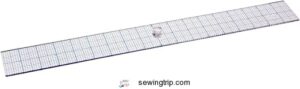
Sometimes the simplest tools make the biggest difference. This 2×18-inch clear acrylic ruler from Cottage Mills features blue 1/16-inch markings and a handy built-in knob that makes positioning a snap.
The laser-cut edges keep your rotary cutter gliding smoothly, while the 1/8-inch grid helps you nail those seam allowances every time. It’s especially great for trimming edges and squaring up corners. Pro tip: pair it with the RulerLip accessory to prevent shifting during cuts!
| Best For | Quilters, sewers, and crafters who need precise measurements and smooth rotary cutting on a compact, durable ruler. |
|---|---|
| Brand | Cottage Mills |
| Material | Acrylic |
| Weight | 2.46 ounces |
| Primary Use | Measuring ruler |
| Dimensions | 18 x 2 x 0.5 in |
| Key Feature | Easy grip knob |
| Additional Features |
|
- Laser-cut edges and 1/16″ markings deliver professional-grade accuracy for seam allowances and trim work
- Built-in grip knob makes positioning easy and keeps your hands away from cutting tools
- Clear acrylic with blue printing provides excellent visibility on both light and dark fabrics
- Blue markings may fade with heavy use over time
- Single 2×18″ size limits versatility compared to ruler sets with multiple dimensions
- Acrylic material can warp if exposed to high heat from irons or other sources
Frequently Asked Questions (FAQs)
How to cut accurately with a rotary cutter?
Position your ruler firmly along the desired line, hold the cutter at a right angle, and push forward with steady pressure—keeping your fingers clear of the blade path.
Can you cut leather with a rotary cutter?
Ever wonder if your trusty rotary cutter can handle leather? You bet!
Thin to mid-weight leathers cut cleanly with a sharp 45mm or 60mm blade and steady pressure on a self-healing mat.
How do you sharpen a rotary cutter blade?
You can restore a dull blade with a rotary blade sharpener or fine diamond file. Run light, smooth passes across the edge, then test on scrap fabric before reinstalling.
What fabrics work best with rotary cutters?
Rotary cutters slice delicate fabric best—yet tough materials shine too.
Woven cottons, quilting fabrics, and denim deliver clean edges every time.
Linen and polyester blends work beautifully with sharp blades and proper mat support!
Do left-handed rotary cutters exist or matter?
Yes, left-handed rotary cutters exist! Brands like Olfa and Martelli offer lefty-friendly models with reversible blades or ambidextrous grips. They’re worth it for comfort and control during long cutting sessions.
Can rotary cutters cut curves or only straight lines?
Don’t put all your eggs in one basket—rotary cutters handle both!
Smaller 28mm blades tackle tight curves beautifully, while larger 45mm cutters excel at straight lines and gentle curves with proper guidance.
Conclusion
Remember when cutting straight meant hoping for the best and squinting really hard? Those days are officially over.
Now that you know how to cut straight lines with a rotary cutter, your fabric strips will line up like obedient soldiers—no more rogue pieces rebelling against your seam allowances!
Armed with the right tools, a steady workspace, and these tried-and-true techniques, you’re ready to slice through fabric like a quilting pro. Happy cutting! ✂️
- https://joann.prf.hn/click/camref:1011l3xpmt/destination:https%3A%2F%2Fwww.joann.com%2Fp%2Folfa-45mm-magenta-ergonomic-rotary-cutter%2F19756907.html
- https://forms.gle/kPmBXY8zAXjRoWpE7
- https://youtu.be/Hab-BTAk01I
- https://www.youtube.com/watch?v=QaI-flblEJU
- https://sharpeninghandbook.info/GT-Rotary-Cutter.html