This site is supported by our readers. We may earn a commission, at no cost to you, if you purchase through links.
You pull your satin dress from the closet for tonight’s event, and your heart sinks—deep creases run across the fabric like fault lines, turning what should be elegant drapes into rumpled chaos. Satin’s smooth, lustrous surface shows every wrinkle with unforgiving clarity, and unlike cotton or linen, you can’t just crank up the iron and press your problems away.
The delicate fibers that give satin its signature sheen will scorch, turn dull, or develop permanent shine marks if you treat them roughly. The good news: you can restore your dress to its original glory using gentle heat, strategic moisture, and the right technique for your specific fabric type.
Table Of Contents
- Key Takeaways
- Why Satin Dresses Wrinkle Easily
- Safely Using Steam to Remove Satin Wrinkles
- Ironing a Satin Dress Without Damage
- Removing Wrinkles With a Hair Dryer
- Using Fabric Relaxer Spray on Satin
- Getting Wrinkles Out Without Steamer or Iron
- Removing Deep Creases From Satin Dresses
- Caring for Satin Dresses to Prevent Wrinkles
- Mistakes to Avoid When Removing Satin Wrinkles
- When to Choose Professional Satin Care
- Frequently Asked Questions (FAQs)
- Conclusion
Key Takeaways
- Satin wrinkles easily because of its weave structure and delicate fibers, but you can safely remove creases using steam (6-12 inches away), low-heat ironing with a press cloth, or even a hair dryer on medium heat with a protective barrier.
- Always test your wrinkle-removal method on a hidden seam first, keep temperatures below 300°F, and avoid direct contact between heat sources and satin to prevent scorching, shine marks, or permanent fabric damage.
- For stubborn wrinkles without equipment, try hanging your dress in a steamy bathroom for 10-15 minutes, laying it on a damp towel, or using a homemade fabric relaxer spray made from equal parts white vinegar and water.
- Prevent future wrinkles by storing satin dresses on padded hangers in breathable garment bags, avoiding tight folds or crowded closets, and smoothing the fabric by hand after each wear.
Why Satin Dresses Wrinkle Easily
Satin wrinkles easier than most fabrics because of how it’s made and what it’s made from. The smooth, lustrous surface that makes satin beautiful also makes it vulnerable to creasing under even light pressure.
Understanding why your satin dress wrinkles so quickly helps you prevent damage and choose the right removal method.
Satin Weave Structure and Fiber Types
Here’s the thing about satin: it’s all about the weave. That glossy surface you love comes from long floating yarns that catch light beautifully, but they also create weak points where wrinkles form easily.
Different satin fabric types behave differently based on their yarn structures:
- Silk satin offers luxury but wrinkles with minimal pressure
- Polyester satin provides durability and wrinkle resistance
- Acetate satin drapes elegantly yet creases stubbornly
- Nylon satin resists some wrinkling but can heat-damage
- Rayon satin blends affordability with moderate wrinkle-proneness
Understanding your satin dress’s fiber blend helps you choose the safest wrinkle-removal method.
Heat and Pressure Sensitivity
Now you know your fabric type—but here’s where things get dicey. Satin fibers show lower heat resistance than most fabrics, meaning your iron or steamer can scorch, flatten, or create permanent shine marks faster than you’d expect. Pressure points from heatless ironing or direct contact can crush the weave, causing fabric damage that no amount of satin restoration can fix.
Before you even touch satin with heat, check out how to safely iron velvet since both fabrics share similar risks when it comes to crushing fibers and shine damage.
Satin’s low heat resistance means your iron or steamer can scorch, flatten, or create permanent shine marks faster than you’d expect
| Risk Factor | What Happens |
|---|---|
| High heat exposure | Scorching, gloss loss, thermal limits exceeded |
| Uneven pressure | Crush marks, flattened texture, new wrinkles |
| Improper wrinkle removal | Permanent shine, water spots, structure damage |
Common Causes of Wrinkles in Satin
You’ve seen what happens when heat and pressure go wrong—but what actually causes those wrinkles to show up in the first place? Fabric compression from folding or packing crushes the weave structure, leaving creases that show instantly on satin fabric.
When moisture gets trapped in those folds, it can lead to uneven shrinkage that makes creases even harder to remove—here’s how to prevent fabric shrinkage before it starts.
Satin snagging happens when fibers catch on zippers or jewelry, distorting the surface.
Beginners often underestimate how hard sewing delicate fabrics like satin can be, especially when managing fraying edges and slippery layers.
Poor storage, tight hangers, and even body movement create wrinkle zones no steamer can fully erase without proper wrinkle removal technique.
Safely Using Steam to Remove Satin Wrinkles
Steaming is one of the safest and most effective ways to release wrinkles from satin without risking heat damage or shine marks. The gentle moisture relaxes the compressed fibers, allowing the fabric to return to its smooth state while you maintain full control over the process.
Since satin and silk share similar delicate properties, you can apply the same gentle steaming techniques that work for silk to protect your satin garments from heat damage.
Here’s how to steam your satin dress properly, from setup to finishing touches.
How to Steam a Satin Dress

A garment steamer is your best friend when tackling wrinkles in a satin dress. Start by preparing the fabric—empty pockets, unfasten closures, and hang the dress vertically.
Set your steamer to the lowest steam setting suitable for delicate satin fabric. Always test on an inconspicuous area first to check how your specific satin fiber types respond before moving to visible wrinkle removal areas.
Steaming Distance and Techniques
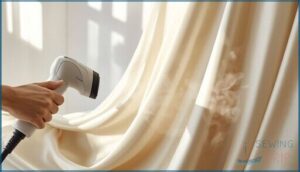
For proper steam control and fabric safety, hold your steamer 6 to 12 inches away from the satin fabric. Keep the nozzle moving continuously during garment steaming to prevent water spots or sheen changes.
Start at the hem and work upward using smooth, sweeping motions. This fabric steaming technique ensures effective wrinkle removal while protecting delicate satin restoration needs.
When to Use Steaming

Steaming benefits delicate fabrics when you need gentle wrinkle prevention without risking heat damage. This method works best for satin dress care in specific situations where fabric safety matters most.
- Use a garment steamer on lightweight satin between wears to refresh the fabric and relax minor surface wrinkles
- Choose steam settings for embellished pieces where direct iron contact could damage beads or sequins
- Apply fabric steaming techniques when the manufacturer recommends steaming over pressing
Ironing a Satin Dress Without Damage
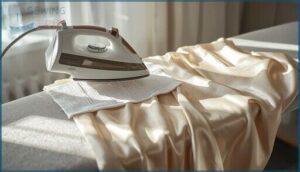
Ironing satin can feel like walking a tightrope, but you can do it safely with the right approach. The key is controlling heat and protecting the fabric’s delicate surface from direct contact.
Here’s exactly how to iron your satin dress without leaving shine marks, scorching, or flattening that signature sheen.
Correct Iron Settings for Satin
The iron temperature you choose makes all the difference between smooth satin and a shiny disaster. Set your iron to the synthetic or delicate heat setting, usually around 110–150°C (230–300°F), and always use dry heat unless your fabric care label says otherwise.
| Setting Type | Temperature Range | Best For |
|---|---|---|
| Synthetic/Delicate | 110–150°C (230–300°F) | Most satin fabrics |
| Silk Setting | 110–135°C (230–275°F) | Silk-blend satin |
| Low Heat | 100–120°C (212–248°F) | Delicate or embellished satin |
Test an inconspicuous spot first to avoid scorching your satin dress.
Using a Press Cloth
Think of a press cloth as your satin’s bodyguard against heat damage. You’ll need a clean cotton or muslin barrier between your iron and the fabric to prevent scorching and shine marks.
Dampen the cloth slightly to help steam penetrate wrinkles without saturating your dress. Always test on a hidden seam first to check for color bleeding or texture changes.
Steps for Safe Ironing
Start by turning your satin dress inside out to protect the glossy surface from direct heat exposure. Set your iron temperature to the lowest silk or synthetic setting, usually below 300°F, and place your damp press cloth over the wrinkled area.
Glide the iron smoothly across the fabric protection barrier using gentle, even strokes, never letting it rest in one spot to avoid scorching or shine marks during wrinkle removal.
Removing Wrinkles With a Hair Dryer

A hair dryer offers a quick fix when you need to smooth out satin wrinkles without bulky equipment. This method works especially well for spot-treating small problem areas or touching up your dress right before an event.
You’ll need to use the right heat setting and technique to protect your satin from damage while getting results.
Proper Heat Settings
Your hair dryer’s heat control matters more than you think when tackling wrinkles in satin fabric. Set it to medium or low to protect delicate weaving, since high temperatures can scorch or leave shine marks on your satin dress.
Before you start ironing techniques or using a steamer, always test temperature settings on a hidden seam—fabric testing prevents costly mistakes and keeps your dress safe.
Step-by-Step Hair Dryer Method
Once your dryer settings are dialed in, lay your satin dress flat on a clean surface or hang it to pull the fabric taut. Place a thin cotton towel between the dryer and satin fabric as a protective barrier, then glide the nozzle 6 to 12 inches above wrinkled sections in slow, even passes for 5 to 10 seconds per area—pausing to check progress ensures safe, controlled wrinkle removal without damaging delicate weaving.
When This Method Works Best
This approach shines for quick touch-ups when your steamer isn’t handy, but it’s not a cure-all. The technique delivers best results when:
- You’re targeting light to moderate wrinkles rather than deep creases that need pressing
- Your satin fabric is polyester-blend rather than pure silk, which tolerates heat better
- You need spot treatment on small sections instead of full-dress wrinkle removal
- You maintain steam distance control of 6-12 inches to protect delicate satin care needs
Using Fabric Relaxer Spray on Satin

Fabric relaxer spray offers a gentler alternative to heat-based wrinkle removal methods, and it’s surprisingly easy to make at home. This approach works well for light to moderate wrinkles and won’t risk heat damage to your satin dress.
You’ll need to understand the proper mixing ratios, application techniques, and a few safety considerations before you start spraying.
Mixing and Applying Fabric Spray
Mix equal parts white vinegar and water in a spray bottle to create your fabric relaxer. Test this solution on a hidden seam first to check for discoloration or shine changes. Hold the bottle 6 to 12 inches away from your satin dress, misting lightly across wrinkled areas. Don’t drench the fabric—light, even coats prevent water spots and stiffness that can create new wrinkles.
| Application Step | Distance/Amount | Key Safety Tip |
|---|---|---|
| Test spray | Hidden seam area | Check colorfastness first |
| Spray distance | 6-12 inches away | Prevents heavy droplets |
| Coverage | Light, even mist | Avoid over-saturation |
| Drying time | Between coats | Let dry completely |
Smoothing Wrinkles by Hand
After you’ve misted your satin dress with fabric spray, use clean hands to gently lift and smooth each wrinkled section. Work in small areas, applying light pressure without pulling or stretching the fabric.
This hand technique lets you feel how the satin responds, preventing fiber crush while encouraging wrinkles to release. Take 2 to 5 minutes per area for best results.
Precautions With Sprays
Before you spray anything across your entire satin dress, protect your investment with a patch test on a hidden seam or inner fold. Not all fabric sprays play nice with satin’s delicate weave, and you don’t want surprises on your big day.
- Test sprays on inconspicuous areas first to check colorfastness and prevent damage to your satin fabric
- Hold the bottle 6 to 12 inches away from the dress to avoid oversaturation and wrinkle-free results
- Choose water-based formulas over alcohol or solvent sprays for safer delicate fabric maintenance
Getting Wrinkles Out Without Steamer or Iron

You don’t always need special equipment to smooth out satin wrinkles. A few household items and some patience can work just as well as a steamer or iron.
Here are three methods that use things you already have at home.
The Damp Towel Technique
You don’t need a steamer to restore your satin dress. Lay a damp towel flat, place your satin fabric over it, then gently press and lift the garment to transfer controlled moisture.
This fiber relaxation technique uses humidity to smooth wrinkles without direct heat, making it perfect for delicate satin restoration. Keep the towel damp, not soaking, for effective moisture control and wrinkle removal.
Using Mattress Pressure
For gentle wrinkle removal, lay your satin dress on a clean, padded mattress and apply light, even pressure with your palms. This mattress smoothing technique uses controlled pressure to encourage fabric relaxation without heat, making it ideal for satin restoration.
Work from the center outward using gentle pressure techniques, keeping contact light to avoid crushing delicate satin fabric fibers or creating new creases.
Shower Steam Method
Your steamy bathroom becomes a gentle fabric relaxation chamber when you hang your satin dress near a hot shower.
Keep the shower steam trick simple: hang the dress on a sturdy hanger about 12 inches from direct water, let steam work for 10–15 minutes, then smooth wrinkles by hand.
This wrinkle removal method respects satin texture without requiring a steamer.
Removing Deep Creases From Satin Dresses
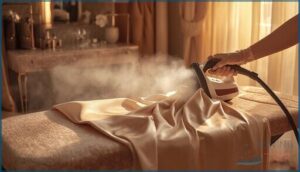
Deep creases in satin don’t always respond to gentle methods like hanging or light steam. When wrinkles have set in from tight folding or storage, you’ll need a more direct approach to restore your dress.
Here’s how to tackle stubborn creases and when it’s time to hand the job over to a professional.
Spot-Treatment Methods
For stubborn wrinkles, spot treatment gives you total control. Use a steamer on the wrinkled area from a safe distance, or apply fabric relaxers formulated for delicate satin fabric. Place a clean, damp cloth between the treatment and your dress for gentle steaming.
After treating spots, smooth the area by hand, encouraging fibers to relax. Let treated sections dry completely before wearing to keep your dress wrinkle free.
When to Seek Professional Help
Sometimes your best efforts won’t budge those deep creases—that’s when professional cleaning becomes your safety net. Dry cleaners use specialized equipment designed for delicate fabric care and satin restoration, protecting your dress from further damage.
Consider expert alterations and garment restoration when:
- Home wrinkle removal methods fail after multiple attempts or your care label specifically recommends professional cleaning
- Vintage dress repair requires specialized textile maintenance to preserve delicate embellishments or antique construction
- Time-sensitive events demand guaranteed results from professional satin dress care services
Caring for Satin Dresses to Prevent Wrinkles

You don’t need to battle wrinkles every time you reach for your satin dress. A few simple habits can keep that smooth, glossy finish intact between wearings.
Here’s how to store and care for your satin pieces so wrinkles don’t stand a chance.
Proper Hanging and Storage
Your satin dress deserves a home that protects its delicate weave. Choose padded hangers to prevent shoulder marks, and store your satin fabric in a cool, dry closet away from direct sunlight.
For fabric preservation, skip wire hangers and crowded spaces. Proper clothing storage means giving your garment maintenance priority—your satin dress will thank you by staying smooth and ready to wear.
Using Garment Bags and Padded Hangers
You’ve already chosen the right hanger—now wrap your satin dress in a breathable garment bag to lock in that protection. This fabric protection strategy shields your clothing storage from dust, friction, and light damage that creates surface wrinkles.
Smart storage solutions for satin preservation include:
- Clear bags let you check your satin fabric without unwrapping
- Breathable materials prevent moisture buildup and compression creases
- Padded hanger support inside the bag maintains shoulder shape over time
Daily Maintenance Tips
Keep your satin dress wrinkle-free between wears by adding quick touch-ups to your routine. Light misting with distilled water resets minor creases, while gentle fabric brushing removes dust that makes wrinkles stick.
After wearing your satin fabric, smooth the surface by hand before hanging. Proper satin handling and daily smoothing prevent set-in folds, so your steamer stays tucked away.
Mistakes to Avoid When Removing Satin Wrinkles

You’ve learned how to safely remove wrinkles from satin, but knowing what not to do is just as important. A single misstep can permanently damage your dress, leaving scorch marks, water stains, or ruined fabric in its wake.
Here are the most common mistakes you need to avoid when de-wrinkling satin.
High Heat Risks
Direct high heat can betray your best intentions, turning your elegant satin dress into a scorched mess. Heat Damage Prevention starts with understanding that satin fabric won’t forgive temperatures it can’t handle. When steamer or ironing heat climbs too high, you’re risking:
- Permanent shine marks and discoloration on the fabric surface
- Fabric scorching that creates yellowed or matte spots
- Satin fiber weakness from prolonged heat exposure risks
- Thermal shrinkage that alters the dress fit and drape
- Warped linings or weakened seams from excessive heat
Test heat settings on a hidden seam first—your dress deserves that caution.
Skipping The Press Cloth
Without that protective barrier between your iron and the fabric, you’re inviting Direct Heat Risks straight onto delicate satin care. Ironing Without Cloth exposes satin fabric to shine marks, scorch spots, and permanent damage that no steamer can undo.
A simple press cloth shields your dress from direct heat risks, ensuring wrinkle-free results without satin fabric damage—Alternative Smoothing Methods can’t rescue skipped protection.
Overusing Moisture
Excessive moisture control mistakes wreck satin fiber damage faster than you’d think. Too much water invites spots that refuse to budge, dulls the fabric’s signature sheen, and sets wrinkles deeper during drying.
Smart humidity management during steaming and satin care protects your investment:
- Mist lightly—never saturate the fabric surface completely.
- Allow adequate air-dry time between wrinkle removal attempts.
- Avoid damp storage risks that invite mildew growth.
- Pat excess moisture immediately with clean cotton cloths.
Water spot removal becomes unnecessary when you control moisture from the start.
When to Choose Professional Satin Care

Sometimes a satin dress needs more help than you can safely give it at home. You don’t want to risk damaging a special piece when professional cleaners have the right tools and expertise to handle it properly.
Here’s when it’s time to hand your satin dress over to the pros instead of tackling those wrinkles yourself.
Signs Professional Cleaning is Needed
You’ll know it’s time for professional dry cleaning when your satin fabric shows persistent yellowing or stain identification becomes impossible with home methods. Odor removal proves difficult despite airing, or you notice fabric damage like pulls and fraying alongside wrinkles.
Delicate handling is essential for embellished pieces, and when color fading appears, textile restoration experts provide the specialized satin care and maintenance your dress deserves.
How Dry Cleaners Handle Satin
Professional dry cleaners use specialized dry cleaning methods that protect satin fabric from damage. Here’s how they handle your delicate pieces:
- Satin fabric inspection identifies embellishments, fiber type, and problem areas before selecting gentle cleaning solvents that won’t strip the sheen.
- Delicate handling techniques minimize friction during processing, preventing fiber crushing and shine marks.
- Post-cleaning finishing restores luster through expert steaming and pressing at controlled temperatures.
Caring for Embellished or Vintage Satin Dresses
Embellished or vintage satin dresses demand extra delicate handling to preserve both the fabric and decorative elements. Store these pieces flat or on wide-shouldered padded hangers with acid-free tissue padding folds, preventing bead loss and fabric distortion.
Maintain climate-controlled storage at 50–60% humidity and avoid aggressive steam near embellishments.
For satin restoration or wrinkle removal techniques on vintage textiles, professional conservators use specialized fabric care methods that protect fragile fibers and trim work simultaneously.
Frequently Asked Questions (FAQs)
How often should I wash my satin dress?
Wash your satin dress only when necessary—usually after two or three wears, unless stains appear. Frequent washing weakens delicate fabric care routines, so spot-clean minor marks and prioritize hand washing tips over machine cycles.
For the best results, always follow a delicate fabric guide to maintain your satin dress’s quality.
What should I do if my satin dress gets stained?
Act fast on stains. Blot gently without rubbing, and test cleaners on hidden seams first. Avoid high heat that could set the mark.
For oil-based stains, sprinkle talcum powder to absorb grease before treating.
Can I store my satin dress on a hanger?
You can store your satin dress on a hanger, but choose a padded or wide-shouldered one to prevent creases and shoulder dimpling.
Keep it in a cool, dry closet with a breathable garment bag for ideal satin preservation.
Can I use wrinkle-release spray on satin?
You can use wrinkle release spray on satin fabric, but test it first on a hidden seam.
This chemical treatment may leave water spots or alter the sheen, so apply sparingly from 6–12 inches away.
Does hanging satin in closet prevent wrinkles?
Yes, hanging satin in your closet does help prevent wrinkles compared to folding. Proper satin hanging techniques with padded hangers and closet climate control reduce compression creases, keeping your fabric smooth between wears.
How long does steaming satin usually take?
Even though satin feels delicate, you won’t spend hours steaming it. Most areas smooth out in 30 to 60 seconds with a garment steamer, though heavier satin fabric may need up to two minutes per section.
Will water stains show on satin fabric?
Satin fabric care requires attention to stain visibility—water can leave noticeable marks, especially on silk blends.
Mineral deposits and fiber finishes affect moisture resistance, making water stain removal essential for proper satin care.
Can I iron satin while slightly damp?
You can iron satin while slightly damp, but only if it’s barely moist—not wet. Too much moisture creates water marks and shine damage, especially on silk satin.
Always check your fabric’s fiber content first. To avoid damaging your satin dress, consider using a low heat setting when ironing.
Conclusion
A single wrinkle won’t doom your evening—you now hold the arsenal to rescue any satin dress from crumpled defeat. Whether you choose steam’s gentle touch, an iron’s precise press, or the humidity trick from your shower, you control the outcome.
Master how to get wrinkles out of a satin dress using these methods, and you’ll never face a clothing crisis minutes before walking out the door. Your satin stays immaculate, ready when you’re.
- https://x.com/godofprompt/status/1990526288063324577
- https://www.love2laundry.com/blog/how-to-wash-satin-sequin-velvet-dresses/
- https://www.longancraft.com/blogs/sewing-tips/how-to-iron-satin-fabric
- https://www.southernliving.com/should-you-iron-clothes-while-damp-11775283
- https://chicsew.com/blogs/tips-guide/how-to-get-stains-out-of-satin