This site is supported by our readers. We may earn a commission, at no cost to you, if you purchase through links.
Cashmere wrinkles differently than ordinary wool. Its long, fine fibers possess natural elasticity that resists creasing, yet sharp folds from storage or travel can still mar its luxurious appearance.
You might assume a quick press solves the problem, but cashmere’s delicate structure demands caution—one careless stroke with a too-hot iron leaves permanent shine marks or flattens the fabric’s soft texture beyond repair. The risk isn’t theoretical; keratin protein bonds within each fiber break down under excessive heat, weakening the garment permanently.
Learning to iron cashmere correctly protects your investment while restoring that smooth, polished look. The right technique involves precise temperature control, protective barriers, and gentle pressure that refreshes the fabric without compromising its integrity.
Table Of Contents
- Key Takeaways
- Does Cashmere Really Need Ironing?
- Preparing Cashmere for Ironing
- Setting Up The Iron and Workspace
- Step-by-Step Guide: How to Iron Cashmere
- Steaming Vs. Ironing Cashmere
- Ironing Different Cashmere Items
- Post-Ironing Care and Storage Tips
- Common Mistakes to Avoid When Ironing Cashmere
- Frequently Asked Questions (FAQs)
- Conclusion
Key Takeaways
- Cashmere demands precise ironing technique with temperatures below 150°C (wool setting), a protective cotton pressing cloth barrier, and gentle lift-and-press motions instead of dragging to prevent permanent fiber damage, shine marks, and structural distortion.
- Steaming offers a safer alternative to ironing for light wrinkles by maintaining 6-8 inches distance and continuous motion, preserving cashmere’s natural texture without direct heat contact that flattens the pile or scorches delicate fibers.
- Critical mistakes include using high heat settings that destroy fiber elasticity, skipping the barrier cloth that causes irreversible shine marks, and folding warm garments that lock in pressure creases instead of allowing 10-15 minutes of flat cooling time.
- Proper storage requires folding cashmere flat in breathable containers rather than hanging to prevent gravity-induced stretching, with items turned inside out and stored vertically in drawers to maintain shape and protect against crushing.
Does Cashmere Really Need Ironing?
Cashmere doesn’t wrinkle as easily as you might think, and that’s one of its best-kept secrets. But there are moments when your favorite sweater picks up creases that won’t quit, and you’ll need to decide whether reaching for the iron is worth the risk.
Cashmere resists wrinkles naturally, but stubborn creases sometimes demand the risky choice of ironing
Understanding when cashmere truly needs ironing—and what happens when you get it wrong—will save you from turning luxury into regret.
Natural Wrinkle Resistance of Cashmere
Cashmere’s natural fiber elasticity gives it impressive wrinkle recovery compared to many fabrics. The fine, hollow fibers—just 13.5 to 16 micrometers in diameter—compress and then bounce back, resisting sharp creases during normal wear.
This resilience makes cashmere ideal for travel and everyday elegance, much like the dimensional stability found in structured DK yarn for knitting projects.
Cashmere texture benefits from moisture effects, allowing fibers to relax and smooth naturally. This fabric resilience means minor wrinkles often disappear without heat or steaming when you lay the garment flat.
While cashmere handles moisture well on its own, you can explore preshrinking wool fabric at home if you’re working with blends or want extra insurance before your first project.
Understanding cashmere care tips is essential for maintaining the quality and appearance of cashmere garments.
When Ironing Becomes Necessary
While cashmere fiber resists most wrinkles naturally, you’ll face situations requiring ironing techniques or steaming methods for complete fabric protection and wrinkle removal:
For delicate fabrics like silk or linen curtains, learning to hem curtains without sewing can help you understand gentle handling techniques that also apply when steaming cashmere.
- Persistent creasing after steaming: Stubborn wrinkles that won’t relax with gentle steaming alone
- Severe storage creases: Sharp folds from long-term packing or compressed drawer storage
- Post-wash refinement: Localized rippling around seams after flat drying
- Formal appearance needs: Professional settings demanding exceptionally smooth fabric care
To maintain the quality of your cashmere garments, it’s vital to follow proper cashmere care tips for washing, drying, and storage.
Risks of Improper Ironing
Even when wrinkles demand your attention, incorrect ironing techniques can permanently harm your cashmere. Understanding these dangers protects your investment and keeps your garments looking their best.
| Type of Damage | Primary Cause | Prevention Method |
|---|---|---|
| Fiber Damage | Excessive heat above 140°C | Use wool/silk heat settings only |
| Scorch Prevention | Direct iron contact | Always place damp cotton cloth barrier |
| Fabric Distortion | Heavy pressure during ironing | Lift and press gently without dragging |
High temperatures break down keratin protein bonds within cashmere fibers, causing permanent structural weakness. When you expose the fabric to heat exceeding 30°C with moisture present, fiber scales open, and protein denaturation begins. This process triggers felting shrinkage that you can’t reverse once set.
Direct contact between your iron’s soleplate and cashmere creates shiny press marks where surface fibers flatten and compact. The original matte appearance disappears, replaced by unattractive glossy patches. Scorch marks from overheated irons cause visible discoloration that chemical treatments may not fully restore.
Pressing too hard distorts the knit structure permanently, especially on ribbed cuffs and hems. Combining heat with tension stretches fibers beyond recovery. Color fading accelerates when high temperatures interact with dyed cashmere, dulling even saturated shades and creating uneven tone changes across your garment.
Preparing Cashmere for Ironing
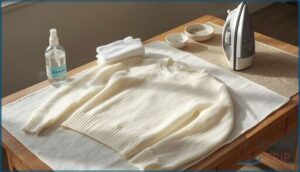
Before you touch an iron to your cashmere, you need to set yourself up for success. The right preparation protects delicate fibers from heat damage and ensures smooth, professional results. Here’s what you should do before turning on that iron.
Checking The Care Label
Before you touch the iron, locate the sewn-in care label—usually at the neck seam or side hem—and decode its fabric content and ironing restrictions. Look for an iron symbol with one dot, signaling low heat settings safe for delicate fabric handling.
If you’re working with viscose or rayon, check out these viscose fabric sewing tips to avoid scorching or stretching the material during pressing.
Some labels prohibit ironing entirely, marked by a crossed-out iron, so label verification protects your cashmere from irreversible heat damage during garment care.
Gathering Essential Tools
You’ll need a steam iron with an adjustable wool setting (below 150°C), a clean white cotton pressing cloth to shield fibers from direct heat, and a well-padded ironing board that holds the knit evenly.
If you’re working with delicate velvet instead, check this guide on removing wrinkles from velvet since it requires a gentler steaming approach to protect the pile.
Keep a fabric steamer on hand as a gentler alternative, plus distilled water to prevent mineral deposits and a soft clothes brush for post-ironing texture restoration.
Pre-Ironing Fabric Inspection
Before you press a single wrinkle, run your hands over the fabric to catch problems heat can worsen. A thorough visual inspection protects delicate fibers from unnecessary damage during ironing.
- Check for pilling or fuzz on elbows, cuffs, and underarms—remove gently with a cashmere comb before pressing.
- Inspect seams and hems for loose threads or weak stitching that pressure could worsen.
- Look for stains on collars and sleeves; treat spots first, because heat sets many soils permanently.
- Test dye stability on a hidden area with a damp cloth if you’re working with saturated colors.
- Identify thin patches or moth damage that won’t tolerate additional heat or compression.
Setting Up The Iron and Workspace
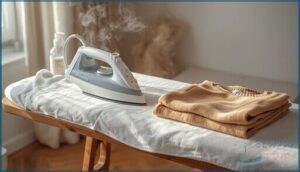
Before you touch that iron to your cashmere, you need to get your workspace ready and dial in the right settings. The wrong temperature or surface can damage the fibers in seconds, so this step isn’t optional.
Here’s how to set up safely and avoid costly mistakes.
Choosing The Right Iron Temperature
Your iron’s temperature dial holds the key to protecting cashmere’s delicate fibers. Set it to the lowest heat setting—usually 110°C (230°F)—often labeled “wool” or “silk.” This low heat prevents fiber damage, scorching, and unwanted shine. Many modern irons feature precise temperature control for delicate fabric care, giving you confidence that you won’t harm your investment.
| Setting | Temperature | Safe for Cashmere? |
|---|---|---|
| Low/Wool/Silk | 110°C (230°F) | ✓ Yes |
| Medium | 150°C (300°F) | ✗ Too Hot |
| High/Cotton | 200°C (390°F) | ✗ Dangerous |
Using a Pressing Cloth
A pressing cloth acts as a bodyguard between your iron and cashmere’s vulnerable fibers, blocking direct heat that could permanently damage the fabric.
Choose the right material for effective fabric protection:
- White cotton cloth – Clean, lint-free, and breathable for heat control
- Muslin fabric – Lightweight and ideal for delicate fibers
- Thin dish towel – Absorbent and readily available
- Commercial pressing cloth – Specially designed for ironing techniques
Preparing a Flat, Padded Surface
Your ironing board’s stability makes all the difference when protecting cashmere from distortion. Set up on a completely flat, firm surface with one layer of cotton batting stretched tight beneath a 100% cotton canvas cover.
This combination prevents seam imprinting and distributes heat evenly across the fabric. Wool pressing pads offer excellent steam absorption and grip, holding delicate knits securely in place during pressing.
Step-by-Step Guide: How to Iron Cashmere
Now that your iron and workspace are ready, it’s time to walk through the actual ironing process. The technique you use matters just as much as the temperature setting—one wrong move can leave permanent shine marks or damage the fibers.
Follow these four steps carefully to protect your cashmere while removing wrinkles.
Turning The Garment Inside Out
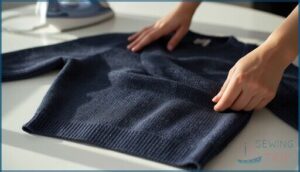
Before you begin ironing, flip your cashmere garment inside out. This method shields the outer surface from direct heat and friction. Cashmere protection starts with this simple step, which preserves delicate fibers by keeping the visible side away from the iron.
This fiber preservation technique prevents shiny patches, flattening, and surface damage. Proper garment handling ensures your cashmere care routine maintains the soft, luxurious texture you expect.
Placing The Pressing Cloth
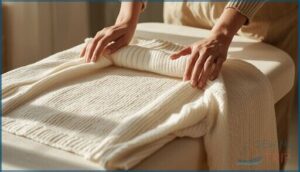
Once your garment is inside out, lay a clean, white cotton pressing cloth over the section you’re about to iron. Choose cloth sizing that fully covers the area, extending beyond it to protect delicate fibers from direct contact.
Smooth the fabric protection barrier gently without stretching—this pressing method shields cashmere from heat damage and prevents shiny marks, keeping your low heat ironing techniques safe and effective.
Using Gentle, Controlled Motions

With the pressing cloth in place, press the iron down gently and lift it straight up—never slide or drag across the surface. This controlled stroke protects delicate fibers from stretching and shine marks.
Follow these motion techniques for safe cashmere ironing:
- Press down lightly, allowing the iron’s weight to provide pressure
- Lift and reposition rather than gliding across fabric
- Move along the fabric nap to smooth the pile
- Integrate steam by hovering briefly before pressing
- Keep each stroke brief to prevent heat buildup
Low heat steaming and gentle ironing preserve cashmere’s luxurious texture.
Ironing Small Sections at a Time
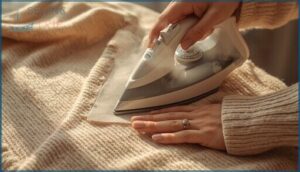
Work your way across the fabric in manageable zones no larger than your palm, completing each area thoroughly before moving to the next. This sectional ironing approach prevents overheating delicate fibers and ensures even wrinkle removal.
You’ll maintain better control over low heat application while protecting cashmere from scorching. Focus on one panel at a time—sleeves, body, collar—using gentle handling and proper ironing techniques throughout.
Steaming Vs. Ironing Cashmere
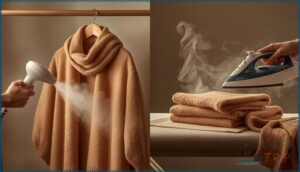
Steaming offers a gentler alternative to ironing that can preserve your cashmere’s delicate fibers while removing wrinkles just as effectively. The key difference lies in how each method applies heat and moisture to the fabric.
Understanding when to steam versus when to iron will help you make the right choice for each situation.
Benefits of Steaming for Cashmere
Steamers treat cashmere with far more gentleness than traditional irons, reducing your risk of scorching or leaving shiny marks on delicate fibers. Steam benefits include preserved texture, effective wrinkle removal without crushing the nap, and the ability to refresh garments between washes—extending longevity while minimizing mechanical stress.
| Steaming Advantage | Impact on Cashmere |
|---|---|
| No direct heat contact | Prevents fiber damage and shine |
| Vertical treatment | Maintains natural drape and shape |
| Moisture penetration | Relaxes wrinkles gently |
How to Steam Cashmere Safely
Hold your steamer six to eight inches away from the cashmere surface, moving it in smooth vertical passes to let gentle steam relax the fibers without risking heat damage. Keep the steaming tool moving continuously—never pause in one spot, which concentrates moisture and heat. Use distilled water to prevent mineral deposits on delicate fabrics.
Work in sections, allowing each area to cool before handling the cashmere fabric.
| Steaming Tools | Steam Settings | Fiber Protection |
|---|---|---|
| Handheld steamer | Low to medium heat | Maintain 6-8 inch distance |
| Garment steamer | Gentle steam output | Continuous motion required |
| Steam iron (hovering) | Wool setting | Never touch fabric directly |
When to Choose Steaming Over Ironing
When should you reach for the steamer instead of the iron? Choose steaming whenever your cashmere shows light to moderate wrinkles, features complex construction like ribbing or cable patterns, or carries a “no iron” care label. Steam protects delicate fibers from scorching while preserving natural loft and softness.
| Steaming Benefits | Fabric Protection |
|---|---|
| Removes light wrinkles without direct heat contact | Prevents scorching and shiny spots |
| Preserves natural texture and drape | Maintains fiber elasticity |
| Freshens garments between washes | Reduces risk of crushing delicate knits |
| Works on hanging or three-dimensional items | Avoids unwanted creases in structured pieces |
Ironing Different Cashmere Items
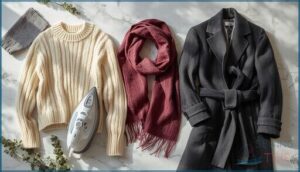
Each type of cashmere item requires a slightly different approach when ironing. The thickness, structure, and construction of sweaters, scarves, and outerwear affect how you should handle them. Here’s what you need to know for each garment.
Sweaters
Sweaters present a special challenge because their knitted structure can easily stretch or distort under heat and pressure. Turn your cashmere sweater inside out before you begin any ironing or steaming work.
Lay it flat on your padded surface, smooth the fabric gently by hand, then press small sections at a time using your damp cotton cloth. Never hang the sweater immediately after—the added weight will pull the fibers out of shape.
Scarves
Scarves demand extra fabric protection because their delicate weave and minimal structure make them vulnerable to heat distortion.
Lay your scarf completely flat, turn it to the wrong side, and place your damp cotton barrier cloth over the entire surface before applying gentle heat. Use hand steaming from a short distance if you’re nervous about direct contact—it relaxes wrinkles beautifully while preserving the scarf’s loft and preventing shine.
Coats and Outerwear
Cashmere coats and outerwear demand special care because their brushed pile surface glazes easily under direct heat. Never exceed 230 degrees Fahrenheit, and always turn your coat inside out before pressing.
Steaming techniques work best for heavy outerwear—hang your garment and direct steam downward with the pile’s natural direction, keeping the steamer head hovering above the cashmere fabric to prevent watermarks and crushing.
Post-Ironing Care and Storage Tips
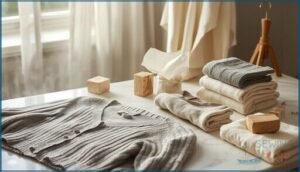
Your cashmere isn’t ready to wear the moment you lift the iron. What you do in the next few minutes can make or break your careful work. Let’s walk through the essential steps that protect your garment and lock in those crisp results.
Allowing Cashmere to Cool
Once you’ve finished ironing, don’t rush to fold or hang your cashmere—letting it cool completely is just as critical as the ironing itself. Lay the garment flat on your ironing board for at least 10 to 15 minutes.
This cooling period allows the delicate fibers to relax and stabilize after heat exposure. Moving warm cashmere risks stretching, distortion, and losing the shape you just restored through careful pressing.
Proper Folding and Storing
After your garment has cooled, proper folding and storing protect your investment. Fold cashmere into thirds rather than halves to minimize sharp creases. Turn the garment inside out for added fabric protection against dust and friction.
Store items vertically in drawers for easy visibility and to prevent crushing lower layers. Use breathable cotton garment bags or acid-free tissue paper between folds for ideal cashmere preservation and gentle handling.
Avoiding Stretch and Distortion
Beyond folding technique, you must actively prevent stretch and distortion during storage. Never hang cashmere long-term—the fabric’s weight stretches shoulders and sleeves, deforming the knit structure.
Store folded flat in breathable drawers to support even weight distribution and fiber protection. This positioning maintains texture while allowing fabric relaxation between wears, preserving garment reshaping resistance and protecting delicate fibers from gravity-induced damage that ironing and low heat can’t reverse.
Common Mistakes to Avoid When Ironing Cashmere
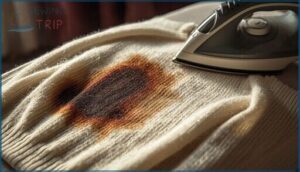
Even with the best intentions, it’s easy to ruin cashmere if you don’t know the common pitfalls. Small errors—like choosing the wrong temperature or skipping a protective layer—can leave permanent damage on your garment.
Here are the critical mistakes you need to avoid every time you iron cashmere.
Using High Heat Settings
Cranking your iron to high will scorch, shrink, or turn cashmere brittle in seconds. Heat above the wool setting destroys elasticity, leaving permanent distortion and weakened fibers that lose their signature softness.
Always dial down to the lowest heat or dedicated wool setting—cashmere’s heat sensitivity means even brief exposure to excessive temperature causes irreversible damage you can’t undo.
Ironing Without a Barrier Cloth
Letting your iron soleplate touch cashmere directly will flatten the pile, scorch fibers, and leave shiny marks you can’t reverse. Direct heat risks burning delicate fabric and catching on knit loops, distorting stitches permanently.
A damp cotton pressing cloth between iron and cashmere diffuses heat, prevents fiber damage, and keeps your garment’s loft intact—skip this barrier and you’ll ruin even the finest weave.
Pressing or Dragging The Iron
Dragging your iron across cashmere stretches stitches and distorts the garment permanently. Sliding motions pull on delicate knit loops, elongate fibers, and raise pilling through friction—even with low heat and a pressing cloth protecting the fabric.
Use gentle pressure with a lift-and-reposition technique instead. Press lightly in one spot, lift the iron, move to the next section, and repeat for safe cashmere ironing techniques.
Storing Cashmere While Still Warm
Patience pays off when you finish ironing—folding or hanging warm cashmere locks in creases and sets pressure marks as fibers tighten during cooling.
Lay your garment flat on a clean surface for at least fifteen minutes to allow complete heat removal and fabric relaxation. This simple cooling technique prevents new wrinkles and preserves your careful work, ensuring proper cashmere storage and long-term garment care.
Frequently Asked Questions (FAQs)
Is it safe to use a flat iron on cashmere?
Using a flat iron on cashmere is risky—flat irons reach over 350°F, far beyond what delicate cashmere fibers can safely tolerate.
Heat damage and scorching become real threats without proper fabric protection.
How often should I wash my cashmere garments?
You should wash cashmere every 6–12 months with regular use, or after 2–3 wearings for lightweight items. This wash frequency protects fabric care while maintaining garment longevity and cashmere’s natural softness.
What should I do if my cashmere has shrunk?
Relax shrunken cashmere through gentle fiber relaxation: soak it in lukewarm water with baby shampoo for 30 minutes, then reshape while damp on a flat towel, stretching carefully toward original measurements for fabric revival.
How do I prevent my cashmere from getting wrinkled?
Store your cashmere folded flat in breathable fabric storage to prevent wrinkles. Gentle handling protects delicate fibers from creasing. Avoid hanging, which causes stretching.
Proper cashmere folding and fiber protection eliminate the need for frequent ironing or steaming.
What is the best way to store cashmere?
Keep your cashmere folded in breathable garment bags or boxes within cool, dry places. Proper moisture control prevents fiber damage.
This clothing preservation technique ensures your garments maintain their luxurious texture season after season.
Can I iron cashmere blends with other fabrics?
Wondering if your cashmere blend is iron-safe? Yes, you can iron cashmere blends on very low heat settings using a pressing cloth barrier, but always follow the care label’s most delicate fiber guidance for complete protection.
How do I remove iron scorch marks from cashmere?
Scorch marks on cashmere require immediate, gentle action. Lightly dampen the affected area with cold water, then use a soft brush to lift damaged fibers.
For stubborn marks, professional fabric restoration is your safest option.
What type of pressing cloth works best for cashmere?
A smooth, white cotton cloth works best for cashmere.
Natural fibers like cotton withstand heat without melting, allow steam interaction through the weave, and protect delicate fabrics from shine while preserving fabric texture during pressing.
Should I dampen cashmere before or during ironing?
Dampening techniques for cashmere fiber care require caution. Never wet the fabric directly—instead, lightly mist your pressing cloth before ironing.
This fabric moisture control method delivers steam without saturating delicate fibers, preventing water spots.
Can travel irons be used safely on cashmere?
Travel irons can work on cashmere if you stick to the lowest heat setting and always use a pressing cloth barrier.
Test on a hidden spot first, since compact thermostats may run hotter than indicated.
Conclusion
Mastering the method to iron cashmere means protecting fibers while preserving luxury. You’ve learned precise temperature settings, the essential pressing cloth barrier, and gentle motions that refresh without damage. Whether you choose steam or iron depends on the wrinkle severity and garment type.
Apply these techniques consistently, allow cooling time before storage, and your cashmere maintains its signature softness for years. Careful handling transforms a delicate task into routine maintenance—your investment stays impeccable, your confidence grows, and every wear feels effortlessly polished.
- https://www.gobicashmere.com/us/pages/cashmere-care/
- https://en.moglimartini.com/blogs/journal/kaschmir-buegeln-wie-sie-ihr-kaschmir-schonend-trocknen-und-buegeln-koennen
- https://www.chcashmere.biz/post/ironing-knitwear-do-s-don-ts-and-pro-tips
- https://www.npeal.com/blogs/stories/the-complete-guide-to-caring-for-your-cashmere
- https://www.luellafashion.com/can-you-iron-cashmere