This site is supported by our readers. We may earn a commission, at no cost to you, if you purchase through links.
Cutting too short costs fabric. Cutting too long wastes it. That margin of error lives entirely in how well you measure before scissors ever touch the roll. Most sewers learn this the hard way—mid-project, fabric short by a few inches, pattern repeat ruined.
Knowing how to measure fabric from a roll correctly means understanding width variations, grain alignment, and unit conversions before you commit to a cut. Get these fundamentals right, and everything downstream—yardage estimates, pattern matching, waste reduction—falls into place.
Table Of Contents
- Key Takeaways
- What is a Fabric Roll and Its Dimensions?
- Essential Tools for Measuring Fabric Rolls
- Step-by-Step Guide to Measuring Fabric Length
- How to Measure Fabric Width From a Roll
- Calculating Yardage and Converting Units
- Best Practices for Accurate Fabric Measurement
- Frequently Asked Questions (FAQs)
- Conclusion
Key Takeaways
- Always measure selvage edge to selvage edge for width, and start your tape at the raw cut edge for length — these two anchors keep every number honest.
- Fabric type changes how you measure: let knits and tightly wound rolls relax flat before you touch the tape, or you’ll cut based on tension, not truth.
- For pattern repeats, add one full repeat to each cut length — skipping this step is the fastest way to run short mid-project.
- Double-check every measurement twice, at multiple points across the roll, and log what you find — one extra minute of verification saves yards of regret.
What is a Fabric Roll and Its Dimensions?
Before you measure anything, it helps to know what you’re actually working with. A fabric roll has specific dimensions that affect how you measure and buy it. Here’s what you need to know about width, length, and edges.
Width in particular drives so many downstream decisions that it’s worth brushing up on the basics over at the fabric measurement and terminology dictionary before you unroll a single inch.
Standard Fabric Roll Widths
Fabric rolls aren’t one-size-fits-all — width varies a lot by purpose. Apparel fabric widths usually run 44 to 60 inches, while quilting fabric widths land around 44 to 45 inches. Upholstery fabric widths stretch from 54 up to 120 inches.
Run your measuring tape from selvage edge to selvage edge for accurate fabric measurement. Knowing your roll’s width upfront saves real headaches later. For more guidance on, you can explore this helpful resource.
Typical Roll Lengths and Variations
Width sets the stage, but roll length? That’s where fabric variance really shows up. Retail bolts usually run 10 to 40 yards, while lightweight linings stretch to 100 yards.
Material thickness and fabric compression directly affect roll diameter and yardage calculation. Use a measuring tape or roll length calculator to confirm what’s actually on your fabric roll — never guess.
It’s important to understand the since it varies by fabric type and manufacturer.
Understanding Selvage and Cut Edges
Now that you know how length varies, edges are the next piece of the puzzle. Every fabric roll has two types: the selvage edge — the tightly woven border running the full length — and the cut edge, which frays easily.
- Selvage Edge: Runs parallel to the fabric grain; use it as your anchor for edge alignment when measuring width
- Cut Edge: Freshly cut threads unravel fast, so fray prevention matters immediately
- Measuring Tape Placement: Always align along the selvage for accurate yardage and length reads
Essential Tools for Measuring Fabric Rolls
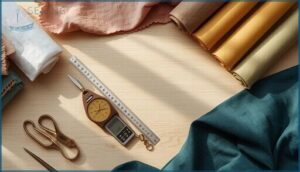
The right tool makes all the difference when you’re measuring fabric from a roll. Whether you’re working at home or in a warehouse, your options range from simple tape measures to digital counters.
Here’s what you need to know before picking the one that fits your setup.
Choosing The Right Measuring Tape or Ruler
The right tool makes all the difference. For length, a flexible tape measure — ideally fiberglass reinforced — navigates curves without stretching. For width, a rigid yardstick or fabric ruler keeps edges flat and true.
Tape measure selection matters: check both sides for inches and centimeters. Simple calibration methods, like comparing against a known ruler, confirm your measuring gauge stays accurate before you cut.
For stretch fabrics especially, pairing good measurement habits with tips from a solid guide to sewing stretch fabric helps you avoid distortion before you ever pick up the scissors.
Using Fabric Measuring Machines and Counters
Modern counters take the guesswork out of fabric measurement. Here’s what makes them work:
- Digital Counters use fabric sensors and rollers to track yardage to 0.1-yard accuracy.
- Machine Calibration corrects for wheel slip or stretch.
- Counter Integration links directly to rewinding machines for automatic stops.
- Bidirectional counting adjusts for overfeeds instantly.
- Measurement Accuracy meets certified commercial standards.
Trust the tech — it delivers.
Measuring Tools for Industrial Vs. Home Use
At home, a flexible measuring tape, fabric ruler, or yardstick gets the job done for most cuts and garment work.
But step into a warehouse, and the stakes change fast. Industrial setups rely on digital counters, measuring wheels, and calibrated industrial scales to track thousands of yards accurately. Calibration methods keep everything dialed in. Fabric gauges add precision where it matters most.
Step-by-Step Guide to Measuring Fabric Length
Measuring fabric length doesn’t have to be complicated — you just need to follow the right steps. A little prep work goes a long way toward getting an accurate result. Here’s exactly how to do it.
Preparing Your Workspace and Fabric
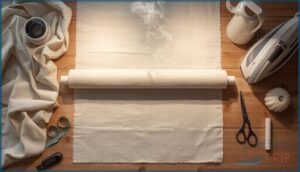
Before you unroll a single inch, your workspace sets the stage for success. Lay your fabric roll on a stable surface at waist height, and set up task lighting overhead so every edge is clearly visible.
Fabric pressing removes wrinkles that quietly steal length. Then align grain by matching selvage edges parallel.
Keep measurement tools within reach — and always put safety first.
Measuring Along The Roll’s Edge Accurately
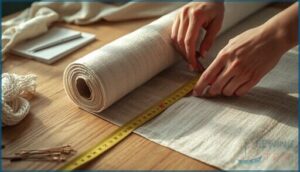
The edge is everything — your whole yardage count lives or dies by it. Start your measuring tape exactly at the raw cut edge, then keep it snug against the selvage for true length.
- Lock edge alignment at zero before you move an inch
- Practice steady tape handling with light, even tension
- Use segment folding for long rolls in tight spaces
- Apply industrial practices — re-check at every yard mark
- Record each segment for precision measurement you can trust
Tips to Avoid Stretching or Distortion

Stretch is the silent saboteur of accurate yardage. Before any measuring techniques begin, let your fabric roll rest flat for a few minutes — that’s fabric relaxation doing its job.
Keep tension control light; hold your measuring tape just snug, never tight. Align the selvage for proper grain alignment, and measure length in short segments for reliable stretch prevention and true width every time.
How to Measure Fabric Width From a Roll
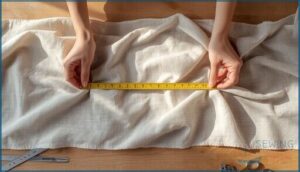
Measuring width sounds simple, but a few things can trip you up if you’re not careful. Getting it right comes down to knowing your fabric and following the right steps. Here’s what to focus on.
Identifying Selvage Edges
Before you start measuring fabric rolls, you need to know exactly where your fabric begins and ends — and that’s what selvage edges tell you.
- Feel for the firm, tightly woven border running along both long sides — that’s your selvage.
- Look for printed text, designer names, or color registration dots along the edge.
- Check for tiny pinholes in a straight line — a classic sign of woven structures and fabric grain direction.
- Notice how cut edges fray, while true selvage edge types stay intact, even after washing.
- Measure between both selvages to get your official fabric width for accurate fabric calculation.
Trust these clues every time.
Measuring Flat, Unstretched Fabric
Now that you’ve spotted your selvage edges, lay the fabric completely flat on a firm table. Let it relax for a minute — fabric holds tension from the roll, and rushing leads to false readings.
Use your tape measure or fabric ruler to align edge to edge at multiple checkpoints. That flat surface prep and consistent edge alignment keep your total yardage honest for sewing projects.
Accounting for Fabric Type and Thickness
Not all fabrics play by the same rules. Fabric thickness changes how your tape sits, and knit stretch can quietly add centimeters you didn’t plan for.
Watch for these fabric types and characteristics:
- Pile Measurement: Brush velvet’s pile aside to find the true base edge
- Knit Stretch: Allow Roll Relaxation before measuring — thick jersey widens after unwinding
- Material Compression: Tightly wound rolls compress; let fabric rest flat first
- Fabric Calculation: Account for material thickness on bulky fabrics over 300 gsm
Textile measurement gets more accurate once you respect what each fabric does naturally.
Calculating Yardage and Converting Units
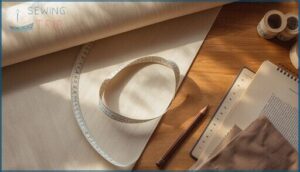
Once you’ve got your measurements, the math is where things start to click. Converting between inches, yards, and meters doesn’t have to trip you up — it just takes knowing the right formula for the job.
Here’s what you need to work through the numbers confidently.
Converting Inches, Yards, and Meters
Three simple relationships do all the heavy lifting in fabric measurement conversion. Divide inches by 36 for your Inch-Yard Conversion. Multiply yards by 0.9144 for Yard-Meter Conversion. Need an Inch-Meter Direct shortcut? Multiply inches by 0.0254.
Whether you’re tracking width, length, or total yardage, keeping these units straight means your yardage calculator always starts with clean, reliable numbers.
Using Formulas to Estimate Total Yardage
Once your units are clean, the formulas click into place fast. For roll measurement, divide total inches by 36 to get total yardage. For project pieces, multiply rows by piece length, then divide by 36.
A yardage calculator manages fabric calculation in seconds, but knowing the math keeps you in control. That confidence is worth every bit of practice.
Factoring in Pattern Repeats and Waste Allowance
Pattern matching is where yardage math gets real. For every cut length in your sewing projects, add one full repeat to your base measurement. A 27-inch vertical repeat on a fabric roll can push waste past 29 inches per drop.
Smart repeat analysis and waste calculation keep your fabric efficiency high. Textile optimization starts with knowing your numbers before you cut.
Best Practices for Accurate Fabric Measurement

Getting the measurement right the first time saves you from costly mistakes down the road. A few smart habits make all the difference between accurate results and frustrating do-overs.
Here’s what you need to keep in mind.
Double-checking Measurements for Precision
Measure twice, cut once — it’s the golden rule of measuring fabric. Skipping this step is how costly mistakes happen. Good measurement verification and precision techniques keep your rolls accurate and your projects on track.
Measure twice, cut once — skipping verification is how costly fabric mistakes happen
- Re-measure length along both selvage edges to catch skew.
- Verify width at three points across the roll.
- Cross-check tools — lay your tape beside a quilting ruler.
- Read markings straight from above to eliminate parallax error.
- Log every measurement for quality assurance and error reduction.
You’ve got this.
Handling Patterned or Specialty Fabrics
Specialty fabrics each have their own rules. For directional prints and fabric nap, cut every piece facing the same way — or your project won’t match. Add extra yardage for pattern repeats, especially large ones.
Keep stretch factors in mind with knits; measure flat, never pulled. For openwork measurement, lay lace fully flat and include scalloped edges.
Know your fabric types, and your sewing projects stay on track.
Common Mistakes to Avoid When Measuring Rolls
Small mistakes add up fast in fabric work. A little tension here, a skipped conversion there — and suddenly your roll calculations are off by yards.
Watch out for these common measuring errors:
- Pull fabric tight, and fabric tension can fake extra length
- Skip unit checks, and roll length calculator results mislead you
- Ignore fabric shrinkage, and cut pieces come up short
- Overlook roll diameter and thickness when measuring material thickness affects totals
Measure twice, cut once — always.
Frequently Asked Questions (FAQs)
How to estimate fabric yardage on a roll?
Unroll the fabric along a marked table and count every 36 inches as one yard. That’s your simplest yardage calculation — no fancy tools needed, just steady hands and a good tape measure.
How wide is fabric off the roll?
Most fabric off the roll runs 44 to 60 inches wide — measured selvage edge to selvage edge. Upholstery and specialty widths can stretch well beyond that, sometimes hitting 108 inches or more.
How many yards of fabric come on a roll?
It depends on the fabric type. Quilting cotton bolts usually hold 10 to 15 yards, while wholesale rolls can reach 40 yards. Always check the label for total yardage before buying.
How to estimate fabric on a bolt?
Count the visible folds along the bolt’s side, then divide by two. That quick roll estimation gives your yardage calculator a solid starting point for accurate fabric allowance and bolt measurement planning.
How do I store fabric rolls after measuring?
After measuring, store rolls horizontally on racks or upright on spindles. Label each core with width, fiber content, and remaining yardage.
Keep rolls off bare floors, away from direct light, and in a climate-controlled space.
Can fabric shrink after washing affect measurements?
Yes, washing effects can shrink roll yardage markedly. Cotton alone loses 3–10% after the first wash, altering your material measurement.
Always prewash fabric to guarantee post-wash accuracy before cutting your final pieces.
How do I measure irregular or damaged roll edges?
When roll edges are frayed or torn, trace a chalk line along the straight grain first.
Average several width readings, add a 1–3 cm trimming allowance per side, and document defects with a ruler for accurate irregular width calculation.
How do temperature and humidity affect fabric dimensions?
Think of your fabric as a living thing. Heat and humidity shift its dimensions. Cotton swells in moisture; synthetics shrink in cold.
Always condition fabric at 65% humidity before measuring for accurate results.
Conclusion
Every project starts long before the first cut—it starts with a number you trust. Learning how to measure fabric from a roll correctly means you won’t face that sinking mid-project moment when the fabric runs short.
Width, grain, unit conversion—each detail you’ve mastered now becomes a quiet safeguard working in your favor. Measure once with care, and your fabric won’t just fit the pattern. It’ll carry the confidence of someone who knew exactly what they were doing.
- https://mytextilefabric.com/blogs/news/how-to-choose-the-right-width-and-yardage-when-buying-fabric-online
- https://icefabrics.com/blogs/news/how-big-is-a-yard-of-fabric
- https://www.frawstedcreations.com/blogs/all-things-minky/the-beginners-guide-to-understanding-fabric-quality-and-bolt-sizes
- https://www.efavormart.com/collections/fabric-bolts
- https://www.archiexpo.com/architecture-design-manufacturer/fabric-2123.html