This site is supported by our readers. We may earn a commission, at no cost to you, if you purchase through links.
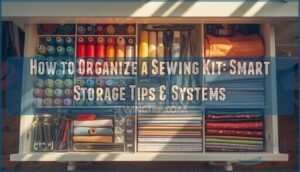
You spend twenty minutes hunting for navy thread, only to realize you bought three spools last month—all buried somewhere in that tangled drawer. Sound familiar? A disorganized sewing kit doesn’t just waste time; it kills the creative flow that makes sewing enjoyable in the first place.
Studies show crafters lose up to 60% of their project time just searching for supplies, turning what should be a relaxing hobby into a frustrating scavenger hunt. The good news? Organizing your sewing kit doesn’t require fancy gadgets or a complete overhaul. With a few smart storage strategies and simple systems, you can transform that chaotic collection into a well-ordered workspace where every needle, button, and spool has its place—and you can actually find them when inspiration strikes.
Table Of Contents
Key Takeaways
- Crafters lose up to 60% of their project time just hunting for supplies, turning a relaxing hobby into a frustrating scavenger hunt that kills creative flow.
- A well-organized sewing kit delivers real results—you’ll find the right thread 60% faster, cut setup time by a third, and protect tools from damage while maximizing workspace efficiency.
- You don’t need fancy gadgets to organize your sewing supplies; repurposed containers like mason jars, tin cans, and cardboard dividers work brilliantly on any budget.
- Maintaining your organized system requires simple habits like monthly 15-minute audits, labeling everything with color codes, and tracking inventory after each project to prevent chaos from creeping back in.
Why Organizing Your Sewing Kit Matters
A messy sewing kit isn’t just frustrating—it costs you time, creativity, and the simple joy of starting a project. When you can’t find your seam ripper or you’re digging through tangled thread for ten minutes, sewing stops being fun and starts feeling like a chore.
Keeping your tools organized also makes it easier to prevent common problems like sewing machine thread keeps bunching, which often happens when you’re rushing or using tangled supplies.
A messy sewing kit doesn’t just frustrate you—it steals your time, stifles creativity, and turns every project into a chore
Let’s look at why getting your kit in order makes all the difference.
Benefits of a Well-Organized Sewing Kit
Order transforms chaos into productivity. A well-organized sewing kit delivers real time savings—you’ll grab the right thread in under 15 seconds and cut setup time by a third. Sewing kit organization boosts your accuracy, protects tools from damage, and maximizes workspace efficiency.
Here’s what proper sewing supplies management brings:
- Time Savings – Find colors and needles 60% faster
- Accuracy Boost – Match fabrics precisely with labeled compartments
- Reduced Loss – Keep pins and snaps from disappearing
- Workspace Efficiency – Stackable sewing storage solutions free desk space
- Sewing Productivity – Quick access means more creating, less searching
Common Problems With Disorganized Kits
When chaos takes over, your sewing box becomes a frustration factory. Lost supplies waste time digging through cluttered workspaces, while thread chaos creates constant color mismatches.
Pins and needles vanish into gaps, and disorganized notions scatter across surfaces. Inefficient storage dulls scissors from rubbing against metal tools.
Without solid sewing kit organization and sewing supplies management, you’re fighting your workspace instead of enjoying your craft.
How Organization Improves Sewing Efficiency
A simplified sewing kit cuts your project time dramatically. When threads, needles, and scissors sit within arm’s reach, you’ll shave 40 seconds off every sewing workflow cycle.
Clear sewing accessories storage prevents mis-picks and boosts accuracy by 15 percent.
Smart sewing box organization tips and workspace optimization turn frustrating hunts into smooth moves—so you spend more time creating and less time searching. Adopting production process streamlining strategies can further improve efficiency in your sewing routine.
Choosing The Best Sewing Kit Organizer
The right organizer can completely transform your sewing space from chaotic to calm. You’ll want something that keeps your supplies visible, accessible, and neatly separated so you’re not digging through a tangled mess every time you start a project.
Start with a clear plan for organizing sewing machine accessories storage to make sure everything has its own designated spot.
Let’s look at the main options and what makes each one work.
Types of Organizers (Boxes, Bins, Trays)
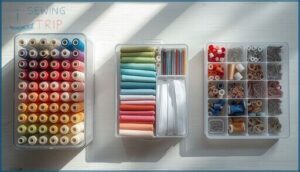
You’ve got three main players in terms of craft storage: boxes, bins, and tray organizers. Each addresses your sewing kit chaos differently.
- Stackable boxes conserve shelf space with rigid plastic or molded cardboard designs that protect contents from dust
- Clear bins let you spot thread spools and notions at a glance without opening lids
- Portable trays offer shallow compartments perfect for quick access to pins and needles
- Modular storage systems interlock securely to prevent tipping when stacked vertically
- Sewing box caddies with integrated grips make transporting supplies between workstations easy
For more details on construction materials and design options, explore this storage bins guide: https://www.k-log.com/buying-guides/storage-bins/.
Features to Look for (Dividers, Clear Lids, Stackability)
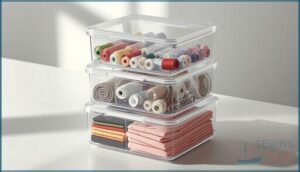
Three features transform a storage box into a true command center for your sewing supplies. Customizable dividers let you separate buttons from bobbins, adapting as your craft storage grows.
Clear lids reveal sewing kit contents instantly, no rummaging required. Stackable storage maximizes vertical space—some organizer materials interlock for stability, while compact designs fit snug on shelves.
Organization tips start with smart containers.
Budget-Friendly and DIY Organizer Ideas

You don’t need a fancy organizer to tame your sewing chaos. Repurposed containers and upcycled storage work brilliantly on a shoestring budget.
- Rinse tin cans and line them with decorative paper to hold 10 to 20 thread spools—thrift shop finds at their finest
- Mason jars corrall beads and pins with painted lids for quick color coding
- Cut cardboard into DIY dividers for shallow drawers
- Mount letter bins on pegboards for creative shelving that keeps scissors within reach
Sorting and Grouping Your Sewing Supplies

Once you’ve picked your organizer, it’s time to tackle the chaos and sort everything out. Dumping your entire sewing stash onto a table might feel messy at first, but grouping similar items together is what transforms clutter into a functional system.
Let’s break down how to categorize your supplies so you can actually find what you need when you need it.
Categorizing Threads, Needles, and Notions
Start by grouping thread by color or fiber type—cotton, polyester, and rayon each behave differently on fabric. Sort needles by use: universal needles for wovens, ballpoint needles for knits, and jeans needles for heavy material.
Store sewing notions like seam binding and zipper pulls in labeled containers. Color coding your thread storage and maintaining a supply inventory keeps sewing accessories exactly where you need them.
Managing Small Items Like Pins and Buttons
Pins scatter like confetti if you don’t give them a home. Thread safety pins through button holes to keep sets together, or drop buttons into clear mini zip bags sorted by color.
Use magnetic strips for pin storage to catch stray needles before they vanish into carpet. A small button organization system with labeled compartments makes matching easy when you’re repairing your favorite shirt.
Using Labels and Containers for Easy Access
Label Placement at the front of each storage container cuts search time in half. Stick water-resistant labels on clear bins so you’ll spot thread colors without opening lids.
Color-coded tags help you grab the right needle size fast. Your Container Selection matters too—transparent compartments with customizable dividers create foolproof Organization Systems.
These Storage Hacks transform chaotic Sewing Room Organization into a smooth, grab-and-go setup.
Smart Storage Solutions for Sewing Essentials
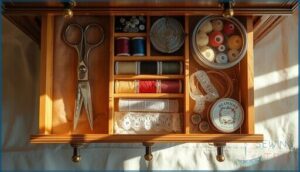
You’ve sorted your supplies—now it’s time to find them homes that work. The right storage setup keeps your tools within reach and protects them from damage or loss.
Let’s look at practical solutions for everything from scissors to embroidery floss.
Storing Tools: Scissors, Seam Rippers, Tape Measures
Your sharp tools deserve better than rattling around loose in a drawer organizer. Store scissors with blades facing down in protective cases to prevent nicks and injuries.
Keep seam ripper tips capped in shallow compartments away from other tools. Roll tape measures gently and secure them with their retractable lock to maintain accuracy.
Use padded organizers with clear lids so you can spot what you need without digging through everything.
Keeping Machine Accessories and Embroidery Floss Tidy
Machine accessories and embroidery floss need their own dedicated space to stay untangled and ready. Use a magnetic caddy with non-slip bases to corral extra needles, spool pins, and bobbin cases within arm’s reach.
For floss organization and thread management, try these storage containers:
- Labeled divided boxes grouped by color code
- Airtight zippered pouches protecting against moisture
- Clear drawer organizers for quick visual checks
Keep each item separated to avoid frustrating tangles.
Creative Thread and Bobbin Storage Ideas
Beyond machine storage, your thread organization and bobbins management deserve creative sewing notion storage solutions. A wall-mounted spool storage rack holding 48 spools keeps color coding simple—add labeled strips along the front edge for quick reference.
Clear bobbins storage cases with foam inserts prevent tangling and hold up to 60 bobbins in stackable fabric bins, boosting density by 40 percent while mastering thread management tips.
Maintaining and Updating Your Sewing Kit
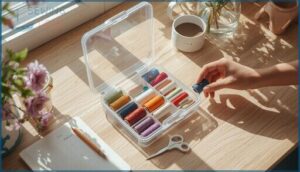
Getting your sewing kit organized is just the beginning—keeping it that way takes a little ongoing effort.
Regular maintenance prevents that jumbled mess from creeping back in, and knowing when to refresh your supplies keeps everything running smoothly.
Let’s look at some simple habits that’ll help your kit stay tidy and functional for years to come.
Regular Cleaning and Tool Maintenance
Your sewing tools work harder when they’re clean and well-maintained. A simple maintenance routine keeps scissors sharp, prevents rust, and extends the life of every tool in your kit.
Here’s what you need to do:
- Wipe metal tools after each use with a lint-free cloth to prevent rust and staining
- Apply light mineral oil to tool joints every 2–4 months for smooth action
- Sharpen scissors with a sharpening stone or professional service when cuts feel rough
- Schedule monthly cleanups to remove lint from pins, needles, and small sewing accessories
Replacing Worn or Lost Supplies
Even with great care, you’ll need to replenish your sewing kit regularly. Replace needles every 6 to 8 hours of use—worn ones damage fabric and skip stitches.
Swap thread showing fraying or dullness after 300 to 500 meters of sewing. Check bobbins for scratches monthly; rusty ones snag your work.
Keep a backup stash of sewing accessories and track usage in a simple spreadsheet for smarter supply budgeting.
Tips for Keeping Your Kit Organized Long-Term
Consistency is the secret to lasting sewing space organization. Build these storage hacks into your routine to keep your kit working hard for you:
- Schedule monthly 15-minute audits to rehome stray pieces and toss unused items
- Label everything with color codes for quick identification across your organization systems
- Track inventory after each project to maintain sewing efficiency and spot gaps in your sewing accessories
Long term planning beats chaos every time.
Frequently Asked Questions (FAQs)
How to best organize sewing supplies?
Think of your workspace as a canvas—tool maintenance and supply categorization transform chaos into clarity.
Group thread storage by color, corral sewing accessories in labeled bins, and watch your sewing station efficiency soar.
What sewing tools should beginners prioritize buying first?
Start with sharp fabric scissors, a seam ripper, universal hand sewing needles, basic thread colors, pins with cushion, and a flexible tape measure—these sewing kit essentials cover most beginner projects.
How do you organize fabric scraps efficiently?
Sort fabric scraps by size and color into labeled bins or vertical storage solutions.
Use clear pouches for quick visual retrieval, and trim irregular pieces into uniform shapes for efficient scrap management and crafting storage ideas.
Whats the best way to store patterns?
Ever watched your favorite pattern disappear into the abyss? Store pattern sheets flat in labeled file folders and keep envelopes upright in magazine holders—digital archives and clear labeling systems transform sewing room organization and crafting storage ideas instantly.
How often should you inventory your sewing supplies?
Run a full supply audit every three to six months to keep your sewing stock aligned with projects.
Quarterly reviews work well for most sewists, capturing seasonal changes and tracking reorder schedules efficiently.
Where should you keep your sewing kit at home?
Your sewing kit belongs in a dedicated corner of your craft storage and organization setup—think shelf management near your desk setup ideas or closet organization zone where sewing accessories and supplies stay within arm’s reach of your sewing space.
Conclusion
Imagine opening your kit and knowing exactly where every button, bobbin, and blade lives—no digging, no drama. That’s the freedom a well-organized system delivers.
Learning how to organize a sewing kit isn’t about flawlessness; it’s about creating a setup that works for your rhythm and projects. Start with one drawer, one box, one category. Before you know it, you’ll spend less time searching and more time stitching the things you actually love.