This site is supported by our readers. We may earn a commission, at no cost to you, if you purchase through links.
You’ve just spotted the perfect thrift store blazer, but someone else’s monogrammed initials stare back at you from the pocket. Or maybe that vintage jacket looked stunning online until you realized it arrived with a dated logo stitched across the back.
The good news: embroidery isn’t a life sentence for fabric. With the right approach, you can liberate your garments from unwanted stitches without leaving behind puckered holes or torn fibers. The trick lies in understanding what you’re working with—hand embroidery versus machine embroidery behaves completely differently under your seam ripper—and moving methodically through each thread layer.
Armed with a few essential tools and techniques that honor your fabric’s structure, you’ll transform that embroidered eyesore into a clean canvas ready for your own vision.
Table Of Contents
Key Takeaways
- Successful embroidery removal hinges on identifying whether you’re working with hand stitching or machine stitching, since each type requires different techniques and tools to prevent fabric damage.
- The three essential tools—a precision seam ripper, small embroidery scissors, and pointed tweezers—form the foundation of safe stitch removal when paired with proper lighting and magnification.
- Working in small one- to two-inch sections while cutting bobbin threads first, then carefully lifting top threads, prevents fabric distortion and maintains control throughout the removal process.
- Complete restoration requires post-removal care including gentle washing, strategic steam pressing, and systematic debris cleanup, though some needle marks may remain as subtle reminders despite your best efforts.
Essential Tools for Removing Embroidery Stitches
You can’t just grab any random tool from your drawer and expect clean results. The right equipment makes the difference between a smooth removal and a disaster that leaves your fabric looking worse than before.
Investing in sharp scissors, proper seam rippers, and quality marking tools will give you neater results and more professional-looking sewing projects.
Here’s what you actually need in your toolkit to get the job done safely.
For detailed steps on removing stitches without damage, check out how to unsew a seam safely.
Seam Ripper, Small Scissors, and Tweezers
Your toolkit starts here: a seam ripper with its curved steel blade for precision cutting, small embroidery scissors for stitch removal in tight spaces, and pointed tweezers for delicate fabric handling. These three form the backbone of removing unwanted embroidery without disaster.
If you’re new to fixing sewing mistakes with a seam ripper, start by practicing on scrap fabric to build confidence before tackling your actual project.
The seam ripper’s ball tip protects fabric while you work, scissors handle detailed snips, and tweezers pluck loose threads with surgical accuracy.
Magnifying Glass and Proper Lighting
Beyond sharp tools, you need clear vision. A magnifying glass—ideally 3x to 5x with optical glass lenses—reveals thread paths hidden to the naked eye, essential for delicate fabric handling and stitch removal without collateral damage.
Pair it with dedicated task lighting: cool LED bulbs around 5500K provide color temperature that shows true thread shades. Position your light at 45 degrees for shadow control, eliminating blind spots during embroidery removal.
Choosing Tools for Fabric Type and Stitch Density
Once you’ve tested your lighting and magnification, thread analysis and density measurement become your compass.
Silk demands fine-pointed tweezers and 70-gauge seam ripper precision; denim tolerates broader embroidery scissors.
Stitch mapping reveals whether satin fills need micro-tools or running stitches accept standard removal kits.
Choosing the right quilting and embroidery tools ensures you can tackle delicate satin stitches and stubborn seams without damaging your fabric.
Tool calibration to fabric weight prevents the heartbreak of new punctures during embroidery removal and fabric repair.
Step-by-Step Embroidery Stitch Removal
Once you’ve got your tools ready, it’s time to take control and actually remove those stitches. The process isn’t complicated, but it does require a methodical approach to protect your fabric from damage.
Here’s how to work through embroidery removal step by step, whether you’re dealing with delicate hand stitching or stubborn machine work.
Identifying Hand Vs. Machine Embroidery
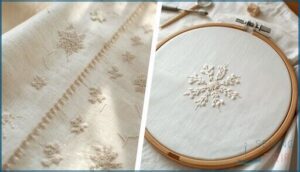
Before you start removing stitches, you need to know whether you’re dealing with hand sewn embroidery or machine embroidery—it changes everything about your approach. Stitch origin determines which embroidery removal techniques will work best without causing fabric distortion.
- Hand-stitched thread types show irregular tension and variable stitch length across embroidery patterns
- Machine work displays uniform stitch density with precisely repeating fills and satin stitches
- Hand embroidery follows natural movement changes while machine designs stick to programmed paths
- Fabric distortion around motifs often signals manual stitching versus machine-hooped stability
- Thread tails and finishing knots differ noticeably between the two methods
Snipping Bobbin Threads and Top Threads
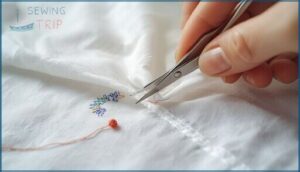
Once you know your embroidery type, flip the fabric to snip bobbin threads first—this unlocks everything. Cut close to the fabric edge at a shallow angle, leaving a quarter-inch tail for easier cleanup during embroidery removal.
For stubborn or delicate areas, follow proven techniques to remove stitches without damaging fabric to keep your material intact.
| Thread Type | Best Snipping Approach |
|---|---|
| Bobbin threads | Cut from back, shallow angle, near fabric edge |
| Top threads | Snip just above surface after removing hoop |
| Dense stitches | Work slowly, check surrounding area frequently |
| Delicate fabric | Use fine-point scissors, minimal pressure |
Then tackle top threads using precision scissors perpendicular to the fabric—this prevents frayed edges and maintains proper thread tension for successful stitch removal.
Using a Needle for Precise Stitch Removal
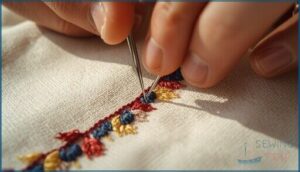
A needle gives you control that no seam ripper can match for intricate embroidery removal. Choose a fine-gauge stainless steel needle (size 8 to 10) with a smooth, rounded eye to gently work beneath hand embroidery stitches without snagging delicate fabric.
Precision Techniques for Careful Stitch Removal:
- Insert your needle at a shallow angle parallel to each stitch line—this protects fabric while releasing thread tension
- Lift individual strands using the needle tip rather than cutting blindly through dense satin stitches
- Work from the visible thread side toward the fabric back to maintain control during embroidery stitches removal
- Create gentle tugging motions instead of forceful pulls to preserve fabric relaxation and prevent fraying
- Understand stitch anatomy by examining how top and bobbin threads interlock before you start weaving through layers
This method takes patience, but your fabric stays intact.
Working in Small Sections to Prevent Fabric Damage
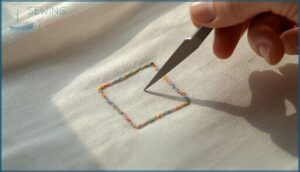
Breaking your embroidery removal into one- to two-inch squares is the foundation of damage control. This sectional removal strategy keeps fabric tension stable while you isolate each stitch cluster without pulling surrounding areas.
Thread management stays manageable when you tackle small zones at a time. Mark your grid with chalk, remove stitches methodically, then inspect before moving forward. Your fabric care improves dramatically with this controlled approach.
Handling Different Fabrics and Embroidery Types
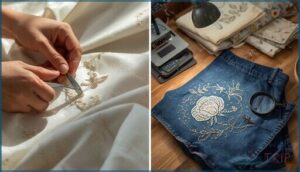
Not all fabrics play by the same rules when you’re removing embroidery. What works perfectly on a sturdy canvas tote might tear a silk blouse to shreds, and dense machine stitching demands a completely different approach than delicate hand embroidery.
Here’s how to match your technique to whatever material you’re facing.
Removing Stitches From Delicate Fabrics (silk, Rayon)
Silk and rayon demand a surgeon’s patience during embroidery removal—these fibers snag, pucker, and fray if you rush the process. Sharp micro scissors and fine-point seam rippers minimize fabric damage prevention while you lift threads away from the surface. Working under bright light with a magnifier keeps your gentle embroidery extraction precise.
Delicate fabrics like silk and rayon demand surgical patience, sharp micro tools, and magnified precision to prevent snagging during embroidery removal
Essential delicate stitch techniques for silk fabric care:
- Test your rayon thread removal approach on scrap fabric first
- Trim top threads close, then pull loops upward individually
- Remove dense satin stitches in 2-3 stitch segments only
- Use tweezers to lift resistant threads before snipping
- Hand wash with low heat pressing afterward for restoration
Working With Durable Fabrics (denim, Canvas)
Denim and canvas reward your confidence—their tight weave patterns and fabric thickness tolerate firmer pressure during embroidery removal. You can snip bobbin threads more decisively on these durable bases, though stitch density still matters.
Work methodically through sections, using your seam ripper at a steeper angle. Post-removal, brush away debris and press with steam for fabric restoration that erases the embroidery’s ghost.
Special Care for Leather and Layered Materials
Leather demands a steady hand and zero room for error—each puncture leaves a permanent mark. Before attempting stitch removal, condition the surface to prevent cracking at stress points.
For layered materials with embossing techniques, work from the underside when possible, cutting bobbin threads without disturbing the veneer.
Suede cleaning requires brushing away debris immediately, as remnants settle into the nap and resist fabric restoration efforts later.
Techniques for Dense or Satin Embroidery
Dense satin fill presents unique challenges—those tightly packed parallel stitches, usually spaced just 0.5 to 0.7 millimeters apart, create significant thread buildup. Before tackling embroidery removal, assess stitch density and thread tension carefully.
Work from the design’s center outward, snipping bobbin threads first to prevent fabric strain. Extra fabric support underneath helps stabilize the material during stitch removal techniques, especially when removing embroidery from areas showing puckering or distortion.
Using an appropriate stabilizer selection guide can also help prevent damage during these processes.
Top 3 Tools for Safe Stitch Removal
You don’t need a whole arsenal to remove embroidery safely—just three well-chosen tools that work together to protect your fabric while getting the job done. The right equipment makes the difference between a clean removal and a frustrating mess of snags and holes.
Here are the three essentials you’ll want on hand before you start pulling out stitches.
1. Sullivans Precision Seam Ripper Tool

The Sullivans Precision Seam Ripper Tool combines reliability with practical design features. You’ll appreciate the metal construction and replaceable blade system, which maintains consistent sharpness through multiple projects.
The purple-handled model includes an extra blade and protective case, extending your tool’s working life. Its compact head accesses tight seams without catching surrounding fabric. While the blade requires careful handling to prevent accidental cuts, the steady grip and precision tip make controlled stitch removal straightforward.
Consider this your primary tool for detailed embroidery work.
| Best For | Home sewers and crafters who need a reliable tool for removing stitches, opening seams, and handling detailed work like embroidery or reborn doll projects. |
|---|---|
| Primary Material | Metal |
| Handle Type | Purple Metal |
| Weight | 0.64 ounces |
| Primary Use | Removing stitches/seams |
| Design Focus | Precision seam ripping |
| Durability | Metal construction |
| Additional Features |
|
- Comes with replaceable blades and a protective case, so you get long-term value and safer storage
- Metal construction with a precision tip makes it easy to remove stitches without damaging fabric
- Includes a bonus buttonhole cutter blade for added versatility in different sewing tasks
- The blade is extremely sharp and requires careful handling to avoid accidentally cutting your fabric
- Some users report the plastic handle feels flimsy despite the metal construction
- Price point may seem high compared to basic seam rippers on the market
2. Stainless Steel Sewing Scissors
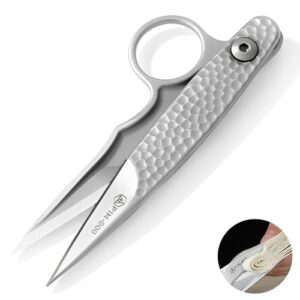
Sharp stainless steel scissors give you control when cutting individual embroidery threads close to fabric. Look for blades around 2 to 3 inches long with fine, pointed tips that slip under stitches without snagging nearby fibers.
The WUSAIRX model features precision-crafted stainless steel blades and an ergonomic rubberized handle that reduces hand fatigue during extended removal sessions. These scissors resist rust when stored properly and maintain their edge longer than carbon steel alternatives, though they’ll need professional sharpening every 6 to 12 months with regular use.
| Best For | Crafters and sewers who need precise control when cutting embroidery threads, trimming fabric edges, or working on detailed projects like quilting and gift wrapping. |
|---|---|
| Primary Material | Stainless Steel |
| Handle Type | Rubberized Ergonomic |
| Weight | 3.52 ounces |
| Primary Use | Cutting fabric/thread |
| Design Focus | Precision cutting |
| Durability | Stainless steel blades |
| Additional Features |
|
- Precision-crafted stainless steel blades stay sharp longer and resist rust better than carbon steel options
- Ergonomic rubberized handle reduces hand fatigue during extended cutting sessions
- Compact 4.6-inch design with fine, pointed tips allows for intricate detailing and close cuts without snagging fabric
- Blades require professional sharpening every 6 to 12 months with regular use
- Not designed for cutting very thick or hard materials beyond standard fabric and thread
- Lacks advanced features like adjustable tension that some specialty scissors offer
3. Scotch Brite Heavy Duty Lint Roller
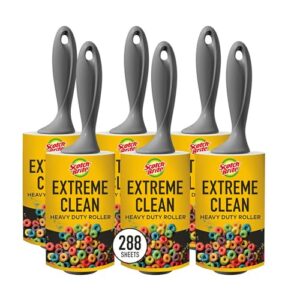
Once you’ve cut and pulled out the embroidery threads, a heavy-duty lint roller becomes your best ally for clearing away the stubborn fuzz and thread fragments clinging to the fabric surface.
The Scotch-Brite Heavy Duty model offers 50% more adhesive strength than standard rollers, grabbing larger debris like thread tails and fabric pills that tweezers can’t reach efficiently. Its 48 easy-tear sheets handle multiple garments before you’ll need a refill, and the ergonomic handle won’t strain your grip during thorough cleanup passes.
| Best For | Anyone dealing with leftover embroidery threads, fabric fuzz, and small debris after removing stitching from clothing or upholstery. |
|---|---|
| Primary Material | Plastic |
| Handle Type | Plastic Ergonomic |
| Weight | Not specified |
| Primary Use | Removing lint/debris |
| Design Focus | Heavy-duty adhesion |
| Durability | Refillable system |
| Additional Features |
|
- 50% stickier than standard lint rollers, making it easier to grab thread fragments and larger debris in one pass
- 48 easy-tear sheets per roller means you can clean multiple garments before needing a refill
- Ergonomic handle design keeps your hand comfortable during extended cleaning sessions
- Some users report the adhesive isn’t as strong as expected, especially compared to regular Scotch-Brite rollers
- May not show a dramatic difference in performance versus standard lint rollers for all cleaning tasks
- Can be too aggressive on certain surfaces, potentially pulling fibers if pressed too hard
Caring for Fabric After Stitch Removal
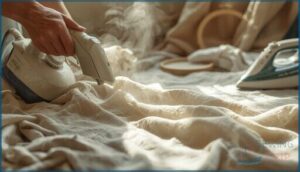
You’ve cleared away the embroidery, but your work isn’t done yet. The fabric needs attention to erase the evidence of those removed stitches and restore its original look.
Here’s how to bring your fabric back to life and know when it’s time to call in the experts.
Washing and Ironing to Restore Appearance
After removing embroidery, you’ll want to revitalize the fabric to restore its original look. Start with a gentle wash using cool or warm water and mild detergent—this relaxes fibers and readies the surface for steam pressing.
Once dry, use ironing techniques with appropriate heat settings for your fabric type. A pressing cloth protects delicate materials during fabric restoration, helping with wrinkle removal and overall fabric rejuvenation.
Treating Needle Marks and Holes
Even careful embroidery removal can leave tiny craters where needles punctured the weave. You’ll see pinpoint holes with slight shadows—marks that fade over weeks with proper textile restoration.
For needle mark removal and fabric repair, gently steam the area using a pressing cloth, then massage with light finger pressure to coax fibers back into place. This textile repair approach facilitates natural hole filling without aggressive intervention that risks further damage.
Removing Thread Residue and Debris
Patience during debris removal protects the fabric restoration work you’ve already completed. After stitch removal, tiny thread residue fragments cling to the weave and demand systematic cleanup for proper stitch cleanup.
- Run a lint roller across the surface using light, even strokes to lift micro fibers less than 2 millimeters long
- Brush along the fabric grain with a soft-bristled tool to sweep away metallic thread shards without snagging
- Use tweezers to extract stubborn bobbin remnants lodged at fabric edges
- Vacuum with low suction to capture invisible debris while preventing textile distortion
This methodical debris removal approach ensures residue prevention and complete embroidery removal finishing.
When to Seek Professional Restoration
Some damage falls beyond DIY repair and demands professional consultation for proper fabric assessment. When you encounter extensive structural damage, fire or smoke residue, mold growth, or contaminated water exposure, restoration costs become worthwhile investments.
Licensed specialists provide damage evaluation documentation that streamlines insurance claims while executing fabric repair and restoration techniques that preserve garment integrity. Textile restoration and repair professionals safeguard items amateur embroidery removal attempts might destroy permanently.
Frequently Asked Questions (FAQs)
What is the easiest way to remove embroidery stitches?
The easiest stitch removal technique starts on the back: snip bobbin threads first with a seam ripper, then gently pull top embroidery stitches through using tweezers for clean fabric protection and minimal thread management effort.
For more detail, you can review essential tools and embroidery removal techniques before starting.
How do you remove embroidery without a seam ripper?
You don’t need a seam ripper for thread removal. Fine-tipped scissors work perfectly for snipping bobbin threads, while a needle carefully lifts individual stitches.
Tweezers pull loose threads through cleanly without fabric damage.
Can embroidery be removed without leaving any trace?
Complete embroidery removal without trace is rarely achievable. Fabric restoration depends on stitch density, fabric type, and original needle penetration.
Thread removal leaves tiny holes that washing and pressing can minimize but not entirely eliminate.
How long does complete embroidery removal typically take?
Removing embroidery usually takes 20 minutes to 2 hours for simple designs, while dense satin stitches on sturdy fabrics can require 4 to 12 hours—stitch complexity and fabric thickness directly affect removal speed.
Will removing embroidery weaken the fabrics structural integrity?
Can gentle hands truly restore fabric to its former glory?
Removing embroidery technique with proper technique minimizes structural impact—relieving tension that once distorted fibers by up to twenty percent while preserving the weave’s integrity.
Can you reuse fabric immediately after removing embroidery?
You can reuse fabric after embroidery removal if the base material stays stable and free of tears.
Washing helps restore appearance, while checking for puckering or needle holes ensures successful fabric reuse for your next project.
What causes embroidery to leave permanent discoloration on fabric?
Dye migration from dark threads, stabilizer residue, metallic tarnish, and cleaning chemicals all bond permanently with fibers.
Thread bleeding intensifies when moisture activates loose dye, leaving halos that washing won’t erase.
Conclusion
The difference between a ruined garment and a rescued one often comes down to patience. Between rushing and respecting the fabric’s limits. Between guessing and actually examining what holds those threads in place.
Now that you understand how to remove embroidery stitches carefully, that monogrammed blazer becomes yours to redesign. Work methodically, honor your fabric’s structure, and you’ll erase unwanted stitches without a trace—proving that second chances apply to clothing too.
- https://maggieframestore.com/collections/magnetic-hoops-for-industrial-machines
- https://blog.deer-and-doe.fr/en/15985-sewing-with-silk-sewing-and-finishing/
- https://www.ageberry.com/how-sew-silk-types-of-stitches-and-seams/
- https://nhkmachineryparts.com/420-vs-440-stainless-steel/
- https://proshearus.com/blogs/news/what-are-the-top-features-to-look-for-in-sewing-scissors