This site is supported by our readers. We may earn a commission, at no cost to you, if you purchase through links.
Most sewists hit the same wall: everything looks fine until you hold the finished piece up and notice wonky seams, puckered fabric, and edges that fray within a week.
It’s not a talent problem—it’s a technique problem. Small habits, like skipping the prewash or using a dull needle, quietly sabotage your results before you’ve sewn a single stitch.
The good news? Neater sewing comes down to a handful of repeatable techniques anyone can learn. Get these right, and the gap between "homemade" and professionally finished starts closing fast.
Table Of Contents
- Key Takeaways
- Prepare Fabric for Neater Sewing
- Cut Pieces More Accurately
- Choose Better Needles and Thread
- Sew Straighter, Even Seams
- Press Seams Like a Pro
- Finish Raw Edges Cleanly
- Handle Tricky Fabrics Smoothly
- Improve Hand Sewing Neatness
- Fix Common Stitching Problems
- Maintain Tools for Clean Results
- Frequently Asked Questions (FAQs)
- Conclusion
Key Takeaways
- Prepping your fabric before you sew — prewashing, pressing, and squaring the edges — prevents most fit and seam problems before they even start.
- Your needle and thread combo matters more than you’d think; matching them to your fabric type stops skipped stitches, puckering, and mid‑project thread breaks—cold.
- Pressing seams as you go (not just at the end) is the single habit that most separates polished, professional‑looking work from homemade‑looking results.
- Sharp tools and a clean machine aren’t optional extras — dull scissors, worn needles, and lint buildup quietly wreck your accuracy, stitch by stitch.
Prepare Fabric for Neater Sewing
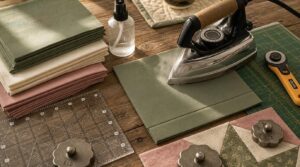
Good fabric prep is honestly where neat sewing starts — before a single stitch is made.
Skipping this step leads to warped seams and frustrating fits, so brushing up on essential machine sewing techniques can save you a lot of headaches down the line.
A few simple steps upfront save you from frustrating surprises later, like seams that pucker or pieces that don’t quite line up. Here’s what to do before you ever sit down at the machine.
Prewash to Prevent Shrinkage
Before you cut a single piece, wash your fabric first — it’s one of the simplest fabric preparation steps you can take before sewing. Prewashing removes sizing, that stiff factory finish, and reveals how your fabric truly behaves.
Different prewash fabric types shrink differently, and some release excess dye too. Washing before cutting saves your finished garment from surprise fit changes later.
Press Before Cutting
Once your fabric is prewashed, don’t skip the iron — pressing before cutting is a difference-maker for fabric preparation before sewing.
A quick iron pressing session smooths out wrinkles and fabric ridges that throw off your cutting lines. Test iron heat settings on a scrap first, use a pressing cloth on delicate materials, and let the fabric cool completely before laying down your pattern.
Square Fabric Edges
Once your fabric is pressed flat, it’s time to square those edges — and this step is essential for accurate seam allowance later. Match your selvage alignment first, then use an L-square or rotary precision tool to verify corners at 90 degrees.
A rotary cutter gives you clean, confident lines. Check corners twice — edge distortion fixes get harder once you’re cutting fabrics.
Ensuring accurate measurements using a ruler helps maintain perfect right angles.
Stabilize Slippery Fabrics
Now that your edges are squared, slippery fabrics are next on your radar. Silk, chiffon, and satin shift like they’ve got somewhere better to be.
Try tissue layering underneath while cutting, or experiment with gelatin stabilization — dissolving a little gelatin in warm water and soaking your fabric creates a temporary stiff backing.
Interfacing options, stay tape, a Teflon foot, or using a walking foot all help lock seam stability in place.
Mark Seam Allowances Clearly
Seam allowances are basically your safety net — skip marking them clearly and your whole project can drift off course.
A tracing wheel technique pressed along a clear acrylic ruler gives you crisp, accurate lines fast.
Here’s what actually works:
- washable marking pens for seam allowance calculation on most wovens
- chalk on knits to avoid permanent impressions
- color-coded lines — one for cutting, one for sewing
- right-angle marking at corners to reduce bulk
- rubber band around your machine as a quick hack to mark seam allowance width consistently
Fabric alignment stays solid when your marks are clear from the start.
Cut Pieces More Accurately
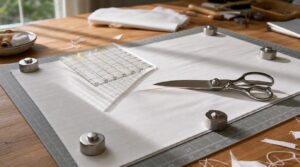
Accurate cutting is honestly where a lot of sewing projects live or die.
A small slip here can throw off your whole seam, and that’s frustrating when you’ve already done the hard work of preparing your fabric.
Simple habits will make a real difference in how cleanly your pieces come together.
Use Sharp Fabric Shears
Dull shears don’t just slow you down — they sabotage your accuracy. When blades tug instead of slicing, you lose up to 2–3mm per cut. That’s a crooked seam waiting to happen.
Dull shears don’t just slow you down — they sabotage your accuracy, one crooked seam at a time
| What to Check | Why It Matters | How Often |
|---|---|---|
| Blade Alignment | Prevents off-grain cuts | After any drop |
| Shear Sharpening | Restores clean bite | Every 6–12 months |
| Material Compatibility | Matches shear to fabric weight | Before each project |
Good fabric cutting strategies start here. Ergonomic grips reduce hand fatigue, cutting curves stay smooth with properly tensioned blades, and keeping scissors sharp is your best defense for preventing fabric fraying. Reserve them for fabric only — that’s how to keep scissors sharp the longest.
Try Pattern Weights
Pattern weights are a real asset for cleaner cuts. Your Weight Selection Guide starts simple: use 100–200 gram weights for denim or wool, and lighter 25–100 gram options for delicate Fabric-Specific Weights that won’t leave marks.
Proper Placement Techniques matter too — set them outside the seam allowance. No pins, no pinholes.
Even DIY Pattern Weights filled with rice work beautifully for precision sewing.
Cut on Grainlines
The grainline is your fabric’s backbone — get it wrong and you’ll have wavy hems and twisted seams no matter how carefully you sew. Use Grainline Marking Tools like a clear ruler or tailor’s chalk to run Grain Direction Tests across the full width before cutting.
Stabilization Techniques, like pattern weights, keep everything locked during Pattern Alignment Tips checks.
Cross Grain Challenges sneak up fast on slippery fabrics, so always verify fabric alignment first.
Trim Notches Carefully
Tiny notches might seem like a small detail, but they’re your best alignment checkpoints. For Notch Depth Control, clip just inside the seam allowance — never through it.
Use Bulk Reduction Snips on thick fabrics to keep seams flat. On curves, Curve Notch Spacing matters: even gaps prevent puckering.
Always do quick Notch Alignment Checks before sewing for a truly professional finish.
Use Pinking Shears
Pinking shears are one of those tools that punch way above their weight. Those zigzag Pinked Edges aren’t just pretty — they actually prevent fabric fraying by shortening loose threads along the cut.
They work best on woven fabrics like cotton and linen, making them a go-to for quick seam finishing techniques. Just mind your Blade Care, avoid heavy canvas, and you’ve got easy Craft Finishing.
Choose Better Needles and Thread
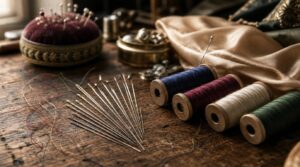
Your needle and thread choices matter more than most people realize. The wrong combo can cause skipped stitches, tangled messes, or fabric that puckers, no matter what you do.
Here’s what to look at before you even sit down at your machine.
Match Needle to Fabric
Choosing the right needle changes everything.
Think of it as your first line of precision — the wrong gauge tears fabric before you even finish a seam.
For knit fabrics, use ballpoint or stretch needles; they glide between fibers instead of piercing them.
Woven fabrics need universal needles.
Silk calls for microtex precision, and denim demands strength — size 90 or heavier.
Use Quality Sewing Thread
Thread matters more than most beginners realize. Cheap thread breaks mid-seam, leaves lint everywhere, and tanks your tension overnight.
Quality thread — polyester, cotton, or core-spun fiber types — gives you smooth machine stitching and colorfastness that lasts. Built-in lubrication keeps it gliding without overheating your needle.
Here’s what good thread actually does for you:
- Reduces mid-project breaks dramatically
- Maintains consistent spool tension throughout long runs
- Protects colorfastness through repeated washing
- Minimizes lint buildup inside your bobbin case
- Improves overall seam finishing quality
Check Thread Weight
Weight is the next thing to get right. That number on your spool — 30, 40, 50 — tells you everything about thickness. Lower means thicker.
| Fabric Type | Best Thread Weight |
|---|---|
| Denim or canvas | 30–40 wt |
| General garments | 40 wt |
| Silk or chiffon | 60 wt+ |
Mismatched weight causes puckering or weak seams — especially on topstitching and quilting projects.
Wax Hand-sewing Thread
hand-sewing is a different game.
Running your thread across beeswax block changes everything — it cuts down on tangles, strengthens the strand, and helps you glide through leather stitching or heavy canvas without fighting the needle. It’s one of those wax application tricks that improves hand stitching methods instantly.
For decorative seams especially, that subtle sheen looks intentional and clean.
Replace Dull Needles Often
Dull needles sneak up on you — one project you’re gliding, the next you’ve got puckered seams and broken thread everywhere. Needle Change Frequency matters more than most sewists think. Here’s what a fresh needle actually does for you:
- Preventing Needle Breaks — High-Speed Stitching on thick layers stresses weak, worn tips fast.
- Reducing Lint Buildup — Sharp eyes pull thread cleanly, leaving less fray and debris.
- Fabric Type Considerations — Denim, leather, and knits each wear needles differently; swap after every project.
- Needle Disposal Safety — Wrap used needles in tape before tossing to protect yourself and others.
Keep Pins and Needles Sharp, and your hand stitching methods improve automatically — garment durability follows.
Sew Straighter, Even Seams
Straight seams are honestly what separate a polished finish from something that looks rushed.
The good news is a few simple habits can make a huge difference, and none of them are hard to pick up.
Here’s what actually works.
Use Seam Guides
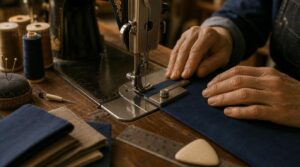
Want seams that stay ruler-straight without constant measuring? A seam guide is your secret weapon.
| Seam Guide Types | Magnetic Guide Benefits | Adjustable Guide Uses |
|---|---|---|
| Magnetic strip | Snaps on instantly | Multiple seam allowances |
| Plastic channel | Marks fixed distance | Precision seam alignment |
| Adhesive tape | Easy repositioning | Quick seam allowance guides |
| Ruler guide | Attaches to needle plate | Seam allowance calculation |
| Quick gauge | Premarked distances | Even seam line control |
Clean guide maintenance tips keep everything accurate longer.
Try a Rubber Band Guide
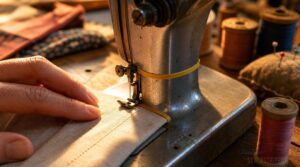
Here’s a clever trick that costs almost nothing — loop a rubber band around your machine base as a seam allowance guide. It’s one of those timesaving sewing tricks sewists swear by.
Proper placement and tension are everything:
- Keep the band taut but relaxed
- Check fabric compatibility before starting
- Monitor for slippage on silkier materials
- Maintenance means swapping stretched bands regularly
Keep Consistent Stitch Length
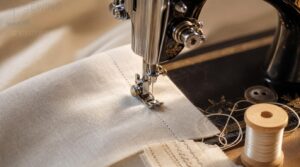
Stitch length is the quiet backbone of every clean seam. Set your machine between 2.5–3.0 mm for woven fabrics — it’s the sweet spot for a smooth straight stitch. Stitch calibration methods like sewing a quick test seam on scrap fabric catch problems before they reach your real project. Test seam importance can’t be overstated.
| Setting | Recommendation |
|---|---|
| Standard stitch length adjustment | 2.5–3.0 mm |
| Machine tension | Balanced top and bobbin |
| Longer stitch length | Basting or thick layers |
| Presser pressure tweaks | Adjust for uneven feeding |
| Feed dog alignment | Keep clean for smooth advance |
Lockstitch reinforcement at seam ends prevents unraveling. Basic stitches stay consistent when your feed dog alignment is solid and machine tension is dialed in right.
Guide Fabric Gently
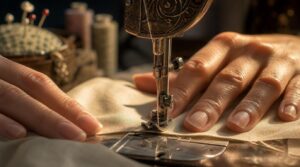
Your hands are the real co-pilot here. Gentle hand placement means resting your fingers lightly on the fabric — never pulling or pushing.
Let the feed dogs do their job. Rhythm sewing techniques keep your pace steady, which helps with fabric layer alignment and stops puckering before it starts.
Stay a finger-width from the needle for needle proximity safety, and avoid fabric pulling at all costs.
Practice on Scraps First
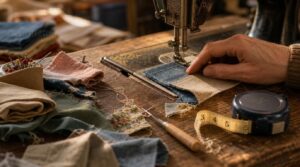
Scraps are your secret rehearsal stage. Before cutting into real fabric, run your sewing techniques on leftover pieces first — it’s where you catch tension issues, check seam allowances, and fine‑tune stitch length without stress.
These consistency drills build real confidence, and spotting errors early means less stitch removal later.
Waste reduction and garment construction basics start here, not mid‑project.
Press Seams Like a Pro
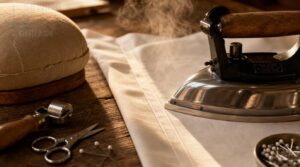
Pressing your seams is honestly one of those habits that separates okay sewing from really clean, polished work. It’s not just about making things look nice — it actually shapes the fabric and helps everything line up better as you go.
Here are a few simple pressing habits worth adding to your routine.
Press as You Sew
Here’s the thing — if you press seams as you go, your finished garment looks like it came from a boutique, not a beginner’s table.
Iron steam settings matter: use a short steam burst rather than a constant flood. Follow a smart layer pressing order, and always allow cooling intervals before handling.
Even hem press timing and curved seam press moments deserve a pause.
That steamy iron is your best friend.
Press Both Fabric Sides
Once you’ve got the hang of pressing as you go, try flipping that seam over and pressing both sides. It sounds simple, but it’s a major improvement for seam allowance accuracy.
Start on the wrong side to set the stitch, then flip and press seams from the right side. Even heat distribution tips matter here — steady pressure, 8–12 seconds, no dragging.
Use a Pressing Cloth
A pressing cloth is your iron’s best chaperone — it sits between the heat and your fabric, protecting delicate fibers from shine and scorch marks. This is non‑negotiable for silk, satin, or velvet.
For professional garment construction and neat finish results, keep these fabric care basics in mind:
- Use 100% cotton cloth for even heat protection
- Dampen it slightly for controlled steam management
- Keep it white to avoid color transfer onto light fabrics
- Replace it when scorched or damp for consistent Delicate Fabric Care
Set Seams Before Opening
Once your pressing cloth has done its job, it’s time to set seams before you open them — this is where Heat Mastery really kicks in.
Flatten the seam allowance on the wrong side first. That simple step controls Curling Prevention before it becomes a problem.
| Step | What You Do | Why It Matters |
|---|---|---|
| Set the seam | Press flat before opening | Locks stitches in place |
| Seam Alignment | Match allowances along stitch line | Prevents misalignment after opening |
| Slow-Open Technique | Open gradually after pressing | Keeps seam allowance matching equal |
Then do your Flatness Checks — no puckers, no distortion, just a clean, neat finish every time.
Avoid Dragging The Iron
Dragging your iron is one of those habits that seems harmless — until your fabric stretches off-grain and your seam lines look slightly twisted. Instead, use the lift-and-press technique: place the iron down, let steam penetrate, then lift straight up.
This method prevents stretch, avoids shine marks, and keeps ironing seams accurate. Your cooling fabric then sets in exactly the right shape.
Finish Raw Edges Cleanly
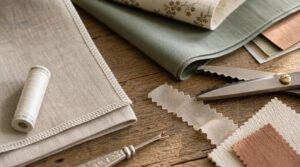
Raw edges are one of those things that can quietly ruin an otherwise great project. The good news is you’ve got several solid options for keeping them in check, and each one works better for certain fabrics and situations.
Here’s a quick look at the most useful finishing methods to add to your sewing toolkit.
Sew French Seams
French seams are your secret weapon for sheer fabric applications — no serger needed. You sew twice, and the raw edge disappears completely inside.
Here’s why they’re worth mastering:
- Enclosed edge advantages keep fabric from fraying, even after multiple washes.
- Double stitching benefits add surprising strength to delicate fabric handling.
- Seam allowance precision ensures a clean, even finish every time.
Try Flat-felled Seams
Want a seam that works as hard as your fabric? Flat-felled seams are the backbone of Denim Jean Construction and Workwear History for good reason — they pass every Seam Strength Test.
| Feature | Detail | Benefit |
|---|---|---|
| Layers | Folds over raw edge | Clean on both sides |
| Stitching | Two parallel rows | Seam reinforcement on woven fabrics |
| Best use | Denim, Industrial Machines | Excellent durability |
Seam Variations exist, but none beat this for heavy-duty seam finishing techniques.
Use Zigzag Finishing
No serger? No problem. A simple zigzag stitch is one of the best serger alternative methods you’ll find hiding in plain sight. Here’s how to nail it:
- Adjust your Zigzag Width Settings so the stitch just grazes the raw edge.
- Use an Overcasting Foot for consistent edge control on delicate fabric edges.
- Balance your Zigzag Tension Control to avoid puckering on knit edge finishing.
This overcast stitch works beautifully on wovens and knits alike.
Bind Edges With Bias Tape
Bias tape binding is one of those edge finishing techniques that look fancy but isn’t complicated. You’ve got two main Bias Tape Types — single and double fold — and both work beautifully depending on your project.
Double fold encases raw edges cleanly inside and out. Try Handmade Bias Tape for Decorative Bias Effects or perfect fabric compatibility.
Mitered Corners give quilts and hems a crisp, polished finish.
Prevent Fraying Neatly
Fraying is sneaky — it starts at the cut edge and works its way in. A quick swipe of Liquid Fray Check stops it cold.
For woven fabrics, Serging Techniques and Overcasting Edges are your best friends.
Love hand-finishing? The Hong Kong Finish wraps edges beautifully.
Don’t skip the Pinked Edge Method on cotton — it’s surprisingly effective at preventing fabric fraying without bulk.
Handle Tricky Fabrics Smoothly
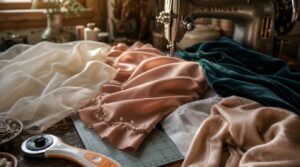
Some fabrics just don’t play nice — they slip, bunch, stretch, or fight you the whole way through.
But few small adjustments can make a huge difference in how they behave under your needle.
Here’s what actually helps when you’re working with the tricky stuff.
Clip Bulky Layers
Bulky layers are seam-finishing killjoys—they cause tunneling, puckering, and uneven pressure. That’s where curve clipping methods save the day.
Make small V-shaped cuts every 1–2 cm along curved seams, stopping 2 mm before the stitch line. Seam allowance balance matters here—clip too much and you’ll compromise garment durability.
Match your clipping tool selection to your fabric type considerations: gentle snips for knits, deeper cuts for heavy wovens.
Support Slippery Fabric
Slippery fabrics like satin and silk can feel like wrestling a wet fish.
Here’s what actually works when cutting slippery fabrics:
- Mist your mat with silicone spray for grip.
- Try cornstarch dusting directly on the fabric surface.
- Use edging weights or magnetic guides to hold long edges flat.
- Lower your foot pressure to stop puckering before it starts.
Use a Walking Foot
walking foot is basically an indispensable tool for slippery fabric control and bulky material sewing. It adds a second set of feed dogs on top, so both fabric layers move together — no more creep, no more frustration.
| What It Fixes | How It Helps |
|---|---|
| Fabric creep | Syncs top and bottom feeding |
| Uneven stitch formation | Keeps layers moving together |
| Walking foot quilting shifts | Prevents batting from bunching |
| Slippery fabric sliding | Grips delicate textiles evenly |
| Layered fabric feeding problems | Reduces pinning dramatically |
Check your machine compatibility tips before buying — some need adapters.
Reduce Fabric Puckering
Even after nailing your walking foot technique, puckering can still sneak up on you. The fix usually lives in few small adjustments:
- Try stitch length adjustment — shorter stitches spread tension more evenly on delicate fabric.
- Check your bobbin tension adjustments and thread tension management so neither pulls too tightly.
- Tack baste before you sew to stop layers shifting.
- Apply light presser foot pressure on curves using curve sewing tips.
Sew Denim Slowly
Denim will humble you fast if you rush it. Slow down your machine speed and let the fabric feed at its own pace — that’s where Slow Sewing Advantages really shine. a walking foot for even layers, apply Denim Clip Techniques to hold seams flat, and dial in your Presser Foot Adjustments before hitting thick Seam Intersection Methods.
| Challenge | Fix | Tool |
|---|---|---|
| Skipped stitches | Denim needle | Heavy-duty needle |
| Seam bulk | Clip allowances | Sharp scissors |
| Thread breaks | Thread tension management | Balanced bobbin |
Improve Hand Sewing Neatness
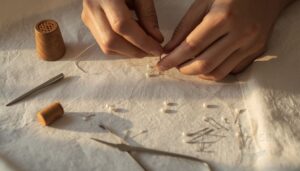
Hand sewing gets a bad reputation for being messy, but a few small habits make a real difference.
The good news is none of them are complicated — just practical tricks that keep your stitches looking intentional.
Here’s what actually works.
Thread Needles Easily
Threading a needle doesn’t have to feel like a punishment. quick needle threading hack: lightly humidify the thread end, then use the pinch technique to guide it straight through.
Different eye types matter too — self‑threading and lighted magnifier threaders are game‑changers for tired eyes. magnetic threader keeps things steady.
Simple tools, way less frustration.
Keep Stitches Evenly Spaced
Consistent spacing is honestly what separates tidy hand sewing from messy work. A glide foot reduces drag, while small needle position tweaks keep stitches tracking straight.
Check your machine tension — tension calibration tips matter more than people realize. Clean feed dogs regularly, because lint buildup throws off your rhythm.
Practice basic stitches like the straight stitch on scraps first. Your muscle memory will thank you.
Secure Knots Without Bulk
A lumpy knot can ruin an otherwise perfect finish — so let’s keep things flat.
- Knot Placement Tips: Tuck knots inside seam allowances, not at fabric edges.
- Micro Overhand Technique: One single wrap, pulled snug against the fabric.
- Thread Tail Trimming: Leave just 5–7 mm — no more.
- Knot Securing Glue: A tiny dab locks grain-aligned knots without bulk.
Use Ladder Stitch Closures
The ladder stitch is your secret weapon for invisible closures. Whether you’re finishing a pillow, closing a stuffed toy, or securing a lining seam, it leaves practically no trace.
The key is hiding your knot inside the fold — not on the surface. It works beautifully on woven material, but needs stabilizing on knit fabric before you start.
Choose Shorter Thread Lengths
Short thread lengths are a simple guide to neater hand sewing. Ideal lengths — roughly 18 inches — reduce fray risks, boost machine and hand sewing ease, and keep your seam strength consistent.
Preventing thread tangles when hand sewing comes down to this:
- Cut less to reduce knot bulk
- Limit slack for precise hand stitching improvements
- Keep quilt sessions tangle-free
Fix Common Stitching Problems
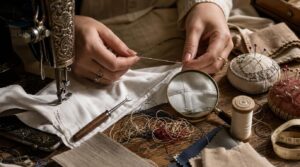
Even the most careful sewists run into stitching problems — it’s just part of the process. The good news is that most issues come down to a handful of fixable culprits.
Here’s what to check when things go sideways.
Adjust Thread Tension
Machine tension trips up almost every sewer at some point. Think of it like a tug-of-war — balanced stitch test on scrap fabric tells you immediately who’s winning. Fabric-specific settings matter too: knits need looser tension, heavier fabrics need more.
Manual vs. presets? Always fine-tune manually. Thread weight impact is real — mismatched thread throws everything off.
Small adjustments, big difference.
Prevent Skipped Stitches
Skipped stitches usually trace back to a few fixable things. Start with needle timing — a quick diagnostic stitch test on scrap fabric reveals a lot. Check your bobbin case for lint, verify your presser foot adjustment, and confirm you’re threading your machine correctly through every guide.
A stabilizer helps slippery fabrics behave.
Sewing machine maintenance and proper needle selection honestly solve most problems before they start.
Clear Thread Jams
Thread jams happen to everyone — don’t stress. Start by rethreading your machine completely, presser foot up, working through every guide along the thread path. Check for bobbin burrs that snag thread and clean tension discs if feeding feels rough.
Your jam toolkit is simple: a lint brush, fresh needle, and patience.
- Lift the presser foot before threading your machine
- Clear bobbin housing lint as part of regular sewing machine maintenance
- Inspect for bobbin burrs that catch and break thread
- Check all tension discs for smooth thread seating
- Run needle checks after every jam — bent tips cause repeat problems
Correct Uneven Hems
Uneven hems often come down to skipping the prep work. Use hem gauge to mark a consistent depth all the way around — it takes two minutes and saves ten.
Tack baste before you sew, especially on curved sections; easing curved hems prevents those annoying waves.
Blind hem foot keeps stitches invisible, and a walking foot stops rippling on heavier fabrics.
Recheck Needle Placement
Honestly, a quick needle alignment check fixes more stitching problems than you’d expect. If stitches look off, stop and inspect before assuming it’s tension.
- Bent needle inspection matters — bent tips cause skipped stitches and fabric snags
- Insertion depth adjustments prevent puckering; too deep bunches fabric, too shallow loosens stitches
- Needle plate compatibility ensures your needle size matches the throat plate hole
- Tension troubleshooting tips start here — misaligned needles throw off everything
Maintain Tools for Clean Results
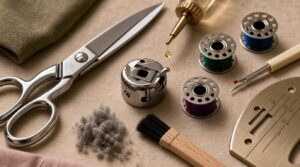
Your tools work hard every time you sew, and they deserve a little care in return. Dull scissors, lint-clogged machines, and tangled bobbins quietly sabotage even your best work.
Here’s what to do to keep everything running clean and sharp.
Reserve Scissors for Fabric
Your fabric scissors deserve VIP treatment — exclusive fabric use only, no exceptions. Cutting paper wrecks the blade edge fast, and dull shears mean fraying, jagged cuts instead of clean ones.
Blade material choices matter too: carbon steel holds a sharper edge, while stainless steel resists rust.
Follow a simple sharpening frequency guide — sharpen when performance drops — and keep scissors handy in a labeled spot so nobody grabs them for craft night.
Keep Tools Dry
Moisture is your tools’ worst enemy — and rust sneaks up fast. Good moisture control means your needles, scissors, and bodkins stay sharp longer and actually do their job.
Here’s what works:
- silica gel packets in your storage box for dry storage solutions that last.
- Wipe metal tools after every session — that’s rust prevention made simple.
- Skip humid spots like bathrooms for storing supplies.
- Treat any rust spots with a drop of mineral oil, fast.
Sharpen Pins and Needles
Dull pins drag and snag — that’s your signal to sharpen. A small abrasive pad (think silicon carbide embedded in foam) works beautifully as a sharpening tool.
Your maintenance routine is simple: use short, controlled strokes, wipe the tip clean, then test on scrap fabric. These sharpening techniques genuinely transform hand sewing, keeping your precise hand for details smooth and frustration‑free.
Clean Machine Lint Regularly
Lint is basically your sewing machine’s silent enemy. It sneaks in, packs tightly, and suddenly you’ve got skipped stitches and grinding noises. Stay ahead of it with these lint removal techniques:
- Bobbin area cleaning: Deep clean weekly if you sew often — that’s where lint hides most
- Lint removal tools: A stiff brush, narrow vacuum nozzle, or cleaning sewing machine with canned air all work great
- Lint prevention tips: Change needles regularly and use a dust cover when storing
Stick to a deep cleaning schedule — every 2–4 hours of sewing keeps your machine humming.
Organize Bobbins and Pins
A chaotic bobbin drawer is a time thief. Try a clear bobbin storage tower — slots hold up to 60 bobbins, and color-coded bobbins let you grab the right shade instantly.
For pin magnet solutions, a magnetic bowl near your machine beats hunting the floor. Tack a pegboard for spool alignment tips and organizing sewing supplies.
Neat tools, faster sewing.
Frequently Asked Questions (FAQs)
How to hand sew with arthritis?
Picture your hands moving slowly but surely through soft fabric — arthritis doesn’t have to stop that.
Use ergonomic tools, adaptive stitches, and simple hand care routines to keep joint‑friendly techniques comfortable and rewarding.
What are common sewing mistakes to avoid?
Skipping Muslin Tests, Ignoring Grain Direction, and Incorrect Stitch Length trip up even experienced sewers.
Rushing Seam Finishing and Poor Notion Selection cost you quality fast.
Small habits fix most of it.
How do I sew curves without distortion?
Curves trip up even experienced sewists. Stay stitch curves first, pin inner curves more densely, and ease curves evenly.
Use edge stay tape, tack baste before you sew, and let a walking foot handle fabric layers, feeding smoothly.
Whats the best way to attach elastic?
You’ve got two solid options: a casing or direct attachment.
For waistbands, casing works beautifully — thread elastic through, overlap the ends, and secure them.
Always use a zigzag or stretch stitch so it moves without snapping.
How do I topstitch evenly near edges?
Even stitching near edges isn’t complicated once you slow your stitching speed down and use a walking foot.
Set needle-down stops, switch to a straight stitch, and let scrap support guide you.
When should I use interfacing for structure?
Use interfacing whenever a garment needs shape and stiffness—think collars, facings, waistbands, and pockets. It’s your secret weapon for clean buttonholes and bag structure that actually holds up.
How do I sew buttonholes that dont pucker?
Puckered buttonholes usually come down to tension and stabilizer use. Set your stitch length to 0–5 mm, attach your buttonhole foot, and interface the area first.
Always test on scrap fabric before committing.
How do I sew invisible zippers without puckering?
Invisible zippers don’t have to pucker. Press teeth open before sewing, use proper Zipper Foot Alignment, and keep Stitch Tension Balance consistent.
Interfacing Placement Tips and careful Pressing Zipper Seams make all the difference.
What causes wavy hems and how to fix them?
Wavy hems usually mean your fabric stretched during sewing. Shorten your stitch length, add stay stitching near the edge, and press firmly. A walking foot helps keep everything feeding evenly.
How do I sew perfect corners on collars?
Corner Pivoting is your secret weapon.
Trim the tip, apply interfacing placement near the point, and hand pressing sets crisp angles.
Topstitch edges, understitch facings inside — and you’ll easily turn a crisp corner every time.
Conclusion
Sewing used to feel like a guessing game—one day neat, the next a tangled mess. Neater sewing isn’t luck.
These sewing technique tips for neater results are really just small, consistent habits stacked together.
Sharp needles, pressed seams, squared edges—none of it is complicated on its own. It’s the combination that transforms your work.
Start with one change today. Your future projects will look like a completely different person made them.
- https://tillyandthebuttons.com/blogs/sewing/five-tips-for-neat-finish
- https://blog.closetcorepatterns.com/couture-seam-finishes-hand-stitches-you-should-know
- https://www.seamwork.com/sewing-tutorials/5-professional-seam-finishes-you-can-make-without-a-serger
- https://inthefolds.com/q-a-series/2022/choose-the-right-seam-finish-for-your-garment
- https://blog.bernina.com/en/2025/03/diy-to-professional-seam-finishes