This site is supported by our readers. We may earn a commission, at no cost to you, if you purchase through links.
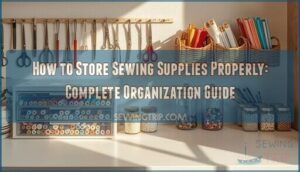
You know that sinking feeling when you’re ready to start a new project, but you spend 15 minutes hunting for the right thread color buried somewhere in your sewing room? That’s not just frustrating—it’s stealing your creative time and momentum.
Research shows that disorganized crafters lose roughly 40 percent of their prep time to searching, and those wasted minutes add up fast across multiple projects. When you learn how to store sewing supplies properly, you’re not just tidying up—you’re reclaiming time and mental energy that should go toward actually creating.
The good news is that transforming chaos into a functional system doesn’t require expensive custom cabinetry or a massive dedicated room. With the right storage strategies and a bit of upfront effort, you can set up a workspace where every tool has its place and you’ll spend less time searching and more time stitching.
Table Of Contents
Key Takeaways
- Disorganized storage costs crafters 40% of their prep time searching for supplies, but proper organization cuts setup time by 15 minutes per session and boosts productivity by 25%.
- Effective sewing supply storage relies on three core strategies: vertical solutions like pegboards for tools, clear labeled bins with dividers for notions and thread, and proper fabric folding techniques that prevent damage while maximizing visibility.
- Small spaces require smart storage, foldable tables, and stackable bins combined with a 5-minute cleanup routine to maintain organization without sacrificing creative flow.
- The right storage system transforms your workspace from chaotic to functional by giving every item a dedicated, accessible home—ultimately unlocking creative momentum rather than just achieving visual tidiness.
Why Proper Sewing Supply Storage Matters
You mightn’t realize it yet, but how you store your sewing supplies can make or break your entire creative experience.
Your machine especially needs the right conditions—storing your sewing machine properly protects it from humidity, dust, and temperature shifts that cause long-term damage.
A well-organized space doesn’t just look nice—it actually transforms the way you work, saving you time and frustration every single time you sit down to sew. Let’s look at why getting your storage right matters so much for your craft.
Organizing your sewing space transforms how you work, saving time and reducing frustration every time you create
Benefits of Organized Sewing Spaces
The transformation feels immediate when your sewing space works for you instead of against you. An organized setup delivers real productivity gains that’ll change how you approach every project:
- Time savings – You’ll cut 15 minutes from project setup and reduce search time by 40 percent
- Sewing efficiency – Ready access means fewer interruptions during stitching
- Creative freedom – Clear surfaces spark new design experiments while reduced stress keeps your mind focused
Storage and organization solutions create sewing space optimization that enhances both your craft and your peace of mind. Utilizing can make it easier to manage fabrics, tools, and notions, keeping your sewing area both functional and inspiring.
Common Problems Caused by Disorganization
When disorganization takes hold, you’ll face real consequences that drain your sewing time. Clutter confusion delays add 15 extra minutes per session to locate scattered tools.
Space inefficiencies from redundant items consume 12 percent more drawer capacity while workflow disruptions slow retrieval by 18 seconds per tool.
Sewing supply storage chaos causes supply damage through tangled threads and fabric dust accumulation, leading to productivity loss across every project.
How Storage Impacts Creativity and Productivity
Beyond those frustrating delays, your storage choices directly fuel creative flow and productivity. A tidy space lowers cognitive load, helping you plan next steps faster.
When you maintain clear surfaces and accessible storage, task initiation speed jumps 25 percent. That organized mindset transforms your workspace organization and productivity—you’ll launch projects without hesitation and finish them more consistently.
Sorting and Decluttering Your Sewing Supplies

Before you can organize your sewing supplies, you need to know what you’re actually working with. Taking inventory of everything you own is the foundation for creating a storage system that truly works for your space and habits.
Once you know what you have, you can start organizing sewing machine accessories with dedicated pockets or compartments for each type of item.
Let’s walk through the three essential steps to get your supplies sorted, decluttered, and ready for their new homes.
Assessing and Categorizing Your Supplies
Start your sewing supply organization by creating a complete inventory—list every item by category and quantity to see what you actually have. Group items into core categories like notions, threads, fabrics, and tools, then tag each by usage frequency so high-use items stay within arm’s reach.
Check each item’s condition during this process, setting aside anything damaged for repair or disposal.
Decluttering Unused or Duplicated Items
Clarity comes when you set aside items you haven’t touched in 12 months—this simple storage audit frees up about 30 percent of your space.
During your item purge, compare thread spools and fabric scraps for duplicate removal, keeping only what supports active projects. Partner with local craft groups for donation guidelines, then maintain a digital inventory to prevent future overbuying and strengthen your sewing supply organization.
Preparing Supplies for Storage
Clean each tool with a cloth to strip away lint before item categorization, then let everything dry completely to prevent rust during storage planning.
Wrap scissors and pins in tissue paper, then pair them with sturdy corrugated boxes for supply purging.
Your container selection drives effective sewing storage—choose clear bins with firm lids, add silica packs for fabric storage, and create labeling systems using permanent markers for sewing supply organization.
For ideal results, consider following storage location considerations to protect your sewing supplies from damage and environmental risks.
Best Storage Solutions for Sewing Tools and Notions

You’ve sorted through your supplies, and now it’s time to find them a proper home. The right storage solutions can transform a cluttered workspace into an efficient creative zone where everything has its place.
Let’s explore the most effective ways to organize your sewing tools and notions so you can spend less time searching and more time creating.
Pegboards and Wall-Mounted Organizers
When your sewing space feels cramped, a pegboard organizer transforms vertical space into a command center for scissors, thread spools, and notions.
Pegboard installation anchors to studs for stability, while hooks and hangers let you reconfigure storage on the fly. Pair it with a wall-mounted ribbon dispenser and magnetic strips for metal tools—this wall mounting strategy delivers exceptional storage optimization without sacrificing precious desk area.
Drawer Dividers and Adjustable Inserts
Your drawers don’t need to become a jumbled mess every time you reach for elastic or bias tape. Adjustable compartments with modular dividers create customizable storage that adapts as your sewing supply storage grows.
Quality drawer organizers offer exceptional drawer optimization through:
- Insert materials ranging from birch wood to painted finishes matching your décor
- Adjustable spacing at 1¼-inch intervals for precise drawer dividers placement
- Stackable heights from 2 to 6 inches fitting various drawer depths
- Non-slip bottoms keeping storage solutions firmly in place during use
Magnetic Strips and Thread Racks
Metal tools scattered across your workspace vanish when you mount magnetic strips along pegboard edges or shelf fronts. These flexible strips hold scissors, seam rippers, and pins within arm’s reach.
Meanwhile, wall-mounted thread racks transform thread organization from chaos to visual delight—arrange spools by color family on horizontal pegs for instant matching. Both optimize sewing storage efficiency while keeping your sewing station setup organized and functional.
Portable and On-the-Go Organizers
When workshop travel or crafting sessions away from home call your name, portable cases keep essential sewing supplies ready without dragging your entire stash along. Compact storage transforms chaos into control.
- Travel sewing kits measure five to nine inches and weigh under eight ounces for light packing
- Portable cases with tiered compartments organize thread, notions, and tools in slim profiles
- Rolling cart alternatives include roll-up organizers compressing to paperback size
- Sewing totes with modular clip-on systems attach to backpacks for hands-free transport
Fabric and Thread Organization Techniques
Your fabric stash and thread collection deserve the same attention as your tools—they’re what bring your projects to life, after all.
But without the right storage approach, you’ll waste time hunting for that perfect shade or untangling rolled fabric. Here are the techniques that’ll keep everything visible, accessible, and in immaculate condition.
Folding, Rolling, and Storing Fabric
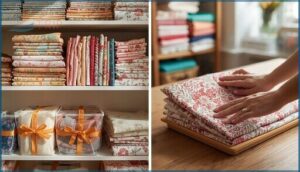
Proper fabric storage starts with the right folding and rolling techniques—these fabric folding tips protect your materials and simplify access. You’ll want to fold fabrics with finished edges facing up for quick print visibility, keeping pieces about 18 to 22 inches wide to stack cleanly on shelves.
| Method | Best For | Key Benefit |
|---|---|---|
| Flat folding | Yardage, cotton, quilting fabrics | Prevents deep creases and stacks neatly |
| Rolling with backing boards | Knits, lightweight fabrics | Saves horizontal space and reduces wrinkles |
| Compact square folds | Fat quarters, scraps | Fits shallow bins for easy sorting |
| Double folding | Denim, canvas, heavy materials | Reduces bulk and prevents sagging |
Rolling techniques work wonders for space-saving fabric management—roll along the grain and secure with ribbons to keep edges straight. For fabric care before sewing supply organization ideas take hold, press pieces lightly and store them fully dry in breathable zip pouches. These crafting and sewing storage methods help you master fabric organization while protecting your investment for years.
Clear Bins Vs. Shelves for Fabric

Once you’ve mastered folding methods, you’ll need to decide between clear storage bins and open shelves for your fabric stash. Clear bins offer exceptional fabric protection from dust and fading while keeping every piece visible—stack them vertically for storage efficiency in tight quarters.
Shelves provide shelf layout flexibility and easy access, but they expose materials to light unless you add cabinet doors for sewing supply organization ideas.
Thread Racks and Stackable Boxes

Thread racks and stackable boxes transform thread management from chaos to calm.
Wall-mounted rack designs let you see every color at a glance through color coding by shade family, while clear stackable boxes offer flexibility if your sewing room organization needs change.
Choose wooden or metal racks for durability, or lightweight plastic box materials for portability—both storage solutions keep thread storage tidy and your fabric storage neighbor organized.
Labeling for Easy Access

Once your thread and fabric are housed, clear storage signage changes the game. A label maker paired with smart color coding keeps everything visible—bright contrasting hues flag cotton versus polyester from five feet away.
Try these organization tips for your sewing space:
- Label placement at eye level cuts searching time by placing priority items within easy reach
- Digital labels with QR codes link containers to online inventory lists
- Label maintenance every six months ensures storage solutions stay accurate and readable
Maintaining an Organized Sewing Space

Getting organized is one thing, but keeping it that way? That’s where the real magic happens. I’ve found that the difference between a system that works and one that falls apart comes down to three key strategies.
Let’s look at how you can maintain that beautifully organized sewing space without constant effort.
Labeling Strategies for Quick Identification
You’ll find what you need in seconds when your labels work as hard as you do. I recommend using a label maker with bold font styles and color coding each category—red for safety items, blue for standard tools, yellow for seasonal supplies.
Add clear category labels to every bin, and include priority marking on frequently used items. These sewing storage solutions transform chaos into control and make your sewing room organization truly functional.
Creating a Dedicated Sewing Area
Your sewing station works best when you claim a corner just for yourself. I’ve seen sewists triple their productivity by setting up a permanent workspace layout with a 30-inch-wide table, task lamp, and wall-mounted pegboard.
This sewing space keeps your machine ready, integrates storage within arm’s reach, and creates natural zones for cutting, stitching, and pressing—your sewing room setup becomes a creative command center.
Tips for Small or Shared Spaces
When you’re working with limited square footage or a shared sewing space, smart vertical storage and foldable tables become game-changers. Compact shelves and portable organizers let you utilize every inch without sacrificing your creative flow.
- Install pegboards above your work surface for instant vertical storage that keeps tools visible
- Choose foldable tables with compact drawers for fabric storage that tucks away between sessions
- Use stackable bins on high shelves to create layered sewing room organization
- Set a 5-minute cleanup routine after each project to maintain shared space harmony
Frequently Asked Questions (FAQs)
How to best organize sewing supplies?
Start by sorting your sewing supplies into clear categories—fabric, thread, tools, and notions. Use labeled bins and drawer dividers to create dedicated zones.
This strategic organization system saves you time and protects delicate materials.
Should I store my sewing machine with the needle up or down?
Most manufacturers recommend storing your sewing machine with the needle down to protect the point and prevent fabric shifting. Place a small scrap underneath the presser foot for extra protection.
How do you store sewing machine attachments?
A labeled shallow bin works exceptionally well for presser feet sorted by type, while magnetic trays hold needles and screwdrivers.
Clear pouches and pegboard hooks keep sewing accessories visible and accessible near your workspace.
Whats the best way to organize patterns?
Use labeled folders for pattern filing and clear sleeves for envelope protection.
Create a digital storage system with consistent naming, rotate seasonal patterns, and schedule quarterly audit processes to maintain your collection efficiently.
How should buttons and zippers be stored?
Keep buttons in small labeled compartments by size and color, while zippers should be sorted by length in clear bins.
This fastener care approach ensures your notion management system stays functional and accessible.
Where do you keep measuring tools safely?
Store your measuring tapes and rulers in a dedicated drawer with dividers or a wall-mounted organizer.
Protective cases work great for delicate tools, while magnetic strips keep metal rulers accessible and scratch-free.
How do you prevent fabric from fading?
Sunlight is fabric’s worst enemy in terms of color preservation.
For effective fading prevention and textile care, you’ll want UV protection through dark storage bins, climate-controlled spaces, and acid-free tissue wrapping for your most vibrant pieces.
Conclusion
Here’s the truth: learning how to store sewing supplies properly isn’t about achieving Pinterest-perfect shelves—it’s about giving yourself permission to create without friction.
When your scissors live in the same spot and your thread colors are visible at a glance, you’re not just organized; you’re unstuck. That first project you complete without a single frustrated search will prove it: the right system doesn’t just hold your supplies—it unlocks your momentum.