
This site is supported by our readers. We may earn a commission, at no cost to you, if you purchase through links.
That gorgeous chiffon blouse looks like it could dissolve if you breathe on it wrong, and honestly, that fear isn’t far off. One wrong move in hot water, and silk chiffon’s protein fibers can pucker, shrink, or lose their drape for good. Even synthetic versions, while tougher, still hate harsh detergents and rough agitation.
Chiffon earns its reputation as the fabric of dreams for a reason: that sheer, floaty texture makes everything from wedding gowns to scarves feel special. But that same delicacy means knowing how to wash chiffon properly isn’t optional, it’s the difference between years of wear and one heartbreaking laundry mishap.
Whether you’re working with silk, polyester, or nylon, the right washing method depends entirely on what’s in your fabric. Here’s exactly how to handle each one, step by step.
Table Of Contents
Key Takeaways
- Always identify your chiffon’s fiber type first—silk requires gentle hand washing in cold water, while polyester and nylon can tolerate machine washing on a delicate, cold cycle.
- Heat is chiffon’s biggest enemy across all fiber types, causing shrinkage, dye bleeding, and permanent loss of the fabric’s signature drape.
- Proper prep work, including checking the care label, testing for colorfastness, separating from rough fabrics, and using a mesh laundry bag, prevents most washing disasters before they happen.
- When rinsing or drying chiffon, always press water out gently with towels and air-dry flat instead of twisting, wringing, or using a dryer, which can warp or tear the delicate weave.
Check Your Chiffon Fabric Type
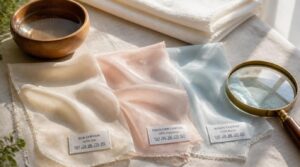
Before you fill the sink or load the machine, you need to know exactly what kind of chiffon you’re dealing with. Silk, polyester, and nylon each behave differently when wet, so treating them all the same way is a recipe for trouble. Here’s what to check before you wash a single thread.
If you’re unsure which fabric you’ve got, this guide on how to get wrinkles out of chiffon walks through quick ways to spot the difference before laundry day.
Silk Chiffon Care Needs
Often called the fabric of dreams, silk chiffon rewards patience and punishes shortcuts. Its protein fibers lose fiber integrity fast under hot water, harsh detergent pH, or rough handling, leading to color fading and dulled fabric luster.
Silk chiffon rewards patience and punishes shortcuts, losing its integrity fast under heat, harsh detergent, or rough handling
Always perform colorfastness tests first on hidden seams to check for potential dye bleeding.
That’s why hand washing in cold water with a mild detergent matters so much—it sidesteps temperature shock entirely while preserving the gentle drape that makes silk chiffon so coveted in the first place.
Polyester Chiffon Care Needs
If silk chiffon demands kid-glove handling, polyester chiffon is the forgiving cousin. Its synthetic fiber durability shrugs off gentle machine washing without fraying.
Use a mesh bag, mild detergent, and the delicate cycle with cold water, and colorfastness holds strong. It also resists wrinkles when air-dried flat and dries quickly—often within an hour—making everyday stain removal far less stressful.
Nylon Chiffon Considerations
Nylon chiffon shares polyester’s machine-washable ease, but with its own quirks. The fabric’s smooth synthetic fibers offer strong abrasion resistance, though rough handling invites pilling.
Static buildup is common in dry air, so a dryer sheet alternative helps. Watch heat closely—nylon has a lower melting point, risking glossing or damage. Wash on delicate cycle, cold water only, and pre-wash dark colors to prevent dye bleeding.
Read The Care Label
Before tossing any chiffon into the wash, find that little tag tucked in the seam—it’s your garment’s instruction manual. The care label reveals fabric composition, country of origin, and washing symbols decoded through tub icons, crossed buckets, or dry-cleaning circles.
Check for:
- Fiber content percentages
- Bleaching/ironing symbols
- Dry cleaning requirements
International labels may repeat instructions in multiple languages, so don’t skip warnings about trims or special handling.
Test for Colorfastness
Why risk turning a beautiful chiffon blouse into a tie-dye accident? Always patch test colorfastness first.
| Method | What It Checks | Risk Avoided |
|---|---|---|
| Damp white cloth rub | Rubbing transfer | Dye bleeding |
| Inner seam dab | Dye stability | Color bleeding |
| Sunlit windowsill | Light exposure fading | Fading |
Dab cleaner on an inner seam, blot with white cloth—if color transfers, skip that product entirely.
Prepare Chiffon Before Washing

Before chiffon ever touches water, it deserves a few minutes of your attention, since this fragile weave won’t forgive shortcuts. A little prep work now saves you from snags, color bleed, and that heartbreaking stretched-out look later. Here’s exactly what to check and do before you start washing.
Inspect Stains and Snags
Before you wash anything, give your chiffon a once-over under good light. Look for circular, shiny oil spots from makeup, pulled threads, fraying edges near seams, dye transfer halos, or pilling.
Mark snags with a fabric-safe pen, then decide: blot-and-spot-treat now, or save deeper stain treatment for after a quick colorfastness fabric test.
Separate From Rough Fabrics
If your jeans or that chunky knit sweater jump into the same load, chiffon doesn’t stand a chance. Textured fabric risks include zippers, hooks, and rough fibers catching the weave during agitation.
Use a dedicated mesh bag as a protective barrier, and keep towels, denim, and wool stacked separately. Smart laundry sorting preserves drape, sheen, and fabric integrity for years.
Turn Garments Inside Out
Here’s a simple trick that costs nothing: flip your chiffon right before it hits the water. Turning the garment inside out shields the outer surface from friction reduction, protects color, and keeps embellishments away from the drum.
It also gives you better interior stain access for spot treatment.
This small habit protects:
- Outer sheen
- Beading
- Prints
- Seam structure
Use a Mesh Laundry Bag
Think of a mesh laundry bag as a bodyguard for your chiffon. Made from tightly woven polyester or nylon, it blocks gentle agitation from turning into damaging friction against the drum or other clothes.
Zip it closed fully so hardware stays covered, choose a bag roomy enough that fabric isn’t crushed, and you’ll prevent entanglement while you machine wash chiffon safely.
Choose Mild Detergent
Not all detergents play nice with chiffon’s delicate weave, so surfactant safety matters more than scent or suds. Look for plant-based, phosphate-free formulas with a balanced pH balance (around 7-8) on the ingredient labeling.
Hypoallergenic options protect both your skin and the fibers, supporting fiber longevity wash after wash. A truly mild detergent is your best ally for any delicate wash cycle.
Hand Wash Chiffon Safely
Once your chiffon is prepped and sorted, hand washing gives you the gentlest control over how it’s cleaned. There’s no machine guesswork involved, just you, some water, and a careful touch. Here’s exactly how to walk through each step without putting the fabric at risk.
Use Cold Lukewarm Water
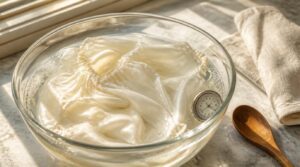
Fill your basin with cold lukewarm water, somewhere between 90 and 110°F, before your chiffon ever touches the surface. This range prevents fiber shock while still giving mild detergent room to dissolve body soil.
Too hot, and you risk dye bleed or shrinking; too cold, and cleaning power suffers. That’s the sweet spot for any "how to clean chiffon dress" routine.
Soak for Fifteen Minutes

Once your chiffon is settled into that cold lukewarm water, add your mild detergent and let the piece soak for fifteen minutes—no longer.
This window gives the fibers just enough time to release surface soil while keeping dye bleed and fiber stress to a minimum. Set a timer if you’re prone to forgetting; chiffon won’t forgive a wandering mind.
Gently Swish The Fabric
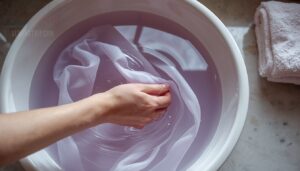
Now comes the fun part: with the timer ticking down, dip your fingertips in and move the chiffon in small circular motions, never rubbing. Keep it fully submerged, applying light pressure to lift dirt without stressing fibers.
Skip seams, beading, or embellishments entirely—those spots snag easily and don’t need the swish to get clean.
Rinse Without Twisting
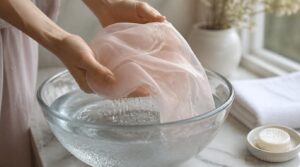
Once you’ve swished out the dirt, drain the basin and refill with fresh cool water, then lift and lower the chiffon gently to rinse—no twisting, ever. Twisting strains fibers and warps that delicate weave permanently.
Watch for these signs you’re rinsing right:
- Water running clear, not cloudy
- No soap bubbles clinging to fabric
- Garment moving freely, never stuck
- No tugging or resistance felt
- Color staying vibrant, not bleeding
Press Water With Towels
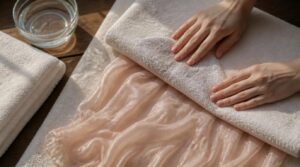
Lay the chiffon on a clean, absorbent towel, fold it over, and press gently—never wring. This capillary absorption action pulls moisture out fast, cutting drying time and preventing watermarks.
| Do | Avoid |
|---|---|
| Press flat | Twisting |
| Fresh towel | Reusing soaked spots |
| Light pressure | Hard rubbing |
| Reshape garment | Hanging wet |
| Repeat sections | Rushing the process |
Machine Wash Chiffon Carefully

If your chiffon is polyester or nylon, you don’t have to hand wash it every single time, since the machine can handle it when you set things up right. The trick is knowing which settings protect that sheer, delicate weave instead of wrecking it in fifteen minutes flat. Here’s exactly what to dial in before you hit start.
Wash Only Synthetic Chiffon
Not every chiffon piece belongs in the washer—that’s the rule to live by here. Synthetic fiber durability is what makes polyester or nylon chiffon machine-safe, while silk simply can’t take the agitation.
If you’re unsure, a quick care label check saves you from distorting delicate fabric. Trust the fiber, not the convenience, and your synthetic chiffon will hold its shape wash after wash.
Select The Delicate Cycle
Finding the right dial setting matters as much as your detergent choice. The delicate cycle slows agitation levels and lowers spin speed, protecting your chiffon’s loose weave from stress.
Look for machine settings labeled "gentle cycle" or "delicates." Good load balancing also helps:
- Loose, tangle-free fabric
- Even drum movement
- Less friction abrasion
- Minimal stretching risk
This is delicate clothing care done right.
Use Cold Water Only
Why does cold water matter so much here? Because heat is chiffon’s biggest enemy, capable of shrinking fibers and bleeding dyes within minutes.
Set your dial to cold water only, ideally between 0 and 15 degrees Celsius. Cold water detergents now clean just as well, while cutting energy use up to 90%, reducing microfiber shedding, and preventing color bleeding between delicate fabrics.
Choose Low Spin Speed
Spin speed matters just as much as water temperature for protecting chiffon’s loose weave. High spin cycles whip delicate fibers around, causing fabric distortion and stress on seams.
Select the lowest spin setting your machine offers, which minimizes mechanical agitation while still removing excess water:
- Gentler handling for sheer, lightweight fibers
- Reduced stretching and shape loss
- Less friction between garment layers
Avoid Bleach and Softeners
Bleach and chiffon simply don’t mix—chlorine bleach weakens fibers and causes yellowing, regardless of fabric type. Fabric softeners leave residue that dulls colors and irritates skin.
| Additive | Risk |
|---|---|
| Chlorine bleach | Fiber damage, fading |
| Fabric softener | Residue buildup, irritation |
Stick with mild detergent, hand washing in cold water when possible, and skip oxygen bleach unless you’ve patch-tested it first for true fabric preservation.
Remove Chiffon Stains Gently

A stain on chiffon can feel like a small disaster, but panic is the enemy of a good outcome here. If you act fast and use the right method for the mess at hand, that delicate fabric stands a real chance of looking spotless again. Here’s how to handle the most common culprits, one at a time.
Blot Stains Immediately
That spill happens fast, and so should you. Blot, don’t rub, working from the outer edge inward so you contain the stain instead of spreading it wider across the sheer weave.
Use a clean white cloth or paper towel—colored fabric can transfer dye onto chiffon. Press gently, keep moisture minimal, and avoid heat, which sets stains permanently. Quick action genuinely makes removal easier.
Treat Oil With Powder
Oil stains call for a different trick: powder absorption instead of liquids. Dust talcum or baby powder over the spot, let it sit fifteen minutes so capillary action pulls oil into the mineral carrier, then brush away the solidified residue before laundering with gentle detergent.
- Use light, even dusting
- Let powder fully absorb
- Brush off gently
- Spot test first
- Launder delicate fabric promptly
Lift Sweat With Baking Soda
Sweat stains need science, not scrubbing. Mix equal parts baking soda and water into a paste, then work it into yellowed areas and let it sit 20-30 minutes—this dwell time lets the paste penetrate fibers and loosen embedded sweat proteins through gentle odor neutralization.
Rinse under cool water, then hand wash with mild detergent. Always spot test first to confirm fabric safety.
Handle Ink With Alcohol
Ink is the troublemaker of the bunch, but isopropyl alcohol usually wins the fight. Dab—never rub—with a cloth dipped in rubbing alcohol, working from the outer edge inward.
- Open windows for ventilation (alcohol fumes irritate)
- Keep it away from flames
- Wear gloves
- Protect your work surface
- Repeat blotting up to three times
Always check colorfastness first, since some dyes bleed under alcohol’s touch.
Spot Test Cleaning Solutions
How do you know a cleaner won’t ruin your chiffon before it’s too late? Spot test first, always.
Pick a hidden area—an inner seam works well—and apply diluted cleaner for one to five minutes. Watch for foam, frosting, or dye transfer onto a white cloth. If color shifts or fabric feels off, skip that stain treatment method and document your results for next time.
Top 5 Chiffon Cleaning Items
Having the right tools on hand makes chiffon care feel a lot less intimidating, since gentle cleaning starts well before the fabric ever touches water.
While chiffon itself needs minimal supplies, a few smart products can help you tackle stains and keep the rest of your laundry routine running smoothly. Here are five items worth keeping in your cleaning kit.
1. Dawn Powerwash Dish Spray Starter Kit
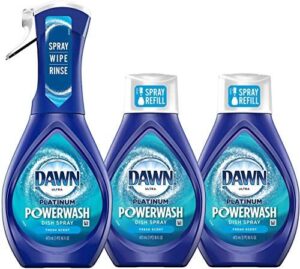
Grease stains on chiffon don’t stand a chance against this one, but you’ll only ever use it as a pre-treatment, never as a direct wash. Dawn Powerwash’s spray-activated foam lifts oil on contact without water, making it ideal for dabbing a small amount onto an oily smudge before your regular hand-wash routine.
It’s phosphate-free and gentle enough for delicate fibers when diluted properly. Always patch-test first, though, since even mild dish soap can affect sheer dyes if you’re not careful.
| Best For | Anyone who wants a fast, water-free way to pre-treat grease stains on delicate fabrics like chiffon before hand-washing. |
|---|---|
| Cleaning Use | Dish & surface cleaning |
| Surface Safety | Phosphate-free formula |
| Form Factor | Spray bottle |
| Pack Quantity | 3 bottles |
| Versatility | Kitchen to auto |
| Eco Friendliness | Phosphate-free |
| Additional Features |
|
- Foaming spray lifts oil on contact without needing water first
- Phosphate-free formula that’s gentle enough for delicate fibers when properly diluted
- Controlled nozzle spray makes it easy to apply just a small amount right where you need it
- Only suitable as a pre-treatment, not a direct wash for delicate fabrics
- Can affect sheer dyes, so patch-testing is necessary before each use
- Still requires careful dilution and manual rinsing afterward
2. Scrub Daddy Multipurpose FlexTexture Sponges
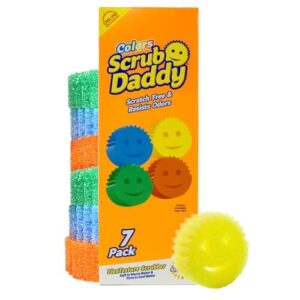
A texture-shifting sidekick belongs in your chiffon kit precisely because it’s never too rough for sheer fibers. These FlexTexture sponges firm up in cold water for tackling stubborn grime elsewhere, then soften in warm water, which is the side you’ll want near delicate weaves.
Use the soft, warm-water side only, and just for wiping nearby surfaces like sinks or hangers before handling your garment. Never scrub chiffon directly. They’re BPA-free, odor-resistant, and gentle on glass or stainless steel, too.
| Best For | Anyone who wants one versatile sponge for everyday cleaning around the kitchen, bathroom, car, and other household surfaces, including delicate items that need a gentler touch nearby. |
|---|---|
| Cleaning Use | Multi-surface scrubbing |
| Surface Safety | Non-scratch material |
| Form Factor | Foam sponge |
| Pack Quantity | 7 count |
| Versatility | Kitchen to furniture |
| Eco Friendliness | BPA-free |
| Additional Features |
|
- Temperature-responsive foam firms up in cold water for tough grime and softens in warm water for gentler cleaning near delicate fabrics or surfaces
- Safe on a wide range of materials, including non-stick coatings, stainless steel, glass, and copper, without scratching
- Odor and stain resistant for up to 8 weeks with proper care, plus a BPA-free, ergonomic design that’s easy to maneuver
- Larger size may be awkward for users with smaller hands, possibly requiring cutting in half
- Needs periodic dishwasher cleaning to stay fresh and odor-free
- Costs more upfront than standard sponges
3. Holikme Drill Brush Cleaning Set
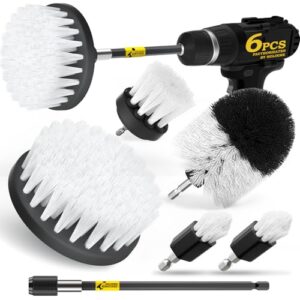
Here’s where you might raise an eyebrow: a drill brush set sounds like the last thing chiffon needs. And you’d be right to keep it far away from your garment itself.
This is strictly for pre-cleaning your tools, not the fabric. Use the soft nylon brush heads to scrub residue off hangers, drying racks, or stain-removal containers before they touch your chiffon. The white bristles won’t scratch surfaces, but never let them near the weave directly.
| Best For | Anyone tackling tough cleaning jobs around the house or garage, from grimy grout and tile to vehicle interiors and stove grates. |
|---|---|
| Cleaning Use | Grout & crevice cleaning |
| Surface Safety | Soft nylon bristles |
| Form Factor | Brush set |
| Pack Quantity | 6 pieces |
| Versatility | Bath to vehicle |
| Eco Friendliness | Reusable bristles |
| Additional Features |
|
- Five brush sizes make it easy to handle different surfaces and tight corners
- Soft nylon bristles clean effectively without scratching most surfaces
- Quick-attach design works with any standard cordless drill you already own
- Cordless drill is sold separately, so it’s not a complete out-of-the-box kit
- Bristles can bend or loosen with heavy pressure or repeated use
- Larger brush heads may wobble, making precise control trickier on detailed jobs
4. Natural Distilled White Vinegar
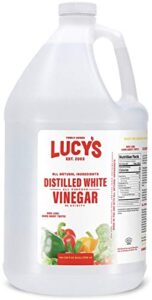
One pantry staple does more heavy lifting for chiffon than almost anything in your cleaning cabinet. Distilled white vinegar comes from fermented ethanol with around 5% acetic acid, giving it real cutting power against soap residue and mineral buildup without harsh chemicals.
For rinse water, add a capful to help dissolve detergent film and leave fibers feeling soft, not stiff. It’s biodegradable, gentle when diluted, and won’t leave behind the synthetic fragrances that can irritate delicate weaves over time.
| Best For | Anyone who cares for delicate or chiffon fabrics and wants a gentle, natural way to dissolve detergent residue and keep fibers soft without synthetic fragrances. |
|---|---|
| Cleaning Use | Household cleaning |
| Surface Safety | Natural, non-toxic |
| Form Factor | Liquid gallon |
| Pack Quantity | 1 gallon |
| Versatility | Food to laundry |
| Eco Friendliness | Biodegradable formula |
| Additional Features |
|
- Naturally dissolves soap residue and mineral buildup in rinse water
- Biodegradable and free of harsh synthetic chemicals or fragrances
- Doubles as a multi-purpose cleaner for kitchens and households
- Fixed 5% acidity means no adjustable strength for tougher stains
- Bulk gallon size can be unwieldy to store and pour
- Strong vinegar smell may linger until fabrics fully dry
5. Arm and Hammer Baking Soda Powder
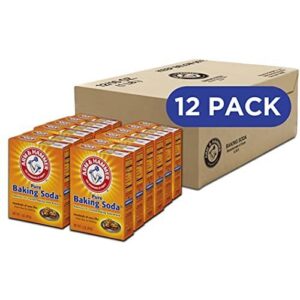
Last on the list, but far from least: baking soda earns its spot for sweat stains and stubborn odors that cling to chiffon’s loose weave. Mix Arm & Hammer’s pure sodium bicarbonate with a little water to form a paste, then dab it onto underarm areas and let it sit before washing.
It’s fragrance-free and non-toxic, with a near-neutral pH that won’t damage delicate fibers. Bonus: the 12-pack keeps a box in your laundry room and one under the sink.
| Best For | Anyone dealing with sweat stains and stubborn odors on delicate fabrics like chiffon who wants a gentle, natural, multi-purpose cleaning staple on hand. |
|---|---|
| Cleaning Use | Cleaning & deodorizing |
| Surface Safety | Non-abrasive powder |
| Form Factor | Powder boxes |
| Pack Quantity | 12 boxes |
| Versatility | Food to DIY |
| Eco Friendliness | Renewable energy made |
| Additional Features |
|
- Fragrance-free and non-toxic, with a near-neutral pH safe for delicate fibers
- Made from 100% pure sodium bicarbonate using sustainably sourced, certified renewable energy
- Versatile beyond laundry, useful for cooking, cleaning, deodorizing, and DIY projects
- Comes as 12 separate 1 lb boxes rather than one large container, requiring more storage space
- Managing multiple smaller units can be less convenient than a single bulk container
- Results for tasks like stain removal can vary depending on how it’s applied
Frequently Asked Questions (FAQs)
Does chiffon shrink when washed?
Yes, chiffon can shrink, especially silk versions, since heat and agitation relax fibers. Polyester and nylon resist it better. Cold water and gentle handling keep your garment’s original shape and size intact.
Should you wash chiffon in hot or cold water?
Think of chiffon like a snowflake on a sunny windowsill — heat dissolves its delicate structure fast. Always choose cold water over hot; warmth causes shrinking, distortion, and fading, while cool temperatures protect those fine, sheer fibers you fell in love with.
Can you put chiffon in a dryer?
Skip the dryer entirely. Heat causes shrinking and texture damage, while tumbling snags those delicate sheer fibers into runs or tears. If you’ve already made the mistake, stop the cycle and air dry flat right away.
Can I wash chiffon in hot water?
Hot water is chiffon’s worst nightmare, practically melting its delicate structure on contact. Stick to cold or lukewarm water, since heat causes shrinkage, fading, and permanent wrinkles, stripping away the soft drape that makes chiffon so beautiful in the first place.
Can I use bleach to remove stains from chiffon?
Bleach isn’t a safe bet here, especially for silk, which chlorine bleach weakens and yellows. Polyester and nylon tolerate milder treatments, but for whitening, reach for oxygen-based alternatives instead, always testing on a hidden seam first.
Can I put chiffon in the dryer?
Generally, no—dryer heat warps chiffon’s delicate weave. Silk shouldn’t ever go in, while polyester can handle a brief, low-heat tumble in a mesh bag. When unsure, air-dry flat; it’s always the safer bet.
Can I iron chiffon on high heat?
No, high heat melts or scorches chiffon fibers fast. Stick to low heat, always with a pressing cloth, and test on a hidden seam first since silk tolerates roughly 250–300°F while nylon needs even gentler treatment.
How often should chiffon garments be washed?
If stains or odor show up, wash right away. Otherwise, silk needs attention every 2-3 wears, polyester stretches to 3-5, and nylon sits comfortably at 3-4—light wear like scarves can simply air out instead.
Can chiffon be steamed instead of ironed?
Why risk a scorch mark when steam works just as well? Yes—steaming beats ironing for chiffon. It relaxes wrinkles using vapor instead of direct heat contact, protecting that delicate sheen while keeping your fabric safe from melting or flattening fibers.
How should chiffon be stored long-term?
Fold along seams with acid-free tissue between layers, then store flat in a breathable cotton bag. Keep it cool, dry, and dark, away from heat, and check every few months for creasing or dampness.
Conclusion
Chiffon may seem high-maintenance, but once you learn its weave, it’s no sheer guesswork at all. Knowing how to wash chiffon properly comes down to reading your fabric, choosing gentle methods, and respecting its delicate nature every single time.
Silk demands a soft touch, synthetics forgive a little more, but both reward patience with years of graceful drape. Treat it kindly, and that floaty fabric will keep turning heads, wash after wash, season after season.
- https://meanblvd.com/pages/chiffon-care-instructions
- https://fabricbysinghanias.com/blogs/fabrics-journal/how-to-care-and-maintain-chiffon-fabric
- https://vocal.media/journal/caring-tips-for-chiffon-fabric
- https://icefabrics.com/blogs/news/can-you-wash-chiffon-fabric
- https://help.bigzfabric.com/portal/en/kb/articles/chiffon-fabric-care-washing-instructions