This site is supported by our readers. We may earn a commission, at no cost to you, if you purchase through links.
The difference between a zipper that disappears into a seam and one that doesn’t comes down to about two millimeters. That’s the gap your presser foot controls—and why the right invisible zipper foot technique changes everything about the finished result.
Most sewers who struggle with visible stitches or puckered tape are fighting their equipment, not their skill level. A standard zipper foot physically can’t curl back the coil far enough to stitch where it needs to go.
The concealed zipper foot does one thing, but it does it with mechanical precision. Get the setup right, and the rest follows.
Table Of Contents
- Key Takeaways
- Top 4 Invisible Zipper Essentials
- Choose Zipper and Machine Setup
- Invisible Zipper Vs. Regular Zipper
- Concealed Zipper Foot Vs. Standard Zipper Foot
- Picking The Right Zipper Length
- Matching Zipper Color to Fabric
- Choosing Needles and Thread by Fabric Type
- Setting Stitch Length for Close Coil Sewing
- When to Use an Invisible Zipper Foot
- Snap-on and Screw-on Foot Compatibility
- Prepare Fabric for Clean Results
- Sew With The Invisible Foot
- Positioning The Zipper Face Down
- Placing The Coil Into The Foot Groove
- Sewing The First Zipper Side
- Sewing The Second Zipper Side Evenly
- Adjusting Needle Position Left or Right
- Stitching Close to The Coil
- Backstitching Near The Zipper Stop
- Sewing The Seam Below The Zipper
- Checking Zipper Alignment Before Finishing
- Finish and Troubleshoot The Zipper
- Frequently Asked Questions (FAQs)
- Conclusion
Key Takeaways
- The right presser foot isn’t optional — a concealed zipper foot stitches within 1–2 mm of the coil, where a standard foot simply can’t reach.
- Prep work decides the result: press the coil flat, fuse interfacing along the seam allowance, and finish raw edges before the zipper goes anywhere near your machine.
- Puckering, visible stitches, and skipped stitches almost always trace back to tension, speed, or off-grain fabric — not bad luck.
- Two millimeters of precision separates a zipper that disappears into the seam from one that doesn’t, so slow down, trust the foot groove, and let the tool do its job.
Top 4 Invisible Zipper Essentials
Before you sew a single stitch, the supplies in your kit can make or break the result. Getting the right zipper, pins, interfacing, and foot isn’t about being picky — it’s about not redoing work.
The same attention to detail applies when tackling closures — knowing how to sew a buttonhole correctly saves you from unpicking mistakes later.
Here are the four essentials worth having on hand.
1. Coats Clark Invisible Navy Zipper

The Coats & Clark 14-inch invisible zipper is a solid go-to for navy and dark blue projects. It’s made from 100% polyester tape and coil, so it holds up through regular washing without color bleed or stretch distortion.
The coil sits on the underside of the tape — that’s what makes it disappear into your seam when installed correctly. At 14 inches, it fits most dress and skirt side seams.
Only the slider shows when you’re done. That’s the whole point.
| Best For | Sewers and seamstresses working on dresses or skirts who need a clean, invisible finish in navy or dark blue fabric. |
|---|---|
| Brand | Coats & Clark |
| Material | Polyester |
| Country of Origin | USA |
| Primary Use | Invisible zipper |
| Skill Level | All levels |
| Project Type | Garments |
| Additional Features |
|
- Coil hides inside the seam, so only the tiny slider is visible when done
- 100% polyester holds up through washing without color bleed or distortion
- Made in the USA by a trusted brand — Coats & Clark
- Pricier than picking one up at a local fabric store
- Only comes in one length and one color, so it’s not very versatile
- Not the most budget-friendly choice if you have a sewing shop nearby
2. Singer Ball Head Straight Pins
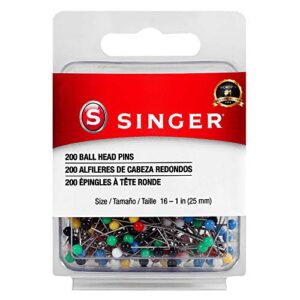
Once your zipper is placed, you need something reliable holding it there. Singer’s ball-head straight pins do that job well.
The nickel-plated steel shafts stay straight under stress, and the colorful ball heads are easy to spot on busy prints — no hunting around for a stray pin.
You get 200 per pack, which is plenty for a full project. The rounded heads won’t snag delicate fabric during placement, and they grip cleanly without distorting your seam allowance.
| Best For | Sewists and crafters who need reliable, easy-to-spot pins for detailed work on patterned or delicate fabrics. |
|---|---|
| Brand | SINGER |
| Material | Alloy Steel |
| Country of Origin | Not specified |
| Primary Use | Fabric pinning |
| Skill Level | All levels |
| Project Type | Sewing/Quilting |
| Additional Features |
|
- Colorful ball heads are easy to see on busy prints — no more lost pins mid-project
- Nickel-plated steel stays straight and resists rust over time
- 200 pins per pack gives you plenty to work through a full sewing or quilting project
- Some users have received pins with broken shafts or dull tips straight out of the box
- Ball heads can come loose, which gets frustrating fast mid-project
- At size 16, they run short — worth double-checking the length before you order
3. Pellon Shape Flex Iron On Cotton Interfacing
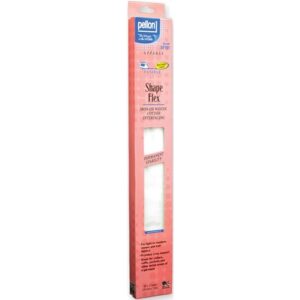
Pins hold the zipper. Interfacing holds the fabric together under pressure. Pellon Shape Flex SF101 is 100% woven cotton fusible — that matters because it moves with your fabric instead of fighting it.
Fuse a 1.5–2 inch strip along each seam allowance before your zipper goes anywhere near the machine. Set your iron between 150–160°C for woven cotton. Press steadily, let it cool flat. The result is a stable edge that won’t stretch, pucker, or shift mid-seam.
| Best For | Sewers and crafters working with light to medium-weight fabrics who need reliable structure in detail areas like collars, cuffs, and pockets. |
|---|---|
| Brand | Pellon |
| Material | 100% Cotton |
| Country of Origin | United States |
| Primary Use | Fabric stabilizing |
| Skill Level | All levels |
| Project Type | Garments/Home décor |
| Additional Features |
|
- 100% woven cotton moves with your fabric, so you won’t get that stiff, fighting-against-you feel
- Works great across a range of projects — garments, bags, home décor, quilting
- Machine washable, dryable, and dry-clean safe once fused
- Pricey for what you get, especially on bigger projects
- At 15" wide, some users ran short faster than expected
- Iron-on application isn’t ideal for everyone — heat-sensitive fabrics or users without a good iron may struggle
4. YRDQNCraft Invisible Zipper Presser Foot
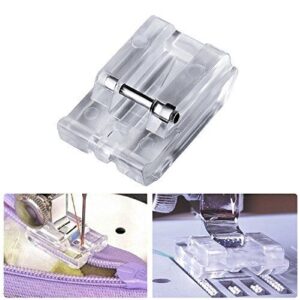
Now your seam allowance is stable — the last piece is what guides your needle right where it needs to go.
The YRDQNCraft Invisible Zipper Presser Foot ($5.99) snaps onto most low-shank machines in seconds. Its clear plastic body lets you watch the coil feed through the underside groove, so you’re never guessing about placement. It works with Singer, Brother, Baby Lock, and Janome models.
Just keep it clean — lint in the groove kills your accuracy fast.
| Best For | Beginners and home sewers who want an easy, affordable way to insert invisible zippers without the guesswork. |
|---|---|
| Brand | YRDQNCraft |
| Material | Plastic (clear) |
| Country of Origin | Not specified |
| Primary Use | Zipper insertion |
| Skill Level | Beginner-friendly |
| Project Type | Skirts/Dresses |
| Additional Features |
|
- Clear plastic body lets you see exactly what’s happening as you sew — no more blind stitching
- Snaps on fast and works with most major brands like Singer, Brother, and Janome
- At $5.99, it’s a budget-friendly tool that genuinely saves time and frustration
- Plastic construction can break quickly — some users reported it snapping on the very first use
- Only works for invisible zippers, so it won’t replace your regular presser feet
- A few machines on the compatibility list may still need adjustments to get clean results
Choose Zipper and Machine Setup
Before you thread a single stitch, a few setup decisions will make or break your invisible zipper. Picking the right zipper, foot, needle, and thread isn’t guesswork — each choice depends on what you’re sewing.
Getting these basics right sets you up for success, so it helps to walk through a complete guide to sewing an invisible zipper before you cut a single piece of fabric.
Here’s what you need to sort out before you sit down at the machine.
Invisible Zipper Vs. Regular Zipper
Both types work — but they’re not interchangeable. Invisible zippers tuck the coil underneath the tape, hiding teeth inside the seam for a clean aesthetic impact. Regular zippers leave teeth exposed along the fabric edge.
That difference affects fabric compatibility, installation complexity, and durability differences between the two. Invisible options cost slightly more but deliver a finish no regular zipper can match.
Concealed Zipper Foot Vs. Standard Zipper Foot
The foot you choose controls everything.
A concealed zipper foot has a narrow groove for precise coil guidance, letting you stitch within 1–2 mm of the teeth — minimal stitch gap, clean bulk reduction. A standard zipper foot sits wider, leaving a 2–4 mm gap that shows on thin fabric.
For a step‑by‑step guide to using the invisible zipper foot, foot adjustability matters more than you’d expect.
Picking The Right Zipper Length
Zipper length planning trips up more sewers than you’d think. Use these garment length guides to get it right:
- Dresses: 14–22 inches, depending on bodice depth
- Skirts: 9–14 inches, ending at mid-hip
- Blouses: 7–12 inches for lighter material weight considerations
- Pants: 16–22 inches for full access
Need a shorter length? Shortening zipper coils from the bottom keeps your invisible zipper foot running clean.
Matching Zipper Color to Fabric
Color matching is the detail that separates a polished finish from an obvious seam. For fabric undertone matching, cool-toned fabrics pair with silver-toned zippers; warm fabrics need brass or antique gold.
Use swatch testing — hold two zipper options against the folded edge in natural light before committing.
| Fabric Tone | Best Zipper Match |
|---|---|
| Warm (ivory, camel) | Brass or antique gold |
| Cool (navy, gray) | Silver or pewter |
| Printed pattern | Dominant color in print |
Choosing Needles and Thread by Fabric Type
The wrong needle punches holes instead of seams.
The right needle guides a seam; the wrong one just punches holes
Needle Size Matching starts with fabric weight — use a 70/10 microtex needle for fine wovens, a ballpoint needle for knits to prevent snags, and a stretch needle for Lycra-rich fabrics.
Thread Weight Selection matters too — 50-weight polyester for delicate wovens, heavier thread for thicker materials.
- Wovens: Microtex sharp needle (75/11), polyester thread
- Knits: Ballpoint vs Sharp — always ballpoint, nylon thread
- Specialty fabrics: Stretch Needle Guidance with silk thread for sheers
Setting Stitch Length for Close Coil Sewing
Stitch length controls everything near the zipper coil. Set yours between 2.0 and 2.5 mm — shorter increases stitch density and reduces puckering without weakening the seam.
For dense fabrics, 1.8 mm often gives the cleanest zipper foot alignment.
Drop your machine speed too; slower feed keeps needle size and thread tension balanced right where stitch proximity to teeth matters most.
When to Use an Invisible Zipper Foot
Once your stitch length is dialed in, matching that precision to the right foot matters just as much.
Reach for the invisible zipper foot on skirts, dresses, and pile fabrics like velvet — anywhere a clean seam is non‑negotiable. It outperforms the standard zipper foot on delicate silk and layered seams.
Skip it for heavyweight coats or high‑stress closures.
Snap-on and Screw-on Foot Compatibility
Your invisible zipper foot comes in two attachment styles: snap-on and screw-on. Snap-on presser foot models lock onto a 5.5 mm post — fast, no tools needed. Screw-on feet use a set screw and handle wider shank thickness limits.
When snap-on vs screw-on foot compatibility is unclear, an adapter kit usage solves most mismatches. Always confirm presser foot height and needle clearance adjustments before sewing.
Prepare Fabric for Clean Results
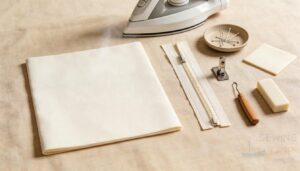
Getting your fabric ready is the foundation for an unblemished invisible zipper. Each step here helps prevent common mistakes and keeps your seam looking sharp.
Let’s walk through what you’ll need to do before you start sewing.
Pressing The Zipper Coil Before Sewing
Before invisible zipper foot ever touches your machine, the coil needs prep work. Factory curl is stiff and unpredictable — it fights your foot groove.
Use the Coil Flattening Technique: press the zipper coil flat with a warm iron and Pressing Cloth Usage to protect the teeth.
- Set iron to low-medium heat — Heat Safe Handling means under two seconds per section
- Press from the back side; avoid pressing the teeth directly
- Use Coil Alignment Marking with chalk to track position after pressing
- Run Post-Press Inspection — check for kinks, shiny marks, or gaps before sewing
Reinforcing Seam Allowances With Interfacing
Once the coil is flat, reinforce your seam allowance before anything else moves forward. Cut a 1.5–2 inch interfacing strip and apply it using the Grain Alignment Technique — match the grain to prevent warping.
Stabilizing fabric with fusible interfacing through Pressing Cloth Usage locks Adhesive Bond Strength without scorching.
Seam Edge Trimming after bonding keeps the invisible zipper foot gliding clean. Interfacing Weight Selection matters: lightweight for delicates, medium for structured seams.
Finishing Raw Edges Before Installation
Before the invisible zipper foot ever touches your machine, your raw edges need to be clean. Unfinished edges fray mid-project and ruin the seam finishing methods you’ve worked hard to set up.
Choose based on your fabric:
- Zigzag Edge Stitch — fast, reliable for most wovens and knits
- Bias Tape Application — encases the edge completely, adds strength
- French Seam Technique — ideal for sheers where edges show through
- Pinking Shears Edge — quick bulk-free option for tightly woven fabrics
Fray Stop Glue works as a backup on stubborn fibers. Finish before pressing the seam for a flat finish — it locks fiber alignment and keeps edges from lifting during fabric stabilization.
Marking Seam Allowance and Zipper Placement
Marking the seam allowance accurately starts with your Marking Tool Selection. Use tailor’s chalk or a fine water-soluble pen — both erase cleanly and won’t bleed into fibers.
Standard Seam Allowance Width sits at ⅝ inch overall.
Mark your Zipper Placement Coordinates parallel to the fabric edge, respecting Fabric Grain Alignment. Pin along those lines using marking and pinning strategies that keep fabric flat without distortion.
Aligning Top Edges and Seam Lines
Before you pin anything, get your top edges flush — within 1–2 mm. Edge Grain Consistency matters here: misaligned grain creates a crooked seam line that no amount of pressing fixes.
Edge Alignment Tools like a straight ruler to confirm Equal Seam Allowances on both sides. Top Edge Pressing sets a crisp, flat contact line.
Seam Line Accuracy depends entirely on this step.
Pinning or Basting Without Fabric Distortion
Every pin tells the fabric where to stay — get it wrong, and the seam fights you the whole way.
- Keep Pin Angle perpendicular to the seam line every time
- Space pins every 2–4 inches for consistent Pin Spacing
- Use 4–6 mm Basting Length for easy removal without tension
- Run a Test Stitch on scrap first to check Fabric Tension
- When basting slippery fabrics, lay them flat — no pulling
Stabilizing Lightweight, Knit, and Slippery Fabrics
Slippery and stretchy fabrics need a little backup before you start. Along the seam allowance, fuse a Lightweight Stabilizer Tape or Knit Fabric Tape — it cuts edge curl by up to 20%.
For Lycra-rich fabric handling, a stabilizing spray gives temporary tack without bulk.
Use a Walking Foot Grip or Teflon Coated Foot when basting slippery fabrics. Both keep the invisible zipper foot tracking true during lightweight fabric zipper installation, stabilizing the zipper area cleanly.
Sew With The Invisible Foot
This is where the real work happens.
Getting your invisible zipper foot to perform well comes down to a handful of specific steps — each one building on the last. Here’s how to work through the process from start to finish.
Positioning The Zipper Face Down
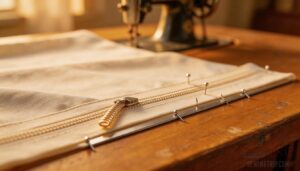
Face down — that’s the only way the zipper works here. Lay the zipper so the coil faces up and the tape rests flat against the fabric’s right side. This tape positioning keeps the seam line consistency intact when you stitch.
- Coil alignment starts with edge flattening the tape against the seam allowance
- Zipper stop placement should meet your marked seam finish exactly
- The fold hides the zipper only when aligning fabric pieces before pinning is done precisely
Placing The Coil Into The Foot Groove
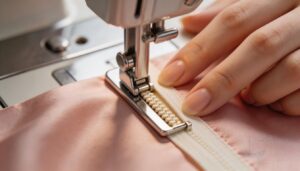
With the zipper face down and tape flat, guide the coil into the foot groove using light fingertip pressure — that’s your Finger Guidance doing the work. This Coil Entry Technique keeps everything steady without forcing it.
| Aspect | Correct Practice | Common Mistake |
|---|---|---|
| Foot Groove Alignment | Coil centered in groove | Coil riding groove edge |
| Seating Depth Control | Teeth evenly exposed | Coil crushed too deep |
| Coil Position Verification | Flat, no twisting | Twisted entry distorts seam |
| Zipper Coil Alignment | Parallel to seam allowance | Angled causes waviness |
| Pressing the Zipper Coil Flat | Done before seating | Skipped — causes puckering |
Keep the invisible zipper foot moving smoothly; any coil protrusion above the groove risks catching the needle.
Sewing The First Zipper Side
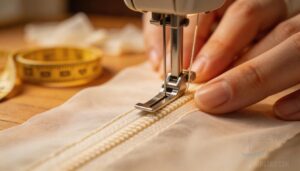
Once the coil seats cleanly in the groove, lower the invisible zipper foot and set your stitch length to 2.0–2.5 mm. Start your Initial Stitch Line at the top stop, keeping Needle Entry Point close to the zipper coil without crossing it.
Maintain light Foot Pressure Adjustment and steady Zipper Tape Tension. Stop before the Zipper Stop Positioning point, backstitching to secure the seam allowance.
Sewing The Second Zipper Side Evenly
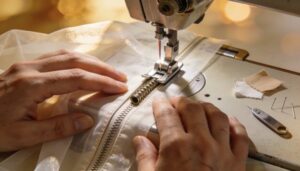
With the first side done, flip to the opposite panel. Zipper Tape Flattening matters here — any twist throws off your seam allowance.
Use these steps for Side Stitch Consistency:
- Align the coil with your seam line
- Check Needle Clearance Check on scrap first
- Seat the coil into the invisible zipper foot groove
- Maintain Fabric Tension Balance — don’t pull
- Sew with steady zipper tension adjustment, stopping before the stop
Adjusting Needle Position Left or Right
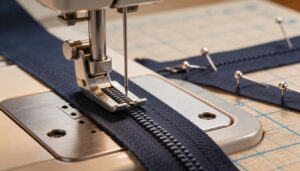
Once both sides are pinned, small needle adjustments make or break your Stitch Line Symmetry. Shift left for the left tape, right for the right — usually 1 to 2 mm from center. That’s your Offset Fine-Tuning window.
| Side | Needle Direction | Offset Range |
|---|---|---|
| Left tape | Shift left | 1–2 mm |
| Right tape | Shift right | 1–2 mm |
| After finishing | Needle Position Reset | Return to center |
Always do Foot Groove Calibration on scrap first. Confirm Zipper Edge Clearance before committing to your garment.
Stitching Close to The Coil
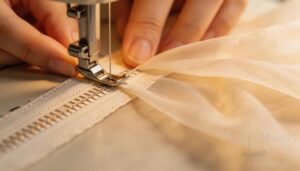
Keep the stitch line within 1–2 mm of the coil — that’s where Coil Guidance matters most. Your invisible zipper foot does the heavy lifting, but you still control Needle Depth, Thread Tension, and Stitch Density.
- Hold fabric flat; don’t pull it
- Set tension to match your scrap test
- Sew slowly for consistent Seam Flatness
- Let the groove steer — trust it
Backstitching Near The Zipper Stop
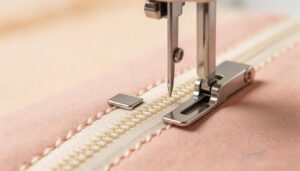
Stop about 1–2 mm before the zipper stop — not on it. Drop your stitch tension slightly and shorten your backstitch length to 1.0–1.5 mm for clean stop reinforcement without bulk. Match your thread color to the zipper tape.
Keep foot pressure steady and even. Three to five tight backstitches here lock everything in place without jamming against the stop mechanism.
Sewing The Seam Below The Zipper
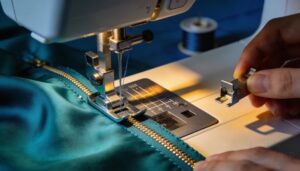
Switching feet now makes all the difference. Swap your invisible zipper foot for a regular zipper foot, then start your bottom seam stitching about 2 cm above the zipper stop to avoid backstitching without hitting the zipper stop.
- Set stitch density control to 2.5 mm for clean seam edge reinforcement
- Balance thread tension so bottom seam bias doesn’t pull fabric toward the coil
- Keep seam allowance consistent all the way down
- Backstitch at both ends for a secure bottom seam stitching finish
Checking Zipper Alignment Before Finishing
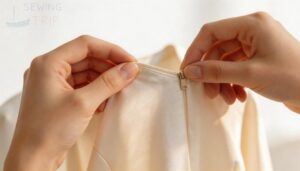
Before you press anything, run a quick zipper alignment check. Close the zipper and look for teeth gap inspection — visible gaps from top to bottom. Then verify stitch line uniformity on both sides.
| Check | What to Look For |
|---|---|
| Zipper tape flatness | No twisting against fabric edges |
| Edge puckering check | Seam lies flat, single plane |
| Alignment after pressing | Heat hasn’t shifted coil or tape |
Finish and Troubleshoot The Zipper
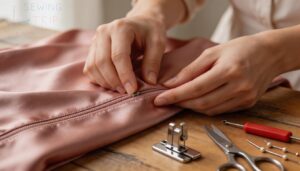
You’ve sewn both sides — now it’s time to clean up the details and fix anything that didn’t land perfectly.
A good invisible zipper lives or dies in the finishing stage. Here’s what to work through before you call it done.
Pressing The Seam Without Melting Teeth
Nylon teeth melt above 230°C — that’s not a warning to ignore.
Set your iron to Temperature Control Settings appropriate for your fabric: 150–160°C for woven cotton, lower for knits. Always use a Pressing Cloth Barrier between iron and seam.
Skip the steam — Steam-Free Pressing prevents moisture from distorting the coil. Use Heat-Resistant Pressing aids on delicate zippers. Let everything cool completely before handling.
Fixing Puckering and Waviness
Puckering near the coil usually comes down to three things: tension, speed, or fabric grain. Fix it with these five checks:
- Balance Tension Balance — lower bobbin tension slightly if fabric pulls toward the seam.
- Slow your Speed Control — faster feeding skips smooth coil contact.
- Use a Walking Foot for even feed on both sides.
- Check Fabric Grain Alignment — off-grain fabric skews every stitch.
- Confirm Interfacing Placement — light interfacing weight selection for light to medium fabrics prevents drag.
After re-stitching, use pressing the seam for a flat finish — no steam burst needed.
Correcting Visible Stitches on The Outside
Visible stitches on the outside indicate issues with Tension Balancing or Stitch Gap Reduction. Address this by matching Needle Size and Thread Weight to your fabric. Adjustments like lowering tension, using a size 80/12 needle, or opting for heavier thread can significantly improve results.
Keep your seam flat—pressing the seam for a flat finish is essential. Trimming excess fabric after pressing further enhances the invisible result.
| Factor | Fix | Result |
|---|---|---|
| Tension Balancing | Lower tension | Fewer stitch loops |
| Needle Size | Use 80/12 | Cleaner exterior |
| Thread Weight | Heavier thread | Seam Flattening |
| Stitch Length | Shorten to 2mm | Stitch Gap Reduction |
| Seam Finish | Press and trim | Invisible result |
Repairing Uneven Zipper Sides
Once you’ve tightened your stitches on the outside, uneven zipper sides are next to be addressed. Misalignment usually traces back to a skewed seam allowance or inconsistent Tape Tension Adjustment.
Fix it with these four steps:
- Lift affected stitches and re-center the zipper using Seam Margin Equalization
- Apply Fabric Edge Reinforcement with light interfacing before re-sewing
- Use Needle Offset Adjustment to balance your invisible zipper foot position
- Re-sew with Symmetrical Stitching close to the coil
Preventing Skipped Stitches and Coil Curling
Even with even sides, skipped stitches and coil curling can unravel your work fast.
Start with Tension Calibration — set mid-range tension and test on scrap first.
Your Needle Path matters too: use a 75/11 or 80/12 sharp for clean Coil Alignment.
Polyester thread manages Thread Lubrication naturally, reducing friction.
Adjust Foot Pressure gradually if fabric shifts, and keep stitch length at 2.0–2.5 mm.
Trimming Thread Tails and Excess Tape
Once your stitching is locked in, don’t skip Thread Tail Securing — leave 2–3 mm under the stitching, then snip at 90 degrees using the Snipping Angle Technique to stop fraying, cold.
For Tape Overhang Management, trim excess zipper tape flush, but leave a hair’s width at the edge.
Follow up with Lint-Free Cloth Cleaning inside the seam, then do a quick Seam Edge Inspection to confirm nothing’s poking through.
Reusing an Invisible Zipper Safely
Before you toss that zipper, run a quick Coil Condition Check — inspect for fraying tape, discoloration, or damaged teeth. Then do a Slider Function Test along the full length.
- Replace worn stops with Stopper Replacement parts
- Complete Fabric Oil Removal by washing natural fibers first
- Run a Scrap Fabric Trial through your invisible zipper foot
- Backstitch both ends when reattaching
Frequently Asked Questions (FAQs)
How to use an invisible zipper foot?
Slide the coil into the foot’s groove, align your thread tension, check coil alignment, and sew close to the teeth.
This step-by-step guide to using the invisible zipper foot delivers a clean seam finish every time.
Is there a difference between a zipper foot and an invisible zipper foot?
Yes. A standard zipper foot uses adjustable width and needle clearance to sew beside exposed teeth. An invisible zipper foot adds groove guidance, cradling the coil for a hidden seam.
Can I install an invisible zipper by hand?
You can, though it takes patience.
Use small backstitches close to the coil, bury your knots, and match thread to fabric. Hand stitching works — just expect less precision than machine sewing.
How do I fix a broken invisible zipper slider?
A stuck zipper slider isn’t a death sentence for your garment.
Apply Graphite Lubrication to the teeth, use Flat-nose Pliers for Slider Realignment, or attempt Slider Clip Replacement if the clip is bent beyond recovery.
Are invisible zippers suitable for heavy upholstery fabrics?
Invisible zippers work on heavy upholstery, but they’re not ideal. Dense fabrics stress the coil and tape quickly.
For heavy fabric durability, choose reinforced tape options or switch to exposed coil zippers entirely.
How do I sew an invisible zipper into a lining?
Sew each side face-down into the lining seam allowance using your invisible zipper foot, keeping the coil in the groove.
Match thread tension and tape width to your lining weight for a flat, invisible finish.
Can invisible zippers be used on curved seams?
Yes, you can.
With proper Seam Curve Preparation, interfacing, and Flexible Foot Adjustments, invisible zippers follow curves cleanly. Stabilize the seam, ease fabric gently, and practice Fabric Tension Management on scrap first.
Conclusion
As you master the invisible zipper foot technique, you’ll open a world of smooth garment construction. Your next project will be just as polished as a professional’s.
With practice, the invisible zipper foot technique becomes second nature. You’ll confidently tackle invisible zippers, achieving perfect results every time. Your garments will look refined, with zippers that blend into the fabric.
Precision and patience yield mastery; now, go create something impressive with your newfound skill.