This site is supported by our readers. We may earn a commission, at no cost to you, if you purchase through links.
A zipper that disappears into the fabric sounds like magic—until you’ve sewn one that puckers, twists, or leaves a visible ridge down the back of a dress. The invisible zipper is one of those techniques that separates a garment that looks handmade from one that looks hand‑crafted.
Most sewists skip it out of frustration, defaulting to a lapped or centered zipper instead. But the problem usually isn’t the zipper itself—it’s skipping two or three preparation steps that make all the difference.
Get those right, and the invisible zipper installation steps become something you’ll reach for on every fitted project.
Table Of Contents
Key Takeaways
- Pressing the zipper coil flat before sewing and fusing a 1.5–2 inch interfacing strip along each seam allowance are the two preparation steps most sewists skip—and skipping them is exactly why puckers and ridges happen.
- An invisible zipper foot isn’t optional: its underside grooves unroll the coil so your needle stitches within 1–2 mm of the teeth, a result that a standard presser foot simply can’t replicate.
- Needle and thread choice is quietly critical—use a microtex needle for wovens, a ballpoint for knits, and a stretch needle with stretch thread for Lycra‑rich fabrics to prevent fraying, runs, and puckering along the coil.
- Getting the top edges even on both sides (within 1–2 mm) before you commit to stitching is the single check that separates a garment that looks handmade from one that looks hand‑crafted.
Top 3 Invisible Zipper Supplies
Getting your supplies right before you start makes the whole installation smoother and less frustrating. The three items below are worth having on hand before you thread your machine.
If you want to dial things in from the start, this guide to automatic machine thread settings walks you through exactly what to check before you begin.
Here’s what you’ll want to pick up.
1. Coats Clark Invisible Navy Zipper

The Coats & Clark Invisible Zipper in navy is a reliable go-to when your project demands a clean, hidden closure. At 14 inches, it covers most dress and skirt applications without trimming.
The polyester tape and coil hold up through regular wash cycles — no puckering, no fading. Navy blends naturally into dark and mid-tone fabrics, so the zipper practically disappears once installed.
If you’re working with medium-weight wovens, this zipper sits flat and stitches smoothly from top to stop.
| Best For | Sewists working on dresses or skirts who need a clean, invisible closure in navy and can’t find the right length locally. |
|---|---|
| Brand | Coats & Clark |
| Origin | USA |
| Material | Polyester |
| Primary Use | Sewing projects |
| Color | Navy |
| Weight | 0.03 pounds |
| Additional Features |
|
- Polyester construction holds up through repeated wash cycles without puckering or fading
- 14-inch length covers most dress and skirt applications right out of the package
- Navy color blends seamlessly into dark and mid-tone fabrics for a truly hidden finish
- Priced higher than what you’d typically find at a local fabric or craft store
- Only comes in one length and one color, so it’s a no-go if your project needs something different
- Not the most budget-friendly pick if you have a sewing shop nearby
2. Singer Ball Head Straight Pins
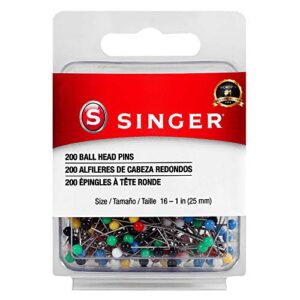
Once your zipper is chosen, you need something equally reliable to hold it in place during installation. Singer’s Ball Head Straight Pins do that job well.
The nickel-plated steel shafts slide through fabric cleanly without snagging, and the colorful ball heads stay visible even on busy patterned fabric — no hunting for a pin you just placed.
Each pack comes with 200 pins, so you won’t run short mid-project. For slippery or lightweight fabric especially, these give you the precise control invisible zipper work demands.
| Best For | Sewers and crafters who need reliable, easy-to-spot pins for detailed work like quilting, zipper installation, or working with patterned and slippery fabrics. |
|---|---|
| Brand | SINGER |
| Origin | Not specified |
| Material | Alloy Steel |
| Primary Use | Sewing and quilting |
| Color | Assorted |
| Weight | 9.07 grams |
| Additional Features |
|
- Nickel-plated shafts glide through fabric smoothly without snagging
- Colorful ball heads are easy to spot on busy or patterned fabric
- 200 pins per pack means you’re unlikely to run out mid-project
- Some users have received pins with broken shafts or dull tips
- Ball heads can be loose or detach with use
- At size 16, the pins may feel too short for certain heavier or bulkier projects
3. Pellon Shape Flex Iron On Cotton Interfacing
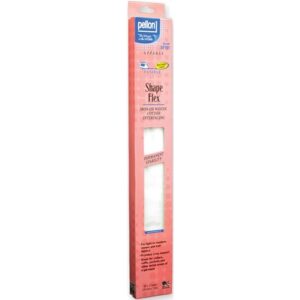
Pins hold the zipper steady, but interfacing is what keeps your fabric from stretching out of shape underneath it.
Pellon Shape Flex is 100% woven cotton, so it fuses firmly to light and medium-weight fabrics without stiffening the drape.
Cut a 1.5–2 inch strip and press it along each seam allowance before you ever touch the zipper.
That single step stops the fabric from shifting or puckering when you stitch close to the teeth.
| Best For | Sewers and crafters working with light to medium-weight fabrics who want clean, stable results on collars, cuffs, bags, and other detail work. |
|---|---|
| Brand | Pellon |
| Origin | United States |
| Material | 100% Cotton |
| Primary Use | Sewing and quilting |
| Color | White |
| Weight | 2.72 ounces |
| Additional Features |
|
- 100% woven cotton that fuses firmly without killing the drape of your fabric
- Works with a wide range of projects — garments, handbags, home décor, even wool appliqué
- Holds up through machine washing, drying, and dry cleaning once fused
- The 15" width limits how much you get, and some users felt it ran out faster than expected
- Iron-on application isn’t for everyone — not ideal if you prefer sew-in interfacing
- Only suited for light to medium fabrics, so heavier projects will need something else
Choose Zipper and Machine Setup
Before you sew a single stitch, the decisions you make at the machine matter just as much as your technique. Getting the zipper type, length, color foot, needle, and thread right sets the whole project up for success.
If you’re working with stretchy or slippery fabrics, stabilizing your zipper area with interfacing strips is a game-changer—here’s exactly how to fix a misaligned zipper if things go sideways anyway.
Here’s what you need to sort out before you start.
Invisible Zipper Vs. Regular Zipper
Think of the two as different tools for different jobs.
An invisible zipper tucks its coil beneath the tape, creating a smooth finish ideal for dresses and skirts — strength comparison favors it on lightweight wovens. A regular zipper‘s visible teeth offer durability on heavier fabrics like denim.
Aesthetic impact, fabric suitability, and your zipper installation goals should drive that choice.
Picking The Right Zipper Length
Getting your opening measurement right is the foundation of zipper length selection. The usable opening runs 2–3 cm shorter than the stated tape length, so always size up — a 55 cm opening needs a 60 cm zipper. Remember to allow the minimum seam allowance for proper installation.
- Match garment type guidelines to your specific project
- Account for body proportion fit, especially at hips and bust
- Follow standard length chart before buying
- Shorten from bottom only, never the top
Matching Zipper Color to Fabric
Match your zipper to fabric under a D65 Light Standard — Metamerism Effects can make a perfect indoor match look off in daylight. Hold both pieces side by side in your actual wearing light.
For multi-panel coordination, match the zipper to the dominant color zone.
Textured weaves like tweed offer Fabric Texture Impact that hides minor shifts; flat satin won’t forgive even a slight mismatch.
Use a Color Card Utilization approach when matching zipper color to fabric tone precisely. Choosing a fine plastic coil zipper ensures a smooth look.
When to Use an Invisible Zipper Foot
Reach for the invisible zipper foot whenever formal garment seams, home decor closures, or curved seam applications demand a professional finish requirement. Its underside grooves unroll the coil so your needle stitches tightly against the teeth — something a standard presser foot simply can’t replicate.
For lightweight fabric projects especially, choosing the right sewing machine foot means the difference between a hidden closure and a visible one.
Needle and Thread for Woven or Knit Fabrics
Your needle and thread choices can quietly make or break an invisible zipper installation.
The right needle and thread quietly determine whether your invisible zipper installation succeeds or fails
- Woven fabric: Use a microtex needle (75/11 or 80/12) — microtex needle benefits include cleaner penetration through tightly woven cotton or linen without fraying yarns, paired with 50-weight polyester thread.
- Knit fabric: Ballpoint needle choice matters here; a 75/11 jersey needle slides between loops instead of cutting them, preventing runs.
- Stretch knits: Stretch thread usage with a dedicated stretch needle accommodates Lycra-rich fabrics without puckering along the coil.
- Needle size selection: Fine shears need a 65/9; heavier layers call for a 90/14 — thread weight matching follows the same logic, dropping to 60-weight for delicate wovens.
Pressing The Zipper Coil Before Sewing
Press the zipper coil flat before you sew a single stitch — skipping this step is how puckers happen. A light Steam Burst relaxes the tape while your Pressing Cloth shields the teeth.
Coil Alignment depends on even Heat Settings: too hot, the plastic warps; too cool, the curl stays.
| Fabric Type | Low Iron Setting | Pressing Cloth Needed |
|---|---|---|
| Woven cotton | 150–160°C | Optional |
| Knit/stretch | 130–140°C | Always |
| Delicate silk | 110–120°C | Always |
Prepare Fabric and Seam Allowances
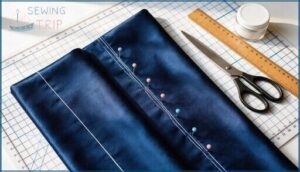
Before you touch that zipper, your fabric needs to be ready — and that prep work matters more than most sewers realize. Getting your seam allowances finished, stabilized, and marked correctly is what separates a clean install from a frustrating redo.
Here’s what to work through before you pin a single thing.
Finishing Raw Edges Before Installation
Before the zipper goes anywhere near your fabric, finish those raw edges — because fraying threads will sabotage even the most careful installation.
Serging raw seams with an overlock edge trim is the fastest method, but a zigzag edge finish on a regular machine works just as well.
Run each seam allowance edge individually, keeping your finish edges clean and snag‑free before you pin anything down.
Stabilizing The Zipper Area With Interfacing
Once your edges are clean, interfacing reinforcement is your next line of defense. Cut a 1.5–2 inch strip of fusible interfacing and press it along each seam allowance using heat setting control — warm, dry iron, no steam.
Interfacing weight selection matters here: light for sheers, medium for wovens.
This stabilizing fabric during zipper insertion step prevents stretch, puckering, and shifting when you stitch.
Marking The Seam Allowance Accurately
With interfacing locked in, accurate marking is what separates a clean installation from a crooked one.
Use tailor’s chalk and a clear ruler for precise ruler use along the seamline. Standard seam allowance measurement sits at 1.5 cm (5/8 inch) for most wovens.
Consistent chalk marks, transfer tape marking, or water-soluble pens all work — just verify mark spacing at three points before moving forward.
Marking The Zipper Start Point at The Top Edge
Once your seam allowance is marked, your next move is locking in the zipper’s start point at the top edge — this single mark controls everything above it.
Use tailor’s chalk or a fabric marking tool for chalk line placement exactly at the top edge. Set your mark 1/4 to 3/8 inches from the edge for edge alignment precision. Treat your interfacing reference edge as your anchor — it won’t shift.
- Your starter point verification catches misalignment before the needle ever drops
- A needle distance guide keeps stitches tight against the teeth without piercing them
- Pin the zipper in place after you mark the invisible zipper position to lock that line solid
Aligning Fabric Pieces Before Pinning
With your start point locked in, lay both fabric pieces flat, right sides together, and check alignment before a single pin goes in. Run a straight edge along the raw edges for your edge straightening technique, then confirm grain line verification — parallel grains prevent twisted seams.
Match any pattern motifs now.
Use tailor’s chalk or a fabric marking tool to recheck chalk marking accuracy, then apply your pin placement strategy perpendicular to the seamline.
Basting Slippery or Lightweight Fabric
When silk or chiffon won’t stay put, hand baste before you touch the machine. Use fine hand-sewing needles with contrast thread visibility to spot and remove stitches easily. Even basting stitches spaced about 1/4 inch apart keep slippery fabrics from creeping.
Tuck tissue paper grip underneath for extra control, or apply temporary spray adhesive along the tape. Interfacing reinforcement holds lightweight fabrics steady right up to the invisible zipper foot.
Sew The Invisible Zipper
This is where the real magic happens — needle meets zipper, and everything you’ve prepped finally comes together. Getting the zipper sewn in correctly depends on a handful of steps that each build on the last.
Here’s exactly what to do.
Positioning The First Zipper Side

Place the zipper face-down on your fabric’s right side, aligning the tape edge with your marked seam allowance — use tailor’s chalk or a fabric marking tool to mark the invisible zipper position clearly. Maintain seam allowance consistency at 1 cm throughout.
Pin with pin head orientation facing outward to prevent snags, then add a temporary stay stitch to anchor the first side tension before sewing.
Stitching Close to The Zipper Teeth

Once zipper is pinned, guide the coil into your invisible zipper foot’s groove and stitch slowly — needle alignment here determines everything.
Keep stitch proximity tight, just 1–2 mm from the coil base, so the finished seam stays invisible.
Use speed control to avoid wandering, backstitch at both ends without hitting the zipper stop, and you’re set.
Aligning and Pinning The Second Side
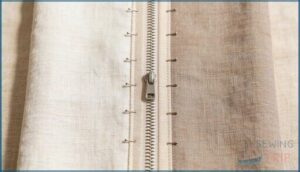
The second side is where mirror edge matching makes or breaks your entire zipper. Flip your fabric right side up, then mark the invisible zipper position to match the first side exactly — coil alignment check first, pins second.
Use pin density control to keep the tape flat without bunching. Confirm pull direction confirmation before stitching: the pull should face you, tape fanning away cleanly.
Checking Top Edges for Even Placement
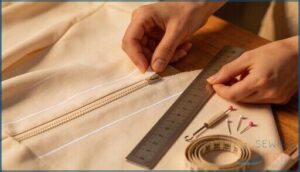
Even a millimeter off at the top edge shows up the moment someone puts on the garment. Use tailor’s chalk to mark zipper placement and verify edge height uniformity on both sides before committing.
Check edge alignment metrics — tops must run parallel within 1–2mm.
Press zipper tape flat, confirm seam allowance measurement stays consistent, and test aligning zipper teeth for a smooth finish.
Backstitching Without Hitting The Zipper Stop
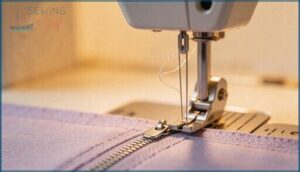
Stop your stitching about 1/4 inch before the zipper stop — that small stop gap protects both your needle and the invisible zipper’s mechanism.
Foot alignment matters here: with your sewing machine foot seated correctly, nudge needle clearance one position left for extra room.
Use a stitch length of 2.0–2.5 mm, then manual backstitch 3–5 stitches firmly within the tape.
Done.
Preventing Puckers and Twisted Tape
Backstitching correctly sets you up — now keep that tape flat and pucker-free.
Run your Tape Alignment Guides parallel to the seam within 1–2mm, using Feed Roller Adjustment to guide fabric gently, never force it.
Apply Stabilizer Choice interfacing along the edge, control Stitch Density Control at 1.5mm intervals, and use Heat Press Technique with low iron settings before your Invisible Zipper Sewing Machine Foot locks everything smooth.
Finish The Seam and Check Results
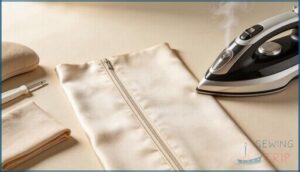
The zipper is in — now it’s time to wrap things up cleanly.
How you finish the seam and press your work separates a good result from a great one. Here’s what to focus on to get that polished, professional look.
Sewing The Seam Below The Zipper
Closing the seam below the zipper is where thread tension, stitch length, and foot pressure all come together.
Switch to a regular zipper foot, lift the zipper tail clear, and position your needle 2–3 mm from your existing stitch line. Sew the first side, then sew the second side, backstitching at both ends for solid seam reinforcement.
Keep the coil flattening naturally as you guide the fabric slowly.
Pressing The Seam for a Flat Finish
Now that the seam below the zipper is secured, press the seam using wrong‑side pressing first, setting your iron to low heat. Use a seam roll for support and a pressing ham on any curved sections.
Skip steam entirely — steam‑free ironing protects the coil’s shape. Finish the seam with a flat finish inspection, confirming no puckers remain.
Trimming Threads and Cleaning The Inside
With the seam pressed flat, thread snipping techniques become your next priority. Snip every tail flush using micro-scissor trimming — cut at a slight angle to reduce snag risk. Then lint brush usage clears trapped fibers from the zipper tape channel, while vacuum seam cleaning on low suction pulls loose threads without disturbing the fabric.
- Trim bobbin threads flush to the seam line
- Run a finger check along interior fiber inspection points
- Wipe zipper tape with a lint-free cloth
- Brush seam allowance edges with a soft lint brush
- Shake loose threads free before final pressing
Fixing Uneven Sides or Misaligned Seams
Spotting a misaligned seam early saves you from removing the entire zipper. Start with Top Edge Alignment — check both sides sit at equal heights before anything else.
| Problem | Fix |
|---|---|
| Twisted tape | Repin; Tape Twist Prevention starts before stitching |
| Uneven sides | Remove affected stitches; recheck Stitch Line Consistency |
| Seam mismatch | Apply Seam Matching Techniques; baste first, then restitch |
Finish Adjustment Methods work best when you press after each correction.
Tips for a Nearly Invisible Finish
A nearly invisible finish comes down to details that happen before and after you stitch. Press each coil flat using the Coil Flattening Technique so the invisible zipper foot can ride the groove cleanly. Your Hidden Stitch Line stays tight — within 1–2 mm of the coil base.
- Seal tape ends with the Tape End Sealing method to prevent fraying
- Do a Slider Alignment Check after both sides are sewn
- Grade seam allowances using Seam Edge Grading to reduce bulk under the zipper
- Apply interfacing reinforcement before pressing zipper tape for stability
- Confirm your invisible zipper foot seated the coil correctly by running the foot slowly
Frequently Asked Questions (FAQs)
How do you sew an invisible zipper?
To sew an invisible zipper, align the coil along your seam, use proper Zipper Foot Alignment, and stitch close to the teeth.
Thread Tension and Fabric Type Considerations matter every step.
What is an invisible zipper?
invisible zipper is a concealed seam closure with a hidden coil design — its nylon-tooth coil folds behind the zipper tape, so only the pull shows, giving you a smooth garment finish on dresses and skirts.
How do you fix an invisible zipper?
Fix starts with stitch removal to free the old tape, then coil repositioning brings everything back into line.
Thread breakage, zipper lubrication, and repairing broken teeth all follow before you resew cleanly.
What is a concealed zipper?
concealed zipper hides its teeth on the back of the zipper tape, so seam integration leaves only a thin seamline visible.
pull tab design and hidden teeth make it disappear completely into fabric.
Can invisible zippers be installed entirely by hand?
Like a surgeon who can operate with or without the latest tools, yes — you can install an invisible zipper entirely by hand using careful hand stitching techniques and basting strategies for precise coil management.
How do you store unfinished garments with zippers?
Store unfinished garments flat inside a breathable garment bag, in a cool dry area.
Keep zippers closed for proper zipper alignment, and never stack heavy items on top — weight protection prevents tape distortion.
What fabrics are completely unsuitable for invisible zippers?
Heavy corduroy, thick denim, stretch mesh, sheer chiffon, and velvet pile all fight invisible zippers. Skip them.
Fabric weight selection matters — thin fabrics and delicate fabrics need proper fabric preparation for invisible zipper installation to succeed.
How long does a typical invisible zipper last?
Ironically, the part you can’t see often wears out faster than the rest.
A well-installed invisible zipper lasts 20 to 40 wear cycles before showing strain, depending on zipper material and care practices.
Can invisible zippers be reused after removal?
Yes, invisible zippers can be reused if tape condition assessment shows no fraying or rips, slider glide test runs clean, and seam damage evaluation confirms the fabric edges are still stable.
Conclusion
Think of an invisible zipper as the backbone of a garment—hidden, yet holding everything together with quiet strength. When you master those invisible zipper installation steps, you’re not just sewing; you’re crafting illusions.
No more puckers, no ridges—just smooth lines that enhance your work from "handmade" to haute couture. These techniques become your secret weapon, transforming frustration into finesse.
Now, take that precision, apply it to your next project, and watch as your creations glide on with natural grace. The difference is in the details—and the details are yours to own.
- https://www.wawak.com/zippers/pant-skirt-dress/invisible-nylon/
- https://blog.mychildhoodtreasures.com/sewing-machine-feet-guide/
- https://www.fyzipper.com/news/industry-news/invisible-zipper-how-to-choose-sew-and-care-for-it.html
- https://blog.wawak.com/post/zipper-size-chart
- https://www.singer.com/products/singer-invisible-zipper-foot