This site is supported by our readers. We may earn a commission, at no cost to you, if you purchase through links.
Your body’s internal temperature doesn’t negotiate with summer heat—it climbs right alongside the mercury, triggering sweat as your only defense against overheating.
The fabric against your skin either becomes your ally in this battle or turns into a suffocating trap that holds moisture and heat right where you don’t want them.
Natural fibers like cotton and linen have dominated warm-weather wardrobes for centuries, but modern textile engineering has introduced synthetic alternatives that can outperform traditional materials in moisture management and durability.
Understanding how different lightweight fabrics interact with airflow, perspiration, and body heat determines whether you’ll stride through summer comfortably or spend every outdoor moment tugging at clingy, sweat-soaked clothes.
Table Of Contents
- Key Takeaways
- Key Qualities of Lightweight Summer Fabrics
- Top Natural Fibers for Summer Wear
- Popular Synthetic and Blended Summer Fabrics
- Best Lightweight Fabrics by Garment Type
- Weave, Weight, and Finish: Impact on Coolness
- Choosing Fabrics for Different Summer Climates
- Sustainable and Eco-Friendly Summer Fabric Options
- Caring for Lightweight Summer Fabrics
- Frequently Asked Questions (FAQs)
- Conclusion
Key Takeaways
- Lightweight summer fabrics work best when they combine three critical properties: open weave structures for airflow, moisture-wicking capabilities that pull sweat away from skin through capillary action, and low GSM ratings (80-150) that prevent heat retention while maintaining durability through repeated washing.
- Natural fibers like linen and cotton excel in different ways—linen stays up to 20% cooler thanks to hollow cores that create air pockets and boost breathability, while cotton absorbs up to 30% of its weight in moisture before feeling damp, though both outperform synthetics in pure comfort.
- Modern sustainable options like Tencel, bamboo viscose, and recycled polyester deliver performance that rivals or exceeds traditional materials, wicking moisture 50% more effectively than cotton while using closed-loop production systems that cut water usage by up to 91% and energy consumption by 30-50%.
- Fabric choice must match your specific climate and activity—dry heat demands breathable natural fibers for fast evaporative cooling, humid conditions require aggressive moisture-wicking synthetics or blends, and urban environments need UPF 30-50 rated materials in light colors that reflect solar radiation while managing sweat during commutes.
Key Qualities of Lightweight Summer Fabrics
Not all lightweight fabrics are created equal in terms of surviving summer heat.
For the best protection against intense heat, check out this fabric guide for summer clothes to find materials that maximize airflow and moisture-wicking.
The difference between feeling cool and collected or sticky and miserable often comes down to a handful of technical characteristics that work together to keep your body comfortable. Here’s what you need to look for when choosing summer fabrics that’ll actually perform.
Breathability and Airflow
Breathability and airflow liberate you from that sticky, overheated feeling when summer temps soar. When you choose lightweight fabrics with high air circulation, you’re basically wearing your own ventilation system, allowing heat to escape while cool air flows in.
Here’s what really drives fabric porosity and thermal regulation:
- Open weave structures like voile create more space between threads, boosting airflow through the fabric by increasing air permeability in still conditions
- Knit fabrics form micro channels that improve ventilation compared to flat wovens of similar weight
- Thread count and spacing determine how quickly air exchanges across the material surface, measured in square centimeters per second
- Natural fiber construction in cotton and linen allows air to pass between individual fibers, especially in loose weaves
- Linen’s hollow cores trap air pockets that actively boost breathable fabric performance and moisture transfer throughout hot days
Moisture-Wicking Properties
Fabric Breathability reaches peak performance when moisture transport actively pulls sweat away from your skin. When you sweat, the wicking mechanism in hydrophobic fibers and natural fibers moves moisture through capillary action, spreading it across the fabric surface where the evaporation rate accelerates. That’s real Moisture Control, not just sitting in a damp shirt.
Peak fabric breathability isn’t just airflow—it’s moisture transport pulling sweat away through capillary action for real evaporative cooling, not damp misery
| Fiber Type | Moisture Wicking Technology | Evaporation Rate |
|---|---|---|
| Polyester blends | Capillary networks channel sweat | Fast surface drying |
| Cotton | Absorbs then releases moisture | Moderate evaporation |
| Bamboo viscose | Hydrophilic core draws wetness out | Quick moisture spread. |
Moisture-Wicking fabrics keep you dry and comfortable when temperatures climb past 75°F, preventing that clingy, overheated sensation. Breathable Fabric with proper moisture transport balances absorption and release, maintaining a consistent microclimate against your skin throughout hot, humid days.
Softness and Comfort
Staying dry matters, but so does how fabric feels against your skin. Fabric Softness directly impacts your Comfort Level throughout sweltering days, especially when you’re moving between air-conditioned spaces and outdoor heat. Gentle Touch fabrics reduce friction and irritation, while Thermal Regulation keeps you cool without sacrificing that plush sensation you crave in Comfort Clothing.
Top picks for Skin Friendliness:
- Bamboo viscose – silky cool surface with Natural Fibers that stay gentle
- Pima cotton – high thread count delivers smooth Breathable Fabric
- Tencel lyocell – rounded fibers create cushiony Lightweight Fabric
- Silk blends – drapes softly while maintaining MoistureWicking performance
- Enzyme-washed cotton – velvety hand feel without added weight
Durability for Repeated Wear
You’ll wash your favorite summer shirt dozens of times, so Fabric Strength matters just as much as airflow.
Double weaves boost Wear Resistance by twenty percent in Lightweight Fabric, while cotton-polyester blends deliver better Tear Testing results compared to pure Natural Fibers.
Fiber Longevity improves when you choose tight weaves with Durability Enhancement finishes that preserve both Breathable Fabrics qualities and MoistureWicking performance through repeated laundering.
Top Natural Fibers for Summer Wear
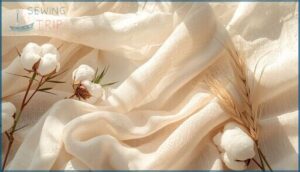
Natural fibers are your first line of defense against summer heat, offering breathability and comfort that synthetics simply can’t match.
These time-tested materials work with your body’s natural cooling system, wicking moisture away while allowing air to circulate freely around your skin. Let’s break down the top natural fiber options and what makes each one a smart choice for staying cool.
Cotton and Its Variations
Cotton stands as the workhorse of breathable fabrics for summer clothing, and variations in fiber length and weaving completely transform how cool you’ll feel. Here’s what sets cotton apart from synthetic alternatives:
For layered garments, choosing the best fabric for lined skirts ensures comfort without sacrificing the breathability that makes cotton ideal for warm weather.
- Standard cotton absorbs moisture into natural cellulose fibers, keeping you comfortable when temperatures climb
- Lightweight cotton weaves like voile, lawn, and muslin deliver breezy 35 to 80 GSM fabric weights for maximum airflow
- Pima and Supima cotton use extra-long staple fibers that resist pilling while feeling silky against your skin
- Organic cotton cuts water use by up to 91 percent compared with conventional growing methods
- Cotton blends mix polyester for moisture-wicking performance while maintaining the soft hand feel you expect
For summer dresses, you’ll want cotton lawn in the 100 to 150 GSM range—it drapes beautifully without weighing you down. Cotton-polyester blends work brilliantly for activewear, with formulas like 65 percent polyester and 35 percent cotton balancing sweat management against breathability.
The hydrophilic nature of cotton fibers means they actually pull moisture in rather than repelling it, which sounds counterintuitive but creates that familiar cool comfort in warm weather. When selecting fabric, understanding fabric GSM qualities guide can help you tailor your choices for maximum breathability and comfort.
Linen and Its Advantages
Natural cooling properties make linen the heavyweight champion of lightweight fabric options for summer clothing. These breathable fabrics utilize flax’s long fibers to deliver outstanding textile durability—linen strength actually increases with washing while maintaining its airy structure.
The eco friendly production requires minimal water compared to cotton, and the loose weaving technique allows moisture to evaporate quickly, keeping you genuinely cool when heat strikes.
Bamboo Fiber Benefits
You’ll appreciate bamboo’s unique moisture management abilities—this sustainable fashion star wicks sweat three to four times its weight before feeling damp, keeping your skin genuinely dry during humid days.
The breathable fabrics created through bamboo weaving deliver outstanding fiber durability with antimicrobial properties that naturally resist odor, while the eco benefits include rapid growth requiring minimal pesticides, making it a smart choice for lightweight fabric enthusiasts seeking sustainable clothing options.
Silk for Lightweight Luxury
Silk fabrication transforms summer clothing into breathable luxury textiles that feel cool against your skin. This natural fiber wicks moisture efficiently—absorbing up to 30 percent of its weight without dampness—while silk blending with cotton creates lightweight fabrics ideal for summer knitwear.
You’ll find breathable weaves ranging from 12 to 30 grams per square meter, delivering outstanding airflow through microscopic channels that keep you genuinely comfortable.
Popular Synthetic and Blended Summer Fabrics
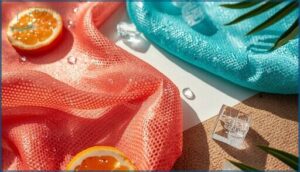
Natural fibers aren’t your only ticket to staying cool when the mercury climbs.
Modern synthetic fabrics bring serious performance to the table, offering moisture management, durability, and eco-friendly options that natural materials can’t always match.
Let’s look at three standout categories that’ll keep you comfortable without sacrificing your values or your workout.
Tencel and Lyocell Features
Tencel and Lyocell deliver textile innovation through a closed-loop solvent process that’s gentler on the planet than conventional methods.
Your summer garments stay cooler thanks to the fiber’s microstructure analysis showing outstanding breathability and moisture management, wicking up to 50 percent more moisture than cotton.
These lightweight fabrics maintain softness wash after wash, combining sustainable production with natural fibers’ performance—freedom meets responsibility.
Recycled Polyester for Eco-Friendly Options
Recycled polyester turns yesterday’s plastic bottles into tomorrow’s favorite summer gear, cutting virgin plastic demand and slashing production energy by up to 30 percent.
Your lightweight fabrics maintain durability through multiple washes while eco-friendly materials deliver moisture-wicking performance you need in hot weather.
Sustainable fashion meets breathable fabrics when green textiles offer real comfort, not just greenwashing—polyester production reimagined for rebels who care.
Performance Blends for Activewear
Performance fabrics engineered for workouts blend polyester or nylon with elastane, giving you four-way fabric stretch and shape retention that won’t quit after your tenth wash.
These breathable knits enhance moisture management through core spun yarns:
- Wicking performance moves sweat outward for evaporation rates that cool skin by 2 to 5 degrees Celsius
- Lightweight fabrics with open mesh textures optimize thermal regulation without sacrificing stretch
- Flatlock stitching minimizes chafing during high-movement activities
- Moisturewicking hydrophilic finishes accelerate sweat absorption before rapid evaporation
Fabric technology meets freedom when breathable materials work as hard as you do.
Best Lightweight Fabrics by Garment Type
Not all lightweight fabrics work the same way across different garments, and picking the wrong one can leave you sticky and uncomfortable.
Your summer dress needs different qualities than your work shirt, which is why matching fabric to garment type matters more than you might think.
Here’s how to choose the right material for what you’re wearing, so you can stay cool no matter what’s on your calendar.
Fabrics for Summer Dresses
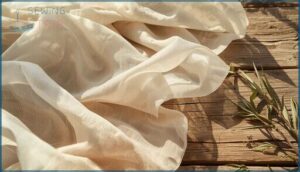
Your summer dress deserves natural fibers and breathable materials that won’t trap heat or cling. Cotton voile delivers sheer openness for quick evaporation, while linen stays up to 20 percent cooler thanks to its open weave structure.
Lightweight bamboo blends wick moisture faster than cotton, keeping you dry through humid afternoons. Chiffon and muslin add airy layers without bulk.
Fabrics for Shirts and T-Shirts
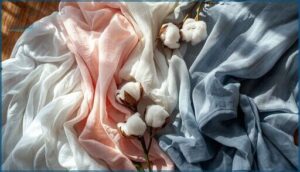
Cotton jersey tees and lightweight materials offer breathable materials you’ll actually want to wear when the mercury climbs. Linen shirts evaporate moisture faster than cotton, while chambray gives you casual style with high airflow.
Look for summer knits between 140 and 180 gsm, they balance fabric softness with cooling performance. Bamboo blends and Tencel blends improve moisture management without the weight.
Suiting Fabrics for Hot Weather
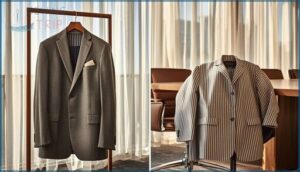
When you’re stuck in a boardroom at noon, breathable suits make all the difference. Tropical wool in 120s to 140s weights delivers fabric ventilation without sacrificing structure, while seersucker’s puckered weave creates airflow channels for exceptional heat management. Linen blends and cotton summer wool give you moisture control through open weaves that push sweat to the surface.
Here’s what works:
- Tropical wool – Compact weave with high-twist fibers for ventilation
- Seersucker – Puckered texture reduces cling, boosts airflow
- Linen blends – High porosity allows for rapid moisture evaporation
- Lightweight cotton (140s blend) – Comfortable drape, good breathability
- Silk-wool blends – Reflects heat while maintaining lightweight fabrics structure
Fabrics for Summer Accessories
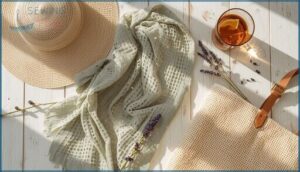
Your bag straps and hat brims need breathable clothing fibers just as much as your shirt does. Cotton poplin stays cool on belts, while mesh weaves in sun hats boost airflow without losing shape. Bamboo rayon adds silky comfort to scarves and neck gaiters, and linen blends in totes handle moisture fast.
| Accessory Type | Best Fabric Blends | Key Performance Feature |
|---|---|---|
| Summer Hats | Cotton voile, linen-poly | Mesh construction for ventilation |
| Scarves & Gaiters | Bamboo rayon, silk chiffon | Moisture-wicking natural fibers |
| Belts & Straps | Cotton poplin, breathable trims | Cool-touch surface in direct sun |
| Bags & Pouches | Linen blend, microfiber | Quick-dry cooling textiles |
Wicking finishes on headbands pull sweat to the surface, while eyelet embroidery in accessories materials creates perforations that improve summer clothing comfort without compromising style. Proper fabric care keeps these lightweight fabrics performing season after season.
Weave, Weight, and Finish: Impact on Coolness
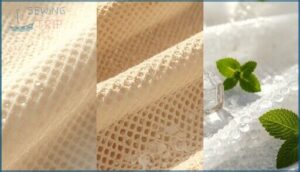
Not all lightweight fabrics are created equal in terms of keeping you cool. The way a fabric is woven, how much it weighs, and what finishing treatments it receives can make the difference between comfortable and clammy.
Here’s what actually matters when you’re trying to beat the heat.
Open Weave Fabrics (Voile, Muslin, Chiffon)
Think of open weave fabrics as your escape hatch from summer heat—voile, muslin, and chiffon let air flow through their loosely structured fibers like a gentle breeze. These breathable textures offer serious open weave benefits for hot days.
The benefits of these fabrics include:
- Fabric transparency creates natural ventilation without sacrificing style
- Weave structures in voile provide sheer yet sturdy breathable clothing
- Chiffon’s high-twist yarns deliver floating, airy drapes perfect for summer layering
- Lightweight fabrics made from natural fibers guarantee quick moisture evaporation
GSM and Fabric Thickness
GSM, or grams per square meter, gives you a direct thickness measurement of fabric density—a 120 GSM cotton feels airy and breathable, while 300 GSM fabric bulk offers heavier structure.
Lightweight fabrics around 80 to 150 GSM keep you coolest because fabric weight directly impacts airflow, and lower GSM variations mean less material trapping heat against your skin.
A deeper understanding of fabric GSM essentials can help you select materials with the ideal balance of comfort and durability for your wardrobe.
Finishes That Enhance Breathability
Breathable coatings aren’t just surface treatments—they fundamentally change how fabric technology interacts with your skin.
Moisture transport finishes use hydrophilic channels to pull sweat across lightweight natural fibers, while air permeable calendering creates microchannels that boost convective cooling.
Thermal regulation finishes with phase change materials can lower surface temperature by 2–5 degrees Celsius, and antimicrobial finishes keep breathability intact by blocking odor-causing bacteria without sealing the weave.
Choosing Fabrics for Different Summer Climates
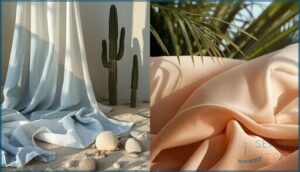
Not all summer heat is created equal, and the fabric that keeps you comfortable in Arizona’s desert won’t necessarily work in Florida’s sticky humidity.
Your climate dictates which fabric properties matter most, from moisture-wicking power to sun protection and quick-dry capabilities.
Here’s how to match your fabric choices to the specific challenges of your summer environment.
Dry Heat Vs. Humid Conditions
Your summer comfort hinges on one thing: how well your fabric manages sweat evaporation. In dry heat, evaporative cooling happens fast, so breathable, lightweight natural fibers like cotton and linen offer dry comfort and exceptional heat resistance.
Humid climates slow that process, raising the heat index, which means you’ll need moisture-wicking fabrics that prioritize thermal regulation over everything else.
Urban Heat Islands and Fabric Needs
Cities trap heat in concrete canyons and asphalt corridors, raising temperatures by 1 to 3°C and demanding smarter fabric innovation for city comfort.
Your best defense against urban heat stress combines thermal regulation with UV protection:
- Lightweight natural fibers with open weaves for exceptional breathability
- Moisture wicking blends to manage sweat during commutes
- Light-colored fabrics reflecting up to 20% more solar radiation
- Heat resistance materials with UPF 30-50 ratings
- Loose-fit garments enhancing airflow around your skin
Travel and Outdoor Activity Considerations
When you’re packing for the trail, your outdoor gear needs to pull double duty. Adventure wear and hiking apparel demand fabrics that wick moisture away from skin during climbs, dry within 2 to 6 hours after washing, and weigh just 60 to 120 grams per square meter for easy compression.
Travel fabrics with natural fibers resist odor through multi-day trips while maintaining breathability.
Sustainable and Eco-Friendly Summer Fabric Options

Choosing sustainable fabrics doesn’t mean sacrificing comfort when the temperature climbs. Today’s eco-friendly materials blend environmental responsibility with the breathability and moisture-wicking properties you need to stay cool.
Here’s a closer look at the top sustainable options that’ll keep you comfortable while treading lightly on the planet.
Organic Cotton and Hemp
When you choose organic cotton or hemp textiles, you’re supporting eco-friendly farming that skips synthetic pesticides and conserves water.
Hemp fibers bring natural strength and breathability to lightweight summer pieces, while organic cotton delivers softness that improves with every wash.
Blending these sustainable materials creates durable, wrinkle-resistant fabrics that keep you cool without compromise, proving natural fibers can handle your adventures.
Bamboo and Tencel Choices
Bamboo and Tencel deliver eco-friendly comfort through closed-loop fiber production that recycles solvents and reduces chemical waste.
You’ll appreciate how these lightweight fabrics combine moisture-wicking power with natural odor resistance, while blended performance versions add structure without sacrificing breathability.
Tencel’s softness retention means your summer pieces stay smooth through countless washes, and both materials dry faster than cotton, keeping your wardrobe rotation quick and your fabric care routine simple.
Benefits of Recycled Materials
Recycled fiber brings waste reduction and energy savings straight to your summer wardrobe, cutting production energy by up to 50 percent compared to virgin polyester.
These eco-friendly fabrics maintain the breathable, moisture-wicking performance you need in hot weather while supporting material reuse across multiple cycles. Recycled polyester blends offer comparable strength and comfort to conventional options, proving sustainable fabrics don’t compromise on durability or feel.
Caring for Lightweight Summer Fabrics
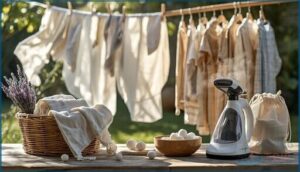
Your summer wardrobe deserves more than a toss in the washer and a prayer. Lightweight fabrics can be surprisingly resilient, but they need the right care to maintain their breathability, softness, and that fresh-out-of-the-store drape you love.
Here’s how to keep your favorite warm-weather pieces looking sharp and performing at their best, season after season.
Washing and Drying Tips
You’ll protect your lightweight summer fabrics best when you embrace cold water washing, which saves energy and prevents shrinkage. Use gentle detergents on a delicate cycle care setting, skip the fabric softener to maintain breathability, and opt for air drying tips like flat surfaces or hangers.
These laundry tips guarantee proper fabric maintenance while keeping your breathable materials performing at their peak through countless wears.
Ironing and Wrinkle Prevention
Set your iron to low heat or medium heat control when smoothing breathable, lightweight natural fibers like cotton and linen. Start with the collar and cuffs using steady steam settings, then work across the garment in sections to eliminate each wrinkle.
For stubborn creases, lightly dampen the fabric before applying heat—this fabric care technique speeds up wrinkle removal while protecting delicate weaving.
Storage for Seasonal Longevity
Between summer seasons, you’ll want climate control to keep your lightweight fabrics fresh—store them in cool spaces around 50 to 65 degrees with moderate humidity.
Use breathable garment bags and acid-free tissue for fabric folding, preventing permanent creases in your seasonal clothing. These storage solutions protect delicate weaving while moisture management prevents mildew, extending your textile maintenance efforts and fabric care investment for years.
Frequently Asked Questions (FAQs)
What is the lightest material for hot weather?
Silk fibers dominate when you’re chasing the lightest option, thanks to their ultra-thin filaments and cool-touch surface.
Cotton voile and breathable knits follow closely, while lightweight blends offer durability without sacrificing comfort.
Which fabric is soft and best for summer?
Cotton and bamboo fabric lead your search for Soft Fabric Options because natural fibers deliver outstanding breathability while staying gentle on skin.
Linen also ranks high, though its texture softens beautifully after several washes.
What to wear in summer if overweight?
When comfort matters most, you’ll want breathable basics in natural fibers like cotton or linen.
Choose comfortable silhouettes with relaxed fits—lightweight summer clothing in soft, moisture-wicking fabrics keeps you cool without clinging.
Can lightweight fabrics provide adequate sun protection?
Yes, when tightly woven or treated with UV blockers, lightweight materials can achieve UPF ratings of 30 to 50+, offering excellent sun blocking while staying breathable for summer clothing.
How do fabric colors affect summer heat absorption?
Ever noticed how your white tee feels cooler than a black one? Color reflectivity matters—lighter fabric shades bounce sunlight away, reducing heat absorption and boosting thermal comfort, while darker tones trap warmth fast.
Are lightweight fabrics suitable for professional work environments?
Absolutely—lightweight fabrics like tropical wool blends, breathable cotton shirting, and performance weaves deliver professional breathability without sacrificing polish, keeping you cool during meetings while maintaining corporate attire standards and workplace fabric expectations for summer suiting.
What causes pilling in summer fabrics over time?
Pilling happens when fiber friction from wear loosens short ends that ball up on fabric surfaces.
Surface roughness, yarn structure weaknesses, and fabric fatigue from washing accelerate pill formation in breathable, lightweight natural fibers.
Do lightweight fabrics offer privacy and opacity concerns?
Fabric transparency can feel like a betrayal when you’re caught in bright sunlight.
Lightweight materials often show sheerness levels that raise privacy concerns, so opacity tests and visible linings become essential parts of breathable fabric selection for natural fibers.
Conclusion
Your summer wardrobe shouldn’t become a personal sauna every time temperatures rise. The right lightweight fabric for summer transforms your relationship with heat, letting you move freely without fighting moisture-soaked garments that cling and chafe.
Whether you choose centuries-old natural fibers or modern synthetics, understanding how materials breathe, wick, and endure gives you control over comfort. Smart fabric choices paired with proper care mean summer’s intensity becomes background noise instead of the main event.
- https://fbargainsgalore.co.uk/what-you-need-to-know-about-cotton/
- https://coreclassic.com/blogs/news/the-ultimate-guide-to-fabric-gsm
- https://modaknits.com/pima-cotton-fabric/
- https://fabriclore.com/blogs/fashion-business-lifestyle-trends/need-cotton-fabrics-in-different-gsm-qualities-for-your-apparel-line-1
- https://cheapfabrics.co.uk/blogs/blog/why-fabric-weight-matters-and-how-to-understand-gsm