This site is supported by our readers. We may earn a commission, at no cost to you, if you purchase through links.
Most DIY projects fail at the first step. You measure once, cut twice, and waste materials because your tape measure gave you a bad reading or you misread the markings. A reliable tape measure eliminates these costly mistakes.
Look for a blade lock that holds your measurement in place while you mark the cut. Choose clear dual scales that show both imperial and metric units without squinting. Pick a tape length that matches your projects—25 feet accommodates most room dimensions while compact 16-foot models fit tight spaces.
The right measuring tape turns guesswork into precision and builds your confidence from your first cut to your final assembly.
Table Of Contents
- Key Takeaways
- Choosing The Right Measuring Tape for Beginners
- How to Read Imperial and Metric Tape Markings
- Step-by-Step Guide to Accurate Measuring
- Top 10 Measuring Tapes for Beginners
- 1. Quickdraw Self Marking Tape Measure
- 2. Mr Pen Retractable Steel Tape Measure
- 3. Dewalt Atomic Compact Tape Measure
- 4. Brightline High Contrast Tape Measure
- 5. Craftsman Self Locking Tape Measure
- 6. GDMINLO Soft Tape Measure
- 7. iBayam Soft Measuring Tape Set
- 8. Metal Retractable Easy Read Tape Measure
- 9. Amazon Basics Self Locking Tape Measure
- 10. Duratech Magnetic Measuring Tape
- Essential Tips for Beginner Measuring Success
- Frequently Asked Questions (FAQs)
- Conclusion
Key Takeaways
- A reliable tape measure with a blade lock, clear dual scales, and appropriate length (25 feet for rooms, 16 feet for tight spaces) eliminates costly measurement errors that cause most DIY projects to fail at the first step.
- Read tape measures accurately by understanding that imperial tapes divide inches into halves, quarters, and sixteenths, while metric tapes use base-ten with 10 millimeters per centimeter, and always align the hook flush at your starting point to prevent parallax errors.
- Prevent measurement mistakes by keeping your eye level with the tape, taking two readings and averaging them, checking hook calibration regularly, and avoiding over-stretching the blade, which skews accuracy by fractions.
- Rigid steel tape measures work best for beginners because the blade stands out 7-10 feet without support for solo measuring, while flexible tapes handle curves and body measurements where rigid tapes fail.
Choosing The Right Measuring Tape for Beginners
You can’t measure twice and cut once without the right tape measure in your hand. Your first measuring tape needs to match your actual projects and skill level, not just look professional in the toolbox.
For sewers working with smaller dimensions, sewing pattern adjustments for petite frames require the same careful measuring approach to ensure accurate fit modifications.
Your first tape measure should match your actual projects and skill level, not just look professional in the toolbox
Here’s what separates a beginner-friendly tape from one that’ll frustrate you on every job.
Key Features to Look for in Beginner Tapes
Your first measuring tape should make the job easier, not harder. Look for these features to guarantee accurate measurements every time:
- Blade lock that prevents accidental retraction during use
- Clear metric scale alongside imperial markings for adaptable measurement tools
- Hardened steel blade that resists kinking over repeated tape measure usage
- Ergonomic design with a non-slip case for comfortable handling
Choose a tape material with magnetic coating to resist wear on metal surfaces.
Differences Between Rigid and Flexible Tapes
Rigid tape measure blades resist bending when extended across long distances. This tape material stays straight up to 10 feet without support, letting you measure ceiling heights and wide openings alone.
Flexible tape measures bend easily around curves and corners. Use flexible benefits for body measurements and fabric work where rigid uses would fail. Both measurement tools serve different measuring and marking needs based on wear durability and adhesion types required for your project.
Recommended Tape Lengths for Home and Sewing Projects
For home projects, you’ll want a 25-foot tape to span most room widths without repositioning.
A 16-foot compact tape option manages tight spaces and quick checks efficiently. Keep a second shorter tape around 6 to 12 feet for DIY measurement tasks requiring precision in confined areas.
Sewing project planning calls for flexible tape benefits in 60 to 120-inch lengths for garment hemming and fabric layout.
For best results, remember that choosing the right tape type is vital for different measurement and home improvement needs.
How to Read Imperial and Metric Tape Markings
Reading a tape measure looks simple until you actually try to make sense of all those lines and numbers staring back at you.
The key is understanding what each marking represents and how the two main systems—imperial and metric—organize their measurements differently. Let’s break down exactly what you’re looking at so you can read any tape measure with confidence.
Understanding Inches, Fractions, and Metric Units
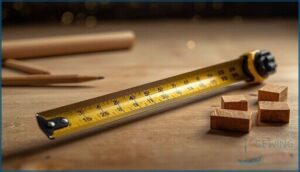
Your tape measure speaks two languages: Imperial Units with Inches and fractions, or Metric Units with centimeters and millimeters. Master these Fraction Basics and Unit Conversions to gain Measurement Precision.
- Imperial Systems divide inches into halves (0.5″), quarters (0.25″), and sixteenths
- Metric Equivalents use base-ten: 10 millimeters per centimeter
- One inch equals exactly 2.54 centimeters for conversions
- Your Measuring Tape shows both systems on opposite edges
Identifying Key Line Markings and Numbers
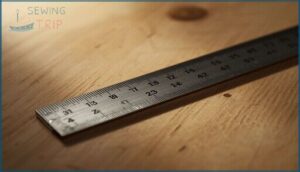
Your Measuring Tape shows longest marks for whole Inches, followed by progressively shorter lines for halves, quarters, and eighths. These Line Markings guide your Measurement Accuracy across the blade.
On metric tapes, numbered centimeter marks appear boldest, with ten smaller millimeter ticks between each. High-contrast Scale Readings prevent parallax errors, so angle your Tape Measure to reduce glare during critical Metric Conversions and precise Tape Measure Basics work.
Tips for Switching Between Imperial and Metric
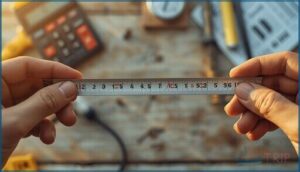
When switching between the Imperial System and Metric System, multiply your measurement by 25.4 to convert inches to millimeters. Many Dual Units tapes print both scales for instant Conversion Charts reference.
- Use bold centimeter marks as anchor points before counting millimeter divisions
- Round metric readings to the nearest 0.5 cm for faster Unit Conversion
- Verify Scale Calibration against a known standard to maintain Measurement Precision
- Keep a calculator handy for complex Tape Measure conversions during layout work
Step-by-Step Guide to Accurate Measuring
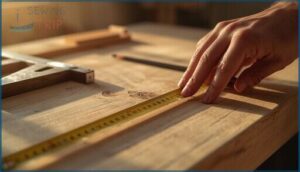
Getting accurate measurements isn’t about fancy tools—it’s about using what you have the right way. You’ll avoid most common errors by following a few simple steps every time you measure.
Let’s break down the process so your measurements come out precise from the start.
Aligning The Tape and Starting Measurements
Every accurate measurement starts with proper tape alignment and a clean zero mark. Place your measuring tape with the hook positioned exactly at the starting edge. Hold it firmly to prevent any slippage that leads to measurement errors.
Pull the blade straight toward the end point without twisting or bending. Use straight edges or a level as guides to keep the tape parallel to your surface. Check that the zero mark sits flush against your reference point.
This hook placement determines your precision measurement accuracy. When you read a tape measure correctly from the start, everything else falls into place.
Measuring Curves, Corners, and Tight Spaces
Curves and corners challenge even experienced builders, but the right approach keeps your precision measurement on track. Flexible measuring tape bends around radiused edges without kinking, while a contour gauge copies irregular profiles directly onto your material.
- Press the tape along the curve and mark key arc calculation points
- Use a framing square in corners to establish true right angles
- Bend flexible tape lightly in tight space areas without forcing it
- Transfer curves with spiling techniques for exact corner fitting
- Always double-check measurements against your reference before cutting
These construction tools turn tricky spots into routine tasks.
Top 10 Measuring Tapes for Beginners
You need a tape measure that won’t confuse you while you’re trying to get work done. The right tool makes measuring straightforward with clear markings and a design that fits your hand.
Here are ten beginner-friendly options that deliver accuracy without the learning curve.
1. Quickdraw Self Marking Tape Measure
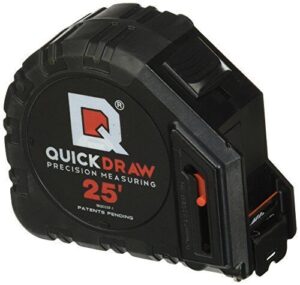
You’ll spend less time juggling tools with the Quickdraw Self Marking Tape. This 25-foot nylon-coated tape has a built-in graphite marker that loads enough material for thousands of marks per refill.
Press the marking wheel against your surface and move it side to side. The Tru View indicator lines up where the mark will hit.
You’ll get clear marks on wood and drywall without switching between tape and pencil. The eight-foot standout keeps the blade rigid for overhead work.
| Best For | DIYers and contractors who want to mark measurements quickly without switching between a tape measure and pencil. |
|---|---|
| Length | 25 feet |
| Material | Alloy Steel |
| Color | Black |
| Measurement Type | Imperial |
| Retractable | Yes |
| Weight | Not specified |
| Additional Features |
|
- Built-in graphite marker eliminates the need to carry a separate pencil or marking tool
- 8-foot standout and durable nylon coating handle tough job site conditions
- Tru View indicator shows exactly where your mark will land before you make it
- Requires firm pressure to mark, which can leave dents in softer woods
- May not produce clean, defined lines on all materials like drywall and lumber
- Graphite refill storage design could be more user-friendly
2. Mr Pen Retractable Steel Tape Measure
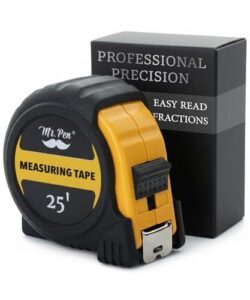
You need a tape that won’t quit after a few drops. The Mr Pen Retractable Steel Tape comes as a two-pack with 25-foot blades built for rough handling. Each tape features a rubberized case that absorbs impact when it hits concrete or tile.
Lock the blade with the thumb button when you’re marking cut lines. The fractional markings print clearly on the steel for quick reads. Clip one tape to your belt and keep the second in your truck toolbox.
| Best For | DIYers, contractors, and tradespeople who need durable tape measures that can handle job site abuse and want a backup on hand. |
|---|---|
| Length | 25 feet |
| Material | Alloy Steel |
| Color | Yellow |
| Measurement Type | Imperial/Metric |
| Retractable | Yes |
| Weight | 14.4 ounces |
| Additional Features |
|
- Comes as a two-pack so you’ve got a spare when you need it
- Rubberized case takes a beating without breaking
- Clear fractional markings make it easy to read measurements quickly
- Heavier and bulkier than compact models at 14.4 ounces each
- Some users reported missing metric measurements despite product claims
- No extra features like magnetic tips or built-in levels
3. Dewalt Atomic Compact Tape Measure
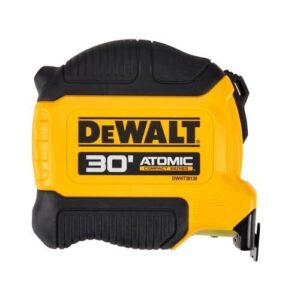
The Dewalt Atomic Compact Tape gives you a 20 percent smaller grip without sacrificing reach. Its 1.125-inch blade extends 30 feet and stays rigid for overhead measurements.
Use the integrated finger brake to slow blade retraction when you’re marking precise cuts. The fractional graphics print bold on the coated blade so you can read sixteenths fast in dim spaces.
This tape weighs one pound and fits tight tool belts better than standard models. Tighten the hook rivets occasionally to maintain accuracy on inside dimensions.
| Best For | Professionals and DIYers who need a compact 30-foot tape measure that’s easy to control and read in tight spaces or low light. |
|---|---|
| Length | 30 feet |
| Material | Steel |
| Color | Black, Yellow |
| Measurement Type | Imperial |
| Retractable | Yes |
| Weight | 1 pound |
| Additional Features |
|
- 20% smaller grip makes it easier to handle and fits better on tool belts
- Integrated finger brake gives you better control when retracting the blade
- Bold fractional markings on the durable coated blade are easy to read even in dim lighting
- Heavier than shorter tape measures due to the 30-foot length
- Only shows Imperial measurements, no metric option
- Hook can loosen over time and may need occasional tightening to stay accurate
4. Brightline High Contrast Tape Measure
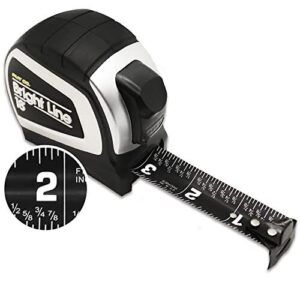
The Brightline High Contrast Tape solves visibility problems with white numbers printed on a black nylon-coated blade. You’ll read fractions clearly in basements and crawl spaces where standard tapes fade into shadows.
This 18-foot steel tape features dual-sided markings with vertical orientation underneath for overhead work. The auto-lock button holds your measurement without finger pressure, and the anti-pinch mechanism protects your thumb during retraction.
Expect to pay more for the high-contrast design, but you’ll cut measurement errors when light is scarce.
| Best For | DIYers and contractors who work in dim garages, basements, or job sites where standard tape measures are hard to read. |
|---|---|
| Length | 18 feet |
| Material | Steel |
| Color | Black |
| Measurement Type | Imperial |
| Retractable | Yes |
| Weight | 10.8 ounces |
| Additional Features |
|
- White-on-black contrast makes numbers pop in low light where regular tapes disappear
- Dual-sided markings with vertical text underneath help when you’re measuring overhead
- Auto-lock holds measurements hands-free so you don’t need to keep pressure on the button
- Heavier than most tape measures at nearly 11 ounces, which adds fatigue during long projects
- Costs more than standard tapes due to the specialized high-contrast design
- Only shows imperial measurements, so it won’t work if you need metric
5. Craftsman Self Locking Tape Measure
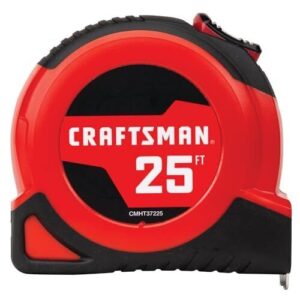
Craftsman’s 25-foot self-locking tape puts control in one hand. The blade locks automatically when you extend it, so you won’t need your other hand pinning measurements in place while you mark lumber or check wall spacing.
Push the thumb button to release the blade smoothly back into its red rubber case. Fraction markings run the full length for quick reads during framing and furniture builds. The accuracy holds to ±1/16 inch per 10 feet, tight enough for trim work and cabinet installation.
| Best For | DIYers and contractors who need quick, one-handed measurements for framing, furniture assembly, and general carpentry projects up to 25 feet. |
|---|---|
| Length | 25 feet |
| Material | Steel |
| Color | Red |
| Measurement Type | Imperial |
| Retractable | Yes |
| Weight | 0.88 ounces |
| Additional Features |
|
- Self-locking blade lets you take measurements solo without needing a second hand to hold the tape in place
- Fraction markings along the full 25-foot blade make it easy to read measurements for woodworking and construction
- Rubber grip and belt clip design makes it durable enough for job sites and convenient to carry
- No metric markings limits usefulness if you work with imported materials or need centimeter measurements
- Locking mechanism can feel stiff and hard to release for some users
- Fraction markings aren’t precise enough for detailed work under half an inch
6. GDMINLO Soft Tape Measure
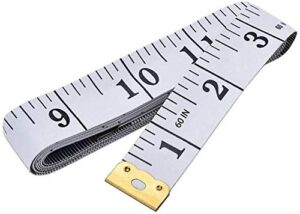
GDMINLO’s 60-inch soft tape wraps around curves your rigid metal tapes can’t follow. The flexible vinyl stretches across shoulders, hips, and fabric without kinking or creasing, then you flip it over to check metric on the reverse side.
White tape with black markings stays easy to read under home lighting, while metal end tabs lock your zero point steady during body measurements and pattern work. At under half an ounce, it slips into your sewing kit without adding bulk or weight.
| Best For | Sewers, tailors, and crafters who need flexible measurement for curved surfaces like body measurements, fabric draping, and pattern-making projects. |
|---|---|
| Length | 60 inches |
| Material | Vinyl |
| Color | White |
| Measurement Type | Imperial/Metric |
| Retractable | No |
| Weight | 0.317 ounces |
| Additional Features |
|
- Double-sided inches and centimeters let you switch between measurement systems without grabbing a second tape
- Flexible vinyl bends around body curves and fabric without the kinking you get from metal tapes
- Metal end tabs prevent fraying and keep your zero point from slipping during measurements
- Lacks a retractable mechanism, so you’ll need to manually fold and store it after each use
- May lose its shape when stretched for longer measurements or repeated use
- Some customers received tapes that arrived dirty or appeared worn out of the package
7. iBayam Soft Measuring Tape Set
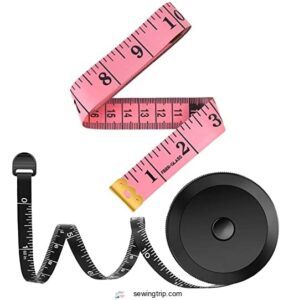
Your 2-pack includes one pink soft tape and one black retractable model, both running 60 inches with double-sided inch and centimeter scales. The soft vinyl flexes around body curves for sewing projects and clothing measurements, while clear black-on-white markings stay readable under home lighting.
At 20 grams total weight, the set slips into your pocket for tailoring jobs or weight tracking sessions. The retractable version uses a smooth push-button mechanism, though you’ll want to avoid dropping it to prevent internal damage.
| Best For | Sewers, tailors, and anyone tracking body measurements who needs a lightweight, portable set with both flexible and retractable options. |
|---|---|
| Length | 60 inches |
| Material | Soft Tape |
| Color | Pink, Black |
| Measurement Type | Imperial/Metric |
| Retractable | Yes |
| Weight | 20 grams |
| Additional Features |
|
- Dual tape design gives you flexibility for curved surfaces and convenience with push-button retraction
- Double-sided scales in inches and centimeters eliminate conversion guesswork
- Ultra-light at 20 grams, making them easy to carry in a pocket or sewing kit
- Retractable mechanism can break if dropped, limiting durability
- Build quality matches the budget price point rather than premium alternatives
- Similar products may offer better value at comparable or lower prices
8. Metal Retractable Easy Read Tape Measure
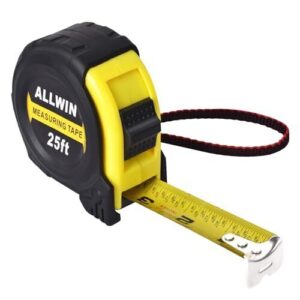
Stainless steel construction with clear fraction printing makes this 3-meter tape a solid choice for precision carpentry and basic sewing. You get dual scales—metric along one edge and imperial fractions along the other—so switching units happens without fumbling.
The 19-millimeter blade width stays flat on workbenches, while high-contrast numbers cut through poor workshop lighting. A rust-resistant coating manages humid basements, and the reinforced metal housing survives drops.
The controlled retraction prevents snap-back injuries, and the magnetic end hook grips metal surfaces during rough layout work.
| Best For | DIY enthusiasts and professional tradespeople who need accurate dual-scale measurements for carpentry, metalwork, and light sewing projects in varied lighting conditions. |
|---|---|
| Length | 25 feet |
| Material | Steel |
| Color | Yellow |
| Measurement Type | Imperial/Metric |
| Retractable | Yes |
| Weight | 12 ounces |
| Additional Features |
|
- Clear fraction markings and high-contrast numbers make readings easy even in dim workshops or basements
- Durable construction with rust-resistant coating and shock-absorbing rubber casing handles job site wear and moisture
- Magnetic end hook and controlled retraction provide safer, hands-free measuring on metal surfaces
- 1-inch blade width may be too narrow for some users who prefer wider tapes for stability over longer spans
- 25-foot length limits usefulness for larger construction projects requiring extended measurements
- At 12 ounces, it’s heavier than basic tape measures, which could cause fatigue during all-day use
9. Amazon Basics Self Locking Tape Measure
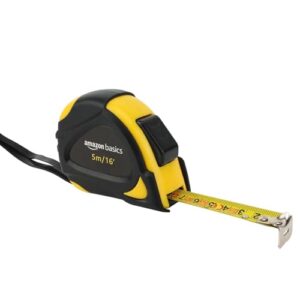
A push-button lock holds your blade at any extension, letting you mark cuts with one hand while gripping lumber in the other. This 16-foot tape balances MID accuracy with budget-friendly construction—heat-treated spring steel retracts smoothly, and the anti-skid rubber grip survives workbench tumbles.
Dual scales run the full length, though the metric side skips meter marks. The yellow housing stands out in cluttered tool bags. Hook alignment stays true for inside and outside measurements, giving you repeatable results on framing and trim work.
| Best For | DIYers and homeowners who need reliable measurements for furniture assembly, home improvement projects, and general household tasks without spending professional-grade money. |
|---|---|
| Length | 16 feet |
| Material | Steel |
| Color | Black, Yellow |
| Measurement Type | Imperial/Metric |
| Retractable | Yes |
| Weight | 7.04 ounces |
| Additional Features |
|
- Push-button lock lets you measure one-handed while holding materials in place
- Dual inch and metric scales cover most measuring needs for home projects
- Rubber grip and belt clip make it easy to carry and survive drops on concrete or wood floors
- Locking mechanism fails on some units according to user reports
- Metric side missing meter marks makes quick conversions harder
- Build quality feels more consumer-grade than contractor-tough for daily heavy use
10. Duratech Magnetic Measuring Tape
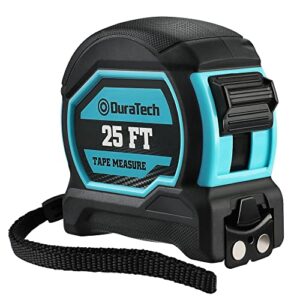
A magnetic hook grabs metal studs and beams without a second hand, letting you pull 25 feet of blade across framing bays solo. Carbon steel with nylon coating resists workshop abrasion, while the thumb lock clicks firmly at any extension—no blade creep when you transfer marks to lumber.
Fractional graduations run to 1/16 inch on both edges, readable in dim corners thanks to high-contrast numerals. The 7/8-inch blade stays rigid past seven feet, supporting layout work on drywall and trim without buckling mid-span.
| Best For | DIYers and contractors who work alone on framing, trim, or layout jobs and need a tape that sticks to metal surfaces while staying stiff enough for long pulls. |
|---|---|
| Length | 25 feet |
| Material | Carbon Steel |
| Color | Black |
| Measurement Type | Imperial |
| Retractable | Yes |
| Weight | 0.41 kilograms |
| Additional Features |
|
- Magnetic hook lets you measure solo by grabbing steel studs or beams without help
- Nylon-coated carbon steel blade resists scratches and workshop wear
- Stays rigid past 7 feet so you can stretch it across walls without it folding
- Blade can bend if you extend it much beyond 7 feet without support
- Lanyard isn’t removable unless you cut it, and it sometimes catches on the blade
- Magnet might not hold well on heavier metal objects or large beams
Essential Tips for Beginner Measuring Success
You’ve got the right tape measure and you know how to read the markings. Now it’s time to master the techniques that separate accurate measurements from frustrating mistakes.
These three essential areas will keep your projects on track and your tape measure working smoothly for years.
Preventing Common Measuring Errors
Human error trips up even seasoned hands, so keep your eye level with the tape measure to dodge parallax error. Pull your measuring tape snug but don’t overstretch it—tape stretching skews accuracy by fractions.
Temperature swings shift metal tapes, so check environmental factors before cutting. Always take two readings for measurement calibration, and average them to lock in precision and catch drift before it costs you material.
Consider the importance of maintaining data validation practices to further reduce the risk of measurement errors.
Maintaining Your Tape Measure for Longevity
Think of your measuring tape like a strong handshake; strong, clean, and reliable. Wipe the blade and store it dry to prevent corrosion.
Check hook calibration often for measurement accuracy. Use gentle reel lubrication so the tape retracts smoothly.
Good tape storage keeps your tape measure from kinking—essential for any set of handyman tools built on maintenance and precision.
Practical Measuring Hacks for Sewing and DIY
Beyond basic maintenance, smart tape measure tricks make every DIY project and sewing hack more efficient. Pair your measuring tape with a clear ruler for transferring curved lines in DIY home improvement work.
Double check measurements with a second tape to catch misreads before cutting. For precision tips, fold and press fabric to simulate actual construction dimensions during flexible measuring tasks.
Frequently Asked Questions (FAQs)
Which measuring tape type is best for a beginner?
A retractable steel tape measure delivers the sweet spot for newcomers: sharp blade standout beats flimsy fabric, clear numbers reduce errors, and a locking button prevents frustrating recoil during your first DIY home improvement tasks.
How do you measure inside corners accurately?
Press your tape measure flat against one wall and pivot the blade to touch the opposite corner. Read the measurement directly at the inner corner line for accurate inside dimensions without gaps.
What causes tape measures to retract poorly?
Like a wound clock losing its power, a tape measure slows when its spring weakens from fatigue or grit buildup.
Housing wear, blade damage, and debris inside the cassette all cause retraction issues without proper maintenance tips.
Can damaged tape measures still measure accurately?
A damaged measuring tape can produce rough readings, but blade damage, hook accuracy issues, and tape wear compromise precision measurement.
Bent hooks or kinks introduce measurement errors that make the tape unreliable for work requiring accuracy measurement.
How do you calibrate a new tape measure?
Most carpenters test a new tape measure against a trusted ruler to verify accuracy.
Inspect the hook for slight play, check zero alignment on a flat reference, and adjust the hook tab if readings drift beyond acceptable tolerances.
Whats the difference between class I and II tapes?
Class I tapes offer tighter tolerance standards with plus or minus 1 to 2 millimeters error over 10 meters. Class II tapes allow wider margins at 2 to 3 millimeters, suitable for general construction tools.
Conclusion
A tape measure is your foundation stone—every cut, every corner, and every joint depends on it.
You now understand how to read markings, choose the right length, and measure accurately in tight spaces. The measuring tapes for beginners we’ve covered deliver reliable readings without complex features that create confusion.
Lock your blade, align your hook, and mark your measurements with confidence. Your precision starts here.