This site is supported by our readers. We may earn a commission, at no cost to you, if you purchase through links.

Your first draping assignment reveals a harsh truth: that worn tape measure from your high school sewing kit can throw off an entire garment’s fit. One-eighth inch of stretch compounds across bust, waist, and hip measurements, transforming a perfectly drafted pattern into something unwearable.
Fashion design programs demand precision tools, not approximation. Professional measuring tapes for fashion design students deliver non-stretch accuracy, dual-scale markings, and fabric-friendly edges that protect your muslins and final pieces.
The right tape measure becomes an extension of your hand—flexible enough for body curves, rigid enough for pattern work, readable enough for quick checks under studio lighting.
Table Of Contents
- Key Takeaways
- Essential Features of Measuring Tapes for Students
- Types of Measuring Tapes Used in Fashion Design
- Benefits of Quality Measuring Tapes in Fashion Education
- Top 5 Measuring Tapes for Fashion Design Students
- How to Choose The Right Measuring Tape
- Best Practices for Accurate Measurement
- Caring for and Maintaining Measuring Tapes
- Frequently Asked Questions (FAQs)
- Conclusion
Key Takeaways
- A stretched or worn measuring tape compounds errors across multiple measurements, turning precise patterns into unwearable garments—invest in non-stretch fiberglass or vinyl-coated tapes with dual metric and imperial scales for studio-grade accuracy.
- Bold, high-contrast markings and flexible yet snag-free edges protect delicate fabrics while maintaining readability under studio lighting, making your tape both a precision instrument and a fabric-safe tool.
- Proper measurement technique matters more than the tape itself—align zero points exactly, keep the tape flat and parallel to the floor on body curves, and always double-check critical bust, waist, and hip readings to catch errors before cutting fabric.
- Replace your measuring tape every one to two years or immediately when you notice faded markings, visible kinks, or measurement drift, because accuracy degradation is the invisible mistake that sabotages every garment you construct.
Essential Features of Measuring Tapes for Students
Your measuring tape is the backbone of every garment you’ll create. You need specific features that won’t fail during body measurements or pattern drafting.
Beginners often overlook tape flexibility and clear markings, but mastering these fundamentals in your early sewing lessons prevents costly fabric mistakes later.
Here are the five essential features your tape must have.
Dual Metric and Imperial Scales
Dual metric and imperial scales put centimeters and inches on one tape, so you don’t juggle separate tools. This means you read a 34 inch bust as 86 centimeters at the same point—no conversion chart needed.
Dual scale benefits include:
- Reading either unit without flipping tools
- Converting measurements instantly during drafting
- Following patterns written in different systems
- Documenting body charts in both inches and centimeters
- Reducing unit mix‑ups with one physical reference
Experts recommend looking at key accuracy and durability features when choosing a tape for design work.
Non-Stretch Materials for Accuracy
Non‑stretch fiberglass cores lock your measurements in place—no drift after ten readings or twenty. Polyester tape calibration resists elongation under tension, so your 38 inch hip stays 38 inches during draping.
Fiber analysis confirms that woven polypropylene strips maintain metric scale accuracy across humidity swings and repeated use. Durability factors like abrasion‑resistant coatings prevent wear that skews fashion measurement over time, keeping your flexible strip reliable semester after semester.
To better understand the importance of elasticity and durability for garment accuracy, explore the key characteristics of high elasticity stretch materials.
Bold, Easy-to-Read Markings
Once your tape holds its shape, marking legibility determines whether you read 37 or 38 inches under studio lights. Bold ink with high contrast numerals—4 mm tall digits on white backing—lets you capture measurements in seconds:
- Metric scale shows centimeter marks every 1 cm with millimeter ticks
- Imperial side uses fractions marked every 1/8 inch for pattern work
- Visual hierarchy emphasizes every 10 cm and 1 inch for fast sectioning
- Ink durability resists smudging when pressed with pins or chalk
- Reading clarity remains sharp through frequent rolling and unrolling
Heat resistant prints maintain measurement accuracy through endless sewing sessions.
Flexible and Snag-Free Edges
Your tape glides over silk bias cuts and around necklines without catching threads when edges stay rounded and pliable. Smooth edge profiles prevent snagging delicate fabric during draping sessions.
Soft flexible measuring tape bends around curves while flexible designs resist kinking at fold points. Snag prevention matters—edge materials like coated fiberglass maintain tape durability through countless measurements.
Fashion measuring tapes with polished finishes protect your samples while delivering precision every tailor tape demands.
Convenient Storage Options
Beyond the measuring tape itself, storage determines whether your tools survive studio chaos or end up tangled in your bag. Snapback case designs protect retractable measuring tape from dust while soft roll form options slip into portable boxes or drawer inserts.
Clip organizers attach flexible measuring tape to your apron. Hanging racks mount near workstations. Rolling carts keep backup tools accessible during critiques.
Types of Measuring Tapes Used in Fashion Design
Fashion design students work with four main types of measuring tapes. Each type fulfills specific tasks in your studio workflow.
Understanding these categories helps you stock your toolkit with the right tools for pattern work, draping, and body measurements.
Soft Ruler Measuring Tapes

Grab a fabric-core tape with a vinyl coating—you’ll shape around curves without crimping delicate textiles. Look for bold millimeter and inch markings printed on both sides.
A 150-centimeter length accommodates most body and pattern work. Choose a soft roll form that tucks into your organizer without tangling.
Confirm the edge is reinforced to resist fraying during repeated draping and measuring sessions.
Retractable Measuring Tapes
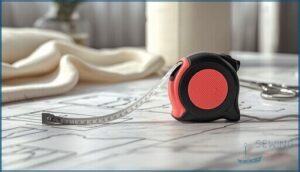
A spring-loaded reel and locking latch give you one-handed control when you’re draping forms or checking pattern blocks. Retractable measuring tapes pair a flexible steel or fiberglass blade with anti-fade markings for consistent reads.
- Ergonomic design: Textured housing prevents slipping during quick measurements.
- Blade materials: Polymer coating resists rust and wear.
- Durability features: Sealed mechanism blocks lint intrusion.
Double-Scale Measuring Tapes
When your project demands smooth scale conversion between metric and imperial units, you need a measuring tape that eliminates guesswork. Fashion measuring tapes with dual readouts display both inches scale and centimeters on the same blade.
Precision engineering ensures tape calibration stays aligned across both systems. Flexible designs bend with your fabric while maintaining measurement accuracy.
You work faster when every number sits exactly where you expect it.
Heavy-Duty and Vinyl Options

Vinyl tape measures stand up to the daily grind of studio work. Polyvinyl construction with fiber backing resists tears when you’re draping muslin or pinning patterns. The rubberized edge glides over delicate silk without snagging, while reinforced cores hold their zero point through hundreds of measurements.
- Heat-bonded wear layers protect markings from classroom solvents and water
- Rounded edges reduce wrist fatigue during marathon fitting sessions
- Retractable mechanisms lock tight to prevent tape creep mid-drape
- Clear dual-scale markings stay legible after months of bending and rolling
Benefits of Quality Measuring Tapes in Fashion Education

A quality measuring tape isn’t just another tool in your kit—it’s the foundation of everything you’ll build. The right tape delivers accuracy that transforms your measurements into garments that actually fit.
Here’s what a professional-grade measuring tape brings to your fashion education.
Accurate Body and Pattern Measurements
Quality measuring tapes eliminate measurement errors that sabotage pattern accuracy and garment fitting. Fashion measuring tapes don’t lie; sloppy ones do.
When you measure body proportions with a non-stretch tape, you capture precise body measurements that align with sizing standards. This precision crafting and measurement foundation ensures your textile measurement and calculation translate into patterns that fit real bodies—not approximations.
Versatility for Sewing and Crafting
One flexible tape manages body fits, fabric yardage, seam allowances, and craft measurement without tool swaps. These multi-purpose fashion measuring tapes move from flat pattern work to fitting a dress form in seconds.
You measure a bustline, then check quilting blocks or tote bag panels with the same sewing tools. They also size embroidery hoops, hat brims, and DIY projects like cushion covers—making sewing and crafting tools overlap seamlessly across garment construction and home décor assignments.
Enhancing Precision in Garment Construction
A reliable measuring tape locks down the numbers that control every seam, dart, and hem in fashion design and pattern making. Fabric tension stays consistent when you check each dimension twice. Pattern fitting improves because your garment measurement doesn’t drift.
- Align grain lines within 1/8 inch to prevent skew
- Mark seam allowances at ¼ inch for uniform assembly
- Verify body blocks before cutting final fabric
- Record measurements to build repeatable precision crafting standards
Top 5 Measuring Tapes for Fashion Design Students
You need the right measuring tape to build precision into every pattern and garment.
The five options below deliver accuracy, durability, and ease of use for studio work and draping sessions.
Each tape earns its place through proven performance in fashion education settings.
1. iBayam Double Sided Measuring Tape
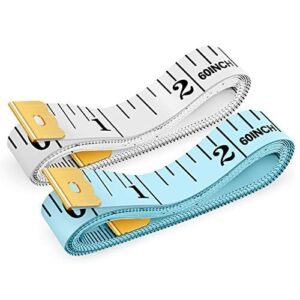
The iBayam Double Sided Measuring Tape delivers 60 inches of measurement range in a pocket-sized format. You get both inch and centimeter scales on opposing sides. The tape uses bold black markings on a light background. Read measurements without flipping.
The fabric-like vinyl construction won’t stretch during repeated use. The smooth edges won’t snag delicate silks or wovens. Wrap it around armholes and sleeve caps with confidence. The tape measures 1/4 inch wide.
Carry it in your apron pocket or sewing kit.
| Best For | Sewers, tailors, and anyone tracking body measurements or fitness progress who needs a flexible, dual-scale tape that fits in a pocket. |
|---|---|
| Length | 60 inches / 150 cm |
| Measurement System | Inches and centimeters |
| Material | Vinyl |
| Design | Soft and flexible |
| Primary Color | White and Blue |
| Use Case | Sewing and body measurement |
| Additional Features |
|
- Dual-sided design with both inches and centimeters saves you from flipping back and forth
- Soft vinyl material flexes around curves without distorting measurements on fabric or skin
- Compact and lightweight enough to toss in any sewing kit or drawer
- Metal tip can shift out of alignment and throw off your measurements
- 60-inch maximum length won’t work for larger projects like upholstery or drapery
- Not built for construction or heavy-duty use where you need a rigid tape
2. iBayam Soft Measuring Tape Set
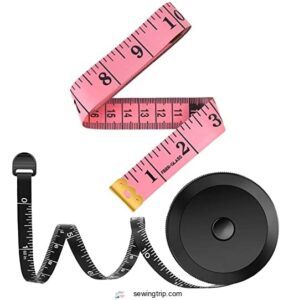
When you need backup tapes or want to share tools with classmates, the iBayam Soft Measuring Tape Set gives you multiple 60-inch tapes in one package. Each tape shows inches and centimeters side by side.
The soft vinyl bends easily around body curves without kinking. Bold numbers stay readable after months of rolling and unrolling.
Keep one tape at school, one at home, and one in your emergency kit. The assorted colors help you spot your tape fast in a crowded studio.
| Best For | Students, sewers, and anyone who needs multiple measuring tapes for different locations or wants a backup in case one breaks. |
|---|---|
| Length | 60 inches / 150 cm |
| Measurement System | Inches and centimeters |
| Material | Vinyl |
| Design | Soft and retractable |
| Primary Color | Pink and Black |
| Use Case | Sewing and body measurement |
| Additional Features |
|
- Comes with two tapes (one soft pink, one retractable black) so you can keep them in different spots or share with friends
- Shows both inches and centimeters on the same tape, making it easy to work with any pattern or measurement system
- Compact and lightweight at just 20 grams, so they slip into any bag or pencil case without adding bulk
- The retractable tape can break if you drop it, so you’ll need to handle it carefully
- Quality is decent but not amazing—you’re getting what you pay for at this price point
- You might find similar tape measures cheaper elsewhere, which could make this feel like an average deal
3. Singer Soft Vinyl Tape Measure
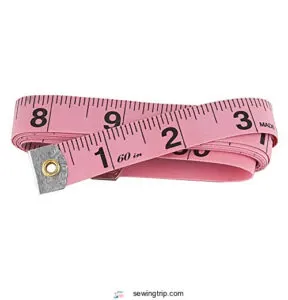
The Singer Soft Vinyl Tape Measure puts 60 inches of dual-scale measuring power in your hands. Black print on pink vinyl creates sharp contrast that cuts through busy fabric patterns.
The soft construction bends around bust, waist, and hip curves without creasing or digging into skin. Tabbed edges resist fraying after months of classroom use. You can drape it over your neck during fittings without stiffness.
This five-foot tape covers most body measurements in one pass, and its accuracy holds up to daily rolling.
| Best For | Sewers, tailors, and anyone who needs to measure body curves or fabric for clothing projects and alterations. |
|---|---|
| Length | 60 inches / 150 cm |
| Measurement System | Inches and centimeters |
| Material | Vinyl |
| Design | Soft and flexible |
| Primary Color | Pink |
| Use Case | Sewing and tailoring |
| Additional Features |
|
- Flexible vinyl conforms to curved surfaces like hips and waistlines without kinking
- Dual measurements in both inches and centimeters save time on conversions
- High-contrast pink and black design makes numbers easy to read against busy patterns
- Five-foot length won’t work for larger projects like curtains or upholstery
- Non-retractable design means you have to manually roll it up after each use
- Some customers received packages that appeared previously opened or resealed
4. iBayam Soft Measuring Tape Ruler
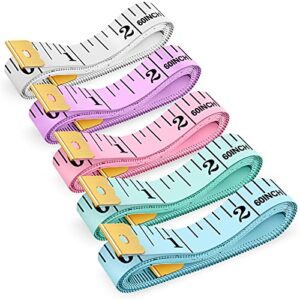
Vinyl matters. This 60-inch soft measuring tape ruler bends to each curve—dress form or client—without stretching or curling at the edges. Dual-sided scales keep metric and inches at your fingertips, letting you work cleanly from international pattern books.
Slim, flexible, and color-coded, it slides into any kit or pocket. Wipe away marks after fittings and expect the bold numbers to hold up class after class.
Secure those tabs at both ends; they protect your measuring investment from daily studio wear.
| Best For | Anyone who needs a soft, easy-to-carry measuring tape for sewing, tailoring, or quick body measurements at home. |
|---|---|
| Length | 60 inches / 150 cm |
| Measurement System | Inches and centimeters |
| Material | Vinyl |
| Design | Soft and flexible |
| Primary Color | Multicolored |
| Use Case | Sewing and body measurement |
| Additional Features |
|
- Dual-scale for inches and centimeters, perfect for international projects
- Soft, flexible vinyl fits curved and tight spots without stretching
- Color-coded 5-pack is easy to spot and share among family or classmates
- Vinyl material may not last as long as stiffer tape options
- Some buyers have received different or lower quality tapes than advertised
- Not ideal for heavy-duty or professional measuring tasks
5. Reidea Soft Fabric Measure Tape
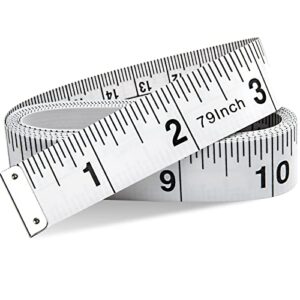
Precision drives progress. Reach for the Reidea Soft Fabric Measure Tape when you want smooth, consistent wraps around bust, waist, hip, or dress form. Dual scales in inches and centimeters sit side by side—no conversions, no searching for a second tape.
Soft fabric lies flat without twisting; clear printing runs edge to edge, so you see every number cleanly, even under fast-paced studio lights. Metal tips prevent fraying.
Stash it in your kit; durability and accuracy won’t slow you down.
| Best For | Anyone who needs reliable, gentle, and easy-to-read measurements for sewing, fitness, or crafts. |
|---|---|
| Length | 79 inches / 200 cm |
| Measurement System | Inches and centimeters |
| Material | Fabric and metal |
| Design | Soft and durable |
| Primary Color | White |
| Use Case | Sewing and body measurement |
| Additional Features |
|
- Soft fabric and metal ends make it durable and comfortable against skin
- Double-sided with both inches and centimeters—no conversions needed
- Lightweight and compact, so it’s easy to stash and carry anywhere
- The centimeters are on the underside, which some might find inconvenient
- Subtle color may be harder to read for some users
- Capped at a 79 inch / 200 cm measuring range
How to Choose The Right Measuring Tape

Choosing your measuring tape isn’t just about price or looks. You’ll want to match the tape to your hands-on work and demands. Keep these four features in mind as you look through the options below.
Material Durability and Flexibility
You want a measuring tape that holds up in real work. Choose fashion measuring tapes with a fiberglass core for proven wear resistance and nonstretch accuracy. Pair it with a vinyl coating—that layer shrugs off chalk, water, and friction from studio benches. Edge flexibility keeps your measuring tools agile around curves.
Always prioritize material durability and flexibility in every tape selection.
Length and Width Considerations
Standard lengths set the pace for efficiency—most fashion measuring tapes for students measure 60 inches (150 centimeters), covering body measurements and patterns without repositioning.
Width flexibility matters next: 1. Choose 13 mm for body fit. 2. Select up to 19 mm for boldness on pattern use. 3. Prioritize widths under 2 cm for compact storage in your tailoring tools.
Marking Clarity and Visibility
High contrast makes or breaks a measuring tape—spot black digits on a bold yellow roll from across the studio. Weigh line thickness, digit size, and clever color coding to stay sharp in every fitting. Fade resistance protects your numbers. When marking tools stand out, your precision crafting speeds up.
| Feature | Student Advantage |
|---|---|
| High Contrast | Fewer reading errors |
| Line Thickness | Fast scale distinction |
| Digit Size | Long-distance clarity |
| Color Coding | Quick unit switching |
| Fade Resistance | Lasts semester to semester |
Compatibility With Fashion Design Tasks
Match your Fashion Measuring Tapes to the full Design Accuracy spectrum—body tracing, pattern making, and fabric layout. A 60-inch tape covers bust-to-hip runs and long coat lengths. Flexible fiber bends around armholes and necklines. Non-stretch cores keep slopers consistent across semesters. When Sewing Essentials and Measurement Tools align with your tasks, you’ll draft, fit, and grade like a pro.
- Body Measurements: Curves need flex without stretch
- Pattern Making: Flat work demands stability
- Fabric layout: Width and yardage checks matter
- Grading: Uniform sizing across samples
- Fitting sessions: Skin-safe repeated use
Best Practices for Accurate Measurement
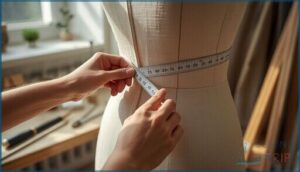
Accuracy starts before you even place the tape. Your technique determines whether a garment fits perfectly or needs costly alterations.
Master these four practices to measure like a professional every time.
Aligning Zero Points Properly
Before you start any measurement, pause and locate the actual 0 mark on your measuring tape—not the case edge or blank space. Touch that zero point directly to your fabric edge, pattern line, or body contact point.
This simple habit stops the most common error in fashion design: adding hidden inches that wreck your garment fit from the very first cut.
Placing zero incorrectly at the start adds hidden inches that ruin every garment you cut
Keeping Tape Flat and Taut
Once you’ve placed zero, hold the tape snug but not tight—skin should never dimple. Run your thumb along the strip to smooth out twists that distort readings. Keep the tape parallel to the floor at bust, waist, and hip; a slant adds millimeters you don’t want.
On fabric, use pattern weights or scissors to anchor the strip flat so it won’t bow away from your line.
Measuring Curves Correctly
Curves demand a flexible ruler that bends with your body landmarks—bust peak, natural waist, fullest hip.
Wrap the measuring tape around each contour without lifting it away from skin. Tape tension matters: slide one finger underneath, then remove it before you read.
Keep the strip parallel to the floor at bust, waist, and hip so curve fitting stays true.
Read numbers at eye level to avoid angle errors that shift your fashion measurement techniques.
Double-Checking Measurements
Record every bust, waist, and hip reading twice—an error of half an inch turns fitted garments into fitting disasters. Precision techniques demand repeated readings, especially on key body measurements that drive pattern decisions. Many tutors keep a backup measuring tape for verification, catching wear-related drift before you cut fabric. When two tapes disagree, run a third pass and check for twists or tension shifts.
- Compare first and second values; circle the number that appears twice for garment measurement accuracy
- Use tape calibration checks by measuring a known reference object between sessions to catch stretch
- Highlight any discrepancy beyond ¼ inch and re-measure immediately—error reduction starts with measurement verification
Caring for and Maintaining Measuring Tapes
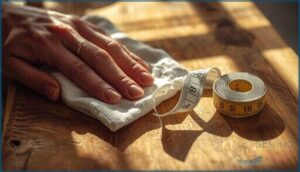
Your measuring tape works hard for you. Treat it right and it’ll stay accurate for years.
Here’s how to keep your tape in top condition so you never second-guess a measurement.
Cleaning and Storage Tips
Fashion Measuring Tapes demand attention beyond simple measuring tools.
Tape Sanitizing starts with a soft cloth, lukewarm water, and mild soap—wipe end to end in one direction. For Measuring Tape Care, use 70 percent isopropyl alcohol on shared Sewing Accessories. Moisture Control matters: air dry completely before rolling.
Storage Solutions include cool spaces at 18 to 22 degrees Celsius and dedicated pouches that protect your Tape Measure from heavy cutting tools.
| Cleaning Methods | Storage Solutions |
|---|---|
| Damp cloth with mild soap | Cool, dry drawer (18–22°C) |
| 70% isopropyl alcohol wipes | Labeled zipper pouch |
| Air dry flat 10–15 minutes | Away from heat sources |
Preventing Stretch and Wear
Tension is the silent enemy of Tape Handling and Material Selection. Pull too hard and your Fashion Measuring Tapes gain millimeters that wreck Body Measurements across every Textile Measurement session.
- Hold the tape with three fingers to spread pulling force evenly across the weave.
- Use clips or pins instead of yanking to maintain tension during Fashion Design and Measurement work.
- Guide retractable tapes back slowly—never let them snap at full speed.
- Store in cool spaces for Heat Protection; avoid sunny windowsills and hot dashboards.
- Roll loosely from one end; sharp folds create kinks that permanently deform fibers.
When to Replace Your Measuring Tape
Measurement Drift is the invisible thief that steals accuracy from every Fashion Design and Measurement project. Replace your Measuring Tape when faded Tape Wear Signs blur numbers, visible damage creates kinks, or functional issues make retraction jerky.
Test against a ruler at term start for Body Measurements consistency. Fashion Measuring Tapes that contradict themselves twice on the same seam need immediate replacement, no exceptions in Measuring and Marking Techniques work.
Replacement Schedules every one to two years protect garment fit.
Frequently Asked Questions (FAQs)
What do fashion designers use to measure?
Picture your hands tracing fabric contours and seam lines. Fashion designers rely on soft measuring tapes, clear plastic rulers, French curves, hem gauges, and digital tools to capture body measurements and pattern dimensions with precision.
What is a fashion measuring tape called?
Fashion designers call their flexible measuring tool a tape measure, sewing tape measure, or body tape measure.
In studios, people often shorten it to measuring tape when talking about garment work.
What measuring tape do tailors use?
Tailors prefer fiberglass reinforced vinyl measuring tapes, usually 60 inches long, with dual scales showing inches and centimeters.
These soft, flexible tapes deliver measurement accuracy for body measurements and pattern work without stretching over time.
Are tailor’s measuring tapes accurate?
Most fashion measuring tapes meet general accuracy standards within 1–2 millimeters over typical garment lengths.
Material stability and user techniques matter more than tape calibration for reliable body measurements and precise tailoring tools in daily studio work.
What measuring tools complement a fashion measuring tape?
Every successful garment starts with the right measuring toolkit. Pattern rulers keep grainlines straight, drafting curves shape armholes, seam gauges mark hems, and marking tools transfer darts—together these sewing aids transform fabric measurements into precision tailoring.
Where can students buy affordable measuring tapes online?
You’ll find budget options at Amazon, Walmart, and Joann. Look for iBayam and Singer multi-packs under ten dollars.
Check fashion measuring tape reviews for marking clarity and free shipping deals from online retailers.
How do professionals measure complex garment areas accurately?
Like a cartographer mapping uncharted terrain, you’ll walk your tape along seam lines—shoulder to underarm, bust peak to waist—keeping it taut but gentle.
Mark landmarks, measure twice, compare pattern to body, and verify with mirrors or helpers for precision.
What measurement units do international fashion schools prefer?
Most programs teach both Metric Units and Imperial Systems using dual scales on Fashion Measuring Tapes.
You’ll learn Unit Conversion because Global Standards require fluency when body measurements cross borders in Fashion Design and Pattern Making.
Can measuring tapes work for both draping and patternmaking?
One tape can’t truly be in two places at once—but a soft, dual-scale measuring tape bridges draping and patternmaking beautifully.
Its flexibility hugs body curves while lying flat on pattern paper, ensuring measurement consistency across both garment construction methods.
Conclusion
Your smallest tool dictates your largest achievements. A stretched tape measure undermines months of pattern drafting and draping work.
Quality measuring tapes for fashion design students prevent this silent sabotage. Choose non-stretch materials with dual scales and crisp markings.
Treat your tape as seriously as your shears. Replace it when accuracy fades. Precision starts before you cut the first piece of fabric—it starts with what’s hanging around your neck.
- https://dgvstyles.wordpress.com/2021/11/09/the-4-types-of-measuring-tape-you-need-in-your-sewing-room/
- https://www.techpacks.co/blog/mastering-clothing-measurements-a-fashion-designers-guide
- https://blog.waveplm.com/guide-how-to-read-a-tape-measure-for-fashion-designers/
- https://www.thetailoredco.com/fashion-measuring-tools/
- https://mbamode.com/how-is-a-tape-measure-employed-in-the-field-of-fashion-and-design/