This site is supported by our readers. We may earn a commission, at no cost to you, if you purchase through links.
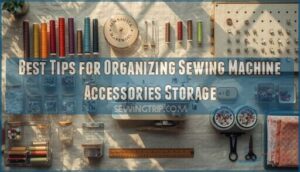
A tangled bobbin at the wrong moment can derail an entire project—and if you’ve ever spent 20 minutes hunting for the right presser foot, you know exactly how costly a disorganized sewing space can be. Most sewists accumulate accessories faster than they find places to put them, leaving needles mixed with buttons, threads knotted around rulers, and specialty feet buried in a drawer somewhere.
The good news is that organizing sewing machine accessories storage doesn’t require a complete room makeover. A few smart systems—clear bins, labeled containers, a pegboard or two—can turn a chaotic setup into one that actually saves you time.
Table Of Contents
Key Takeaways
- Grouping similar items together — threads with threads, feet with feet, bobbins with bobbins — is the single fastest way to cut down search time and keep your projects moving.
- Clear containers and labeled bins do more work than any fancy organizer, because visibility alone stops the digging before it starts.
- Your walls are free real estate, and a pegboard or thread rack keeps your most-used tools within reach without eating up table or drawer space.
- A simple maintenance routine — dusting, auditing, and updating labels — is what keeps any storage system working long after you set it up.
Essential Tips for Organizing Sewing Accessories
Getting your sewing accessories in order doesn’t have to be complicated. A few smart habits can make a big difference in how smoothly your projects come together.
Once your workspace is sorted, you can focus on the fun stuff—like trying out bold new stitches with a capable serger like the Singer 14CG754.
Here are the essential tips that’ll help you stay organized and keep everything right where you need it.
Grouping Similar Items for Easy Access
Category sorting is one of the simplest wins you can give your sewing space. When you cluster similar items together, everything just flows better. Think of it as accessory clustering — threads with threads, feet with feet, bobbins with bobbins.
Here’s what efficient storage looks like in practice:
- Group all-purpose, embroidery, and specialty threads separately
- Keep presser feet in a labeled, transparent container
- Store bobbins near your machine in a compact tray
- Use clear bins for sewing accessories so nothing hides
Organized workspaces save you real time.
Sorting Sewing Machine Needles by Type
Needles are easy to overlook, but poor needle organization quietly kills your sewing efficiency. Universal, ballpoint, denim, leather, and embroidery needles all behave differently — and grabbing the wrong one mid-project is frustrating.
Sort your sewing supplies by needle type first, then by size. A color-coded organizer like the Grabbit myPad makes needle storage simple and keeps your sewing room organization tight.
Storing Sewing Machine Feet and Bobbins Separately
Feet and bobbins deserve their own dedicated spots — mixing them together is a recipe for lost pieces and tangled threads. Good foot storage keeps each presser foot visible and separate, while bobbin cases and accessory trays prevent thread from unspooling.
Sewing caddies and tool organizers make sewing tool management simple, keeping your sewing supply storage, thread organization, and overall sewing room organization running smoothly.
Implementing a Maintenance Routine for Storage Areas
Once your storage solutions are in place, keeping them working well takes a little routine care. A simple cleaning schedule — dusting surfaces and vacuuming loose threads regularly — goes a long way for sewing room organization and damage prevention.
Pair that with periodic inventory updates and quick space audits, and your sewing supply storage stays accurate, tidy, and ready to support real organization and productivity.
Maximizing Storage Space in Your Sewing Area
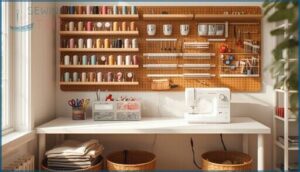
A cluttered sewing area slows you down more than you might think. The good news is that a few smart storage moves can free up a surprising amount of space.
Here are some simple ways to make your sewing area work harder for you.
Using Clear Storage Containers for Visibility
Clear containers might be the single best upgrade you can make for sewing supply organization. When you can see exactly what’s inside — threads, bobbins, buttons — you stop wasting time digging. Transparent solutions like clear storage bins work for everything from tiny notions to bulkier fabric.
Clear containers are the single best upgrade for sewing organization — visibility ends the digging
Label each one, and your accessory organization stays consistent. Visibility tips don’t get simpler than that.
Utilizing Wall Space for Thread Storage
Your walls are prime real estate for thread storage. A pegboard organizer keeps spools, bobbins, and sewing supplies visible and within reach without eating up table space. Thread racks — wood or metal — mount cleanly and hold dozens of colors.
Wall shelves with storage bins, wall boxes, and pegboard systems all turn blank wall organization into a fully functional display you’ll actually use.
Repurposing Household Items for Accessory Storage
You don’t need to spend much to get organized. Some of the best DIY storage solutions are already sitting in your kitchen or bathroom. Repurposed containers, upcycled shelves, and simple household hacks can handle most of your crafting supplies beautifully.
- Tackle boxes for bobbins, pins, and buttons
- Shower caddies for ironing tools and starch
- Glass jars for threads, zippers, or vintage buttons
- Pill bottles for color-sorted bobbins
Creating a Selvage Bag for Rulers and Templates
A selvage bag is one of those organization ideas that does double duty. You’re cutting down fabric waste and solving your ruler organization problem at the same time.
Sew selvage fabric strips onto paper-backed squares, then assemble them into a zippered pouch — roomy enough for templates, rulers, and other sewing supplies.
It’s a portable crafts solution that keeps your sewing tool organization tidy wherever you go.
Customized and DIY Storage Solutions
Sometimes the best storage solutions are the ones you make yourself. A few simple materials and a little creativity can go a long way toward keeping your sewing space tidy and personal.
Here are some DIY ideas worth trying.
Creating a Sewing Machine Mat With Selvage Pockets
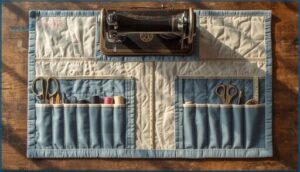
A DIY sewing machine mat with selvage pockets is one of the smartest storage solutions for sewing tool organization. It keeps your sewing supplies right where you need them. Here’s what makes this mat worth crafting:
- Use selvage edges as pocket openings — no hemming needed
- Layer fabric, batting, and backing for noise reduction
- Divide pockets with vertical stitches for sewing efficiency
- Customize pocket depth for taller tools
- Add double-fold binding for clean, durable edges
Making a Handmade Storage Bucket for Supplies
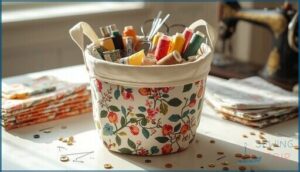
A handmade fabric bucket might be the most satisfying craft storage project you’ll ever make. Bucket size options range from a small 3.5-inch tabletop bin to a medium container using a 19.5-by-10.5-inch side panel — plenty of storage capacity for sewing supplies.
Smart fabric choices and interfacing techniques keep walls upright, while simple handle designs make moving your sewing room organization pieces easy.
| Feature | Details |
|---|---|
| Fabric Choices | Quilting cotton outer, lightweight lining |
| Interfacing Techniques | Fusible fleece for firm fabric storage |
| Bucket Size Options | 4.5″–10.5″ diameter base |
| Handle Designs | 10″ cotton webbing strips |
Using Ziploc Bags and Take-out Containers for Organization
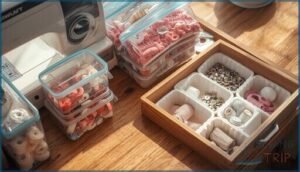
Once your fabric bucket is sorted, don’t overlook what’s already in your kitchen. Ziploc hacks and repurposed takeout containers are some of the smartest bag storage tips for sewing tool organization on a budget.
- Use quart bags for accessory sorting — one bag per presser foot group
- Label containers with permanent marker for quick craft supply management
- Stack square takeout tubs in drawers for space optimization
- Bundle project notions in gallon bags for portable sewing supplies storage
Attaching Hooks and Installing Pegboards for Hanging Accessories
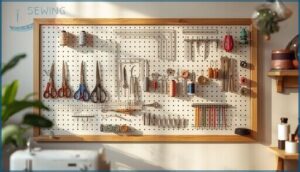
If kitchen containers work great in drawers, pegboard installation takes that same logic vertical. Mount a standard hardboard panel with furring strips to leave space behind it for hooks.
Then focus on smart hook placement — scissors and rotary cutters low, rulers and templates higher. A pegboard organizer manages wall mounting and accessory hanging beautifully, keeping your most-used tools visible and within arm’s reach for real storage optimization.
Top 5 Products for Sewing Accessory Storage
Sometimes the right product makes all the difference in keeping your sewing space running smoothly. A few well-chosen storage picks can handle everything from tiny bobbins to bulky thread spools without taking over your workspace.
Here are five products worth adding to your setup.
1. Bagsmart Hanging Jewelry Organizer Storage Roll
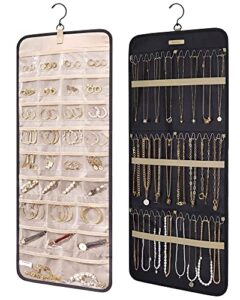
The Bagsmart Hanging Jewelry Organizer Storage Roll is a surprisingly smart pick for sewing accessories. It features 32 transparent pockets on both sides, so you can instantly see your bobbins, presser feet, and hand needles without digging around.
The pockets zip closed, which means nothing falls out when you move it. It hangs on a door or closet rod, rolls up for travel, and weighs just 6 ounces.
Small but mighty, it keeps tiny notions sorted and easy to grab.
| Best For | Anyone who wants a simple, affordable way to keep small jewelry pieces organized at home or while traveling. |
|---|---|
| Material | Polyester/PVC |
| Color | Black |
| Storage Use | Jewelry/Accessories |
| Weight | 6 oz |
| Multi-Room Use | Yes |
| Durability Concern | Flimsy material |
| Additional Features |
|
- 32 clear pockets plus 42 necklace hooks mean you can see everything at a glance — no more digging through a tangled pile.
- The 360-degree rotating hanger makes it easy to browse, and it folds down small enough to toss in a bag for travel.
- Works for way more than jewelry — nail polish, hair accessories, cables, cards, you name it.
- The material feels a bit flimsy to some people, so it may not hold up well with heavy or bulky pieces.
- The pockets are on the shallow side, which means smaller items could slip out if you’re not careful.
- It runs smaller than it looks in photos, so if you’ve got a big collection, you might outgrow it fast.
2. Sywhitta Rolling Utility Cart
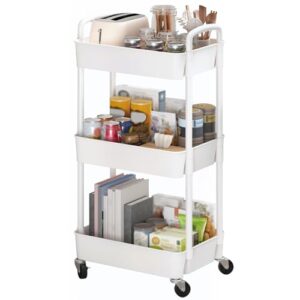
If you need more than pockets, the Sywhitta Rolling Utility Cart gives you room to spread out. Its three open tiers let you separate thread, bobbins, and presser feet so nothing gets jumbled together.
At just under 30 inches tall, the top shelf sits right at desk level, so your most-used tools stay within easy reach. The locking wheels keep it parked firmly beside your machine, and the whole cart weighs only 3.5 pounds empty, so moving it around is no trouble at all.
| Best For | Sewers and crafters who want easy, organized access to small tools and supplies right at their workstation. |
|---|---|
| Material | Iron/Plastic |
| Color | White |
| Storage Use | General Home |
| Weight | 3.5 lbs |
| Multi-Room Use | Yes |
| Durability Concern | Bows under weight |
| Additional Features |
|
- Three open tiers give you plenty of room to sort thread, bobbins, and other small supplies so everything’s easy to grab.
- Locking wheels keep it right where you need it, and at only 3.5 pounds, moving it around takes zero effort.
- Works just as well in a kitchen, bathroom, or home office — it’s not a one-trick pony.
- Not built for heavy loads, so skip stacking big books or anything with serious weight.
- Can wobble on uneven floors, especially once you start filling it up.
- Assembly can be a little finicky, and some pieces may need tightening after a few uses.
3. Mesh Zipper Storage Pouches
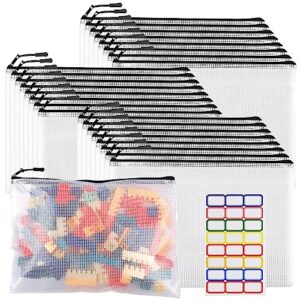
Mesh zipper pouches might be the most adaptable tool in a sewing room. The YOPCDJ set comes with 24 black PVC pouches, each measuring about 13 by 9 inches — roomy enough for presser feet, bobbins, and small notions.
The see-through mesh lets you spot what’s inside without digging around. They’re easy to wipe clean when thread bits and chalk dust pile up, and they hold their shape in a drawer, so nothing collapses into a tangled mess.
| Best For | Sewists, crafters, and anyone who needs a simple way to sort small supplies without losing track of what’s where. |
|---|---|
| Material | PVC |
| Color | Black |
| Storage Use | Documents/Supplies |
| Weight | 1.54 lbs |
| Multi-Room Use | Yes |
| Durability Concern | Zipper wear |
| Additional Features |
|
- You get 24 pouches in one set, so there’s plenty to go around for every drawer, bag, or bin.
- The see-through mesh means you can find what you need at a glance — no more digging.
- They’re big enough to hold more than just notions; think documents, game pieces, or travel odds and ends.
- The zippers aren’t leak-proof, so keep liquids far away from these.
- Some buyers found the zippers wore out faster than expected with regular use.
- The width might be a tight fit for certain paper sizes, so double-check before using them as document folders.
4. Sterilite Plastic Storage Baskets
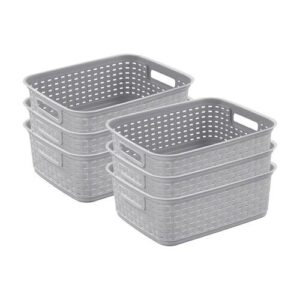
Sterilite plastic baskets are a shelf staple for good reason. The Ultra series comes in four sizes — Small through Deep — so you can match the basket to what you’re storing.
Small fits bobbins and needle packs perfectly. Medium grips presser foot cases without crowding. The vented sides let you see inside at a glance, and the molded grips make grabbing a basket off the shelf easy.
They’re lightweight, stackable when empty, and sold in multi-packs, so organizing by category is simple and affordable.
| Best For | Anyone who wants an affordable, good-looking way to organize their pantry, closet, or craft supplies without sacrificing airflow or style. |
|---|---|
| Material | Plastic |
| Color | Gray |
| Storage Use | Crafts/Kitchen |
| Weight | 1 lb |
| Multi-Room Use | Yes |
| Durability Concern | Color mismatch |
| Additional Features |
|
- The wicker-style weave looks way nicer than a plain plastic bin, so it actually fits in on open shelves
- Made in the USA and built sturdy — these aren’t flimsy dollar-store baskets
- Comes in a set of 6, so you can organize a whole shelf or pantry in one shot
- At just over 5 inches tall, they’re pretty shallow — taller items won’t fit
- Stock can be hit or miss, so you might have trouble grabbing a set when you need one
- A few buyers have gotten a different color than what they ordered, so double-check when yours arrives
5. Glass Cookie Jar with Lid
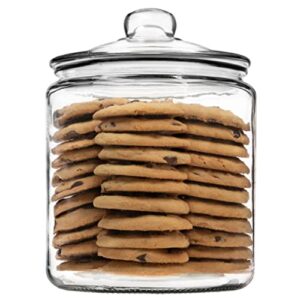
A glass cookie jar might seem like an odd pick for a sewing room, but it works surprisingly well. The kitchentoolz 1-gallon clear glass jar holds bobbins, clips, snaps, and small presser feet without hiding them from view.
You can see exactly what’s inside without lifting the lid, which saves real time mid-project. The airtight seal protects metal notions from dust and humidity, and the wide mouth makes grabbing a handful of Wonder Clips easy.
Functional and a little pretty, too.
| Best For | Sewists and crafters who want a stylish, practical way to store small notions like bobbins, clips, and snaps while keeping everything visible at a glance. |
|---|---|
| Material | BPA-Free Glass |
| Color | Clear |
| Storage Use | Dry Goods |
| Weight | 2.5 lbs |
| Multi-Room Use | Yes |
| Durability Concern | Lid issues |
| Additional Features |
|
- Crystal-clear glass lets you see exactly what’s inside without opening it
- Wide mouth makes grabbing small items quick and easy
- Airtight lid helps protect metal notions from dust and humidity
- Some users reported the lid popping open on its own, which can defeat the purpose
- At 2.5 pounds, it’s a bit heavy and not great for little hands
- The lid seal can be tight, so you’ll want to be careful opening it to avoid accidents
Frequently Asked Questions (FAQs)
How to organize sewing supplies in a small space?
Small spaces reward smart choices. Start by going vertical — wall-mounted pegboards, thread racks, and floating shelves keep your supplies visible and within reach without eating up your precious floor space.
How do you organize the tools and materials you need in sewing?
Start by grouping similar tools together — threads with threads, feet with feet, and notions in labeled jars. That simple habit alone cuts your search time in half and keeps your workflow moving.
What is the best way to store a sewing machine?
Keep your sewing machine on a flat, stable surface with a dust cover over it.
Clean out the bobbin area, lower the presser foot, and store the cord loosely beside it.
How to set up a sewing machine room?
A place for everything, and everything in its place. Set up your sewing room with your machine, cutting table, and ironing station in a triangle so you’re never taking extra steps mid-project.
How to prevent sewing accessories from tangling?
Separate thread by type, store bobbins in individual slots, and roll elastic into secured coils.
Mesh pouches and divided containers keep sharp tools away from loose fibers, stopping tangles before they start.
What’s the best way to label small items?
Think of how a library works — every book findable in seconds. The same logic applies here. Bold permanent markers on removable tape keep small sewing items clearly identified, cheap, and easy to update.
How to store rarely used sewing supplies?
Rarely used supplies deserve their own spot — clear lidded bins on high shelves work great. Sort by category, label each container, and you won’t waste time searching when a special project finally calls for them.
What accessories require climate-controlled storage?
Funny how the “extras” in your sewing kit are actually the most sensitive. Thread, elastic, fusible web, and metal needles all degrade faster without stable temperature and humidity, so a climate-controlled room protects them best.
How to transport fragile sewing tools securely?
Fragile sewing tools travel best in hard shell cases with foam lining. Sharp items like rotary cutters belong in checked luggage, while small scissors and needles can stay safely in your carry-on.
How do I organize accessories for multiple sewing machines?
Assign each machine its own labeled bin or container for its presser feet, bobbins, and tools. Color-coding by machine makes it easy to grab the right accessories without mixing up parts. For further guidance, refer to the detailed.
Conclusion
Ironically, the accessories meant to make sewing easier are often the very things slowing you down—because nobody can sew efficiently while digging through a tangled drawer. That’s exactly why organizing sewing machine accessories storage is worth every minute you invest in it.
Once your needles, feet, bobbins, and threads each have a home, your whole creative process shifts. You spend less time searching and more time actually making things. That’s a trade worth taking.
- https://www.allpeoplequilt.com/how-to-quilt/organization/sewing-room-storage-and-organization-products
- https://www.incolororder.com/2022/03/ideas-for-storing-and-organizing-sewing.html
- https://weallsew.com/organizing-sewing-supplies-with-amanda-murphy/
- https://www.diaryofaquilter.com/organize-your-sewing-room/
- https://madamsew.com/blogs/sewing-blog/sewing-project-organization-bags-storage-solutions?srsltid=AfmBOoqIEeUXVUG6R-JOMv8EAY0XdINtne73ryWcoRxPFgxfqYEhDkDx