This site is supported by our readers. We may earn a commission, at no cost to you, if you purchase through links.
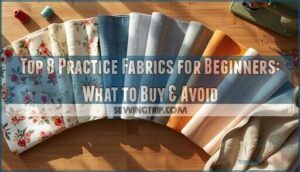
Your first sewing project shouldn’t end with tangled thread and a crumpled heap of fabric in the trash. But here’s what most beginners don’t realize: the fabric matters more than the pattern.
A gorgeous silk might catch your eye at the store, but it’ll slide around under your needle like a fish on ice. Cotton, on the other hand, stays put and forgives wobbly stitches.
The right practice fabric for beginners builds your confidence with every seam, while the wrong choice can make you want to quit before you’ve even started. Learning which fabrics help you succeed and which ones secretly sabotage your progress changes everything.
Table Of Contents
Key Takeaways
- Cotton quilting fabric and cotton poplin are the best practice materials for beginners because they stay stable under the needle, resist fraying, and let you focus on mastering basic techniques instead of fighting unpredictable fabric behavior.
- Avoid slippery fabrics like silk, stretchy materials like jersey knits, and expensive or loosely woven fabrics when starting out, since these require advanced tension control and specialized techniques you haven’t developed yet.
- Look for medium-weight fabrics with smooth textures and minimal stretch—these properties give you clean cuts, visible stitches, and predictable results that build your confidence with every seam.
- Pre-cut cotton squares and complete embroidery kits with pre-printed patterns eliminate guesswork and let you jump straight into practice without wasting time or money on measuring, cutting, or design transfer.
Why Fabric Choice Matters for Beginners
Picking the right fabric can make or break your first sewing project. The wrong material will fight you at every turn, while the right one helps you build skills without frustration.
Before you commit to a fabric, check out this pattern alteration advice for different fabrics to see how material choice affects fit and drape.
Let’s look at why your fabric choice matters so much when you’re just starting out.
Impact on Learning Basic Sewing Skills
Fabric selection shapes your sewing confidence from day one. When you start with beginner-friendly, easy-to-sew materials, you master basic techniques faster because stable fabrics deliver predictable results. Error tolerance in forgiving cloth lets you focus on skill development instead of fixing mistakes, which speeds up your learning pace.
Beginner-friendly fabrics build confidence faster by delivering predictable results that let you master techniques instead of fighting mistakes
- Smooth surfaces show your stitches clearly so you can check seam alignment as you go
- Stable fabrics cut without slipping, helping you nail straight lines and accurate patterns
- Beginner sewing succeeds when materials behave consistently across multiple practice sessions
Understanding essential sewing fundamentals lays the groundwork for mastering your practice fabric choices.
Common Challenges With Difficult Fabrics
Slippery silks and stretchy knits turn beginner sewing into a frustration fest. You’ll fight fabric fraying at every seam, wrestle with thread tension that loops and knots, and second-guess needle selection when stitches skip.
Pressing issues like scorch marks add insult to injury, while color bleeding ruins your hard work in the wash. These fabric properties demand skilled sewing techniques you haven’t learned yet.
Benefits of Beginner-Friendly Fabrics
The right fabric selection transforms your beginner sewing experience from a battle to a win. Beginner friendly fabrics stay put under your needle, resist fraying, and press flat without scorching.
You’ll finish beginner projects faster because these materials tolerate mistakes and handle machine washing without shrinking. That means more sewing confidence with every seam, better learning outcomes, and fabric durability that lets you practice repeatedly without wasting money.
Key Features of Beginner Practice Fabrics
Not all fabrics are created equal when you’re just starting out. The right fabric can make your first projects feel like a breeze, while the wrong one can leave you tangled in frustration.
Here are the three key features you should look for to set yourself up for success.
Stability and Minimal Stretch
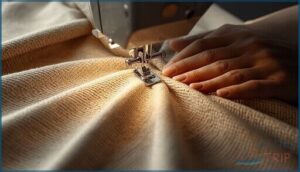
When you’re guiding fabric under the presser foot, stability makes all the difference. Fabrics with a stable weave and minimal stretch—like cotton twill or mediumweight fabrics—resist skewing and hold their shape while you practice straight seams.
This weave density and stretch resistance directly improve your sewing precision and help you master thread tension without fighting fabric that shifts or distorts mid-stitch. Beginners can gain important insight by understanding fabric weight and density when selecting practice materials.
Smooth Texture and Medium Weight
A smooth surface keeps fabric gliding under your presser foot without snagging or bunching. Cotton poplin and cotton twill offer barely textured finishes that let you see every stitch clearly while maintaining fabric stability. Medium weight materials prevent fatigue during practice sessions and feed evenly through your machine.
Here’s why smooth weaves and mediumweight fabrics matter:
- Texture analysis reveals fewer snags – Combed cottons reduce thread breaks during beginner stitching
- Sewing ease improves with consistent fabric weight – No dragging or distortion when cutting practice pieces
- Stable weave structure pairs perfectly with standard needles – Works with common thread weights without fussy adjustments
Ease of Cutting and Handling
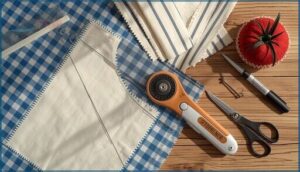
Clean cuts and confident handling set you up for sewing precision from your very first seam. Beginner-friendly fabrics like cotton hold their shape while you pin pattern pieces and transfer markings. Fabric stability means edges stay put during cutting techniques without shifting under your rotary cutter or shears.
Once you’ve mastered stable cottons, you can apply these techniques for sewing with delicate fabrics like silk and chiffon that need extra care.
Here’s how easy-to-sew materials support edge management:
| Fabric Feature | Cutting Benefit | Handling Advantage |
|---|---|---|
| Stable weave | Pattern pieces stay flat | Minimal skewing during pinning |
| Low fraying edges | Clean seam allowances | Reduced thread tangles |
| Consistent weight | Accurate ruler alignment | Even grip while guiding fabric |
| Plain surface | Clear marking visibility | Smooth feed under presser foot |
| Moderate drape | Controlled fabric movement | Easier seam matching |
Cotton fabric gives you predictable behavior that builds confidence with every practice project.
Top 8 Practice Fabrics and Kits for Beginners
You’re ready to put your skills into action, and the right practice materials make all the difference.
I’ve gathered eight specific fabrics and kits that give you real hands-on experience without the guesswork.
Each option below offers something unique, whether you’re focused on sewing basics or embroidery fundamentals.
1. Cotton Fabric Squares For Sewing
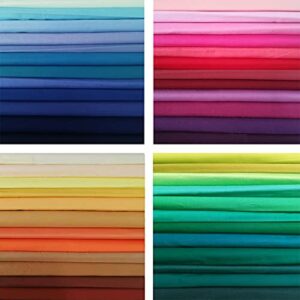
Cotton fabric squares are your training wheels for sewing. These precut pieces eliminate the intimidation of cutting yardage and let you jump straight into stitching.
Look for 100% cotton squares in 8-inch or 10-inch sizes with a medium weight of around 4 ounces per square yard. The plain weave holds up to repeated pinning and washing while staying stable under your needle.
Start with solid colors or simple prints so you can clearly see your stitch work and practice seam allowances without getting lost in busy patterns.
| Best For | Beginner sewers and quilters who want an affordable, ready-to-use variety pack for small projects like potholders, patchwork quilts, or practice pieces. |
|---|---|
| Material | 100% Cotton |
| Skill Level | Beginners |
| Primary Use | Sewing and Quilting |
| Includes Instructions | No |
| Weight | 8.1 ounces |
| Piece Count | 50 squares |
| Additional Features |
|
- 50 precut squares save time and eliminate the need for precise cutting, perfect for jumping straight into projects
- Versatile multi-color assortment works for quilting, small crafts, DIY toys, and testing new stitches
- Budget-friendly entry point for beginners to experiment without investing in full fabric yardage
- Some customers report the fabric feels like polyester rather than true 100% cotton, affecting quality expectations
- Thin material tends to fray easily, which can frustrate beginners during handling and sewing
- Colors may appear less vibrant than pictured, and price-to-quality ratio disappoints some buyers
2. Cotton Quilting Fabric Squares
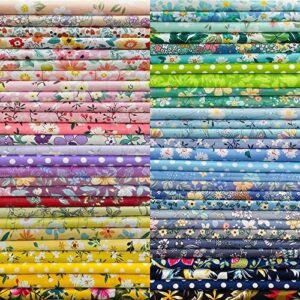
If you want accuracy right out of the package, grab quilting cotton squares in 5×5 inch bundles. These precuts are your secret weapon for learning patchwork without the hassle of measuring and resizing every piece.
You’ll get stable edges that resist fraying when you stitch with a standard 1/4 inch seam. Most sets come in 9 to 36 pieces with coordinated colors that take the guesswork out of planning. The tight weave gives you clean cutting lines and blocks that actually line up when you piece them together.
| Best For | Quilting beginners and crafters who want ready-to-use fabric squares for small projects like face masks, potholders, or patchwork without cutting fabric themselves. |
|---|---|
| Material | 100% Cotton (disputed) |
| Skill Level | Beginners |
| Primary Use | Quilting and Sewing |
| Includes Instructions | No |
| Weight | 1.17 pounds |
| Piece Count | 50 squares |
| Additional Features |
|
- Pre-cut 12″ x 12″ squares save time on measuring and cutting, letting you start projects immediately
- 50 different floral patterns give you plenty of variety for coordinating colors in quilts and crafts
- Versatile for multiple uses including quilting, sewing accessories, and teaching kids basic sewing skills
- Multiple reviews question whether the fabric is actually 100% cotton as claimed, with some reporting it feels like polyester
- Fabric may be thinner than expected and prone to slipping during sewing
- Some customers received smaller 8″ x 8″ squares instead of the advertised 12″ x 12″ size, making sizing inconsistent
3. Lystaii Embroidery Stitch Practice Kit
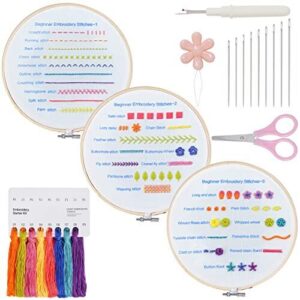
Learning thirty different stitches in one go sounds overwhelming until you open the Lystaii kit. You’ll find pre-printed fabric with each stitch name and pattern already marked, so there’s no guessing about placement or spacing.
The bamboo hoop keeps your fabric taut while you practice backstitch, satin stitch, and running stitch techniques. Everything ships together—floss in four to six colors, needles sized for easy threading, and basic scissors.
The compact setup means you can practice anywhere and build muscle memory without fighting tangled threads.
| Best For | Beginners who want to learn a variety of embroidery stitches without feeling overwhelmed by complex instructions or missing supplies. |
|---|---|
| Material | Bamboo, Fabric |
| Skill Level | Beginners and Intermediate |
| Primary Use | Embroidery Learning |
| Includes Instructions | Yes |
| Weight | 3.52 ounces |
| Piece Count | Complete kit |
| Additional Features |
|
- Pre-printed fabric shows you exactly where each of the 30 stitches goes, so you’re not guessing at placement
- Everything you need comes in one box—hoop, threads, needles, scissors, and instructions
- The bamboo hoop adjusts to keep fabric tight while you practice, which makes learning easier
- The scissors that come with the kit aren’t great quality and might need replacing
- Instructions can be confusing or incomplete, which is frustrating when you’re just starting out
- Not challenging enough for advanced stitchers looking for complex projects
4. Embroidery Kit For Adults Beginner Set
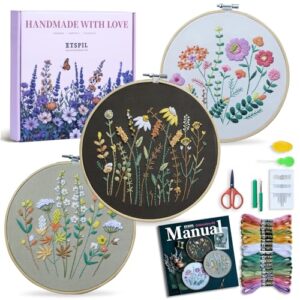
The ETSPIL kit gives you three pre-stamped floral designs on cotton fabric, so you can dive straight into stitching without drawing patterns yourself. You’ll get a 7-inch bamboo hoop that adjusts to keep fabric snug, plus ten vibrant thread colors and sixteen needles to match different stitch weights.
The real advantage here is the video tutorial access covering thirty-three essential techniques—backstitch, French knots, and chain stitch all included. Some users mention needle threading takes patience at first, but the step-by-step guidance makes mastering basic stitches feel achievable.
| Best For | Beginners who want a complete starter kit with video guidance to learn embroidery from scratch without needing prior experience. |
|---|---|
| Material | Bamboo, Cotton |
| Skill Level | Beginners |
| Primary Use | Embroidery Learning |
| Includes Instructions | Yes |
| Weight | 5.9 ounces |
| Piece Count | Complete kit |
| Additional Features |
|
- Includes 33 stitch technique tutorials via video, making it easy to follow along and learn progressively
- Comes with everything needed to start immediately—pre-stamped designs, threads, needles, and tools all in one package
- Adjustable bamboo hoop keeps fabric taut while you work, preventing bunching or loose stitches
- Some kits arrive with missing items like needles, requiring contact with the seller
- Needle eyes are small and can be frustrating to thread, especially for beginners or those with vision challenges
- Written instructions alone can be confusing without watching the video tutorials first
5. Embroidery Kit For Adults
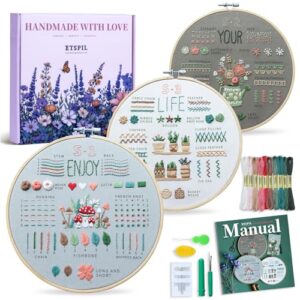
Many beginner kits come with 14 to 28 count cotton fabric that balances visibility and stitching ease. You’ll find pre-printed patterns with numbered color palettes to keep threads organized, plus an embroidery hoop that holds fabric taut while you work.
Most packages include step-by-step instructions showing backstitch and split stitch options, so you can practice multiple techniques on forgiving floral or geometric designs. The even weave helps you count stitches accurately, and many brands offer online video tutorials for extra support.
| Best For | Absolute beginners who want to learn embroidery with a complete all-in-one kit that includes pre-printed patterns, video tutorials, and everything needed to get started. |
|---|---|
| Material | Bamboo, Cotton |
| Skill Level | Beginners |
| Primary Use | Embroidery Learning |
| Includes Instructions | Yes |
| Weight | 5.9 ounces |
| Piece Count | Complete kit |
| Additional Features |
|
- Comes with 33 essential stitch diagrams and HD video tutorials that make learning easy for first-timers
- Includes everything you need in one package—3 pre-printed fabrics, adjustable hoop, threads, needles, and threading tool
- Arrives in elegant gift packaging, making it perfect for birthdays, Mother’s Day, or Christmas
- Written instructions can be hard to follow, especially for complete beginners
- Needles have small eyes that make threading difficult, even with the included threader
- Some kits arrive with missing items like needles or threading tools
6. Bonroy Embroidery Practice Kit
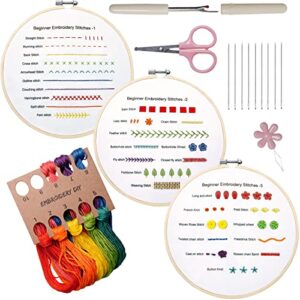
The Bonroy kit gives you three separate fabric sheets printed with 30 different stitch patterns, so you can master backstitch, satin stitch, and running stitch without guesswork. Each sheet has labeled guide marks that show you exactly where to place your needle.
You’ll get a bamboo hoop, color-coded threads, and steel needles with comfortable eye sizes. The tight-weave cotton fabric won’t fray as you practice, and the included video tutorials walk you through tricky techniques when the illustrated instructions need extra clarity.
| Best For | Adults and older kids (10+) who want to learn embroidery from scratch with clear visual guides and don’t mind supplementing printed instructions with video tutorials. |
|---|---|
| Material | Bamboo, Cotton, Fabric |
| Skill Level | Beginners |
| Primary Use | Embroidery Learning |
| Includes Instructions | Yes |
| Weight | Not specified |
| Piece Count | Complete kit |
| Additional Features |
|
- Three practice sheets with 30 pre-printed stitch patterns and labeled guide marks take the guesswork out of learning
- Complete starter bundle includes bamboo hoop, color-coded threads, needles, and video tutorials for under-explained techniques
- Tight-weave cotton fabric won’t fray while you practice, and the portable size lets you work anywhere
- Printed instructions can be hard to follow due to unclear language or translation issues
- Needle eyes run small, making it frustrating to thread multiple strands at once
- The included needle threader often doesn’t work well, so you may need to buy a better one
7. TenDawn Embroidery Stitch Book Kit
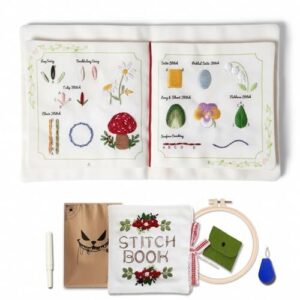
The TenDawn kit packs 30 stitch lessons into a fabric book format you can practice on directly. You’ll trace running stitches, backstitches, and satin stitches right onto pre-printed pages made from medium-weight linen-like fabric that stays flat while you work.
The bundle includes 18 floss skeins, steel needles, scissors, and a needle threader—everything you need to build real skill. Video tutorials back up the illustrated guides when you hit a tricky technique. At $28.99, it’s a portable practice system that grows with you.
| Best For | Beginners who want hands-on practice with a portable kit that teaches 30 embroidery stitches through direct fabric tracing and video support. |
|---|---|
| Material | Fabric |
| Skill Level | Beginners |
| Primary Use | Embroidery Learning |
| Includes Instructions | Yes |
| Weight | 8.8 ounces |
| Piece Count | Complete kit |
| Additional Features |
|
- Practice directly on pre-printed fabric pages instead of wasting materials on trial runs
- Includes video tutorials alongside illustrated guides to help you work through tricky techniques
- Comes with all the basics—18 floss colors, needles, scissors, and threader—so you can start immediately
- Some kits arrived incomplete or missing items shown in promotional materials
- Thread quality concerns reported by several users
- May need additional supplies or skills beyond what’s included to finish certain projects
8. KintKita Embroidery Kit for Beginners
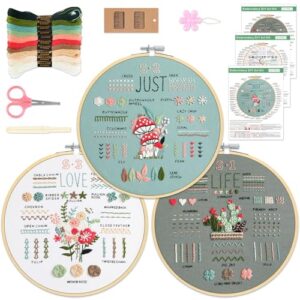
If you want a kit with printed designs you can stitch without tracing, the KintKita set gives you three fabric pieces pre-marked for 36 basic stitches. The cotton fabric holds tension in the 6-inch hoop while you practice backstitches and satin stitches using the included floss colors.
Step-by-step instructions guide you through each technique, though some users recommend pairing the kit with online videos for clearer stitch demonstrations. At under $20, it’s a low-pressure way to master embroidery fundamentals.
| Best For | Beginners who want pre-printed patterns and a complete starter set to practice basic embroidery stitches without the hassle of transferring designs. |
|---|---|
| Material | Cotton, Linen |
| Skill Level | Beginners |
| Primary Use | Embroidery Learning |
| Includes Instructions | Yes |
| Weight | 6.2 ounces |
| Piece Count | 3 sets |
| Additional Features |
|
- Includes everything you need in one box—fabric, threads, hoop, needles, and tools—so you can start stitching right away
- Pre-printed designs on cotton fabric mean no tracing or pattern transfer required
- Teaches 36 fundamental stitches with step-by-step instructions at an affordable price
- Instructions aren’t always crystal clear, so you might need to watch YouTube tutorials for certain stitches
- Material quality can be inconsistent, with some users reporting faint chalk markings on the fabric
- May feel too basic if you already have some embroidery experience
Fabrics to Avoid When Starting Out
Not all fabrics are created equal when you’re learning to sew. Some materials will fight you at every step, making simple projects feel impossible and killing your confidence before you’ve even started.
Here are the fabrics you should skip until you’ve built up your skills and experience.
Slippery and Delicate Fabrics
Slippery surfaces like silk satin or cotton voile will slide right under your needle, causing seam slippage and skipped stitches.
Delicate cuts in velvet show every handling mistake, while sheer fabrics demand perfect tension control you haven’t developed yet.
These materials require sophisticated sewing techniques for fraying prevention and proper fabric drape. Save them for later when your skills match their demands.
Very Stretchy Materials
Knit fabrics and jersey stitching present a wild challenge when you’re just starting out. Double knit and ponte knit behave differently than woven cotton, stretching unpredictably under your needle. T-shirt knit curls at the edges and grows as you sew, turning simple seams into frustrating battles.
- Jersey knit edges curl inward, making straight seams nearly impossible to align properly
- Spandex handling demands zigzag stitches instead of straight ones you’re practicing
- Cotton jersey knit can tunnel and pucker when you use standard thread tension
- Stretchy fabric tips won’t help if you haven’t mastered stable materials first
- Elastic sewing requires specialty needles and techniques beyond basic skill building
Expensive or Loosely Woven Fabrics
Fabric costs add real pressure when cashmere and loosely woven linens show every mistake you make. These materials snag easily on pins, creating loose threads that unravel your confidence.
Pilling issues appear from basic handling, while open weaving techniques reveal seam allowances underneath. Skip expensive options until you’ve mastered fabric stability with forgiving fabrics that won’t punish beginner handling.
Where to Buy Beginner-Friendly Fabrics
You don’t need to spend a fortune to stock up on beginner-friendly fabrics. The good news is that great practice materials are available both locally and online, so you can choose what works best for your budget and learning style.
Here’s where to find fabrics that won’t fight back while you’re building your skills.
Local Fabric Stores
Your neighborhood fabric shop is your best friend when you’re just starting out. You can touch the cotton fabric, check quality firsthand, and get in-store guidance from staff who know beginner-friendly options inside out.
Many shops offer community classes and fabric selection help customized to sewing for beginners. Prices usually run five to eight dollars per yard for stable, easy-care cottons.
Online Retailers
If you can’t make it to a physical shop, online stores give you access to thousands of beginner friendly options with detailed fabric reviews and fabric selection guides.
Many retailers bundle digital tutorials with their sewing for beginners kits, and you’ll find clear retailer policies on cotton fabric care, returns, and customer support. Check for bundles that include everything you need to practice.
Thrift Stores and Garage Sales
You’ll find hidden gems at thrift stores and garage sales where fabric sourcing becomes a treasure hunt.
Secondhand fabrics cost as little as 50 cents to 2 dollars per piece, perfect for beginner sewers practicing new skills. Check flat sheets for yards of continuous cotton, inspect for holes or worn spots, and always wash finds before sewing.
This discount hunting approach lets you experiment without fear of wasting expensive material.
Frequently Asked Questions (FAQs)
What is the easiest fabric to sew for beginners?
When you’re starting out, quilting cotton is your best friend. This beginner-friendly fabric stays put under your needle, doesn’t stretch or slide, and helps you build confidence with every straight seam.
What fabric to use to practice sewing?
Cotton quilting fabric and cotton poplin work best for practice sewing because they’re stable, easy to handle, and don’t shift under your presser foot.
These beginner-friendly fabrics let you focus on mastering basic sewing skills.
What is the best fabric for basics?
Your wardrobe staples deserve fabric that behaves. Cotton poplin and quilting cotton are the best beginner-friendly fabrics for everyday basics because they’re easy to handle, stable under the needle, and forgiving when you’re still mastering sewing essentials.
How much fabric should I buy for practice?
You’ll want about one to two yards of beginner-friendly fabric for initial practice projects.
This fabric quantity gives enough room for mistakes, seam ripping, and multiple attempts without breaking your sewing budget.
Can I reuse practice fabric for final projects?
Yes, you can absolutely reuse practice fabric for final projects.
Successful muslin mockups make comfortable wearable garments for home wear, while leftover pieces work well as linings, facings, or even press cloths.
What thread works best with beginner fabrics?
You don’t need fancy specialty spools to match beginner-friendly fabrics.
All purpose polyester thread in 40 to 50 weight complements cotton quilting fabric and broadcloth beautifully, pairing with 80/12 needles for smooth, even stitches.
Should I prewash all my practice fabric first?
Prewashing helps prevent fabric shrinkage and dye bleeding in your finished projects. Cotton and linen benefit most from this sewing preparation step, improving fabric stability and handling while revealing true fabric properties before you cut.
Does fabric quality affect sewing machine performance?
Fabric thickness and texture directly shape stitch quality and machine tension. Slippery synthetics shift during fabric feed, while stable cottons let your needle selection and sewing machines work smoothly.
Choosing the right fabric makes beginner friendly learning possible.
Conclusion
Sure, you could start your sewing journey wrestling with slippery charmeuse at 11 PM, cursing your machine while your cat judges you.
Or you could grab some reliable cotton and actually enjoy learning. The right practice fabric for beginners isn’t about limiting yourself—it’s about building real skills without the drama.
Start with what works, master the basics, and save the fancy stuff for when you’re ready to show off. Your future self will thank you.
- https://www.instagram.com/explore/tags/bfsandwashedcotton
- https://www.seamwork.com/catalog/hansie?rfsn=6464216.d24786
- https://suzyquilts.com/the-ultimate-guide-to-best-fabric-online/
- https://www.missouriquiltco.com/pages/buy-embroidery-supplies
- https://sewcanshe.com/100-stunning-fun-free-sewing-ideas-for-fabric-scraps/