This site is supported by our readers. We may earn a commission, at no cost to you, if you purchase through links.
A 10-year-old who sews doesn’t just make scrunchies—she builds confidence one straight stitch at a time. Research from the Craft and Hobby Association shows kids who learn hands-on making skills score higher in problem-solving and stick with creative hobbies longer into adulthood. That’s a lot of payoff from a machine that fits in a backpack.
The tricky part is finding the right fit. Too underpowered, and the machine jams on the first thick seam. Too complex, and the excitement dies before the first project finishes. The best sewing machine for a 10-year-old lands in a specific sweet spot—safe enough for independent use, capable enough to grow with her skills.
Table Of Contents
- Key Takeaways
- Best Sewing Machines for 10-Year-Olds
- 1. Minifun Girls Fashion Design Kit
- 2. KPCB Tech Mini Sewing Machine Kit
- 3. DAPRIL Mini Portable Sewing Machine
- 4. My First Sewing Machine Book
- 5. Mini Portable Sewing Machine for Beginners
- 6. CraftBud Mini Portable Sewing Machine
- 7. Zeuboary Pink Portable Sewing Machine
- 8. Brother XM2701 Lightweight Sewing Machine
- 9. RxMeili Portable Mini Sewing Machine
- Key Kid-Friendly Sewing Features
- Safety Tips Before Buying
- Mechanical Vs Mini Machines
- Best Projects for Beginners
- Frequently Asked Questions (FAQs)
- Conclusion
Key Takeaways
- The Brother XM2701 is top pick for most 10-year-olds — it has 27 built-in stitches, a drop-in bobbin, and room to grow without overwhelming a beginner.
- Safety features like finger guards, anti-slip feet, and adjustable speed control matter more than price when choosing a machine for a child.
- Mini portable machines are great for casual crafting on the go, but they hit a ceiling fast — limited stitches and flimsy builds make them poor long-term choices.
- Starting with small, forgiving projects like scrunchies, felt pouches, or tote bags builds real confidence before tackling anything more complex.
Best Sewing Machines for 10-Year-Olds
Finding the right sewing machine for a 10-year-old doesn’t have to be overwhelming. The picks below are chosen with safety, ease of use, and real fun in mind — so your kid can actually learn, not just tinker. Here are nine great options worth a closer look.
If you’re just getting started, these beginner sewing machine tips for kids can help you figure out exactly what features matter most before you buy.
1. Minifun Girls Fashion Design Kit
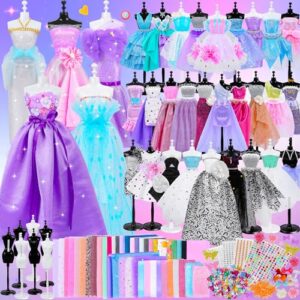
The Minifun Girls Fashion Design Kit isn’t a sewing machine — but for a 10-year-old just discovering fashion, it might be the perfect starting point. With over 1,500 craft pieces and 7 mannequins, your child can design and decorate outfits without touching a needle.
The no-sew mode keeps things safe and stress-free.
At $29.99, it’s an affordable way to spark creativity before committing to a real machine.
| Best For | Kids ages 6–12 who are curious about fashion and want a fun, no-pressure way to start designing clothes without any sewing experience. |
|---|---|
| Skill Level | Beginner / Ages 6–12+ |
| Power Source | N/A (no-sew kit) |
| Price (USD) | $29.99 |
| Included Accessories | 1500+ craft pieces, tools, booklet |
| Portability | Fully portable kit |
| Suitable Project Types | Doll fashion design |
| Additional Features |
|
- Tons of materials to work with — 1,500 pieces means there’s always something new to try.
- No-sew mode makes it safe and easy for younger kids to jump right in.
- Great value at $29.99 for everything you get.
- Outfits don’t stay put well — no Velcro or fasteners means things slip around.
- Finished designs won’t fit standard dolls like Barbie without extra tweaks.
- The adhesive doesn’t hold great, so some embellishments may not stick for long.
2. KPCB Tech Mini Sewing Machine Kit
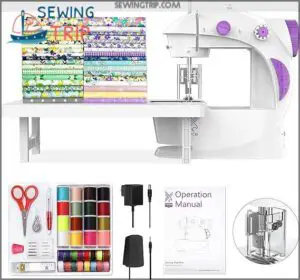
If your 10-year-old is ready to try an actual machine, the KPCB Tech Mini Sewing Machine Kit is a solid first step. It weighs under 3 lb, so your child can carry it without help.
The two-speed control keeps stitching slow and manageable. A built-in finger guard adds peace of mind, and the included kit — fabric squares, threads, bobbins, scissors — means you’re ready to sew on day one.
| Best For | Kids around 10 and up (or total beginners of any age) who want to learn sewing without jumping into a complex machine. |
|---|---|
| Skill Level | Beginner / All ages |
| Power Source | AC adapter / Manual crank |
| Price (USD) | Not specified |
| Included Accessories | Fabric, bobbins, scissors, threads, foot pedal |
| Portability | Lightweight (2.97 lb) |
| Suitable Project Types | Home repairs, small crafts |
| Additional Features |
|
- Comes with basically everything you need out of the box — fabric, threads, scissors, bobbins, the works
- Two-speed control and a finger guard make it genuinely beginner-friendly and safe for younger users
- Super lightweight and compact, so it’s easy to move around or tuck away when not in use
- The plastic build feels a bit flimsy, and it may not hold up well with heavy or long-term use
- Thread tension and bobbin issues have been reported, especially on thicker fabrics
- Very limited stitch options — no backstitch and minimal adjustments, so it’ll hit a ceiling pretty quickly as skills grow
3. DAPRIL Mini Portable Sewing Machine
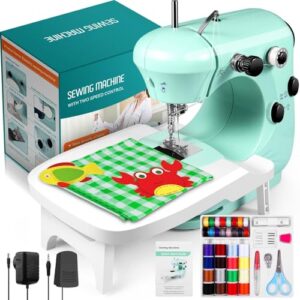
The DAPRIL Mini Portable Sewing Machine takes the compact idea even further. It folds down small enough to tuck into a backpack, which makes it a fun option for kids who like crafting on the go.
It manages basic straight stitching well — think small hems, felt projects, and simple repairs. The low-speed setting keeps things calm for new sewers. Just know it skips reverse stitching, so it’s best for light, easy projects rather than anything complex.
| Best For | Kids and beginners who want a simple, portable machine for light crafting, quick repairs, or learning the basics of sewing. |
|---|---|
| Skill Level | Beginner / Children |
| Power Source | AC mains |
| Price (USD) | Not specified |
| Included Accessories | Extension table, built-in light, thread cutter |
| Portability | Mini compact design |
| Suitable Project Types | Hemming, small crafts |
| Additional Features |
|
- Small enough to toss in a bag and take anywhere — great for crafting on the go
- Built-in light and thread cutter are handy little extras that make life easier
- Low-speed mode gives beginners more control without the overwhelm
- Missing parts (bobbin, manual, sewing kit) have been a common complaint
- No reverse stitching, tension markings, or foot-pedal grip — pretty bare-bones
- Some units start sewing the moment you power them on, which is a real quality-control concern
4. My First Sewing Machine Book
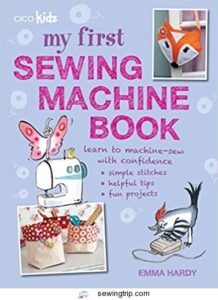
Not every learning tool has to be a machine. My First Sewing Machine Book is a smart add-on for any young sewer just getting started. It covers 35 beginner-friendly projects across four categories — clothes, bags, room décor, and toys — all built around simple straight stitches and basic seams.
It also walks kids through machine parts in plain language, so they actually understand what they’re working with before touching the pedal.
| Best For | Kids aged 7 and up — or any beginner — who just got their first sewing machine and need a fun, structured way to learn the basics. |
|---|---|
| Skill Level | Ages 7+ |
| Power Source | N/A (book) |
| Price (USD) | $10.96 |
| Included Accessories | 128-page illustrated guide |
| Portability | Portable book |
| Suitable Project Types | 35 beginner projects |
| Additional Features |
|
- 35 projects across four categories means there’s always something new to try, from scarves to coin purses to wall décor.
- Step-by-step visuals make it easy for kids (and adults!) to follow along without needing someone to explain every move.
- Machine parts are explained in plain language, so young sewers actually know what they’re doing before they start.
- You’ll need a sewing machine and basic supplies on hand — the book doesn’t come with materials.
- Basting instructions are skipped in favor of pinning, which some sewers prefer to learn properly from the start.
- Experienced sewers will likely find the projects too simple — it’s really built for true beginners.
5. Mini Portable Sewing Machine for Beginners
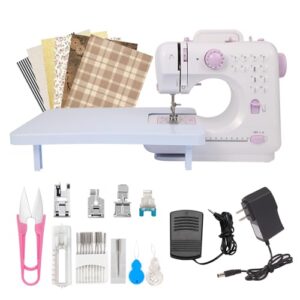
At just 5.29 lb, this little machine punches above its weight for a beginner. It offers 12 built-in stitch patterns — straight, zigzag, blind hem, and more — which is plenty for a 10-year-old learning the basics.
If she outgrows these basics quickly, a look at computerized sewing machines designed for easy operation can help you figure out what to upgrade to next.
What makes it genuinely handy is the dual power option: plug it in or run it on four AA batteries. That means your kid can sew anywhere.
Threading guides are printed right on the body, so setup doesn’t turn into a frustrating guessing game.
| Best For | Kids and beginners who want a lightweight, easy-to-use machine for simple sewing projects at home or on the go. |
|---|---|
| Skill Level | Beginner / Children |
| Power Source | AC adapter / 4 AA batteries |
| Price (USD) | Not specified |
| Included Accessories | Extension table, foot pedal, threads |
| Portability | Mini portable (5.29 lb) |
| Suitable Project Types | Clothing, bags, crafts |
| Additional Features |
|
- Runs on batteries or AC power, so you can sew pretty much anywhere
- 12 stitch patterns built in — more than enough to learn the basics
- Threading guides are printed right on the machine, which takes a lot of the guesswork out of setup
- Not built for heavy fabrics or big projects — keep it light
- Some users have run into thread breakage and jamming, so it can be a little finicky
- The written instructions can be confusing; you’ll probably want to watch a video tutorial before diving in
6. CraftBud Mini Portable Sewing Machine
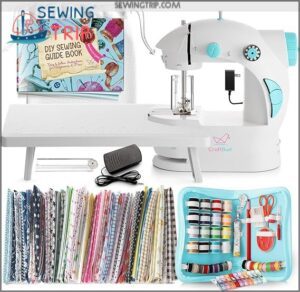
The CraftBud Mini is a solid step up from most toy-style machines. Weighing just 2 pounds, it’s light enough for a 10-year-old to carry between rooms without help. The 122-piece kit covers everything from the start — threads, bobbins, needles, fabric squares, and a beginner guidebook with 10 projects built in.
One feature parents appreciate: the built-in finger guard. It’s a small detail that makes a real difference at this age.
| Best For | Kids ages 7–12 and total beginners who want to learn the basics of sewing without jumping into a complex machine. |
|---|---|
| Skill Level | Ages 7–12 / Beginner |
| Power Source | AC adapter / Batteries |
| Price (USD) | Not specified |
| Included Accessories | 122-piece full kit with guidebook |
| Portability | Lightweight (2 lb) |
| Suitable Project Types | Doll clothes, tote bags |
| Additional Features |
|
- Comes with everything you need right out of the box — fabric, thread, bobbins, and a guidebook with 10 starter projects
- At just 2 pounds, it’s easy to move around and works great on a desk, kitchen table, or even a lap
- Runs on batteries or an AC adapter, so it’s flexible enough for travel, camps, or small spaces
- Only does a single straight stitch, so there’s no room to grow into more creative or detailed sewing work
- Some users run into bobbin tension issues, needle breaks, or motor problems after just a little use
- The accessories feel pretty cheap, and the foot pedal is tiny — the machine can also get pretty noisy during use
7. Zeuboary Pink Portable Sewing Machine
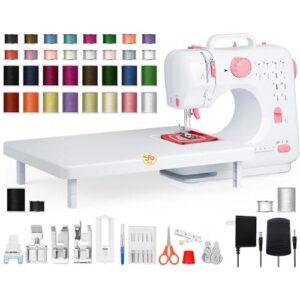
At just 5.65 pounds, the Zeuboary Pink is easy for a 10-year-old to move around without help.
It runs on an AC adapter or four AA batteries, so your child can sew almost anywhere.
The 12 built-in stitch patterns cover basic hems, buttonholes, and simple decorative work.
An LED light keeps the work area bright, and the included 32-color thread kit means you’re ready to start right away.
| Best For | Kids and beginners who want a simple, portable machine for light sewing projects like hemming, repairs, and basic crafts. |
|---|---|
| Skill Level | Beginner / Children |
| Power Source | AC adapter / 4 AA batteries |
| Price (USD) | Not specified |
| Included Accessories | 32-color thread kit, storage drawer |
| Portability | Portable with handle |
| Suitable Project Types | Home repairs, hemming |
| Additional Features |
|
- Lightweight and compact — easy to carry around and store in small spaces
- Comes ready to go with a 32-color thread kit and 12 stitch patterns built in
- Works on batteries or AC power, so you can sew just about anywhere
- Runs pretty loud, which can get annoying in a quiet room
- Plastic build means it won’t hold up well to heavy, frequent use
- Not great for thick fabrics like denim — best to stick to lighter materials
8. Brother XM2701 Lightweight Sewing Machine
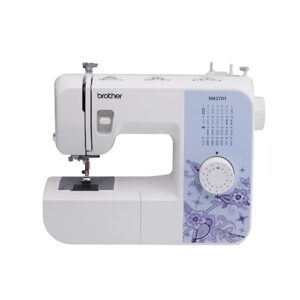
The Brother XM2701 is where things get serious — in the best way. At 12.6 lb, it’s heavier than a mini machine, but still manageable for a 10-year-old with a dedicated workspace.
You get 27 built-in stitches, an automatic needle threader, and a drop-in bobbin that snaps into place without frustration. The free-arm design manages cuffs and sleeves easily.
At $149, it’s a genuine starter machine, your child won’t outgrow in a month.
| Best For | Kids and beginners who are ready to move past toy machines and start learning on something real. |
|---|---|
| Skill Level | Beginner / All ages |
| Power Source | AC adapter (120V) |
| Price (USD) | $149.00 |
| Included Accessories | 6 presser feet, needles, guide |
| Portability | Portable (12.6 lb) |
| Suitable Project Types | Hemming, quilts, repairs |
| Additional Features |
|
- The automatic needle threader and drop-in bobbin make setup quick and low-frustration — great for impatient learners.
- 27 built-in stitches gives a kid plenty to experiment with without feeling boxed in.
- Lifetime online support means help is always available when things go sideways.
- It can shift around on the table at higher speeds, which gets annoying fast.
- Skip the denim and leather — this machine isn’t built for heavy fabrics.
- Only works in the U.S. (120V), so no use abroad without voiding the warranty.
9. RxMeili Portable Mini Sewing Machine
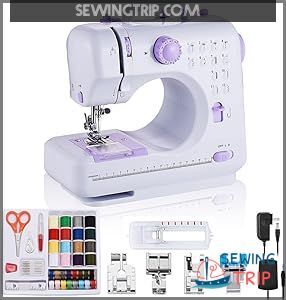
At $49.99, the RxMeili is one of the most budget-friendly picks on this list. It weighs just 5.3 lb and runs on either batteries or an AC adapter, so your child can sew at a desk or on the floor during a craft afternoon.
It offers 12 built-in stitches and includes both a foot pedal and a button control. Just know it’s best for light fabrics — thick layers will slow it down.
| Best For | Kids and beginners who want a simple, lightweight machine for easy fabric projects like hemming, repairs, or basic crafts. |
|---|---|
| Skill Level | Beginner / Casual users |
| Power Source | AC adapter / 4 AA batteries |
| Price (USD) | $49.99 |
| Included Accessories | Bobbin, extra feet, thread, storage drawer |
| Portability | Portable with top handle (5.3 lb) |
| Suitable Project Types | Hemming, bags, DIY crafts |
| Additional Features |
|
- 12 stitch options give you enough variety for most beginner projects
- Runs on batteries or AC power, so you can sew just about anywhere
- At $49.99, it’s one of the most affordable options out there
- Struggles with thick fabrics or multiple layers — not built for heavy-duty work
- Battery mode is unreliable and can cut out even with fresh batteries
- Some users have reported motor issues and pedal failures right out of the box
Key Kid-Friendly Sewing Features
Not every sewing machine is built with kids in mind, and that difference really matters. The right features can make learning feel easy and fun instead of frustrating. Here’s what to look for before you buy.
Simple Stitch Selection
Think of stitches as your child’s starter toolkit. A good beginner machine keeps things simple — just a handful of options that actually get used.
Here are the basic stitch types worth knowing:
- Straight stitch – the everyday workhorse for most fabrics
- Zigzag stitch – prevents fraying and stretches with the material
- Buttonhole stitch – creates clean, reinforced openings
- Overcast stitch – mimics a serger to seal raw edges
- Decorative stitches – add fun detail to pillowcases or pouches
A stitch selection dial with clear labels makes switching seamless. Start with a 2.5 mm straight stitch on medium fabric — it’s the safest, most forgiving setting for beginners. Machines like the Brother XM2701 offer 27 built-in stitches, which sounds like a lot, but your child will mostly use three or four.
Adjustable Speed Control
Once your child has a few stitches down, speed becomes the next thing to manage.
A speed control slider lets you set a safe ceiling before they even press the pedal — so fast stitching stays off the table until they’re ready.
Many beginner machines max out around 500–800 stitches per minute, which is plenty for learning without feeling overwhelming.
Easy Bobbin Loading
Speed control helps beginners stay in charge of their machine — and bobbin loading is the next piece of the puzzle.
A drop-in top bobbin is the easiest setup for young sewists. The bobbin clicks into place from above, and a transparent drop-in bobbin case lets your child see exactly how much thread is left. For a smooth stitch, follow the proper top-loading unwinding direction.
Lightweight Portable Design
Once the bobbin clicks in, portability becomes the next thing worth thinking about.
A lightweight sewing machine makes a real difference when your child wants to move from bedroom to kitchen table and back again. Machines like the Janome Fastlane weigh just 5 lb, which means a 10-year-old can carry it without help.
Here’s what makes a portable sewing machine for kids worth choosing:
- Aluminum or polycarbonate frames keep weight under 2.5 lb on mini models
- Integrated carrying grips distribute weight evenly and reduce hand strain
- Compact dimensions (9–12 inches wide) fit easily on small desks or in a cubby
- Battery-operated options cut the cord entirely for flexible placement
- Free-arm design lets kids sew cuffs and small pieces without extra attachments
A compact for travel setup also means tidier storage. Small and portable doesn’t mean flimsy — powder-coated frames and ABS plastic bodies hold up to daily use.
Beginner-friendly Accessories
A good starter kit makes the learning curve much gentler.
Look for machines that include an auto needle threader, a few basic presser feet, and a clear finger guard right out of the box.
Small extras — a measuring tape, fabric chalk, and practice felt sheets — mean your child can start a project without a last‑minute supply run.
Safety Tips Before Buying
Before you hand over a sewing machine, a few safety checks are worth running through. The right features can make a big difference between a confident young sewer and a frustrated one. Here’s what to look for before you buy.
Finger Guard Protection
A needle moves fast — faster than little fingers can always react.
Finger guards sit between your child’s fingertip and potential punctures, and picking the right one matters. Look for these key features:
- Silicone material — flexible, snug, and easy to rinse clean
- Low-profile thickness (0.5–1.2 mm) — keeps touch sensitivity intact
- Adjustable or elasticated fit — grows with small hands
- Breathable design — reduces sweating during longer sessions
- Monthly inspection habit — check for cracks and replace worn guards promptly
A loose guard can slip straight into the needle area, so proper fit isn’t optional.
Stable Machine Base
A wobbly machine is a safety hazard, plain and simple.
Stable machine base design matters more than most buyers realize. Look for durable metal construction — machines with a metal frame flex far less than all-plastic builds. Anti-slip rubber feet grip the table surface and reduce drift during stitching. Heavier machines naturally dampen vibration, so machine weight considerations work in your favor here.
Shorter Pedal Reach
The foot pedal might seem like a small detail, but its reach makes a big difference for a 10-year-old. A pedal positioned too far away forces awkward leg angles that tire kids out fast.
Look for these ergonomic wins:
- Shorter pedal reach keeps the knee at a gentle, comfortable bend
- Adjustable pedal plates let you fine-tune without replacing parts
- Non-slip mat placement stops the machine from creeping during use
Proper safety alignment between pedal and table height helps your child stay comfortable and focused — which is exactly how skill progression to bigger machines starts.
Adult Supervision Needs
No sewing machine is truly safe without an adult nearby. Stay within arm’s reach whenever your child stitches — not just in the room, but close enough to intervene instantly.
Before each session, run through a quick checklist: safety glasses on, loose hair tied back, and machine unplugged during any setup changes. Start simple, then build from there.
Safe Threading Setup
Threading a machine wrong is one of the most common reasons stitches skip or bunch up. That’s why taking it slow here really pays off.
Before your child threads anything, run through these basics:
- Raise the presser foot before threading to release tension and prevent snagging
- Follow the thread path marked on the machine, step by step
- Unplug the machine whenever loading or changing the bobbin
An automated needle threader removes most of the frustration — and keeps small fingers away from the needle tip. Pair that with a finger guard, and threading practice becomes much safer from day one.
Mechanical Vs Mini Machines
Not all sewing machines are built the same, and that really matters when you’re shopping for a 10-year-old. The right choice depends on how serious your child is and how much room you have to work with. Here’s a breakdown of the main types to help you figure out which one fits best.
Full-size Beginner Machines
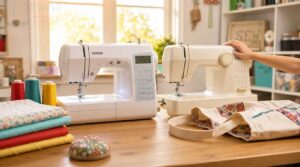
A full-size beginner machine is basically the best sewing machine for a 10 year old who’s serious about learning. These machines sit steady on a desk, give you a proper work surface, and build real skills from day one.
| Feature | Brother XM2701 | Singer Start 1304 |
|---|---|---|
| Built-in Stitches | 27 | 6 |
| Weight | Under 12 lb | Lightweight |
| Safety Features | Metal frame, free arm | Short pedal cord, free arm |
Durability factors matter here. Metal frames reduce vibration and hold up through hundreds of practice sessions. Stitch quality stays consistent because the machine doesn’t flex mid-seam. That means cleaner results, which keeps a kid motivated.
For skill progression, full-size machines grow with your child. The Brother XM2701 starts simple but has enough stitches to tackle real garments later. The Singer Start 1304 keeps things basic — perfect if your child just wants to get started without feeling overwhelmed.
Workspace benefits are real too. A wider throat area means larger projects, like pillowcases or tote bags, actually fit. Long-term value makes these worth the investment — a kid-friendly sewing machine built to last beats replacing a cheaper model every year.
Compact Mini Models
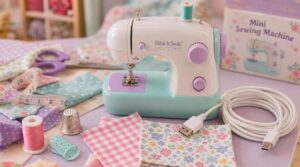
Compact minis are a different story. Where full-size machines stay put on a desk, a Mini Sewing Machine goes wherever your child does.
| Feature | Compact Mini | Full-Size Beginner |
|---|---|---|
| Weight | Under 3 lb | 11–14 lb |
| Power | USB or battery | Wall outlet |
Ultra-Compact Size and Jam-Free Bobbins make these beginner-friendly. Many include a Beginner Fabric Kit and finger guard for safer practice.
Toy-style Sewing Machines
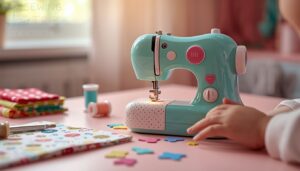
Toy-style machines sit at the far end of the spectrum. Something like the CoolMaker Toy Sewing Machine costs under $30 and looks adorable, but it’s built more for imaginative play than real projects.
That said, good toy-style picks still include a finger guard, built-in lighting, and pre-threaded needles — handy features that make a kid-friendly sewing machine genuinely safer to explore.
Durability and Stitch Quality
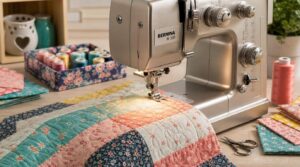
Durability matters more than it might seem at first glance. A machine that skips stitches or produces loose, uneven seams will frustrate a 10-year-old, fast.
Look for a metal frame construction — it absorbs vibration better than plastic and holds tension adjustment settings more consistently across a project.
Best Option by Skill
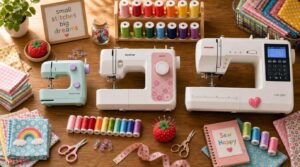
Your child’s skill level should really drive this decision. A true beginner does best with a compact beginner model featuring 4–6 stitches and adjustable speed control capped around 600–900 stitches per minute. A confident kid ready to grow benefits from a full-size machine like the Brother XM2701, which adds 27 stitches and metal-frame durability without overwhelming a young learner.
Let your child’s skill level lead: beginners need simplicity, growing sewers need room to expand
| Skill Level | Best Machine Type | Key Feature |
|---|---|---|
| First-timer | Mini portable | Speed limiter |
| Intermediate | Brother XM2701 | 27 built-in stitches |
| Expert | Brother CS7000i | 60 stitches, auto-threader |
Best Projects for Beginners
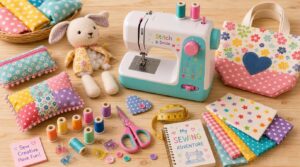
Once your child gets comfortable with their machine, it’s time to put it to work on something fun. The best beginner projects are small, forgiving, and actually useful — so there’s a real payoff at the end. Here are five great starting points to get them going.
Scrunchies and Headbands
Scrunchies are one of the best starter projects around — quick to finish and actually useful. Silk and satin fabrics are ideal choices because they reduce friction and minimize hair breakage.
The Brother XM2701 sews these lightweight fabrics beautifully without puckering. Keep the elastic snug but not tight, and your 10-year-old will have a wearable win on the very first try.
Felt Pouches
Felt pouches are a perfect next step after scrunchies. They’re small, forgiving, and endlessly customizable.
- Use wool or polyester felt — no fraying, no hemming needed
- Keep pouches 4–6 inches wide for a beginner-friendly size
- Add a snap or zipper closure for easy, secure access
- Decorate with iron-on patches or fabric markers before sewing
The Brother XM2701 manages felt beautifully with a simple straight stitch.
Pillowcase Projects
Making a pillowcase is one of those projects that feels impressively real — you end up with something you actually use every night.
Pre-wash your fabric first to avoid shrinkage. The classic burrito method wraps your cuff inside the fabric, giving you clean, enclosed seams with no raw edges. Cut to 20 by 26 inches, leave a half-inch seam allowance, and you’re set.
Doll Clothes
Doll clothes are one of the most rewarding beginner projects because the pieces are tiny — which means less fabric, shorter seams, and faster results.
Use lightweight cotton or knit fabric so seams stay flat and the clothes slip on easily. Snap fasteners and Velcro work best for small closures. Scale your pattern to your doll’s exact height for a proper fit.
Simple Tote Bags
A tote bag might just be the perfect next step after doll clothes. The pieces are simple rectangles, seams are long and forgiving, and the finished result is actually useful.
Cut two matching panels from cotton canvas fabric, sew three sides, add straps, and you’re done.
Frequently Asked Questions (FAQs)
What is the best sewing machine for an 11 year old?
As the saying goes, *the right tool makes all the difference.
- For an 11-year-old, the Brother XM2701 hits the sweet spot — lightweight, beginner-friendly, with solid safety features and room to grow.
What is the best child’s sewing machine?
The Brother XM2701 is a top pick. It’s lightweight, has 27 built-in stitches, and includes a drop-in bobbin — making it a reliable, beginner-friendly choice for kids just starting out.
How old should a child be to use a sewing machine?
Most kids are ready around age six to eight, but readiness really depends on attention span and listening skills. A calm, focused child matters far more than hitting a specific birthday.
What is the best sewing machine for beginners?
The Brother XM2701 is a top pick for beginners — lightweight, easy to thread, and loaded with 27 stitches. Its drop-in bobbin and adjustable speed make starting simple and stress-free.
What is the recommended thread type and quality?
Stick with 50 wt polyester thread — it’s the workhorse for beginners. It manages most fabrics smoothly, resists stretching, and holds color after washing. Gutermann is a reliable brand that won’t shred or snap mid-stitch.
How easy is it to adjust tension levels?
Most machines keep it simple. The tension dial runs 0–9 — higher tightens, lower loosens. Sew a scrap piece, check both sides, and adjust until stitches look even.
Are there any creative project ideas included?
Many kits include creative project ideas like scrunchies, felt pouches, tote bags, and doll clothes — fun, skill-building options that keep young sewists engaged while learning real techniques.
Does it come with a comprehensive instruction manual?
Most beginner machines include a printed user manual with clear diagrams, threading tutorials, and basic safety instructions. Some models also offer digital guides with video walkthroughs — genuinely helpful for first-time sewers.
Can the machine handle a variety of fabric types?
Most machines handle a good range of fabric types. Cotton, polyester, and stretch blends all work well with adjustable settings and the right needle size for your project’s needs.
What age can kids start using sewing machines?
Most kids are ready to try a sewing machine around age eight to ten, though some confident six-year-olds can start with the right machine and a patient adult close by.
Conclusion
right machine teaches patience, builds real skill, and turns a blank piece of fabric into something she made herself.
best sewing machine for a 10‑year‑old isn’t just about features—it’s about matching the tool to the child.
Start simple, stay safe, and let early wins do the heavy lifting.
Once she finishes that first project and holds it up with pride, you’ll know you made exactly the right call.
- https://www.lindazs.com/post/best-sewing-machine-for-beginners-2026
- https://sewjoyfulteaching.com/blogs/news/best-sewing-machines-for-beginners-2025
- https://www.nytimes.com/wirecutter/reviews/best-sewing-machine
- https://www.cottonclubsew.co.uk/blog/sewing-machines-for-kids-guide
- https://www.goodhousekeeping.com/appliances/g16/sewing-machine-reviews