This site is supported by our readers. We may earn a commission, at no cost to you, if you purchase through links.
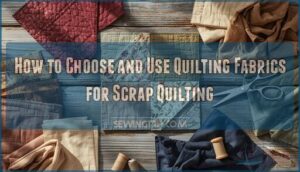
Your scrap pile holds more potential than you think. A handful of leftover quilting fabrics can become something stunning when you understand how to match texture, weave, and weight.
Quilting cotton, with its steady weave and crisp hand, forms the backbone of most scrap quilts—it behaves, blends, and lasts. Pair it with fabrics that share its mood, and you’ll avoid puckered seams and stretched edges.
With a little thought about how each fabric feels and behaves, your scraps start working together instead of fighting each other, turning the chaos of color and pattern into a quilt that feels beautifully intentional.
Table Of Contents
Key Takeaways
- Quilting cotton is the most reliable fabric for scrap quilting thanks to its tight weave, medium weight, and long-lasting durability.
- Matching fabrics with similar weight, weave, and fiber content keeps seams smooth, blocks flat, and quilts cohesive.
- Prewashing scraps reduces shrinkage and color bleeding, helping mixed fabrics age evenly and stay stable over time.
- Balanced color values, print scales, and repeated hues create unity and intentional design in scrap quilts of any style.
What Makes Fabrics Ideal for Scrap Quilting?
The best scrap quilts start with the right kind of fabric. Some materials naturally hold their shape, stitch smoothly, and last through years of snuggling.
If you’re looking for ideas on how to use those colorful remnants, these creative sewing machine projects with fabric scraps are a great place to start.
Here’s what to look for when choosing fabrics that make scrap quilting a joy instead of a struggle.
Key Properties of Quilting Cotton
Quilting cotton hits the sweet spot for Scrap Quilting—its medium Thread Count and balanced Fabric Density make piecing Fabric Scraps smooth and steady. With a typical 68 x 68 standard quilting cotton thread count, it offers a smooth, durable surface that’s easy to work with for most quilting projects.
The plain Weave Structure keeps shapes true, while strong Colorfastness and Durability let each Quilt Design shine bright wash after wash. It’s reliable, breathable, and built to last beautifully.
Why Fiber Content Matters
Once you’re comfortable with quilting cotton, it helps to look at what’s inside the fibers you’re sewing with. Fiber content affects Fiber Durability, Color Stability, Shrinkage Control, and even how your Quilt Making feels in daily use.
Cotton Fabric Scraps breathe, shrink, and soften; polyester blends add strength and lower shrinkage, which changes Fabric Blending and Texture Variation in Scrap Quilting.
The Importance of Fabric Weave and Weight
You’ve looked at fiber content; now let’s talk about how Fabric Density and Weight Factors change the way your Quilt behaves in real life. Medium thread count quilting cotton (around 150–200 threads per square inch) offers Fabric Stability, while very loose Weave Types tend to fray and misbehave in tiny Quilt pieces. Standard quilting cotton weight (about 150–160 gsm) gives enough body for accurate Quilting Techniques without making Scrap Quilt Patterns stiff, and mixing very light and heavy Fabric makes seams lumpy and harder to manage in Fabric Scrap Management.
- A smooth, medium-tight weave keeps small patchwork units square and crisp.
- Loosely woven Fabric can ravel at the edges, especially in narrow strips and tiny squares.
- Matching similar Fabric weights helps Scrap Quilt Patterns press flat and look calm.
- Medium-weight, tightly woven cotton creates a cozy, durable Quilt that withstands frequent washing well.
Best Fabric Types for Scrap Quilting
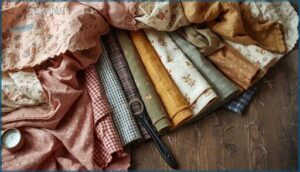
Choosing the right fabrics makes all the difference when you’re piecing together a scrap quilt. Some fabrics play nicer than others regarding sewing, pressing, and long-term wear.
For more insight on how to mix textures and prints effectively, check out this beginner’s quilting techniques guide.
Here’s a look at which types work best—and which ones to skip.
Quilting Cotton Vs. Flannel Scraps
Think of your Fabric Scraps as two personalities: quilting cotton is the steady friend, with higher Thread Count, tight Weave Types, and great Fabric Durability, so Scrap Quilt Patterns stay crisp. Flannel (often with Fiber Blends) brings softness and warmth but stretches, shrinks, and bulks up seams, so careful Scrap Management and Fabric Scrap Management really matter in Scrap Fabric Quilting with these Quilting Fabrics.
For the most predictable results, choose medium weight quilting cotton that offers a tight weave, balanced breathability, and reliable shape retention in your scrap projects.
Using Precuts, Fat Quarters, and Jelly Rolls
Little stacks of precuts can turn Scrap Management into real Quilting Shortcuts. With a Jelly Roll, you skip cutting 2.5″ strips and jump straight into Jelly Roll Tips and fast Scrap Quilt Patterns or Free Quilt Patterns. Fat Quarter Hacks shine too, since one fat quarter can feed several Quilt Patterns and stretch your Fabric Scraps further.
- Jelly Roll strips chain‑pieced into quick strip units
- Fat quarters sliced into squares, rectangles, and binding
- Charm packs laid out as instant patchwork “tiles”
- Layer cakes subcut into smaller precut sizes you already use
- Mini charms added as sweet accent pops in Scrap Quilt Patterns
Fabrics to Avoid in Scrap Quilts
Your Scrap Quilt Patterns will thank you for smart Fabric Selection. Skip slippery Synthetic Fabrics, Stretchy Materials like T‑shirt knits, fragile Loose Weaves such as gauze, heavy Bulky Textiles like denim upholstery, and thick Plush Fabrics such as minky.
They fight your seams, fray or stretch, and break Fabric Cohesion in otherwise happy Fabric Scraps and Scrap Fabric quilts.
How to Prepare Fabrics for Scrap Quilting
Getting your fabrics ready is half the joy of scrap quilting. A little prep goes a long way toward smooth stitching and better results.
Here’s how to set your fabric lineup before the first snip.
Sorting and Organizing Fabric Scraps
When your Fabric Scraps feel out of control, a simple Fabric Organization system makes Scrap Fabric Management much calmer. Start with Color Sorting: warm scraps in one spot, cool in another, or even into 10 color groups if your bins are overflowing.
Then try Fabric Categorization by Scrap Sizing—chunks, squares, strings, and crumbs—using clear boxes or bags as Scrap Storage. These small Organization Tips turn Fabric Management into a gentle, creative ritual.
Prewashing and Shrinkage Considerations
Want to keep surprises out of your scrap quilt and save them for show-and-tell? You’ll want to think about Fabric Shrinkage, Color Bleeding, and how your Fabric choices affect Quilt Texture and long-term Scrap Quilt Ideas. Prewash Methods don’t have to be fancy, but they do need to be intentional when you’re mixing lots of Scrap Fabric and Fabric Scraps from different baskets of your Quilting life.
- Use gentle Prewash Methods (cold or warm water, low to medium heat) to control Shrinkage Rates so your quilt doesn’t pull in more than you planned.
- Remember that quilting cotton can shrink around 3–5 percent on the first wash, while flannel often shrinks even more, which can distort seams in a mixed-fabric scrap quilt.
- Wash deep reds, navies, and browns separately with color catchers the first time to catch Color Bleeding before it reaches your low-volume treasures.
- Decide what Quilt Texture you love: skip prewashing for extra crinkle and coziness, or prewash most fabrics for a smoother, flatter finish in your Scrap Quilt Ideas.
Cutting and Sizing for Scrap Patterns
Think of Scrap Sizing as your future self’s best friend in Fabric Cutting for Scrap Quilts and Patchwork Quilts. Aim for standard units like 2.5 inch strips and squares, then use Grainline Control, Rotary Cutting, and a true 0.25 inch Seam Allowance to keep Quilt Blocks and Quilt Patterns accurate when you turn loose Fabric Scraps into cozy order.
| Focus | What it helps with |
|---|---|
| Grainline Control | Straighter edges and less stretch in Quilt Blocks. |
| Rotary Cutting | Faster, safer trimming of Scrap Sizing units. |
| Seam Allowance | Finished Scrap Quilts that actually match the math. |
Tips for Mixing and Matching Scrap Fabrics
Mixing your fabric scraps is where the real magic happens. It’s the place where color, texture, and pattern come together to tell their story.
The magic of scrap quilting lies in how color, texture, and pattern weave their story together
Here’s how to pull that mix together so your quilt feels unified and full of life.
Achieving Cohesion With Color and Value
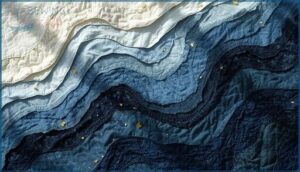
Color Harmony in scrap quilting starts with Value Contrast, not just your favorite prints or hues. When you do a quick Scrap Sorting by light and dark, you build Visual Flow and a truly Cohesive Design rooted in simple quilt design principles and color theory in quilting, so color and fabric cohesion feel like quiet visual harmony, not chaos.
- A river of pale blues and creams winding through deeper navy scraps.
- Soft light squares glowing against a field of inky, midnight tones.
- Tiny sparks of bright yellow dancing between calm grays and whites.
Balancing Prints, Solids, and Scale
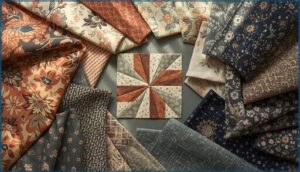
You’ve already seen how value creates calm; now you’ll use Print Scale Balance to keep that calm from turning into clutter.
Mix a few bold, large prints with plenty of small, read-as-solid textures so your block shapes stay clear and your Visual Hierarchy feels intentional.
That simple Scale Proportion keeps fabric cohesion, Print Harmony, and Fabric Contrast working together in your scrap quilts, instead of fighting for attention.
Strategies for Unifying Diverse Scraps
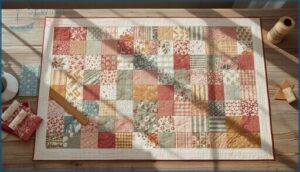
You’ve balanced print scale; now you can gently unify all those diverse fabrics.
Lean on Unified Backgrounds, simple repeated block shapes, and consistent Scrap Placement so your scrap quilts feel intentional, not random.
Limit your palette for soft Color Harmony, repeat key hues for fabric cohesion, and let sashing, borders, and binding guide the Visual Flow into truly cohesive scrap quilts.
Creative Scrap Quilt Patterns and Inspiration
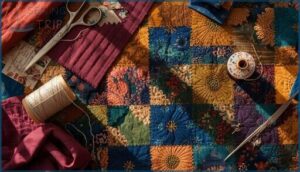
Scrap quilting is where leftover fabric turns into something beautiful and full of character. Whether you love neat patterns or a more relaxed look, there’s a design that fits your scraps and your style.
Here are a few creative ideas to get you inspired.
Popular Patterns for Scrap Quilts
Story quilts, memory quilts, comfort quilts—Scrap Quilts and Scrappy Quilts all start with simple Quilt Blocks and Patchwork Patterns that you can sew on repeat. Classic Quilt Designs make your Fabric Layouts feel intentional, even when your Scrap Blocks came straight from the scrap bin.
- Log Cabin Quilt Patterns built from narrow strips that spiral around a center square.
- Rail Fence stripes from leftover clothing-length strips stitched into bold Patchwork.
- Flying Geese strings marching across a low-volume background, full of movement.
- 16-Patch and String Quilt foundations that turn mixed-width strips into tidy Patchwork Patterns.
Using Tiny Scraps With Crumb Quilting
If your Scrap Fabric pile looks more like confetti, Crumb Quilt Blocks are your best friend. This Improvisational Piecing method turns even one-inch bits into Micro Quilt Designs full of charm.
With good Scrap Fabric Sorting and Tiny Scrap Management, you can stitch vibrant Scrap Quilt Ideas that celebrate resourceful Fabric Crafting and truly one-of-a-kind Scrappy Quilts.
Ideas for Sustainable and Unique Quilt Designs
Imagination meets responsibility when you lean into Sustainable Quilting. Try Eco Quilt Ideas like Memory Quilts from Repurposed Textiles and Upcycling Fabric from jeans, flannels, and shirts.
Play with Natural Dyes for soft, hand-painted color, or let Improv Quilting guide Scrap Quilt Ideas and tiny art pieces.
Each choice becomes quiet Quilt Design Inspiration—and a gentler kind of Fabric Crafting.
Frequently Asked Questions (FAQs)
How many different fabrics for a scrappy quilt?
You’ve got lots of wiggle room, but here’s a handy guide: for a controlled scrappy look, use around 9–24 fabrics; for true Fabric Variety and Fabric Diversity in larger Quilt Size projects, aim for 40–75+ diverse fabrics for lively Color Balance and satisfying Scrap Quantity in your scrap quilts.
Especially when you’re leaning into scrap quilt design strategies and stash sewing as part of thoughtful fabric selection for scrap quilts.
What to sew out of scrap fabric?
Ever wonder what to do with leftover scrap fabric? Turn tiny bits into Patchwork Projects like Mini Quilts, Stuffed Toys, or Fabric Banners—each adding charm to your Scrap Quilt Ideas and keeping your Quilt Projects beautifully sustainable.
How do fabric textures affect quilt durability?
Fabric texture affects Quilt Longevity through Fabric Wear and Seam Durability. Smooth quilting cotton’s tight weave strengthens seams, while textured flannel’s fibers pill and fray faster.
Thoughtful Material Selection ensures balanced Texture Impact and lasting Textile Art from Scrap Fabric projects.
What thread types work best for mixed fabrics?
For Scrappy Quilts, look for strong, smooth 50 weight all-purpose polyester or cotton-polyester blend thread, then use 40 weight for bolder quilting lines.
This Thread Selection facilitates Fabric Blending, Mixed Media Quilt Making and Design, and reliable Sewing Strategies across varied Fabric and Textiles.
How can vintage fabrics be safely reused?
You can bring vintage fabrics back to life through gentle Safe Cleaning Methods, careful Fiber Identification, and Stabilizing Techniques.
These Vintage Fabric Restoration steps let you practice Sustainable Crafting, Fabric Recycling, and creative Upcycling for lasting Scrap Quilts.
How do seasonal fabrics influence quilt comfort?
Like swapping wardrobes for the year, Seasonal Fabric quietly decides whether Quilt Comfort feels breezy or bundled. Summer-friendly fibers with strong Breathability Factors, like cotton or linen, keep Scrappy Quilts cool, while warmer options—think flannel, wool, higher GSM batting, and denser Thermal Insulation—create cozy Climate Control for cold nights.
Smart Fabric Selection in your Scrap Quilts helps your Quilting shift with the seasons so one quilt never feels “too much” or “not enough.”
Conclusion
Use the technique of imagery while writing to engage the audience. Picture your scrap basket as a paint box, every fabric a color story waiting for its moment.
Choose fibers, weaves, and weights with care so your quilt feels calm, not chaotic. Trust your hands and your eyes.
Lay pieces side by side, listen for harmony, and let quilting fabrics for scrap quilting become your toolkit for comfort and a style that feels like home.
- https://fabric-fabric.com/blog/what-is-quilting-cotton
- https://www.stitchedincolor.com/blog/2025/8/27/a-quilt-for-every-fabric-scrap
- https://itsonlyfabricandthread.com/2023/04/14/sizes-to-cut-quilting-scraps/
- https://quiltyfolk.blogspot.com/2015/01/scrap-quilting-abcs-cant-ignore-value.html
- https://www.quiltingdaily.com/workshop-wednesday-selecting-fabric-for-scrap-quilts-mccalls-quilting-blog/