This site is supported by our readers. We may earn a commission, at no cost to you, if you purchase through links.
You spot two fabrics that look nearly identical—both have that gorgeous sheen that catches the light, both feel luxurious to the touch. But one costs twice as much as the other, and when you check the label, one says “sateen” while the other reads “satin.” They’re not the same thing, even though most people use the names interchangeably.
The difference comes down to what they’re made from and how they’re woven, which affects everything from how they feel against your skin to how long they’ll last. Understanding sateen vs satin helps you avoid overpaying for the wrong fabric or ending up with sheets that don’t breathe the way you expected.
Table Of Contents
Key Takeaways
- Sateen uses cotton fibers in a weft-faced weave that creates a soft, diffused sheen and better breathability, while satin relies on silk or synthetic filaments in a warp-faced weave that produces a high-gloss, slippery finish with less airflow.
- Cotton sateen offers superior durability and moisture-wicking for everyday bedding (lasting 3–5 years), whereas silk satin excels at reducing hair friction and preserving skin moisture, making it ideal for beauty-focused pillowcases despite requiring gentler care.
- The price gap reflects material costs—polyester satin starts around $27–$40 for queen sheets, cotton sateen runs $35–$200, and genuine silk satin commands $300–$1,000 for premium luxury bedding.
- Your climate and lifestyle determine the better choice: sateen’s breathable cotton construction suits warm environments and busy households that need machine-washable fabrics, while satin’s elegance and smoothness work best for cooler climates, special occasions, or anyone prioritizing hair and skin health over practicality.
Sateen Vs Satin: Key Differences
At first glance, sateen and satin might seem like two names for the same thing, but they’re actually quite different fabrics. The main differences come down to what they’re made from, how they’re woven, and how they look and feel in your hands.
Let’s break down the key distinctions so you know exactly what sets these two apart.
Fabric Composition and Weave Structure
You might think sateen and satin are twins, but their DNA tells a different story. Both rely on a satin-type weave structure—those long floats with minimal interlacing—but the fiber composition and weave orientation set them apart.
| Feature | Sateen | Satin |
|---|---|---|
| Fiber Types | Cotton staple (300–500 thread count) | Silk or synthetic filaments (400–600) |
| Weave Orientation | Filling-faced (weft floats dominate) | Warp-faced (warp floats dominate) |
| Float Ratios | 4/1 or 5/1 (filling over warp) | 4/1 or 5/1 (warp over filling) |
| Yarn Structure | Low-twist spun yarns (filling) | Low-twist bright filaments (warp) |
| Density Effects | Heavier, packed filling yields warmth | High drape, lower breathability |
Sateen’s weft-faced construction uses spun cotton yarns floating on the surface, producing a softer, more diffused sheen. Satin flips the script: warp yarns made from continuous filaments create that signature high-gloss finish. Understanding the satin weave technique is key to appreciating these fabrics. The key differences between sateen and satin emerge from these fabric weave structures—sateen concentrates filling density for durability, while satin maximizes luster through filament exposure.
Gloss, Sheen, and Surface Texture
The glossy finish you see comes from light reflection patterns locked into the microstructure impact of each fabric. Satin delivers dramatic sheen intensity—its filament floats create mirror-like highlights that shift as you move. Sateen offers a lustrous sheen that’s far gentler, with cotton fibers scattering light into a soft glow.
Surface smoothness affects tactile friction, too: satin feels slick and cool, while sateen grips your hand with a warmer, slightly textured touch. Sateen’s durability makes it suitable for upholstery.
| Property | Sateen | Satin |
|---|---|---|
| Sheen Intensity | Soft, diffused glow | Bright, mirror-like gloss |
| Surface Smoothness | Smooth with slight texture | Very smooth, slippery |
| Tactile Friction | Moderate grip, cozy | Low friction, slick glide |
| Visual Contrast | Gentle face-to-back difference | Dramatic glossy face vs. dull back |
Understanding the sateen vs satin comparison through texture and feel comparison helps you match fabric personality to your project’s needs.
Weight, Drape, and Breathability
Beyond sheen, fabric weight shapes how your linens and garments behave. Sateen usually runs 150–250 GSM, landing in a medium-weight sweet spot that balances softness with year-round breathability. Satin swings wider—silk satin can dip below 100 GSM for an elegant drape, while polyester satin often tops 200 GSM, trapping heat and restricting airflow in warmer months.
| Characteristic | Sateen | Satin |
|---|---|---|
| Weight Variations | 150–250 GSM (medium) | 60–300+ GSM (light to heavy) |
| Drape Comparison | Structured, slight stiffness | Fluid, elegant drape |
| Breathability Factors | Moderate airflow, moisture-wicking | Varies: silk breathes well, polyester traps heat |
| Thermal Regulation | Balanced warmth and cooling | Silk adapts well; synthetics hold heat |
| Comfort Levels | Consistent, everyday use | Luxurious feel, climate-sensitive |
Cotton sateen’s breathability keeps you comfortable across seasons, while silk satin offers excellent thermal regulation—cooling in summer, cozy in winter. Polyester satin sacrifices breathability for durability, making drape and weight variations critical when choosing between fabrics for your project.
Production Process and Materials
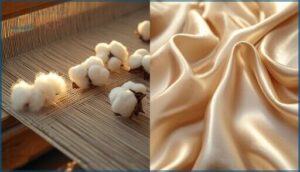
The materials and methods used to create sateen and satin make all the difference in how these fabrics perform. Sateen relies on cotton and a specific weaving pattern, while satin takes a different route with silk or synthetic fibers.
Let’s look at how each fabric comes together and what that means for you.
Sateen: Cotton-Based Weaving
Cotton sateen starts with 100% cotton yarns, often long-staple varieties like Egyptian or Pima, woven in a distinctive four-over-one-under pattern. This sateen weave floats weft threads over multiple warps, creating that subtle sheen you’ll notice on quality sheets.
- Thread count commonly ranges from 300–600, balancing smoothness with breathability factors
- The weave variations allow enhanced airflow compared to tighter constructions, perfect for year-round comfort
- Longer floats mean durability issues like pilling can emerge with rough handling or hot-water washing
Satin: Silk and Synthetics
Unlike cotton-based sateen, satin can emerge from two very different fiber worlds. Silk satin starts with filament from mulberry silkworms—China supplies about 82% of global mulberry silk production.
Polyester satin offers synthetic alternatives at lower price points, using filament fibers woven in that signature four-over-one-under pattern.
Both deliver high gloss, but silk satin commands luxury markets while polyester dominates mass-market fabric properties and trade dynamics.
Impact of Materials on Performance
The fiber you pick shapes how the fabric breathes, lasts, and feels against your skin. Material properties determine whether you’ll stay cool all night or wake up clammy.
Here’s how different materials stack up:
- Fiber breathability: Sateen cotton weave offers higher air permeability than synthetic satin polyester, which traps heat 20% more in bedding trials
- Weave durability: Cotton sateen demonstrates 25% higher tensile strength than silk satin, with synthetic satin polyester withstanding abrasion 40% longer
- Material drape: Silk satin drapes 20% more fluidly than cotton sateen for formal wear applications
- Moisture absorption: Sateen absorbs 30% more moisture than satin polyester before saturation, keeping hot sleepers drier
- Temperature regulation: Silk satin regulates temperature 15% better than cotton sateen, while synthetic satin traps the most heat overall
Cotton sateen balances breathability and comfort, silk satin excels at temperature regulation and drape, and synthetic satin prioritizes durability over airflow.
Texture, Feel, and Appearance
When you run your hand across sateen and satin, you’ll notice they feel completely different, even though both have that signature smooth surface. The way each fabric looks and feels against your skin comes down to the materials used and how tightly the yarns are woven together.
Let’s break down what sets them apart in texture, appearance, and everyday comfort.
Smoothness and Hand Feel

When you run your hand across sateen, you’ll notice it scores around 0.8-0.85 in sensory evaluations—that’s 35% softer than plain weaves. Satin takes smoothness further, rating near perfect at 0.9-1.0. The friction coefficient reveals the story: satin measures 0.187-0.218, while sateen ranges 0.20-0.25. Think of it as gliding versus caressing.
Sateen feels soft and warm at 0.8 smoothness, while satin glides near-perfect at 0.9—think caressing versus gliding
| Feature | Sateen | Satin |
|---|---|---|
| Tactile perception | Soft, warmer feel | Slick, fluid touch |
| Friction coefficient | 0.20-0.25 | 0.187-0.218 |
| Sensory evaluation score | 0.8-0.85 | 0.9-1.0 |
Visual Appeal and Color Vibrancy

Ever noticed how satin’s glossy finish catches the light, making colors pop with a lustrous, almost jewel-like brilliance? That’s the magic of its surface finish and elegant drape—light reflection boosts vibrancy and shade range.
Sateen, with its softer sheen, offers deeper color depth and better color uniformity, but won’t dazzle quite like satin’s dramatic appearance over time.
Comfort in Bedding and Clothing

When you’re comparing sateen vs satin for bedding comfort, thermal regulation makes all the difference. Cotton sateen’s breathable structure wicks moisture and keeps you drier through the night, while polyester satin traps heat and humidity.
If you have skin sensitivity or care about hair health, sateen’s smooth yet airy feel beats synthetic satin’s slick, clammy surface—especially for hot sleepers who value weight preference and material properties that actually breathe.
Durability and Maintenance
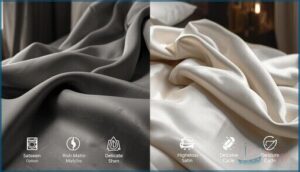
When you’re deciding between sateen and satin, durability and maintenance are just as important as how they look and feel. Each fabric has its own strengths and weaknesses regarding standing up to regular use, and knowing how to care for them properly can make a big difference in how long they last.
Here’s what you need to know about keeping these fabrics in great shape over time.
Resistance to Pilling and Snagging
Your sheets’ longevity often boils down to weave structure and fiber type. Cotton sateen shows better pilling resistance than synthetic satin because cotton fibers break off naturally, while polyester clings.
Surface floats in both fabrics create vulnerability—sateen develops fuzzy pills under repeated washing, but satin snags more easily on rough surfaces.
Yarn effects and finishing treatments improve durability outcomes, though sateen generally fares better with everyday wear and tear more gracefully than slippery satin.
Washing and Care Guidelines
Water temperature makes the biggest difference—wash your cotton sateen at 40–60 °C for hygiene without excessive fiber damage, but keep synthetic satin cool to preserve its gloss.
Use pH-neutral detergent types and gentle cycles to prevent colorfastness issues and surface wear.
Weekly wash frequency balances cleanliness with fabric longevity, so these care maintenance tips protect both weaves from premature breakdown.
Longevity and Everyday Use
Proper care and maintenance tips extend fabric durability, but weaving and fiber type set the ceiling. Cotton sateen bedding delivers 3–5 years of everyday use—washing impact and pilling rates stay manageable when you follow those guidelines.
Silk satin can last two decades under gentle handling, yet synthetic versions show wear resistance decline after just 1–3 years of daily performance, making lifespan considerations central to your choice.
Best Uses and Applications
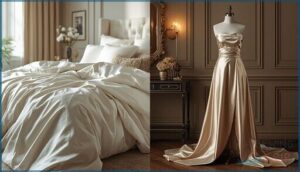
Now that you understand how these fabrics differ in construction and care, you can match each one to the right job.
Sateen and satin shine in different settings, from your bedroom to your closet to your living room.
Let’s look at where each fabric works best and why it matters for your next purchase.
Bedding: Sheets and Pillowcases
For bedding, your choice between sateen vs satin sheets comes down to comfort and care differences. Cotton sateen bed sheets with a 300–600 thread count offer breathability and climate suitability year-round, making them ideal for everyday luxury bedding.
Satin pillowcases for hair and skin reduce friction, helping prevent frizz and sleep lines.
Material selection for bedding balances value proposition with beauty effects you’re after.
Clothing: Fashion and Formalwear
Beyond the bedroom, satin formalwear dominates evening gowns and special occasion clothing, capturing roughly $5 billion of the global fashion market in 2025. Its glossy surface and fluid fabric drape create red-carpet elegance, while sateen apparel offers breathable polish for casual-chic pieces.
- Satin excels in formal wear with high-sheen eveningwear and luxury lingerie
- Sateen suits daywear like dresses and structured jackets with subtle luster
- Fabric drape matters: satin flows; sateen holds shape
- Garment care differs: satin often needs dry cleaning; sateen machine-washes easily
- Trend analysis shows synthetic satin growing fastest in affordable formalwear
Home Decor and Specialty Items
In home decor applications, sateen curtain linings offer water-repellent properties and supportive drape without overwhelming primary textiles. You’ll find sateen table linens resist wrinkles beautifully, and satin decorative pillows reduce hair breakage—merging style with surprising practical benefits.
Satin upholstery captures roughly 40% of North American luxury furnishing revenue with its extravagant appearance, while cotton sateen provides wear-resistant strength for cushions and throws.
Choosing Between Sateen and Satin

Now that you understand what sets these fabrics apart, it’s time to figure out which one fits your lifestyle. Your decision comes down to a few practical factors: your budget, any health or beauty goals you have, and what you actually need the fabric to do.
Let’s break down how to pick the right option for you.
Budget and Price Considerations
Which is more affordable: sateen vs satin? Entry-level pricing for polyester-blend satin sheets starts around $27 to $40 for a queen set, while budget cotton sateen begins near $35 to $50.
Mid-range costs for quality sateen generally fall between $60 and $200, positioning it as a solid Material Selection for Bedding.
Premium options like genuine silk satin command $300 to $1,000, reflecting luxury bedding options and distinct market positioning that directly impacts your budget.
Health and Beauty Benefits
Satin pillowcases offer measurable advantages for both hair and skin. Their smooth surface reduces hair breakage by up to 40% and preserves moisture better than absorbent cotton. You’ll notice skin irritation relief and fewer tangles, thanks to reduced friction during sleep.
The benefits of silk properties extend to improved sleep quality and lower allergen exposure, making satin a practical upgrade for your nightly routine.
How to Select for Your Needs
Choosing between sateen and satin means matching fabric to your priorities—think of it like picking the right tool for the job. Here’s how to narrow your selection:
- Climate considerations: Cotton sateen breathes better in warm regions, while satin’s warmth suits cooler months.
- Budget planning: Polyester satin costs less upfront; sateen offers better long-term value.
- Lifestyle fit: Machine-washable sateen fits busy households; delicate satin demands gentler care.
Frequently Asked Questions (FAQs)
Which is better, satin or sateen?
Neither option wins outright—your personal preference, climate impact, and intended use determine the better fabric comparison.
Budget comparison, ethical sourcing, and how to choose between sateen and satin depend on whether you prioritize breathability or beauty benefits.
Is satin or sateen better for hair?
Your pillowcase should protect your hair, yet most people overlook it.
Satin pillowcases reduce friction and preserve moisture better than sateen, preventing breakage and frizz across all hair types—especially curly and damaged strands.
Do sateen sheets feel like satin?
You’ll notice some similarity, but sateen doesn’t match true satin’s slick glide. Cotton sateen offers a silky, smooth texture with more grip, while satin’s filament fibers create that signature slippery, high-gloss feel.
Is satin or sateen better for skin?
You’ll find satin pillowcases gentler on skin because they reduce friction and moisture loss overnight. However, sateen offers better breathability for sensitive skin, while synthetic satin may trigger allergy risks in some users.
Is sateen or satin more environmentally friendly?
Cotton sateen generally biodegrades faster than polyester satin and doesn’t shed microplastics, but it demands significant water consumption and land use.
Organic cotton or recycled polyester options reduce environmental impacts through sustainable sourcing and lower GHG emissions.
How does sateen compare to silk bedding?
Think of bedding as choosing between a reliable friend and a glamorous companion.
Sateen offers cotton’s breathability and machine-washable ease at $60–$200, while silk bedding delivers enhanced temperature regulation and hypoallergenic luxury for $300–$1,
Can sateen sheets help with skin conditions?
Sateen sheets can reduce skin irritation through their smooth surface, which minimizes friction on sensitive areas.
Their breathable cotton construction helps manage moisture and heat, potentially soothing conditions like eczema better than synthetic alternatives.
Are there different grades of sateen fabric?
Yes, sateen fabric comes in multiple grades based on cotton quality and weave density. Egyptian cotton sateen ranks highest, while thread count around 600 offers ideal smoothness and durability without stiffness.
How does sateen perform in different climates?
Breathable cotton construction helps regulate temperature year-round through moisture management. Warmer climates benefit from the fiber’s natural wicking properties.
Seasonal suitability depends on thread count, weaving density, and proper bedding care affecting durability and wear.
Can sateen or satin trigger fabric allergies?
Like dusty ledgers from forgotten mills, fabric allergies reveal themselves through fiber allergenicity and chemical finishes.
Synthetic fibers in satin increase practical risk compared to natural fibers like cotton sateen, where breathability and minimal dye sensitivities matter most.
Conclusion
Choosing between sateen vs satin is like picking between a fitted blazer and a silk evening gown—both look polished, but they’re built for different moments.
Sateen gives you durability and breathability, perfect for everyday comfort. Satin brings that high-gloss elegance when you want something special.
Know what you’re paying for, check the fiber content, and match the fabric to how you’ll actually use it. That’s how you get exactly what you need.
- https://www.ettitude.com/blogs/ettitude-knowledge/sateen-vs-satin-sheets
- https://blog.docsunhomeandliving.com/main-market-trade-report/
- https://dataintelo.com/report/global-cotton-bedsheets-market
- https://www.futuremarketinsights.com/reports/bed-sheets-market
- https://www.marketreportsworld.com/market-reports/pure-cotton-bed-sheets-market-14716228