This site is supported by our readers. We may earn a commission, at no cost to you, if you purchase through links.
Most sewers treat their serger like a finishing machine—something you run fabric through at the end and hope for the best. But one small attachment changes that entirely.
A serger sewing machine fabric guide turns guesswork into precision, keeping your seam allowance consistent and your edges clean from the very first stitch.
Without it, even experienced hands fight wavy knit seams and fraying edges that no amount of tension tweaking can fix. Get the guide dialed in, and everything else—settings, fabric handling, troubleshooting—clicks into place.
Table Of Contents
Key Takeaways
- fabric guide turns your serger from a guessing game into a precision tool by locking in your seam allowance on every single pass.
- Your settings—differential feed, tension, needle size, and stitch type— need to match your fabric, because what works for denim will wreck chiffon.
- Most serger headaches like wavy knits, puckering, and misaligned seams trace back to a handful of fixable culprits, not the machine itself.
- The right accessories—quality thread, correct needle size, and a compatible presser foot—do as much for your results as technique does.
What a Serger Fabric Guide Does
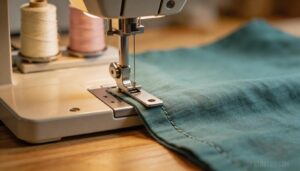
A serger fabric guide is one of those small tools that makes a surprisingly big difference in your sewing. It keeps your seam allowance consistent and your fabric edge right where it needs to be, every single pass.
It’s especially handy for specialty techniques like those covered in this guide to serger rolled hem settings and tips, where precision at the edge makes or breaks the finish.
Here’s a closer look at what it does and why your serger setup isn’t complete without one.
Definition and Purpose
Think of a serger fabric guide as your machine’s built-in traffic cop. It’s an Edge Alignment Aid and Fabric Path Stabilizer that keeps your fabric moving in a straight, steady line as it enters the serger.
While you’re mastering serger machine basics, this small tool acts as a Thread Wrap Positioner and Edge Protection Mechanism — directing exactly where the overlock stitch wraps around your raw edge.
The fabric guide attachment ensures consistent seam allowance during overlock stitching.
How It Controls Seam Allowance
The needle to blade gap is the real boss here. It sets how much fabric stays inside your seam after edge trimming.
Presser foot markings show you where your fabric edge should sit, while built-in seam guides keep that position locked in.
Nail your fabric edge alignment, dial in the right cutting width control, and your seam allowance stays exactly where you want it — every single pass.
Benefits for Accurate Edge Finishing
Once your seam allowance is locked in, accurate edge finishing becomes the real payoff. Here’s what you gain:
- Fray Control — overlock stitching wraps thread around raw edges, stopping unraveling, cold
- Clean Edge Look — seam finishing gives every project that store-bought finish
- Stronger Seams — finished edges hold up through washing and wear
- Neater Handling — clean edges press flat and feed evenly
Faster finishing, better results.
Compatibility With Serger Sewing Machines
Not every guide fits every machine — and that gap matters more than you’d think. Needle Compatibility, Presser Foot Fit, and Machine Brand Compatibility all work together.
A foot built for Baby Lock won’t always seat properly on a SINGER. Thread Type Matching and Thread Tension Compatibility shift too, especially with stretch fabrics and knit fabrics where differential feed and thread tension are non‑negotiable.
| Feature | What to Check |
|---|---|
| Presser Foot Fit | Match foot to exact brand/model |
| Needle Compatibility | Confirm system type in your manual |
Installing a Serger Fabric Guide
Installing a fabric guide on your serger is easier than it looks — you just need to know the right steps going in. A little prep upfront saves a lot of frustration later.
Here’s what to gather and do before your first stitch.
Parts Needed Before Setup
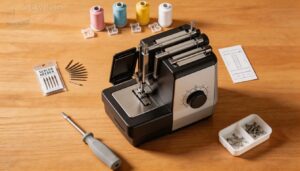
Before you attach anything, a quick parts check saves you from stopping mid-setup. Confirm your edge guide bracket matches your machine’s part number — a misfit bracket won’t align with the blade correctly. Gather your mounting screws, alignment card, and spare screwdriver before starting.
Also have ready:
- Serger needles, thread guides, and thread tension controls accessible
- Differential feed dials visible for reference
- Blade area clear of lint or debris
Step-by-step Attachment Process
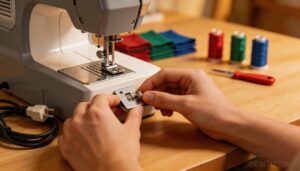
Powering off first isn’t optional — it’s your safety net. Follow these steps to attach the guide cleanly:
| Step | Action |
|---|---|
| 1. Power Off Procedure | Switch off and unplug the machine |
| 2. Guide Holder Securing | Insert holder, tighten thumb screw snugly |
| 3. Clearance Check | Confirm blade and presser foot have room |
| 4. Test Stitch Validation | Run scrap fabric before your real project |
Raise the presser foot, position your guide, then double-check needles and thread guides are clear.
For thread that disappears into your fabric, check out these invisible thread sewing tips before deciding between nylon’s flexibility and polyester’s heat resistance.
Aligning The Guide With The Blade
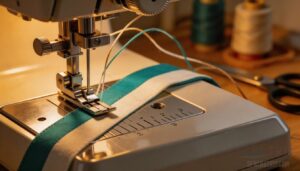
Once the guide is attached, blade-guide calibration is what ties everything together. Line up your fabric edge with the visual alignment marks on the machine bed — those printed lines exist for a reason.
The guide locking mechanism should sit flush beside the built-in blade, not blocking it. Use edge alignment techniques to stay within blade position tolerances, keeping your seam allowance consistent from start to finish.
Safety Checks Before Serging
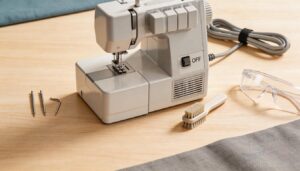
Before you sew a single stitch, run through these serger safety precautions — they take two minutes and save real headaches.
- Power Off the machine before threading or changing the needle
- Needle Inspection — swap out any bent or dull needles
- Presser Foot Check — confirm it’s locked securely in place
- Work Area Clearance — remove lint from vents and keep cords tidy
Consider wearing Safety Glasses too.
Best Fabrics for Serger Sewing
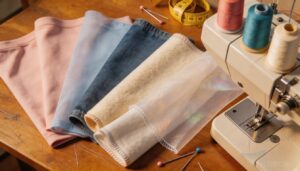
Not every fabric plays by the same rules — and your serger is surprisingly picky about what it likes. Knowing which fabrics work best helps you avoid headaches and get cleaner results from the start.
main fabric types worth knowing before you sit down to sew.
Knit and Stretch Fabrics
Knit fabrics are a serger’s sweet spot. Jersey, rib, and interlock each behave differently, so knit grain direction matters before you cut.
Elasticity testing helps you choose the right differential feed — bump it to 1.5 or 2.0 for waviness. Fiber blend influence is real: adding spandex changes stitch recovery and seam stretch ratio substantially.
| Knit Type | Serger Tip |
|---|---|
| Cotton Jersey | Use differential feed 1.5–2.0 |
| Rib Knit | Keep thread tension control balanced |
| Spandex Blend | Test stretchy seam on scraps first |
| Interlock Knit | Standard knit fabric handling works well |
Lightweight and Delicate Fabrics
Chiffon and organza demand respect — and a lighter touch than you might expect.
Gentle fabric handling starts before you even thread your machine. These sheer slip, distort, and pucker at the slightest misstep.
- Use a Microtex needle (size 70/10 or 75/11) for clean piercing
- Set low tension settings to avoid seam puckering
- Adjust differential feed to 0.75 to prevent waviness
- Choose fine polyester thread for near-invisible seams
- Rely on sharp cutting tools to prevent fabric fraying
Stable Woven Fabrics
After delicate shears, cotton and linen feel like a welcome change — steady, predictable, and forgiving.
With differential feed at 1.0 and a 3- or 4-thread overlock stitch, fabric grain alignment stays true. Seam allowance consistency follows naturally when blade sharpness maintenance is routine. Set fabric tension to 4, match thread color, and run seam flatness testing on scraps first. Fabric fraying prevention and clean fabric edge trimming practically take care of themselves.
Heavy Fabrics Like Denim and Canvas
Now for the heavyweights — denim and canvas play by different rules.
These fabrics push back, so you’ll need Heavy-Duty Needles (100/16 or larger) and Abrasion-Resistant Thread to handle the friction.
Bump your Extended Stitch Length to 3–4 mm, run a Blade Sharpness Check before starting, and adjust tension settings to be slightly looser.
Differential feed at 1.0 keeps heavy fabric handling steady and your Seam Reinforcement solid.
Fabrics That Need Extra Caution
Some fabrics just need a gentler hand.
Sheer Fabrics like chiffon and silk pucker fast if tension runs too tight. Slippery Satin drifts out of alignment before you notice. Fine Rayons shift mid-seam on narrow allowances. Open Weaves can disappear right into the throat plate. Stretch Jerseys wave without the right differential feed.
Slow down, test first, and trust your scrap fabric.
Serger Settings for Each Fabric
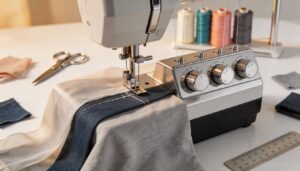
Getting your serger settings right can make or break how your fabric behaves under the foot. Each fabric type has its own sweet spot — and once you know it, everything comes together faster.
Here’s what to dial in before you start cutting into your project fabric.
Differential Feed for Stretchy Materials
Stretchy knits have a mind of their own — and that’s where differential feed saves the day.
This feed ratio tuning feature controls how fast fabric moves through your serger. Set it above 1.0 for gathering control on rippling knits, or use it for ruffle creation on hems.
Adjusting differential feed for different fabric types keeps stretchable seam construction smooth and wave-free.
Tension Adjustments by Fabric Weight
Tension is really just a conversation between your serger and the fabric.
Serger tension is a conversation between machine and fabric — dial it right, and every stitch listens
For lightweight tension range fabrics like chiffon, keep dials around 2–4 — tight tension puckers thin cloth fast.
Medium fabric balance sits comfortably near center settings, where looper threads meet cleanly at the edge.
Heavy fabric looseness matters too — denim needs more give.
Stretch knit tension stays relaxed, and thread thickness matching keeps every stitch honest.
Stitch Types for Clean Fabric Edges
Pick the right stitch, and your edges practically finish themselves.
A Three Thread Overlock manages light knits and sheers beautifully, while a Four Thread Overlock builds a fray-resistant seam tough enough for ravelly wovens.
Need a delicate finish edge?
The Rolled Hem Stitch rolls it tight.
Flatlock Stitch lays seams flat for activewear, and the Wrapped Edge Stitch hugs every raw edge cleanly.
Needle Sizes for Light to Heavy Fabrics
Your needle is the unsung hero of every clean serge.
Think of a Needle Size Chart as your cheat sheet — matching fabric weight to the correct needles keeps stitches smooth and fabric undamaged. Use 70/10 for delicate sheers, 80/12 for everyday knits, and 100/16 for heavy-duty projects like denim.
Ballpoint Needle Tip Types glide through knits without snagging. Swap serger needles every few projects.
Thread Choices for Smooth Serging
Thread is the silent backbone of every overlock seam. For most fabrics, quality polyester or nylon thread suits both knit and woven projects beautifully.
Regarding polyester vs woolly nylon, woolly nylon wins for swimwear softness — though its heat resistance is lower; press carefully.
Textured looper benefits include fuller edge coverage on rolled hems.
Match thread weight to fabric, and always buy cone sizes that last.
Common Fabric Guide Problems
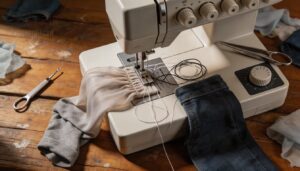
Even a well-set-up serger can run into snags once fabric enters the picture.
Most problems trace back to a handful of familiar culprits — and once you know them, the fixes are pretty straightforward.
Here are the five most common fabric guide problems and how to handle each one.
Fabric Not Feeding Evenly
Uneven feeding usually traces back to four culprits: Presser Foot Pressure, Feed Dog Maintenance, Knife Alignment, and Thread Tension Balance.
Lint-clogged feed dogs block smooth movement, so clean them every 10 hours. A dull knife pulls fabric sideways, causing uneven overlock stitches.
Try a Stitch Length Adjustment to 2.5 mm, and check your differential feed to stop fabric bunching before it starts.
Wavy Seams on Knit Fabrics
Wavy seams on knit fabric usually mean the serger stretched your cloth while stitching. Fix it by bumping your differential feed above 1.0 — try 1.5 or 2.0 for very stretchy knits.
Then check your tension dials, stitch length tuning, and Thread Type Choice. Proper Needle Size Selection and Fabric Grain Alignment also reduce Edge Curl Control issues, keeping every stretchable seam smooth and flat.
Puckering on Lightweight Materials
Puckering is the flip side of that stretchy-knit problem. Lightweight fabric bunching happens when tension settings are too tight or feed dogs move too fast.
Lower your differential feed below 1.0 for lightweight fabric handling — it keeps feed dogs from pushing fabric faster than it feeds through.
Try fine thread weight, a 70/10 needle choice, and tissue paper stabilizer application underneath for Thread Balance that stays perfectly smooth.
Misaligned Seam Allowances
Fixing puckering is satisfying — but misaligned seam allowances are sneakier. They repeat silently on every seam.
Needle reference errors and blade cut calibration issues shift your stitching line without warning. Check guide marking alignment first, then run pattern match verification on a scrap.
Seam consistency checks catch small offsets before they change your garment’s total size.
Guide Slipping During Sewing
Misaligned seams repeat — but a slipping guide is just as stubborn. Machine vibration at high speeds loosens attachment screws, shifting your guide mid‑seam.
Tighten screws every two hours using a hex key; that’s your best defense against vibration impact and guide wear.
Check presser foot pressure too — too low lets fabric slide.
A light lubrication routine keeps feed dogs moving the fabric smoothly, and balanced tension dials do the rest.
Top 4 Serger Fabric Guide Items
The right tools make serging so much less frustrating. A few key items can help your fabric feed smoothly, your stitches stay even, and your finished edges look genuinely polished.
Here are four worth keeping on your radar.
1. White Polyester Serger Thread
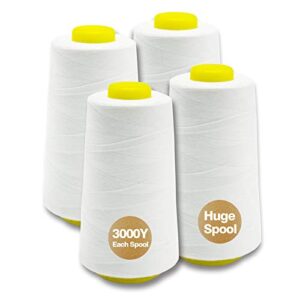
Good thread is the quiet backbone of every clean serged seam. WAFASSZD’s white polyester serger thread delivers exactly that.
Each cone holds 3,000 yards, and you get four cones per pack — that’s 12,000 yards total for just $13.99.
The Tex 27 weight hits a sweet spot: strong enough for activewear seams, light enough for everyday knits.
It’s colorfast, low-lint, and compatible with most major brands like Brother, Janome, and Singer.
Less rethreading, more sewing.
| Best For | Home sewers and commercial operators who go through a lot of white thread and want a reliable, budget-friendly serger cone that works across most major machines. |
|---|---|
| Price | $13.99 |
| Compatibility | Brother, Babylock, Janome, Singer, Pfaff, Juki, Bernina |
| Material | 100% polyester |
| Color | White |
| Installation | Standard spool holder |
| Primary Use | Serger/overlock stitching |
| Additional Features |
|
- Incredible value — 12,000 yards across four cones for under $14 means you won’t be running to the store anytime soon.
- Plays nice with pretty much every major brand (Brother, Janome, Singer, Juki, and more), including automatic threaders.
- Colorfast and holds up to bleaching and heavy washing, so it’s solid for apparel and home textiles that take a beating.
- White only — if you need any other color, this pack isn’t it.
- A handful of users have run into breakage on certain high-end machines, so tension settings may need some tweaking.
- Keep it out of direct sunlight for long stretches or the thread can degrade over time.
2. Singer Universal Overlock Serger Needles
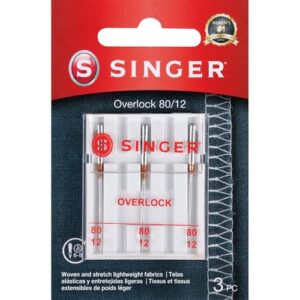
A dull or wrong-sized needle is one of the sneakiest causes of skipped stitches — and Singer’s Universal Overlock Serger Needles take that problem off the table.
This pack of five size 80/12 needles is cold-forged for durability, with larger eyes and T-shaped heads that feed smoothly through medium-weight fabrics. Color-coded caps make sizing foolproof at a glance.
At $7.15 for five, it’s a smart, affordable backup to keep on hand before starting any new project.
| Best For | Serger owners who want a reliable stash of needles on hand — whether you’re a weekend hobbyist or someone who sews regularly and hates stopping mid-project for a quick fix. |
|---|---|
| Price | $7.15 |
| Compatibility | Singer, ProFinish, Professional sergers |
| Material | Cold-forged steel |
| Color | Color-coded caps |
| Installation | Drop-in needle replacement |
| Primary Use | Serger/overlock stitching |
| Additional Features |
|
- Cold-forged steel means they hold up longer and skip stitches less — a real time-saver mid-project
- Color-coded caps make grabbing the right needle fast, no squinting at tiny numbers
- At $7.15 for five, it’s an easy, low-risk buy to keep in your sewing kit
- Only works with 2022-style 80/12 needles — double-check your machine before ordering
- Five needles won’t last long if you sew heavily; you’ll be reordering sooner than you’d like
- Single size means you’ll need a different pack if your project calls for a heavier or lighter needle
3. HONEYSEW Brother Overlock Serger Presser Foot
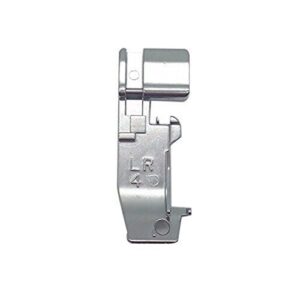
When your presser foot snaps or wobbles mid-project, everything grinds to a halt.
The HONEYSEW Brother Overlock Serger Presser Foot (model XB0316001) is a budget-friendly fix at $17.90, compatible with popular Brother models like the 1034D, 1050, and 929D, plus select Viking machines.
Its snap-on design makes swapping fast and easy. It manages everyday edge finishing and seam sealing well.
Just double-check your machine’s generation before ordering — fit can vary, especially on pre-2015 models.
| Best For | Sewers on a budget who need a quick replacement presser foot for their Brother or Viking serger and don’t want to pay OEM prices. |
|---|---|
| Price | $17.90 |
| Compatibility | Brother 640D-1034D, Viking 1000L-660CD |
| Material | Injection-molded plastic |
| Color | White |
| Installation | Snap-on attachment |
| Primary Use | Overlock/serger stitching |
| Additional Features |
|
- At $17.90, it’s a wallet-friendly alternative when original parts are hard to find or overpriced.
- Snap-on design means you’re back to sewing in seconds — no tools, no fuss.
- Works across a solid range of Brother and Viking serger models, so one spare can cover multiple machines.
- Some users report the plastic feels fragile and can crack or break off sooner than expected.
- Manufacturing inconsistencies pop up occasionally — like a main pin installed backwards — which can cause fit issues right out of the box.
- Compatibility isn’t guaranteed across all machine generations, so you’ll want to double-check before buying, especially if you have a pre-2015 model.
4. YEQIN Cording Presser Foot
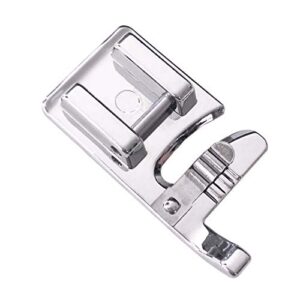
Sometimes you just want to add a little something extra — a decorative cord, a raised trim, a textured line that makes a piece feel finished and intentional. That’s exactly where the YEQIN Cording Presser Foot earns its place.
At just $5.99, it guides up to three cords smoothly while you stitch, using zigzag or decorative patterns to hold them in place. It snaps onto most low-shank machines.
Stick to lightweight cords and stable fabrics for the best results.
| Best For | Home sewers who want to add decorative cording or raised trim to garments, pillows, and everyday fabric projects without spending a lot. |
|---|---|
| Price | $5.99 |
| Compatibility | Singer, Brother, Babylock, Janome, Juki, Elna |
| Material | Cardboard |
| Color | Style 8 |
| Installation | Snap-on low-shank |
| Primary Use | Cording on fabric |
| Additional Features |
|
- Guides up to three cords at once, making decorative stitching faster and more consistent
- Snaps onto most low-shank machines, so it works with a wide range of popular brands
- At $5.99, it’s an easy, low-risk add to your sewing kit
- Cardboard construction isn’t as sturdy as metal feet and may not hold up over heavy use
- Cords can shift during sewing, which gets frustrating on detailed or precise work
- Doesn’t play well with heavy materials like marine vinyl, and some Singer models need a separate adaptor
Frequently Asked Questions (FAQs)
Can you use fabric guides on all serger brands?
No, you can’t use fabric guides on all serger brands. Each machine has its own bed shape and screw pattern. Always check your model first — compatibility varies widely.
Do fabric guides work with thick layered seams?
Thick seams can really "layer" on the challenges.
Guides help, but bulk shifts the edge, away from the reference line — so, slow down, check your first few inches, and reposition by hand at crossings.
How do you store fabric guides when not using?
Keep guides clean and dry, then store them in a small tackle box, magnetic strip, or labeled fabric pouch. Organize by number so you can grab the right one fast.
Are magnetic fabric guides better than clip-on types?
Magnetic guides win on speed — reposition them in seconds. Clip-on types grip thicker fabrics more firmly.
Your best pick depends on your machine’s surface and how often you switch seam widths.
Can fabric guides help with curved or circular hems?
Fabric guides work best on straight hems. For gentle curves, they can still help keep your edge even. But on tight circular hems, skip the guide and sew freehand slowly.
Can a serger replace a regular sewing machine?
A serger can’t fully replace a regular sewing machine. You still need one for buttonholes, zippers, and topstitching. Think of your serger as a powerful helper — not the whole crew.
How often should serger blades be replaced?
Think of serger blades like kitchen knives — they don’t announce when they’re dull, but the ragged edges tell the story.
Replace them after about two years of regular use, or sooner if cutting turns uneven.
What thread types work best for swimwear?
For swimwear, polyester thread is your best bet — it manages stretch, chlorine, and sun without breaking down. Woolly nylon works great in the loopers for soft, skin-friendly edges.
How do you fix skipped stitches on a serger?
Start with the needle — push it all the way up and make sure it’s straight. If that doesn’t fix it, rethread completely.
skipped stitch is almost always a needle or threading issue.
What beginner projects are best for learning to serge?
Like training wheels on a bike, simple projects build real confidence.
Try a knit infinity scarf, fabric napkins with rolled hems, or stretchy pajama shorts — each one teaches essential serging skills fast.
Conclusion
Savoring smooth serging success starts with the right tools.
Fitting a serger sewing machine fabric guide transforms tricky trims into tidy, professional finishes.
With precise control over seam allowances and edges, you’ll conquer common challenges like wavy knit seams and fraying.
Your serger will hum along, handling various fabrics with ease when you pair it with a reliable fabric guide and adjust settings accordingly, making every stitch a proof of your mastery.
- https://stylemakerfabrics.com/blogs/maker-resources/working-with-a-serger
- https://www.mhthread.com/blog/products/serger-thread-1
- https://www.threadsmagazine.com/2023/04/21/differential-feed
- http://www.makeithandmade.com/2012/08/understanding-your-serger-features.html
- https://www.sewingpartsonline.com/blogs/education/ultimate-thread-reference-guide-2