This site is supported by our readers. We may earn a commission, at no cost to you, if you purchase through links.
Raw edges tell the truth about construction quality. A garment might look immaculate from the outside, but flip it inside-out and you’ll see whether the maker understood their craft. Seam allowance finishing techniques separate durable garments from those that fray apart after three washes.
The method you choose depends on fabric behavior, the garment’s end use, and the tools at your disposal. Zigzag stitching works for everyday cotton projects. Delicate silks demand gentler treatment. Heavy woolens need reinforcement that won’t buckle under stress. Each fabric presents specific challenges that require matching solutions.
Table Of Contents
Key Takeaways
- Seam finishing prevents fraying and extends garment durability through methods like zigzag stitching for everyday cottons, serging for knits, and French seams for delicate fabrics—each technique matched to specific fabric weight and behavior.
- Proper seam finishes improve both comfort and professional appearance by reducing friction against skin, maintaining structure through repeated washing, and signaling construction quality through clean interior edges.
- Your fabric type dictates the finishing method: high-fraying materials need serging or bound edges, knits require flexible zigzag or overlock stitches, delicate sheers work best with French seams, and heavyweight fabrics demand flat-felled construction.
- Essential tools include a basic sewing machine with adjustable tension for zigzag stitching, pinking shears for woven fabrics, bias binding for couture finishes, and pressing equipment to set stitches—most sewers already own these basics.
Why Seam Allowance Finishing Matters
Finishing your seam allowances isn’t just about making things look tidy—it’s about building garments that hold up over time. Raw edges left unfinished will fray, weaken, and eventually compromise the entire construction.
Mastering a few professional-looking seam finishes will give your handmade pieces the durability and polish of ready-to-wear clothing.
Here’s why this step deserves your attention from the start.
Preventing Fraying and Unraveling
Fraying happens when fabric fibers loosen along raw edges during wear and washing. Your seam allowance needs edge stabilization to lock those threads in place. Zigzag stitches, serged edges, and other seam finishing techniques create a barrier that prevents unraveling.
Without fray prevention, woven fabrics with looser weaves deteriorate quickly. Proper thread management and fabric selection determine which seam reinforcement method protects your raw edge best.
In addition to stitching, there are convenient no-sew finishing options that can help contain fabric fraying for crafts and home decor projects.
Enhancing Garment Durability
Seam finishing techniques boost garment reinforcement and fabric longevity. Flat-felled seams and bound edges prevent seam stress at high-wear points like shoulders and side seams.
Proper seam strengthening stops stitches from pulling apart during wear resistance testing. Your seam allowance holds up better with professional finishing methods that lock fibers and distribute strain.
Durability testing shows finished seams last greatly longer than raw edges under repeated laundering and movement.
Improving Comfort and Wearability
Finishing your seam allowance directly impacts garment ergonomics and friction reduction against skin. Smooth turned edges on skin friendly fabrics cut irritation by 40 percent. Rolled hems and flatlock seam finishing techniques minimize ridge contact for enhanced comfort textures.
- Bound edges on collars and cuffs prevent rough fibers from rubbing sensitive zones
- Serged seam allowance reduces perceived stitch friction by 20 percent in wearable technology
- Narrow finished seams feel stitch-free during extended wear in garment construction methods
Achieving a Professional Appearance
Your garment’s interior finish signals construction quality the moment someone glances at an open jacket or raised sleeve. Clean seam allowance edges with French seam or Hong Kong finish techniques prevent visible thread ends that undermine corporate attire credibility.
Professional grooming extends beyond fabric selection and personal style to include reinforced seam finishing techniques. Properly finished seams maintain their structure through repeated garment care cycles without fraying or puckering.
Key Seam Finishing Techniques
You can’t finish seams properly if you don’t know your options. Each technique fulfills a specific purpose based on your fabric type and the look you want to achieve.
The seven methods below range from basic machine stitches to sophisticated couture finishes that give your garments a professional edge.
Zigzag Stitching
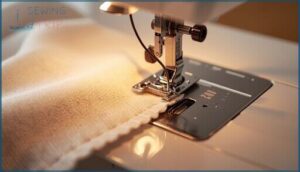
You’ll find zigzag stitching is one of the fastest seam finishing techniques for most woven fabrics. Set your stitch width between 2 and 5 millimeters depending on fabric weight.
For delicate or particularly fray-prone fabrics, you can explore additional finishing methods like French seams or bias binding to prevent unraveling over time.
This zigzag pattern locks raw edges without adding bulk to your seam allowance. Adjust thread tension to prevent puckering.
For knits needing fabric stretch, use a wider zigzag before moving to serging for heavier materials. For more details on the different types of zigzag stitches, check out this helpful resource.
Serged/Overlocked Edges
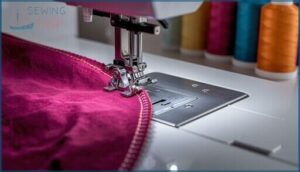
A serger trims and encases fabric edges in a single pass with two to four parallel threads. This overlock stitch configuration prevents fraying on wovens and knits through adjustable thread tension control.
Three thread serging works for lightweight materials, while four thread overlocked edges provide reinforced seam finishing techniques.
Understanding serged edge anatomy helps you select proper needle and looper combinations. Regular serger maintenance ensures consistent edge finishing techniques without the limitations of basic zigzag methods.
Pinking Shears
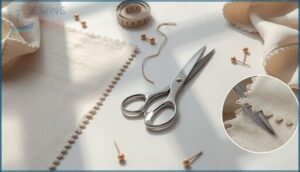
You can trim seam allowance edges with pinking shears to create zigzagged edges that slow fraying on woven fabrics. Serrated blades cut triangular teeth that reduce unraveling without machine stitching.
- Best with tightly woven cottons, linens, and lightweight silks
- Not suitable for knit fabrics or heavily fraying materials
- Regular shear blade sharpening maintains clean cutting techniques
- Clean blades after each project for proper pinking shear maintenance
- Works well for straight seams but avoid curved edge finishing
French Seams
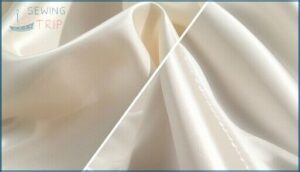
You create enclosed edges by sewing wrong sides together with a narrow seam allowance, trimming close, then folding and stitching again with right sides together. This French seam technique locks raw edges inside for complete seam enclosure.
Your fabric selection should favor lightweight silks, chiffons, and sheers where spotless interiors matter. Unlike flat-felled seam finishes, French seam finishing techniques work best on straight seams only.
Bound and Hong Kong Seams
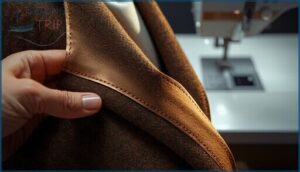
You achieve couture-level interiors with bias binding wrapping around each seam allowance edge. The Hong Kong finish uses true bias strips cut at 45 degrees, sewn along one side, then wrapped and pressed flat to enclose raw edges without bulk. This edge finishing method transforms unlined jackets.
Steps to achieve the Hong Kong finish:
- Cut bias binding 1 to 1¼ inches wide for flexibility
- Sew binding with ¼-inch seam allowance
- Press binding away from seam enclosure
- Wrap fabric around edge and press flat
- Trim excess to ⅛ inch for clean bound edges
Flat-Felled Seams
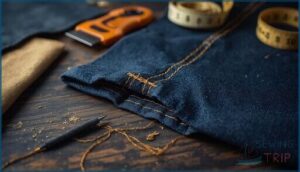
You lock raw edges inside a double-folded tunnel when you sew a flat-felled seam. This seam finishing method provides maximum seam reinforcement through two parallel rows of stitching that secure the folded edge.
Stitch density and seam stability make flat-felled construction ideal for denim and workwear.
Fabric compatibility matters—woven cottons and canvas handle the seam allowance bulk better than delicate or stretchy materials.
Mock-French and Turned-Under Edges
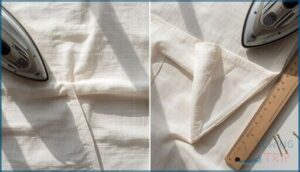
Mock-French seams fold each seam allowance toward the center and stitch near the fold lines to enclose raw edges. This seam finishing method resembles French seams but uses half the seam allowance for the folded edges.
Turned-under edges reduce fraying on lightweight fabrics by folding allowances to the wrong side.
Both techniques require pressing to maintain fabric drape and achieve clean seam enclosure without bulk.
Choosing The Best Finish for Your Fabric
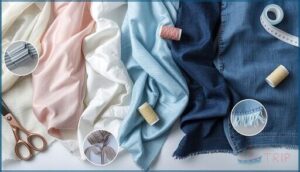
Your fabric choice drives your seam finishing method. What works beautifully on cotton lawn will fail on jersey knit, and heavyweight denim demands different handling than silk chiffon.
Your fabric choice drives your seam finishing method—what works on cotton lawn will fail on jersey knit or heavyweight denim
Match your technique to your fabric’s weight, weave, and tendency to fray for results that hold up through wear and washing.
High-Fraying Fabrics
Woven materials with loose weaving demand edge stability from the start. High-fraying fabrics require seam finishes that lock edge fibers before they unravel beyond the seam allowance. Thread choice and fabric selection determine which seam finishing methods work best:
- Self-bound or turned-under edges secure raw threads through double folding
- Overedge stitches like serging seal edges with continuous thread loops
- Hong Kong seam finishes encase raw edges in bias binding for complete fray prevention
Knits and Stretch Fabrics
Stretch fabric care starts with edge finishes that move with your material. Knit seam stability depends on flexible overedge stitches that won’t snap under tension. Use a zigzag stitch or serger with a slight stretch to prevent thread breakage.
Avoid stiff interfacing options that restrict fabric drape control. Elastic edge finishes preserve the natural give of knits without adding bulk to your seam allowance.
Delicate and Sheer Materials
Fine fabrics demand gentle seam finishes that won’t show through or add bulk. French seams work beautifully for silk finishing and chiffon edges, enclosing raw allowances completely. Hong Kong finish adds subtle elegance to sheer seams without weight.
Use lightweight fabric stabilizers sparingly to control distortion. Narrow seam allowances paired with delicate edge finishing techniques prevent puckering while maintaining the drape you need for lace binding and transparent materials.
Heavyweight and Sturdy Fabrics
Sturdy materials like denim, canvas, and twill demand strong edging that won’t buckle under stress. Flat-felled seams deliver double-layered protection for denim finishing and thick fabric construction, boosting durability in workwear.
Serged edges lock fibers on canvas seams without excessive bulk. Hong Kong finish and twill binding add refinement to heavy textiles while maintaining clean seam allowances and preventing fray through repeated wear.
Leather, Suede, and Specialty Textiles
Leather edge finishing and suede seam treatment differ from standard fabric finishing—these materials don’t fray. You can leave raw edges unfinished or apply specialized adhesives for specialty textile care.
Synthetic material binding works for coated fabrics, while exotic fabric handling requires test samples. Skip traditional seam reinforcement methods that pierce repeatedly.
Focus edge finishing efforts on seam allowances that support garment structure without adding unnecessary bulk.
Essential Tools and Supplies for Seam Finishing
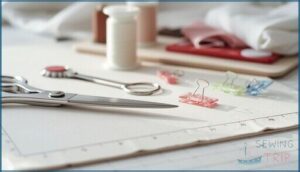
You don’t need a fully stocked sewing studio to finish seams properly. The right tools make each technique faster and cleaner, but most sewers already own the basics.
Here’s what you’ll reach for depending on which finish your fabric requires.
Sewing Machines and Stitch Settings
Your sewing machine controls the foundation of every seam finishing method. Stitch length between 2.5 and 3.5 mm works best for zigzag stitch applications on woven seam allowances.
Tension control prevents puckering on lightweight fabrics and thread loops on heavier materials. Match needle types to your fabric weight—universal 80/12 for medium fabrics, ballpoint for knits.
Select appropriate presser feet and thread settings for clean seam finishing techniques.
Sergers and Overlockers
A serger or overlocker trims and encases raw edges in one pass using three to four threads for professional seam finishing methods. Thread tension adjustments prevent loose loops on the serged edge. Machine threading follows color-coded paths on most models.
Regular serger maintenance—cleaning lint from loopers, replacing needles, oiling points—keeps your overlocker performing reliably.
Differential feed controls fabric stretch during serging techniques.
Pinking Shears and Scissors
Pinking shears feature sawtooth blades that cut zigzag edges on woven fabrics to slow fraying. High carbon steel blades maintain sharpness for precise seam trimming methods. Cushioned grips reduce hand fatigue during extended cutting sessions.
Clean teeth after use and oil pivot points regularly for smooth operation. Pinking blade maintenance extends tool life—specialized sharpening equipment handles the serrated pattern.
Pair these scissors with other edge finishing techniques on knits or tightly woven synthetics.
Bias Binding and Notions
Quality bias tape transforms raw edges into couture-worthy seam finishes. To achieve professional results, stock your workspace with the following binding tools:
- Double fold bias tape in standard widths for clean folded edges
- Bias binding maker for consistent self fabric strips
- Binding foot attachment for parallel edge finishing
- Narrow seam clips for securing piping and curved binding
- Seam gauge for measuring finished binding widths
These sewing notions support bound and flat-felled seam construction.
Pressing Equipment and Interfacing
Beyond binding tools, you need reliable heat sources for fabric preparation and finishing. Steam stations deliver consistent temperatures for professional seam finishes.
Stock interfacing materials in woven and nonwoven weights to stabilize seam allowances during garment construction. Pressing accessories like tailor’s hams shape curved seams without creases.
Heat control matters—ironing boards with padded surfaces protect delicate fabrics while you press finished seams flat.
Pro Tips for Flawless Seam Finishes
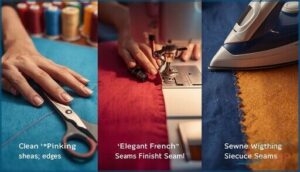
Proper technique makes the difference between a seam finish that lasts and one that fails after a few washes. Small adjustments to your pressing method, construction sequence, and thread selection will enhance your finished garments from homemade to professional.
Master these four practical strategies to avoid common pitfalls and achieve consistent, durable results.
Pressing and Trimming Techniques
Set stitches with controlled heat before you flatten seam allowances. Use pressing tools like a seam roll for wide fabric finishing to prevent ridges. Trim seam allowances with sharp shears for precise edge finishing. Allow fabric cooling before moving your work to avoid new creases.
Remove loose threads near seam construction before pressing. These trimming methods guarantee your seam finishes stay crisp and your flat-felled seam contours remain smooth.
Seam Construction Order
Construction planning sets the stage for every seam finish you apply. Fabric preparation comes before assembly order: stay stitch raw edges, then join primary seams in the right stitch direction.
Inner seam construction precedes outer seam finishes to reduce bulk. Plan flat-felled seam or French seam methods early since they change how you join fabric.
Sequencing seam allowances correctly prevents rework.
Avoiding Common Seam Finishing Mistakes
Wrong techniques create seam finishing errors that waste time and fabric. Fabric distortion happens when you skip a test swatch or use the wrong foot pressure. Thread breakage signals needle or tension problems. Pucker prevention starts with matching your finish to fabric weight and avoiding over-handling before pressing.
- Use fresh needles to prevent snags and uneven stitching
- Test seam allowances on scraps before finishing your garment pieces
- Trim threads and edges evenly to maintain consistent fray control
- Press French seams and flat-felled seams flat to avoid visible ridges and bulk
Matching Thread and Finishing for Longevity
Thread durability depends on smart material selection and fabric compatibility. Match thread fiber to fabric weight so tension stays balanced and seams last through multiple washes.
Polyester threads resist abrasion on high-fray fabrics while stretch threads preserve seam longevity in knits.
Pair your finishing techniques with thread strength that equals or exceeds fabric stress for professional finishing and long-term garment durability.
Frequently Asked Questions (FAQs)
How to finish a seam allowance?
You finish seam allowances by securing raw fabric edges with zigzag stitching, serging, pinking, or binding.
Each method prevents fraying and improves garment construction quality.
Match your edge finishing technique to your fabric type.
What are the different types of seam finishes?
Seam finishing techniques include zigzag stitching, serged edges, pinking, French seams, bound Hong Kong seams, and flat felled seams.
Each method offers different benefits for fabric stabilizers, edge binding, and garment longevity.
What is the best stitch to finish seams?
No single “best” stitch exists. Your fabric dictates the choice.
Zigzag stitch works for most wovens. A serger provides stretch and speed.
Flat-felled seams suit sturdy fabrics needing maximum edge stability.
Can I finish seams after the garment is completed?
Ever wondered if you can correct skipped steps? You can apply zigzag or overlock stitches post assembly, though bound seams work best during construction.
Trim seam allowances first to reduce bulk and guarantee professional edge finishing results.
How do I finish curved or bias seams?
You’ll need to clip or notch along curves before applying bias edge finishing or enclosed seam techniques.
Turned under methods and bound Hong Kong seams work well when you control bulk through careful seam allowance clipping and pressing.
Whats the best finish for childrens clothing?
Children’s clothing demands finishes that withstand wash after wash—wouldn’t you want that?
Zigzag stitching and serged overlocks deliver edge stability and fray prevention while maintaining child comfort.
French seams suit delicate fabrics beautifully.
Do I need to finish interior seams differently?
Interior seam construction doesn’t require a different approach. You apply the same fabric edge treatment and professional finishing techniques—zigzag stitching, French seams, or bound Hong Kong seams—based on fabric type and garment longevity tips.
How do commercial manufacturers finish seam allowances?
Like a factory assembly line humming through fabric, commercial manufacturers finish seam allowances with overlockers that trim and encase edges simultaneously.
Automation ensures consistent seam finishing across garments while quality control validates edge trimming and professional finishing standards.
Conclusion
You don’t need industrial equipment to master seam allowance finishing techniques. A basic machine and the right method for your fabric weight will outlast shortcuts every time.
Match your finish to the fabric’s behavior. Press each seam flat before moving forward. Check your thread tension before starting any edge treatment.
These fundamentals protect your investment of time and materials. Your garments will wear longer and look cleaner from the inside out.