This site is supported by our readers. We may earn a commission, at no cost to you, if you purchase through links.
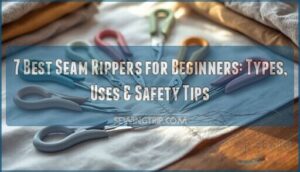
You rip out your first crooked seam, and suddenly your beautiful fabric has a hole the size of Texas. That’s the moment most sewists realize their trusty scissors weren’t the right tool for the job. A proper seam ripper isn’t just about undoing mistakes—it’s about having the confidence to fix them without destroying your project in the process.
The difference between a beginner-friendly seam ripper and a cheap one that fights you at every stitch comes down to blade sharpness, handle comfort, and that little safety ball that keeps your fabric intact.
Whether you’re correcting a wayward zipper or taking apart a thrift store find for fabric, the right seam ripper transforms frustrating do-overs into quick fixes.
Table Of Contents
Key Takeaways
- A quality seam ripper with a sharp blade, safety ball, and ergonomic handle transforms mistake-fixing from a frustrating battle into quick, confident corrections without destroying your fabric.
- The three main types—forked head for general use, curved blade for following seam lines, and stiletto for precision quilting work—each excel at different tasks, so matching the tool to your project prevents fabric damage.
- Proper technique means inserting the blade at a shallow 20-30 degree angle and cutting one stitch at a time rather than yanking threads, which protects your fabric and builds real control.
- Upgrading from a cheap seam ripper to a $6-20 model with replaceable blades and comfortable grip pays off immediately because you’ll stop fighting your tools and start fixing mistakes without fear.
Essential Features of Seam Rippers for Beginners
Look, not all seam rippers are created equal—and when you’re just starting out, knowing what makes a good one can save you from accidentally shredding your favorite fabric.
The right features make the difference between a tool that feels like an extension of your hand and one that fights you at every stitch.
Let’s break down what you actually need to look for so you can rip seams like a pro without the battle scars.
Key Parts and Their Functions
Your seam ripper has a few game-changing parts you need to know. The blade design includes a sharp point for lifting stitches and a cutting edge nestled in that U-shaped curve between the forks. Most forked head seam rippers feature a safety ball on the shorter end—this little guardian prevents fabric snags.
The handle materials and ergonomic grip matter too, especially when you’re undoing miles of mistakes.
Understanding the importance of methodological rigor is essential for evaluating tool effectiveness.
Safety Ball and Sharp Point Explained
That little rounded cap—the safety ball—sits on the shorter fork and acts like a bodyguard for your fabric. It keeps the sharp point from gouging delicate textiles when you’re maneuvering through tight seams.
The sharp seam ripper blade itself measures just 3–4mm, engineered to slice thread without shredding cloth. Using a seam ripper effectively means respecting both ends: the ball prevents accidental damage while the point does precision work.
Ergonomic Handle Designs
Your hand shouldn’t cramp after five minutes of seam ripping—that’s where ergonomic grip matters. Look for contoured designs with finger grooves or soft-touch handle materials that cradle your palm and keep your wrist neutral. Ambidextrous use means left-handers won’t struggle with awkward angles.
Whether you grab a forked head seam ripper or curved blade seam ripper, reduced fatigue lets you work longer without that white-knuckle death grip.
Differences Between Beginner and Advanced Models
Once you’re comfortable with your grip, you’ll notice starter tools cost around five dollars, while pro-grade models hit twenty or more. That price comparison reflects blade materials—carbon steel dulls quickly, but titanium-coated edges stay sharper through hundreds of thread removal sessions. Handle ergonomics and safety features like blade guards also improve. Durability tests show premium forked head seam rippers and lighted seam rippers outlast budget picks by years.
- Blade materials: Carbon steel vs. titanium coatings
- Safety features: Blade guards and locking mechanisms
- Durability tests: Pro models last years longer
- Price comparison: Beginner tools start at five dollars
Types of Seam Rippers and Their Uses
Not all seam rippers are created equal, and knowing which one to grab can make the difference between a quick fix and a frustrating mess. Each type has its own superpower—whether you’re tackling straight seams, curved edges, or delicate quilting work.
Let’s break down the main players so you can pick your weapon of choice with confidence.
Forked Head Seam Rippers
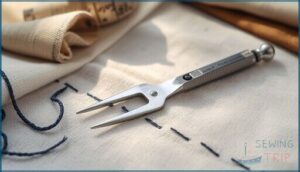
You’ll spot forked head designs everywhere because they’re the benchmark for beginners tackling seam removal. Those two-prong forks slip under stitches fast, and smart blade angles let you cut threads without stabbing your fabric.
The beauty? That protective ball on the shorter prong guards against snags while you work. This forked head seam ripper becomes your best friend for mastering thread removal without the drama.
Curved Blade Seam Rippers
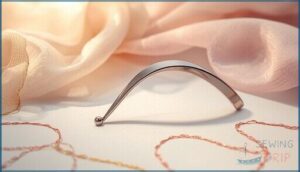
Professional sewists favor curved blade seam rippers because that blade curvature follows seam lines like a dream. You’ll notice faster stitch removal on curved seams, and the ergonomic design keeps your wrist happy during marathon unpicking sessions.
Here’s what makes curved blade seam rippers stand out:
- Precision control: The arc concentrates cutting pressure for clean thread release
- Fabric compatibility: Works beautifully on everything from delicate knits to sturdy wovens
- Safety features: Many include protective caps and ball tips to prevent accidental gouging
- Maneuverability: Navigates tight corners without distorting your fabric
This curved blade seam ripper becomes your secret weapon for those tricky princess seams and armhole curves.
Stiletto Seam Rippers for Quilting
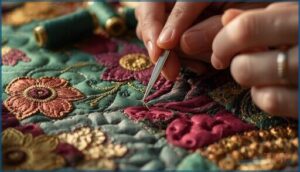
Quilters, listen up—stiletto seam rippers are your precision cutting allies when those forked head seam rippers feel too bulky. That needle-thin point slips under dense quilting stitches with surgical accuracy, giving you total control near appliqué edges without disturbing surrounding fabric.
Quilter safety matters here: the sharp tip demands respect and careful angle work. Master this sewing tool’s fabric handling finesse, and you’ll confidently tackle intricate quilting techniques that once intimidated you.
Choosing The Right Type for Your Project
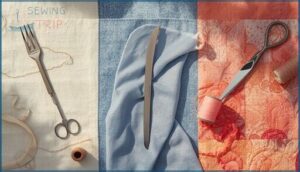
Your fabric selection drives seam ripper choice. Heavy woven fabrics respond best to forked head seam rippers that grasp multiple threads during stitch removal, while delicate knits need smaller blades to prevent snags. Curved blade seam rippers follow seam lines naturally on wovens, reducing fabric catching.
For project planning, match your thread types and seam removal needs: quilters benefit from stiletto precision, while general unpicking favors adaptable forked designs.
Top 7 Seam Rippers for Beginners
You’ve got the knowledge down—now let’s talk tools. Not all seam rippers are created equal, and the right one can make the difference between a quick fix and a frustrating afternoon.
Here are seven solid options that’ll give you control and confidence from your very first stitch removal.
1. Missouri Star Heavy Duty Seam Ripper Tool
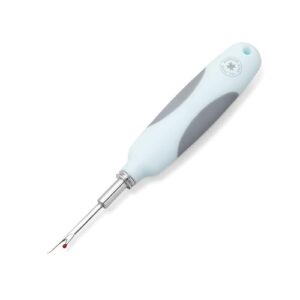
When you’re wrestling with thick seams or multiple fabric layers, Missouri Star’s Heavy Duty Seam Ripper becomes your best ally. This tool features a sturdy steel blade that won’t quit when regular sewing tools give up, making it perfect for quilting techniques and unpicking stubborn stitches.
The ergonomic handle reduces hand fatigue during extended sessions, while the protective cap ensures seam ripper safety when you toss it in your bag. It’s built tough for beginners tackling challenging projects, offering reliable fabric protection and straightforward tool maintenance through compatible replacement blades.
| Best For | Quilters and sewers who frequently work with thick fabrics, multiple layers, or need to remove stitches from heavy-duty projects without wearing out their tools. |
|---|---|
| Handle Type | Soft grip ergonomic |
| Blade Material | Chrome-plated steel |
| Length | 5.5 inches |
| Protective Cover | Yes |
| Primary Use | Seam removal |
| Weight | 1.13 ounces |
| Additional Features |
|
- Robust steel blade stays sharp through tough seams and thick materials
- Ergonomic handle design minimizes hand strain during long unpicking sessions
- Compatible with standard replacement blades for easy maintenance
- Heavier build may feel bulky for delicate or precision work
- Protective cap could get misplaced if not attached to the tool
- Replacement blades sold separately add to long-term costs
2. Clover Ergonomic Seam Ripper Tool
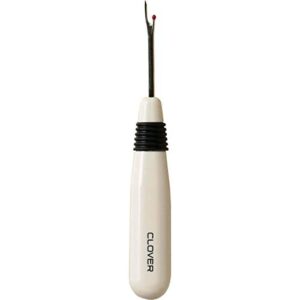
If hand strain’s been slowing you down, Clover’s ergonomic design changes everything. This seam ripper features a contoured handle that actually fits your grip, making seam removal feel natural instead of awkward.
The built-in safety ball protects your fabric during unpicking, while the sharp, replaceable blade manages precise work without excessive force.
It’s one of those sewing tools that teaches proper technique through its design—perfect for beginners mastering sewing tips and building confidence. With simple tool maintenance and excellent fabric protection, you’ll wonder how you ever managed without it.
| Best For | Sewers who want comfortable, extended seam-ripping sessions without hand fatigue, especially beginners learning proper unpicking technique. |
|---|---|
| Handle Type | Ergonomic |
| Blade Material | Sharp blade |
| Length | 5 inches |
| Protective Cover | Vinyl cap |
| Primary Use | Seam removal |
| Weight | 0.32 ounces |
| Additional Features |
|
- Contoured handle reduces grip pressure and hand strain during repetitive seam removal
- Built-in safety ball prevents accidental fabric snags and punctures while you work
- Sharp, replaceable blade gives you precise control without needing excessive force
- Comes with a thin vinyl pouch instead of a sturdy protective case that stays secure
- Smaller than some users expect, which might feel less substantial in your hand
- Priced higher than basic seam rippers you’ll find elsewhere
3. Dritz Small Blade Seam Ripper
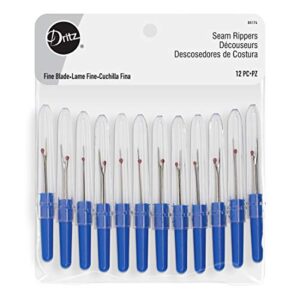
When tight spaces demand precision, this compact tool delivers. The Dritz Small Blade Seam Ripper cuts through delicate work without overwhelming beginners learning stitch removal techniques.
Its 4-6mm blade width excels at unpicking small seams where larger tools feel clumsy. The ergonomic handle gives you real control, while the protective ball ensures fabric protection during those first nervous attempts.
Sold in 12-packs, you’ll always have a fresh blade ready—blade maintenance made simple. For sewing beginners mastering tool ergonomics and seam ripper safety, this affordable option builds confidence fast.
| Best For | Sewers who need precision in tight spaces—especially beginners learning stitch removal or anyone working with delicate fabrics and small seams. |
|---|---|
| Handle Type | Ergonomic |
| Blade Material | Sharp blade |
| Length | Small blade |
| Protective Cover | No |
| Primary Use | Seam removal |
| Weight | 1.6 ounces |
| Additional Features |
|
- Compact 4-6mm blade gets into cramped areas where full-size rippers can’t reach
- Ergonomic handle with protective ball tip makes it safer for first-timers
- 12-pack means you’ve always got a sharp blade ready when the current one dulls
- Small blade dulls faster with heavy use and needs regular replacement
- Not built for thick fabrics like denim or multi-layer seams
- Blades can rust if you don’t dry and store them properly
4. Clover Seam Ripper Tool
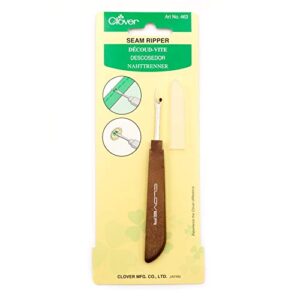
For just $6.45, this classic Clover Seam Ripper punches above its weight. You’ll love the brown ergonomic handle that fits comfortably during longer unpicking sessions—real fabric safety without hand cramping.
The sharp point manages buttonholes and fine stitches beautifully, making it one of those sewing essentials every beginner needs. Just watch that tiny cap—it’s notorious for vanishing. Toss this in your sewing tools arsenal and you’re ready to tackle mistakes confidently. Trust me, learning proper seam ripper tips with quality gear like this makes sewing for beginners way less intimidating.
| Best For | Sewers and crafters who need an affordable, reliable tool for removing stitches, ripping seams, and fixing mistakes on everyday sewing projects. |
|---|---|
| Handle Type | Standard |
| Blade Material | Sharp point |
| Length | Small |
| Protective Cover | Small cap |
| Primary Use | Seam removal |
| Weight | Lightweight |
| Additional Features |
|
- Sharp point cuts through threads and buttonholes cleanly without snagging fabric
- Ergonomic brown handle feels comfortable during extended use and reduces hand fatigue
- Budget-friendly at $6.45, making it an accessible essential for beginners and experienced sewers alike
- The cap is small and doesn’t secure firmly to the handle, so it’s easy to lose
- May struggle with very tiny stitch lengths (like 1.4mm or 1.6mm) that require ultra-fine precision
- Requires careful handling due to the sharp point, especially around delicate fabrics
5. Dritz Curved Seam Ripper Tool
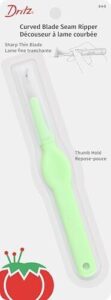
The Dritz Curved Seam Ripper changes the game when you’re unpicking curved seams or darts. That curved blade follows your fabric’s natural weave, giving you serious fabric protection while you work. You’ll notice less snagging compared to straight rippers—which matters when you’re removing stitches from delicate projects.
The ergonomic handle gives you excellent control for precise stitch removal, and the safety ball protects against accidental cuts. Master this sewing tool and you’ll tackle mistakes around corners like a pro. It’s proper tool safety meeting smart design.
| Best For | Sewers who regularly work with curved seams, darts, or delicate fabrics and need precise stitch removal without snagging or damaging the material. |
|---|---|
| Handle Type | Large soft grip |
| Blade Material | Curved steel blade |
| Length | 7.63 inches |
| Protective Cover | Yes |
| Primary Use | Seam removal |
| Weight | 0.352 ounces |
| Additional Features |
|
- Curved blade design follows fabric weave naturally, reducing snags and fabric damage compared to straight rippers
- Ergonomic handle provides excellent control and comfort during extended use
- Safety ball feature protects fabric from accidental cuts while removing stitches
- May not be as versatile as straight seam rippers for general stitch removal tasks
- Blade sharpness can decrease over time with frequent use, requiring replacement
- Limited information about long-term durability and build quality
6. Singer Seam Ripper Tape Measure Combo
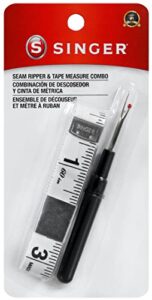
Singer’s two-in-one design puts a 60-inch vinyl tape measure right alongside your ripper—ingenious for quick measurements while you’re unpicking seams. You won’t juggle multiple sewing tools anymore.
The black plastic handle offers a solid grip during stitch removal, and at four inches long, it’s compact enough for any project bag. Here’s the catch: there’s no protective cap, so seam ripper safety means storing it carefully.
Some beginners find the tape measure accuracy fades with heavy use, but it’s still beginner-friendly as a starter combo tool.
| Best For | Sewers who want a space-saving tool that handles basic seam ripping and quick fabric measurements in one compact package. |
|---|---|
| Handle Type | Plastic |
| Blade Material | Metal |
| Length | 4 inches |
| Protective Cover | No |
| Primary Use | Seam removal |
| Weight | Not specified |
| Additional Features |
|
- Combines a seam ripper and 60-inch tape measure so you don’t need to grab separate tools mid-project
- Compact 4-inch size fits easily into any sewing kit or project bag
- Shows both inches and centimeters, making it versatile for different pattern types
- No protective cap on the seam ripper means you need to be careful where you toss it
- Tape measure markings can wear off or get hard to read with regular use
- Some users report the overall quality feels a bit cheap compared to standalone tools
7. Clover Straight Tailors Awl Tool
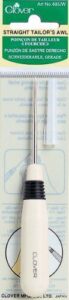
Here’s the truth: this isn’t a seam ripper at all—it’s an awl tool designed for fabric piercing and mark-making. The alloy steel point helps you create starter holes and guide fabric layers before stitching, which is why tailor tools like this belong in your kit.
At just nine grams with a comfortable white handle, it’s perfect for sewing basics like tucking threads or punching eyelets. Awl tool benefits include precision work on denim and quilting cotton. Store it in the protective case for awl maintenance and safety.
| Best For | Sewers and quilters who need a precision tool for creating starter holes, guiding fabric layers, and marking materials before stitching. |
|---|---|
| Handle Type | Plastic and steel |
| Blade Material | Alloy steel |
| Length | Standard |
| Protective Cover | Yes |
| Primary Use | Hole piercing |
| Weight | 9.07 grams |
| Additional Features |
|
- Lightweight at just 9 grams with a comfortable grip that won’t tire your hand during detailed work
- Sharp alloy steel point creates clean holes in various fabrics from quilting cotton to denim
- Comes with a protective case so you can store it safely without worrying about that sharp tip
- The sharp point requires careful handling and isn’t kid-friendly
- Not built for heavy-duty fabrics or industrial-level piercing work
- Handle size might not feel right for everyone’s grip
How to Use a Seam Ripper Safely
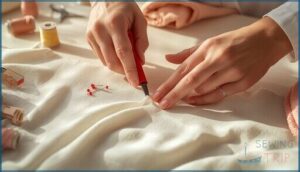
Look, I’ve watched too many beginners stab their fabric (or their fingers) because nobody showed them the right way to handle a seam ripper. You’re about to break free from those wonky stitches, but only if you learn the proper technique first.
Too many beginners stab their fabric or fingers because nobody taught them the proper seam ripper technique first
Let’s cover the essential safety moves that’ll have you ripping seams like a pro without destroying your project—or yourself.
Correct Insertion and Angle
Think of your seam ripper as a scalpel, not a crowbar. Insert the sharp point at a shallow 20 to 30 degree angle—just enough to slide under the thread without snagging fabric beneath.
Keep that angle steady as you work, blade facing away from your seam allowance. This angle control protects your fabric and makes stitch removal smooth and safe.
Techniques for Removing Stitches
Start by cutting one stitch at a time for total control over thread removal. Slide your seam ripper sideways—never straight down—to catch just the thread.
For longer seams, cut every fourth stitch, then pull the thread from the back. Work slowly, checking after each cut.
This stitch correction method keeps your fabric protected while you’re unpicking those unwanted stitches.
Preventing Fabric Damage
Keep your fabric taut but not stretched—tension is your best friend for fabric protection.
Insert the seam ripper at a 45-degree angle, staying shallow to master seam safety. The ball should kiss the fabric surface while you’re unpicking, guiding your cutting techniques.
Test your thread removal moves on scraps first—it’s the smartest damage control you’ll practice. Your fabric care skills will thank you.
Common Mistakes to Avoid
You’re going to make seam ripper mistakes—but let’s skip the worst ones. Wrong blade maintenance means dull edges that snag instead of slice, causing fabric damage you can’t undo.
Watch for these safety precautions during stitch removal:
- Never yank the thread—controlled tool handling beats speed every time
- Don’t rush dense seams—pause between stitches for clean unpicking
- Replace dull blades immediately—sharp tools make unsewing safer
These sewing tips save your projects.
Maintenance and Care Tips for Seam Rippers
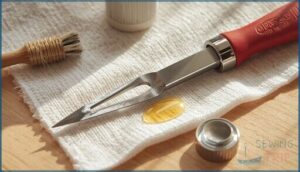
Your seam ripper won’t stay sharp forever, and honestly, that’s okay. A little regular care keeps your tool working like new and helps you avoid those frustrating moments when a dull blade snags your fabric.
Here’s how to keep your seam ripper in top shape so it’s always ready when you need it.
Cleaning and Blade Replacement
Your seam ripper won’t stay sharp forever, but you can keep it performing like new. After each unsewing session, brush away fabric fibers with a soft nylon brush—this prevents buildup that dulls your blade. Wipe the cutting edge with a damp cloth, then dry thoroughly for rust prevention. A quick swipe with isopropyl alcohol sanitizes your tool between projects.
When your blade starts snagging fabric instead of gliding through stitches, it’s time for a replacement. Always use blades designed for your specific model—they’ll fit perfectly and cut cleanly. Wear protective gloves during blade replacement, keep your fingers clear of that sharp edge, and test on scrap fabric before tackling your actual project. Trust me, a well-maintained seam ripper makes unpicking feel less like a punishment and more like a simple fix.
| Maintenance Task | Best Practice |
|---|---|
| Edge Maintenance | Replace nicked blades immediately |
| Handle Cleaning | Avoid soaking wooden grips |
| Blade Sharpening | Use manufacturer-specific replacements |
| Tool Sanitizing | Apply isopropyl alcohol periodically |
| Inspection | Check your lighted seam ripper before each session |
Safe Storage Solutions
Once you’ve cleaned your seam ripper, proper storage keeps it sharp and safe. Here’s your tool organization game plan:
- Cap the blade immediately after each use—blade protection is non-negotiable.
- Designate a specific drawer slot or storage case for your sewing tools.
- Keep it separate from other notions to prevent accidental pokes.
- Store in a cool, dry spot away from fabric and thread management areas.
When to Upgrade Your Seam Ripper
Your seam ripper won’t last forever, and that’s okay. Blade wear shows up when you need extra force to pull threads—upgrade triggers right there. If you’ve replaced blades three or more times in a month, you’re ready for something better.
Performance decline, rust spots, or misalignment after 25–50 uses? Time for tool replacement. Investing in quality sewing tools beats fighting a dull blade every project.
Practicing on Scrap Fabric for Skill-building
Before you touch your best project fabric, run drills on scraps. Fabric selection matters—grab cotton, synthetics, and knits to mirror real sewing scenarios. Practice scheduling twenty removals across different materials builds unpicking confidence fast.
Track fabric preservation by comparing before-and-after damage. Scrap management keeps your workspace tidy, and skill assessment shows exactly where you need more reps with your seam ripper.
Frequently Asked Questions (FAQs)
How do you remove buttonhole stitches with a seam ripper?
Position your ripper’s sharp point beneath the buttonhole’s center thread, then gently rock the blade along each side.
Work slowly—one stitch at a time protects your fabric from accidental snags during unpicking.
Whats the best way to remove embroidery stitches?
Use your seam ripper to snip threads close to the fabric, then gently pull them away.
For dense embroidery, work from the back side to minimize surface damage and preserve fabric integrity.
Are electric seam rippers worth it for beginners?
For most beginners, electric seam rippers aren’t worth the investment. They’re pricey, harder to control, and can damage fabric faster.
Master manual techniques first—automatic stitch removal comes easier once you’ve built real precision.
How do you fix a hole from seam ripper mistakes?
If you’ve accidentally nicked the fabric, don’t panic. Pin the edges together, restitch along the original seam line with matching thread, and reinforce with small backstitches for a nearly invisible repair.
Conclusion
Last month, a student told me she’d been using kitchen scissors for three years because “all seam rippers are the same.” After one afternoon with a proper ergonomic model, she texted me: “I just fixed a zipper in two minutes without cursing once.”
That’s the difference a quality tool makes. The right seam ripper for beginners doesn’t just remove stitches—it removes the fear of making mistakes. And that’s when real sewing confidence begins.