This site is supported by our readers. We may earn a commission, at no cost to you, if you purchase through links.
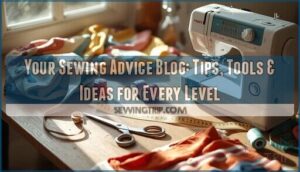
The first time you slice through crisp cotton with sharp dressmaking shears, something clicks—suddenly, fabric isn’t just a material, it’s a canvas for your ideas. Whether you’re piecing together a no-pattern tote or wrestling with slippery satin, sewing rewards patience and curiosity.
But every project comes with its own set of tangled threads: uneven seams, skipped stitches, a machine that won’t cooperate.
That’s where a sewing advice blog steps in, offering practical tips, fresh inspiration, and solutions for every skill level.
With the right guidance, you can turn mistakes into mastery and ordinary fabric into something uniquely yours.
Table Of Contents
Key Takeaways
- Beginners should start with simple projects, reliable machines, and essential tools like dressmaking shears and flexible tape measures.
- Common mistakes include skipping fabric prewash, using the wrong needle size, poor measurement, and neglecting seam finishing and machine maintenance.
- Connecting with sewing blogs, online forums, and virtual classes helps you learn, find inspiration, and join a supportive community.
- Troubleshooting skipped stitches, tension issues, and tricky fabrics relies on proper needle choice, bobbin care, and using stabilizers or clips for difficult materials.
Essential Sewing Tips for Beginners
Starting out in sewing doesn’t have to feel overwhelming — you just need to know where to begin.
If you’re looking for guidance, these beginner sewing machine user guides break down the basics in a way that’s easy to follow.
A few solid basics can make the difference between a frustrating first project and one you’re genuinely proud of.
Here’s what every beginner should know before threading that first needle.
Choosing Your First Sewing Machine
Picking your first sewing machine doesn’t have to feel overwhelming.
Look for beginner-friendly features like a top-loading bobbin, built-in needle threader, and speed control.
Essential Stitches — straight and zigzag — cover most projects.
Budget Factors matter too: reliable machines with solid Brand Support generally run $150–$400.
Stick to trusted names, and you’ll get manuals, warranties, and a community ready to help.
Understanding Basic Sewing Tools
Once you’ve got your machine sorted, the right sewing tools make everything click.
Cutting Tools Basics start with dressmaking shears — those angled grips keep fabric flat while you cut.
Measuring Tools Essentials like a flexible tape measure and seam gauge keep your work accurate.
Fabric Marking Techniques, Pins and Fasteners, and a Pressing Tools Overview round out your core sewing supplies kit.
Simple Starter Projects
With your tools ready, it’s time to actually sew something.
Start simple — No Pattern Bags, Fat Quarter Pouches, and Beginner Quilt Squares are all beginner‑friendly wins.
Straight Line Decor like napkins and placemats build consistency fast.
Simple Tote Variations teach real construction skills in an afternoon.
Explore free sewing tutorials for beginners, DIY fashion projects, and sewing tips to keep momentum going.
You can also download free beginner patterns for quick projects.
Common Beginner Mistakes to Avoid
Now that you’ve got a few projects under your belt, don’t let small slip-ups slow you down.
Skipping fabric prewash, cottons can shrink 3–5%.
Wrong needle size on stretch knits causes skipped stitches.
Poor measuring accuracy means garments that won’t fit.
Seam finishing prevents fraying after washing.
Regular machine maintenance keeps everything running smoothly.
Good sewing techniques start with avoiding these easy-to-fix mistakes.
Building Your Sewing Skills
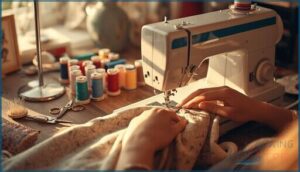
Once you’ve got the basics down, the real fun begins.
Building your skills means getting comfortable with the techniques that’ll take your projects from “pretty good” to “I actually made that.”
Here’s what to focus on next.
Mastering Basic Stitches and Seams
Every strong seam starts with knowing your stitches. A running stitch works for basting, while a backstitch rivals machine strength for hand‑sewn seams. Here’s your quick Stitch Types Overview and Seam Finishing Techniques cheat sheet:
- Use 2–2.5 mm straight stitch for most sewing techniques on woven fabrics
- Apply zigzag stitches for seam allowances without a serger
- Match your Needle Selection Guide: size 80/12 for cottons and linens
- Press every seam before joining pieces — non‑negotiable sewing tips from every pro
Garment Fitting Fundamentals
Getting the fit right starts with accurate Body Measurements — wrap a flexible tape snug but not tight, and note your bust measurements, natural waist, and hip separately.
From there, Pattern Size Selection becomes straightforward: choose by high bust for tops and full hip for bottoms. Factor in Ease Calculations, follow a smart Fitting Order, and tackle Common Adjustments like a full bust adjustment to dial in your perfect fit.
Easy Fabric Handling Techniques
Handling fabric well is half the battle — and honestly, it’s where clean results begin.
Before you even pick up your scissors, prewash fabric to remove shrinkage and sizing.
Then align selvedges on a flat surface to keep the grain honest.
- Use pattern weights for accurate, distortion‑free cutting
- A walking foot guidance system prevents puckering on long seams
- Press seam flat after every stitch line
- Spray starch tames slippery or lightweight fabrics
Must-Have Sewing Tools and Supplies
The right tools can make or break your sewing experience — and yes, that’s genuinely true.
From the fabric you choose to the gadgets that save you hours of frustration, what’s in your sewing kit matters more than you’d think.
Here’s what every sewist should have on hand.
Selecting Quality Fabrics
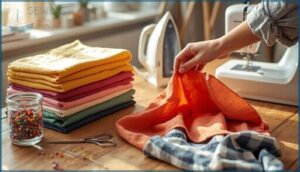
Fabric is the soul of any garment-making project, so choosing wisely matters more than most beginners expect.
Start with your Fiber Content Guide — cotton weaves are forgiving and beginner-friendly.
Understanding Woven Knit Differences helps you match fabric to pattern.
Always do a Fabric Drape Test, check Care Label Insights, and follow Prewashing Importance to avoid shrinkage surprises later.
Essential Notions for Every Project
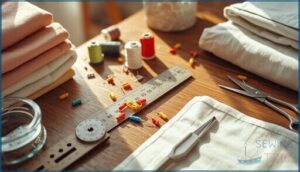
Think of notions as your project’s support crew.
You’ll want sharp pins, quality all-purpose thread (look for 40‑weight polyester), and a seam gauge for Seam Allowance Precision.
Glass-head pins handle pressing safely, while clips tackle vinyl or leather without holes.
Good sewing tools and materials — including marking tools for Fabric Grain Awareness and Finishing Edge Techniques — quietly make every seam cleaner.
Caring for Your Sewing Machine

Your sewing machine works hard — treat it like a partner, not just a tool. Stick to a Bobbin Cleaning Routine every 8–10 hours, follow a Needle Replacement Schedule each new project, and use an Oil Lubrication Guide matched to your model.
Smart Machine Storage Tips prevent rust and dust damage. Book Professional Service Timing annually to keep everything running smoothly.
Time-Saving Sewing Gadgets
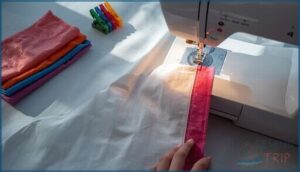
Once your machine’s running well, the right gadgets make everything faster.
A Rotary Cutter slices through multiple layers cleanly. A Magnetic Seam Guide keeps your seam allowances consistent without marking fabric. Fabric Clip Sets hold bulky layers without pin holes. A Pattern Projector skips the paper‑cutting entirely. And a Pressing Ham shapes curved seams in one smooth press — no fussing required.
Finding Inspiration and Sewing Ideas

Every great project starts with a spark of inspiration.
Every creative sewing journey begins with a single spark of inspiration that sets your next project in motion
Whether you’re drawn to runway trends, cozy home décor, or giving old clothes a second life, there’s a whole world of ideas waiting for you. Here are some of the best places to look when you need that creative push.
Trending DIY Fashion Projects
DIY fashion is having a serious moment.
From Thrift Flip makeovers that turn thrifted finds into crop tops and wrap blouses, to Visible Mending that makes repairs the star of the show — sewing projects are leading sustainable fashion trends.
Add Cottagecore Details, Crochet Accents, and Scrap Patchwork garments to your list, and you’ve got sewing tutorials worth bookmarking today.
Vintage and Retro Sewing Inspiration
If you love Thrift Flips, vintage sewing opens the door to retro inspiration. Dropped Waistlines, Balloon Pants, and Cropped Trench coats echo timeless silhouettes. Statement Skirts with dramatic shapes bring vintage and retro fashion to life. Natural Fabrics, like linen and cotton, add tactile nostalgia.
For more sewing inspiration and trends, check sewing blogs with vintage pattern guides. Check out the 2026 colour Cloud Dancer for inspiration.
Sewing for Home Decor
After exploring retro patterns, you might want to refresh your space with Seasonal Fabric Accents. Try Custom Pillow Covers or DIY Window Treatments for an instant lift.
Home Accent Baskets and Fabric Storage Solutions keep clutter stylishly out of sight.
Bench cushions, reading pillows, and handmade curtains—these sewing projects turn home sewing into creative DIY projects. Textile arts offer endless sewing tutorials.
Upcycling and Sustainable Sewing
Even as you stitch your way through slow fashion, you can try Zero‑Waste Patterns for minimal scraps and sustainable stitch techniques.
Upcycling old shirts into patchwork quilts or denim jeans into Upcycled Accessories keeps fabric repurposing ideas practical. Eco‑Friendly Dyeing and mindful sewing habits turn DIY fashion and crafting into sustainable fashion, blending creativity with sewing and sustainability every step.
Connecting With The Sewing Community

You don’t have to sew alone—there’s a whole world of makers sharing tips, patterns, and support. Finding your people can make sewing more fun and rewarding.
Here are some easy ways to connect and join in.
Top Sewing Blogs to Follow
Looking for sewing blogs that feel like a patchwork quilt of ideas?
You’ll find Pattern Reviews at Mood Sewciety, Curvy Fit Guides from Cashmerette, and Sustainable Practices at Miss MonMon.
Community Challenges and Video Tutorials fill So Sew Easy and Melly Sews.
These sewing resources offer sewing tips, sewing tutorials, and inspiration for every stitcher in the sewing community.
Online Sewing Forums and Groups
Joining online sewing forums and groups lets you swap sewing tips and connect with the sewing community.
- Member Introduction Posts and Regional Stitch Circles at MySewingCircle.com
- Forum Navigation Tips and Pattern Review Threads on PatternReview.com
- Live Q&A Sessions and friendly support on SewForum.com
Each space offers practical advice for every stitcher.
Participating in Sewing Challenges
Ready to turn sewing inspiration into action? Monthly sewing challenges spark creativity and connect you with the sewing community.
You’ll plan projects, pick themes, manage your time, and document your progress for prize preparation. Check out the table below for practical ways to join in:
| Challenge Planning | Documentation Strategies |
|---|---|
| Theme Selection | Photograph your sewing tips |
| Time Management | Share sewing projects online |
Workshops and Virtual Sewing Classes
Why not sharpen your skills with a Live Stitch-Along or dive into Interactive Pattern Fitting from your own home?
Online sewing workshops and sewing classes let you explore Remote Quilting Workshops, Virtual Fabric Swatches, and Online Machine Setup. You’ll find sewing education and classes for every skill level—hands‑on, project‑based, and led by experts who guide you step by step.
Troubleshooting Common Sewing Issues
Sewing projects don’t always go as planned, but there’s a fix for most problems.
If you’re stuck on something, you’re not alone.
Here are some ways to tackle the issues that come up most often.
Fixing Skipped Stitches and Thread Jams
Ever feel like your sewing machine skips stitches or jams right when you’re in the groove? Check these essentials:
- Needle Alignment: Make sure the needle faces the right way and is fully inserted.
- Bobbin Winding: Wind bobbins evenly and use quality sewing supplies.
- Thread Compatibility: Pair thread weights, test on scrap fabric, and control speed.
These sewing techniques and tips boost reliability.
Adjusting Tension and Stitch Length
Skipped stitches fixed? Now, fine-tune your sewing with Stitch Length Guides and Tension Calibration Tips.
Adjust machine dial settings for fabric-specific stitching—short stitches for silk, longer for denim. Match needle and thread.
Use sewing tutorials to test tension: look for balanced stitches, no loops or puckering. These sewing machine techniques and sewing tips and tricks keep your projects smooth and reliable.
Repairing Sewing Machine Problems
Once your stitch length and tension are set, check for mechanical hiccups.
Needle Replacement prevents skipped stitches and fabric jams.
Bobbin Case Cleaning clears thread nests.
Presser Foot Alignment helps avoid uneven seams.
For persistent issues, Timing Belt Repair or Electrical Fault Diagnosis may be needed.
Use sewing machine techniques, sewing tutorials, and sewing machine and tool reviews from the sewing community for guidance.
Tips for Working With Tricky Fabrics
Once your machine’s running smooth, tricky fabrics bring new challenges.
For instance, slippery silks need stabilizer techniques and careful Needle Selection.
Lace demands gentle handling and Pinning Alternatives like Wonder Clips.
Thick materials call for pressing tricks and pattern adjustments. Try these sewing tips:
- Tissue as stabilizer
- Ballpoint needles
- Wonder Clips
- Spray starch
- Full-size pattern pieces
Frequently Asked Questions (FAQs)
What’s the hardest thing to sew?
Nearly 60% of sewists rank welt buttonholes, French seams on curves, bias binding curves, modular wardrobes, vintage pattern adjustments, bra making, couture sewing, garment fitting techniques, pattern drafting, and lingerie or underwear sewing as the hardest projects to master.
What are the most common sewing mistakes?
Rushing projects, skipping pins, using the wrong needle or thread, choosing inappropriate fabric, and ignoring pressing or seam allowances top the list.
These mistakes sideline sewing tips, sewing techniques, and sewing tutorials, making sewing challenges harder.
Should you read a blog about sewing?
Imagine checking a sewing blog on your smartwatch—modern convenience meets timeless craft.
You get blog credibility, content depth, frequent updates, reader interaction, and practical sewing tips. Monetization impact rarely affects sewing tutorials or sewing community inspiration.
What is a sewing website?
A sewing website offers Digital Pattern Libraries, Online Sewing Courses, Fabric Marketplace Guides, Virtual Fitting Tools, Sewing Blog Aggregators, tutorials and techniques, sewing resources and tools, and sewing inspiration.
plus access to sewing community and forums for sharing and learning.
Who is so Sew Easy?
So Sew Easy started with Deby’s journey—her blog origin rooted in beginner-friendly sewing tips, sewing tutorials, and practical patterns.
The community vision centers on accessible sewing advice, pattern philosophy, and collaboration highlights that connect the sewing community.
What are the best sewing blogs?
Top sewing blogs include Easy Sewing for Beginners, SewCanShe, Mimi G Style, Pattern Review Blog, Grainline Studio, and Melly Sews.
Consider Blog Review Criteria like niche pattern blogs, video tutorial sites, sustainable sewing blogs, and fashion-focused blogs.
Why should you browse the best sewing blogs?
You know what they say—“A stitch in time saves nine.”
Browsing sewing blogs gives you fresh sewing inspiration, Trend Forecasts, Pattern Reviews, Designer Spotlights, Sustainable Practices, sewing tips, sewing tutorials, and Skill Motivation from a vibrant sewing community.
What are some sewing tips?
For cleaner seams, use sharp scissors and reliable pinning techniques. Pay attention to fabric grain awareness and pattern layout strategies.
Try thread tension tricks for smooth stitches.
Explore seam finish options and sewing tutorials for new sewing techniques and sewing inspiration.
What is the most difficult thing to sew?
Imagine threading a needle in the dark ages—today, buttonhole mastery, puff sleeve construction, complex trousers fit, quilting sandwich alignment, and sophisticated pattern drafting top the list.
These sewing techniques demand precise pattern adaptation, fit adjustments, and full bust adjustment.
What are the big 4 in sewing?
The Big 4 in sewing refers to the four major commercial pattern companies: Simplicity, McCall’s, Butterick, and Vogue.
These brands shape sewing projects, pattern drafting, fabric grain choices, and seam finishes for makers worldwide.
Conclusion
Every stitch is a small step in a bigger journey—like piecing together a patchwork quilt, your skills grow with each project. This sewing advice blog is your map, guiding you from tangled threads to finished seams.
Whether you’re crafting a simple tote or experimenting with vintage styles, the right tools and ideas turn fabric into something personal.
Keep connecting, learning, and sharing.
The next time you thread your needle, you’ll find confidence woven into every inch.