This site is supported by our readers. We may earn a commission, at no cost to you, if you purchase through links.
The difference between a plushie that holds up through years of bedtime cuddles and one that pills, fades, or falls apart after three washes comes down to a single decision made before you thread your needle: fabric choice.
Most beginner plushie makers chase softness alone, grabbing whatever feels nice at the fabric store—then wonder why their finished toy looks nothing like the inspiration photo. Fabric behaves differently under your machine, stuffed tight, and after a spin in the washing machine.
This sewing fabric guide for plushies cuts through the guesswork, matching the right materials to your project so every stitch counts.
Table Of Contents
- Key Takeaways
- Essential Qualities of Plushie Fabrics
- Popular Fabric Types for Plushies
- Tips for Sewing Plushie Fabrics
- Top 9 Fabric Picks for Plushies
- 1. Eovea Shaggy Faux Fur Fabric
- 2. Cotton Fabric Squares For Sewing
- 3. Sleepytime Elephants Cotton Flannel Fabric
- 4. Red White Christmas Plaid Fabric
- 5. RayLineDo Polar Fleece Fabric
- 6. Kelly Green Fleece Fabric Bolt
- 7. Barcelonetta Minky Fabric
- 8. Valentina Minky Fabric By The Yard Sage
- 9. Reginary Felt Sheets for Crafts
- Caring for and Customizing Plushies
- Frequently Asked Questions (FAQs)
- Conclusion
Key Takeaways
- Fabric choice is the single most important decision in plushie making — softness, durability, safety, and washability all hinge on getting it right before you cut a single piece.
- Minky and fleece are your go-to starting fabrics, but mixing textures (like smooth minky with faux fur accents) is what takes a plushie from cute to truly unforgettable.
- Sewing technique matters as much as material — the right needle, foot, seam allowance, and stitch length are what keep your plushie from falling apart after three washes.
- Long-lasting plushies come down to three non-negotiables: polyester-based fabric for durability, reinforced seams for strength, and gentle cold-water care to preserve softness over years of love.
Essential Qualities of Plushie Fabrics
Not every fabric deserves a spot in your plushie project—some are just too scratchy, too fragile, or a nightmare to wash. Before you pick yours, it helps to know what actually makes a fabric worth your time and thread.
Here are the four qualities that matter most.
Softness and Texture
Softness is the soul of a great plushie.
When you’re choosing between minky, fleece, or faux fur, fiber analysis really matters. Minky’s 100% polyester construction lets fibers be spun ultra-fine, giving it that silky, velvety plush feel.
That fine-fiber construction is exactly why minky tops the list of softest fabrics for baby blankets, offering a gentle touch sensitive skin genuinely loves.
Fleece traps air for cozy warmth, while faux fur delivers dramatic fluff. Each brings distinct texture types and surface smoothness — so match the fabric softness to your vision.
For more inspiration, you can browse a variety of plush fabric options for sewing.
Durability and Maintenance
A gorgeous plushie deserves to last. Fabric longevity starts with material selection — dense polyester minky and quality fleece resist pilling far better than loose weaves. Durable fabrics also mean fewer plushie repair sessions. Follow care instructions closely: gentle cold-water cycles, mesh laundry bags, and mild detergent protect your work. To guarantee your plushie stays soft and vibrant, be sure to review proper.
Three washing techniques worth committing to memory:
- Always use a delicate cycle to reduce fiber stress.
- Air dry flat — dryer heat warps stuffing and weakens seams.
- Spot clean small stains first to extend washability between full washes.
Safety and Toy Standards
Beyond durability, fabric compliance matters more than most makers realize. If your plushie is meant for a child, toy regulations aren’t optional — fabrics need to pass chemical safety checks (think lead, azo dyes) and flammability testing requirements. In the US, ASTM F963 sets the bar; the EU follows EN71.
Choosing hypoallergenic, durable fabrics with documented safety standards keeps little ones protected and your work trustworthy.
Color Fastness and Washability
Color fastness is just as important as safety — a plushie that bleeds dye onto little hands isn’t doing anyone favors. Always test for color bleeding before the first wash cycle, especially with deep reds or blacks.
Cold water preserves color retention and limits fabric shrinkage, while mild detergents protect dye stability without stripping fibers. Good washability means your plushie survives love — repeatedly.
Popular Fabric Types for Plushies
Now that you know what to look for in a good plushie fabric, it’s time to talk about your actual options.
There are a handful of go-to materials that makers reach for again and again — each with its own feel, personality, and quirks.
Here’s a look at the most popular ones worth knowing.
Minky Fabric
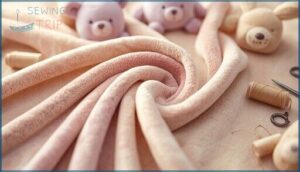
If you want that iconic, store-bought feel, minky is your go-to fabric for plushies. This knit microfiber polyester has a pile ranging from 1mm to 20mm, giving you control over how fluffy your plushie patterns turn out. It stretches just enough to hug curves beautifully — perfect for sewing plushies with round, squishy shapes.
Top reasons minky wins for fabric blending and beyond:
- Minky texture stays silky soft even after repeated washing
- Minky care is simple — gentle cycle, low heat
- Stretch backing smooths seams when stuffed firmly
- Available in embossed and printed styles for built-in detail
- Holds up beautifully as a fabric for plushies meant for daily cuddles
Fleece
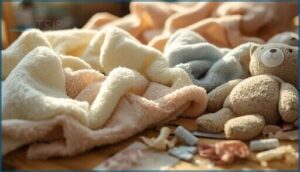
Fleece is the reliable workhorse of soft fabrics — warm, forgiving, and budget-friendly. Fleece crafting feels approachable even for beginners because it doesn’t fray and stretches just enough to smooth out stuffed seams.
Fleece textures, patterns, and blends are everywhere in craft stores, making it easy to find the perfect match for sewing plushies on any budget.
| Feature | Fleece | Best For |
|---|---|---|
| Fleece Textures | Brushed, soft pile | Chubby, round plushies |
| Fleece Patterns | Solids and prints | Character and seasonal toys |
| Fleece Care | Machine wash, tumble dry low | Everyday play plushies |
Quilting Cotton
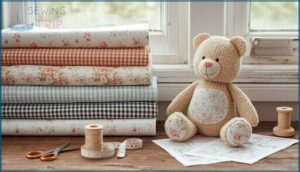
Quilting cotton is the straight-talker of plushie fabrics — no stretch, no fuss, just clean seams and crisp shapes. Its tightly woven surface makes plushie pattern making and fabric selection genuinely satisfying, especially if you love piecing coordinated prints together.
Cotton care tips are simple too: machine wash and press flat. The fabric texture comparison to minky is obvious — less snuggly, but far easier to control.
Faux Fur
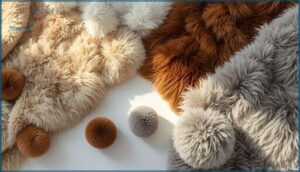
Faux fur is where plush toy construction gets dramatic — in the best way. Pile length ranges from a tidy 10 mm for short-haired animals up to 50 mm for shaggy monsters and fantasy creatures.
These synthetic materials hold their shape beautifully and nail plush texture instantly. Smart fabric blending means using faux fur types just for manes or tails, keeping costs down without sacrificing that wow factor.
Chenille
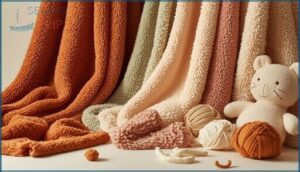
Chenille fabric is the secret weapon of plush making that most beginners overlook. Its signature fuzzy materials come from the weaving process itself — tiny loops of chenille yarns cut into a velvety, caterpillar-like pile. Compared to minky or fleece, chenille offers uniquely tactile soft textures that practically beg to be touched.
Five reasons chenille wins in plushies:
- Ultra-cozy pile that rivals minky softness
- Rich, dimensional look without extra embellishment
- Naturally thick body that stuffs beautifully
- Gorgeous in earth tones and pastels
- Pairs perfectly with felt accents
Flannel
Think of flannel as that reliable friend who shows up warm, soft, and ready for anything. This cozy material brings flannel textures that feel gentle against the skin — perfect for snuggly plushies kids actually want to hold.
Its soft brushing finish and wide range of flannel patterns make it endlessly adaptable. As a winter fabric cousin to cotton and fleece, flannel is beginner-friendly and easy to sew.
Felt
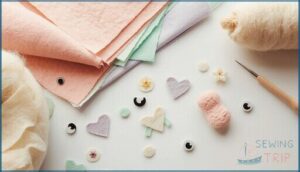
Where flannel brings warmth, felt brings precision. Felt sheets are a plush maker’s secret weapon for crisp, cartoon-perfect details — no fraying, no fuss.
Felt crafting shines in the small stuff:
- Felt embellishments like blush circles and tiny noses
- Clean-cut eyes using varied felt textures
- Needle felting for dimensional accents
- Appliqué shapes on stuffed animals
Pair felt with minky for a polished finish.
Polyester Blends
Felt manages the tiny details beautifully, but when you need a fabric that holds up through years of hugs, polyester blends are your go-to. Thanks to smart blend ratios and solid textile science, polyester properties like color retention and fabric durability make these fabrics workhorses for plushies and stuffed animals.
| Property | Minky (Polyester) | Fleece (Polyester) |
|---|---|---|
| Softness | Ultra-soft pile | Brushed, warm |
| Durability | High | Very High |
| Color Retention | Excellent | Excellent |
Tips for Sewing Plushie Fabrics
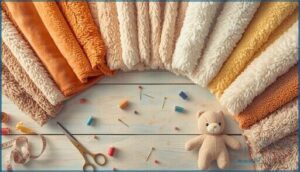
Sewing plushies is genuinely fun, but the fabric can fight back if you’re not prepared. A few simple techniques make all the difference between a lumpy mess and something you’re proud to show off.
Here’s what you need to know before you start cutting.
Cutting and Pinning Techniques
Good fabric preparation sets you up for clean, frustration-free sewing. Trace your pattern pieces onto the wrong side before cutting—it keeps everything accurate.
For minky, a sharp rotary cutter gives you smooth edges without the fuzz.
Use long glass-head pins perpendicular to the seam for better seam accuracy, or swap to clips on bulkier sections. Weights help with fabric stabilization on slippery pieces.
Choosing The Right Sewing Machine Foot
Once your fabric is cut and pinned, the right sewing machine foot makes all the difference for plushies. Here are five favorites for plush sewing techniques:
- Walking Feet (for even feeding)
- Teflon Feet (for sticky or high-pile fabrics)
- Zipper Feet (tight seams, details)
- Edge Guide Feet (straight topstitching)
- Adjustable Foot Pressure (prevents stretching, improves feed settings)
Managing Stretch and Slipperiness
Slippery minky and stretchy fleece can turn a simple seam into a sliding mess if you’re not prepared. Fabric stabilization is your best friend here — try fusible interfacing or basting spray to keep layers honest.
For stretch control, lay pattern pieces along the least stretchy grain. Lower your presser foot pressure too. Better slip resistance and seam integrity means your plushie holds its shape beautifully.
Seam Allowance and Stitch Length
Two numbers every plush maker should know: your seam allowance and your stitch length. For most stuffed animals, a ¼ to ½ inch seam allowance keeps things clean without bulk. Match stitch length to fabric thickness — around 2mm for quilting cotton, up to 4mm for heavy minky.
Consistent Seam Guidance and smart Stitch Control mean stronger seams, easier Trimming Techniques, and plushies that actually hold together.
Mixing Fabrics for Unique Effects
Mixing fabrics is where plushies go from cute to unforgettable. Try smooth minky for the body, then add faux fur just on the ears or tail for Texture Contrast that kids instantly feel. Fleece on the tummy, shaggy fur on the back — that’s smart Sensory Design.
Mix smooth minky with faux fur accents to transform a cute plushie into an unforgettable sensory experience
Color Mixing and Fabric Blending give your plushies Visual Interest without fighting their fabric properties.
Top 9 Fabric Picks for Plushies
Now that you know what to look for, it’s time to put that knowledge to work. These nine fabrics each bring something a little different to the table — whether it’s cloud-soft texture, easy care, or that perfect fluffy finish.
Let’s take a closer look at each one.
1. Eovea Shaggy Faux Fur Fabric
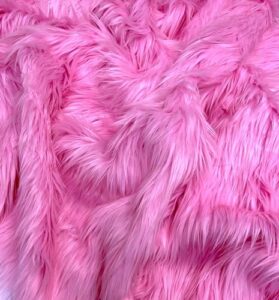
If you want your plushie to turn heads, the Eovea Shaggy Faux Fur is hard to beat. With a pile that runs 2 to 2.5 inches long, it adds serious volume and hides seams beautifully — a beginner’s best friend.
The 80% acrylic, 20% polyester blend keeps colors vivid and the shape intact after washing. It’s 60 inches wide, so you’re not squinting to fit pattern pieces. Just shake out the edges after cutting and you’re good to go.
| Best For | Crafters, cosplayers, and DIYers who want a plush, high-volume faux fur for plushies, costumes, pet beds, or home decor projects. |
|---|---|
| Material | Faux Fur (80% Acrylic, 20% Polyester) |
| Width | 60 inches |
| Sold By | By the yard |
| Primary Use | Costumes and crafts |
| Machine Washable | Yes |
| Color Variety | Single color (Bubble Gum) |
| Additional Features |
|
- Ultra-soft shaggy pile with a realistic texture that hides seams and adds great volume
- 60 inches wide, so you get plenty of coverage without awkward pattern piecing
- Shed-resistant and easy to work with — just cut, shake out the edges, and sew
- Color can run more golden than it looks in photos, so expect a possible surprise
- Can get pricey fast if you’re working on a larger project
- Some buyers have found dried glue along the edges, which means a little extra prep before you start
2. Cotton Fabric Squares For Sewing
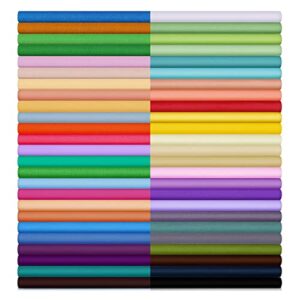
Sometimes the simplest option is the smartest one. This set of 50 cotton fabric squares — each a generous 10 x 10 inches — gives you a ready-made palette for patchwork plushies without the cutting headache.
Cotton’s tight, stable weave keeps stuffing inside where it belongs, and the smooth surface is easy to sew accurately, even for beginners.
These squares work beautifully for small parts like ears, muzzles, and bellies. Plus, they’re washable and reusable, so your plushie stays fresh long after playtime.
| Best For | Crafters of all skill levels who want a versatile, ready-to-use fabric set for quilting, sewing, and DIY projects like plushies, bags, or pillows. |
|---|---|
| Material | Cotton |
| Width | 10 inches |
| Sold By | 50-piece set |
| Primary Use | Quilting and crafts |
| Machine Washable | Yes |
| Color Variety | 50 assorted colors |
| Additional Features |
|
- 50 bright, colorful squares mean you’ve got plenty of variety without needing to shop around for matching fabrics.
- Soft, smooth cotton is easy to sew accurately and feels great to work with, whether you’re a beginner or a seasoned crafter.
- Washable and reusable, so your finished projects hold up over time with no fuss.
- The fabric runs on the thinner side, so it’s not a great fit for projects that need structure or heavy-duty material.
- Some colors may repeat in the set, which could limit variety if you’re going for a fully unique patchwork look.
- Color accuracy can vary depending on your screen, so what you see online might look a little different in person.
3. Sleepytime Elephants Cotton Flannel Fabric
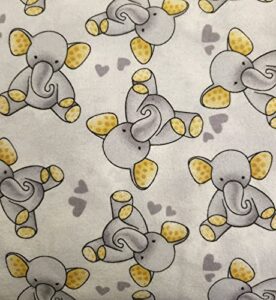
If you’re making a nursery plushie, this flannel is basically a dream come true. The Sleepytime Elephants Cotton Flannel Fabric features adorable sleeping elephant motifs on a soft, brushed cotton surface that feels gentle against baby skin.
Because it’s 100% cotton with no stretch, it holds its shape beautifully once stuffed. Prewash it first — flannel does shrink slightly — and give yourself a little extra seam allowance since the edges fray.
Small hands will love squeezing the finished result.
| Best For | Crafters and parents who want soft, safe fabric for baby blankets, nursery plushies, and kids’ clothing. |
|---|---|
| Material | 100% Cotton |
| Width | 44 inches |
| Sold By | By the yard |
| Primary Use | Baby items and quilting |
| Machine Washable | Yes |
| Color Variety | Single print (elephant) |
| Additional Features |
|
- Super soft 100% cotton flannel that’s gentle on baby skin
- Sold by the yard so you can grab exactly what you need
- Cute elephant print works great for nursery projects and handmade gifts
- May bleed color in the wash, so a Color Catcher sheet is a good idea
- Slight shrinkage means you’ll want to prewash before cutting
- Edges fray, so you’ll need to account for that in your seam allowance
4. Red White Christmas Plaid Fabric
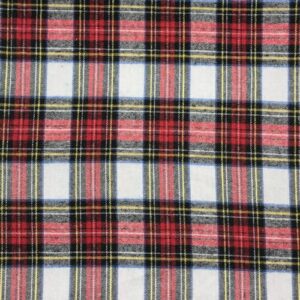
From snuggly nursery friends, let’s shift to something a little more festive. This Red White Christmas Plaid Fabric is a brushed cotton blend — reversible, with fleece on one side and a smoother finish on the other.
It’s 57 inches wide and yarn-dyed for solid color fastness, so that bold red won’t bleed all over your white sections. Prewash it in cold water first, always.
Most crafters use it for plushie accessories — tiny scarves, holiday shirts, ear linings — rather than full bodies.
| Best For | Holiday crafters and DIYers who want a festive, cozy fabric for making seasonal decor, clothing accessories, and handmade gifts. |
|---|---|
| Material | Cotton Blend |
| Width | 57 inches |
| Sold By | By the yard |
| Primary Use | Holiday crafts and decor |
| Machine Washable | Yes |
| Color Variety | Single color (Red/White) |
| Additional Features |
|
- Reversible design gives you two textures in one — soft fleece on one side, smoother finish on the other
- Yarn-dyed construction keeps that bold red-and-white pattern looking sharp wash after wash
- Versatile enough for pillows, stockings, placemats, tiny scarves, and more
- Not ideal for quilting — the brushed fleece texture can make precise piecing tricky
- You’re getting one pre-cut yard, so plan your project dimensions carefully before ordering
- Color and texture may look a little different in person than they do in the product photos
5. RayLineDo Polar Fleece Fabric
If accessories are your thing, wait until you try RayLineDo Polar Fleece for actual plushie bodies. Each pack gives you 10 anti-pill polyester sheets — 20 x 20 inches each, 10 different colors — so you can mix tones for faces, ears, and limbs without buying full bolts.
The knit structure stretches just enough to ease around curves, and cut edges won’t fray. Machine wash cold, air dry, and your little creations stay soft and bright wash after wash.
| Best For | Crafters and DIYers who want a variety of colors on hand for small sewing projects like plushies, gnomes, pet blankets, or cushions without committing to full fabric bolts. |
|---|---|
| Material | 100% Polyester Fleece |
| Width | 20 inches |
| Sold By | 10-sheet pack |
| Primary Use | DIY sewing and dolls |
| Machine Washable | Yes (cold water) |
| Color Variety | 10 colors included |
| Additional Features |
|
- 10 different colors in one pack makes it easy to mix and match for detailed projects like faces, ears, and limbs
- Anti-pill fleece holds up through washes and stays soft — great for things that get handled a lot
- No fraying edges, so you can cut and go without finishing the seams
- Sheets can run a bit thin, and the quality feels closer to budget fabric than premium fleece
- Sizes aren’t always consistent, so don’t count on every sheet being a perfect 20×20
- Color accuracy is hit or miss — what you see on screen might not match what shows up at your door
6. Kelly Green Fleece Fabric Bolt
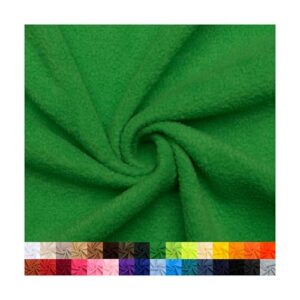
Now, if you’re making a single-color plushie — think frogs, dinosaurs, or any creature that practically demands kelly green — this bolt is a dream.
You get 4 yards of 60-inch wide, 100% polyester fleece, which is plenty for a whole family of stuffed critters. It’s medium weight, so finished plushies hold their shape without feeling stiff.
Edges won’t fray, it’s beginner-friendly to sew, and cold-water machine washing keeps that bold green bright for the long haul.
| Best For | Crafters and sewers who want an easy-to-work-with, vibrant green fleece for plushies, blankets, costumes, or no-sew projects. |
|---|---|
| Material | 100% Polyester Fleece |
| Width | 60 inches |
| Sold By | 4-yard bolt |
| Primary Use | Blankets and clothing |
| Machine Washable | Yes |
| Color Variety | Single color (Kelly Green) |
| Additional Features |
|
- Soft, medium-weight fleece that holds its shape well and feels great against the skin
- A generous 4-yard, 60-inch-wide bolt gives you plenty of material for multiple projects
- Easy to care for and beginner-friendly — no fraying edges to stress over
- Some customers have run into peeling or thinner-than-expected quality over time
- You have to buy the full 4-yard bolt, so it’s not ideal if you only need a small amount
- Online-only purchase means you can’t feel the fabric before you buy
7. Barcelonetta Minky Fabric
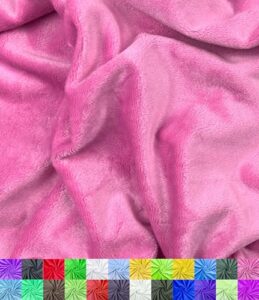
If green fleece is bold and sturdy, Barcelonetta Minky is its softer, dreamier cousin. This 100% polyester fabric has a 3mm pile that feels genuinely velvety — like the inside of something expensive, without the price tag.
At 60 inches wide, you can cut several small plushie pieces in one pass, which saves serious yardage. Safety eyes sit cleanly on the smooth surface, and embroidery details pop.
Just pin generously — minky loves to wander when you’re cutting.
| Best For | Crafters and parents who want an ultra-soft fabric for baby blankets, plushies, and cozy comfort items. |
|---|---|
| Material | Minky Polyester |
| Width | 60 inches |
| Sold By | By the yard |
| Primary Use | Baby blankets and stuffed animals |
| Machine Washable | Yes |
| Color Variety | Single color (Pink) |
| Additional Features |
|
- Incredibly soft 3mm pile that feels luxurious against skin — great for baby and toddler projects
- Hypoallergenic and safe, so you don’t have to second-guess it for little ones
- 60-inch width gives you plenty of room to cut multiple pieces at once and save on yardage
- Can be tricky to sew — it shifts and wanders, so you’ll need lots of pins
- Trimming and cutting gets messy fast, with fibers going everywhere
- Prone to fraying over time, and thinner sections can rip if you’re not careful
8. Valentina Minky Fabric By The Yard Sage
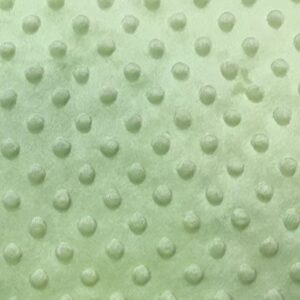
Think of this one as the quiet overachiever in your fabric stash. Valentina’s sage minky brings that same raised-dot texture and buttery-soft feel you’d expect, but the muted green tone opens up a whole world of characters — frogs, dragons, little dinosaurs, forest creatures.
The 4-way stretch makes stuffing curved limbs surprisingly smooth, and at 58–60 inches wide, you get generous yardage for bigger projects. Just use a walking foot and pre-wash once to clear any manufacturing residue before you cut.
| Best For | Crafters and sewists who love working with soft, textured fabrics — especially those making baby blankets, stuffed animals, or cozy home decor pieces. |
|---|---|
| Material | 100% Polyester Minky |
| Width | 58-60 inches |
| Sold By | By the yard |
| Primary Use | Baby blankets and quilting |
| Machine Washable | Yes |
| Color Variety | Single color (Sage) |
| Additional Features |
|
- Super soft raised-dot texture that’s genuinely pleasant to work with and great for baby-friendly projects
- 4-way stretch makes it easy to sew around curves and stuff limbs without a fight
- Generous 58–60 inch width means you get a lot of fabric per yard, which helps on bigger projects
- The sage color can look different on screen than in person, so what you see online may not match what shows up at your door
- Some customers have reported getting the wrong color altogether, which is frustrating when you’re trying to match a project
- Continuous lengths can vary in color or texture, so large cuts might not be perfectly consistent throughout
9. Reginary Felt Sheets for Crafts
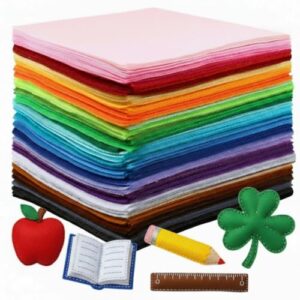
Felt is the unsung hero of plush detailing. The Reginary pack gives you 120 sheets across 40 colors — three of each shade — so you’ll never run short when cutting matching eyes, tiny cheeks, or little clothing patches.
At 1mm thick, each sheet holds its shape beautifully without adding bulk. The edges don’t fray, which means you can leave raw cuts without a second thought.
Perfect for appliqué work on minky or fleece bases, and genuinely beginner-friendly.
| Best For | DIY lovers, beginners, and crafters who need a wide range of colors for plush details, appliqué, sewing, and small craft projects. |
|---|---|
| Material | Felt |
| Width | 12.4 inches |
| Sold By | 120-piece set |
| Primary Use | DIY accessories and crafts |
| Machine Washable | Not specified |
| Color Variety | 40 colors included |
| Additional Features |
|
- 120 sheets across 40 colors means you’ve got plenty to work with — three of every shade so you won’t run out mid-project.
- At 1mm thick, the felt holds its shape without adding bulk, and the edges don’t fray so raw cuts are totally fine.
- Works great for all kinds of projects — from greeting cards and bags to clothing patches and home décor.
- Some sheets may feel a bit stiff or plasticky, which could be a dealbreaker if you need soft, drapey felt.
- A few colors tend to run thinner than others, so consistency isn’t guaranteed across the whole pack.
- The actual size can vary from the advertised 12×8 inches, so measure before cutting if precision matters.
Caring for and Customizing Plushies
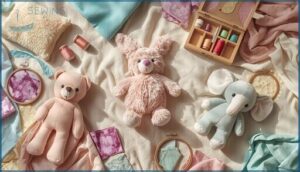
Making your plushie is only half the story — keeping it looking great is the other half. With the right care habits and a few fun customization tricks, your creation can stay soft, vibrant, and totally one-of-a-kind for years. Here’s what you need to know.
Cleaning and Maintenance Tips
Your plushie deserves good care — and honestly, it’s simpler than you think. Always check the label first: washable fabrics like minky and fleece handle a gentle cold cycle beautifully inside a mesh bag.
For stain removal, dab with soapy water — don’t scrub. Dryer safety matters too: low heat only.
Before storage methods kick in, make sure everything’s fully dry to avoid hidden mildew.
Customizing With Details and Accents
Details are where your plushie’s personality really shines. Embroidery techniques like satin stitch create safe, expressive faces — no loose plastic parts. Applique designs using felt add adorable cheeks or patches without fraying.
For a polished look, try ribbon embellishments sewn firmly into seams. Fabric painting with non-toxic markers adds freckles or blush beautifully. Small accent materials transform a simple toy into something unforgettable.
Ensuring Long-Lasting Plushies
A plushie built to last is all about the details you can’t see at first glance. Smart fabric selection and stitch quality make the real difference over years of hugs.
- Choose polyester plush for material durability — it resists pilling and holds shape.
- Use tight, reinforced seams for stitch quality that survives tugging.
- Follow gentle fabric care routines to preserve softness and toy durability long-term.
Frequently Asked Questions (FAQs)
What fabric should I use for making plushies?
Minky and fleece plushies are your best starting points for plushies—both nail the cuddle factor instantly.
For fabric selection, your textile choices really depend on the look you want. Faux fur adds drama; minky stays buttery soft.
What stitch to use when sewing plushies?
For seams, backstitch is your best friend — strong, slightly stretchy, and stuffing-proof. Use ladder stitch to close openings invisibly.
Whipstitch method manages edges and details. On stretchy fabrics like minky, zigzag stitches keep everything flexible.
What is the best thread for sewing plushies?
All-purpose 100% polyester thread is your best bet for sewing plushies. It’s strong, slightly stretchy, and holds color beautifully through countless washes—everything your plush projects need.
Can you sew plush fabric with a sewing machine?
Yes, you absolutely can. Most home sewing machines handle plush fabrics like minky and fleece beautifully—just pair the right needle, adjust your tension, and you’re good to go.
How much fabric for a standard plushie?
For a standard 8–12 inch plushie, you’ll need about a quarter to half a yard of main fabric. Grab a little extra for seam allowance and any happy little accidents along the way.
Embellishments that are plushie-safe?
For plushies, stick to embroidered features, felt appliqués, and soft fabric patches. They’re the safest plushie accents — no hard parts, no choking risks, and they hold up beautifully through countless cuddles and washes.
Fabric stretch percentage for plushie patterns?
Stretch percentage tells you how much your fabric grows when pulled. Most minky and fleece sit between 20–50%. Knowing this helps you adjust your pattern so your finished plush stays the right size and shape.
Eco-friendly alternatives to traditional plushie fabrics?
Like swapping plastic straws for bamboo ones, eco-friendly options in sustainable toy making go far.
Organic cotton, recycled polyester, and lyocell are hypoallergenic, pet-friendly fabrics perfect for any DIY plushie project.
Best thread types for different plushie fabrics?
For most plushie fabrics, 50-weight polyester thread is your best friend — it’s strong, slightly stretchy, and manages minky, fleece, and faux fur beautifully.
Use cotton thread for quilting cotton, and heavy-duty thread for joints.
What thread type works best for plushie seams?
Strong seams, secure stitches, and fabric compatibility all matter—so reach for all-purpose polyester thread. Its thread strength and slight stretch boost seam security and stitch quality, especially on minky and fleece. Medium thread weight balances durability with softness.
Conclusion
Imagine spending hours crafting the perfect plushie, only to watch it emerge from the wash looking like it survived a blender. Tragic—and completely avoidable.
This sewing fabric guide for plushies exists precisely so your creations outlive that nightmare scenario. You now know which fabrics perform, which ones forgive beginner mistakes, and which ones transform a simple toy into something worth keeping.
Pick your fabric with intention, and every stitch will show it.
- https://blog.bigzfabric.com/what-is-the-best-soft-fabric-fleece-vs-minky/
- https://lazylambplush.com/blogs/blog/plush-fabrics
- https://sewcutepatterns.com/blog/sewing-toys-choosing-the-fabric
- https://www.kullaloo.ca/supersoft/plush-fabric-types-guide/
- https://imagogroup.com/how-to-safely-produce-a-plush-soft-toy-top-tips/