This site is supported by our readers. We may earn a commission, at no cost to you, if you purchase through links.
Your first buttonhole won’t look perfect. That’s because you’re missing the right tools. Sewing notions and tools are the small supplies and equipment that turn fabric into finished pieces—buttons, zippers, needles, scissors, measuring tapes.
Beginners often buy fabric first. Smart sewers stock their toolkit. Notions include fasteners and trims. Tools cover cutting and measuring equipment. Each fulfills a specific purpose.
Wrong needle? Skipped stitches. Dull scissors? Frayed edges. The difference between a professional finish and homemade look often comes down to using proper supplies.
Quality notions cost less than you think. They’ll save hours of frustration.
Table Of Contents
- Key Takeaways
- What Are Sewing Notions and Tools?
- Essential Categories of Sewing Tools
- Top 10 Sewing Needles and Tools
- 1. Bohin Sharps Hand Sewing Needles
- 2. John James Between Hand Quilting Needles
- 3. Schmetz Universal Sewing Machine Needles
- 4. Schmetz Ball Point Jersey Needles
- 5. Microtex Size 10 Sharp Sewing Needles
- 6. Jean Denim Sewing Machine Needles
- 7. Euro Notions Quilt Machine Needles
- 8. Schmetz Chrome Topstitch Sewing Needle
- 9. SCHMETZ Precision Embroidery Sewing Needles
- 10. Schmetz Metallic Sewing Machine Needles
- Choosing The Right Notions for Projects
- Storing and Organizing Sewing Notions
- Frequently Asked Questions (FAQs)
- Conclusion
Key Takeaways
- Right tools prevent common mistakes—wrong needles skip stitches, dull scissors fray edges, and the difference between professional and homemade looks lives in your supply choices.
- Notions attach to your project while tools move between tasks—buttons and zippers stay with fabric, scissors and measuring tapes serve every piece you make.
- Match needles to fabric weight and fiber type, not project ambition—ballpoint glides through knits, sharp pierces cotton, microtex handles silk, denim powers through heavy layers.
- Build your toolkit project by project instead of buying everything upfront—let real work guide purchases and stock essentials like universal needles, sharp scissors, pins, measuring tape, and quality thread first.
What Are Sewing Notions and Tools?
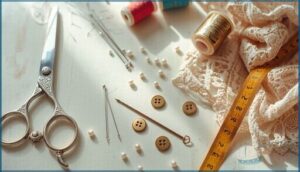
Sewing notions are the small supplies you need to complete projects. Tools help you cut, measure, and assemble fabric.
You can browse a full range of sewing supplies online to stock up on everything from needles to measuring tapes.
Understanding the difference between them makes shopping easier and your work more efficient.
Definition of Sewing Notions
Sewing notions are the small accessories you’ll reach for beyond fabric itself. Think buttons, zippers, snaps, elastic, and ribbon—the finishing touches that close garments and add flexibility.
You’ll also rely on marking pens, tailor’s chalk, and seam rippers for precision work. These sewing basics come in metal, plastic, or wood, supporting every stage from cutting to final embellishment in your crafting essentials kit.
Many projects rely on that guarantee accuracy and a professional result.
Difference Between Notions and Tools
You’ll find notions stay with your project—buttons pinned, zippers stitched—while tools move between tasks. Tools like scissors and rotary cutters perform the work itself. Sewing notions and accessories include fabric helpers that organize or embellish, while sewing tools enable cutting and stitching.
- Notion types attach or decorate your fabric
- Tool functions cut, measure, and sew material
- Sewing aids support both creation and finishing
Common Examples of Sewing Notions
Your kit likely holds pins, thread, and buttons you reach for constantly. Zippers and interfacing give structure, while stabilizers keep fabric steady under your machine. Ribbons and embellishments add personality to finished pieces.
When you browse sewing notions online, you’ll find sewing accessories like bias tape, elastic, and seam rippers—small items that solve big problems and expand what you can create. Essential knowledge about can further improve your ability to select the right items for every project.
Role of Notions and Tools in Sewing
These items determine whether your project succeeds or fails. Sewing notions and tools deliver precision sewing tools for clean seams and fabric selection guidance through needles matched to weight. They boost sewing efficiency by cutting time and reducing mistakes.
Tool maintenance keeps blades sharp for years. Notion budgeting stretches your dollar when you shop sewing notions online. Sewing aids turn frustrating tasks into smooth workflows.
Essential Categories of Sewing Tools
Your sewing toolkit breaks down into five key groups. Each category covers a different part of the process. Here’s what you need in each one.
Measuring and Marking Tools
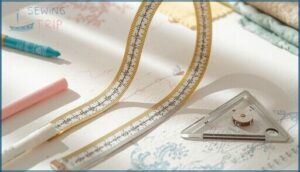
You need precision every time you mark fabric. Measuring tapes show imperial and metric markings for quick size checks. Chalk markers and tracing wheels transfer pattern lines without permanent stains. Seam gauges and sliding gauges keep small increments consistent. Hera markers crease fabric for temporary guides. Precision rulers guarantee straight edges. Triangles gauge angles perfectly. Master these measuring techniques and marking tools for impeccable results.
Cutting Tools
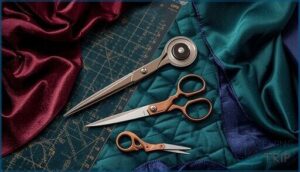
Sharp blades make every cut count. Fabric shears slice cleanly through layers without fraying. Rotary cutters glide along rulers for straight edges and curves. Scissors handle detailed trimming work.
Tool materials like carbide hold their cutting edge longer than basic steel. Blade sharpening restores precision when dullness slows you down.
Pair your fabric cutting tools with measuring guides and a tracing wheel for accuracy.
Pinning and Holding Tools
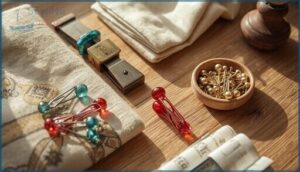
Pins keep your fabric exactly where you want it. Straight pins, ball point pins, and glass-headed options give you precision across different materials. Magnetic holders and magnet pin caddies keep small notions within reach while you work.
Wonder clips grip thick layers without piercing. Fabric clamps and edge grippers secure edges during hemming. Sewing vises hold large pieces flat for accurate cutting and marking.
Sewing Machine Accessories
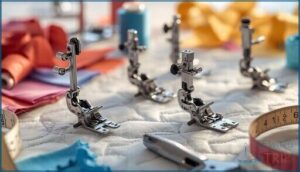
Your machine comes alive with the right presser foot. Swap feet to match your project and you’ll see exactly why sewing attachments matter so much.
- Zipper feet let you stitch close to zipper teeth without shifting the tape.
- Walking feet feed thick layers evenly during quilting and sewing machine projects.
- Buttonhole feet automate spacing with built-in gauges.
- Quarter-inch feet deliver precise seams for machine embroidery and patchwork.
- Rolled hem feet create narrow folds on lightweight fabrics.
Foot accessories transform what quilting accessories and sewing tools can do.
Hand Sewing Supplies
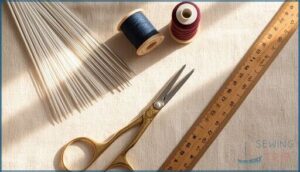
Your fingertips control every stitch when hand sewing. Needles sized 1 to 12 match your fabric weight. Steel needles with chrome plating glide smoothly.
Sewing threads in cotton or polyester keep seams strong. Thimbles protect fingers during hand quilting. Sewing kits gather these sewing notions in one place.
Sewing supplies like rulers measure seam allowances precisely. Sewing tools for fabric preparation and needle care complete your sewing accessories and gifts collection.
Top 10 Sewing Needles and Tools
Your needle makes or breaks your project. The right one glides through fabric like butter. Here are ten essential needles and tools every sewist needs in their kit.
1. Bohin Sharps Hand Sewing Needles
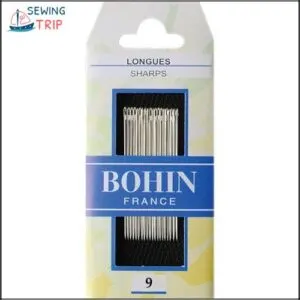
You’ll want Bohin Sharps for everyday sewing. These nickel-plated needles come from France. They glide through cotton and linen smoothly.
Sizes range from 1 to 9. Pick size 9 for delicate work. Choose size 1 for denim. The polished eye reduces thread breakage. The fine point won’t damage fabric.
These needles resist bending. They stay sharp through repeated use. Perfect for seams, basting, and hand stitching. You get consistent performance every time.
| Best For | Sewers who need reliable, sharp needles for everyday hand sewing on light to medium fabrics like cotton and linen. |
|---|---|
| Primary Use | Hand sewing |
| Needle Type | Sharps |
| Material/Coating | Nickel-plated |
| Size Range | 1-9 |
| Quantity | Multiple |
| Brand | Bohin |
| Additional Features |
|
- Stay sharp and resist bending even with repeated use
- Polished eye reduces thread breakage and works well with fine materials
- Versatile for hand quilting, sewing, and sashiko projects
- Size 9 needles have an extremely small eye that can be tricky to thread
- Not ideal for heavier fabrics like denim (would need larger sizes)
- Some users report excessive shipping packaging
2. John James Between Hand Quilting Needles
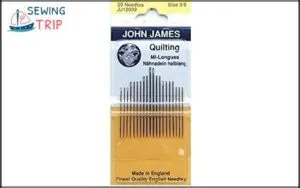
Between needles deliver precision for hand quilting. John James offers them in shorter lengths than sharps. The compact design helps you make tight, even stitches through layered fabrics.
These needles feature the Gold n Glide coating. It reduces drag as you work through batting. Your thread glides smoothly without snagging. The curved profile keeps your wrist comfortable during long sessions.
Sizes range from light to medium weight fabrics. The reinforced eye won’t bend under pressure. Colonial Needle stocks quality iron construction with nickel plating.
| Best For | Quilters who want precise, even stitches through multiple fabric layers and need needles that won’t bend during detailed hand-quilting projects. |
|---|---|
| Primary Use | Hand quilting |
| Needle Type | Betweens |
| Material/Coating | Gold n Glide coating |
| Size Range | Multiple sizes |
| Quantity | Multiple |
| Brand | John James/Colonial Needle |
| Additional Features |
|
- Gold n Glide coating reduces friction and prevents thread from snagging on batting
- Shorter length and curved profile make it easier to create tight, consistent stitches while keeping your wrist comfortable
- Durable iron construction with nickel plating resists bending even when working through thicker fabrics
- Some users find the needles too small or delicate for their preferences
- Occasional quality control issues may result in defective needles with imperfect eyes or thread damage
- Limited to hand-quilting and similar lightweight projects—not ideal for heavier needlework
3. Schmetz Universal Sewing Machine Needles
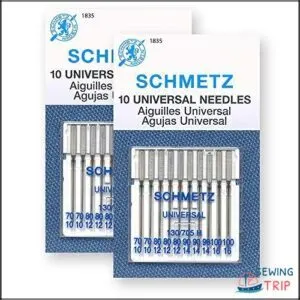
Schmetz Universal needles handle both wovens and knits. The slightly rounded point won’t snag delicate fibers. You get 20 needles across four sizes—70/10, 80/12, 90/14, and 100/16.
These work with all household machines. Stock up for diverse projects without switching needle types constantly. The 130/705 H system fits Brother, Baby Lock, and most domestic brands.
Replace them when stitches skip or fabric snags appear. Color-coded bands help you identify sizes quickly. They won’t stay sharp through heavy-duty work, but they’re perfect for everyday sewing.
| Best For | Home sewers who work with different fabric types and need reliable, affordable needles for everyday projects. |
|---|---|
| Primary Use | Machine sewing – general |
| Needle Type | Universal |
| Material/Coating | Standard steel |
| Size Range | 70/10-100/16 |
| Quantity | 20 needles |
| Brand | Schmetz |
| Additional Features |
|
- Works with both woven and knit fabrics, so you don’t need separate needle sets
- Comes with 20 needles in four different sizes for various fabric weights
- Fits all major household sewing machine brands
- Dulls faster than premium needles, especially on thicker materials
- Not ideal for heavy-duty or industrial sewing work
- Performance can vary depending on your specific machine and fabric combination
4. Schmetz Ball Point Jersey Needles
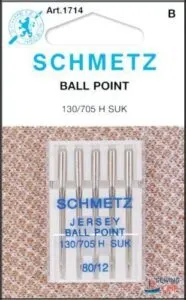
Working with stretchy fabrics requires a different approach. Ball point tips glide between knit fibers instead of piercing them. You won’t see runs or ladders on your jersey projects.
These size 80/12 needles come five per pack. They handle cotton knitwear, gauze, and stretch blends without snagging. The rounded medium ball point prevents skipped stitches on t-shirt fabric.
Compatible with all home sewing machines using 130/705 H SUK systems. Color-coded packaging helps you grab the right size fast. Switch to these when regular needles start pulling your knits.
| Best For | Sewers working with jersey, knits, and stretchy fabrics who need to prevent snags and skipped stitches. |
|---|---|
| Primary Use | Machine sewing – knits |
| Needle Type | Ball point |
| Material/Coating | Standard steel |
| Size Range | 80/12 |
| Quantity | 5 needles |
| Brand | Schmetz |
| Additional Features |
|
- Rounded ball point glides between fibers instead of piercing them, preventing runs and damage to delicate knits
- Works with all home sewing machine brands and eliminates common issues like puckering and uneven stitching
- Color-coded packaging makes it easy to identify the right needle size quickly
- Only suitable for stretchy and knit materials, not versatile for all fabric types
- Not compatible with industrial sewing machines
- Some customers reported misleading product packaging
5. Microtex Size 10 Sharp Sewing Needles
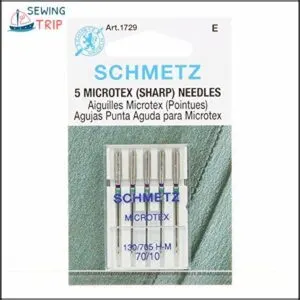
Fine fabrics demand finesse. Microtex size 10 needles feature a slender shaft and ultra-sharp point. They pierce silk, satin, and microfiber without leaving visible holes.
The 70/10 size manages delicate polyester and high thread count materials. You’ll get clean topstitching on lightweight garments. Five needles per pack from SCHMETZ, color-coded purple for quick identification.
Replace them every few projects on translucent fabrics. The acute point creates precise seams but can break on dense materials. Keep spares ready for your detail work.
| Best For | Sewers working with delicate fabrics like silk, microfiber, and satin who need precise stitching without visible puncture marks. |
|---|---|
| Primary Use | Machine sewing – delicate fabrics |
| Needle Type | Microtex |
| Material/Coating | Standard steel |
| Size Range | 70/10 |
| Quantity | 5 needles |
| Brand | Schmetz |
| Additional Features |
|
- Ultra-sharp point glides through lightweight materials without snagging or leaving holes
- Works across multiple delicate fabric types including polyester, silk, and microfiber
- Compatible with all home sewing machines and easy to identify with purple color coding
- Breaks easily on thicker or dense fabrics—strictly for lightweight work
- Some users report quality control issues with burrs or catching right out of the package
- Needs frequent replacement when working on translucent or very fine materials
6. Jean Denim Sewing Machine Needles
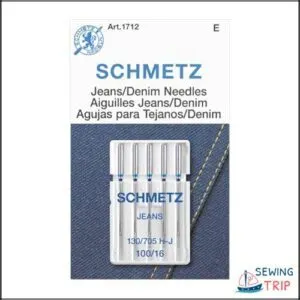
Heavy twill fights back. Jean denim needles use a reinforced shaft and sharp point to push through thick layers without bending. The 100/16 size manages multiple plies during flat felled seams and pocket construction.
SCHMETZ packs five needles per card, made in Germany for domestic machines. The blade resists breakage on selvage edges and topstitching runs. Replace after hemming several pairs of jeans. Keep extras on hand for upholstery and canvas work.
| Best For | Sewers working with heavy denim, canvas, or upholstery fabric who need durable needles that can handle multiple layers and thick seams. |
|---|---|
| Primary Use | Machine sewing – denim |
| Needle Type | Jeans/Denim |
| Material/Coating | Reinforced steel |
| Size Range | 100/16 |
| Quantity | 5 needles |
| Brand | Schmetz |
| Additional Features |
|
- Reinforced shaft and sharp point prevent bending when pushing through dense materials like selvage edges
- German-made quality designed specifically for flat felled seams and heavy-duty topstitching
- Compatible with standard domestic sewing machines, so no special equipment needed
- Too strong for delicate fabrics—you’ll need different needles for lighter materials
- Five-pack might run out quickly if you’re hemming jeans regularly or tackling big upholstery projects
- Can still break if you push them beyond their limits on extremely thick layers
7. Euro Notions Quilt Machine Needles
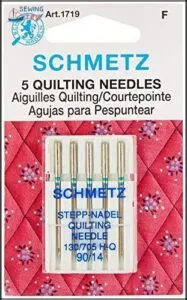
Layered quilts demand precision. Euro Notions needles feature a slightly rounded point that glides through batting and multiple fabric plies without skipped stitches. The 14/90 size manages dense seam crossings during piecing.
Each card holds five color-coded needles with a medium eye for thicker quilting thread. The flat shank fits most domestic machines. The hardened shaft resists bending when you stitch long runs across quilt tops. Replace after completing large projects or when points dull.
| Best For | Quilters and sewers working on multi-layer projects who need reliable needles that won’t skip stitches when piecing or free-motion quilting. |
|---|---|
| Primary Use | Machine quilting |
| Needle Type | Quilting |
| Material/Coating | Hardened steel |
| Size Range | 14/90 |
| Quantity | 5 needles |
| Brand | Euro Notions |
| Additional Features |
|
- Slightly rounded point glides smoothly through batting and multiple fabric layers without snagging
- Color-coded system makes it easy to identify the right needle size at a glance
- Hardened shaft resists bending during long quilting sessions and dense seam intersections
- Not ideal for heavy-duty fabrics like denim or canvas
- Some users report packaging and coloring inconsistencies that raise authenticity concerns
- Limited to one needle size per package, so you’ll need multiple packs for different projects
8. Schmetz Chrome Topstitch Sewing Needle
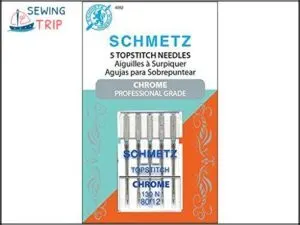
Decorative topstitching needs clean, bold lines. Schmetz Chrome needles feature an extra-large eye that reduces friction on thick or metallic threads. The elongated groove feeds bulky threads smoothly without skipping or shredding.
Chrome plating resists heat buildup during long runs and keeps the point sharp through heavy fabrics like denim or canvas. The slightly rounded tip penetrates woven materials easily.
Use these needles for visible seams on jackets, bags, or upholstery where precision matters. Replace when stitches become uneven or threads fray.
| Best For | Sewers who want professional-looking decorative topstitching with thick or specialty threads on medium to heavy fabrics. |
|---|---|
| Primary Use | Machine topstitching |
| Needle Type | Topstitch |
| Material/Coating | Chrome plated |
| Size Range | Multiple sizes |
| Quantity | Multiple |
| Brand | Schmetz |
| Additional Features |
|
- Extra-large eye and groove handle thick topstitch, metallic, and decorative threads without fraying or breaking
- Chrome plating stays cooler and sharper longer, especially during extended sewing sessions on denim or canvas
- Designed specifically for straight, even stitches on visible seams and edge work
- Only compatible with domestic sewing machines, not industrial models
- No specific brand or model compatibility information provided
- Not ideal for heavy-duty industrial projects or extremely thick materials
9. SCHMETZ Precision Embroidery Sewing Needles
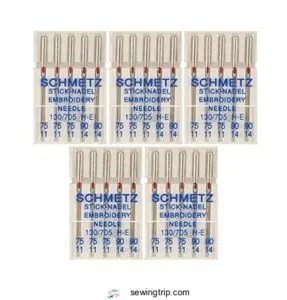
Embroidery threads need room to breathe. Schmetz embroidery needles feature an extra-large eye that prevents rayon and polyester threads from fraying or breaking mid-stitch. The widened scarf reduces friction as thread moves through dense fill patterns.
A polished tip glides through fabric without snagging, even in complex designs with tight spacing. The reinforced blade stays straight under pressure, minimizing skipped stitches.
Use these for bright satin stitches and decorative work. Replace after heavy projects to maintain stitch quality.
| Best For | Home sewers working on embroidery and decorative stitching projects who need needles that handle specialty threads without fraying or breaking. |
|---|---|
| Primary Use | Machine embroidery |
| Needle Type | Embroidery |
| Material/Coating | Polished steel |
| Size Range | Multiple sizes |
| Quantity | Multiple |
| Brand | Schmetz |
| Additional Features |
|
- Extra-large eye prevents thread damage during dense embroidery patterns
- Polished tip glides smoothly without snagging delicate fabrics
- Compatible with most domestic sewing machine brands
- Not designed for heavy-duty materials like denim or leather
- Needles can still break during intensive embroidery work
- Requires proper size selection to match your specific fabric type
10. Schmetz Metallic Sewing Machine Needles
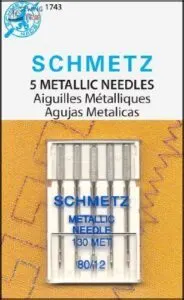
Metallic threads shimmer, but they shred easily. Schmetz metallic needles solve this with an elongated eye that reduces friction as foil and metallic threads pass through. The wide groove prevents bunching during fast stitching.
A special coating resists heat buildup when you’re working through dense decorative areas. The polished eye opening keeps shiny threads gliding smoothly without snagging.
Perfect for quilting accents and embroidery highlights. Size 80/12 manages most metallic thread weights. Replace often to maintain clean stitches.
| Best For | Sewers working with metallic and foil threads who want to prevent shredding and achieve smooth, professional decorative stitching. |
|---|---|
| Primary Use | Machine sewing – metallic thread |
| Needle Type | Metallic |
| Material/Coating | Standard steel |
| Size Range | 80/12 |
| Quantity | 5 needles |
| Brand | Schmetz |
| Additional Features |
|
- Elongated eye and wide groove design reduces friction and prevents metallic thread from shredding during stitching
- Special coating resists heat buildup when working through dense decorative areas or embroidery
- Works well for quilting accents and embroidery highlights with most metallic thread weights
- Only designed for metallic threads, so you’ll need regular needles for other projects
- May not work with some automatic needle threaders (reported compatibility issues with certain machines)
- Needs frequent replacement to maintain stitch quality, which adds to ongoing costs
Choosing The Right Notions for Projects
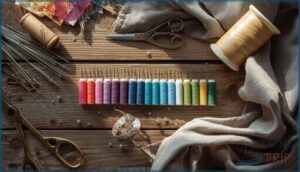
Your project dictates your notions. Match needles to fabric weight and fiber. Thread quality affects every stitch you make.
Selecting Needles for Different Fabrics
Your fabric picks your needle. Match needle sizes to fabric weight—thin fabrics need smaller numbers, thick fabrics need larger. Here’s your quick guide to fabric types and sewing tools:
- Ballpoint needles glide through knits without snagging
- Sharp needles pierce cotton weaves cleanly
- Microtex tips handle silk without damage
- Denim needles power through heavy fabric weaves
- Replace after eight hours of use
Test on scraps first.
Importance of Thread Quality
Strong thread keeps your seams intact through years of wear. Thread Strength and Tensile Testing reveal how fiber types perform under stress. Quality thread resists breaking, skipped stitches, and fraying in the wash. Colorfastness prevents bleeding and fading.
Your sewing tools and Embroidery Thread deserve the same care as your fabric and thread pairing. Seam Durability starts with smart thread choices for every sewing and crafting project.
Picking Notions for Specific Sewing Techniques
Match your sewing notions to your technique, not just your fabric. Different methods demand smart choices:
- Fabric Selection – Use glass head pins for silk, metallic zippers for lightweight materials
- Edge Finishing – Apply bias tape makers on curves, pinking shears on wovens
- Decorative Embellishments – Pick beading needles for zipper integration and appliques
- Tailoring Tips – Mark with tailor chalk and grid tracing wheels
- Fastener Choices – Choose invisible zippers for formal wear, magnetic snaps for bags
Tips for Beginners on Notion Selection
Start simple with three core sewing notions. Build your collection slowly as you tackle real projects, not all at once.
| Notion Basics | Why You Need It |
|---|---|
| Sharp hand needles | All hand stitching projects |
| Universal machine needles | Woven and quilting fabrics |
| Quality thread | Strong seams that last |
| Glass head pins | Safe marking and holding |
Practice choosing sewing essentials for each technique. Your skills grow faster when you match tools to fabric.
Storing and Organizing Sewing Notions
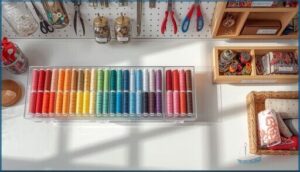
Your notions work harder when they’re easy to find. Good storage keeps threads untangled, needles sorted, and tools within reach.
Here’s how to organize your space so everything has a home.
Storage Solutions for Sewing Notions
Keep your sewing notions visible and within reach. Clear containers let you sort threads by color. Drawer dividers separate bobbins from pins. Pegboard systems hold scissors and rulers. Portable cases carry supplies to classes. Vertical shelving saves desk space. Label everything. Stack boxes by project type. Your sewing tools and sewing accessories stay dust-free in sealed bins. Good storage turns chaos into control.
Organizing Tools for Easy Access
Group your sewing tools by function in dedicated tool stations. Position rotary cutters and scissors together for quick reach. Map your workspace layout with labeled zones so everything lives within arm’s length. Use color-coded drawers for speed. Smart access optimization means:
- Shallow trays for pins and needles
- Magnetic strips for metal sewing accessories
- Desktop holders at each station
- Upright storage for crafting tools
- Labeled compartments for fabric notions
DIY Ideas for Notion Organization
Turn ordinary containers into smart storage with zero extra cost. Mason jars hold pins and needles vertically. Cardboard tubes become spool organizers. Ice cube trays separate tiny sewing accessories perfectly.
Build a simple dashboard design on pegboard to track your crafting supplies inventory. Magnetic tin lids stick inside drawer fronts for quick notion templates.
Workflow optimization starts with what’s already in your hands.
Maintenance and Care of Sewing Tools
Tool sharpening keeps your sewing tools precise. Wipe blades after each project. Apply light oil to joints monthly. Replace bent pins immediately.
Clean your sewing machine’s bobbin area weekly for stitch quality. Store sewing accessories in dry spaces with blade guards on. Professional blade maintenance means sharper cuts.
Fabric protection starts with equipment storage habits. Your precision sewing tools last when you treat sewing aids with care.
Frequently Asked Questions (FAQs)
What are the notions in sewing?
The right tool makes all the difference. Sewing notions are small items like pins, needles, buttons, and zippers that help you cut, stitch, finish, and decorate your fabric projects accurately.
What notions do I need for sewing?
Your kit needs pins, sharp scissors, measuring tape, chalk markers, seam ripper, and quality needles. Add thread types, interfacing, zippers, and elastic.
These sewing essentials support fabric prep and accurate construction.
What are the 5 categories of sewing tools?
Sewing tools fall into five main groups: Measuring Tools like tapes and gauges, Cuting Tools such as fabric scissors, Pinning and Marking Tools, Sewing Machine Accessories, and Hand Sewing Supplies for precision work.
What are the common sewing notions?
You’ll be needling the truth once you stock up—pins, needles, thread, measuring tapes, and seam rippers form your notion kit.
Add fasteners like zippers, buttons, and hooks to finish any project cleanly.
What to buy as a beginner in sewing?
Start with a universal needle set, sharp fabric scissors, glass-head pins, measuring tape, seam ripper, and quality thread.
These Sewing Basics and Essential Tools give you control to finish your first projects confidently.
What is the most essential equipment in sewing?
Your fabric won’t cooperate without sharp sewing scissors and a measuring tape. Add pins, thread, needles, and an iron—these sewing tools transform chaos into precision every single time.
What is a notion used for in sewing?
Notions finish and elevate your projects. They include buttons, zippers, and trims for fabric finishing.
These sewing accessories and craft supplies provide function and style.
Sewing aids like pins and thread enable construction using proper sewing basics and notion types.
Whats the shelf life of sewing machine oil?
Most sewing machine oil lasts five years sealed. Watch for thickening or color shifts. Store in dark, cool spots.
Synthetic oils resist breakdown better. Fresh oil protects your machine’s moving parts.
How often should scissors be professionally sharpened?
Professional hairdressers sharpen every 3-4 months with heavy use. Medium salon use needs sharpening every 6-9 months. Light home cutting extends intervals to 9-12 months, depending on blade inspection and edge retention.
Which presser feet are essential for knit fabrics?
You’ll want a walking foot for even feeding, a knit foot for stretch control, and a nonstick foot for fleece. A narrow rolled hem foot manages lightweight edges perfectly.
Conclusion
You bought fabric last week. Today you need a zipper. That’s how most sewers learn: project by project. Smart move—start sewing now. Add sewing notions and tools as projects demand them.
Your first buttonhole won’t be perfect. Neither will your tenth. But with proper needles, sharp scissors, and quality thread, each one improves. Stock your toolkit gradually. Let your work guide what you buy next.
The right supplies don’t guarantee success. They just remove the obstacles between you and better sewing.