This site is supported by our readers. We may earn a commission, at no cost to you, if you purchase through links.
The fashion industry dumps around 92 million tons of textile waste every year—and a solid chunk of that starts in your own closet. That worn-out denim jacket, the sweater with the stretched-out collar, the T-shirts you never wear anymore. They’re not trash. They’re raw material.
Sewing patterns for upcycling old clothes turn that pile of “someday I’ll deal with this” into actual, wearable things you made yourself. No need to buy new fabric, follow trends, or spend a fortune. Grab what you’ve got, pick a pattern, and start cutting.
Table Of Contents
Key Takeaways
- The fashion industry generates 92 million tons of textile waste yearly, and upcycling your own clothes is one of the most direct ways to push back against that.
- Zero-waste sewing patterns use every scrap by working with simple geometric shapes, shared cut lines, and leftover “void” pieces turned into pockets or ties.
- You don’t need much to get started — sharp fabric shears, a seam ripper, a basic sewing machine, and whatever old clothes are already piling up in your closet.
- Pattern hacking lets you hide stains, add pockets, and mix pieces from multiple garments so every finished item ends up feeling like something you actually designed.
Benefits of Upcycling Old Clothes
Upcycling old clothes isn’t just a craft project — it’s a quiet rebellion against a wasteful system.
It’s also a surprisingly practical way to save money, as these budget-friendly sewing project tips show.
Your old jeans and forgotten sweaters have more life left in them than you’d think. Here’s why making the switch to upcycling is worth your time.
Reducing Textile Waste and Environmental Impact
Every second, a garbage truck’s worth of textiles gets landfilled or burned — that’s the broken system you’re quietly rebelling against when you pick up a needle. The fashion industry dumps 92 million tonnes of textile waste yearly.
Every second, a garbage truck of textiles is landfilled — your needle is the quiet rebellion against 92 million tonnes of fashion’s waste
Upcycled clothing flips that script. Fabric recycling and textile reuse aren’t just eco fashion buzzwords — they’re your direct hit against wasteful green manufacturing cycles. You can maximize your impact by learning more about the.
Promoting Sustainable Fashion Choices
Picking up those sewing patterns isn’t just a craft choice — it’s a conscious style statement. Upcycled clothing fosters a real circular economy, keeping fabrics alive instead of trashed.
Younger shoppers are already driving demand for eco fashion and green living brands. Your needle? It’s voting too. That’s fashion sustainability you can actually feel, stitch by stitch.
Choosing upcycled garments provides measurable that foster a more sustainable future.
Encouraging Creativity and Personal Expression
Sustainable style goes hand in hand with creative freedom. When you grab those sewing patterns and start refashioning old pieces, something shifts — you stop dressing like a store mannequin and start building a real sewing identity.
Your DIY clothing projects become artistic expression, not just repairs. Upcycled clothing lets your personal style lead. That’s fashion autonomy most people never taste.
Essential Sewing Patterns for Upcycling

The right pattern makes all the difference when you’re working with fabric that already has a story. Whether you’re sewing for kids, making accessories, or going full zero-waste mode, there’s something here for every skill level.
Here are the patterns worth knowing about.
Patterns for Kids’ Clothing (e.g., Playdress, Shorts, Leggings)
Kids’ clothes are honestly the best place to start upcycling old clothes. Patterns like the Everyday Playdress ($7.95) or Surfer Shorts ($7.00) are built for beginner-friendly DIY clothing projects — think elastic waists, simple shapes, and kid-friendly fabrics like soft cotton jersey.
Once you’ve nailed the basics, branching out into fun sewing machine projects for adults like reusable produce bags keeps the momentum going with the same simple techniques.
Playful design elements such as color-blocking let you mix upcycled garment scraps creatively, making eco fashion trends genuinely fun for little ones.
Patterns for Accessories (e.g., Socks, Tunics, Tops)
Accessories are where garment refashioning gets really exciting. Old T-shirts become sock designs with simple tube cuts — no fancy skills needed.
Tunic patterns like the Mix It Up PhT ($15.00) let you build upcycled tops from knit scraps using raglan seams and banded cuffs.
Whether you’re into DIY fashion or just starting out, these creative sewing ideas make upcycling old clothes genuinely addictive.
Zero Waste Sewing Patterns for Upcycled Garments
Zero waste design is basically the cheat code you didn’t know you needed. Instead of tossing fabric scraps, smart pattern drafting uses every inch — rectangles, squares, shared cut lines. It’s fabric efficiency turned into an art form.
Here’s what makes zero waste sewing patterns work for garment reconstruction:
- Simple geometric shapes tile perfectly across upcycled panels
- Shared cut lines create two pieces from one straight cut
- Relaxed silhouettes adapt to whatever sustainable textiles you’ve rescued
- Leftover “void” shapes become ties, pockets, or facings
- Patchwork layouts invite creative reuse of textiles from multiple garments
Step-by-Step Upcycling Project Tutorials
Ready to actually make something? These four projects are perfect starting points — no fancy skills required, just an old piece of clothing and a little nerve.
Pick one and let’s get into it.
Transforming T-Shirts Into Tote Bags
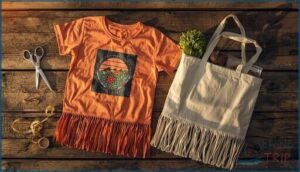
Got an old T-shirt collecting dust? Cut off the sleeves for straps, scoop out the neckline, and fringe the hem — then knot front and back strips together to seal the base. No sewing required.
For better bag reinforcement and durability, sew French seams and boxed corners instead. Upcycling a tote bag this way takes minutes and actually works.
Repurposing Jeans Into Aprons or Shorts
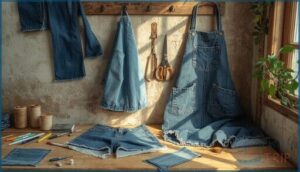
Old jeans are basically sustainable denim waiting to be freed. Slice down the inseam, flatten the panel, and you’ve got the body for upcycled aprons — repurposed pockets included, no extra hardware needed.
Transforming old pants into jean shorts is even simpler: cut, hem, cuff. Denim fabric holds up beautifully, and those natural fade lines make every repurposed clothing piece genuinely one of a kind.
Converting Sweaters Into Mittens or Pillow Covers

That thrift-store sweater you’ve been ignoring? It’s one cut away from becoming something worth keeping. Sweater upcycling is genuinely fast — a beginner can knock out mittens in under two hours. The secret: felt the wool first (hot wash, high dryer heat), then cut.
Here’s where to start with your repurposed clothing:
- Trace your hand, add half an inch, and you’ve got a custom mitten pattern ready to go
- Use ribbed cuffs directly as mitten wrists — zero extra sewing
- For pillow covers, slip a pillow form inside and mark your cut lines right on the sweater
- Stabilize raw edges with fray preventer or a zigzag stitch to keep things clean
One medium sweater usually yields one lined pair of mittens and a small pillow cover. That’s real textile recycling — no special sewing patterns required.
Making Patchwork Blankets From Fabric Scraps
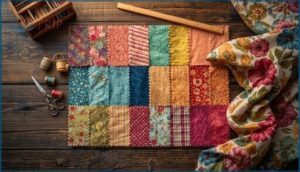
Every scrap tells a story — your patchwork throw blanket just needs to piece them together. Start with scrap fabric sorting: keep cotton wovens for durability, knits separate. Cut pieces into 2–5 inch squares for tidy patchwork layouts.
A simple nine-patch works great for upcycled sewing projects. Use quilting techniques like straight-line stitching, then finish with blanket binding from leftover strips.
Fabric scrap management and creative reuse have never looked this good.
Tips for Choosing and Adapting Patterns

Not every pattern plays nice with thrifted fabric — and that’s okay, because knowing what to look for makes all the difference. A few smart tweaks can turn a basic pattern into something totally your own.
Here’s what to keep in mind before you cut a single piece.
Selecting Patterns for Different Fabric Types
Not all fabrics play by the same rules — and that’s your first real lesson in upcycling and recycling old clothes. Match your sewing patterns to what you’re actually working with.
- Knit patterns need stretch direction around the body, not up and down
- Woven fabrics suit structured designs with darts and seams
- Grainline alignment prevents twisting and saggy hems
- Fabric weight guides your project — denim for bags, light cotton for patchwork
- Stretch direction matters most for sewing for beginners cutting knits off-grain
Modifying Patterns for Unique Upcycled Pieces
Once you’ve matched your pattern to your fabric, it’s time to make it yours. Pattern hacking lets you add pockets, reshape hems, or split pieces for panel mixing — so two worn-out shirts become one interesting garment.
Style line placement can hide stains too (win). Garment cloning, seam modification, even combining patterns — upcycling and repurposing gets creative fast. Rules exist, but breaking them is kind of the point.
Sizing and Fitting Adjustments for Repurposed Materials
Breaking rules is fun — until your jeans won’t button. That’s where fit adjustment techniques actually save the project. With repurposed fabric, you’re often working with what’s there, so sizing strategies get creative fast.
Add a contrast gusset for mobility, swap a waistband for stretchy knit, or grade between sizes on your traced pattern. Smart garment resizing turns “almost fits” into “made for me.
Eco-Friendly Sewing and Upcycling Techniques
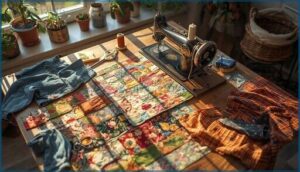
Eco-friendly sewing isn’t just about the fabric you choose — it’s also about how you work with what you’ve got.
A few smart techniques can stretch your materials further and keep your waste close to zero.
Here’s what actually has an impact when you’re sewing with sustainability in mind.
Color Blocking and Mixing Fabrics Creatively
Color blocking is basically your cheat code for upcycling. Got scraps too small for a full piece? Use color blocking techniques to join them into something bold and intentional.
Stick to similar fabric weights when mixing fabrics — denim with denim, knit with knit. Follow basic color theory (think complementary pairs) for block placement that pops.
These sewing techniques turn textile chaos into real style.
Managing and Using Fabric Scraps Efficiently
Scraps are basically free fabric — don’t trash them. Smart scrap organization starts with fabric sorting by weight and type, then storing pieces in clear bins so you can actually find them.
Crumb piecing stitches tiny offcuts into made fabric you can recut for sewing patterns. That’s textile recycling at its most rebellious.
Upcycling and eco-friendly creative sewing begin right at your cutting table.
Sustainable Sewing Practices for Home Sewists
Sustainable sewing practices start before you even thread a needle. Source fabric from charity shops or deadstock sellers — that’s mindful consumption in action. Choose sustainable materials like linen, hemp, or organic cotton for your upcycling projects.
Wash handmade pieces cold, line dry them, and mend before you discard. Real eco-friendly sewing means your clothing upcycle lives longer, not just looks good on day one.
Frequently Asked Questions (FAQs)
What to sew from old clothes?
Old tees become tote bags. Worn jeans transform into shorts or aprons. Upcycled bags, repurposed linens, DIY home decor, old shirt crafts — upcycling old clothes turns clutter into something worth keeping.
What are some sewing projects for upcycling?
Cut up a worn tee and stitch it into an Upcycled Bag — zero waste, maximum personality. Denim scraps become patchwork denim skirts. Repurposed Textiles, Creative Embellishments, Sustainable Crafts — upcycling old clothes never looked this rebellious.
What can be made out of old clothes?
Funny how your donation pile might hold tomorrow’s favorite bag. From upcycled bags to patchwork denim skirts, repurposed textiles and clothing refashion projects turn fabric recycling into accessory making — upcycling old clothes into reusable shopping bags and more.
How can I upcycle old clothes?
Upcycling old clothes is simpler than it sounds. Grab those forgotten pieces and dive into creative reuse — cut, stitch, and reinvent them into upcycled clothing, tote bags, or a patchwork denim skirt. Textile transformation starts now.
Where can I find upcycling fabric inspiration?
Instagram’s upcycling hashtags, Pinterest boards, fabric blogs, and community groups like Up Cycled Cloth Collective are goldmines.
Even library books on eco-friendly fashion and online forums spark fresh ideas for your next DIY project.
What tools do beginners need for upcycling?
You don’t need much to start. Grab sharp fabric shears, a seam ripper, and a basic sewing machine.
Add a tape measure and some chalk, and you’re honestly ready to go.
How do I wash and prep old clothing?
Sort your old clothes by fabric type first. Pre-treat stains, soak musty pieces in diluted white vinegar, then wash on the gentlest cycle that gets the job done. Air dry when you can.
Can I sell garments made from upcycled patterns?
Yes, you can — with a few caveats. U.S. copyright laws protect the pattern itself, not the finished garment.
Just check for commercial use terms and any marketplace rules before you list.
How do I handle worn or stained fabric sections?
Stain it, patch it, darn it — worn fabric isn’t a dealbreaker.
Pre-treat stains, reinforce thin spots with fusible interfacing, or turn damage into design with upcycled patches and creative mending strategies.
Conclusion
Seam like magic, doesn’t it? One old shirt becomes a tote. Worn jeans turn into something you’d actually wear again.
That’s the real power of sewing patterns for upcycling old clothes—you stop waiting for permission to make something new and just cut into what’s already there. Nothing goes to waste. Your scraps have stories left in them.
All you need is a pattern, a little nerve, and scissors pointed in the right direction.
- https://thefoldline.com/blogs/trending/zero-waste-sewing-patterns
- https://www.cochenille.com/from-thrift-to-trend-eight-upcycled-garment-techniques-to-explore/
- https://rawshot.ai/statistic/upcycling-fashion
- https://www.fortunebusinessinsights.com/upcycled-fashion-market-111476
- https://www.zerowastescotland.org.uk/resources/ditch-fast-fashion-refashion-guide-clothes-upcycling