This site is supported by our readers. We may earn a commission, at no cost to you, if you purchase through links.
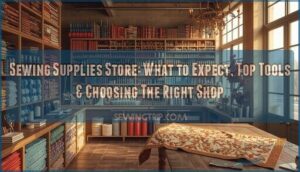
Walk into a sewing supplies store in Massachusetts and you’ll feel the energy right away—bolts of fabric stacked in every color, the hum of machines, and friendly faces ready to help.
These shops aren’t just places to grab thread or needles; they’re the heartbeat of local creative communities.
Whether you’re piecing together a quilt or searching for the perfect zipper, each store offers something unique, shaped by regional trends and the people who gather there.
Finding the right spot can transform your projects and connect you with others who share your passion for sewing.
Table Of Contents
Key Takeaways
- Massachusetts sewing stores aren’t just supply shops—they’re community hubs where beginners and seasoned sewists alike find classes, events, and real human expertise under one roof.
- Standouts like Thredz Unlimited and Karen’s Quilting Corner show that local shops often beat chain retailers on fabric quality, personalized service, and creative atmosphere.
- The right small tools—think sewing clips, magnetic seam guides, and proper notions—can quietly transform your accuracy and enjoyment at the machine more than any big purchase will.
- Matching a store to your skill level matters: look for beginner-friendly signage, staff who actually sew, and a class schedule that grows with you rather than a shop that just moves product.
Best Sewing Supplies Stores in Massachusetts
Massachusetts is packed with welcoming sewing shops, each with its own personality and strengths.
If you’re curious about what makes a sewing shop truly special, this guide explains their role in fueling creativity and connection.
From busy city centers to cozy small towns, you’ll find stores that cater to beginners, seasoned quilters, and everyone in between.
Below, you’ll see some of the best options to help you choose where to shop first.
Overview of Massachusetts Sewing Store Landscape
Although Massachusetts is small, you’ll notice high Store Density, where Sewing Stores double as gathering spots for a Local Sewing Community rather than just places to grab thread.
- Specialty Niches give each shop a flavor.
- Independent vs Chains options keep pricing competitive.
- Regional Trends guide fabrics and colors.
- Community Events spark friendships around shared projects.
- Worcester: Sewing Supplies and Tools.
For more fabric options, see the Grey’s Fabric shop guide.
Store Locations in Worcester, Hyannis, and Williamstown
Spread across Worcester, Hyannis, and Williamstown, these sewing stores genuinely feel like home base for the local sewing community.
In Worcester, shops cluster near Route 9 proximity, making quick supply runs easy.
Joann in Hyannis sits on Iyannough Road with solid parking accessibility.
Williamstown’s Karen’s Quilting Corner offers street-level classes and wheelchair entry.
Check local hours before visiting.
For a similar coastal vibe, see the Cape Cod Quilts location.
Spotlight on Thredz Unlimited and Karen’s Quilting Corner
Once you’ve mapped out Worcester, Hyannis, and Williamstown, two standouts are Thredz Unlimited in Bellingham and Karens Quilting Corner in Williamstown.
Thredz Unlimited feels like a hybrid Sewing Store and studio, mixing Custom Apparel, Embroidery Services, and Design Consultation with practical Sewing Supplies.
Karens Quilting Corner leans into Quilting and Fabric Arts, offering Longarm Quilting, Community Workshops, and inspiring samples.
What to Expect From a Local Sewing Supplies Store
Beyond these standout shops, most local sewing supplies stores share a welcoming formula. You’ll find staff expertise you can actually trust — people who sew themselves and can steer you toward the right needle or fabric fast.
Expect pricing transparency, community boards, sewing classes, sample projects on display, and even loyalty programs. They’re true local crafting resources built around your sewing community.
What a Sewing Supplies Store Offers
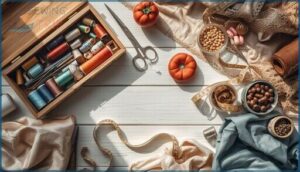
When you walk into a sewing supplies store, you should know what kinds of materials and tools you can count on finding. From fabric to tiny notions, each section plays a different role in helping your projects turn out the way you imagine.
If your machine needs attention before you dive into a new project, finding sewing machine service near me can save you a lot of frustration down the road.
Here’s what you can expect most well-stocked shops to offer.
Fabrics for Quilting, Apparel, and Home Décor
Fabric is the heart of every project you’ll ever make. A good sewing supplies store carries options across four key categories:
- Quilting Fabric — quilted cotton weights generally run 120–150 gsm, woven at 44–45 inches wide
- Apparel Fabric Drape — lightweight chiffons to medium shirting cottons for garments that actually move
- Home Decor Textures — durable upholstery to soft drapery fabrics
- Fabric Finish Safety — OEKO-TEX certified textiles for peace of mind
Threads, Needles, and Notions Every Sewist Needs
Thread types, needle sizes, and notion essentials are where most sewists spend their time browsing. You’ll find polyester threads for everyday garments, fine 60–100 wt options for delicate sheers, and cotton threads perfect for quilting.
Needle sizes run from 70/10 for voile up to 110/18 for heavy layers. Don’t overlook marking tools, pin and clip varieties, and other sewing tools that make every project smoother.
Zippers, Fasteners, and Specialty Materials
Choosing zippers and closures in Sewing Supplies Retail, you’ll compare metal, plastic, and coil teeth through clear Zipper Material Comparisons.
Coil Zipper Types suit clothing, while heavy metal sizes handle bags.
Magnetic Fastener uses shine in kids’ wear.
You’ll feel Fusible Interfacing Benefits, explore Specialty Closure Innovations, and match Fabric and Notions, Sewing Tools, Sewing and Crafting, Sewing and Embroidery.
Store Layout and How Supplies Are Organized
Step into most Sewing Stores and you’ll feel the plan right away: smart Zoning by Activity, clear Aisle Traffic Flow, and thoughtful Category Grouping.
In good Sewing Supplies Retail and Fabric Retail, Labeling Visibility on shelves, tidy Fixture Displays, and even Sewing Furniture and Studios echo what you’ve previewed in a Sewing and Fabric Store Directory before you ever visit.
Top 3 Sewing Tools and Accessories
When you’re standing at your sewing table, the right little tools can make everything feel smoother and more fun.
Beyond fabric and thread, a few smart accessories help you work more accurately, stay organized, and enjoy the process.
Here are three simple tools I recommend keeping close by for almost every project.
1. Otylzto Sewing Clips Assorted Colors
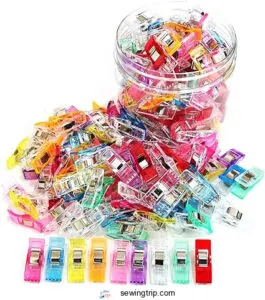
Think of tiny, colorful helpers as rigid, transparent AS-plastic clip opens to about 0.9 cm, strong enough to hold several fabric layers without slipping, yet gentle enough not to leave pinholes.
The bright assorted colors are easy to spot on a crowded cutting table, and the flat back glides under most presser feet. I especially love the three molded marking lines, which help you keep seam allowances consistent from project to project, reliably.
| Best For | Quilters, sewists, and crafters who often work with multiple fabric layers, bindings, or thick seams and want a fast, pin-free way to hold everything in place. |
|---|---|
| Material | AS-plastic |
| Color Variety | Bright assorted colors |
| Use Cases | Sewing, quilting, crafting |
| Size | Opens to 0.9 cm |
| Ease of Use | Flat back glides |
| Pack Quantity | Multiple per pack |
| Additional Features |
|
- Strong grip that holds several layers of fabric without slipping, and the flat back makes it easy to sew right up to the clip.
- Bright assorted colors and clear plastic make them easy to see and grab on a busy cutting table.
- Built-in marking lines help you keep a consistent distance from the fabric edge, making seam allowances more accurate.
- Clips can feel a bit heavy on very light or delicate fabrics and may cause distortion if you’re not careful.
- Like most small notions, they can get lost or break over time, especially with heavy daily use.
- Some buyers report issues with packaging and shipping, such as cracked storage jars or delayed delivery.
2. Magnetic Sewing Seam Guide Set
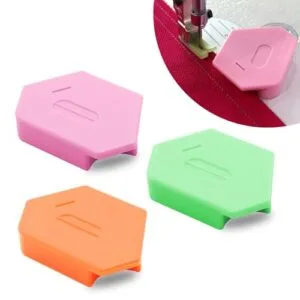
Ever wish your seams could drive themselves in a straight line?
A magnetic sewing seam guide set is about as close as you’ll get.
These compact guides snap onto your metal needle plate with strong neodymium magnets, staying put even at high speeds.
You simply slide the guide to the seam width you want, from a scant 1/8 inch up to 2 inches, then run your fabric along the raised edge for beautifully consistent seams, hems, and bindings every time.
| Best For | Quilters, garment makers, and everyday sewists who want straighter, more consistent seams without constantly babysitting the needle. |
|---|---|
| Material | Neodymium magnets/plastic |
| Color Variety | Multicolor set |
| Use Cases | Sewing, quilting, garment making |
| Size | Adjustable up to 2 inches |
| Ease of Use | Quick to place |
| Pack Quantity | 3 guides per set |
| Additional Features |
|
- Strong magnetic hold on metal needle plates keeps the guide steady for precise, repeatable seam allowances.
- 3-in-1 multicolor set gives you multiple guides to use on different machines or projects and makes them easy to spot in a busy sewing space.
- Quick to place and adjust, helping beginners build good habits and letting experienced sewists sew faster with fewer mistakes.
- Only works on metal needle plates, so it won’t stick to plastic surfaces or non-magnetic machines without an added metal plate.
- Strong magnet can make small, precise adjustments a bit fiddly when you’re trying to nudge it into the perfect spot.
- Not ideal for very narrow seams or some machine setups (like certain walking feet/AcuFeed-style systems) where there isn’t enough room for the guide.
3. Sewing Clips for Fabric Quilting
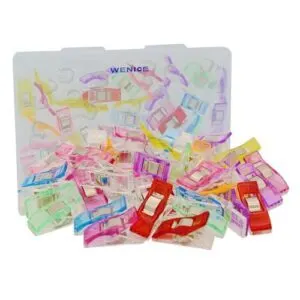
If straight seams are your goal, sewing clips are your secret weapon for everything that comes before and after the stitch. The WENICE clips come in a pack of 40 multicolor plastic clips, measuring just 1.06 inches long — small enough to tuck along binding edges every few inches without crowding your work.
They grip fabric layers firmly, glide under your presser foot without snagging, and spare your fingertips from pins entirely. Perfect for quilts, curves, and thick stacks up to half an inch.
| Best For | Quilters, sewists, and crafters who want an easy, pin-free way to hold fabric layers, bindings, and small projects in place. |
|---|---|
| Material | Plastic |
| Color Variety | Multicolor |
| Use Cases | Sewing, quilting, embroidery, crafts |
| Size | 1.06″L x 0.39″W |
| Ease of Use | Simple clip design |
| Pack Quantity | 40 clips per pack |
| Additional Features |
|
- Hold fabric layers securely without bending, buckling, or leaving pin holes.
- Multicolor pack of 40 makes it easy to spot clips on your work and keep plenty on hand.
- Glide under the presser foot smoothly, protecting your fingers from pin pricks.
- Plastic construction may wear out faster with heavy or constant use.
- A pack of 40 may not be enough for very large quilts or bulk projects.
- Small size may feel fiddly for those working with very thick or heavy materials.
Sewing Machines, Brands, and In-Store Services
When you’re ready to move beyond the basics, the sewing machines and services at a good shop can make all the difference in how smoothly you sew.
From trusted brands to longarm machines, furniture, and support, you should know what’s available before you invest.
In the next sections, you’ll see the key options to look for, so you can choose what fits you best.
Popular Brands Including Bernina, Janome, and Brother
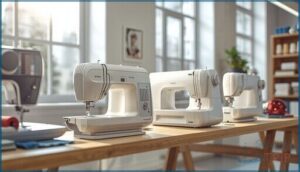
In the realm of sewing machine sales, knowing your brands makes all the difference. Here are four worth knowing:
- Bernina – Swiss precision, dating back to 1893, with Stitch Regulation technology built in.
- Janome – Japanese innovation, with Dual Feed Technology and AcuFeed Flex, for smooth, even layers.
- Brother – Reliable sewing equipment, with Automatic Threading, at budget‑friendly prices.
- Pfaff – Solid European sewing machines, with consistent performance.
Longarm and Quilting Machine Options
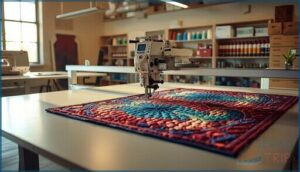
Once you know your Sewing Machines brands, it’s time to look at Longarm Machines for serious Quilting. In-store, you’ll usually compare Frame‑Mounted vs Sit‑Down Longarm Quilting Machines, Hybrid Longarm Configurations, and Motor Speed Ranges around 1,500–3,500 stitches per minute.
Ask to test Stitch Regulation Systems and Computerized Pattern Libraries, and determine which models match your projects and Quilting Supplies at home someday.
Sewing Furniture and Studio Accessories
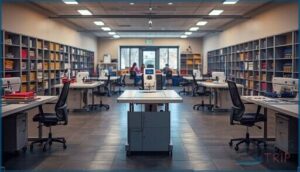
Once you’ve met the longarms, look around at Sewing Furniture and Studios that make them a joy to use: Hydraulic Cabinets that lift heavy Sewing Machine Equipment, Ergonomic Chairs with real back support, tall Cutting Tables on locking casters, smart Storage Racks, Lighting Magnifiers for detail work, plus sturdy Crafting Tools that also shine in group Sewing Workshops and classes.
Repair Services and Expert Consultations
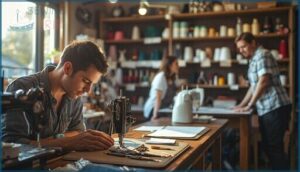
Your machine acting up mid‑project?
Most local shops offer full Sewing Machine Service, from Machine Tune-ups at around $50–$85 to complex Warranty Repairs handled by Certified Technicians with brand‑specific training.
Drop it off, describe the symptoms, and In‑Store Diagnostics takes it from there.
Custom Consultations help with General Sewing and Alterations questions too, making Sewing Community Support feel less like a transaction and more like a conversation.
How to Choose The Right Sewing Supplies Store

Not every sewing store is the right fit, and that’s okay — finding your perfect spot just takes knowing what to look for. Whether you’re just starting out or you’ve been sewing for years, the right shop can make a real difference in your projects and your confidence.
Finding the right sewing store can boost your confidence and transform your projects, no matter your experience level
Here’s what to keep in mind when you’re sizing up your options.
Comparing Local Shops Vs. Chain Retailers
Ever notice how two fabric stores can feel like different worlds?
Local sewing stores win the Quality Comparison with softer quilt cottons and real Customer Service, while chains lean on Product Variety and sharp Pricing Differences from coupons.
Community Impact grows when you choose Sewing Local, boosting Sewing Community Support; a good Sewing and Fabric Store Directory helps you compare.
Finding Stores That Fit Your Skill Level
Although fabric stores can look similar, you’ll spot sewing stores that match your skills by watching for:
- Beginner aisles with simple sewing patterns and clear signs nearby.
- Intermediate kits plus jersey and quilt projects.
- Expert tools, longarm threads, and specialty zippers.
- Staff expertise explaining bobbin winding and tension in minutes.
- Skill‑based pricing, sewing classes and workshops, and skill‑level crafting events.
Classes, Community Events, and Customer Support
Think of the best sewing stores as community hubs, not just shops.
Look for Sewing Classes and Workshops like Auburn’s multi‑level lessons, plus Skill Workshops, Live Demonstrations, and evening Sewing Classes.
Strong stores host Crafting Events, Janome educator Workshops, and ASG Member Meetups, and then back you up with Repair Clinics, phone support, and Online Tutorials from brands and Sewing Local.
Using Online Directories Like SewingLocal to Locate Stores
- On SewingLocal, use Location detection to see fabric stores and sewing stores.
- Use Filter customization for sewing classes and workshops or crafting events.
- Check Review analytics to gauge quality, staff help, and pricing.
- Scan Real‑time inventory notes so you know which machines and notions are available.
- Then tap Map navigation to open directions and plan your most efficient shop hop.
Frequently Asked Questions (FAQs)
Where can I find sewing supplies?
You’ll find sewing supplies at fabric stores, sewing stores in Worcester, Hyannis, and Williamstown, plus online marketplaces and mobile app finders.
Community bulletin boards, social media groups, and local craft fairs often highlight fabric shopping and crafting supplies too.
Where can I buy sewing supplies in bulk?
For bulk buys, check out Wholesale Fabric Shops like New England Quilt Supply, or explore Online Bulk Platforms such as FabricWholesaleDirect.
DIY Bulk Ordering works great through Gather Here in Cambridge too.
What is sew with Me?
Sew With Me is a sewing store in Lake Elmo, Minnesota, known for its strong Brand Identity, Membership Benefits, Community Classes, and Specialized Fabrics.
Their In‑Store Services support DIY Sewing, offering crafting supplies, sewing machines, and expert guidance.
Where can I buy a sewing machine in St Paul?
You’ve got solid options in St Paul — from Service First Sewing and Wagner Bernina to Creative Sewing Centers in Roseville.
Compare dealer brand focus, warranty policies, and pricing before committing to your perfect machine.
Does St Paul’s have a sewing shop?
Much like searching for a hidden gem in fabric shopping, you won’t find a sewing store named St Paul’s in Massachusetts.
For local availability, explore nearby alternatives, community classes, store hours, and contact info in established sewing stores.
What is Michaels fabric & sewing shop?
Michaels fabric & sewing shop, known as the Knit & Sew Concept, blends Michaels Brand Fusion with JOANN Yarn Integration.
You’ll find expanded fabric retail, Fabric Cutting Stations, in-store thread selection, sewing stores, crafting supplies, and sewing classes nationwide.
What are typical sewing store operating hours?
Most sewing stores keep their doors open weekdays from 9 am to 7 pm, with weekend schedules and Sunday openings running a bit shorter.
Holiday adjustments and seasonal variations mean it’s always smart to call ahead.
Do stores offer layaway or payment plans?
Yes, many stores offer layaway terms or payment flexibility, making fabric shopping easier. You’ll see credit-free options, deposit policies, and installment fees—perfect for DIY projects and crafting.
Payment plans help you enjoy fabric sales without stress.
Can I return opened thread or fabric?
It depends on the store.
Opened thread usually can’t be returned due to hygiene restrictions, and cut fabric is often final sale.
Always keep your customer receipts and check return policies before you buy.
Are alterations services available at sewing stores?
Some local shops do offer in‑house alterations alongside supplies, with pricing structure starting around $5 for simple hems.
Turnaround times and appointment policies vary, so call ahead — especially for adaptive clothing modifications.
Conclusion
Think of your sewing journey as a garden—the right sewing supplies store is the soil where your creativity takes root and grows. Choosing a shop that matches your skill level, carries quality tools, and connects you to a community makes all the difference.
Whether you’re just starting out or perfecting sophisticated techniques, the perfect store is out there waiting. Walk through its doors, and let your next project begin.