This site is supported by our readers. We may earn a commission, at no cost to you, if you purchase through links.
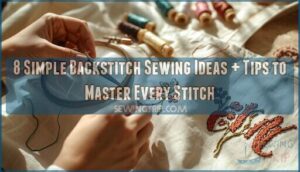
You don’t need fancy equipment or years of experience to create something beautiful with a needle and thread. Backstitch—one of the oldest and most reliable embroidery techniques—gives you clean, precise lines that can transform plain fabric into customized treasures.
Whether you’re stitching your initials onto a tote bag or bringing a handmade toy to life with embroidered eyes, this single stitch opens up a world of creative possibilities. The best part? You can master the basics in an afternoon and start tackling simple backstitch sewing ideas that actually look professional.
From custom gift tags to monogrammed patches, these beginner-friendly projects prove that stunning handwork doesn’t have to be complicated.
Table Of Contents
- Key Takeaways
- 8 Simple Backstitch Sewing Ideas for Beginners
- Personalized Name Labels and Lettering
- Embroidered Facial Features on Plush Toys
- Decorative Outline Details on Tote Bags
- Floral Border Embellishments on Napkins
- Monogrammed Patches for Clothing
- Simple Framed Embroidery Wall Art
- Custom Gift Tags With Stitched Designs
- Fabric Bookmark With Backstitch Patterns
- How to Backstitch: Step-by-Step Basics
- Top Sewing Patterns to Try With Backstitch
- Common Backstitch Mistakes to Avoid
- Popular Backstitch Variations to Explore
- Frequently Asked Questions (FAQs)
- Conclusion
Key Takeaways
- Backstitch is one of the most versatile and beginner-friendly embroidery techniques, perfect for creating clean lines on everything from personalized name labels to embroidered plush toy faces without needing fancy equipment or years of experience.
- Consistency matters more than speed—keeping stitches even at 3-4mm, using the right needle and thread weight for your fabric, and always marking guidelines with washable pens prevents puckering, wandering lines, and amateur-looking results.
- Common mistakes like skipping fabric guidelines, using the wrong thread weight, or failing to secure thread ends properly will sabotage your work, so lock down both ends with tight stitches and match your thread to your fabric type.
- Once you’ve mastered the basic backstitch, variations like whipped backstitch for decorative edges, double-thread for extra durability, and combining backstitch with chain stitch let you add texture, strength, and dimensional effects that transform simple projects into professional-looking handmade art.
8 Simple Backstitch Sewing Ideas for Beginners
Whether you’re just picking up a needle for the first time or looking for a fresh project to sharpen your skills, backstitch is the perfect place to start.
If you want to take your stitching further, check out techniques for hand sewing seams that are stronger and last longer.
These eight ideas are simple enough for true beginners but still produce results you’ll actually be proud to show off. Pick the one that excites you most and let’s get into it.
Personalized Name Labels and Lettering
Name labels are where backstitch truly shines. Whether you’re stitching a monogram onto a lunch bag or weaving custom lettering into a gift, this simple embroidery technique gives your sewing projects a handmade edge no store-bought label can match.
Pick satin or polyester woven labels for durability, experiment with bold thread colors and font selection, and let your label design tips and custom embellishments do the talking.
Embroidered Facial Features on Plush Toys
Ready to give your plush toy some serious personality? Backstitch is hands-down the safest way to embroider facial expressions — no detachable plastic eyes, no choking hazards, just sturdy needlework sewn right into the fabric.
Your fabric choices and embroidery threads matter here. Think soft Minky or fleece, paired with quality embroidery floss, for results that last through years of play and washing.
- Backstitch smiles and mouths for clean, expressive lines
- French knots for eyes to add texture and life to your toy design
- Satin stitch noses for bold, smooth plush toy safety-friendly features
- Experiment with stitching placement — slightly lower eyes create instant charm and innocence
Handmade faces offer unique personality and extra durability, which is why many crafters recommend exploring embroidery tips for plushies.
Decorative Outline Details on Tote Bags
Want to take your tote bag embellishments from plain to polished? Backstitch outline stitch techniques give canvas bags a clean, striking look without heavy embroidery.
Dark thread on light fabric creates bold contrast — keeping things sharp and modern. Mind your bag seam finishing with a securing knot at each end for lasting decorative edge effects.
Simple, satisfying stitching that speaks for itself. For more inspiration, explore personalised photo outline bags to see creative ways outlines can beautify fabric accessories.
Floral Border Embellishments on Napkins
Napkin Embellishments are where backstitch really shines. Grab a cotton-linen blend napkin and sketch Floral Patterns along the Border Designs using a washable fabric pen.
With the right Fabric Choices and a few Embroidery Tips, your hand stitching transforms simple edges into something stunning. Keep embroidery stitches at 4–6mm for clean, even lines — no experience needed.
Monogrammed Patches for Clothing
Patch Design Tips start with your vision: monogram your jacket, bag, or denim with backstitch embroidery that screams you. Choose from circular, shield, or rectangular shapes, then play with Monogram Styles—classic block or flowing script. Pair twill Fabric Choices with cotton Embroidery Threads, and explore Backing Options like iron-on or sew-on. These handsewing embroidery techniques let you craft wearable art, no rules required.
- Select your patch shape (circular, shield, or rectangular)
- Choose monogram font style (block, script, or monoline)
- Pick backing method (iron-on, sew-on, or Velcro)
Simple Framed Embroidery Wall Art
Turn your hand embroidery art into wall hanging art that draws the eye. Pick lightweight cotton for fabric selection, then work your backstitch stitch patterns inside embroidery hoops for crisp tension.
Choose frame design with natural wood or white matte finishes, and explore matting options—1/2 to 1-1/4 inch borders give breathing room. Your embroidery techniques deserve a spotlight, so mount that masterpiece and own your space.
If your needle keeps snapping mid-stitch, check out this guide on troubleshooting sewing machine needle breakage to fix the issue fast.
Custom Gift Tags With Stitched Designs
Put your stamp on custom gifts with custom tags that look professional and thoughtful. Cut felt or cotton twill for your tag design ideas, trace stitched monograms with a water-soluble pen, then backstitch names or motifs at 1.5–2.0 mm stitch length.
Try these embellishment techniques:
- Single-word minimalist tags with clean backstitched outlines
- Floral motifs in pastel embroidery thread for soft charm
- Metallic accents that catch light on holiday packages
- Two-tone monograms for high-contrast impact
Fabric Bookmark With Backstitch Patterns
Stitch your reading habit into something beautiful with fabric bookmarks that showcase backstitch embroidery. Cut cotton or linen to 6 by 1.5 inches, sketch stitching patterns with erasable pen, then backstitch floral motifs or quotes using 1–2 strand thread.
Edge finishing with a zigzag stitch prevents fraying, while varied thread colors and stitch density create visual interest across your bookmark sizes.
How to Backstitch: Step-by-Step Basics
Ready to get your hands stitching? Mastering the backstitch starts with a few simple steps that’ll set you up for success every time.
Here’s what you need to know to make clean, professional-looking stitches from day one.
Choosing The Right Needle and Thread
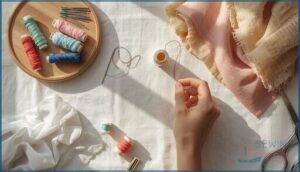
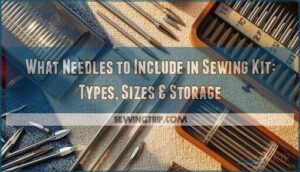
Your needle and thread choices aren’t just details—they’re the foundation of every backstitch you make. For lightweight fabric types, grab a size 60-70 needle with cotton embroidery floss or polyester thread for clean lines.
Medium-weight fabrics work best with size 70-90 needles. An embroidery needle‘s larger eye accommodates thicker yarn weights smoothly, while proper thread selection and stitch tension keep your work polished and professional.
Marking Guidelines on Your Fabric
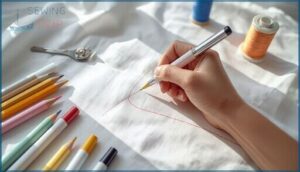
Fabric markers are your roadmap to backstitch mastery—without them, you’re flying blind. Choose water-soluble pens for most sewing tutorials, or tailor’s chalk for dark fabrics in handsewing projects.
Here’s your marking arsenal for sewing for beginners:
- Water-soluble markers for washable fabrics
- Chalk pencils for temporary stitch guides
- Tracing wheels for precise pattern transfer
- Fabric pencils for fine lines
- Thread colors that contrast your base fabric
Test marking tools on scraps first to avoid permanent disasters.
Making Your First Backstitch
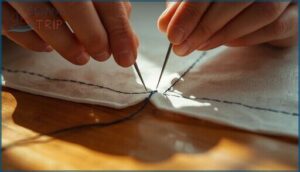
Your guidelines are down—now comes the moment that separates talkers from makers. Thread your size 7 embroidery needle with cotton floss, knot the end, and push up through the fabric from below.
Make one small forward stitch (about 3 millimeters), then bring your needle back down where you started. That’s your first backstitch—bold, clean, unstoppable. You’ve just claimed your place in every handsewing project ahead.
That first backstitch—three millimeters forward, needle back to start—is bold, clean, and the beginning of every project you’ll master
Keeping Stitches Even and Consistent
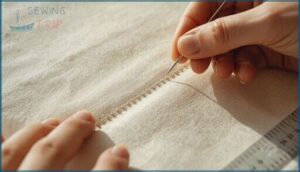
Once you nail that first stitch, consistency becomes your new obsession. You want every backstitch to match—same length, same rhythm, same fierce precision. Think of it as your signature: unmistakable and undeniably yours.
- Aim for 3 to 4 millimeters per stitch on medium-weight fabrics for that sweet spot between visibility and strength
- Count your rhythm while hand sewing to lock in consistent stitch length every single time
- Keep finger pressure steady so your stitching doesn’t pucker or drift off course
- Use your marked guideline to maintain even spacing and prevent your line from wandering
Top Sewing Patterns to Try With Backstitch
Once you’ve nailed the basics, it’s time to put your backstitch skills to work on actual sewing patterns that let you practice and build confidence.
These three patterns are beginner-friendly and give you plenty of opportunities to use backstitch for seams, details, and embellishments. Whether you’re into casual knits, structured jackets, or easy button-ups, there’s something here to get your hands on.
1. McCall’s Knit Poncho Tops Pattern
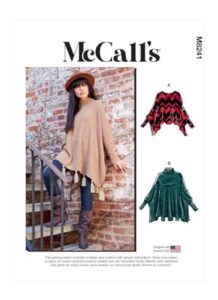
McCall’s M8241 gives you serious creative freedom with its knit poncho lineup. You’ll find options from cropped cuts to playful tassel hems, all in sizes XS through XXL.
The best part? It’s built for stretchy fabrics like jersey and ponte, which means you can add custom backstitch details—think monograms on the neckline or decorative edging along those wide sleeve bands. Since the construction stays beginner-friendly with minimal shaping, you won’t wrestle with complicated seams while perfecting your stitchwork.
| Best For | Sewers with basic skills who want to make comfortable, customizable knit tops with different neckline and hem options. |
|---|---|
| Type | Sewing Pattern |
| Media Type | Physical Pattern |
| Skill Level | Basic sewing skills |
| Includes | Templates and instructions |
| Customization | Multiple hem/neck options |
| Materials Needed | User provides fabric/tools |
| Additional Features |
|
- Multiple style variations in one pattern—cropped, shaped, and tassel hems plus turtleneck or crewneck options
- Wide size range from XS to XXL works for different body types
- Designed for forgiving knit fabrics, making it easier to get a good fit
- You need to supply all your own fabric, notions, and sewing tools
- Requires basic sewing knowledge and skills to complete
- This is just the pattern template, not a finished garment
2. Know Me Mens Crop Jacket Sewing Pattern
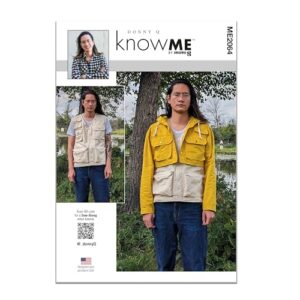
Know Me’s ME2036 brings workwear swagger to your backstitch practice with its rugged crop jacket design. You’ll work with denim, canvas, or twill—sturdy fabrics that hold up beautifully when you’re topstitching those exterior seams or reinforcing pocket edges.
The pattern’s boxy silhouette and front patch pockets give you wide-open real estate for custom embroidery or monograms along the yoke. Button plackets and collar facings? Perfect spots to lock in those hand-stitched details that scream “I made this myself.
| Best For | Intermediate to advanced sewers who want to create a modern, layered workwear-inspired outfit with customizable details and versatile styling options. |
|---|---|
| Type | Sewing Pattern |
| Media Type | Physical Pattern |
| Skill Level | Intermediate/Advanced |
| Includes | Templates and instructions |
| Customization | Jacket and vest variations |
| Materials Needed | User provides fabric/tools |
| Additional Features |
|
- Two garments in one pattern that work together or separately, giving you multiple styling combinations
- Features practical details like cargo pockets, zippers, and snaps that add functional style to your wardrobe
- Sturdy fabric recommendations (denim, canvas, twill) make for durable pieces that’ll last through heavy wear
- Limited size range (44-52) excludes smaller or larger body types
- Complex construction with pockets, closures, and layering details makes this challenging for beginners
- Physical pattern format means waiting for shipping and storing bulky pattern pieces
3. Vogue Easy Sew Women’s Shirt Pattern
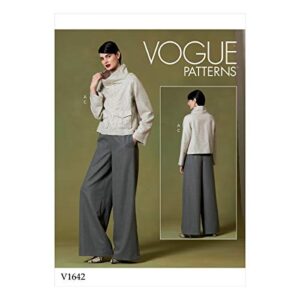
Vogue V1642Y hands you three patterns in one envelope—two loose-fit tops and a pair of pull-on pants. You’ll love the zippered collars and pleated underlays for practicing backstitch on curved seams and collar facings.
The elasticized waist on the pants? That’s where you can anchor custom embroidery or reinforce pocket openings with those sturdy hand stitches. Sizes 4–14 keep things accessible, and the straightforward construction means you’re adding backstitch flair without wrestling complicated pattern pieces.
| Best For | Beginner sewists who want to practice curved seams and collar details while creating relaxed, everyday wardrobe pieces. |
|---|---|
| Type | Sewing Pattern |
| Media Type | Physical Pattern |
| Skill Level | Beginner-friendly |
| Includes | Templates and instructions |
| Customization | 2 shirts, 1 pants |
| Materials Needed | User provides fabric/tools |
| Additional Features |
|
- Three patterns in one envelope give you variety without buying multiple packs
- Loose-fitting design is forgiving for beginners still learning fit adjustments
- Zippered collars and pleated details offer skill-building opportunities without overwhelming complexity
- Size range stops at 14, leaving out many sewists who need larger patterns
- Requires you to already own basic sewing supplies and fabric beyond what’s included
- Fit isn’t guaranteed—you’ll need accurate measurements and some adjustment skills for best results
Common Backstitch Mistakes to Avoid
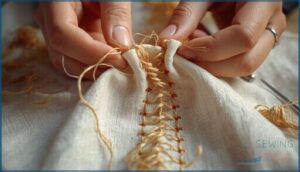
Even the simplest stitch can go sideways if you’re not careful. A few small slip-ups—like rushing through prep or ignoring your thread choice—can turn a clean line into a tangled mess.
Here’s what to watch out for so your backstitch stays sharp and professional every time.
Uneven or Inconsistent Stitch Lengths
Your backstitch‘s uneven stitch length often screams tension issues or sloppy thread setup. When your upper thread tension pulls harder than the bobbin, you’ll see irregular spacing that ruins clean lines.
Fabric stability matters too—slippery or stretchy material shifts under your needle, throwing off your rhythm. Check your machine calibration and stitch regulation settings, or slow down your hand sewing technique. Consistency beats speed every time when you’re mastering stitching fundamentals.
Skipping The Fabric Guideline Step
Without fabric guidelines, you’re basically sewing blind. Your backstitch lines can shift mid-stitch, throwing off stitch alignment and turning straight embroidery into wobbly nonsense.
Fabric shifting causes puckers, off-center lettering, and crooked plush toy faces. Guideline accuracy isn’t optional—it’s your foundation for sewing precision and error prevention. Mark those baselines with washable pen or chalk, and watch your hand sewing techniques level up instantly.
Using The Wrong Thread Weight
Picking the wrong thread weight is like showing up to a knife fight with a spoon—you’re already outmatched. Here’s how thread weight risks sabotage your backstitch:
- Fabric pucker warps your seams and ruins smooth lines.
- Tension issues create looping and unbalanced stitches.
- Needle damage from forcing heavy thread through delicate fabric.
- Seam quality drops when weight doesn’t match your embroidery vision.
- Skipped stitches break your sewing techniques flow mid-project.
Not Securing The Thread Properly
You can’t build anything solid on a weak foundation—and in sewing and embroidery, that means securing your thread from the jump. Loose Ends unravel with the slightest tug, while Knotting Issues create bulky spots that throw off your backstitch rhythm.
Insecure Anchors at start or finish points invite pullout under wear. Lock down both ends with two tight stitches using your embroidery needle—Thread Tension stays balanced, and Fraying Prevention keeps your stitching tight through every wash.
Popular Backstitch Variations to Explore
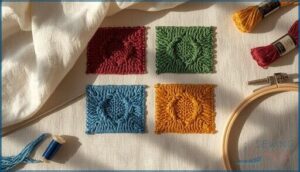
Once you’ve nailed the basic backstitch, you can branch out and experiment with variations that add texture, strength, and style to your work.
These techniques let you push beyond the plain stitch and customize your projects with bold details or subtle shading effects. Here’s a quick look at four popular variations worth trying.
Whipped Backstitch for Decorative Edges
Want to add some serious flair to your next project? Whipped backstitch wraps a separate thread around your base stitches, creating a raised, polished line that screams handmade elegance.
Here’s what makes it perfect for decorative seams and fabric borders:
- Creates a refined raised edge with minimal effort
- Works beautifully on napkin hems and edge embellishments
- Adds subtle texture that catches the light
- Allows two-tone effects with contrasting thread wrapping
- Requires just a single strand for delicate stitching
Master this variation and you’ll transform basic embroidery into something truly eye-catching.
Double-Thread Backstitch for Extra Durability
Ready to bulletproof your seams? Double-thread backstitch loads your needle with two strands instead of one, instantly cranking up the strength for high-wear zones like toy seams and hem edges.
| Aspect | What You Gain |
|---|---|
| Thread Tension | Requires careful control to prevent puckering |
| Stitch Reinforcement | Doubles durability without changing stitch length |
| Fabric Selection | Works best on sturdy weaves that can handle thicker thread |
Your embroidery just leveled up.
Backstitch for Shading and Subtle Design Effects
Shading techniques turn backstitch into a painter’s tool—swap thread colors mid-line and watch gradients bloom across petals or faces.
Short, clean stitch variations keep color gradations smooth, while subtle texture effects add depth without screaming “embroidery stitches.”
Pair this with satin fills for blended embellishment ideas, or let your back stitch handle the shadows solo.
Either way, you’re weaving dimension into every backstitch pattern.
Backstitch Combined With Chain Stitch
Layer a lightweight chain stitch alongside your backstitch line and watch flat outlines snap into dimensional details—that’s hybrid embroidery working its magic.
This stitch variations combo shines on dark canvas or tightly woven fabrics, where textured outlines boost visibility. Keep both rows aligned and you’ll master chain stitch basics while leveling up your needlework game on any sewing patterns.
Frequently Asked Questions (FAQs)
What are common backstitch mistakes?
The devil’s in the details—uneven stitch lengths, skipped guidelines, wrong thread weight, and poor anchoring plague beginners.
Master tension control and stitch alignment to avoid fabric puckering, thread tangles, and weak seams in hand stitching techniques.
What are some back stitch variations?
Once you’ve nailed the basics, try whipped backstitch for twisted edges, threaded back for braided lines, double thread for bold monograms, Pekinese stitch for texture, or interlaced back for decorative borders.
Can backstitch be used on stretchy fabrics?
About 60% of home sewers struggle with knit fabric puckering—but yes, backstitch works on stretch fabric when you adjust stitch length, use a ball point needle, and maintain gentle fabric tension while sewing.
How do you fix a backstitch mistake?
To fix a backstitch error, carefully unpick the flawed stitches with a seam ripper, check your thread tension, then resew from just before the mistake.
Finish with a light press to flatten the repaired seam perfectly.
Whats the best backstitch length for curves?
Curves demand backstitch tension and control—think 5 to 2 mm for tight bends, 5 to 3 mm for gentle arcs.
Fabric thickness dictates stitch length variations; lighter materials need shorter increments. Master sewing curve techniques through practice.
Does backstitch work for sewing seams permanently?
Yes—backstitch creates secure, permanent seams when you nail thread tension and stitch reinforcement.
It provides excellent seam permanence and backstitch security across woven and knit fabrics, making it perfect for durable sewing and needlework projects.
Can you backstitch through multiple fabric layers?
Absolutely—backstitch powers through layered fabric like a champion when you pair a sharp needle with the right thread selection.
Just pin your multi-layer stack, adjust stitch tension, and watch those hand sewing techniques conquer any fabric thickness effortlessly.
Conclusion
If your fabric’s feeling too quiet, it’s time to let your needle start whispering secrets. Even for the bold, there’s power in just a line drawn by hand—one you control, loop by loop.
These simple backstitch sewing ideas aren’t rules to follow; they’re doors to kick open. Try them, twist them, stitch outside every line. Suddenly, you’re not decorating fabric; you’re rewriting its story. With every backstitch, make your mark loud enough to echo.
- https://www.catkinandlillie.com/post/what-are-the-best-needles-for-cross-stitch
- https://en.wikipedia.org/wiki/Crochet_hook
- https://bunniesbythebay.com/blogs/how-to-delight/choosing-the-perfect-stuffed-animal-for-your-newborn
- https://www.customimplementer.com/blog/how-to-improve-the-durability-of-custom-plush-toys
- https://funenjoytoys.com/stuffed-toy