This site is supported by our readers. We may earn a commission, at no cost to you, if you purchase through links.
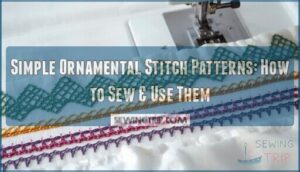
Your sewing machine has a whole library of decorative stitches you’ve probably never touched—those mysterious patterns hiding between the basic straight and zigzag options. Most sewers stick to the basics because ornamental stitches feel intimidating or unnecessary, but these simple ornamental stitch patterns can transform plain seams into statement details with just a few clicks.
The truth is, you don’t need expert skills to use them effectively. Once you understand how fagoting, featherstitch, cross stitch, blanket stitch, and chain stitch actually work, you’ll start seeing opportunities to add personality to everything from garment hems to quilt borders.
The key is knowing which stitch works best for your project and how to set up your machine so these patterns look crisp and professional instead of messy.
Table Of Contents
Key Takeaways
- Your sewing machine already has decorative stitches like fagoting, featherstitch, cross stitch, blanket stitch, and chain stitch that can transform plain fabric into statement pieces without requiring expert-level skills.
- Success with ornamental stitches depends on matching the right materials—pairing thread type (polyester for durability, rayon for sheen), needle choice (Microtex for delicate fabrics), and fabric weight to your specific stitch pattern.
- Machine setup matters more than fancy equipment: adjusting stitch width, length, tension, and using the correct presser foot on test fabric prevents common problems like puckering, thread breakage, and distorted patterns.
- Decorative stitches work everywhere from garment hems and quilt borders to home decor accents, and you can layer multiple stitch types with contrasting threads to create completely unique designs that tell your story.
Essential Simple Ornamental Stitch Patterns
You don’t need a fancy machine or years of experience to create beautiful decorative details on your projects. A handful of simple ornamental stitches can transform plain fabric into something special, whether you’re working by hand or using your machine’s built-in options.
If you’re not sure where to start, exploring a comprehensive guide to sewing machine stitches can help you discover which decorative options your machine already offers.
Let’s look at five essential stitches that’ll give you the creative freedom to add character to everything you sew.
Fagoting Stitch
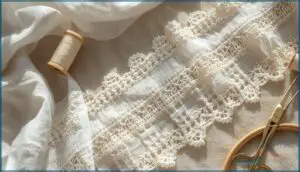
Fagoting is a decorative stitch that joins two fabric pieces with a lace-like open network between them—think of it as creating tiny windows in your stitching.
You’ll use laid threads or cords to build those network patterns, forming vertical gaps that look like miniature ladders.
This heirloom sewing technique works beautifully on garments and panels, adding elegant lace effects through creative embroidery stitches and ornamental stitches.
For more on creating decorative seam techniques, explore specialized guides on faggoting.
Featherstitch
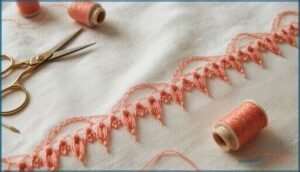
Another way to add movement and texture to your work is through featherstitch—a lovely embroidery stitch that creates soft, feathery arcs along hems and seams.
You’ll alternate short diagonal loops between parallel baselines, perfect for smocked embellishments and heirloom applications. Try basic, long-armed, or double featherstitch variants to achieve different decorative stitch patterns.
Master loop formation by keeping your tension consistent and baseline stitches parallel.
Cross Stitch
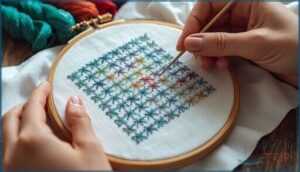
When you’re ready to explore grid-based embroidery stitches, cross stitch offers perfect symmetry and endless design possibilities. Each X-shaped stitch forms over two fabric threads on Aida or evenweave, creating decorative stitch patterns that range from simple borders to intricate artwork.
You’ll master Cross Stitch Basics by maintaining consistent stitch tension and keeping your diagonal direction uniform—14-count fabric works beautifully for beginners learning these sewing techniques.
Blanket Stitch
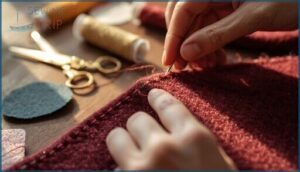
If you want a flexible edge finishing technique, blanket stitch delivers both function and flair. This embellishment technique secures raw edges with small diagonal loops that resist fraying—perfect for felt, wool, or appliqués. You’ll love how thread contrast transforms simple borders into striking decorative stitches.
Just work from back to front, keeping spacing even as you stitch. The stitch’s use in highlights its cultural importance and enduring flexibility.
Chain Stitch
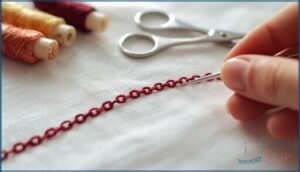
This elegant embroidery stitch creates a continuous line of interlocking loops that flows like liquid thread across fabric. Chain stitch basics involve bringing your needle up, forming a slack loop, then catching it with your next stitch—mastering stitch tension control prevents puckering.
You’ll find loop variations perfect for bold outlines or delicate hand embroidery tips, while machine stitch settings let you automate these stunning ornamental stitches.
Choosing Threads, Needles, and Fabrics
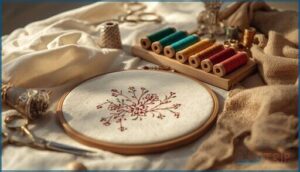
Your ornamental stitches are only as good as the materials you choose. The right thread, needle, and fabric combo can make your stitches pop—or disappear into a hot mess.
The right thread, needle, and fabric combo can make your stitches pop—or disappear into a hot mess
Let’s break down what you need to grab before you start stitching up a storm.
Best Thread Types for Decorative Stitches
Your thread choice makes or breaks decorative stitches. Polyester embroidery thread delivers unbeatable durability and colorfastness—perfect for projects that’ll see heavy use. Cotton finish gives that classic matte look you’ll love on quilts. Want your stitches to pop? Rayon sheen creates gorgeous visual impact. Metallic thread adds sparkle, though it demands patience.
Smart thread selection means considering thread contrast and thread options that match your fabric’s personality.
Ideal Needle Choices (e.g., Microtex)
Your needle selection transforms decorative stitches from frustrating to impeccable. Microtex needles pack a slim, razor-sharp point that glides through delicate fabrics like silk and satin without snagging.
These sewing machine needles create crisp, clean holes—perfect for stitch precision on high thread count materials. Their exceptional fabric compatibility and thread interaction mean you’ll nail those intricate patterns every time.
Microtex benefits? Professional results without the puckering.
Selecting Fabrics for Ornamental Stitches
Your fabric choice sets the stage for show-stopping stitches. Lightweight cotton lawn and silk chiffon let ornamental patterns lay smoothly without bunching, while medium-weight quilting cotton provides the stable base intricate designs crave.
Fabric weight and fiber choice determine how your stitch tension behaves—natural fibers like linen grip thread beautifully, creating crisp edges. Dense weaves support decorative work better than loose muslin, minimizing texture impact and puckering.
Color and Contrast Tips
Color harmony transforms ordinary embroidery stitches into eye-catching designs. Aim for contrast ratios of at least 4.5 to 1—think dark navy thread on cream linen—so your decorative stitch patterns truly pop.
Thread visibility depends on fabric interaction and smart thread contrast choices. Testing skin tone matching matters for wearables, while high luminance differences separate motifs clearly.
Stitch optimization starts with bold color decisions.
Setting Up Your Sewing Machine for Decorative Stitches

Getting your machine ready for decorative stitches doesn’t have to feel like defusing a bomb. A few quick adjustments will access those fancy stitches you’ve been ignoring since you unboxed your machine.
Here’s what you need to dial in before you start stitching.
Selecting Decorative Machine Stitches
Your sewing machine is hiding a treasure trove of decorative machine stitches you’ve probably never touched. Most modern machines pack dozens of stitch pattern options right in their menus, just waiting to transform plain seams into showstoppers. Here’s how to pick winners:
- Browse your machine’s stitch library and test each pattern on scrap fabric to see how thread color choices and fabric compatibility affect the look.
- Match stitch patterns to your project’s vibe—delicate featherstitches for heirloom work, bold blanket stitches for appliqué edges.
- Check stitch density control settings to verify your chosen pattern won’t pucker lightweight cottons or disappear into heavy canvas.
Adjusting Stitch Width and Length
Once you’ve picked your pattern, stitch width control and length adjustment turn basic shapes into custom masterpieces. Start at width 4 mm and length 2.5 mm as your baseline, then tweak both on scrap fabric until you hit that sweet spot.
Wider settings boost thread visibility and stitch density, while longer lengths open up texture—but watch your fabric tension or you’ll battle puckering and skipped stitches.
Choosing The Right Presser Foot
You’ve dialed in your width and length—now your presser foot makes or breaks those perfect decorative lines. Match the foot to your stitch pattern and machine shank type for smooth fabric control and clean stitch guidance.
Here’s your foot compatibility checklist:
- Applique foot – Flat base with wide opening for dense satin stitches
- Embroidery foot – Clear underside for visibility on ornamental patterns
- Open toe foot – Unobstructed view for intricate stitch work
- Even feed foot – Prevents shifting on slippery or layered fabrics
Tension and Stitch Density Tips
Once your foot’s locked in, tension and density need fine-tuning. Set tension to mid-range for cotton, then run a 4-inch test swatch. If loops appear underneath, bump up your top tension by one unit.
For denser decorative stitch patterns, shorten stitch length—just slow your speed to keep spacing even and prevent puckering.
| Fabric Type | Tension Adjustment |
|---|---|
| Cotton | Mid range baseline |
| Silk/Lightweight | Raise 1–2 units |
| Denim/Heavy | Lower 1 unit |
| Knits | Slightly lower top |
| Sheer | Lower length, higher position |
Step-by-Step Guide to Sewing Ornamental Stitches
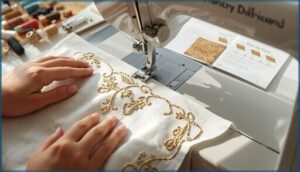
Now that your machine is ready, it’s time to actually put those decorative stitches to work. The best way to master ornamental stitching is to break it down into manageable steps that build your confidence and control.
Let’s walk through the essential techniques that’ll take your projects from basic to beautiful.
Marking Guidelines on Fabric
You can’t stitch a clean decorative pattern without clear guidelines. Fabric marking tools like heat erasable pens or water soluble markers help you plan guideline placement along the grain, keeping stitch visibility high.
Test your marker removal on a scrap first—fabric choice and thread contrast matter, but nothing ruins decorative stitch patterns faster than leftover chalk or ink residue.
Practicing With Stitch Samplers
Building a stitch sampler is your fast track to muscle memory and stitch optimization—no fancy practice routine required. Grab plain cotton fabric and create sampler blocks to test decorative stitch patterns before diving into real projects.
- Start each session with a baseline 2.0 mm stitch length
- Test thread tension on scrap fabric first
- Work in 3 by 3 inch blocks for consistency
- Document settings for future reference
Achieving Even and Neat Stitches
Consistently great results start with balanced stitch tension and rock-solid Fabric Stabilization—use tearaway or washaway stabilizer to prevent puckering.
Guide your fabric with steady hands for Even Stitch Spacing, keeping your needle centered.
Thread Management matters too: check your thread path for snags and match tension to fabric weight.
A Microtex needle paired with proper Needle Alignment delivers clean, professional decorative stitches every time.
Troubleshooting Common Issues
When Thread Breakage strikes mid-pattern, swap out your needle—old ones create friction that snaps thread. Fabric Puckering? Reduce upper tension and add stabilizer beneath your work. Stitch Distortion usually means mismatched needle-thread combos; pair fine embroidery thread with sharp Microtex needles. For loops appearing topside, check your bobbin winding consistency.
Test stitch tension on scraps before tackling your actual project—these quick sewing tips prevent most Machine Errors with decorative stitches.
Creative Uses for Simple Ornamental Stitches
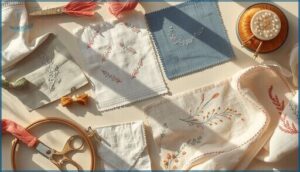
Now that you’ve got the techniques down, it’s time to put those ornamental stitches to work.
These decorative patterns aren’t just pretty—they transform everyday sewing projects into something special.
Here’s how you can use them to add personality and polish to everything from clothing to home decor.
Embellishing Garment Edges and Hems
Transform ordinary garment edges into eye-catching details with simple embroidery stitches. Your fabric choice and stitch tension dramatically change the impact of hem embellishments and decorative trims:
- Blanket stitch creates bold fabric edging that loops evenly around hems for a sturdy, visible border.
- Herringbone runs parallel to edges, forming subtle stitch borders.
- Piping inserts raised cord for architectural edge finishing.
- Satin stitch appliques add dimensional garment decoration with smooth, dense outlines.
Adding Decorative Borders to Quilts
Quilts come alive when you layer decorative stitch patterns along their borders. Start with Border Width Options between 1/4 and 2 inches—wider borders highlight corner motifs while narrow ones suit delicate work.
Your fabric choice and stitch tension control how featherstitch or chain stitch motifs pop against Quilt Edge Finishing.
Play with Color Contrast Effects using high-contrast threads for drama or analogous shades for soft cohesion. Binding Techniques like mitered corners create crisp angles that frame your embroidery and quilting beautifully.
Personalizing Home Decor Projects
Your home craves personality you can actually touch. Decorative stitch patterns transform plain pillows into Tailored Textiles. Embroider initials using chain stitch or featherstitch on linen cushions, then mix in Bespoke Fabrics for curtains that echo your vibe.
Enhance napkins with blanket stitch borders or cross-stitch monograms for Decorative Accents. These Home Embellishments prove your sewing skills create Unique Interiors that tell your story through thoughtful embroidery and smart fabric choice.
Combining Stitches for Unique Designs
Once you’ve customized your space, why stop at single stitches? Stitch Layering chains over featherstitches for lacy edges, while Color Blocking with contrasting threads makes each pattern pop.
Try these Texture Mixing tricks:
- Overlay satin stitches beneath decorative stitch patterns for subtle shadowing
- Alternate Stitch Alignment directions to create chevron effects
- Adjust tension based on Fabric Interaction—stretch fabrics need looser settings
Blend embroidery stitches freely and watch your stitching methods evolve into signature designs.
Frequently Asked Questions (FAQs)
What are the six examples of decorative stitches?
Six standout decorative stitches include fagoting tips for openwork, featherstitch variations along edges, cross stitch basics on grids, blanket stitch uses for borders, chain stitch applications for outlines, and hem stitch for delicate finishes.
What is simple decorative stitch?
A simple decorative stitch adds ornament or texture to fabric using basic hand or machine stitches like chain stitch, blanket stitch, or feather stitch—creating visual pattern and surface texture rather than structural strength.
How do you remove ornamental stitches if mistakes occur?
Grab your seam ripper and work slowly—cut threads from the back, lift gently with tweezers, then smooth the fabric with your fingers to reset the weave before re-stitching.
Can decorative stitches be used on stretchy fabrics?
Yes, but you’ll need to finesse your approach. Opt for stretch-compatible threads like polyester, use ball point needles, loosen stitch tension slightly, and stabilize the fabric to prevent puckering on knits.
What stabilizers work best for ornamental stitch projects?
Choose tear away stabilizers for woven fabrics, cut away for knits, and water soluble toppers for delicate textiles.
Match stabilizer weight to your stitch density—heavier backing prevents distortion during dense decorative embroidery.
How do you wash items with decorative stitching?
Hand washing tips include cool water and mild detergent for fabric care and stitch protection. Delicate wash methods preserve your decorative stitch patterns—skip the wringer, roll in a towel, then air dry flat for gentle drying.
Conclusion
Think of simple ornamental stitch patterns like spices in your kitchen—most people own them but never pull them off the shelf. Now you know how to use fagoting, featherstitch, cross stitch, blanket stitch, and chain stitch with confidence.
Start small: add one decorative detail to your next project, even if it’s just a practice sampler. Once you see how these stitches transform plain fabric into something memorable, you won’t go back to basics-only sewing.