This site is supported by our readers. We may earn a commission, at no cost to you, if you purchase through links.
Your seam rips during a final fitting because you grabbed the wrong thread weight. The customer leaves unhappy, and you’re left wondering why your thread drawer looks like a tangled rainbow.
Most tailors waste fifteen minutes per day hunting for the right spool, which adds up to over ninety hours each year spent digging through mismatched threads. Professional tailoring demands precision, and that precision starts with thread sets designed for the work you execute daily.
When you invest in organized, adaptable collections that cover everything from silk charmeuse to heavy wool suiting, you eliminate guesswork and deliver consistent results. The difference between amateur patchwork and professional craftsmanship often comes down to matching the right thread to each fabric and construction method.
Table Of Contents
Key Takeaways
- Professional tailors lose over ninety hours annually searching for the right thread, making organized, versatile collections essential for consistent results and efficient workflow.
- Thread selection must match specific project demands—polyester delivers strength and stretch for everyday work, cotton suits natural fabrics, while bonded nylon handles heavy upholstery and leather applications.
- Smart storage systems like wall-mounted racks and color-coded organization cut search time in half, transforming scattered spools into an accessible command center that protects your materials.
- Quality thread sets require attention to fiber composition, weight range (20-60 for most tailoring), color variety covering neutrals and primaries, and sufficient yardage to prevent mid-project interruptions.
Top 7 Thread Sets for Tailors
You need thread sets that won’t let you down when a client’s standing in front of you waiting for alterations. The right collection gives you the colors, strength, and versatility to handle everything from delicate silk blouses to heavy wool coats.
A solid thread sets for beginners collection ensures you’re never scrambling for the right color or weight mid-project.
Here are seven thread sets that professional tailors actually rely on to get the job done.
Each of these threads is carefully engineered to resist issues like thread stretching during high-speed stitching, ensuring your seams stay strong and even.
1. Connecting Threads Cotton Thread Set
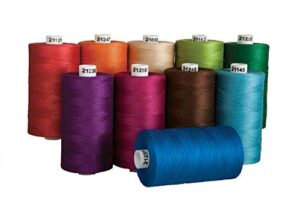
You get 12,000 yards of pure cotton thread across 10 spools with the Connecting Threads set, each rolling out 1200 yards in coordinated hues. This 50-weight cotton thread manages both machine piecing and hand finishing without choking your tension settings or clogging your bobbin case.
If you’re working with high-speed machines, adjusting your industrial sewing machine speed control settings helps this 50-weight thread perform consistently without breaking or bunching.
The satin finish gives natural fabrics that authentic feel tailors want, though you might need a spool holder adapter for some machines.
Color palette selection spans neutrals to brights, making quick work of garment matching across cotton and linen projects.
| Best For | Quilters and sewers who work with natural fabrics and want a reliable cotton thread in multiple colors without constantly swapping spools. |
|---|---|
| Material | 100% cotton |
| Total Length | 12000 yards |
| Thread Weight | 50-weight |
| Color Options | Assorted (10 colors) |
| Use Case | Quilting and sewing |
| Unit Count | 10 spools |
| Additional Features |
|
- 12,000 total yards across 10 spools means you won’t run out mid-project
- Works smoothly for both machine and hand sewing on cotton and linen
- Satin finish gives fabrics a natural, quality look without artificial shine
- Spool size doesn’t fit all machines—you might need an adapter or separate holder
- Some users report tension issues or thread snapping during use
- Produces more lint than expected, which means extra bobbin case cleaning
2. Coats Clark Extra Strong Upholstery Thread
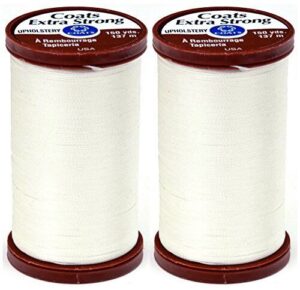
When heavyweight applications demand true thread durability, Coats Clark Extra Strong rises to meet upholstery materials that would snap lighter options. This 100 percent bonded nylon thread delivers 150 yards per spool at weight 15, handling chair backs and sofa cushions with reliable tensile strength.
Your sewing machine compatibility extends across needles sized 16 or 18, while hand work accepts sizes 1 through 5. The natural white tone maintains fabric resistance through abrasion and moisture, making it your go-to choice for sewing threads that won’t quit under stress.
| Best For | Sewers working on heavy-duty upholstery projects, outdoor furniture, or thick fabrics who need strong, weather-resistant thread that won’t break under tension. |
|---|---|
| Material | 100% bonded nylon |
| Total Length | 300 yards |
| Thread Weight | Weight 15 |
| Color Options | Natural/White |
| Use Case | Upholstery and outdoor |
| Unit Count | 2 spools |
| Additional Features |
|
- Bonded nylon construction provides exceptional strength and durability for demanding projects like furniture re-upholstering
- Weather-resistant properties make it ideal for outdoor fabrics and applications exposed to moisture
- Works with both machine and hand sewing across multiple needle sizes, offering versatility in how you work
- Limited to one color option (natural/white), restricting your choices for visible stitching or decorative work
- Weight 15 thickness may be too heavy for standard home sewing machines or delicate fabrics
- The heavy-duty nature means it’s overkill for everyday sewing projects with lightweight materials
3. Paxcoo Sewing Machine Bobbins And Thread Set
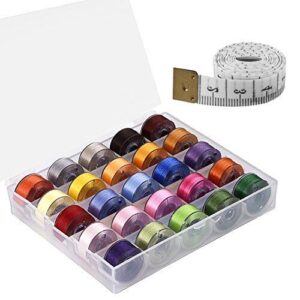
While upholstery work calls for specialized strength, everyday alterations need adaptable sewing supplies ready to execute quick color changes. The Paxcoo Sewing Machine Bobbins And Thread Set delivers 25 pre-wound bobbins in assorted colors with a clear storage case that keeps your workspace organized.
Bobbin compatibility spans most domestic machines, though you’ll want to verify fit before tackling silk or polyester. The included 60cm measuring tape adds convenience, while bobbin storage prevents tangling.
Thread quality manages cotton and blends effectively, making this thread set ideal for rapid repairs and standard garment work.
For best results with different fabric weights and finishes, check out these thread matching techniques to pair the right weight with your material.
| Best For | Home sewers who need quick color changes for everyday alterations and repairs without the hassle of winding bobbins. |
|---|---|
| Material | Plastic bobbins |
| Total Length | N/A |
| Thread Weight | N/A |
| Color Options | Assorted (25 colors) |
| Use Case | Daily sewing |
| Unit Count | 25 bobbins |
| Additional Features |
|
- 25 pre-wound bobbins in assorted colors save time and come with a clear storage case to keep everything organized
- Fits most standard domestic sewing machines including popular brands like Brother, Janome, and Singer
- Includes a free 60cm measuring tape for added convenience during sewing projects
- Not compatible with all machines, particularly Singer Futura Embroidery models
- Thread quality may not hold up well for delicate fabrics like silk or certain polyester materials
- Some users report issues with thread tension and slightly smaller bobbin diameter causing fit problems
4. Coats General Purpose Thread Assortment
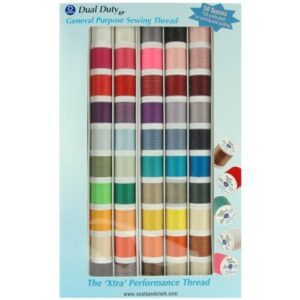
When you need a wide color selection without cluttering your shop, the Coats General Purpose Thread Assortment brings 50 separate spools covering core neutrals and fashion tones.
Each spool holds 125 yards of polyester-wrapped polyester thread that stretches with knits and resists abrasion on wovens, so you’ll match fabrics accurately while maintaining thread quality across garment construction and repairs.
If you’re new to working with knit fabrics, this thread’s built-in stretch prevents puckering and broken stitches that frustrate beginners.
The trap-style spools keep loose ends secure during spool management, and labeled color codes let you reorder individual shades as your tailoring workflow depletes them.
| Best For | Sewers and crafters who need a diverse color palette for multiple small-to-medium projects without buying individual spools. |
|---|---|
| Material | 100% polyester |
| Total Length | 6250 yards |
| Thread Weight | N/A |
| Color Options | Multicolor (50) |
| Use Case | General purpose |
| Unit Count | 50 spools |
| Additional Features |
|
- 50 spools give you plenty of color options for matching fabrics across different projects
- Polyester thread works well with both knits and woven materials, making it versatile for garment work and repairs
- Trap-style spools keep threads from unraveling, and color codes make reordering specific shades easy
- Only 125 yards per spool means you’ll run out quickly on larger projects
- The assortment may include duplicate colors or shades you won’t use
- Spools can be smaller than standard size, which might not fit all sewing machine holders
5. Gutermann Cotton Sewing Thread
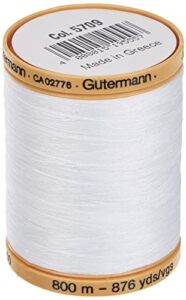
When you’re working with natural fabrics like cotton and linen, Gutermann Cotton Thread delivers mercerized cotton fiber strength that holds seams without breaking down under washing or pressing. This sewing thread feeds smoothly through your sewing machine without generating lint buildup, and the silky finish resists fraying during hand or machine stitching.
You’ll appreciate the thread colorfastness across dozens of shade options, letting you execute precise color matching for garment construction and alterations. Each 876-yard spool provides long runs between re-threads, keeping your tailoring workflow efficient.
| Best For | Sewers and quilters who need a strong, all-cotton thread for natural fabric projects like potholders, quilts, and garments that require frequent washing. |
|---|---|
| Material | 100% mercerized cotton |
| Total Length | 876 yards |
| Thread Weight | N/A |
| Color Options | White |
| Use Case | Hand or machine sewing |
| Unit Count | 1 spool |
| Additional Features |
|
- Mercerized cotton construction provides a silky finish and excellent strength for both hand and machine sewing
- Generates minimal lint and fuzz during use, keeping your sewing machine clean
- Long 876-yard spools reduce the need for frequent thread changes during large projects
- The springy twist can make threading needles more difficult than standard threads
- Some users report it’s slightly less resistant to wear compared to competitor cotton threads
- Occasional authenticity concerns have been raised, though most users confirm it’s genuine Gütermann product
6. Aurifil Cotton Thread
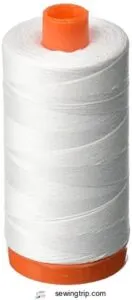
Aurifil Cotton Thread brings you long-staple Egyptian cotton from the Mako region, mercerized in Milan through 15 processing steps that lock in strength and sheen.
You get 270 colors in the popular 50wt weight, plus options from ultra-fine 80wt to bold 12wt, so you can match thread weight to any tailoring task.
The smooth fiber resists lint and breakage, letting you execute crisp seams on suits and delicate garments alike.
Designer thread sets package coordinated palettes on compact spools that fit your studio space.
| Best For | Quilters, embroiderers, and sewers who want premium Egyptian cotton thread with minimal lint and excellent strength for both machine and hand projects. |
|---|---|
| Material | 100% Egyptian cotton |
| Total Length | 1422 yards |
| Thread Weight | N/A |
| Color Options | White |
| Use Case | Machine embroidery and quilting |
| Unit Count | 1 spool |
| Additional Features |
|
- Long-staple mercerized Egyptian cotton delivers superior strength and a lustrous finish with minimal lint
- Massive 1422-yard spool provides excellent value and reduces the need for frequent thread changes
- Versatile enough for multiple applications including quilting, machine embroidery, serging, and hand sewing
- Large spool size may not fit on some traditional sewing machines without a standalone thread holder
- Higher price point compared to standard cotton threads
- Occasional thread breakage reported during use
7. Ak Trading Polyester Sewing Thread
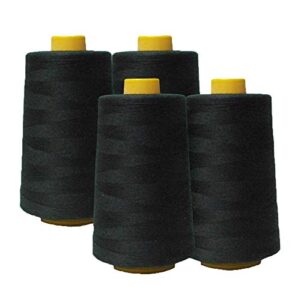
Ak Trading Polyester Sewing Thread delivers 24,000 yards across four 6,000-yard cones, giving you serious yardage for commercial and home sewing machines. The 100 percent spun polyester construction offers high tensile strength that manages Brother, Janome, and serger setups without snapping at speed.
You can choose from over 40 color options, including garment staples and fashion brights. Thread durability shows in the colorfast, low-lint fibers that keep seams flexible through repeated laundering.
This thread set suits garment construction, alterations, and general sewing and tailoring tasks.
| Best For | Sewers, quilters, and embroiderers who need bulk thread for high-volume projects or want to stock multiple machines without frequent restocking. |
|---|---|
| Material | 100% polyester |
| Total Length | 24000 yards |
| Thread Weight | 40-weight |
| Color Options | Black (30+ available) |
| Use Case | Sewing and embroidery |
| Unit Count | 4 cones |
| Additional Features |
|
- 24,000 total yards across four cones gives you enough thread for major projects or long-term use
- High tensile strength and low lint perform well on commercial machines, sergers, and home sewing setups
- Over 30 color options let you match fabrics or build a versatile thread library
- Four-cone minimum may be overkill if you only need one spool for small projects
- Some users report colors don’t always match expectations (like brown showing a maroon tint)
- Higher price point compared to single-spool alternatives
Essential Thread Types for Professional Tailoring
Your thread collection defines the quality and range of work you can execute. Different fabrics and techniques demand specific thread types, and stocking the right variety separates competent tailors from masters of the craft.
Here are the five essential thread types every professional tailor needs in their arsenal.
All-Purpose Polyester Threads
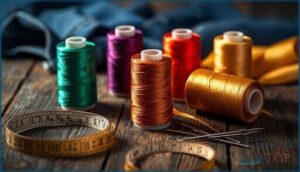
You’ll find polyester thread is your workhorse—it delivers 14.5 pounds of tensile strength in size 92, handling everything from cotton to denim without breaking stride.
This all-purpose sewing thread stretches up to 26 percent before snapping, so your seams flex with garments instead of popping at stress points. Polyester benefits include resistance to mildew and moisture, making it the durable default for mixed fabric compatibility and daily sewing techniques.
For more information on selecting the best all-purpose thread, explore key characteristics and recommendations from experts.
Cotton Threads for Natural Fabrics
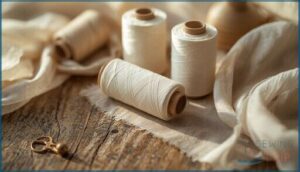
Cotton threads belong in your core arsenal when you’re tailoring garments with natural dyes or cotton fiber.
Mercerized cotton thread maintains thread tension smoothly and shrinks with the fabric, so your seams stay aligned after washing.
Use 3-to-4-weight mercerized spools on breathable materials—cotton voile, linen trousers, heirloom details—where sewing techniques demand gentle strength and a soft hand against skin. Their natural moisture management properties also make them highly suitable for durable and comfortable garment construction.
Heavy-Duty Upholstery Threads
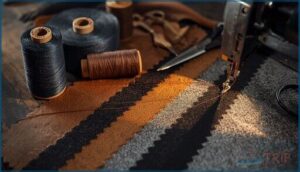
When leather, canvas, or thick vinyl arrives on your sewing machines, bonded nylon and bonded polyester upholstery threads deliver the thread strength and fabric durability your heavy-duty materials demand.
These sewing threads resist abrasion during upholstery techniques, hold tension at industrial speeds, and offer hundreds of colorfast finishes.
Choose bonded nylon for indoor work and bonded polyester when UV resistance matters.
Silk Threads for Delicate Garments
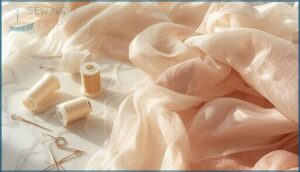
When chiffon, organza, or satin arrive at your workspace, silk threads deliver the Silk Fiber Benefits your delicate fabrics deserve. These sewing threads match nearly invisible with proper Thread Color Matching, resist snagging through careful Sewing Needle Selection, and shine in Garment Finishing Techniques like French seams.
Silk Thread outperforms polyester embroidery thread on lightweight materials where bulk kills drape.
Blind Stitch and Invisible Threads
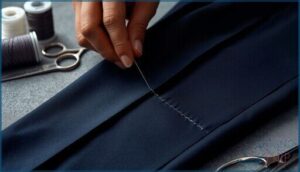
Invisible Stitching transforms hems on dress pants and skirts when you want zero thread visibility on the outside. Monofilament Threads—clear nylon or polyester—blend across any color, though nylon melts under high heat and polyester tolerates your iron better.
Master Blind Hemming with these Sewing Techniques:
- Fold your hem, press firmly, then stitch shallow bites along the fold.
- Choose smoke-tint Invisible Threads on dark fabrics to kill shine.
- Lower machine tension to prevent puckering with monofilament.
- Backstitch firmly; monofilament stretches more than standard Sewing Threads.
Blind Stitching saves alterations when Thread Sets lack exact matches.
What to Look for in Tailor Thread Sets
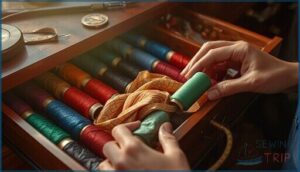
You can’t build a professional tailoring business on mediocre thread—your reputation depends on choosing sets that won’t fail mid-seam. The right thread set gives you the versatility to handle everything from delicate silk alterations to heavy upholstery work without constantly restocking.
Your reputation as a tailor stands on thread that won’t fail mid-seam, not mediocre spools that leave you restocking constantly
Here’s what separates professional-grade thread sets from the bargain bin options that’ll leave you frustrated.
Thread Material and Fiber Composition
Thread material determines how your seams perform under real-world stress. Polyester thread delivers exceptional fiber strength and material durability, making it your go-to for most garment work. Cotton thread suits natural fabrics beautifully but lacks the resilience of synthetic fiber blends.
Understanding yarn construction helps you match thread quality to each project, whether you’re working with delicate silks or heavyweight woolens that demand different thread weights.
Color Range and Matching Options
Your thread collection needs a full spectrum—from light cream to deep charcoal—covering 95 percent of garment fabrics you’ll encounter. Look for thread sets with at least 10 neutrals plus 6 primary thread shades that match typical skin tones, whites, blacks, and denims.
Colorfast thread resists fading after 40 washes, while dye lots maintain consistency within 0.5 Delta E across spools. Swatch matching tools help you execute precise color theory in practice.
Thread Weight and Thickness
Understanding weight systems helps you match fiber thickness to fabric demands. Higher numbers like 60 indicate finer sewing threads, while lower numbers such as 20 signal thicker material density for upholstery work.
Thread gauges guarantee proper thread tension and prevent needle damage. Look for thread sets offering 40-50 weight for medium fabrics, 30-40 for suiting, and 20-30 for heavy canvas to maintain thread quality across projects.
Spool Size and Quantity
Choosing the right spool diameter and thread length transforms your workspace efficiency. Standard spools hold 100 to 3000 meters depending on fiber type, while spool materials range from cardboard to durable plastic cores.
- All-purpose thread sets usually offer 1000-3000 meters per color on medium-width spools
- Heavy-duty upholstery spools contain 100-500 meters with wider flanges to prevent tangling
- Quantity options in embroidery thread sets often include 40-80 colors for extensive thread selection and quality
Durability and Tensile Strength
Stress resistance separates professional sewing threads from budget options that fail mid-seam. Polyester thread delivers exceptional tensile testing results with minimal material fatigue, while fiber analysis reveals cotton’s lower breakage threshold under heavy loads.
Thread quality directly affects thread selection and quality for alterations—strong threads withstand repeated needle penetration without fraying. Verify tensile strength ratings before committing to any sewing thread set.
Thread Set Organization and Storage Solutions
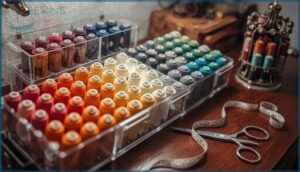
You can’t execute your best work if your threads are scattered across your workspace. Smart storage keeps your color range accessible and prevents tangles that waste billable time.
Below are the storage solutions that give professional tailors control over their materials without breaking stride.
Thread Racks and Wall-Mounted Holders
You’ll appreciate how wall-mounted holders transform your workspace into an efficient command center. Most racks accommodate 30 to 120 spools using grid layouts with pegs spaced 1.5 to 2 inches apart, keeping sewing threads visible and organized.
Choose hardwood, plastic, or metal frames based on your studio’s needs, then install them with keyhole slots for easy removal. These storage solutions protect thread sets while giving you instant access to every color.
Portable Thread Cases for Mobile Tailors
Take your thread sets wherever clients need you with compact portable storage designed for tailors on the go. Travel cases built for embroidery thread sets and sewing supplies protect your mobile workstations while keeping thread organization intact during transport.
- Double-sided boxes hold 36 to 60 spools with secure latches preventing spills
- Clear plastic construction lets you identify sewing threads without opening multiple containers
- Built-in grips or shoulder straps keep your hands free between fittings
- Removable trays let you grab only needed colors while leaving the rest packed in your sewing kits
Color-Coded Organization Systems
Organize your thread sets by color families to cut search time in half during rush alterations. Group sewing thread into reds, blues, greens, and neutrals on wall racks or labeled drawer sections so you spot the right shade instantly.
Label each embroidery thread set slot with color codes and brand numbers to track inventory and avoid buying duplicates you already own.
Thread Dispensers and Tension Management
Keep thread stands behind your machine to feed sewing thread smoothly and prevent tension spikes that snap threads mid-seam. Vertical dispensers let thread path run straight off cone tops, reducing drag and keeping tension control steady across your thread sets and collections.
Position guides to minimize contact points—fewer twists mean better thread feeding and sewing efficiency, so you spend less time rethreading and more time finishing alterations.
Choosing Thread Sets for Different Tailoring Projects
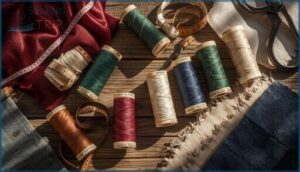
Your thread choices change dramatically based on the project in front of you, and understanding these differences will sharpen your results every time.
Different tailoring work demands specific thread characteristics, from fiber type to weight to durability.
Let’s break down how to match your thread sets to the projects that land on your workbench.
Garment Construction and Alterations
Your daily alteration work demands threads that handle everything from garment construction to seam finishing without hesitation. When you’re tackling fabric cutting and garment fitting projects, you’ll want a flexible all-purpose polyester set that covers:
- Basic garment alterations and repairs with 301 lockstitches
- Textile selection flexibility across cotton, poly-blend, and synthetic fabrics
- Reliable sewing threads for hemming, darts, and standard tailoring tasks
Suit and Formalwear Tailoring
Suit construction shifts your focus to precision threading that won’t telegraph through delicate wool suiting or disrupt lapel rolls. Fabric selection dictates thread weight—lightweight wool needs finer threads than heavyweight gabardine—so your garment fitting stays invisible and your tailoring techniques deliver clean, professional seams every time.
Professional sewing services rely on fine-gauge all-purpose threads for pad stitching canvas into peaked lapels, while silk or high-quality polyester manages blind stitches along trouser hems and sleeve adjustments.
Bridal and Special Occasion Garments
Bridal fabrics demand fine polyester or silk threads between 60 and 80 weight so seams vanish beneath chiffon and organza layers. Wedding embellishments like lace appliques rely on invisible nylon thread, while beading techniques require strong polyester to anchor crystals without tearing delicate tulle.
Professional sewing services switch to heavier thread at bustle points, reinforcing special occasion garment construction where weight and movement test every stitch.
Upholstery and Heavy Fabric Work
Upholstery techniques shift your fabric selection to bonded nylon or polyester sewing threads rated Tex 70 to 135 for strength. Heavy-duty machines with walking feet handle thick canvas and vinyl layers when you pair size 100/16 needles with proper thread tension. You’ll execute clean topstitching on cushions and furniture using these threads:
- Bonded polyester for UV-resistant outdoor work
- Size 92 thread for standard upholstery projects
- Tex 40-plus weights for all-purpose heavy fabric work
- Polyester thread over nylon for marine applications
- Serging edges before assembly to prevent fraying
Adjust tension settings before starting production seams.
Repairs and Quick Alterations
Speed defines emergency alterations when clients need same-day fixes. Keep prewound bobbins in neutral all-purpose polyester on hand so you can tackle hem repairs, zipper fixes, and tear mending without delay.
Strap reinforcement demands dense stitches that rebuild weak sections quickly. Stock adaptable thread sets with black, white, and beige because these sewing threads handle 80 percent of urgent jobs while you execute professional results under pressure.
Frequently Asked Questions (FAQs)
How do I prevent thread tangling during storage?
Your spools become chaos the moment you toss them in a drawer. Prevent tangling by securing loose ends with spool huggers, storing threads in closed compartments, and keeping bobbins separated with dedicated organizers or rings.
What thread weight works best for buttonholes?
Most garment buttonholes perform best with 40 wt all-purpose threads, balancing coverage and flexibility.
Heavy fabrics like wool coats benefit from thicker 30 wt thread, creating raised, durable edges that withstand frequent use.
Can polyester thread be used on silk fabrics?
You can use quality polyester thread on silk fabrics, especially medium-weight varieties like charmeuse. Pair it with fine needles and gentle tension to prevent puckering while maintaining durable, colorfast seams.
How long does quality thread typically last unused?
Quality sits on the shelf, getting better with time—or worse, depending on how you treat it.
Polyester thread lasts 20 to 50 years unused, while cotton usually stays strong for 5 to 10 years.
Are metallic threads suitable for professional tailoring work?
Professional techniques reserve metallic thread for decorative topstitching and embroidery—not structural seams.
Sewing performance demands slower speeds and specialty needles, while thread durability suffers under repeated stress despite stunning visual impact.
Conclusion
Your thread drawer is the backbone of every garment you craft. When you stock it with the right thread sets for tailors, you transform chaos into confidence and guesswork into precision.
Each spool becomes a tool that speaks to your commitment to quality work. Stop wrestling with mismatched colors and weak fibers.
Build your collection with intention, organize it with purpose, and watch your efficiency multiply while your craftsmanship speaks for itself.
- https://www.nascoeducation.com/coats-clark-dual-duty-xp-general-purpose-thread-50-spool-assortment-wa27428.html
- https://www.officesupply.com/craft-supplies/sewing-quilting/thread/other-brands/coats-dual-duty-general-purpose-thread-assortment/p400351.html
- https://www.checkerdist.com/products/G3016Q5
- https://www.wawak.com/thread/thread-by-use/all-purpose/coatsclark-s910s930-dual-duty-xp-all-purpose-poly-wrapped-poly-core-thread-tex-30/
- https://www.aurifil.com/aurifil-thread-faq