This site is supported by our readers. We may earn a commission, at no cost to you, if you purchase through links.
Your fabric scissors drag instead of glide. The blades stick together mid-cut, forcing you to stop and pry them apart. This isn’t wear and tear—it’s a film of invisible residue coating the metal, and it comes from the very fabrics you’re cutting.
Synthetic fibers like polyester melt microscopically under friction, depositing tacky polymers onto your blades with every pass. Natural fibers shed lubricants and finishes applied during manufacturing. Even your hands transfer oils that bind with textile dust into a stubborn adhesive layer.
The good news: sticky scissors aren’t ruined scissors. Understanding what builds up on those blades—and why certain fabrics accelerate the problem—gives you the exact steps to restore them and keep them sharp.
Table Of Contents
Key Takeaways
- Fabric scissors become sticky when synthetic fibers melt microscopically under friction and deposit tacky polymer films on blades, while natural fibers transfer manufacturing lubricants and finishes that bind with textile dust into adhesive layers.
- White vinegar dissolves most sticky residue through acetic acid action without damaging metal, but thorough drying immediately after cleaning is critical to prevent rust formation on steel blades within hours.
- Dedicating scissors exclusively to fabric prevents cross-contamination from paper’s abrasive mineral fillers and plastic’s polymer smearing, which both accelerate blade dulling and residue buildup faster than any textile material.
- Professional sharpening becomes necessary when routine cleaning no longer restores cutting performance, typically twice yearly for active users, but replacement makes economic sense once blades won’t hold edges or pivot damage makes repair costs approach new-scissor prices.
Why Do Fabric Scissors Become Sticky?
Your fabric scissors don’t get sticky by accident. Residue builds up on the blades from the materials you cut, the substances on your hands, and the environment where you store them.
Switching to laser-guided scissors for fabric can help you cut more precisely and avoid dragging the blades through adhesive-backed materials that leave residue.
Four primary mechanisms drive this stickiness—each one rooted in material science and cutting mechanics.
Residue From Fabrics and Fibers
Every time you cut fabric, microfiber buildup starts immediately. Polyester and other synthetic fibers shed fragments between 200 and 800 micrometers—small enough to lodge in blade micro-asperities.
This film effect is one of the main reasons fabric scissors get dull quickly, especially when cutting plush or fleece materials regularly.
Worse, textile lubricants and fabric finish coatings transfer during shear contact, binding loose lint into greasy adhesive residue. That film is why your blades drag.
Regular scissor maintenance fights this relentless fiber residue accumulation. For best results, following scissor care recommendations such as wiping the blades and oiling the pivot can prevent sticky buildup.
Transfer of Soap and Detergent Films
You don’t realize it, but your own hands are contaminating your scissors every time you touch them after washing fabric. Soap transfer and detergent residue leave invisible films that trap fibers against the blade surface.
That’s why learning how to clean fabric scissors properly involves removing both visible debris and the hidden buildup you can’t see.
Three blade contamination mechanisms drive this:
Adhesive residue, fabric fibers, and oxidation all contribute to dull edges, which is why knowing how to test if fabric scissors are sharp enough helps you catch blade degradation before it ruins your next project.
- High-pH cleaning solutions leave surfactant deposits that increase friction
- Residual soap creates sticky scissors through hygroscopic film formation
- Repeated contact compounds the adhesive layer thickness
Film removal requires solvent action—water won’t work.
Build-Up From Adhesives and Glues
When you cut fusible web or pressure-sensitive tape, thermoplastic polymers transfer directly onto your blades. Fusible adhesives melt between 120–150°C and leave tacky films after each pass; tape adhesives deposit elastomeric residue that traps dust.
Even spray adhesive overspray settles on nearby scissors, creating sticky residue without direct contact.
Rubbing alcohol dissolves most glue buildup, but acetone manages stubborn fusible web deposits.
Effects of Synthetic Vs. Natural Fibers
Synthetic fibers dull your blades faster than natural ones through three mechanisms: thermal softening, static charge, and surface chemistry.
Polyester and nylon melt around 250–260°C—friction heat during cutting softens filaments into tacky films that coat metal. Static electricity makes synthetic dust cling to blades instead of falling away.
Cotton and wool fracture into dry lint; synthetics smear and form continuous residue layers. Using blades with advanced blade coatings can help reduce adhesive residue buildup and prolong cutting efficiency.
How Fabric Types Affect Scissor Stickiness
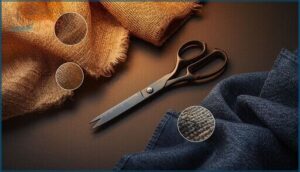
Not all fabrics treat your scissors the same way. The material you cut—whether it’s synthetic, tightly woven, or something that’s not fabric at all—directly affects how quickly residue builds up and blades lose their edge.
Here’s what happens when you cut different materials.
Impact of Synthetic Fibers Like Polyester
When your scissors drag through polyester, thermoplastic smear is often the culprit. Friction heat can soften synthetic fibers at the blade edge, depositing a glue-like polymer film that creates that sticky, resistant feel.
Regular cleaning with rubbing alcohol removes that polymer residue before it hardens, and investing in quality fabric scissors designed for home sewing helps minimize heat buildup in the first place.
Polyester fiber damage also accelerates because oleophilic finish issues attract oily residues from fabric processing, building up adhesive residue faster than natural fibers ever could.
Dense Weaves and Heavy Fabrics
Canvas, denim, and upholstery fabrics don’t just dull your blades—they create intense shear forces that compress residue into the microscopic gaps between blade surfaces. Dense threads in heavy textiles generate friction heat that melts fiber finishes, bonding them to metal.
Bulk cutting through thick materials amplifies this effect, transforming fabric friction into sticky buildup faster than any adhesive removal techniques can reverse.
Cutting Non-Fabric Materials (Paper, Plastic)
Paper and plastic are abrasive material effects waiting to ruin your blades. Calcium carbonate fillers in office paper act like fine sandpaper on cutting edges, leaving gritty mineral deposits that trap adhesive residue and dust. Polymer transfer from plastic packaging smears tacky films across your blade faces, while micro abrasion causes roughening of the edge geometry—tripling the surface area where sticky buildup accumulates and making adhesive removal essential before blade wear patterns become permanent cutting edge damage.
- Mineral fillers in paper—especially clay and calcium carbonate—deposit abrasive particles that embed in micro-roughened steel
- Pressure-sensitive adhesives from labels and sticky notes transfer directly to blade surfaces during each cut
- Polymer smearing occurs when thermoplastics generate friction heat, leaving thin tackier films on hardened edges
- Accelerated dulling from rigid cellulose fibers increases cutting force, which magnifies adhesion and contaminant bonding
- Combined residue layers—minerals, adhesives, and polymer fragments—form persistent sticky films requiring scissor cleaning methods and rust removal techniques
Common Habits That Cause Sticky Scissors

You probably don’t realize you’re sabotaging your scissors until they’re already gummed up. Most stickiness comes from everyday handling mistakes that build residue, dull edges, and trap debris between the blades.
Here are the three worst habits that wreck your fabric scissors faster than anything else.
Improper Cleaning and Handling
You’re letting basic cleaning and degreasing routines slip, and that’s the fastest way to sticky scissors. Residue buildup from inadequate wiping traps lint at the pivot, creating pivot friction that feels like binding. Using water or harsh cleaners on carbon steel invites blade corrosion and rough surfaces. Handle contamination from sweaty or lotion-coated hands transfers films directly to metal. Storage neglect in dusty spaces compounds every mistake—adhesive removal tips and proper scissor cleaning methods keep blades smooth and responsive.
| Mistake | Mechanism | Result |
|---|---|---|
| Skip post-use wiping | Fibers accumulate at pivot and edge | Gummy resistance, sticky movement |
| Use petroleum oils | Oxidized residue forms tacky film | Attracts dust, binds blades |
| Clean with water | Promotes rust on non-stainless steel | Rough, dragging blade surface |
| Handle with oily hands | Skin oils and lotions transfer to metal | Sticky film, increased friction |
| Store in open, dusty space | Particulates adhere to any moisture or oil | Compacted contamination layer |
Using Scissors on Non-Fabric Materials
Adhesive transfer from tape and labels is the number-one culprit when you cross into non-fabric territory. Cutting plastic packaging or paper with adhesive-backed materials coats your blades with tackifying resins and plasticizers that create sticky residue.
That film traps dust and fibers, accelerating blade wear and forcing you into adhesive removal routines or facing rusty scissors. Dedicate one pair to fabric—scissor maintenance depends on it.
Storing Scissors in Humid or Dirty Environments
Humidity above 60 percent accelerates corrosion on your scissor blades—moisture forms tacky oxide films that make every cut feel gummy. Dust in open drawers combines with residual oils to create greasy deposits. Poor storage shortens tool life and increases rust risk, turning scissor care into constant damage control.
- Store scissors in dry environments with relative humidity between 40–60 percent
- Use dust prevention measures like covered racks or sealed containers
- Apply light protective oil before storage for corrosion management
- Avoid humid drawers where moisture accelerates sticky scissors formation
- Implement storage solutions that include desiccants in damp areas
Cleaning Methods for Sticky Fabric Scissors
You don’t need harsh chemicals or expensive products to restore your scissors. White vinegar cuts through most residue without damaging the metal, and proper drying prevents rust from taking hold.
Here’s how to clean sticky fabric scissors the right way.
Removing Residue With White Vinegar
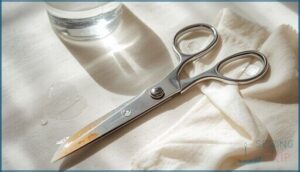
White vinegar breaks down adhesive residue and sticky films on your scissor blades fast. This acid effects method outperforms plain water for removing adhesive from scissors without harsh solvents.
Soak a clean cloth with undiluted distilled white vinegar—4 to 7 percent acetic acid—and wipe both blade surfaces. Let it sit 5 to 10 minutes, then wipe again. Repeat until tackiness vanishes.
| Step | Action |
|---|---|
| 1 | Soak cloth with undiluted white vinegar |
| 2 | Wipe both blade surfaces thoroughly |
| 3 | Let vinegar dwell 5–10 minutes |
| 4 | Wipe again, repeat until residue clears |
| 5 | Check blade surfaces for sticky feel |
Safe Drying and Avoiding Rust
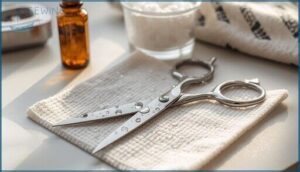
Moisture is the primary corrosion catalyst for steel scissors. After vinegar cleaning, you must wipe blades completely with a lint-free cloth—especially pivot joints and serrations where water hides. Rust forms within hours if joints retain water droplets in humid conditions.
Blade maintenance demands thorough drying before storage:
- Open and close blades repeatedly to dislodge trapped moisture from pivot areas
- Apply one drop of light machine oil after drying to create a hydrophobic barrier for rust prevention
- Wipe excess oil to leave only a thin protective film for metal preservation
- Store in dry environments with silica gel packets for corrosion control and humidity reduction
What Not to Use When Cleaning

While safe drying prevents rust, improper cleaners cause worse damage. Never use harsh chemicals like Barbicide—quaternary ammonium compounds corrode blade edges and leave sticky films.
Strong acids, abrasive cleaners, and scouring pads scratch precision-ground surfaces, creating micro-grooves that trap fiber dust.
Organic solvents including WD40, Goo Gone, and citrus oil cleaners soften ABS plastic grips and leave tacky adhesive residue that attracts lint.
Preventing Scissors From Getting Sticky
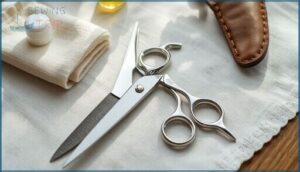
You don’t need sticky scissors if you’re willing to follow a few simple rules. Prevention beats repair every time—it takes less effort and protects your investment longer.
Prevention beats repair every time—a few simple rules keep your fabric scissors clean and ready
Here’s what actually works to keep your fabric scissors clean and ready.
Dedicating Scissors for Fabric Only
Blade protection starts with a single rule: never cut anything but fabric. Paper fillers contain calcium carbonate—hard enough to blunt your cutting edge faster than textile fibers—while adhesive-backed materials leave sticky residues that snag threads and degrade cut precision.
Fabric care depends on separating tools from the start:
- Assign one pair exclusively to textiles
- Use general scissors for patterns and packaging
- Mark fabric shears clearly to prevent accidental misuse
- Store fabric scissors separately from household tools
Dedicated fabric cutting preserves honed micro-serrations and extends sharpening intervals.
Regular Maintenance and Inspections
Systematic scissor care locks in cutting precision and prevents residue accumulation. Weekly blade inspection catches nicks and adhesive spots before they trap fibers, while pivot cleaning removes embedded lint that restricts movement. Apply one drop of sewing-machine oil monthly—excess attracts dust, so wipe surplus immediately. Schedule professional regular sharpening twice yearly to restore geometry; dull edges increase friction against contaminants. Maintenance schedules adjusted to workload intensity deliver consistent performance and extend service life through proactive rust prevention and blade care.
| Task | Frequency | Purpose |
|---|---|---|
| Blade inspection & wipe | After each project | Remove fibers, spot corrosion early |
| Scissor lubrication (pivot) | Monthly or when stiff | Reduce friction, displace debris |
| Professional sharpening | Twice per year | Restore edge, minimize drag |
Proper Storage Techniques
Beyond maintenance, secure storage determines long-term blade condition. Keep your scissors in a dry, climate-controlled drawer with silica gel packets for moisture control—humidity initiates rust that binds fibers.
Use protective cases or sheaths to isolate blades from tool contact and adhesive contamination.
Store fabric scissors separately from household cutters to prevent misuse and preserve edge geometry, essential for scissor maintenance and care.
When to Sharpen or Replace Your Scissors

Even after cleaning, your scissors mightn’t cut the way they used to. At that point, you need to decide whether sharpening will restore performance or if the blades are past their useful life.
Here’s how to recognize when each option makes sense.
Signs of Persistent Stickiness or Dullness
You’ll notice increased cutting resistance first—fabric drags instead of glides, requiring extra hand pressure that accelerates edge wear and scissor strain. Friction increase from sticky residue or blade dulling produces frayed edges rather than clean cuts, while adhesive residue causes snagging at specific stroke points.
When routine scissor maintenance and care no longer restores performance, the causes of dullness in scissors demand intervention beyond basic blade care.
Sharpening Vs. Replacement Decision
Sharpening costs less than replacing quality scissors—usually one professional service can restore years of cutting precision. You face economic tradeoffs when cumulative scissor sharpening fees approach new-pair prices, usually after many services.
Replacement timing arrives when:
- Blades won’t hold edges after sharpening
- Deep chips exceed grindable depth
- Blade durability fails despite recent service
- Pivot damage makes repair uneconomical
- Blade sharpness returns briefly then fades
High-grade shears justify repeated scissor maintenance; cheap tools favor replacement of scissors once dullness persists.
Maintaining Blade Sharpness After Cleaning
Thorough drying after each cleaning prevents micro-corrosion that degrades your blade edge care—residual moisture forms oxidation pits even on stainless steel, increasing friction and perceived dullness.
Apply one drop of light machine oil at the pivot for proper scissor lubrication, then wipe excess from blade surfaces.
Check tension so blades close firmly without grinding; this post-cleaning maintenance preserves sharpness retention between professional scissor sharpening sessions.
Frequently Asked Questions (FAQs)
How to fix sticky scissors?
White vinegar dissolves sticky residue fast. Saturate a cloth, wipe blades from base to tip, then dry thoroughly.
For heavy adhesive buildup, citrus oil cleaner works in five to ten minutes.
How to keep scissors from sticking?
Oil your pivot weekly and wipe blades after each use. Store scissors in a dry case.
Regular blade care with adhesive remover prevents residue buildup—these maintenance tips stop sticking before it starts.
Can oiling fabric scissors reduce stickiness problems?
A drop of light machine oil at the pivot joint cuts friction and stops binding. It’s solid blade maintenance for friction reduction, but you’ll need to wipe excess away—or lint builds up fast.
Do left-handed scissors experience more stickiness issues?
No. Hand preference doesn’t influence adhesive residue accumulation—blade difference in left-handed scissors doesn’t affect sticky residue buildup.
Scissor ergonomics improve cutting comfort, but sticky factors remain identical across designs.
Blade care matters more than handedness.
How does blade material affect stickiness resistance?
You reach for your favorite shears and feel that gummy drag—frustrating. Blade material determines how adhesive residue clings.
Titanium bonded and fluoropolymer blade coatings resist adhesive buildup far better than uncoated stainless or carbon metal alloys.
Can freezing scissors remove stubborn sticky residue?
Freezing techniques can harden resinous deposits for easier scraping, but tape adhesive residue resists cold cleaning alone.
Combine freezing with isopropyl alcohol or citrus-based adhesive remover for complete sticky residue removal and proper scissor maintenance.
Does cutting velcro damage or stick scissors?
Yes, Velcro damages scissors through two mechanisms. Adhesive-backed Velcro leaves sticky residue that requires adhesive removal with rubbing alcohol.
Non-adhesive hook tape accelerates blade dulling through concentrated abrasion, demanding dedicated blade care.
Conclusion
A seamstress once told me her favorite shears seized mid-project—blades gummed shut from weeks of polyester cutting. One vinegar wipe restored them completely.
Now you know what causes fabric scissors to become sticky: synthetic melt residue, detergent films, adhesive transfer, and cross-contamination from non-fabric materials.
Clean your blades after heavy use, dedicate them to fabric only, and store them dry. Sticky scissors aren’t a death sentence—they’re a maintenance reminder.
- https://libraryguides.ccbcmd.edu/c.php?g=1408884&p=10790074
- https://pmc.ncbi.nlm.nih.gov/articles/instance/9553038/bin/pone.0275964.s005.docx
- https://elsevier.blog/sub-points-outlining-organization/
- https://pubs.acs.org/doi/10.1021/acs.est.1c00650
- https://www.goulston.com/news-innovation-fiber-lubricants.php