This site is supported by our readers. We may earn a commission, at no cost to you, if you purchase through links.
You’ve just squared up your fabric, ruler in place, scissors poised—and then your hand cramps halfway through cutting eight layers for a quilt block. Sound familiar? A rotary cutter changes this entire experience with a circular blade that rolls smoothly through multiple fabric layers in one clean pass.
This handheld tool delivers the speed quilters need for repetitive cuts and the precision dressmakers demand for curved seams, all while reducing hand fatigue that makes scissor work exhausting. Whether you’re strip-piecing a bed quilt or cutting bias binding for garment finishing, understanding what a rotary cutter does and how it outperforms traditional methods will transform your approach to every fabric project.
Table Of Contents
- Key Takeaways
- What is a Rotary Cutter Used For?
- Key Benefits of Using a Rotary Cutter
- Types of Rotary Cutters for Sewing
- Essential Tools to Use With a Rotary Cutter
- How to Use a Rotary Cutter Safely
- Rotary Cutter Maintenance and Blade Care
- Common Rotary Cutter Mistakes to Avoid
- Rotary Cutter Applications in Sewing Projects
- Frequently Asked Questions (FAQs)
- Conclusion
Key Takeaways
- A rotary cutter is a handheld tool with a circular rolling blade that slices through multiple fabric layers simultaneously, delivering faster cuts and cleaner edges than traditional scissors while reducing hand fatigue during repetitive cutting tasks.
- The tool excels in three primary applications—quilting and patchwork for precise strips and squares, dressmaking for accurate pattern pieces and curved seams, and DIY crafts for cutting materials like vinyl, foam, and leather with specialty blades.
- Safe and effective use requires three essential companions: a self-healing cutting mat to protect the blade and work surface, a nonslip acrylic ruler for straight guided cuts, and proper safety accessories including cut-resistant gloves and engaged blade locks between uses.
- Blade maintenance directly impacts performance—replace blades every six to twelve months when you notice sluggish motion or frayed fabric edges, clean after each use to prevent dulling buildup, and always apply consistent pressure without forcing the tool through material.
What is a Rotary Cutter Used For?
A rotary cutter is a handheld tool with a sharp, circular blade that rolls along fabric to make clean, precise cuts. Think of it as a pizza cutter designed specifically for sewing projects, allowing you to slice through multiple fabric layers in one smooth motion.
Understanding what this tool does and how it differs from traditional scissors will help you decide when to reach for it in your sewing space.
Pairing the right cutting tool with the different stitch patterns and uses you’re working with ensures cleaner edges and better results.
Definition and Purpose in Sewing
A rotary cutter is a handheld sewing tool featuring a sharp, circular blade that slices through fabric along a straight edge with minimal fraying. You’ll guide this cutting equipment along rulers and mats to create precise seam allowances and pattern shapes.
The blade’s continuous rolling motion delivers outstanding sewing precision, and you can cut multiple fabric layers simultaneously—perfect for mastering sophisticated cutting techniques in quilting and crafting.
Early textile skills such as the history of sewing craft have greatly influenced the development of modern sewing tools like the rotary cutter.
Common Applications in Fabric Cutting
You’ll use this tool most often for quilting and patchwork, where precision cutting through multiple fabric layers saves time during material selection and fabric preparation.
Cutting techniques with a rotary cutter also work beautifully for dressmaking pattern pieces, allowing clean edge finishing on curves and straight seams. Your crafting projects benefit from accurate strips, squares, and bias binding cuts that fabric cutting techniques with scissors can’t match.
Differences From Scissors and Other Tools
Unlike scissors that shear fabric between two blades, your rotary cutter slices with a rolling wheel action that concentrates force along a narrow line for precision cutting.
The sharp blade, usually 45 to 60 millimeters in diameter, requires less wrist motion during long straight cuts and produces cleaner edges on slippery materials. Tool ergonomics favor standing with steady downward pressure, while blade comparison shows rotary cutters prevent fraying better than traditional sewing accessories.
Key Benefits of Using a Rotary Cutter
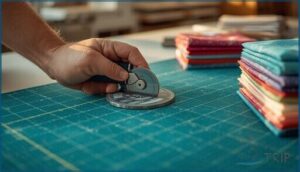
Once you start using a rotary cutter, you’ll wonder how you ever managed with just scissors. This tool transforms the way you work with fabric, making tasks faster and more accurate than traditional methods.
Let’s look at the specific advantages that make rotary cutters essential for sewers at every skill level.
Speed and Efficiency in Cutting
Speed separates rotary cutters from traditional scissors when you’re working through multiple fabric layers. A sharp blade slices cleanly through cotton, flannel, and batting in one continuous motion, cutting your prep time substantially.
You’ll maintain steady cutting techniques while the rolling action removes material faster than snipping with shears. This efficiency means more time creating and less time wrestling with textile cutting, making your rotary cutter essential among sewing accessories for both quilting projects and everyday fabric prep.
In fact, understanding the role of cutting speed in material efficiency can further refine your fabric preparation process.
Precision and Clean Edges
Clean curves and straight lines depend on a sharp blade paired with the right cutting techniques. When you maintain your rotary cutter properly, you’ll notice smoother edges and fewer frayed fibers on every pass.
The key to achieving these results lies in several factors, including:
- Tension and alignment prevent wandering cuts that create irregular edges along your fabric preparation.
- Minimal pressure with steady motion reduces micro-tears and fiber fraying at the cut line.
- Hollow ground blades from brands like OLFA minimize friction for precision cutting on delicate textiles.
- Regular blade maintenance preserves edge quality across multiple textile cutting sessions.
Versatility Across Materials
Your rotary cutter accommodates nearly every fabric you’ll encounter in sewing and crafting. Woven fabrics, nonwoven interfacing, leather, vinyl, and foam all respond to the right blade selection and cutting techniques. This flexibility transforms one tool into your go-to solution for quilting and sewing tools across projects.
From thick canvas to slippery satin, mastering the right cutting tools and techniques ensures clean edges on every project.
| Material Type | Recommended Blade & Technique |
|---|---|
| Woven & Nonwoven Fabrics | Sharp 45mm blade with firm pressure on self-healing mat for minimal fraying |
| Leather & Vinyl | Heavy-duty blade with ruler guide to prevent snagging and maintain edge finishing |
| Foam & Foam Board | Sharp blade with thick mat and slow, smooth passes for clean cuts |
| Knits & Stretch Fabrics | Low-resistance blade with light spray starch to stabilize material thickness variations |
Textile cutting and handling become more efficient when you match your blade to the material thickness and adjust your approach for each fabric variety.
Types of Rotary Cutters for Sewing
Not all rotary cutters are created equal, and choosing the right one depends on your specific sewing needs.
The market offers everything from basic everyday cutters to specialized tools designed for unique cutting challenges. Let’s break down the main types so you can find the perfect match for your projects.
Standard Vs. Specialty Rotary Cutters
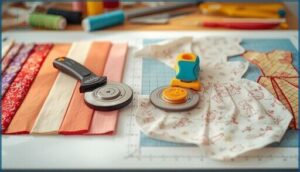
When you’re choosing a rotary cutter, you’ll find two main categories: standard models and specialty designs.
Standard cutters feature a basic handle and usually accommodate 45 millimeter blades, making them ideal for straight cuts in quilting and general sewing projects.
Specialty rotary cutters offer ergonomic grips, curved blade options, and adjustable pressure mechanisms for detailed work like appliqué or dressmaking, where handle ergonomics and cutting techniques matter most.
Blade Sizes and Shapes
Your rotary cutter’s performance depends largely on the blade you choose. Consider these common options:
- 28 mm blades excel at small, intricate cuts in detailed appliqué work
- 45 mm blades offer the most versatility, balancing control and cutting width
- 60 mm blades handle larger projects with quick, efficient passes
- Scalloped or straight edge types accommodate different fabric textures
Blade sharpening and proper maintenance guarantee consistent sharpness across materials.
Popular Brands and Models
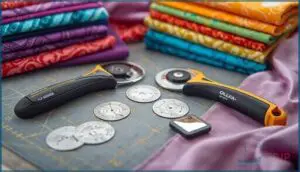
When you’re ready to invest in quality tools, OLFA and FISKARS stand out as industry leaders with proven track records. OLFA’s 45mm standard cutter remains the quilter’s workhorse, while FISKARS’ 60mm heavy-duty model handles multiple fabric layers with ease.
Both brands offer titanium-coated replacement blades that resist corrosion and maintain sharpness longer than basic steel options.
| Brand | Popular Model | Best For |
|---|---|---|
| OLFA | 45mm Standard | General quilting and straight edges |
| FISKARS | 60mm Ultra Sharp | Multiple layers and thick fabrics |
| OLFA | 28mm Precision | Delicate fabrics and appliqué work |
| FISKARS | Titanium-Coated | Extended use and frequent cutting |
Essential Tools to Use With a Rotary Cutter
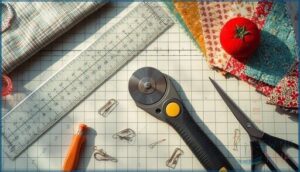
A rotary cutter works best when paired with the right companion tools that protect your work surface and guide your blade. Think of these accessories as your support team—they make every cut safer, straighter, and more accurate.
Here’s what you need to set up a complete rotary cutting station in your sewing space.
Cutting Mats and Their Importance
Your rotary cutter deserves a partner that protects both your blade and your work surface. A cutting mat acts as a resilient barrier between your fabric cutting tool and the table, absorbing blade pressure while preventing dulling.
OLFA and similar brands offer self-healing surfaces made from layered PVC that close minor grooves after each pass, extending blade life and maintaining accuracy across countless craft cutting sessions.
Rulers and Guides for Straight Cuts
A quality nonslip ruler transforms your rotary cutter into a precision instrument. OLFA and GINGHER offer acrylic rulers with grip backing that won’t shift during cuts, while edge guides clamp directly to your cutting mat for repeatable seam allowances. For quick repositioning, magnetic rulers lock instantly to compatible surfaces, and fence kits create dedicated cutting paths for long, accurate work.
- Straight edge guides provide a fixed reference surface, available in 12 to 60 inch lengths with measurement marks aligned to your blade
- Clamp systems attach securely to fabric, offering adjustable fences that lock at 90 and 45 degree angles for perfect corners
- Magnetic rulers use embedded magnets for rapid setup and constant distance from edges without tape or clips
- Self-healing cutting mats feature printed grid lines every half inch to serve as quick visual guides during straight cuts
- Track and fence kits create lightweight rails your rotary cutter follows, reducing blade drift across extended projects
Safety Accessories
Even with a nonslip ruler, your rotary cutter demands protection. Cut resistant gloves rated level 5 shield your hands during blade changes, while safety glasses with side shields guard against flying debris.
Always engage the safety lock between cuts, store blades in rigid storage cases, and use blade guards during transport. Safety mats with nonslip backing prevent shifting, and proper sewing accessories keep your crafting equipment secure.
How to Use a Rotary Cutter Safely
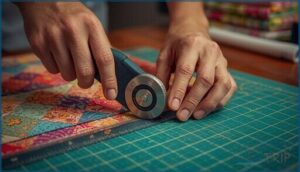
A rotary cutter can transform your sewing experience, but only if you use it correctly and safely. The sharp, rotating blade demands respect and proper technique to prevent injuries while delivering clean, precise cuts.
Let’s walk through the essential hand placements, safety practices, and injury prevention strategies that will keep you cutting with confidence.
Proper Hand Position and Technique
Mastering your rotary cutter starts with grip techniques and wrist alignment that keep your hand relaxed yet steady. Position your index finger along the ruler’s edge for control, maintain a neutral wrist to prevent strain, and let the blade’s weight do the work.
Here are three essential cutting motions:
- Use smooth, continuous strokes rather than jerky movements
- Apply consistent downward pressure without stretching fabric
- Keep the blade perpendicular to your mat for straight cuts
Safety Rules and Best Practices
Your workspace setup affects cutting safety more than you might realize. Keep your cutting mat on a stable, flat surface with plenty of good lighting so you can see every cutting line clearly.
Always wear protective gear like safety glasses with side shields to guard against flying debris, and consider non-slip gloves for better control of your fabric and ruler.
Preventing Accidents and Injuries
Consistently following safety precautions transforms your cutting space from a hazard zone into a controlled workspace. These injury reduction steps will help you avoid common accidents:
- Always cut away from your body to minimize injury if your rotary cutter slips.
- Keep fingers positioned on the safe side of your ruler during every cutting motion.
- Store extra blades in a locked sharps container away from heat and moisture.
- Maintain a first aid kit with emergency contact numbers in your sewing area.
- Engage blade locks immediately when you’re not actively using your rotary cutter.
These accident prevention habits work together with proper equipment like cutting mats and fabric scissors to create a safer sewing environment.
Rotary Cutter Maintenance and Blade Care
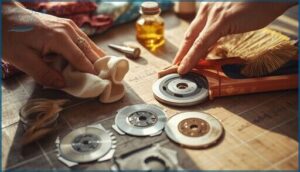
Your rotary cutter won’t stay sharp forever, and proper care makes all the difference in how well it performs over time. Knowing when to swap out a blade, how to sharpen it, and the best way to clean and store your tool will save you money and frustration.
Here’s what you need to keep your rotary cutter in top shape for every project.
When and How to Replace Blades
Your rotary cutter signals when it’s time for a fresh blade through several blade wear signs: sluggish motion, visible nicks, and frayed fabric edges.
Replace blades every six to twelve months for home sewing accessories and equipment, or sooner with heavy crafting projects and supplies. Always unplug before handling, wear protective gloves, and store old blades in puncture-resistant containers for safe cutter maintenance.
Blade Sharpening Methods
Sharpening your rotary cutter extends blade life and saves money on replacements. You can restore edges through five proven methods suited to different skill levels and sewing accessories and equipment needs.
- Whetstone sharpening uses progressive grits from 400 to 1000 for controlled edge restoration in crafting techniques and tips
- Electric sharpeners offer quick results for beginners learning rotary cutter tutorial basics
- Diamond abrasives cut faster on hardened steel cutting edges
- Blade honing realigns micro-edges between full sharpening sessions
- Ceramic stones provide fine finishing touches for precision work
Cleaning and Storing Your Cutter
After each cutting session, you’ll want to remove fabric residue from your rotary cutter using a soft cloth and mild cleaner. Blade sanitizing prevents buildup that dulls edges prematurely in crafting techniques and tips.
Store your cutting tools in a closed container with blades retracted, following maintenance schedules of cleaning after every use. Proper cutter storage and tool organization extend blade life substantially in your rotary cutter tutorial practice.
Common Rotary Cutter Mistakes to Avoid

Even experienced sewers can develop bad habits that reduce the effectiveness of their rotary cutters and create frustration during projects.
These common mistakes often lead to uneven cuts, damaged materials, and unnecessary blade replacements. Understanding what to avoid will help you maintain better control over your cutting and extend the life of your tools.
Using a Dull Blade
You’ll know it’s time for cutting edge maintenance when your rotary cutter starts dragging instead of gliding. Blade wear signs appear gradually but impact every cut you make, creating fabric damage prevention challenges.
Watch for these dull blade risks:
- Frayed edges instead of clean lines
- Increased hand strain from extra pressure
- Blade wandering off your ruler
- Snags that jerk your hand unexpectedly
- Heat buildup along the blade edge
Test sharpness by cutting scrap fabric on your cutting mat before starting any project.
Cutting Without a Mat
Your cutting mat isn’t just a work surface—it’s essential protection that prevents dulled blades and ruined tables. Skipping this tool is one mistake every quilter needs to avoid, as blade calibration and edge control become nearly impossible without proper support beneath your fabric.
| Without Mat Risk | Impact on Sewing | Safety Precautions |
|---|---|---|
| Immediate blade damage | Uneven fabric cuts | Use stable surface always |
| Lost material alignment | Wasted expensive yardage | Check blade depth settings |
| Surface scratches | Shortened rotary cutter life | Never substitute cardboard |
Cut settings won’t compensate for missing this fundamental tool—your work deserves better than shortcuts that compromise both safety and precision.
Improper Pressure and Technique
Even with a cutting mat beneath your fabric, pressure control makes the difference between professional results and jagged edges.
Your hand position directly affects blade drift—too much force dulls your rotary cutter faster than fabric scissors ever could, while too little lets fabric tension shift mid-cut. Stand tall, keep your wrist straight, and let the blade do the work.
Rotary Cutter Applications in Sewing Projects
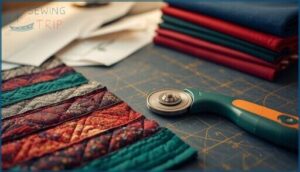
You’ll find rotary cutters make their biggest impact in three main sewing areas where speed and accuracy really matter. Each application utilizes the tool’s ability to cut through multiple fabric layers cleanly and consistently.
Let’s look at how quilters, dressmakers, and crafters put rotary cutters to work in their projects.
Quilting and Patchwork
Your rotary cutter becomes an essential quilter tool when tackling intricate quilt patterns and patchwork designs. The precision cutting allows you to execute sophisticated sewing techniques that refine your crafting techniques.
- Cut multiple fabric layers simultaneously for faster piecing and consistent patchwork designs
- Create accurate strips and squares essential for traditional quilt patterns
- Trim blocks perfectly to maintain uniform sizing throughout your quilting project
- Handle delicate fabric selection including lightweight cottons without fraying edges
- Execute precise angles and bias cuts required for complex sewing applications
Dressmaking and Pattern Cutting
When you’re working on dressmaking projects, your rotary cutter transforms pattern making from tedious to efficient. You’ll achieve precise garment fitting by cutting pattern pieces with accuracy that scissors can’t match.
This tool helps you handle delicate fabric selection across various textile science categories, from lightweight silks to structured wools. The clean edges improve your sewing techniques and guarantee professional results in every garment.
DIY Crafts and Fabric Art
Beyond traditional sewing projects, your rotary cutter opens up creative possibilities in fabric painting, textile design, and DIY crafts. You can slice heat transfer vinyl for embroidery techniques, trim handmade collage materials, and even cut foam for three-dimensional fabric art that sewing machines can’t handle.
- Precisely cut multiple fabric layers at once for patchwork quilting patterns
- Trim vinyl and heat transfer materials with clean edge lines for custom designs
- Slice through paper and thin cardstock for mixed-media collage crafts
- Cut foam and thin leather using specialty blades for sculptural fabric projects
Frequently Asked Questions (FAQs)
What is the purpose of a rotary cutter?
Think of cutting through fabric like slicing butter—a rotary cutter uses a sharp circular blade to glide through material smoothly, delivering precision crafting for quilting, sewing tools needs, and various DIY projects.
What two things must you use with the rotary cutter?
You’ll need two essentials with your rotary cutter: a self-healing cutting mat and a clear acrylic ruler.
The mat protects your blade and workspace, while the ruler guides straight, accurate cuts every time.
Can rotary cutters work on leather or vinyl?
Yes, rotary cutters handle lightweight leather and vinyl when you pair a sharp 45mm blade with a self-healing cutting mat and guiding ruler, though thicker materials may require multiple careful passes for clean edges.
How often should I oil my rotary cutter?
Oil your rotary cutter after every blade change with a single drop of sewing machine oil.
If you’re cutting frequently or in dusty conditions, weekly lubrication keeps the blade rotating smoothly and prevents friction buildup.
What causes blade skipping during cuts?
Blade skipping happens when blade tension is incorrect, your cutting mat has grooves or damage, you’re using a dull blade, the fabric is slippery, or you’re applying inconsistent pressure during cuts.
Are left-handed rotary cutters widely available?
Finding the right tool shouldn’t feel like traversing a maze blindfolded.
Left-handed rotary cutters with ergonomic grips are readily available through retail channels, offering intuitive blade mounting options that make cutting and sewing accessible for all crafters.
Can I cut multiple fabric layers simultaneously?
You can cut multiple fabric layers simultaneously with your rotary cutter by stacking fabric evenly, using weights for layer alignment, and selecting an appropriate blade for your cutting thickness and material compatibility needs.
Conclusion
Think of your rotary cutter as the difference between walking and driving—both get you there, but one covers far more ground with less effort.
Now that you understand what’s a rotary cutter used for, from quilting marathons to delicate garment curves, you hold the tool that separates hobbyists from efficient makers. Keep that blade sharp, your mat beneath every cut, and watch your fabric projects transform from tedious tasks into smooth, confident work.