This site is supported by our readers. We may earn a commission, at no cost to you, if you purchase through links.
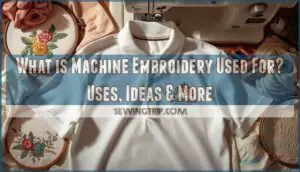
A plain white polo shirt costs the same whether it holds a $12 iron-on transfer or a perfectly stitched company logo—but only one of those ends up in a customer’s hands instead of a trash bin. That’s the quiet power behind machine embroidery.
What started as industrial uniform production has quietly expanded into everything from custom baby blankets to trade show backdrops, quilted wall art to custom wedding gifts. The range might surprise you.
Whether you’re thinking about starting a small embroidery business or just wondering what your machine can actually do, the possibilities stretch much further than most beginners expect.
Table Of Contents
- Common Uses for Machine Embroidery
- Customizing Clothing and Accessories
- Creating Home Decor With Embroidery
- Branding and Logo Embroidery
- Quilting and Patchwork Applications
- Personalization and Gift Making
- Artistic and Decorative Techniques
- Commercial and Industrial Applications
- Machine Embroidery for Crafting
- Top Machine Embroidery Products
- Frequently Asked Questions (FAQs)
- Conclusion
Common Uses for Machine Embroidery
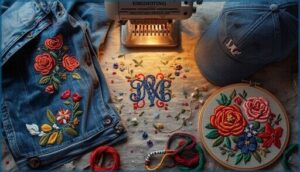
Machine embroidery shows up in more places than you might expect.
From fashion labels to home décor, multi-needle embroidery machine styles are behind much of the intricate, large-scale work you see every day.
From personalizing a jacket to decorating your home, the range of what you can create is surprisingly wide. Here are some of the most common uses that keep both hobbyists and professionals busy.
Apparel Decoration
most popular embroidery machine uses
From polo shirts to hoodies, you can apply custom garment decoration that holds up wash after wash.
Smart fabric stabilizer choice prevents puckering on stretchy knits, while thread sheen matching keeps logos looking sharp.
placement guidelines — like positioning chest logos 7 to 9 inches below the shoulder seam — for consistently professional results.
Consider using low stitch density designs(https://weallsew.com/tips-for-customizing-garments-with-machine-embroidery/) for delicate fabrics like silk.
Home Decor Projects
Beyond clothing, your embroidery machine opens up a whole world of home decor and quilting possibilities.
Stitch detailed motifs onto throw pillows, curtains, or table linens using the right stabilizer backing and embroidery designs for each fabric type.
From embroidered shelf accents to stitched bed throws, embroidered kitchen rugs, embroidered door swings, and even embroidered lampshades, any embroidery blank can become something genuinely beautiful.
decorative embroidered pillows can add a pop of creativity and color to any room.
Corporate Branding
Custom embroidery is one of the smartest embroidery machine uses for building a brand.
A logo placement strategy — like stitching on the left chest of a polo — keeps your brand visible in every client meeting. Thread color consistency across uniforms signals professionalism, and embroidery and branding go hand-in-hand when textile decoration outlasts any printed alternative through years of wear.
Personalized Gifts
While branding keeps embroidery busy in the workplace, custom embroidery truly shines when it gets personal.
Monogrammed travel pouches, embroidered photo frames, and individualized kitchen aprons turn ordinary objects into keepsakes. Custom pet collars and embroidered phone cases make surprisingly thoughtful gifts, too.
With monogramming and personalization, every stitch carries meaning — and that’s where embroidery design creation becomes genuinely rewarding.
Craft and Hobby Creations
Hobby embroidery opens up a surprisingly wide creative world. You can stitch Embroidered Bookmarks with clean border details inside a small hoop, or build Hoop Art Projects using layered felt and Embroidery Patterns from your Embroidery Software.
Fabric Jewelry, Miniature Embroidery pieces, and DIY Embroidery Kits make great weekend projects. With the right Embroidery Thread, Embroidery Hoops, and Embroidery Designs, almost anything becomes a canvas.
Customizing Clothing and Accessories
Clothing and accessories are where machine embroidery really gets personal.
Whether you’re updating a plain jacket or giving a tote bag some character, the options are surprisingly broad.
Here are some of the most popular ways to customize what you wear and carry.
Monogramming Shirts and Jackets
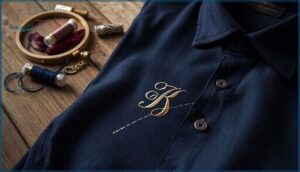
Monogramming shirts and jackets is one of those garment decoration techniques that makes something ordinary feel personal.
Stitch placement matters — left chest monograms sit 7 to 9 inches below the shoulder seam.
Pair script fonts with a stabilizer selection suited to your fabric, like cutaway for knits.
Smart color coordination, proper thread tension, and the right embroidery software turn simple initials into something worth keeping.
Embroidering Hats and Caps
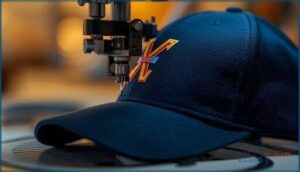
Stitching a logo onto a hat looks simple — until the fabric curves and your design starts drifting. That’s why cap frame selection, hoop technique, and stabilizer choice all matter here. A few things to get right:
- Align the center seam with your frame’s red line
- Sew at 900 SPM, dropping to 500–600 for dense embroidery stitches
- Rotate embroidery designs 180 degrees for correct design orientation
Tear-away stabilizers work well on structured hats, while stretchy flexfit caps need cut-away backing. Nail these basics, and your embroidery patterns will land clean every time.
Personalizing Bags and Backpacks
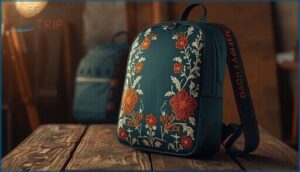
Bags and backpacks give you more real estate than you’d think.
Front panels handle embroidery designs up to 4 inches tall, while strap lettering stays sharp at 1–3 inches high.
Smart stabilizer selection matters — cutaway backing prevents distortion on stretchy nylon, adhesive types grip polyester without slipping.
UV-resistant threads protect side panel geometry and bold personalization and branding details through daily wear.
Adding Designs to Footwear
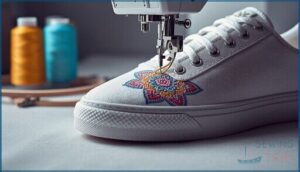
Footwear might be the most exciting frontier for machine embroidery right now.
Canvas sneaker materials take digital embroidery designs beautifully, and shoe clamp systems grip the upper securely so your embroidery machine stitches cleanly without slipping.
- Heel counter embroidery sits on the flattest panel, protecting flex zones
- Nylon thread durability manages daily wear and outdoor scuffing well
- Multi-needle machines speed up colorful customization options efficiently
Creating Home Decor With Embroidery
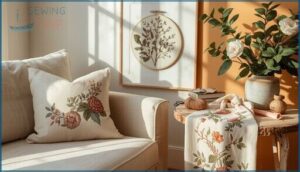
home says a lot about you, and embroidery is one of the easiest ways to make it feel truly yours.
From soft furnishings to wall art, machine can turn plain fabric into something that looks intentional and handcrafted.
Here are some of the best home decor pieces you can create with machine embroidery.
Designing Pillows and Cushions
Pillows are one of the easiest ways to bring embroidery designs into your home. Start with your fabric choice — cotton duck holds dense embroidery patterns without sagging.
Match your hoop size guide to the pillow section, and layer tear-away stabilizer beneath for clean results. Thread color coordination ties your home decor and quilting vision together, while blind-stitch finishing techniques give every cushion a polished, professional look.
Embroidering Curtains and Drapes
Curtains bring a different challenge than pillows — the fabric is often sheer, delicate, and unforgiving. Smart stabilizer selection makes all the difference here. Cutaway works best for loosely woven fabrics, while water-soluble toppings prevent puckering on textured drapes.
Your hooping techniques, thread choices, and design placement all shape the final look. With the right embroidery machine setup, fabric decoration becomes genuinely beautiful.
Custom Table Linens and Napkins
Table linens are where machine embroidery really shines. A few smart choices make all the difference:
- Follow standard monogram placement — 1–2 inches from the corner edge.
- Use metallic thread accents for holiday tablecloths.
- Pick seasonal motifs like snowflakes or blossoms for rotating sets.
- Choose cotton or linen for lasting corner embroidery designs.
Wall Hangings and Art
machine embroidery opens up a whole new canvas.
Hoop Art Displays are the easiest starting point — just frame your finished fabric in a painted wooden hoop and hang it with ribbon.
For larger statements, Paneled Wall Assembly lets you join embroidered cotton panels into continuous Textile Art scenes.
Solid Stabilizer Techniques and smart Hanging Mechanisms keep everything crisp and level.
Branding and Logo Embroidery
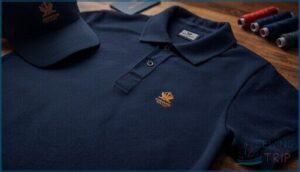
Branding and logo embroidery is one of the most practical ways businesses put their name out there.
Whether you’re outfitting a team or promoting an event, embroidered logos carry a polished, lasting look that printed alternatives just can’t match.
Here are some of the most common ways it gets used.
Business Uniforms
Business uniforms are walking billboards, and machine embroidery makes them look sharp. Logo placement matters — a left chest position sits 3-4 inches below the shoulder, giving your brand immediate visibility.
Thread selection is just as critical; polyester threads handle 50+ industrial washes without fading.
With the right fabric compatibility and production workflow, your team looks consistently polished every single day.
Sports Team Jerseys
Sports team jerseys demand precision, and that’s where multi-needle tech earns its place. Machines like the Tajima SAI use fabric stabilization and stitch type selection to keep logos crisp on stretch fabrics.
With digitizing software and logo placement guidelines, here’s what commercial embroidery delivers:
- Satin stitch shiny numbers
- 3D puff chest crests
- Performance thread colors matched to team palettes
- Customization options for every player name
Promotional Merchandise
Promotional merchandise turns everyday items into brand ambassadors. With the right embroidery machine types and customization options, you can stitch logos onto eco-friendly giveaways like reusable totes or tech accessory branding on sleeves and pouches.
A smart event swag strategy also includes employee appreciation items and seasonal promotional kits — all adding up to a solid embroidery business and marketing approach.
Event Apparel
Event apparel is where your embroidery design choices really shine. Whether you’re outfitting festival crews or charity walkers, the right customization options make every garment work harder. Here’s what works well:
- Metallic Thread Accents and 3D Puff Logos for wedding and conference wear
- Glow-in-the-Dark Designs on festival tees, lasting 50+ washes
- Neon Visibility Stripes and awareness ribbons for charity run shirts
- QR Code Embroidery on staff polos for instant event info
A capable embroidery machine manages all of it, making machine embroidery a smart embroidery business investment.
Quilting and Patchwork Applications
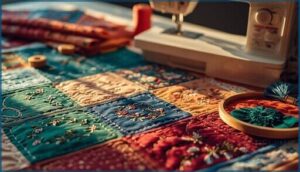
Quilting and patchwork are where machine embroidery really gets to shine. Your embroidery machine can handle everything from detailed quilt blocks to custom patches with surprising ease.
Here are some of the most popular ways to put it to work.
Quilt Blocks and Borders
Machine-embroidered quilt blocks bring structure and beauty together in one hoop. With In‑the‑Hoop Construction, you stitch complete 5–8 inch blocks as finished units, using a dieline for Dieline Placement before decorative stitching begins.
Continuous Border Tiles repeat every 4–6 inches for clean edges.
Proper Stabilizer Selection keeps seams flat, and Trimmed Block Sizing ensures every piece aligns perfectly when assembling your quilt top.
Appliqué Embroidery
Appliqué is one of the smartest Machine Embroidery Techniques you can add to your quilting toolkit. Instead of filling large areas with dense thread, you layer fabric pieces for rich, Layered Texture Effects — cutting production time nearly in half.
Your machine walks through a precise sequence: placement stitch, tack‑down, trim, then Edge Finishing Techniques like satin stitching seal everything neatly. Pair Fusible Web Choices like HeatnBond Lite with the right Fabric Stabilizer Types, and your Applique and In the Hoop Projects stay crisp wash after wash.
In-the-Hoop Quilt Designs
In-the-hoop quilt designs let your embroidery machine piece, quilt, and decorate fabric — all inside a single hoop.
You layer Stabilizer Layers beneath your fabric, follow Color Stop Quilting sequences, and build complete blocks without touching a traditional sewing machine.
SVG Pre-Cut Patterns remove guesswork, while Continuous Line Motifs connect hoopings seamlessly.
Tension Tuning keeps every stitch clean across all IntheHoop Projects.
Patch Creation
Patches take that hoop-based precision a step further. Your material selection matters here — polyester twill resists fraying, while felt cuts cleanly every time.
Smart digitizing techniques place stitches from center outward, and the right stabilizer types keep edges crisp. With solid backing options and clean finishing methods, your embroidery machine delivers sharp, professional patches ready for uniforms or custom gifts.
Personalization and Gift Making
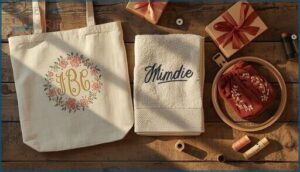
Custom gifts hit differently than anything you’d find on a store shelf.
Embroidery machine lets you create something truly one-of-a-kind, whether it’s a name, a date, or a meaningful design stitched right into the fabric.
Here are some of the best ways to use machine embroidery for gifts and special keepsakes.
Monogrammed Towels and Blankets
Monogrammed towels and blankets make genuinely thoughtful gifts, and your home embroidery machine processes them beautifully.
A reliable embroidery blank gives you a clean starting point. Center monograms 4 inches above the hem on bath towels, or 3 inches for hand towels. Use a size 14 needle, lightweight water‑soluble topping, and dark thread color contrast to keep stitches crisp on plush terry pile.
Custom Baby Items
Baby gifts feel extra special when they’re made just for that little one. Your embroidery machine manages baby bib embroidery, onesie stitching, hat monograms, bootie appliqué, and pacifier clip designs with ease.
Use soft stabilizers and gentle fabric and thread selection to protect delicate skin. Home embroidery machines let you personalize custom clothing with sweet embroidery patterns that parents genuinely treasure.
Special Occasion Gifts
Special occasions deserve gifts that actually mean something.
Your embroidery machine takes care of all of it — Anniversary Pillow Sets with embroidered dates, Birthday Banner Hoops bursting with color, Holiday Tree Ornaments with family names, Graduation Tote Designs, and even Retirement Glassware with individualized monogramming.
Made-to-order clothing works beautifully here too.
Follow solid Embroidery Machine Guides and Embroidery Tutorials and Guides to nail the right Embroidery Patterns every time.
Wedding and Event Accessories
Embroidery truly shines at weddings. Your embroidery machine processes Ring Bearer Pillows with stitched dates, Bridal Veil Embroidery with delicate floral motifs, and Bridesmaid Lace Earrings using metallic threads.
Stitch Wedding Favor Sachets with couple initials, or create Custom Table Runners through monogramming and applique. Each embroidery hoop session produces personalized clothing and keepsakes that guests genuinely treasure.
Artistic and Decorative Techniques
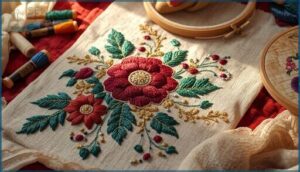
Machine embroidery isn’t just functional — it’s a creative outlet that lets you push fabric art in exciting directions. Beyond basic stitching, there are techniques that add texture, shine, and dimension to your work.
Here are some artistic approaches worth exploring.
Redwork and Outline Embroidery
Redwork is one of the oldest machine embroidery styles, tracing back to Turkey Red Floss and Penny Square History of the 1800s.
Your embroidery machine replicates the Stem Stitch Technique with a Low Stitch Count, making it quick to run. Software Auto-Sequence tools connect outlines inside the Embroidery Hoop without extra trims, keeping thread types consistent and your finished stitching beautifully clean.
3D and Puffy Foam Designs
Puffy foam transforms flat stitching into eye‑catching, tactile designs that genuinely pop off the fabric. Your embroidery machine manages this beautifully when you nail foam stitch density — satin columns work best, never fill stitches.
Color matching techniques keep edges invisible, while careful foam cutting methods guarantee clean borders. Design digitization tips like using 5–12.5mm satin widths make all the difference for sharp, professional results.
Mylar and Specialty Effects
IIridescent Mylar turns ordinary embroidery into something that genuinely catches the light — and it’s easier than it looks. Your embroidery machine manages it well when you follow a simple process:
- Use a placement stitch, then painter’s tape, to hold iridescent Mylar steady
- Apply tack-down stitching at low speed to avoid shifting the film
- Choose sketch-style digital embroidery designs with open, loose fills
- Lay cutaway stabilizer underneath for firm, lasting support
- Follow Mylar care tips: wash normally, skip high heat, never iron directly on it
Mixed-Media Embroidery
Mixed-media embroidery is where fabric art stops following rules. You can stitch directly onto pre-painted canvas, layer paper collage beneath thread painting, or press beads into French knots for bead integration that shifts with light. Metallic accents catch attention the way paint simply cannot.
| Substrate | Technique | Effect |
|---|---|---|
| Canvas stitching | Appliqué | Dimensional texture |
| Paper collage | Digital embroidery | Graphic line detail |
| Leather | Metallic accents | Bold contrast |
Your embroidery machine guide covers more surfaces than you’d expect.
Commercial and Industrial Applications
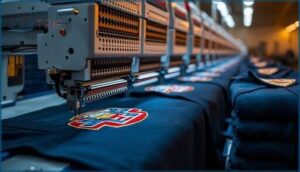
Machine embroidery isn’t just a hobby—it’s a serious workhorse in the business world.
From factories stitching thousands of uniforms to large brands decorating merchandise at scale, the commercial side of embroidery runs deep.
Here’s a look at the key ways it powers industry.
Mass Production of Branded Apparel
When you need hundreds of identical logos stitched overnight, multi-head efficiency becomes your best friend. Industrial embroidery machines with 6 to 12 heads handle bulk fabric handling without missing a beat.
AI-driven digitization selects stitch types automatically, while stitch density optimization keeps every piece consistent. Automated quality inspection catches errors fast, so your custom-made clothing ships looking sharp every time.
Uniform Manufacturing
Uniform manufacturing relies on commercial and industrial embroidery machines for consistent, professional results.
You’ll see strict placement standards—logos stitched exactly where they belong, every time. Multi‑head setups speed up production, while stitch density and thread matching keep designs crisp.
Quality control ensures made-to-order clothing holds up to daily wear. That’s how machine embroidery transforms uniforms from simple workwear into brand statements.
- Consistent logo placement
- Durable polyester thread matching
- Multi‑head setup for efficiency
- Stitch density optimized for fabric
- Quality control after each run
Large-Scale Textile Decoration
Beyond uniforms, industrial embroidery machines handle large-scale textile decoration with impressive range.
Banner production, trade show backdrops, and flag embellishment all rely on automated stitching and commercial embroidery machines to deliver sharp, consistent results.
Upholstery motifs get similar treatment, with industrial multi-needle setups penetrating thick fabrics evenly.
These textile decoration techniques keep the textile industry running at full scale.
High-Speed Embroidery Solutions
When speed truly matters, industrial embroidery machines deliver.
Servo Motor Integration keeps main shafts spinning at 1200 RPM with stitch accuracy of ±0.05mm. Automatic Thread Trimming cuts manual work by 70 percent, while Precision Stitch Control maintains quality across every run.
Sophisticated Control Panels with Real-Time Monitoring sync production data instantly, keeping your Computerized Embroidery operation running without interruption.
Machine Embroidery for Crafting
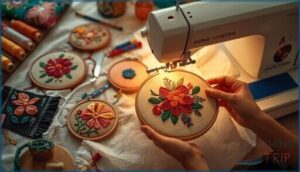
Machine embroidery isn’t just for clothing and home decor — it’s also an excellent tool for hands-on crafting projects. Whether you’re making something from scratch or adding a personal touch to an existing piece, possibilities are wider than you might think.
Here are some of the best ways crafters are putting their machines to work.
Scrapbooking and Paper Embroidery
Paper is one surface most crafters overlook, but your embroidery machine manages it beautifully. Choosing the right paper types overview matters — watercolor paper and heavyweight cardstock hold up well. Use a tearaway paper stabilizer choices setup, keep designs within design size limits of 5×7 inches, and select needle size 75/11 for clean results.
- Float paper over hooped stabilizer using painters tape for hoop placement tips that prevent shifting
- Stick to open embroidery patterns like redwork running stitches to minimize tearing
- Unlike Cricut cutting, thread art stitching adds real texture to crafting layouts and applique accents
Embroidered Cards and Invitations
Turning greeting cards into keepsakes is where your embroidery machine really shines. Use heavyweight cardstock between 80 and 140 lb for solid paper stabilization, and consider vellum overlays for an elegant, translucent finish.
Load digitized computer files through your embroidery software and digitizing tools, pick lightweight embroidery thread choices, and keep designs simple — clean embroidery patterns stay mail‑ready thickness without risking postal surcharges.
DIY Sewing Projects
Exploring fabric crafting with your embroidery machine creates opportunities for practical projects like Fabric Gift Bags, Embroidered Keychains, and Custom Tote Designs.
You can personalize hair accessories or stitch DIY embroidered coasters using applique and creative embroidery patterns. Each project lets you enhance sewing techniques and practice embroidery machine maintenance, making your handmade items both functional and uniquely yours.
Textile Art Pieces
Your embroidery machine becomes a true artist’s tool when you venture into textile art pieces.
Layer threads to build a Stitched Collage, or use puffy foam for Textural Relief that catches the eye. Pull in Cultural Motifs, sustainable materials, and mixed fibers to give your work a Fiber Narrative that feels personal.
This is where fabric decoration meets genuine Textile Art and Design.
Top Machine Embroidery Products
The right machine or resource can make a huge difference in what you’re able to create.
Whether you’re just starting out or looking to level up your setup, a few standout products are worth knowing about.
Here are some of the top picks to review.
1. Janome MB-4S Four Needle Embroidery Machine
 View On Amazon
 Ever wondered how you could stitch four colors at once without pausing to rethread? The Janome MB-4S answers that challenge, making commercial embroidery feel easy.
With its four-needle setup and roomy 9.4" x 7.9" embroidery area, you can breeze through logos, patches, and custom apparel. Built-in designs, bright LED lights, and easy thread management help you stay productive.
If you’re looking to scale up your craft or launch a small shop, this machine offers reliable performance and creative flexibility.
| Best For | Small business owners and apparel shop operators who want to dive into commercial embroidery without breaking the bank. |
|---|---|
| Primary Use | Commercial embroidery |
| Skill Level | Intermediate to advanced |
| Design Compatibility | Embroidery software designs |
| Project Types | Patches, apparel, decor |
| Additional Materials | Thread, oil, hoops |
| Gift Suitability | Custom apparel gifts |
| Additional Features |
|
- Four needles mean you can stitch multiple colors at once—no stopping to rethread mid-project.
- Works with popular threads like Madiera Poly and Floriani, so you’re not locked into one brand.
- Great for high-volume work like patches, custom apparel, and home décor items.
- Doesn’t include a cap hoop, so embroidering hats isn’t really in the cards.
- There’s a learning curve, especially if you’re new to commercial machines.
- Finding a repair technician can be a headache depending on where you live—worth checking local Janome service availability before buying.
2. Jack Dempsey Needle Art Sue Sam Quilt Block
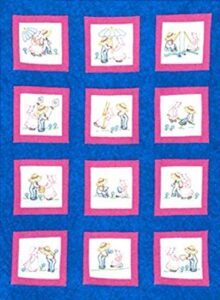
Looking for a nostalgic quilt project that’s simple yet charming?
The Jack Dempsey Needle Art Sue Sam Quilt Block set gives you twelve 9-inch squares, each stamped with classic Sunbonnet Sue and Sam designs. The ink washes out after stitching, leaving crisp outlines.
You get a floss chart and clear instructions, so color sorting is easy.
Made from cotton-poly broadcloth, these blocks are perfect for baby quilts or handmade gifts. They’re lightweight, made in the U.S., and appeal to both beginners and seasoned crafters.
| Best For | Crafters who love nostalgic, handmade projects — especially beginners and gift-makers looking for a sweet baby quilt idea. |
|---|---|
| Primary Use | Hand embroidery quilts |
| Skill Level | Beginner to intermediate |
| Design Compatibility | Pre-printed quilt designs |
| Project Types | Baby quilts, gifts |
| Additional Materials | Backing, batting, floss |
| Gift Suitability | Handmade quilt gifts |
| Additional Features |
|
- Classic Sunbonnet Sue and Sam designs give it a charming, old-school feel that never goes out of style
- The wash-out ink makes finishing clean and easy — no ghost lines left behind
- Comes with a floss chart and clear instructions, so you’re not guessing where to start
- You’ll need to gather extra supplies separately — backing, batting, hoop, needle, and floss aren’t included
- Color sorting is required before you can dive in, which adds a small prep step
- Some embroiderers may need a hoop to keep the fabric taut, depending on their stitching style
3. Piece in the Hoop Embroidery Quilt Book
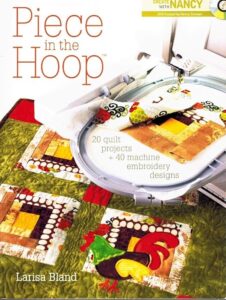
Imagine letting your embroidery machine handle quilt block piecing with near-perfect accuracy—Piece in the Hoop Embroidery Quilt Book makes this possible. You get 20 quilt projects and 40 embroidery designs on disc, all designed for in-the-hoop methods.
Step-by-step instructions walk you through adding and flipping fabric as the machine stitches seam lines, making block construction fast and precise. Whether you’re new to quilting or want efficient block production, this book bridges creativity and control, with clear guidance for every skill level.
| Best For | Quilters of any skill level who want to speed up block construction using an embroidery machine, especially those looking to learn in-the-hoop techniques or use up scrap fabric. |
|---|---|
| Primary Use | Machine embroidery quilting |
| Skill Level | Beginner to advanced |
| Design Compatibility | 40 included digital designs |
| Project Types | Quilts of any size |
| Additional Materials | Embroidery machine required |
| Gift Suitability | Personalized quilt gifts |
| Additional Features |
|
- Comes with 20 quilt projects and 40 embroidery designs across 9 formats, so you’ve got plenty to work with right out of the box.
- Step-by-step instructions make it easy to follow along, whether you’re a beginner or just want a more efficient workflow.
- The bonus DVD hosted by Nancy Zieman is a nice touch—actually seeing the techniques in action makes a real difference.
- Some users ran into printing errors and missing stitching lines in a few designs, which can be frustrating mid-project.
- You’ll need an embroidery machine to get anything out of this—it’s not useful for traditional hand or standard machine quilting.
- A few people had trouble finding files on the included CD, so expect a little trial and error there.
4. Brother SE1900 Sewing Embroidery Machine
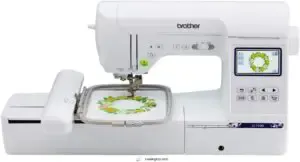
If you want a machine that manages both sewing and embroidery with confidence, the Brother SE1900 stands out. You get 138 built-in designs, 11 fonts, and a roomy 5" x 7" embroidery field—perfect for bigger projects and custom layouts.
The color touchscreen makes editing designs feel natural, whether you’re resizing, combining, or adding text. USB import lets you expand your creative library.
It’s reliable for home or small business, offering versatility without overwhelming you with complexity.
| Best For | Home sewers and small business owners who want one machine that handles both everyday sewing and detailed embroidery without a steep learning curve. |
|---|---|
| Primary Use | Home sewing & embroidery |
| Skill Level | Beginner to intermediate |
| Design Compatibility | USB & built-in designs |
| Project Types | Monograms, custom embroidery |
| Additional Materials | Extension table sold separately |
| Gift Suitability | Monogrammed item gifts |
| Additional Features |
|
- Tons of built-in options — 138 embroidery designs, 11 fonts, and 240 stitches mean you’re rarely starting from scratch.
- The 5" x 7" embroidery field is genuinely roomy, so you can tackle bigger designs without constantly rehooping.
- USB import and the touchscreen make customizing or swapping designs quick and pretty intuitive.
- No extension table included, so if you’re doing larger sewing projects, that’s an extra purchase.
- Embroidery software and additional design packs can get pricey fast.
- It’s only built for US outlets (120V), so if you’re outside the States, it’s a no-go.
Frequently Asked Questions (FAQs)
What materials can embroidery machines stitch onto?
Think of your embroidery machine as a needle that never discriminates — it’ll stitch on cotton, denim, fleece, canvas, leather, and even paper or thin wood.
How long does machine embroidery typically take?
Timing depends on stitch count and design complexity. A simple monogram might finish in 10 to 30 minutes, while a detailed multi-color logo can take one to two hours or more.
Can beginners learn machine embroidery quickly?
Yes — and faster than you’d expect.
Most beginners grasp basic machine operation within one to two hours. With regular practice over a few weeks, you’ll handle fabrics, designs and simple troubleshooting comfortably.
What software is used to create embroidery designs?
Popular embroidery design software includes Wilcom Hatch, Brother PE‑Design 11, and Embrilliance StitchArtist. If you’re on a budget, Ink/Stitch is a free option that works surprisingly well.
How do you maintain and clean embroidery machines?
An ounce of prevention is worth a pound of cure.
Brush out lint every 8–10 hours, oil the hook race regularly, swap needles often, and schedule annual professional servicing to keep your machine running smoothly.
Conclusion
It’s almost funny—people spend hours searching for what machine embroidery is used for, then discover it’s been quietly stitching together the world around them all along. Uniforms, wedding keepsakes, quilts, branded hats, nursery art—it’s rarely the flashiest craft in the room, yet it outlasts nearly every trend.
Your next project doesn’t need a grand vision to matter. Pick one idea from this guide, thread your needle, and let the machine do what it does best.
- https://textilsl.com/machine-embroidery-for-fashion-apparel/
- https://www.disenmachinery.com/What-are-the-Common-Uses-of-Embroidery-Machines-id45493126.html
- https://www.quiltersquest.com/module/news/12576/elevate-your-sewing-creative-uses-for-machine-embroidery
- https://www.digitizingusa.com/showblog/embroidery-machine-accessories-hats
- https://jacquard.hr/en/