This site is supported by our readers. We may earn a commission, at no cost to you, if you purchase through links.
My embroidery machine sat mostly idle for two years—pretty patterns on fabric, nothing more.
Then I stumbled onto hoop embroidery designs, and everything changed.
A finished zipper pouch in 25 minutes.
A key fob, done before my coffee cooled.
The machine does the heavy lifting.
Placement stitches show you where to lay fabric.
Tack-down stitches lock everything in place.
Automatic thread trimming keeps things moving.
No pattern tracing, no hand‑cutting curves, no wondering if your seams match.
This is the rabbit hole worth falling into for anyone who wants to make something real and useful at a sewing machine without a giant learning curve.
Table Of Contents
- Key Takeaways
- Why I’m Obsessed With ITH Designs
- What In-The-Hoop Embroidery Means
- My Favorite ITH Project Ideas
- Choosing The Right Hoop Size
- Best Machines for ITH Embroidery
- Supplies That Make ITH Easier
- My Simple ITH Stitching Workflow
- Tips for Better Finished Designs
- Frequently Asked Questions (FAQs)
- Conclusion
Key Takeaways
- Your embroidery machine does the heavy lifting with its designs—placement stitches, tack-downs, and auto thread trimming mean you’re guiding the process, not fighting it.
- Small projects like key fobs and mug rugs finish in under 30 minutes, so you’re building real confidence with every single stitch-out.
- Picking the right stabilizer and hoop size isn’t optional—it’s what separates a clean, professional finish from a puckered mess.
- You don’t need years of practice to make something worth keeping; the right design file walks you through every step, start to finish.
Why I’m Obsessed With ITH Designs
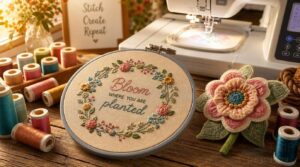
Honestly, ITH designs kind of changed everything for me. The machine does most of the heavy lifting, and you end up with real, finished projects way faster than you’d expect. Here’s what pulled me in from the start.
Fast Finished Sewing Projects
One of the best things about in the hoop embroidery projects is how fast they go. A quilted mug rug takes about 25 minutes. Key fobs and coasters? Even less. Instead of cutting a dozen pieces, you hoop up and let your machine do the work. Beautiful finished projects come together quickly — no long afternoons lost to complicated steps.
If you’re just getting started, these embroidery hoop art ideas for beginners prove you can pick up the basics in an afternoon and jump straight into finished projects.
Even beyond embroidery, fast tote bag projects can be completed in under an hour.
Machine-guided Embroidery Magic
Your embroidery machine does more than just stitch — it thinks. Smart hoop alignment locks your fabric in place fast, so every stitch lands exactly where it should.
Auto color change keeps things moving with trimmed threads and on-screen prompts. You just watch.
That’s the real magic of in the hoop embroidery: the machine guides you the whole way.
Less Cutting and Piecing
If the machine does the guiding, your scissors finally get a break. Fewer fabric pieces means less mess on your table and less stress in your head.
ITH skips the pre-cut panels entirely — you’re working with one-piece construction from the start.
The embroidery design files handle the rest, stitching everything into place with continuous embroidery fill and simplified seamlines.
Beginner-friendly Project Wins
With less cutting to worry about, you can actually focus on the fun part — finishing things. That’s where beginner-friendly ITH wins really shine.
- Fast Zipper Pouch done in under 90 minutes
- Simple Mug Rug with minimal stitch steps
- Easy Key Fob ready in under 30 minutes
- Basic Plush Toy using just felt or fleece
Every complete project proves you don’t need experience — just a good stitch out.
What In-The-Hoop Embroidery Means
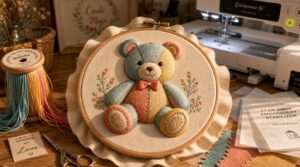
So what exactly is in-the-hoop embroidery? It’s a process where your machine does all the heavy lifting — stitching a finished item from start to finish without you having to cut and sew pieces together separately. Here’s how it actually works, step by step.
Stitched Inside One Hoop
Think of the embroidery hoop as your own little workshop. Stitched completely in the hoop, every step happens in one spot — no separate sewing needed. Your machine guides each pass, keeping things neat and aligned. With hoop tension control and smart design file optimization, IntheHoop projects come out clean and professional every single time.
| Feature | What It Does | Why It Matters |
|---|---|---|
| Hoop Tension Control | Keeps fabric flat | Prevents puckering |
| Design File Optimization | Sequences stitch order | Reduces thread breaks |
| Stitch Density Management | Balances fill coverage | Protects delicate fabrics |
Stabilizer First, Fabric Next
Before anything else touches your hoop, the stabilizer goes in first. This is non-negotiable. Stabilizer selection shapes everything — cut-away for stretch fabrics, tear-away for clean cotton projects.
Lay your fabric flat on top, smoothing out any wrinkles. Proper fabric stabilization keeps your in the hoop embroidery designs crisp and pucker‑free from the very first stitch.
Placement and Tack-down Stitches
Once your stabilizer is hooped and your fabric is smooth, the machine takes over with a placement line. That single pass of stitching tells you exactly where your fabric piece should sit — no guessing.
Then comes the tack down stitch, locking everything in place with a tight zigzag outline. Nail the tension here, and your edges stay crisp through every step of your in the hoop embroidery designs.
Turning Projects Right-side-out
Here’s the part nobody warns you about — getting your project out of the hoop is only half the job. Turning right-side-out is where your DIY embroidery project finally comes to life.
- Use a loop turner tool for small tubes and straps
- Trim seam allowances before turning to cut bulk
- Press edges flat after turning for crisp, clean lines
- Close the opening with a final tack stitch
My Favorite ITH Project Ideas
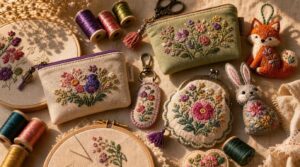
Once you start ITH embroidery, picking your first project is half the fun. There are so many great options, and honestly, a few of them will surprise you with how easy they are. Here are my personal favorites to get you started.
Before diving in, make sure your designs are safely backed up — a dedicated embroidery machine like the Janome 11000 pairs perfectly with a solid backup routine to protect every stitch you create.
Zipper Pouches and Purses
Zipper pouches might just be the perfect first ITH project. You stitch the whole thing — zipper and all — right inside the hoop.
No hand-sewing needed. The machine sews every seam, so you end up with professional-grade edges every time.
Pair a quilting cotton exterior with a water-resistant lining, and you’ve got something that’s both pretty and practical.
Mug Rugs and Coasters
Mug rugs are low-key one of the most satisfying in-the-hoop embroidery designs you can make. They’re bigger than a coaster — usually 4 to 12 inches — so there’s actually room to get creative.
Here are five reasons they’re worth adding to your project list:
- Quick to stitch with a small hoop
- Seasonal patterns keep things fresh all year
- Easy to customize using quilting cotton scraps
- Batting layers add cushioning and absorb condensation
- Simple edge finishes like binding give them a polished look
Your embroidery design file manages all the placement and quilting steps automatically. Just follow along with the embroidery design tutorials, and you’ll have something gift-worthy in no time.
Key Fobs and Tags
Key fobs and tags are the perfect next step after mug rugs. They’re tiny, they’re quick, and people absolutely love getting them as gifts.
A 4×4 hoop accommodates these easily. Your machine stitches the whole thing — front, back, and all — using in-the-hoop embroidery designs that walk you through every step.
| Feature | Detail | Why It Matters |
|---|---|---|
| Material Choices | Vinyl or felt | Durable and easy to clean |
| Chip Compatibility | MIFARE or HID chip | Works with most readers |
| Design Integration | Machine embroidery patterns | Adds personal style fast |
You can even make handmade bag tags for luggage or backpacks. Follow a simple tutorial, snap on a swivel hook, and you’re done.
Plush Toys and Softies
Now here’s where things get really fun. Plush toys and softies made completely with InTheHoop embroidery designs feel like pure magic.
Your machine manages the whole thing inside a large hoop — front, back, and seams included. Minky or fleece works great for that cuddly feel.
Embroider the eyes for stuffed animal safety, stuff it, and you’ve got an adorable 3D embroidery project done.
Monogrammed Phone Cases
And then there are monogrammed phone cases — honestly one of my favorite inthehoop embroidery designs to gift people.
You can stitch initials onto a leather shell, silicone case, clear case, vegan leather, or polycarbonate back. Each material gives a totally different look. Pick your hoop size, load your file, and your embroidery tutorials walk you through every step.
Choosing The Right Hoop Size
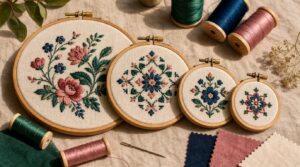
Hoop size really does make or break your project. Pick one too small and your design simply won’t fit — too big and things get wobbly fast. Here’s a quick look at the sizes you’ll actually use.
4×4 Beginner Projects
The 4×4 hoop is honestly the perfect place to start.
It’s small, easy to manage, and beginner embroidery guide projects like key fobs, mini mug rugs, and coasters all fit right in. Most finish in under 20 minutes.
Stick with quilting cotton or felt — they hoop cleanly and stitch beautifully every time.
5×7 Everyday Designs
Once you graduate from the 4×4, the 5×7 hoop size opens up a whole new world. Zipper pouches, monogrammed phone cases, mug rugs — they all stitch up cleanly here.
You get minimal fabric waste thanks to tight placement stitches, and most quick stitch projects finish quickly with fewer thread colors. It’s the sweet spot for everyday accessory patterns.
6×10 Versatile Hooping
The 6×10 hoop is where things really open up. You can center wide designs in a single pass without rehooping — a huge win.
Stabilizer layering here keeps everything drum-tight, so your multi-color patterns land perfectly. It’s the size most embroidery hoop tutorials point to for confident, flexible work.
8×12 Bag Designs
The 8×12 bag design is really impactful. With this embroidery hoop size, you can stitch a complete zipper pouch — interior pocket design included — in under four hours.
Nail your monogram placement and color palette choices before you start, and your strap reinforcement stitches land right where they need to.
These in-the-hoop DIY embroidery projects feel like magic.
10×14 Advanced Projects
The 10×14 hoop is where things get seriously exciting. You’re working with enough space for layered construction methods — think multi-fabric pouches, structured bags, and detailed appliqué, all stitched clean in one frame.
Precision hoop tension and stabilizer alignment keep everything flat and pucker-free. Nail those, and your satin fill optimization produces buttery-smooth results every single time.
Best Machines for ITH Embroidery
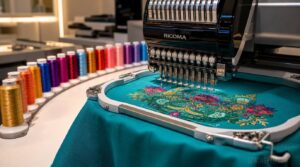
Not every machine is built for ITH work, and picking the right one makes a huge difference. A few key features separate a great ITH machine from a frustrating one. Here’s what to look for before you buy.
Embroidery Field Size
Your machine’s embroidery field size is basically its canvas. A 4×4 hoop gives you roughly 3.9 × 3.9 inches of actual stitch area — not the full four inches.
For in‑the‑hoop projects, that gap matters.
Large embroidery hoops like a 10×14 hoop (360 × 260 mm) enable bigger designs without repositioning.
Always match your design limits to your real stitch area before you start.
Reliable Stitch Quality
Stitch quality can make or break your finished piece. A good ITH machine keeps thread tension balanced on both the needle and bobbin — no loops, no gaps.
Look for consistent stitch density across fills and satin areas.
When your design is digitized correctly and your hoop alignment is solid, every layer lands clean. That’s bulletproof embroidery.
USB or Wi-Fi Transfers
Once your stitch quality is locked in, getting your design onto the machine matters too. USB vs. Wi-Fi is a real choice worth thinking about.
- USB transfers are stable, fast, and don’t need a network
- Wi-Fi transfers let you send files from your phone or tablet wirelessly
- Large embroidery design file formats move quicker over USB
- Wi-Fi can lag if your network is busy
Automatic Thread Trimming
Here’s something that’ll save you so much time in your embroidery workflow: automatic thread trimming. Instead of reaching for scissors after every color change, the machine does it for you.
Automatic cutter activation kicks in right after the last stitch, trimming threads to within a millimeter or two of the fabric — clean and precise every time.
Easy Design Positioning
Automatic trimming takes care of the cleanup — and good positioning tools handle the setup. With grid overlay guides and snap alignment, you place your design exactly where you want it, every time.
Centering mark tips take the guesswork out of hooping. And the real-time preview shows adjustments instantly.
Use rotation handle control to fine-tune angles before you stitch a single thread.
Supplies That Make ITH Easier
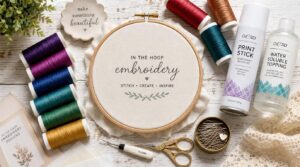
The right supplies can make or break your ITH projects. Having a few key items on hand keeps things running smoothly from start to finish. Here’s what you’ll want in your corner.
Tear-away Stabilizer Choices
Not all tear-away stabilizer is created equal. Your weight selection guide starts here:
- Light (1–1.5 oz): gentle on delicate fabrics, tears off easily
- Medium (2–3 oz): great everyday machine embroidery support
- Heavy (4+ oz): engages thick materials and dense designs
Try Inspira TearAWay Stabilizer or adhesive options for slippery fabrics. Precut sheet benefits include less waste and faster setup — total win for in-the-hoop projects.
Cut-away Stabilizer Uses
Cut-away stabilizer is your best friend for stretchy fabric support. Unlike tear-away, it stays in place permanently — which means your design holds its shape through washing and daily wear.
It’s especially great for dense design backing on knits and fleece. The permanent backing benefits speak for themselves: no rippling, no distortion, just crisp, clean stitches every time.
Quilting Cotton Scraps
Quilting cotton scraps are a secret weapon for in-the-hoop projects. Here are five great ways to put them to work:
- Crumb quilt basics — use tiny pieces for coaster fillers
- Patchwork block sizes — cut 2–4 inch squares for mug rugs
- Scrap sorting methods — sort by color families first
- Color wheel planning — mix lights and darks for contrast
- Fabric pre-wash — always wash scraps before hoop stitching
Vinyl and Felt Options
Vinyl and felt might surprise you — they’re not just for crafters with fancy setups. Vinyl thickness matters a lot here.
Thinner sheets work great for phone cases and key fobs, while thicker options give zipper pouches real structure. Pair adhesive-backed vinyl with a cut-away stabilizer to keep everything locked in place through every stitch.
Swivel Hooks and Snaps
Don’t overlook the small stuff — swivel hooks and snaps can make or break a finished piece. For key fobs and bag straps in your #inthehoop projects, pick hardware that matches the job:
- Zinc alloy hooks resist rust and handle daily wear
- Spring-loaded gates snap shut and stay secure
- 1-inch size fits most key fob and lanyard designs
- Antique brass or matte black finishes match any style
My Simple ITH Stitching Workflow
Once you get your supplies ready, the actual stitching process is pretty straightforward. ITH designs walk you through each step, so there’s no guessing involved. Here’s the simple workflow I follow every time.
Load The Embroidery File
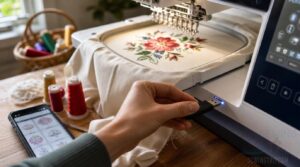
Getting your embroidery file onto your machine is easier than it sounds. Save your digital embroidery designs to a USB drive, drop it in, and browse to your file.
Before hitting start, always confirm design size verification — wrong hoop size means cropped stitches. Check your color palette matching too, then run a quick test stitch confirmation on scrap fabric.
Hoop Stabilizer Smoothly
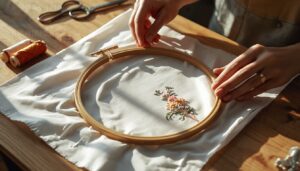
Think of your stabilizer as the foundation of a house — skip this step, or rush it, and everything shifts.
Your stabilizer is the foundation — rush it, and everything shifts
Start your stable hoop base by laying your embroidery stabilizer flat inside the machine embroidery hoop. Here’s what matters most:
- Match your lightweight stabilizer use to your fabric weight
- Align the center mark alignment dots precisely
- Control tear-away residue by hooping with even tension
A moisture resistant stabilizer keeps your in the hoop project crisp.
Follow Placement Stitches
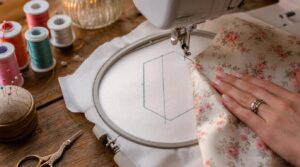
Once the stabilizer is hooped, your machine stitches the placement line first. That light outline shows you exactly where to lay your fabric. It’s your roadmap. Follow it closely — placement line accuracy makes the difference between a clean finish and a crooked one. Smooth your fabric right over it, and you’re ready for the tack down.
Add Fabric Layers Carefully
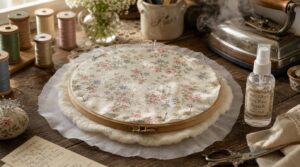
Once the placement stitch guides your fabric into position, it’s time to add your layers. Go lightest first — thin batting or interfacing before heavier fabric. That layer sequence matters.
Use pins or positioning tape to keep everything flat. A little temporary spray starch helps, too.
Press each layer gently on low heat to avoid shifting before the tack-down stitch locks it all in place.
Trim Before Final Seams
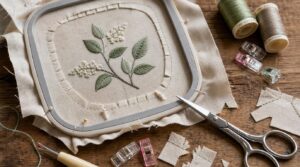
With your layers locked down, it’s time for a pre-seam trim.
- Trim 1/16 to 1/8 inch from seam edges
- Clip diagonal notches at corners to cut bulk
- Notch concave curves so edges curve smoothly
- Snip intersection points where seams cross
- Prep turn-through openings last for clean flipping
Neat trimming makes turning right-side-out so much easier.
Tips for Better Finished Designs
Getting clean, polished results comes down to a few small habits that make a big difference. Once you nail these, your finished projects will look way more professional. Here are the tips that have genuinely leveled up my ITH game.
Reduce Thread Breaks
Thread breaks mid-project are so frustrating. The fix usually starts with high quality thread — smooth, consistent thickness makes a huge difference.
Match your proper needle size to your fabric and thread weight, too. For dense satin or fill stitches, reduce stitch density slightly and shorten travel paths so the thread isn’t under constant stress.
Your in-the-hoop results will thank you.
Slow Metallic Thread Speed
Metallic thread has its own rules. Your embroidery machine speed should drop to around 350–600 stitches per minute when using it.
That slower pace gives the thread time to relax between stitches, which cuts down on breakage and tangling. Pair that with reduced top tension and you’ll get that gorgeous, smooth shine without the frustration.
Trim Close, Not Crooked
Trimming might seem simple, but edge trimming precision makes or breaks your finished look. Stay within about 0.5 mm of the stitch edge — any farther, and you’ll see frayed threads peeking through.
Cutting angle control matters too: cut perpendicular to the stitching, not at a sloppy angle. A sharp detail snip gives you the control you need around tight curves.
Test Dense Satin Stitches
Skipping this test is how you end up with puckered fabric and rough edges. Before your final in‑the‑hoop run, always stitch a sample first. Here’s what to check:
- Density Settings Test — aim for 0.3–0.4 mm spacing
- Edge Cleanliness Check — look for smooth, even borders
- Thread Tension Test — no gaps or loops
- Fabric Stabilizer Test — no show‑through
- Speed Quality Balance — slow down for crisp satin stitching
Organize Design Files Neatly
A messy design folder is a joy killer. Name every design file with the project type, hoop size, and date — like mug_rug_4x4_20260527.dst.
Create one main ITH Embroidery Projects folder, then sort by hoop size inside it. Add metadata tags for stitch count and stabilizer type.
Back everything up monthly so your custom embroidery designs are never lost.
Frequently Asked Questions (FAQs)
What does in the hoop embroidery design mean?
Think of it like a sewing machine doing all the hard work for you. In-the-hoop embroidery means your embroidery machine builds a complete project — fabric, stitches, seams — all inside one single hoop.
How do you center embroidery designs in a hoop?
Fold your fabric in half both ways and mark where the lines cross. That’s your fabric center mark. Line it up with your hoop’s center, and you’re set.
Do you leave embroidery in the hoop?
The hoop is a tool, not a home. Remove your project after the final stitch to prevent hoop marks, fabric distortion, and ghosting. Your embroidery machine does the work — you finish it free.
Why are my outlines off on my embroidery design?
Outlines shift because of fabric stretch, hoop misalignment, or uneven thread tension. Poor stabilizer choice lets fabric pull during stitching. Even small hooping inconsistencies can throw off your outline placement noticeably.
What types of stabilizers are best to use?
Stabilizer choice makes or breaks your project. Use tear-away stabilizer for pouches, cut-away for stretchy fabrics, and water-soluble for delicate work. Match weight to your fabric for clean, pucker-free results.
How can I avoid puckering in fabric?
Prewash your fabric first to stop shrinkage. Then match your needle size to the fabric weight, keep hoop tension firm, and use short stitch lengths to keep everything flat and pucker-free.
What precautions are needed for metallic threads?
Metallic threads need a little extra care. Slow your machine speed to cut friction, and lower thread tension so it doesn’t snap. Use the right needle size and a compatible stabilizer to keep everything smooth.
Are in-the-hoop designs suitable for beginners?
ITH designs are beginner-friendly. Step-by-step embroidery sequences guide you through each stage. Small projects like key fobs fit a 4×4 hoop, keeping your learning curve low and your wins fast.
Can in-the-hoop designs be resized easily?
Sometimes yes, sometimes no — it depends on the design. Scaling within a hoop works for small adjustments, but density needs rebalancing. Always test-stitch first, and consider a larger hoop size for big changes.
Where can I find free ITH designs online?
Try Etsy shops, LoveCrafts, or HoopTalent for free ITH downloads. SweetPea and Smart Needle also offer freebies. Always check hoop size and file format before downloading.
Conclusion
Studies show that crafters who finish quick projects early on are far more likely to stick with a hobby long-term—and that’s exactly why in the hoop embroidery designs, my newest obsession has become a gateway for so many beginners. One hoop, a few fabric scraps, and your machine does the rest.
You don’t need years of practice to make something you’re proud of. You just need the right design and the courage to hit start.
- https://urbanthreads.com/collections/in-the-hoop
- https://emblibrary.com/collections/in-the-hoop-embroidery-designs
- https://www.kreativekiwiembroidery.co.nz/Coasters-and-Mug-Rugs-In-the-hoop.html
- https://www.designsbyjuju.com/in-the-hoop/accessories/key-fobs
- https://inthehoopembroiderydesigns.com/collections/coasters-in-the-hoop