This site is supported by our readers. We may earn a commission, at no cost to you, if you purchase through links.
A blunt needle doesn’t announce itself. It just quietly ruins your work—skipped stitches here, snagged fabric there, thread snapping for no obvious reason. Most sewists blame their machine or their thread before ever suspecting the needle, even though needles dull faster than you’d think.
Eight to ten hours of use is all you get before performance starts slipping. That’s roughly one or two solid projects. Knowing when to replace sewing needles—and which needle belongs with which fabric—is the kind of small habit that separates frustrating sewing sessions from clean, professional results every time.
Table Of Contents
Key Takeaways
- Replace your needle every 8–10 hours of sewing—that’s about one project—before problems like skipped stitches or thread breakage show up.
- Match your needle to your fabric: stretch needles for knits, jeans needles for denim, Microtex for delicate fabrics like silk.
- A worn needle doesn’t just hurt your stitches—it forces your machine to work harder and can cause real mechanical damage over time.
- Before every project, run the needle tip across your fingernail; if it snags, swap it out right then.
When Should You Replace Sewing Needles?
Knowing when to swap out your needle can save you a lot of frustration. A few simple rules make it easy to stay on top of it.
Once you’ve got the timing down, these sewing machine tricks for perfect stitches can help you get even more out of a fresh needle.
Here’s what to keep in mind.
Recommended Replacement Frequency
Most sewists overlook needle longevity until something goes wrong. A good frequency guideline is every 8 to 10 hours of sewing — that’s your sweet spot for maintaining needle sharpness and avoiding skipped stitches or thread breakage.
Think of it like a razor blade: you don’t wait until it’s tearing. Following consistent replacement schedules is the simplest form of sewing needle care you can practice.
For more insight on avoiding issues like fabric damage and skipped stitches, choosing the right needle type is also essential.
Project and Fabric Changes
Beyond the clock, fabric switching is its own signal. Moving from knits to denim? That calls for a new needle — full stop.
Different fabrics need different needle types, and using the wrong one risks fabric damage and poor seam quality. Smart project planning means matching your needle selection to each fabric. It’s the simplest way to protect your thread management and your work.
For additional guidance on keeping your equipment in top shape, review these best practices for sewing machine needle maintenance.
Preventing Sewing Machine Issues
A worn needle doesn’t just ruin stitches — it can throw off your whole machine. Think of sewing machine maintenance like changing your car’s oil: skip it, and bigger problems follow.
Neglect your sewing machine like skipped oil changes, and small worn needles become big costly problems
Good sewing techniques start here:
- Replace needles every 8–10 hours to prevent skipped stitches and thread breakage.
- Match fabric selection to needle sharpness for cleaner seams.
- Use quality thread to reduce lint buildup and tension issues.
Common Signs of Needle Wear
Your needle talks to you — you just have to know what to listen for. A worn needle leaves clues in your stitches, your fabric, and even your thread.
Here are the most common signs that it’s time for a fresh one.
Skipped Stitches and Uneven Seams
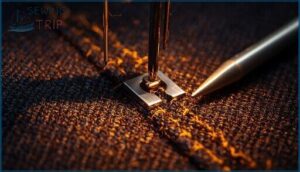
Skipped stitches are your machine’s way of waving a red flag. When needle sharpness fades, the tip can’t pierce fabric cleanly — so the hook misses the thread loop and leaves bare gaps along the seam.
A bent or mismatched needle is often the real culprit, and this guide to common sewing stitch problems and fixes can help you pinpoint exactly what’s going wrong.
Those gaps hurt seam consistency and weaken the whole stitch line. Uneven seams, thread breakage, and poor fabric tension usually follow. One fresh sewing machine needle fixes all of it.
Fabric Damage and Puckering
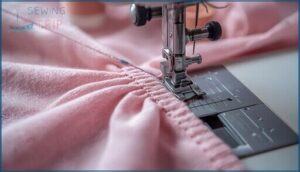
Puckering is a telltale sign that something’s off with your needle. A dull tip doesn’t pierce cleanly — it pushes fibers aside, causing fabric distortion and seam integrity issues.
Needle point damage can also scrape yarns, leaving tiny fabric tears that spread over time. Fabric compatibility matters too. A mismatched needle makes puckering worse.
Staying on top of needle maintenance protects your fabric and your finished seams.
Thread Breaks and Tension Problems
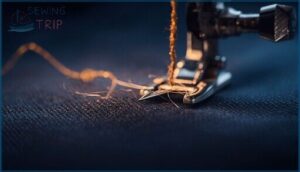
Thread breakage is one of the clearest warning signs your needle needs to go. A bent shaft or tiny burr on the eye causes Thread Shredding — the thread frays and snaps after just a few stitches.
Poor Needle Alignment also throws off your Tension Settings, creating skipped stitches and Fabric Fraying. Before adjusting Sewing Machine Calibration, swap the needle first. It’s the simplest fix in sewing machine troubleshooting.
How Needle Condition Affects Sewing Quality
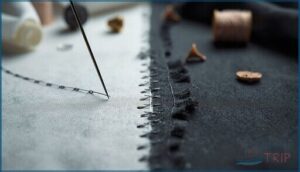
A worn needle doesn’t just make your stitches look bad — it messes with your whole sewing experience.
The condition of your needle touches more than you’d think.
Here’s how it affects three key areas of your work.
Stitch Consistency and Appearance
Your needle’s sharpness shows up directly in every stitch you make. A dull tip pushes fibers aside instead of piercing cleanly, so seam appearance suffers fast.
Watch for these stitch quality red flags:
- Uneven seams with wobbly, inconsistent spacing
- Skipped stitches breaking your stitch line
- Thread tension issues causing tight or loose loops
Fresh needle sharpness keeps fabric texture smooth and results professional.
Fabric Protection
Your fabric pays the price when needle sharpness slips. A worn tip drags fibers instead of piercing cleanly, leaving fabric snags, enlarged holes, and puckering along your seam.
Point Shape Impact matters too — ballpoint needles protect knit preservation by sliding between loops, while Microtex tips excel at minimizing fabric holes in wovens. Fabric compatibility isn’t optional; it’s your first line of fabric protection.
Machine Performance
Your sewing machine feels every bit of needle wear — and it shows. A dull needle forces the motor to work harder, slows your sewing speed, and creates that telltale popping sound most people ignore too long.
- Motor Efficiency drops when a worn needle drags through fabric
- Needle Vibration increases with bent or dull points
- Machine Noise changes are your first warning sign
- Skipped stitches signal timing and synchronization stress
- Performance Optimization starts with simple needle replacement
Regular machine upkeep — swapping needles every 8–10 hours — protects stitch quality and long-term sewing machine performance.
Matching Needle Types to Fabrics
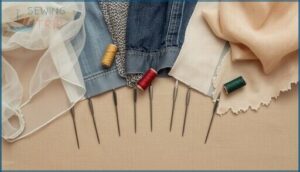
Not every needle type works for every fabric — that’s just the truth.
Using the wrong one is like trying to cut steak with a butter knife; you’ll get there, but not without a mess.
Here’s how to match the right needle type to whatever you’re sewing.
Universal Needles for Everyday Sewing
Think of universal needles as your everyday workhorse. They handle most woven fabrics — quilting cotton, linen, poplin — with ease, making fabric compatibility less of a headache for beginners.
For everyday sewing techniques, an 80/12 sewing machine needle is a solid starting point. Proper needle sharpness directly impacts stitch quality and sewing machine care, so swap it out every 8–10 hours.
Specialized Needles for Stretch and Denim
Universal needles are great, but some fabrics need a specialist.
Stretch fabric like spandex and Lycra requires stretch needles. Their slightly rounded tip pushes fibers aside instead of cutting them — fewer runs, fewer skipped stitches.
For denim sewing, jeans needles are built tougher. Fabric density on heavy denim bends regular needles fast.
Match your needle to the job:
- Stretch needles — activewear, swimwear, jersey knits
- Jeans needles — denim, canvas, thick layers
- Size up — heavier fabric needs a larger needle (90/14 or 100/16)
Microtex and Quilting Needle Uses
Two more needles worth knowing: Microtex and quilting.
Microtex needles have a super-slim, sharp point — perfect for delicate materials like silk, batik, and microfiber. That fine tip pierces cleanly without distorting the weave, giving you crisp stitch quality on tight fabrics.
Quilting needles handle multiple layers easily. Their tapered design reduces skipped stitches mid-project. Size 75/11 works for piecing; bump to 90/14 for thicker quilts.
Choosing The Right Needle Size
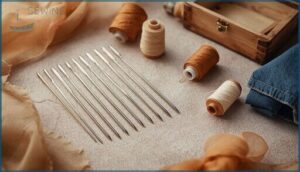
Picking the right needle size makes a bigger difference than most people expect.
The wrong size can mess up your stitches before you even get started. Here’s what to know about matching needle size to your fabric, thread, and machine.
Needle Size Guide by Fabric Weight
Needle size is basically your fabric’s best friend — or worst enemy. Match it wrong, and you’re fighting skipped stitches all day.
- Sheer/lightweight fabrics (organza, chiffon): Use sizes 55/6–65/9
- Light fabrics (cotton lawn, silk): Sizes 70/10–75/11
- Medium fabrics (quilting cotton, poplin): Sizes 80/12–90/14
- Heavyweight fabrics (denim, canvas): Sizes 100/16–110/18
- Very heavy/layered materials: Sizes 120/20–160/23
Thread Compatibility Considerations
Once you’ve nailed fabric weight, thread compatibility is the next piece of the puzzle. Thread weight affects needle eye size — a size 30 thread is thicker than a 50 weight, so it needs more room to pass cleanly.
Mismatched thread and needle types lead to poor stitch formation, uneven thread tension, and frustrating thread breakage. Match your fiber types to needle size, and everything runs smoother.
Home Vs. Industrial Needle Types
Home and industrial needles aren’t interchangeable — they’re built for completely different worlds. Home machines use the 130/705 H needle system with a flat shank design, while industrial uses rely on round-shank systems like 134 or 135×5.
- Home applications: universal needles, stretch needles, microtex needles, jeans needles
- Industrial uses: system-specific needle types for high-speed production
- Shank design determines fit and stitch accuracy
- Needle materials differ in durability and thickness
Tips for Safe and Effective Needle Replacement
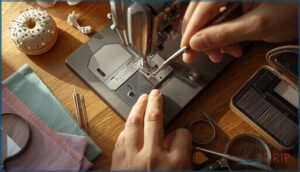
Swapping out a needle doesn’t have to be a big deal — it just takes a little know-how. Done right, it keeps your machine running smoothly and your fabric looking its best.
Here’s what to keep in mind every time you make the change.
Step-by-Step Needle Change Process
Changing your sewing machine needle takes less than two minutes when you know the steps. First, safety precautions matter — turn off and unplug the machine.
Raise the needle to its highest position. Loosen the clamp screw counterclockwise, and ease the old needle out. For needle removal, hold it so it won’t drop.
Push the new needle up firmly, flat side back, then tighten. Done.
Inspection Before Each Project
Before every project, take sixty seconds for a quick visual inspection. Hold the sewing machine needle up to the light and check for bends, rust, or dull points. These preproject checks protect your fabric compatibility and stitch quality from the start.
Run the tip across your fingernail — any snag means it’s time for needle replacement. Simple needle maintenance like this saves a lot of frustration later.
Maintaining Needle and Machine Health
Think of your sewing machine as a partner — treat it well, and it won’t let you down. Good sewing maintenance means pairing needle alignment checks with regular lint removal around the feed dogs and needle bar.
Smart fabric selection and thread management reduce wear on both needle and machine. Consistent sewing needle care and replacement, plus basic sewing machine maintenance, keeps everything running smoothly for years.
Frequently Asked Questions (FAQs)
How to tell if a sewing needle is dull?
Your sewing machine needle might be tired — listen for a popping sound as it pierces fabric.
Skipped stitches, thread breakage, and snags during needle inspection are clear signs sharpness is gone.
How long are sewing needles good for?
Most sewing machine needles last about 6 to 8 hours of active sewing. Needle lifespan shifts with fabric density — heavy denim wears a needle faster than lightweight cotton.
How often should I replace my needle?
Most experts agree: replace your sewing machine needle every 8–10 hours of sewing. That’s roughly one project. Your needle lifespan shortens fast with heavy fabrics, so don’t wait for problems.
Can I reuse needles after washing projects?
It’s tempting, but not a great idea. A needle that’s already sewn a full project carries hidden wear.
Reusing it risks fabric damage, skipped stitches, and extra strain on your sewing machine.
Does needle brand affect stitch quality?
Yes, needle brand does affect stitch quality. Trusted brands like Schmetz and Organ deliver better quality control, consistent needle materials, and tighter tolerances — giving you smoother stitch consistency and reliable sewing performance across different fabric compatibility needs.
How do I store spare sewing needles safely?
Store spare sewing needles in hard safety containers with secure lids, magnetic holders, or needle books with felt pages.
Label everything by needle types and size for easy, safe access and smart needle organization.
Are hand-sewing needles replaced at the same rate?
Not quite. Think of it like a car versus bicycle — both wear down, but at very different speeds.
Hand needle longevity far outlasts machine needles because your hand simply can’t match a machine’s 1,000 stitches per minute.
Can a bent needle damage my machine permanently?
A bent needle can absolutely damage your machine.
A single needle strike can gouge the hook, warp the bobbin case, or cause timing issues — all requiring costly machine repair or even full replacement.
Conclusion
A sharp needle is like a clean paintbrush—without it, even your best technique falls flat. Knowing when to replace sewing needles keeps your machine running smoothly and your fabric looking its best.
Don’t wait for skipped stitches or snags to remind you. Swap it out every eight to ten hours, match the needle to your fabric, and you’ll feel the difference immediately. That one small habit quietly shapes every seam you sew.
- https://www.aurorasewingcenter.com/blogs/posts/how-long-does-a-needle-last
- https://www.tandavindustries.com/2025/10/dbx1-1738-1738a-needle-system-guide.html
- https://www.eobquiltdesign.com/blog2/e2s6px8yjr8jsczaewgf33g46zp4r5
- https://thesewinggallery.net/blogs/the-sewing-gallery/how-often-should-you-change-your-sewing-machine-needle
- https://www.youtube.com/watch?v=8-bkXPS6U3w