This site is supported by our readers. We may earn a commission, at no cost to you, if you purchase through links.
Your machine was running fine yesterday. Now the stitches look like a loose shoelace dragged across the fabric. Sound familiar?
Loose upper thread is one of the most common sewing frustrations—and one of the most misunderstood.
Most sewers blame the bobbin first, but the real culprit usually sits above the fabric.
A skipped thread guide, a dirty tension disc, or threading with the presser foot down can quietly throw everything off.
The good news: once you know what to look for, fixing it takes minutes.
Here’s exactly what’s going wrong and how to set it right.
Table Of Contents
- Key Takeaways
- Why is My Upper Thread Loose?
- What Are Signs of Loose Top Thread?
- How Incorrect Threading Causes Loose Thread
- Impact of Tension Dial Settings on Thread
- Effects of Poor-Quality Thread and Needles
- Step-by-Step Fix for Loose Upper Thread
- Preventing Loose Upper Thread Issues
- Troubleshooting Persistent Tension Problems
- When to Adjust Bobbin Tension Instead
- Sewing Tips for Consistent Upper Thread Tension
- Frequently Asked Questions (FAQs)
- Conclusion
Key Takeaways
- Threading with the presser foot down keeps the tension discs clamped shut, so your thread never grips — always raise the foot first.
- Most loose upper thread problems come from a skipped thread guide or missed take‑up lever, not the bobbin.
- Lint inside the tension discs quietly kills your thread tension, and no dial adjustment will fix what a dirty machine is causing.
- Match your needle size and thread quality to your fabric, since cheap or wrong supplies create tension problems just as fast as incorrect settings do.
Why is My Upper Thread Loose?
Loose upper thread is one of those frustrating problems that stops a project cold.
Often, the fix is as simple as switching to a metal sewing machine thread stand that lets the spool unwind smoothly without twisting or catching.
A few specific things tend to cause it, and once you know what they are, fixing it gets a lot easier.
Here’s what’s usually behind the issue.
Common Causes of Loose Upper Thread
Loose stitches usually trace back to a handful of easy-to-miss mistakes. Spool Orientation Issues cause uneven unwinding. Thread Guide Blockage means your thread skips key tension points. Tension Disc Lint stops the discs from gripping properly. Needle Eye Damage frays the upper thread. Bobbin Placement Errors throw everything off balance.
Any one of these can quietly wreck your thread tension.
incorrect threading issues are a common cause of loose upper thread.
How Upper Thread Tension Works
Think of upper thread tension like a garden hose — too loose, water spills everywhere; too tight, it kinks. Your machine controls upper thread tension through metal discs, a presser foot, and a take‑up lever working together.
- Tension Disc Mechanics — discs squeeze the thread, creating drag
- Presser Foot Influence — foot up opens discs for threading
- Take‑Up Lever Role — pulls thread tight after each stitch
- Balanced Stitch Interaction — upper and bobbin tension must match
- Fabric Thread Effects — thicker fabric needs looser tension dial settings
For reference, the upper thread tension location is at the front of most lockstitch machines.
What Are Signs of Loose Top Thread?

Loose top thread doesn’t stay quiet — it leaves clues all over your work.
Some signs are easy to spot, while others hide just below the surface.
Here’s what to look for.
Loops and Tangles Under Fabric
Spotting loose upper thread usually starts under the fabric. Loops hanging beneath the surface are the clearest sign — often caused by Tension Disc Failure or a Take-Up Lever Miss.
Lint Accumulation worsens the problem quickly.
Fabric Weight Impact matters too; lightweight fabrics show larger loops than denim.
Thread Quality Issues add drag, pulling upper thread tension off balance and ruining stitch quality.
Uneven or Unsecured Stitches
Those loops under the fabric aren’t the only clue. Flip your work over — if you notice Stitch Length Variation along the seam, that’s upper thread tension misfiring.
Fabric Feed Issues and Thread Path Misalignment make loose stitches spread unevenly.
Tension Dial Tweaks and fixing Needle Timing Errors restore consistency.
Unsecured stitches won’t hold under stress — they’ll open.
Birdnesting and Knotting
Birdnesting happens fast. One moment you’re sewing fine — the next, a tangled mass of thread clogs the underside of your fabric.
That’s Bobbin Thread Excess bunching up when upper thread tension fails. Tension Disk Misalignment and Needle Hook Timing problems pull loose stitches into knots. Poor Thread Tail Management at the start makes it worse. Fix the tension first.
How Incorrect Threading Causes Loose Thread
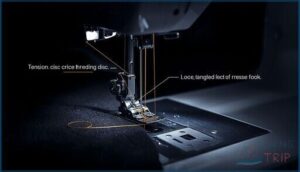
Most tension problems trace back to one thing: machine wasn’t threaded right. It sounds simple, but even one missed step throws everything off.
Here are the three threading mistakes that cause loose upper thread most often.
Skipping The Take-Up Lever
The take-up lever is easy to miss — and skipping it wrecks your upper thread tension fast. Without proper lever positioning and eyelet threading, the thread never gets pulled tight into each stitch. You’ll spot loose stitches almost immediately.
Always raise the lever highest before upper threading, confirm thread path verification visually, and make sure tension disc release is complete for solid initial stitch stabilization.
Thread Guides and Thread Path Errors
Precision matters here. Every thread guide exists for a reason — skipping even one throws off your upper thread tension completely. A missed guide means the thread feeds too freely, creating loose loops underneath.
Check your spool orientation, since a cross-wound spool on the wrong pin causes twisting. Walk your path routing carefully, inspect for guide wear, and confirm guide alignment before rethreading.
Threading With Presser Foot Down
Threading with the presser foot down is like trying to slide a letter under a closed door — it just won’t go in right. The tension discs stay clamped shut, creating a zero tension condition where the thread never actually grips.
Threading with the presser foot down keeps tension discs clamped shut, so your thread never actually grips
- Closed tension discs block proper thread seating
- Misleading dial adjustments won’t fix thread path blockage
- Pull test omission means you won’t catch the problem early
Always raise the foot first.
Impact of Tension Dial Settings on Thread

The tension dial has more power over your stitches than most people realize.
A setting that’s even slightly off can throw everything out of balance — too loose, too tight, or somewhere frustratingly in between.
Here’s what you need to know about dialing it in right.
Setting Too Low Vs. Too High
Your tension dial controls everything. Set it too low, and you’ll get loose stitches — the upper thread barely pulls the bobbin thread into the fabric, leaving loops underneath. Set it too high, and fabric puckering begins, with thread breakage following on delicate material.
| Tension Issue | What You’ll See |
|---|---|
| Too Low | Loose loops on the underside |
| Too High | Fabric puckering along seams |
| Too Low | Poor bobbin interaction, top thread dominates underside |
| Too High | Thread breakage on fine fabrics |
| Balanced | Stitch balance — even dots on both sides |
Stitch balance happens when both threads meet in the middle.
Adjusting Tension Dial Safely
Before touching anything, photograph your dial — that number is your anchor. Start with small, incremental dial turns, moving one number at a time. Always do foot‑up rethreading between adjustments so the discs reset properly.
Test on scrap after each move. Use fabric‑specific charts to track what works. Your dial marking reference keeps upper thread tension balanced without over‑tightening or guesswork.
Effects of Poor-Quality Thread and Needles
Your thread and needle matter more than you think. Bad supplies cause tension problems just as fast as wrong settings do. Here’s what to watch for.
Thread Shedding or Breaking
Cheap or old thread behaves like a worn-out rubber band — it just can’t hold up. Poor Thread Material Choice directly affects upper thread tension, causing thread shedding and thread breaking mid‑seam. Smart thread management starts with knowing what weakens your thread:
- Fuzzy thread sheds fibers, increasing friction
- Old cotton snaps under moderate tension
- Spool Cap Issues cause jerky, uneven feeding
- High Sewing Speed Effects shred weaker threads fast
- Fabric Abrasiveness wears down thread with every stitch
Needle Type and Condition
Your needle matters just as much as your thread. A bent needle can’t catch the upper thread loop properly — skipped stitches occur quickly. Dull needles create friction that mimics low upper thread tension. And a wrong needle size? Loose stitches every time.
| Needle Issue | Effect on Upper Thread Tension |
|---|---|
| Bent Needle Impact | Hook misses loop, causing skipped stitches |
| Dull Needle Symptoms | Friction loosens thread control |
| Needle Size Matching | Wrong size creates thread slippage |
| Point Type Selection | Wrong point disrupts stitch formation |
| Correct Needle Orientation | Backward insertion misaligns the scarf |
Step-by-Step Fix for Loose Upper Thread
Fixing loose upper thread isn’t complicated — you just need to work through it one step at a time.
Before touching the tension dial, there are a few basics to check and reset first.
Here’s exactly what to do.
Removing Fabric and Tangled Thread
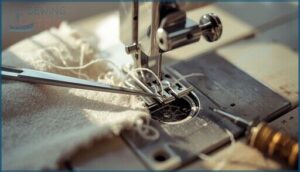
Before anything else, turn off and unplug your machine.
Forcing trapped fabric out causes tearing — instead, cut the top thread near the needle eye first for easier fabric release.
Use small scissors or a seam ripper for clean thread clip cuts under the needle plate.
Open the bobbin cover for bobbin case extraction, then clear the hook race of packed thread bits causing loose stitches.
Raising Presser Foot and Needle
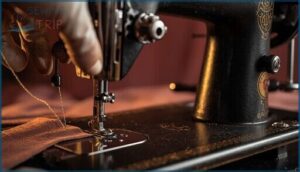
With the tangle cleared, now set your machine up for a clean rethread. Raise the presser foot lever first — this opens the tension discs for proper foot-up threading and zero-tension prevention.
Then turn the handwheel toward you until the needle reaches its highest point.
Needle-up positioning also brings the take-up lever to the top, giving you full take-up lever access before you rethread.
Rethreading The Machine Correctly
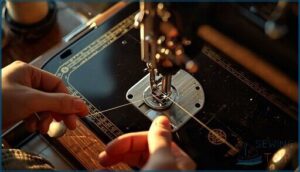
Now rethread from the top down. Check your spool placement first — it should unwind smoothly without catching.
With the presser foot up, follow your machine’s thread guide sequence all the way down, through the tension discs for proper tension disc seating, then up through the take-up lever alignment.
Finish at the needle. Pull the thread snug — you should feel light resistance.
Reinserting The Bobbin
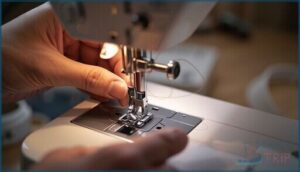
Reinserting the bobbin correctly matters more than most people realize. Drop-in bobbins should unwind counterclockwise — look for that P‑shape before dropping it in.
Guide the thread through the slot so it slides under the tension spring; you’ll feel smooth resistance when thread engagement is right.
Snap the cover flush. Then turn the handwheel once to confirm the upper thread catches the bobbin thread cleanly.
Preventing Loose Upper Thread Issues

Most tension problems are completely avoidable. A few simple habits can keep your upper thread behaving the way it should, every single time. Here’s what makes the biggest difference.
Proper Threading Practices
Always raise your presser foot before threading — this opens the tension discs so the thread seats properly between them. Follow the Thread Guide Sequence from Spool Placement to needle, including Take‑Up Lever Alignment.
Thread Path Verification takes seconds but prevents most upper thread tension problems. One missed guide means the tension dial can’t do its job, no matter how you set it.
Regular Machine Cleaning and Maintenance
A dirty machine fights you on tension — no dial adjustment will fix what lint is causing.
- Tension Disc Cleaning — Slide unwaxed dental floss between the discs monthly to clear hidden fiber buildup.
- Bobbin Area Maintenance — Brush out lint every 8–10 sewing hours, especially after fleece or flannel.
- Feed Dog Lint Removal — Clear teeth after each bobbin change to keep fabric feeding evenly.
- Lubrication Schedule — Add one drop of sewing machine oil to marked points monthly.
- Professional Service Timing — Book machine calibration every 12–18 months to catch worn tension springs early.
Using Quality Threads and Needles
Your thread and needle choices matter more than most sewists realize. Cheap, fuzzy thread sheds fibers that clog tension discs and cause loose upper thread tension.
Choose premium thread selection for smooth, consistent diameter. Match needle size to your fabric — 70/10 for silk, 100/16 for denim. Run thread consistency checks before each project, and store spools away from sunlight to preserve strength.
Troubleshooting Persistent Tension Problems
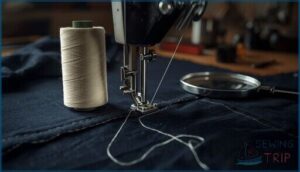
Sometimes tension problems stick around even after you’ve rethreaded and adjusted the dial.
That usually means something in the thread path or machine setup needs a closer look.
Here are two places to check when the usual fixes aren’t cutting it.
Checking Thread Path and Guides
Still getting loops after rethreading? Run your fingertip along the full Visual Thread Path — from spool to needle. Feel for any spot where the thread skips a guide or sits beside it instead of inside.
A Guide Cleanliness Inspection matters too; lint in small slots creates hidden drag. Confirm Tension Disc Contact by threading with the foot up, then check Thread Path Smoothness by tugging gently near the needle.
Consulting Your Machine Manual
Your sewing machine manual is one of the best tools you have. Open it to the troubleshoot tables — they list "loose upper thread" and "loops on underside" with exact fixes.
Check the diagram interpretation section for tension dial adjustments and factory settings specific to your model. Model specifics matter; a setting that works on another machine can make your upper thread worse.
When to Adjust Bobbin Tension Instead
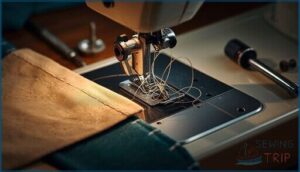
Sometimes the problem isn’t your upper thread at all.
The bobbin can cause the same messy stitches, and it’s easy to mix them up.
Here’s how to tell which one is actually to blame.
Signs Bobbin Tension is The Issue
Sometimes the culprit isn’t your upper thread tension at all. If you spot bobbin thread loops on top of the fabric, birdnesting under fabric, uneven stitch gaps, or puckered fabric — your bobbin tension needs attention.
Try the bobbin drop test: a 1–2 inch drop means balanced tension. No movement means it’s too tight. Loose stitches confirm the rest.
Why Upper Thread Issues Can Mimic Bobbin Problems
Upper thread issues love to disguise themselves as bobbin problems. Here’s why that happens:
- All the mess collects underneath — right where the bobbin sits.
- Tension disc slip causes a zero‑grip condition, creating loose stitches that look like bobbin misinterpretation.
- Thread path errors send slack into the bobbin area, triggering birdnesting causes.
- Fabric loop diagnosis almost always points back to upper thread tension, not bobbin thread.
Sewing Tips for Consistent Upper Thread Tension

Good tension doesn’t happen by accident — it comes from a few steady habits. Small things done consistently make a bigger difference than any single fix.
Here are the tips that’ll keep your upper thread behaving every time you sit down to sew.
Holding Thread Tails at Start
Before you take that first stitch, grab both thread tails and hold them back. This simple Tail Grip Technique prevents the machine from sucking loose thread into the bobbin area.
For Initial Stitch Stabilization, hold tails about four inches long — that’s your Tail Length Recommendation. Two or three stitches are all it takes.
Some sewists use Leader Fabric Use instead, anchoring threads in a scrap first.
Adjusting for Different Fabrics
Every fabric plays by different rules. Lightweight chiffon needs upper thread tension around 2–3.5, while heavy denim calls for 5–6.
Fabric weight tension and stitch length selection work together — fine silk wants shorter stitches, thick canvas wants longer ones. Match your needle size and thread type choice to the fabric, and adjust presser foot pressure accordingly.
Test first on scraps.
Regular Maintenance Schedules
Think of maintenance like brushing your teeth — skip it, and problems build up fast.
Daily lint removal from the bobbin area keeps upper thread tension steady.
Do a monthly deep clean of the tension discs and feed dogs.
Weekly oiling prevents friction.
A seasonal needle check catches dull tips early.
For machine calibration and repair, schedule quarterly professional service when you sew heavily.
Frequently Asked Questions (FAQs)
How to fix upper thread too loose?
Raise the presser foot, rethread completely, then turn the tension dial up in small steps. Test each change on a fabric test swatch until stitches lock cleanly in the middle.
Why does my top thread keep coming loose?
Like a car slipping out of gear, your top thread loses tension when the presser foot stays down during upper threading, skipping the take-up lever, or misaligned guides disrupt proper thread tension calibration.
Why are my stitches loose on the top?
Loose stitches on top usually mean your upper thread tension is too low.
A quick Thread Path Check and Presser Foot Timing reset — rethread with the foot up — often solves it instantly.
Can a dirty machine cause upper thread issues?
Yes, absolutely.
Tension disc lint, take-up lever gunk, feed dog debris, and needle plate fuzz all disrupt upper threading and thread tension.
Even dust-induced loose stitch problems require sewing machine maintenance before any tension adjustment fixes them.
Does sewing speed affect upper thread tension?
Sewing speed absolutely affects upper thread tension. Faster stitching creates inertia tension changes and friction heat impact, causing speed‑induced slack.
Slow down first — electronic tension compensation helps sophisticated machines, but manual adjustment works fine.
Which fabrics are most prone to tension problems?
Ironically, the most beautiful fabrics give you the most grief.
Sheer chiffon, silk satin, stretch knit, heavy denim, and open weave linen all expose thread tension and fabric and thread compatibility issues quickly.
Can the needle position affect upper thread tension?
Needle position upper thread tension.
A needle that’s off-center, too low, or inserted backward changes how the thread pulls — causing loose stitches even when your tension dial setting looks correct.
Does thread color or dye affect tension performance?
Thread color can affect tension. Dark Thread Friction from high Dye Load Impact may cause drag. Light Thread Glide needs less pull.
Lubricant Variance between colors means Color‑Based Tension Testing on scrap fabric is always smart.
Conclusion
Thread tension is a quiet language your machine speaks—and now you understand it. Knowing why the upper thread loose puts you back in control, stitch by stitch.
A skipped guide, a dropped foot, a dusty tension disc: small things with big consequences.
Rethread carefully, raise that presser foot, and test on scrap fabric first.
Your machine hasn’t failed you. It just needed you to listen. Now you know exactly how.
- https://madamsew.com/blogs/sewing-blog/how-to-deal-with-thread-tension
- https://www.singermachines.co.uk/faq/upper-thread-snaping-on-sewing-machine.html
- https://quiltingwemple.com/troubleshoot-sewing-machine-tension/
- https://maggieframestore.com/collections/magnetic-hoops-for-industrial-machines
- https://www.magnetichoop.com/cs/blogs/news/top-thread-mastery-prevent-breakage-optimize-tension-and-choose-perfect-threads