This site is supported by our readers. We may earn a commission, at no cost to you, if you purchase through links.
A blunt needle through silk is basically a tiny wrecking ball—it punches through the weave instead of gliding between threads, leaving little holes where there shouldn’t be any. Most sewists who hit frustrating snags, skipped stitches, or mysterious fabric puckers never suspect the culprit sitting in their machine. The needle looks fine. It probably worked great last week on denim. But that’s exactly the problem.
Knowing why to use different needles for different fabrics isn’t just technical trivia—it’s the difference between a clean seam and a ruined yard of fabric. The right needle makes everything else fall into place.
Table Of Contents
- Key Takeaways
- Why Needle Choice Matters for Different Fabrics
- How Needle Structure Affects Fabric Compatibility
- Matching Needle Size to Fabric Weight
- Choosing The Right Needle Type
- Thread and Needle Pairing Essentials
- Troubleshooting Fabric and Needle Issues
- Top 3 Sewing Needle Products for Fabric Variety
- Frequently Asked Questions (FAQs)
- Conclusion
Key Takeaways
- The needle type you choose directly controls stitch quality — the wrong type means puckers, snags, and fabric damage that no iron can fix.
- Match the needle point to your fabric’s structure: sharp for tight wovens, ballpoint for knits, wedge for leather, microtex for delicate or dense weaves.
- Needle size and thread weight are a package deal — pair fine thread with a 70/10 and heavy thread with a 100/16, or expect skipped stitches and fraying.
- Replace your needle every 6–8 hours of sewing, because a dull needle is behind most mystery problems — it’s cheap insurance for cleaner, smoother work.
Why Needle Choice Matters for Different Fabrics
The needle you pick does more than poke a hole — it shapes every stitch you make.
For silk especially, knowing which needles work best for silk fabric can mean the difference between flawless seams and snags.
Choose wrong, and you’re fighting skipped stitches, snags, and fabric that looks like it lost a battle.
Here’s what’s really at stake when needle choice goes right, or wrong.
Impact on Stitch Quality and Fabric Integrity
Precision is everything in sewing precision — and needle selection quietly controls it all. The wrong needle doesn’t just look bad; it actively damages your fabric. An oversized needle on silk stretches yarns sideways, leaving ripples that no iron can fix. Fabric distortion, poor stitch consistency, and thread tension problems usually trace back here.
Watch for these warning signs:
- Visible puckering along seam lines
- Rough, fuzzy stitch holes in lightweight fabric
- Uneven stitch quality despite correct tension settings
Preventing Skipped Stitches and Thread Breakage
Skipped stitches and thread breakage often share one root cause — the wrong needle. A dull tip struggles to pierce cleanly, shrinking the thread loop the hook needs to catch.
Fabric Tension spikes when Thread Friction builds from a mismatch between needle size and thread weight.
| Problem | Needle Fix |
|---|---|
| Skipped stitches | Check Needle Sharpness |
| Thread breakage | Match needle size to thread |
| Sewing Speed issues | Slow down, recalibrate Machine Calibration |
How The Wrong Needle Can Damage Fabrics
Wrong needle, real damage — it’s not just about skipped stitches. A needle that’s too large punches visible holes in delicate fabrics, while a sharp tip on knits causes Fiber Breakage and Thread Snags that spread into runs.
Needle Friction from a poor size match leads to Seam Distortion, puckering, and even Fabric Tears that no amount of pressing can fix.
How Needle Structure Affects Fabric Compatibility
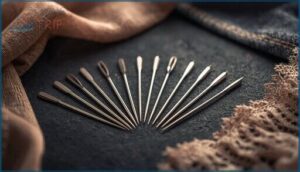
A needle isn’t just a pointy stick — every part of it’s doing a job. The point, the eye, and the overall build all work together to decide how well your needle gets along with your fabric.
Here’s how each piece plays its role.
Needle Points—Sharp, Ballpoint, and Wedge
Think of your needle’s tip as a personality — and not every personality belongs in every room.
- Sharp Points cut cleanly through tight weaves like quilting cotton, making tiny, precise holes.
- Ballpoint Tips nudge between knit loops instead of slicing them, preventing runs.
- Wedge Geometry slices a clean slit in leather for bold, defined stitches.
- Point Durability matters — dull tips drag and distort fabric fast.
- Needle Materials affect how long that sharp point actually stays sharp.
Needle Eyes and Thread Flow
The eye is basically your thread’s highway — and size matters. Too small, and friction builds up fast, fraying your thread before it even reaches the fabric.
For a quick reference, this needle size guide for different fabric weights breaks down exactly which size works best from delicate chiffon all the way up to heavy denim.
That’s where Eye Shape Importance and Friction Reduction Methods come in. A well-matched eye keeps Thread Flow Dynamics smooth, facilitates Smooth Stitch Formation, and slows Needle Wear Factors.
Right needle selection protects both your thread and your sewing.
Matching Needle Build to Fabric Weave
Fabric structure is the real boss here — your needle just has to play by its Fabric Density and Weave Structure rules. Match them wrong, and you’ll fight Needle Deflection, loose Yarn Migration, and torn Seam Integrity all project long.
Here’s how Fabric Density and Weave Structure should guide your needle selection:
- Tight wovens need sharp, fine needles
- Loose knits need rounded ballpoint tips
- Dense denim needs a reinforced shaft
- Delicate weaves need smaller diameters
- Elastic fabrics need stretch-specific builds
Matching Needle Size to Fabric Weight
Needle size isn’t just a number — it’s a signal for how your fabric and needle will get along.
Pick the wrong size, and you’re looking at skipped stitches, pulled threads, or worse, a ruined project.
Here’s what you need to know to match them right.
Understanding Needle Size Numbers (e.g., 80/12)
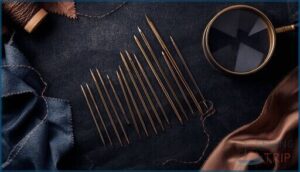
That little fraction on the needle pack — like 80/12 — is actually telling you two things at once. The first number is European, based on needle thickness in hundredths of a millimeter.
The second follows the American system. So needle size conversion is simpler than it looks: size 80 means a 0.80 mm shaft. Bigger number, thicker needle. That’s your whole cheat sheet for sewing needle selection.
Lightweight Vs. Heavyweight Fabric Needs
Needle size and fabric weight go hand in hand — get that pairing wrong and you’ll feel it fast. Sheer or lightweight fabric types like chiffon do best with a 60/8 or 70/10 for clean needle penetration and solid fabric durability.
Heavier materials need 100/16 or larger to maintain thread tension without bending or breaking through dense fabric compatibility zones.
Double Number Sizing Explained
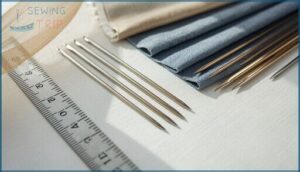
That number pair on the package — like 80/12 — isn’t a typo. It’s dual labeling at work: European sizing first, American sizing second.
The metric side tells you the actual blade diameter (80 means 0.80mm), while the American number just matches it by scale. Think of it as built-in metric conversion, so needle sizing stays consistent no matter which measurement standards you learned first.
Choosing The Right Needle Type
Not all needles are created equal, and once you understand the types, a lot of sewing frustrations suddenly make sense.
Each one is built for a specific job, whether that’s gliding through silk or punching through denim without a fuss. Here’s a breakdown of the needle types worth knowing.
Universal, Ballpoint, and Microtex Needles
Think of these three as your needle starting lineup. Universal needles handle most fabric blends with ease. Ballpoint needles slide between knit loops, protecting thread tension and preventing runs. Microtex needles pierce dense weaves with surgical precision.
- Universal needles: reliable fabric compatibility across wovens
- Ballpoint needles: knit-friendly, reduces sewing speed damage
- Microtex needles: crisp topstitching on fine fabrics
- Needle maintenance keeps all three performing their best
Specialty Needles: Denim, Leather, Embroidery
When your project goes beyond everyday fabrics, specialty needles earn their place. Denim needles have a reinforced blade that punches through thick layers without bending — a solid choice for denim stitching and canvas work.
Leather needles use a wedge point built for leather crafting, slicing clean holes every stitch. Embroidery needles feature wider eyes that protect delicate threads. Smart needle selection and needle maintenance keep all three performing flawlessly.
Topstitch and Quilting Needle Uses
Two more needle types worth knowing: topstitch and quilting needles. Topstitch needles have an extra-long eye and deep groove, making them ideal for thick or decorative threads in topstitch applications.
Quilting needles use a tapered point that glides through multiple layers smoothly. Both improve sewing efficiency — and smart needle selection between the two keeps your quilting techniques and fabric compatibility dialed in.
Thread and Needle Pairing Essentials
Getting your thread and needle to work together isn’t just a nice-to-have — it’s what separates a smooth seam from a frustrating mess.
The wrong pairing can snap your thread, throw off your tension, or leave your fabric looking rough. Here’s what you need to know to get it right.
Matching Thread Type to Needle Eye
The needle eye is your thread’s front door — and size really does matter. A mismatch here quietly wrecks your sewing performance before you’ve finished a seam.
Match thread weight to eye size using this quick guide:
- Tex 16–35 (fine thread): Use needles 70/10–80/12
- Tex 45–69 (medium thread): Use needles 90/14–100/16
- Tex 90–135 (heavy thread): Use needles 110/18–140/22
- Embroidery/metallic thread: Use specialty large-eye needles
- Fabric thickness test: Heavier fabric needs larger thread and needle compatibility
Your thread should glide, not fight.
Preventing Thread Breakage and Tension Issues
Even a perfect thread-to-eye match fails if your tension is off or your needle is past its prime. Too-tight tension stretches fine thread until it snaps — and a dull or nicked needle shreds it on every pass.
For real sewing optimization, check your tension settings on scrap first, and swap worn needles early. Needle sharpness and tension control honestly solve half of all thread breakage problems.
Thread Thickness and Needle Compatibility
Think of thread weight and needle eye size as a handshake — they either grip well or they don’t. A 50-weight thread pairs naturally with an 80/12 needle, while thicker 30-weight needs a 100/16 for smooth fabric tension and solid sewing performance.
When thread thickness mismatches the eye, expect fraying or skipped stitches. Material compatibility starts with getting that pairing right.
Troubleshooting Fabric and Needle Issues
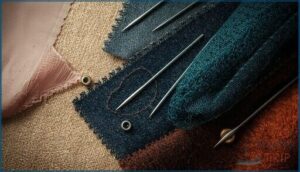
Even the best sewists hit a snag sometimes — and usually, the needle is the culprit. Knowing what to look for makes fixing the problem a whole lot faster.
Here’s what to watch out for.
Signs You’re Using The Wrong Needle
Your fabric doesn’t lie — when the needle’s wrong, it tells you fast. Watch for these sewing troubleshooting red flags:
- Skipped stitches appearing randomly on knits or dense weaves
- Thread breakage or fraying right at the needle eye
- Snagging and pulling leaving snags or tiny loops on the surface
- Fabric damage like visible holes, puckering, or runs along the seam
Poor stitch quality and needle wear go hand in hand.
Solving Common Sewing Problems
Most sewing problems trace back to one fix: swap the needle. Skipped stitches on knits? Go ballpoint. Fabric tears or puckering? Your needle’s likely too large or too dull. Good thread and needle matching keeps thread tension balanced and stitch quality consistent.
| Problem | Quick Fix |
|---|---|
| Skipped stitches | Switch to ballpoint or stretch needle |
| Thread breakage | Match thread size to needle eye |
| Fabric tears | Use correct needle type for fabric |
| Poor stitch quality | Re-thread and check sewing machine needle selection |
When and How Often to Replace Needles
A dull needle is the silent troublemaker in most stitch disasters. For needle maintenance and fabric damage prevention, replace your needle every 6 to 8 hours of actual sewing time — or simply start each new project fresh.
A dull needle is the silent troublemaker behind most stitch disasters — replace it every 6 to 8 hours
Watch for needle wear signs like popping sounds, skipped stitches, or puckering fabric. Good sewing machine care means treating needles as cheap insurance, not optional extras.
Top 3 Sewing Needle Products for Fabric Variety
Now that you know what to look for in a good needle, the next step is finding products that actually deliver. A needle collection doesn’t have to be complicated — just reliable, adaptable, and built for the fabrics you actually sew.
Here are three worth keeping in your kit.
1. Automatic Needle Threader Device
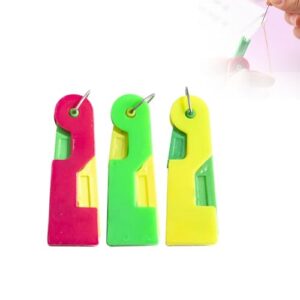
Threading a needle shouldn’t feel like defusing a bomb. This compact little gadget — weighing just 5 grams — takes that frustration completely off the table. It works with hand sewing, embroidery, cross-stitch, and machine sewing, so it’s not a one-trick tool.
If you’re dealing with arthritis, low vision, or just tired eyes after a long project, it’s a genuine lifesaver. Fair warning, though: very thick threads or yarn mightn’t cooperate. For standard thread weights, it’s a quiet hero in your kit.
| Best For | Anyone who struggles with threading needles — especially the elderly, those with arthritis or low vision, and sewing enthusiasts who just want to skip the frustration. |
|---|---|
| Compatibility | Hand & machine sewing |
| Primary Use | General sewing |
| Durability | High-quality plastic |
| Pack Quantity | Single tool |
| Weight | 5 grams |
| Value | Budget-friendly |
| Additional Features |
|
- Works across hand sewing, embroidery, cross-stitch, and machine sewing — genuinely versatile
- Tiny and light at just 5 grams, so it won’t clutter your kit
- A thoughtful gift for anyone who sews regularly, especially older crafters
- Hooks can be too small for thick threads or yarn — stick to standard weights
- Some users found the build quality a bit flimsy
- No instructions included, so you’re figuring it out on your own
2. Sewing Machine Needles Heavy Duty
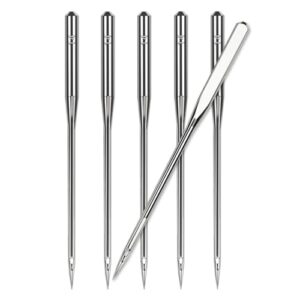
When you’re pushing through denim, canvas, or layered upholstery, a regular needle just won’t cut it — literally.
The Heavy Duty pack gives you 50 size 90/14 needles made from iron alloy, so the shaft stays rigid instead of bending mid-seam.
That thicker build means cleaner stitches, less machine strain, and fewer of those maddening skipped stitches over bulky intersections.
They come in five organized packs of ten, which makes restocking easy.
Solid, affordable, and built for the tough stuff.
| Best For | Sewers who regularly work with heavy fabrics like denim, leather, canvas, or quilting layers and need reliable needles that won’t bend or skip. |
|---|---|
| Compatibility | Home sewing machines |
| Primary Use | Heavy-duty sewing |
| Durability | Iron alloy |
| Pack Quantity | 50 needles |
| Weight | 0.704 ounces |
| Value | Cost-effective |
| Additional Features |
|
- Built from iron alloy, so they stay sharp and rigid even through thick, tough materials
- 50 needles split into five packs of ten — easy to store and restock as you go
- Great value for the price, especially if you go through needles quickly on heavy-duty projects
- “Universal” doesn’t always mean universal — worth double-checking compatibility with your specific machine before buying in bulk
- The pack-of-ten format can make grabbing a single needle a little fiddly
- Quality consistency may vary depending on your machine and what you’re sewing
3. SCHMETZ Universal Household Sewing Machine Needles
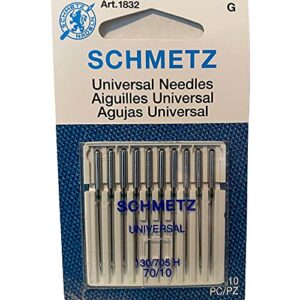
Not every project calls for heavy-duty firepower, though. Sometimes you just need a reliable everyday needle — the kind that accommodates cotton, knits, and blends without making you think twice.
That’s the sweet spot for SCHMETZ Universal 70/10 needles. The slightly rounded point slides between fibers instead of piercing them, so both wovens and knits stay intact. You get 10 needles per pack, they fit virtually all home machines, and SCHMETZ’s reputation for consistency means fewer surprises mid-seam.
| Best For | Home sewers who want a dependable, no-fuss needle for everyday projects across a mix of fabrics. |
|---|---|
| Compatibility | All household machines |
| Primary Use | General sewing |
| Durability | High-grade steel |
| Pack Quantity | 10 needles |
| Weight | 0.317 ounces |
| Value | Good value |
| Additional Features |
|
- Works on both wovens and knits, so you’re not swapping needles every five minutes
- Fits virtually all home sewing machines, including embroidery machines
- SCHMETZ is a trusted brand, and 10 needles per pack makes it great value
- Only comes in size 70/10, so you’ll need something else for heavier fabrics
- Not built for heavy-duty or specialty sewing tasks
- Quality can occasionally vary, though that’s rare with SCHMETZ
Frequently Asked Questions (FAQs)
Do you need different needles for different fabrics?
Yes, you really do. The needle you pick affects how cleanly it pierces the fabric, how stitches form, and whether your seams hold — or fall apart after one wash.
Which needle is used for which fabric?
The right needle depends on your fabric.
Ballpoint for knits, universal for cotton, microtex for silk, denim needles for heavy canvas, and leather needles for hide.
Match the point to the material.
When to use different needle sizes?
Match needle size to fabric weight. Fine fabrics like silk need a 60/8 or 70/ Heavy denim calls for a 100/ Think of it as giving your fabric the right handshake.
What do different sewing machine needles mean?
Each needle type is a tool built for a specific job.
Universal accommodates most wovens, ballpoint protects knits, microtex pierces delicate fabrics cleanly, and specialty needles like denim or leather tackle tough materials.
Can I reuse needles across multiple projects?
You can, but tread carefully. A lightly used needle on similar fabrics is usually fine. Hit 8 hours or a medium project, though, and it’s smarter to just swap it out.
How do I store needles safely and organized?
Think of your needle collection like a tiny toolkit — everything needs a home.
Use labeled containers, separate new from dull, and keep sharps in rigid cases so nothing pokes where it shouldn’t.
Do needle brands affect sewing performance significantly?
Yes, brand matters more than most people expect.
Schmetz and Groz-Beckert needles are machined to tighter tolerances, so you get cleaner stitches, fewer skips, and less thread breakage compared to cheap generic packs.
How does needle age affect fabric and thread?
Even a medieval blacksmith knew dull tools ruin the work. Old needles snag fibers, skip stitches, and shred thread fast. Swap yours every 8 hours — your fabric will thank you.
Can hand-sewing needles work in sewing machines?
No, hand-sewing needles don’t work in machines. They lack the flat shank, scarf, and groove that machine needles need to form stitches.
Using one risks broken needles, skipped stitches, and real machine damage.
Conclusion
What separates a clean, professional seam from a frustrating mess? Often, it’s just the needle. Understanding why use different needles for different fabrics isn’t about memorizing charts—it’s about trusting the right tool for the job.
Your fabric talks to you through skipped stitches, puckers, and snags. Start listening. Swap that needle, match it to your material, and suddenly everything runs smoother. The right needle doesn’t just sew—it transforms how you work.
- https://www.goldstartool.com/blog/the-complete-guide-to-sewing-machine-needles-and-sizes.htm
- https://www.schmetzneedles.com/pages/how-to-pick-the-correct-sewing-machine-needle
- https://www.maggieframes.com/blogs/embroidery-blogs/ultimate-hand-needle-size-chart-guide-match-needles-to-fabric-thread
- https://singerindia.com/10-common-sewing-mistakes-and-how-to-avoid-them-with-the-right-sewing-techniques-2/
- https://weallsew.com/five-basic-sewing-needles-you-need-and-why/